Complex Guaranty Agreement to Lender
What this document covers
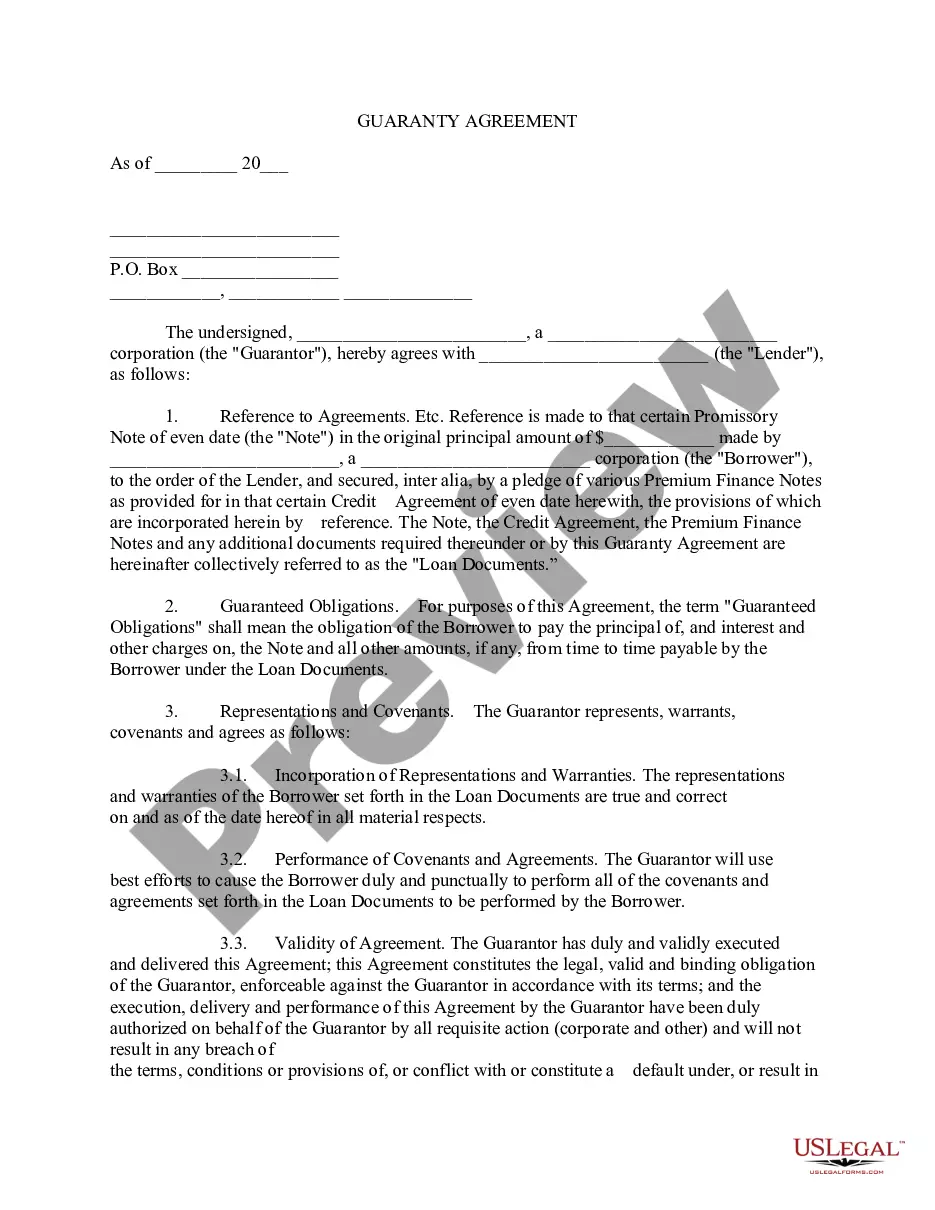
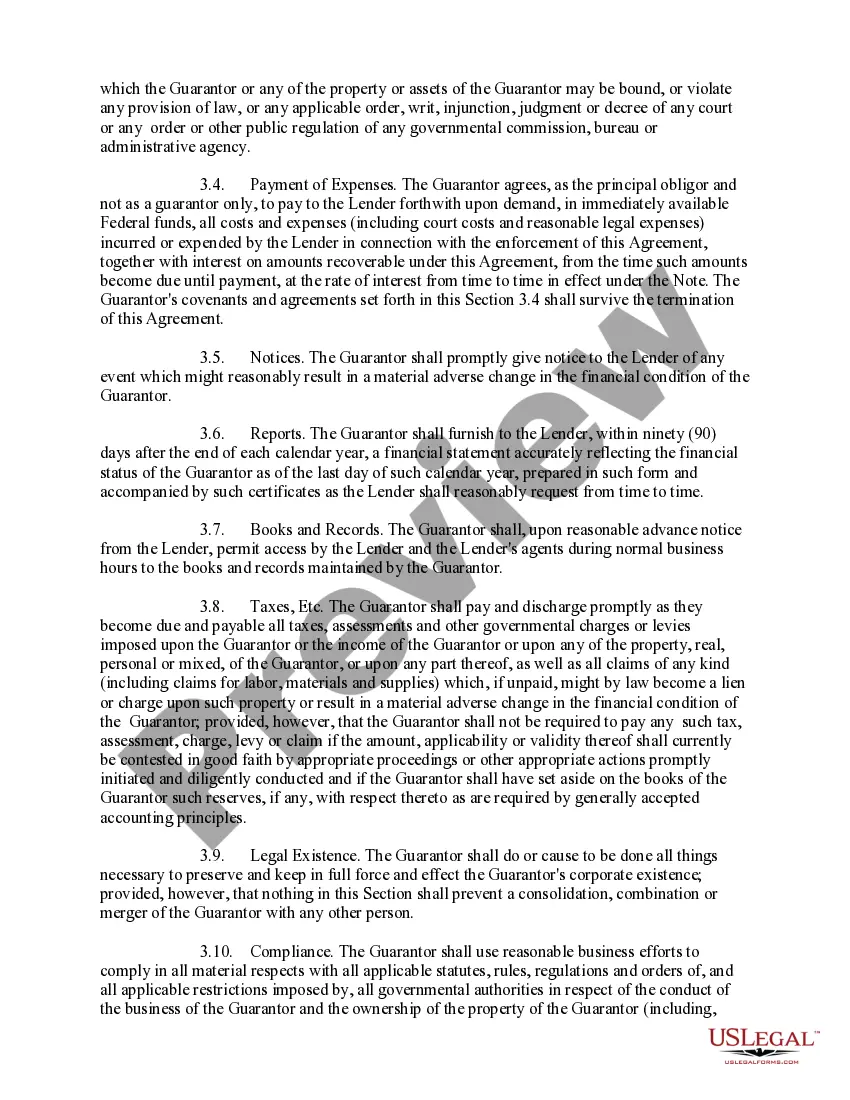
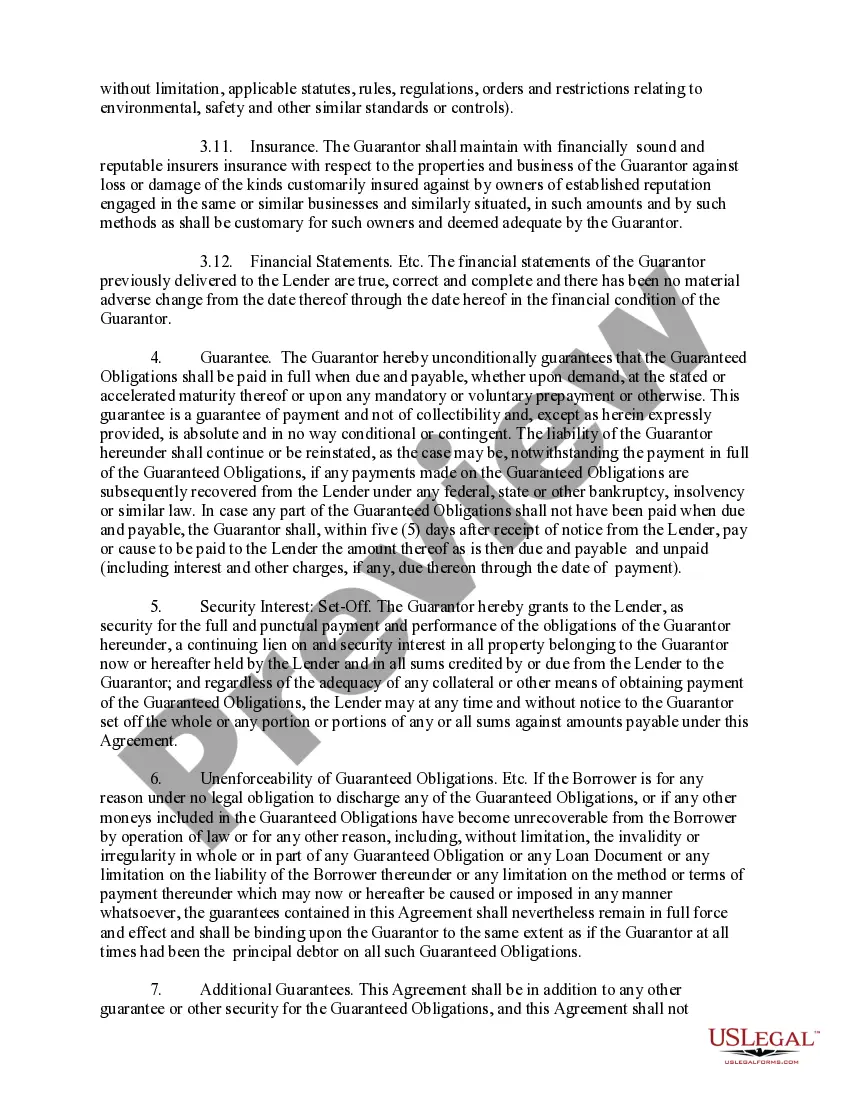
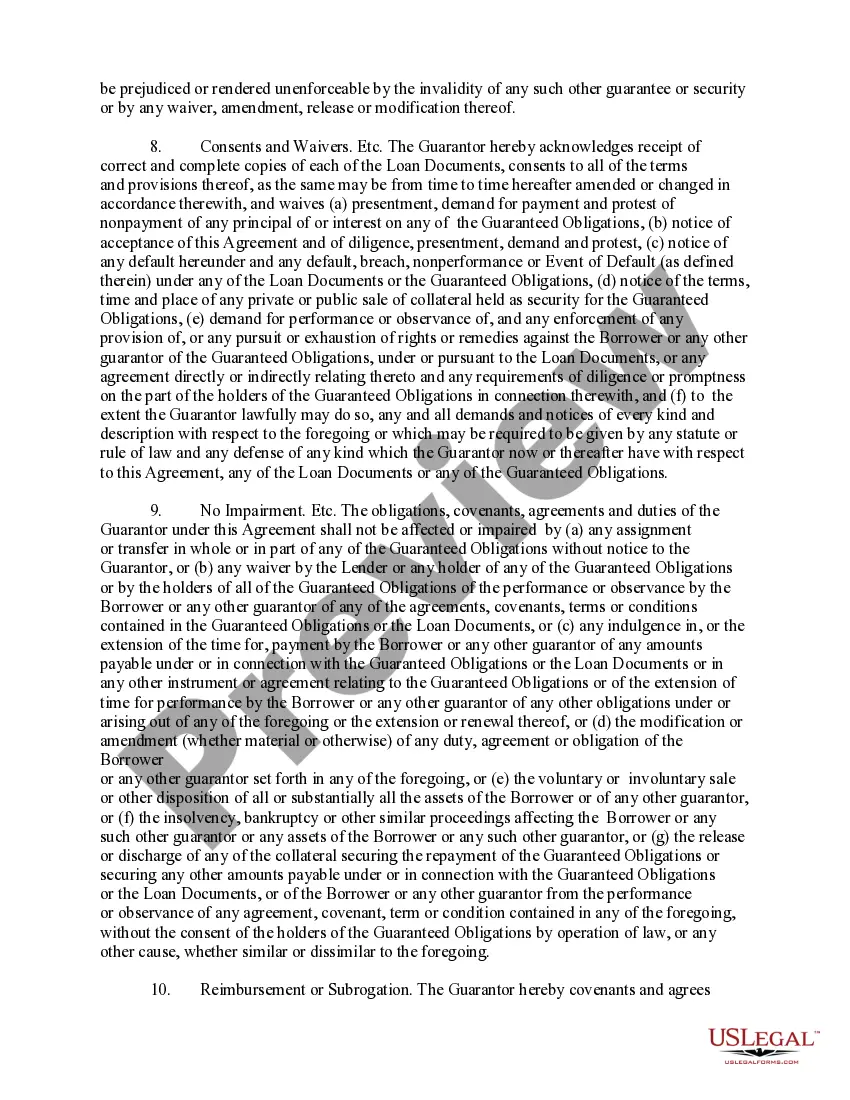
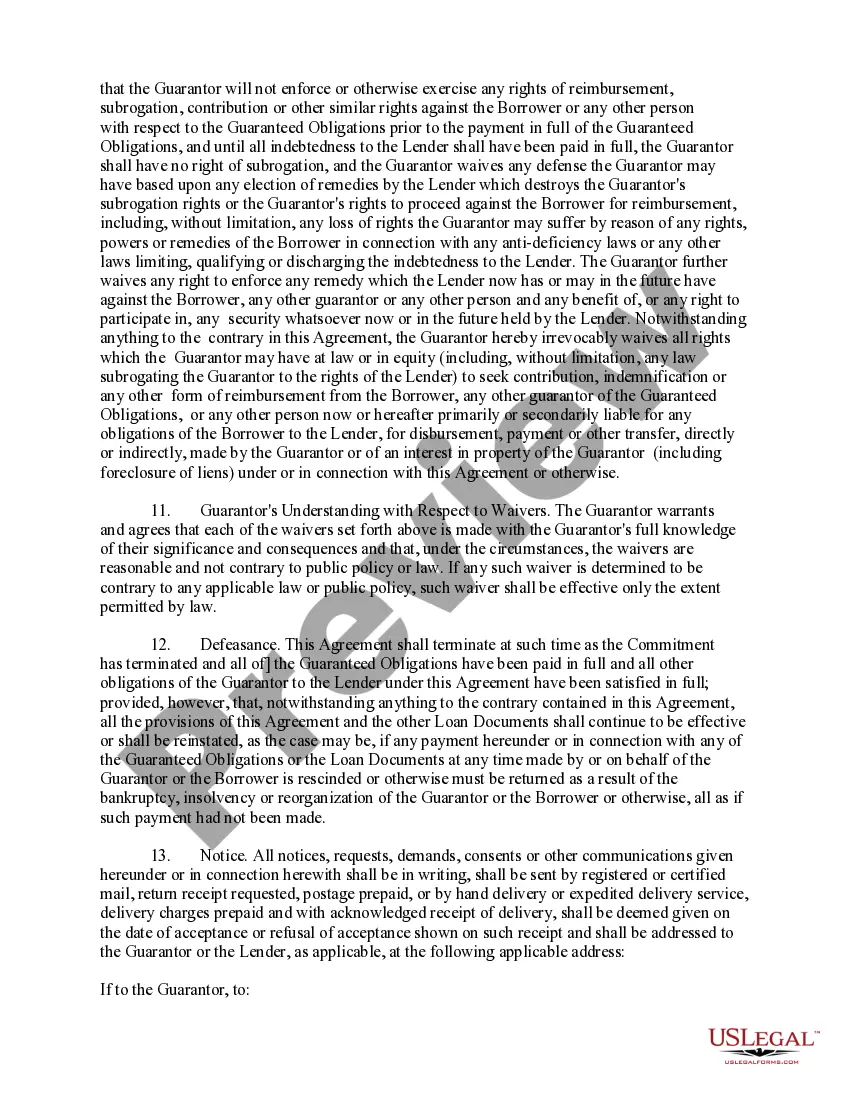
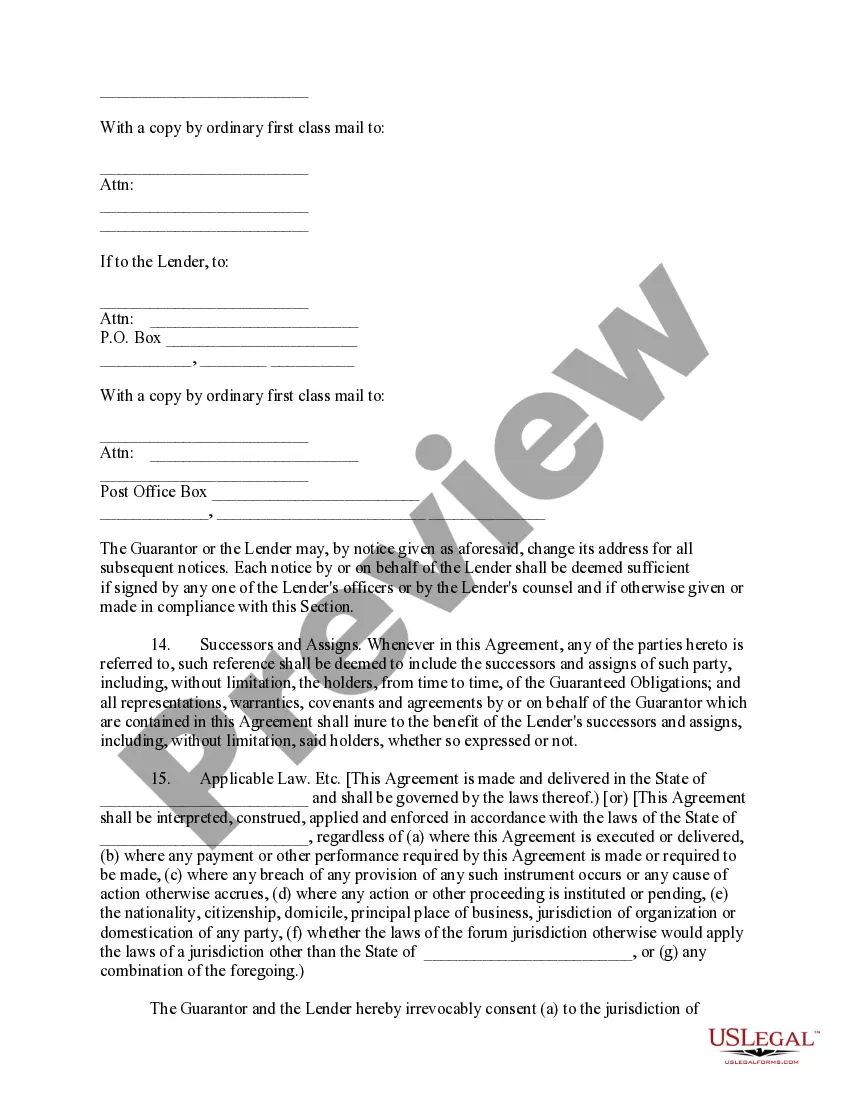
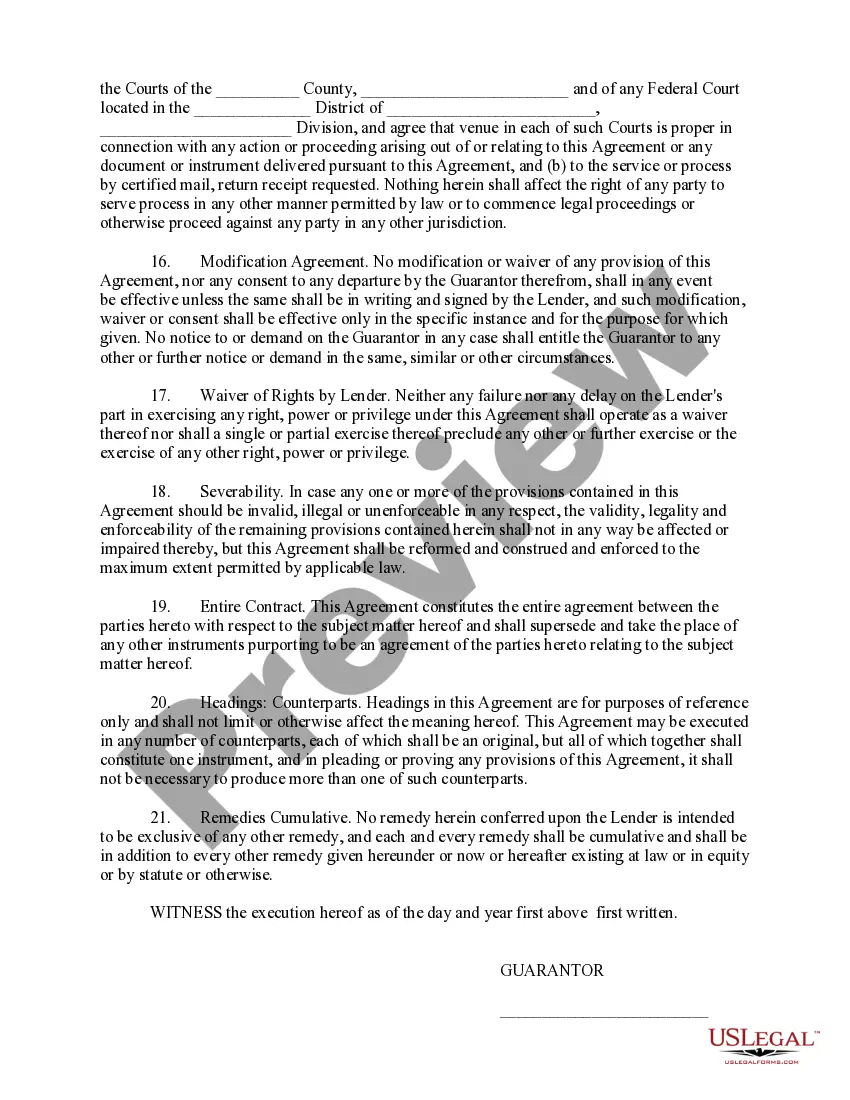
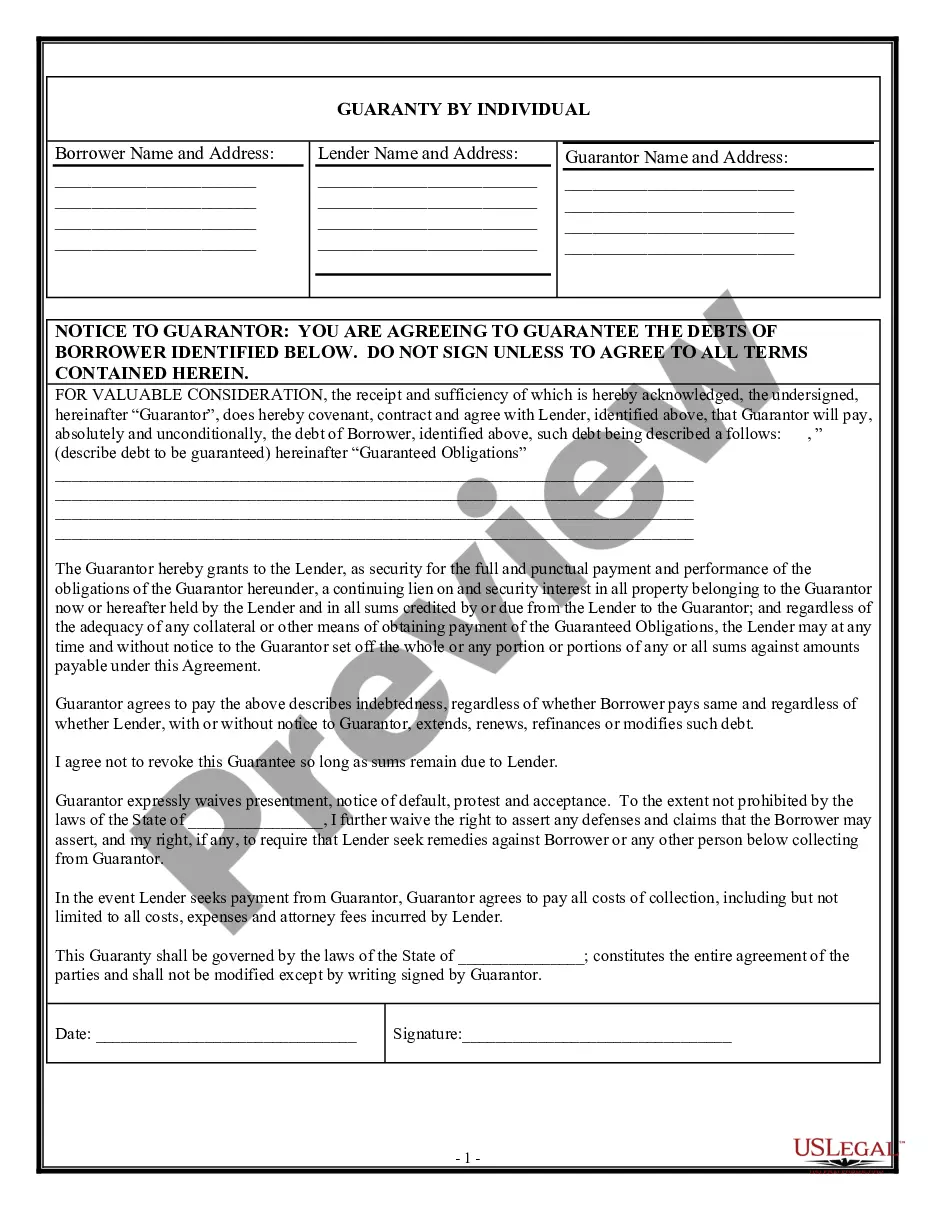
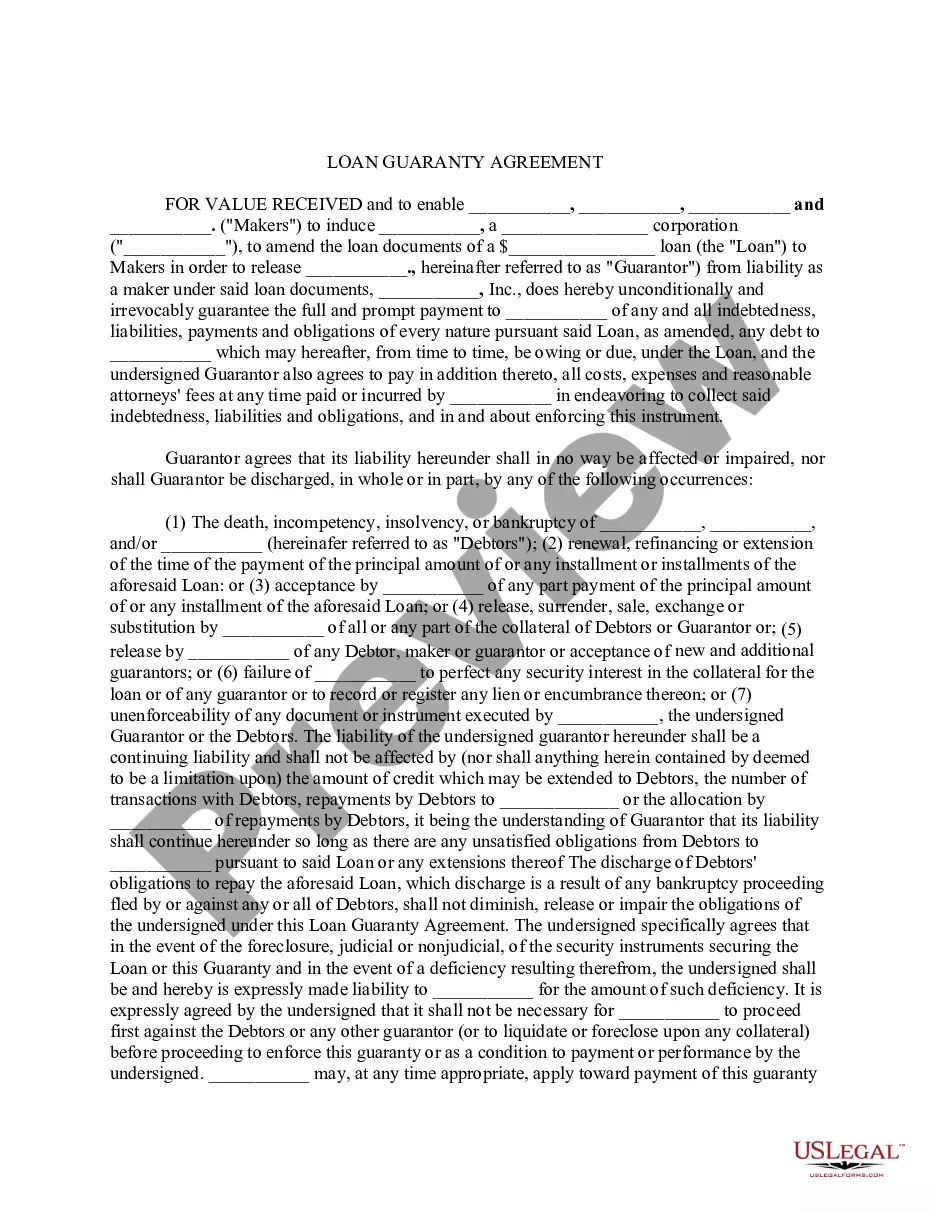
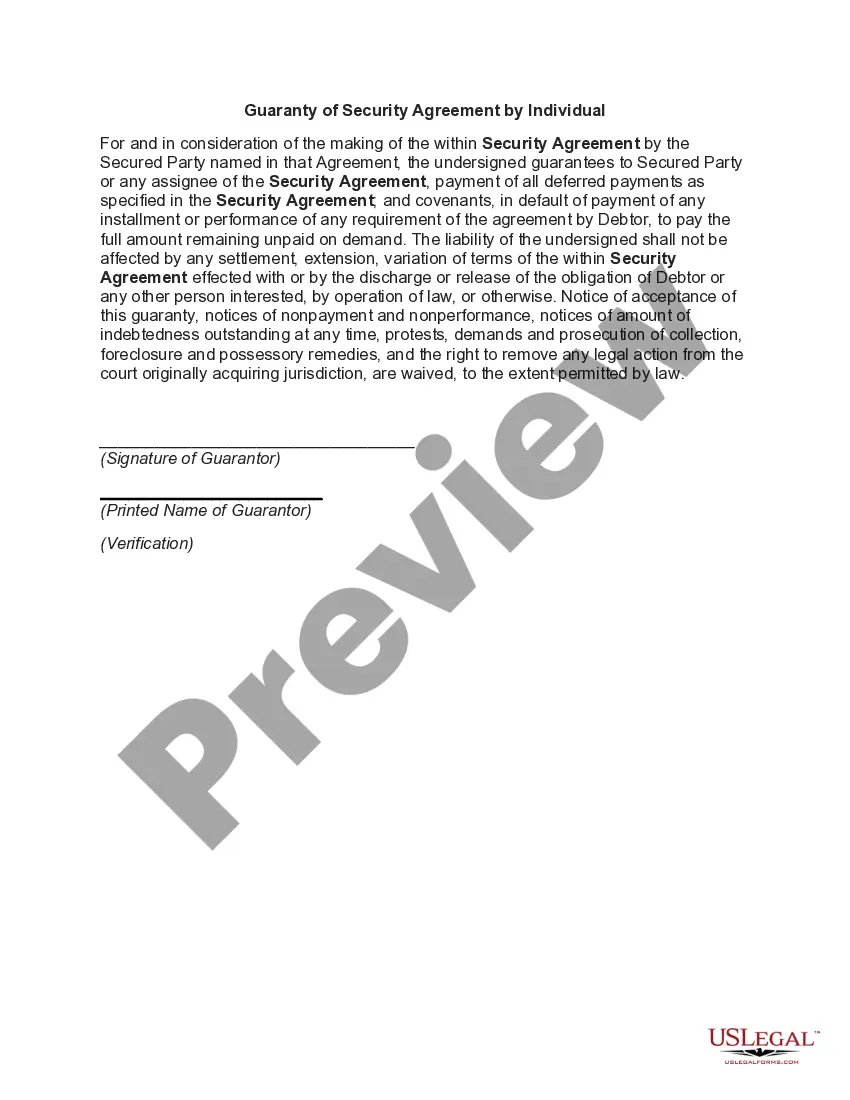
A Complex Guaranty Agreement to Lender is a legal document in which a guarantor agrees to pay all costs associated with a borrower's obligations under a promissory note. This form specifically clarifies that the guarantor acts as the principal obligor, meaning they take on more responsibility than a typical guarantor, ensuring that the lender can recover the owed amounts without delay. This agreement differs from other guaranty forms by emphasizing the guarantee of payment itself, rather than just a promise to pay if the borrower defaults.
Main sections of this form
- Identification of the parties involved: the guarantor and the lender.
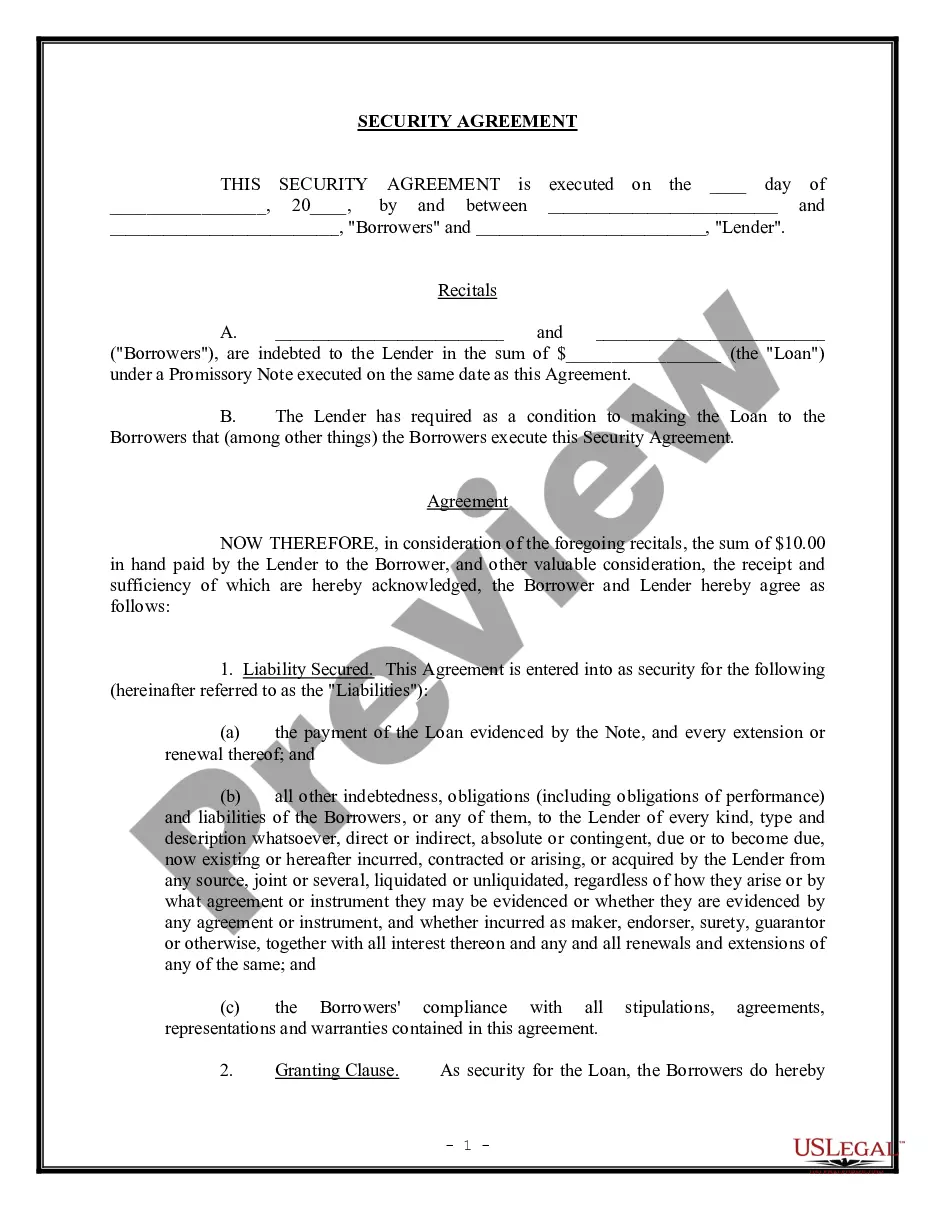
- Reference to the original promissory note and additional loan documents.
- Definition of guaranteed obligations, including principal and interest payments.
- Representations and covenants of the guarantor regarding financial condition and obligations.
- Provisions for payment of costs and expenses incurred by the lender.
- Conditions for enforcement of the guarantee and its binding nature.

Common use cases
This form should be used when a lender requires a guarantor to secure a loan, particularly in situations where the borrower may not have sufficient creditworthiness or assets to secure financing on their own. It is commonly used in commercial lending scenarios, business loans, or when specific project financing is involved, thereby protecting the lender's interests.
Who this form is for
- Business corporations seeking to borrow funds and needing a guarantor.
- Individuals or entities willing to act as guarantors for a loan agreement.
- Lenders who require a formal agreement to outline the obligations of the guarantor.
- Legal professionals assisting clients with loan and guarantee agreements.
Steps to complete this form
- Identify and enter the names and addresses of the guarantor and lender.
- Reference the specific promissory note and other related loan documents in the form.
- Fill in the principal amount and terms of the obligations to be guaranteed.
- Ensure all representations and covenants by the guarantor are accurately completed.
- Sign and date the agreement, including any required witness or notary signatures.
Does this form need to be notarized?
Notarization is not commonly needed for this form. However, certain documents or local rules may make it necessary. Our notarization service, powered by Notarize, allows you to finalize it securely online anytime, day or night.
Get your form ready online
Our built-in tools help you complete, sign, share, and store your documents in one place.
Make edits, fill in missing information, and update formatting in US Legal Forms—just like you would in MS Word.
Download a copy, print it, send it by email, or mail it via USPS—whatever works best for your next step.
Sign and collect signatures with our SignNow integration. Send to multiple recipients, set reminders, and more. Go Premium to unlock E-Sign.
If this form requires notarization, complete it online through a secure video call—no need to meet a notary in person or wait for an appointment.
We protect your documents and personal data by following strict security and privacy standards.

Make edits, fill in missing information, and update formatting in US Legal Forms—just like you would in MS Word.

Download a copy, print it, send it by email, or mail it via USPS—whatever works best for your next step.

Sign and collect signatures with our SignNow integration. Send to multiple recipients, set reminders, and more. Go Premium to unlock E-Sign.

If this form requires notarization, complete it online through a secure video call—no need to meet a notary in person or wait for an appointment.

We protect your documents and personal data by following strict security and privacy standards.
Common mistakes to avoid
- Failing to accurately identify all parties involved, such as the borrower, lender, and guarantor.
- Omitting critical details of the loan documents referenced in the agreement.
- Not fully understanding the scope of obligations being guaranteed.
- Neglecting to include mandatory signatures or required notarization if applicable.
Why use this form online
- Convenient access to legal templates drafted by licensed attorneys.
- Editable forms to ensure customization specific to your needs.
- Instant download for quick completion and use.
- Guidance available for filling out the form correctly.
Looking for another form?



Form popularity
FAQ
If the guarantor refuses to make the repayment when due, the lenders can then begin to take legal action. A warning letter of pre-court action is typically then sent to the guarantor, with court proceedings beginning 14 days after, provided the repayment is still not made in this period.
At law, the giver of a guarantee is called the surety or the "guarantor". The person to whom the guarantee is given is the creditor or the "obligee"; while the person whose payment or performance is secured thereby is termed "the obligor", "the principal debtor", or simply "the principal".
Unlike a co-signer, a guarantor has no claim to the asset purchased by the borrower. If the borrower defaults on their loan, then the guarantor is liable for the outstanding obligation, which they must meet, otherwise, legal action may be brought against them.
Guarantee can refer to the agreement itself as a noun, and the act of making the agreement as a verb. Guaranty is a specific type of guarantee that is only used as a noun.
A surety is an insurer of the debt, whereas a guarantor is an insurer of the solvency of the debtor. A suretyship is an undertaking that the debt shall be paid; a guaranty, an undertaking that the debtor shall pay.A surety binds himself to perform if the principal does not, without regard to his ability to do so.
1 : an undertaking to answer for the payment of a debt or the performance of a duty of another in case of the other's default or miscarriage. 2 : guarantee sense 3. 3 : guarantor. 4 : something given as security (see security sense 2) : pledge used our house as a guaranty for the loan.
A guaranty of payment is an independent agreement by a person or an entity to pay the loan when it goes into default. Even if the borrower is unable or unwilling to pay back the loan, the Bank can require the guarantor to pay it back.
Guaranty Agreement a two-party contract in which the first party agrees to perform in the event that a second party fails to perform. Unlike a surety, a guarantor is only required to perform after the obligee has made every reasonable and legal effort to force the principal's performance.
A suretyship is an accessory contract by which one person undertakes liability for another's debt or financial obligations.In simple terms the surety agrees to step into the principal debtor's shoes, if and when the debtor can no longer fill those shoes financially.