Fault-Definition
What this document covers
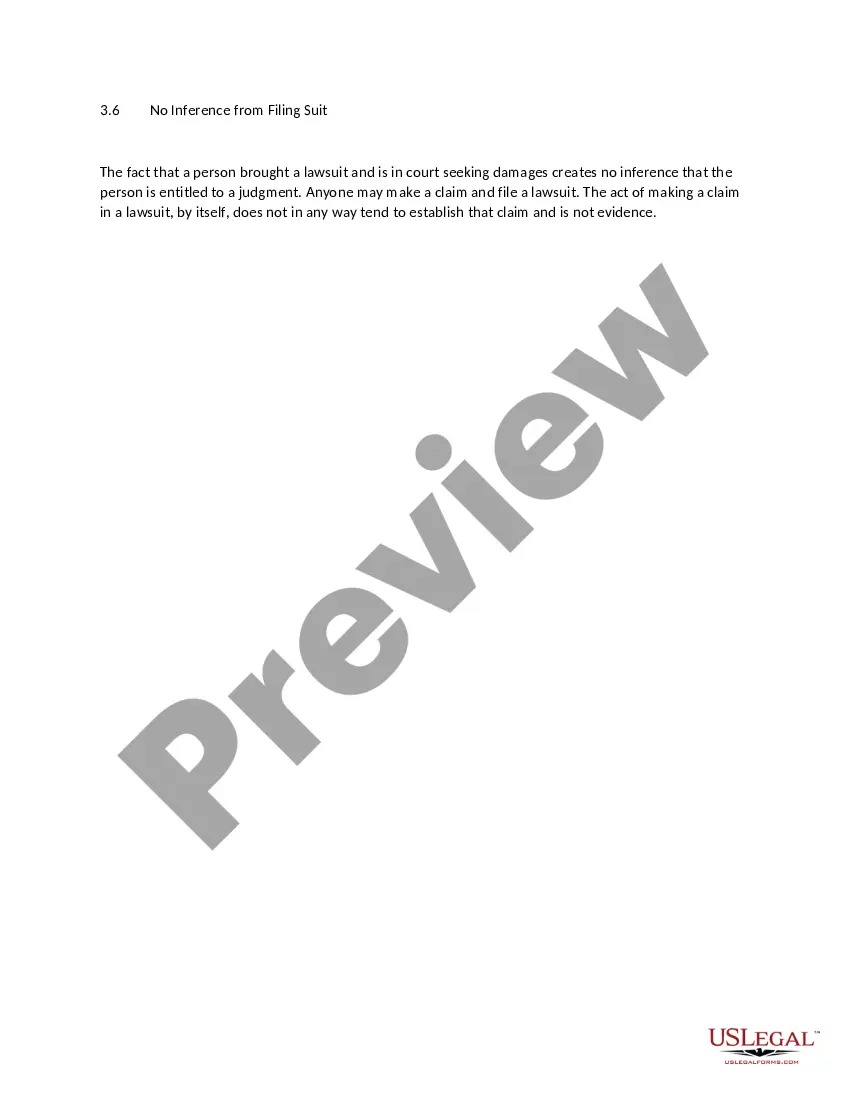
The Fault-Definition form is a legal document that clarifies the concept of fault within the context of lawsuits. This form helps individuals understand that merely filing a lawsuit does not imply an entitlement to damages or a judgment. It differs from other legal documents by focusing specifically on the legal interpretations of fault and the implications of initiating legal action.
Main sections of this form
- Clarification that filing a lawsuit does not guarantee a judgment.
- Statement on the lack of evidence simply from having made a claim.
- Definitions and implications related to fault in the context of legal claims.
Common use cases
This form is useful in situations where an individual plans to file a lawsuit but needs to understand the legal concept of fault. It can help clarify expectations before proceeding and inform them that the act of suing alone does not substantiate their claims.
Who this form is for
- Individuals considering filing a lawsuit.
- Individuals seeking clarity on the legal implications of fault in litigation.
- Legal professionals advising clients on the status and possibilities of their claims.
Steps to complete this form
- Understand the legal concept of fault as outlined in the form.
- Identify the parties involved in the lawsuit.
- Review the implications of filing a lawsuit.
- Document any claims clearly, ensuring they align with the legal definitions provided.
- Consult with a legal professional for clarification on your specific case.
Is notarization required?
In most cases, this form does not require notarization. However, some jurisdictions or signing circumstances might. US Legal Forms offers online notarization powered by Notarize, accessible 24/7 for a quick, remote process.
Get your form ready online
Our built-in tools help you complete, sign, share, and store your documents in one place.
Make edits, fill in missing information, and update formatting in US Legal Forms—just like you would in MS Word.
Download a copy, print it, send it by email, or mail it via USPS—whatever works best for your next step.
Sign and collect signatures with our SignNow integration. Send to multiple recipients, set reminders, and more. Go Premium to unlock E-Sign.
If this form requires notarization, complete it online through a secure video call—no need to meet a notary in person or wait for an appointment.
We protect your documents and personal data by following strict security and privacy standards.

Make edits, fill in missing information, and update formatting in US Legal Forms—just like you would in MS Word.

Download a copy, print it, send it by email, or mail it via USPS—whatever works best for your next step.

Sign and collect signatures with our SignNow integration. Send to multiple recipients, set reminders, and more. Go Premium to unlock E-Sign.

If this form requires notarization, complete it online through a secure video call—no need to meet a notary in person or wait for an appointment.

We protect your documents and personal data by following strict security and privacy standards.
Typical mistakes to avoid
- Assuming that filing a lawsuit automatically proves a claim.
- Failing to understand the time limits for filing claims.
- Neglecting to clarify the definitions of fault when discussing claims with others.
Why complete this form online
- Convenient access and download of legal documents.
- Editability to tailor the form to specific case needs.
- Reliability from documents drafted by licensed attorneys.
Legal use & context
- This form helps clarify expectations before litigation.
- Understanding fault is critical in determining liability in lawsuits.
Looking for another form?

Form popularity
FAQ
House. A House event is used to allow turning an event off and on. It allows the probability of the event to be set to 0 (will not occur) or 1 (will occur). Typically, House events are used to allow portions of a fault tree to be included or not included in analysis.
A failure event in a fault tree that requires further development.
The Voting OR gate in the fault tree indicates that if two components fail then the system will fail; while the node in the reliability block diagram indicates that if at least two components succeed then the system will succeed.
Fault tree analysis consists of ?events? and ?logic gates,? which connect the events to identify the cause of the top undesired event. Fault Tree Analysis is easier than the Failure Mode and Effects Analysis (FMEA) as it focuses on all possible system failures of an undesired top event.
A fault is a fracture or zone of fractures between two blocks of rock. Faults allow the blocks to move relative to each other. This movement may occur rapidly, in the form of an earthquake - or may occur slowly, in the form of creep. Faults may range in length from a few millimeters to thousands of kilometers.
The 5 basic steps to perform a Fault Tree Analysis are as follows: Identify the Hazard. Obtain Understanding of the System Being Analyzed. Create the Fault Tree. Identify the Cut Sets. Mitigate the Risk.
Intermediate events (IE): These events are generally caused by one or more events. It has both an input and output. Another event may cause its failure, and most likely causes further failures down the fault tree. Basic events (BE): These types of events are generally the root cause of the top event.
? Fault tree analysis (FTA) is a top-down approach to failure analysis, starting with a potential undesirable event (accident) called a TOP event, and then determining all the ways it can happen. caused by individual or combined lower level failures or events.