Elements of Offense(s) Charged
What this document covers
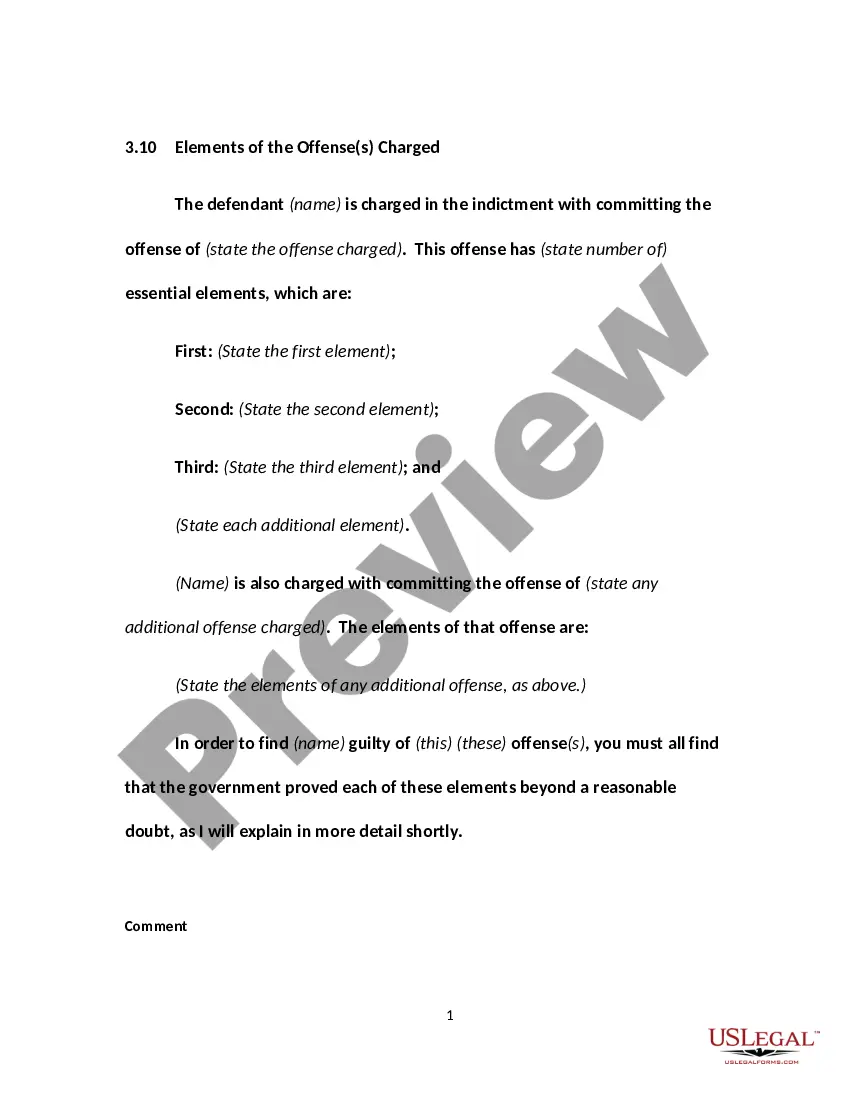
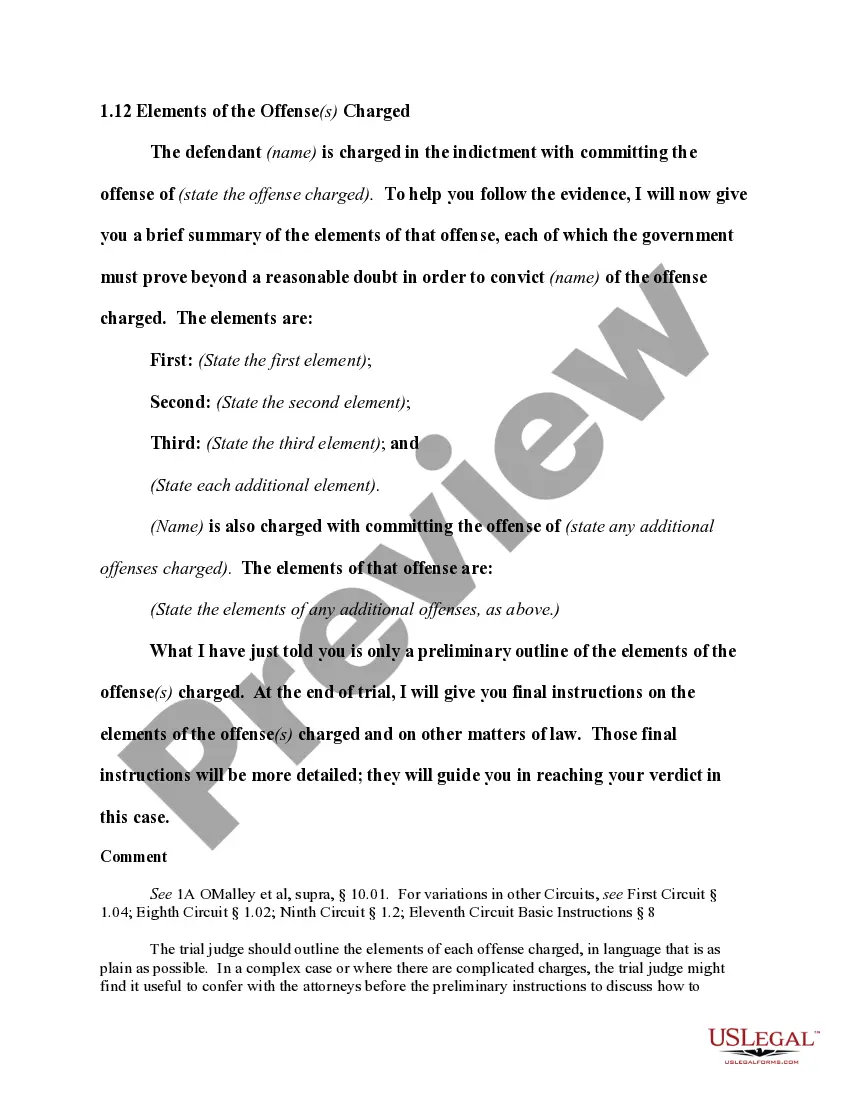
The Elements of Offense(s) Charged form outlines the essential components that must be established for a defendant to be found guilty of a criminal offense. This form is intended for use in legal proceedings, specifically jury instructions, and differs from other legal templates by focusing explicitly on the requisite elements of specific charges against an individual. It serves as a crucial tool for ensuring that jurors understand the legal standards required to convict a defendant, thereby upholding fair trial principles.
What’s included in this form
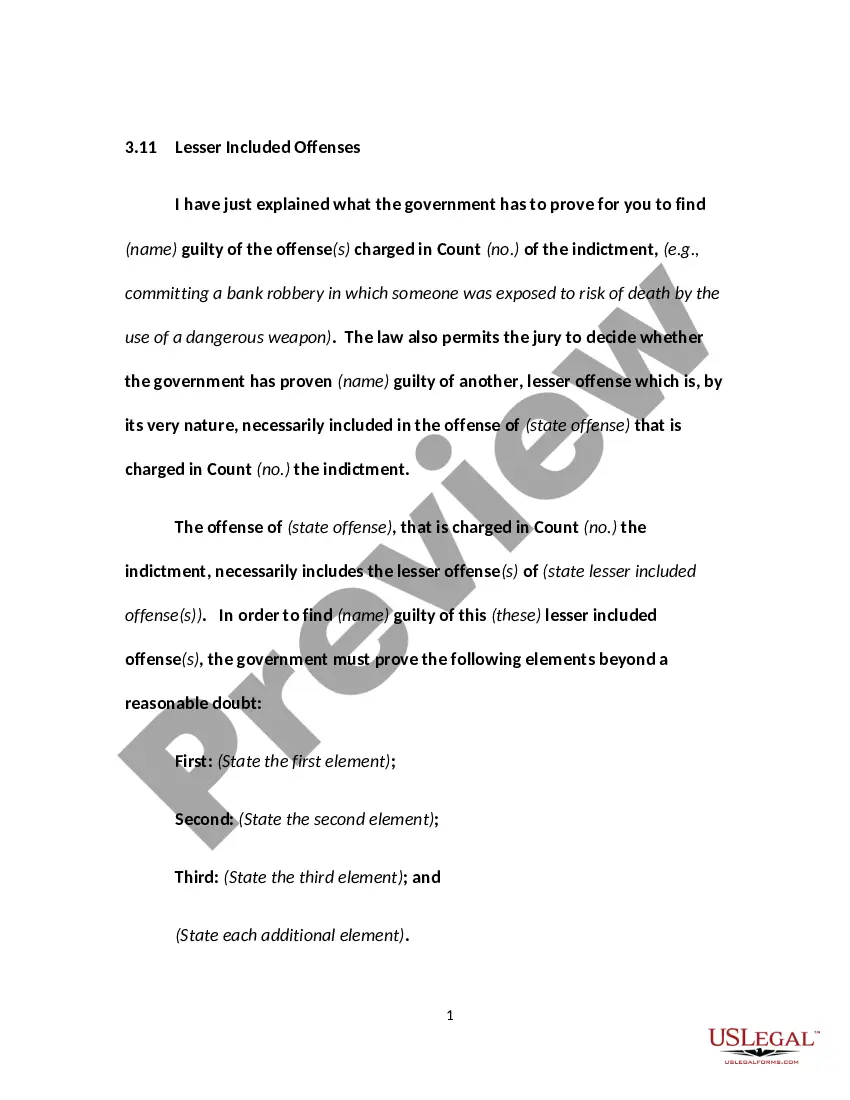
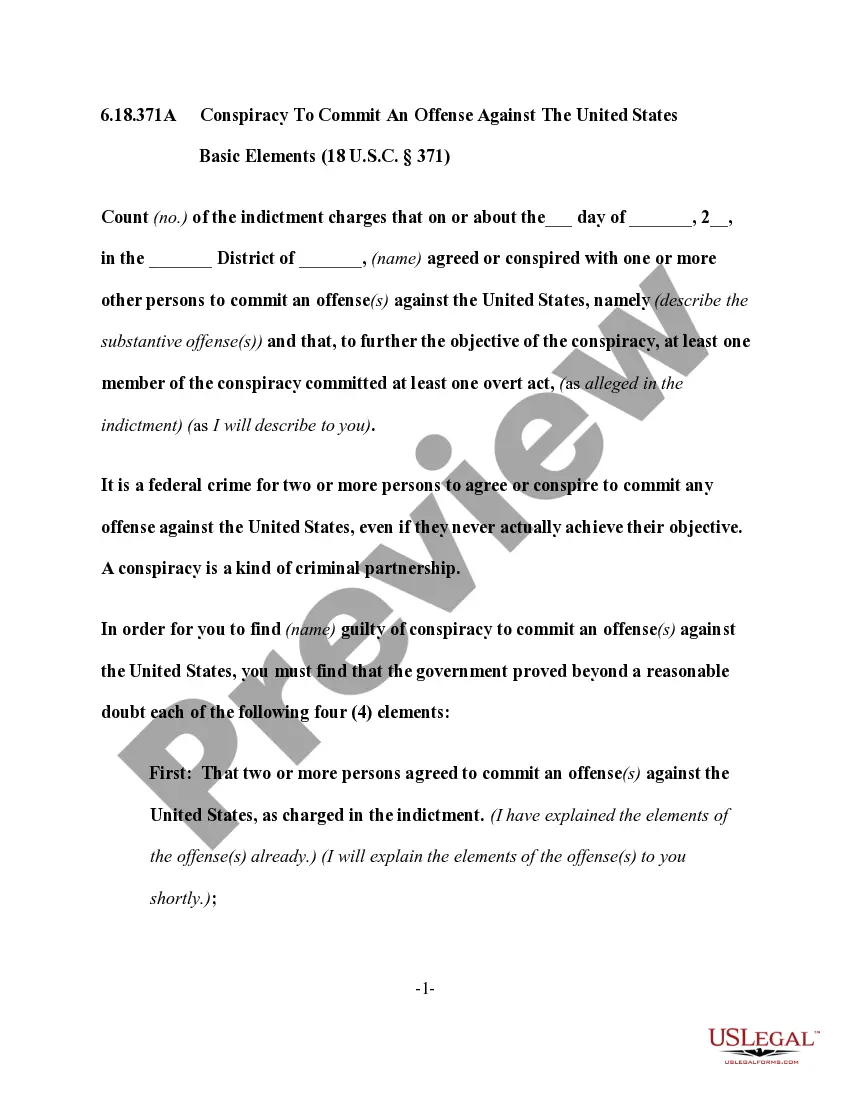
- Identification of the defendant and the charges against them.
- A detailed listing of each essential element required to prove the offense.
- Instructions for the jury regarding the burden of proof necessary for conviction.
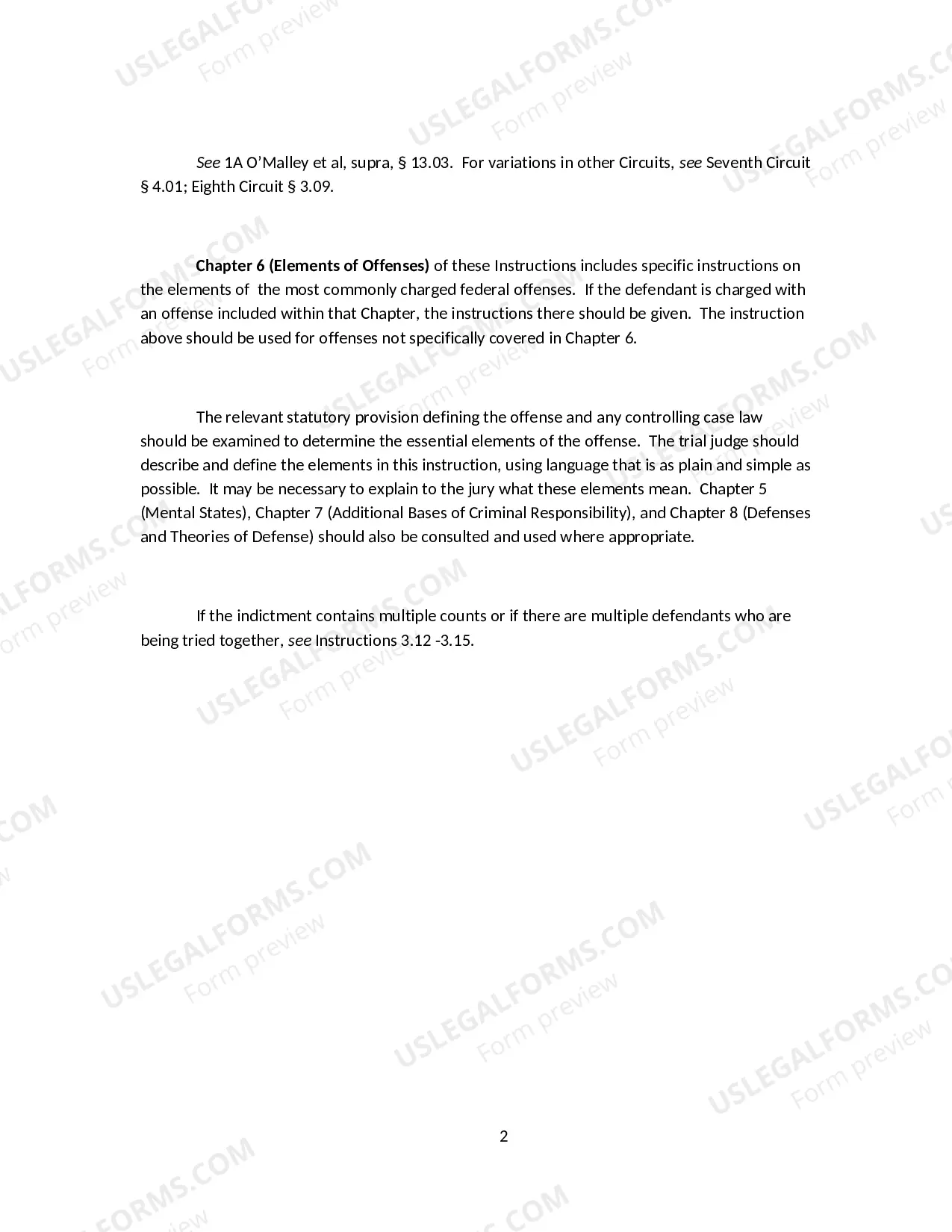
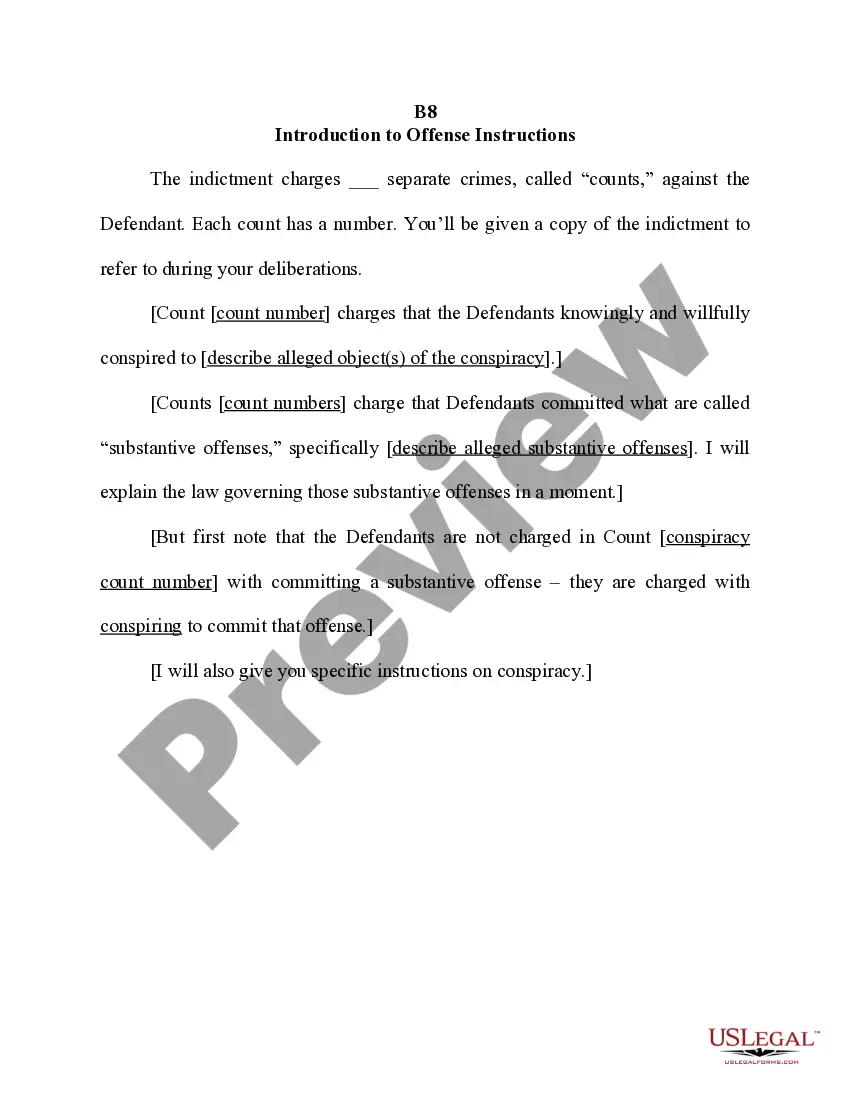
- Guidance on considering multiple charges within a single indictment.
- Reference to applicable legal standards and supporting case law.
When this form is needed
This form is used during criminal trials when the jury needs to be instructed on the specific elements of the offenses charged against the defendant. It is essential in situations where clarity regarding legal standards is necessary for the jury's deliberation, particularly in complex cases involving multiple charges or defendants. It ensures jurors can properly engage with the evidence presented and apply the law accordingly.
Who should use this form
- Judges overseeing criminal trials.
- Legal practitioners preparing for jury instructions.
- Jurors needing clarification on the elements required for conviction.
- Prosecutors and defense attorneys involved in trial proceedings.
How to complete this form
- Identify the defendant's name at the beginning of the form.
- Clearly state the offense(s) charged against the defendant.
- List each essential element that constitutes the offense, numbering them as needed.
- If applicable, repeat the process for any additional offenses charged.
- Ensure the language used is clear and understandable for the jury.
Is notarization required?
This form usually doesn’t need to be notarized. However, local laws or specific transactions may require it. Our online notarization service, powered by Notarize, lets you complete it remotely through a secure video session, available 24/7.
Get your form ready online
Our built-in tools help you complete, sign, share, and store your documents in one place.
Make edits, fill in missing information, and update formatting in US Legal Forms—just like you would in MS Word.
Download a copy, print it, send it by email, or mail it via USPS—whatever works best for your next step.
Sign and collect signatures with our SignNow integration. Send to multiple recipients, set reminders, and more. Go Premium to unlock E-Sign.
If this form requires notarization, complete it online through a secure video call—no need to meet a notary in person or wait for an appointment.
We protect your documents and personal data by following strict security and privacy standards.

Make edits, fill in missing information, and update formatting in US Legal Forms—just like you would in MS Word.

Download a copy, print it, send it by email, or mail it via USPS—whatever works best for your next step.

Sign and collect signatures with our SignNow integration. Send to multiple recipients, set reminders, and more. Go Premium to unlock E-Sign.

If this form requires notarization, complete it online through a secure video call—no need to meet a notary in person or wait for an appointment.

We protect your documents and personal data by following strict security and privacy standards.
Typical mistakes to avoid
- Failing to list all essential elements of the offense charged.
- Using complex legal terms without explanation, leading to confusion.
- Neglecting to clarify how the jury must apply these elements to the facts of the case.
Why use this form online
- Convenience of accessing the form anytime, anywhere.
- Editability allows adjustments to fit specific cases or jurisdictions.
- Reliability offered by templates drafted by licensed attorneys, ensuring legal validity.
Legal use & context
- This form is integral to the legal process in criminal trials, ensuring jurors understand their duties.
- Legal definitions and the burden of proof must be communicated clearly to prevent wrongful conviction.
- It plays a crucial role in upholding the standards of justice and fair trials for defendants.
Looking for another form?
Form popularity
FAQ
The indictment or information must be a plain, concise, and definite written statement of the essential facts constituting the offense charged and must be signed by an attorney for the government. It need not contain a formal introduction or conclusion.
The four elements of a crime are: Criminal act. Criminal intent. A concurrence of the previous two elements. Causation.
The two elements required to be convicted of an intent crime are criminal intent and that the intended result occurred.
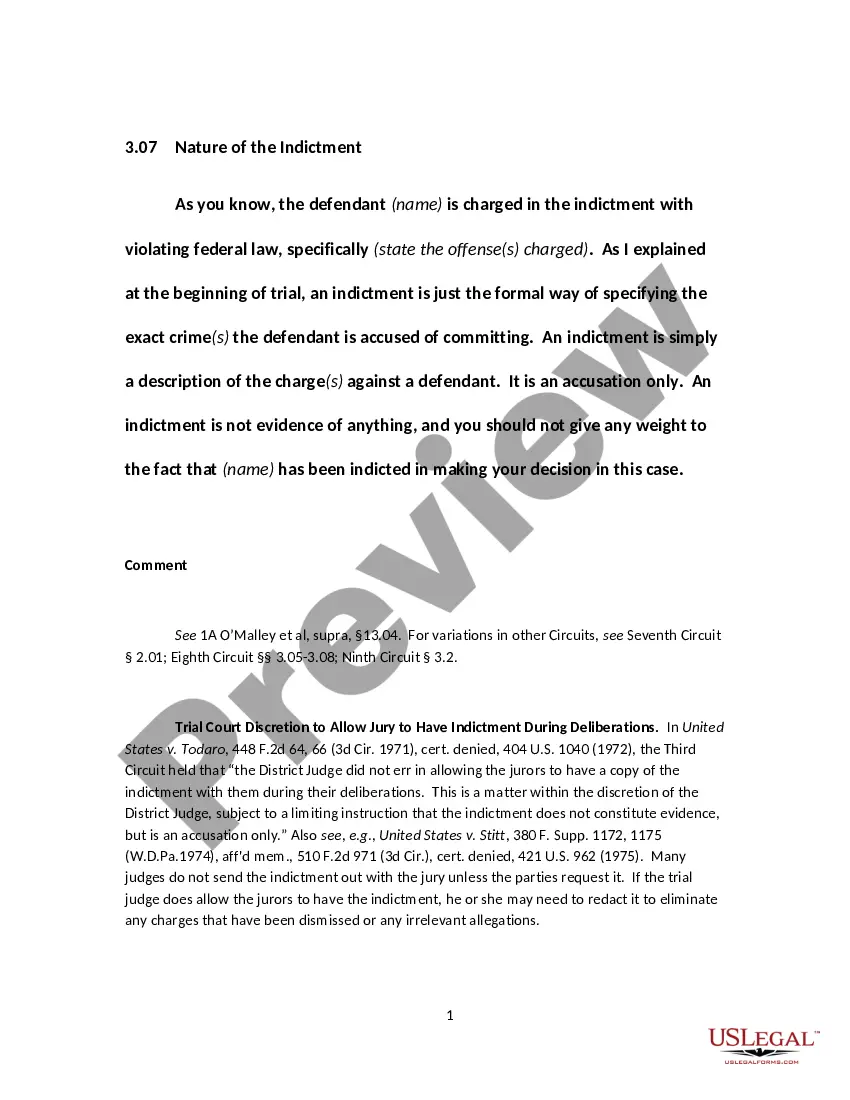
When a person is indicted, they are given formal notice that it is believed that they committed a crime. The indictment contains the basic information that informs the person of the charges against them.
The second element of a crime is actus reus, Latin for ?guilty act.? Actus reus is a required element of a crime that means a criminal act, or the criminal omission of an act, must have actually occurred. It is not a crime to only have thought of an unlawful act, or to think criminal thoughts.
In short, being charged means an individual is accused of committing a crime, whereas being indicted means that a grand jury has found enough evidence to formally charge them with the said crime.
The substance of an indictment or other charging instrument is usually the same, regardless of the jurisdiction: it consists of a short and plain statement of where, when, and how the defendant allegedly committed the offense. Each offense is usually set out in a separate count.
In the context of charging instruments, cases such as this one from Ohio, explain that ?a charging document is defective, if one of the vital elements identifying the crime is omitted. However, not all facts surrounding an offense are vital elements.?