Conspiracy to Commit an Offense Against the United States - Basic Elements
Overview of this form
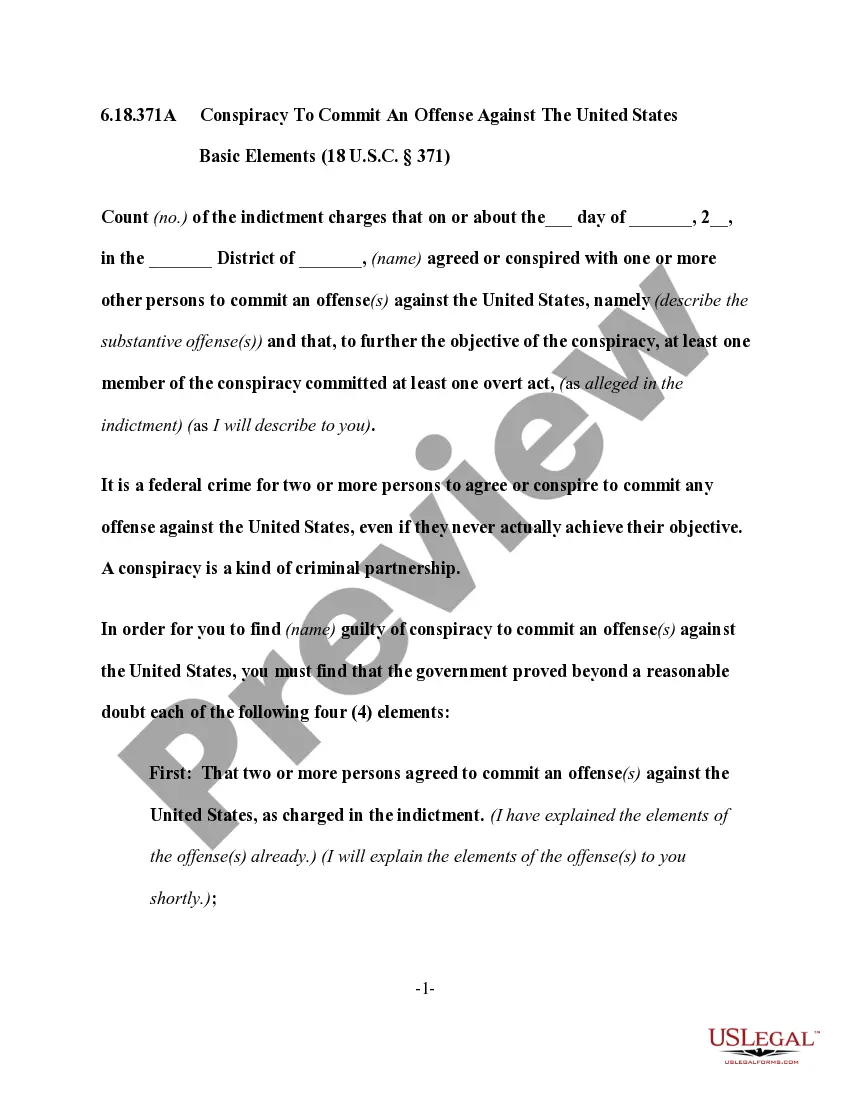
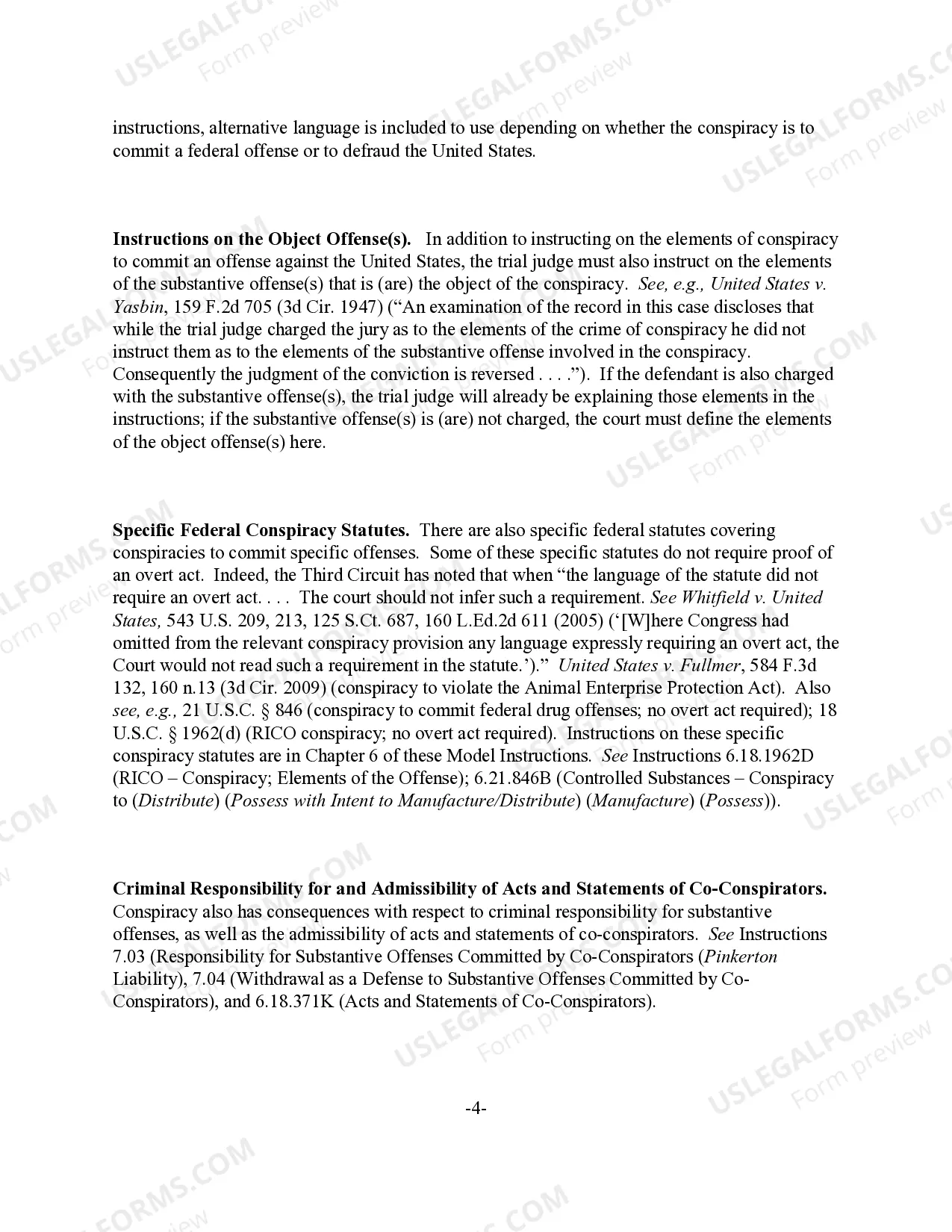
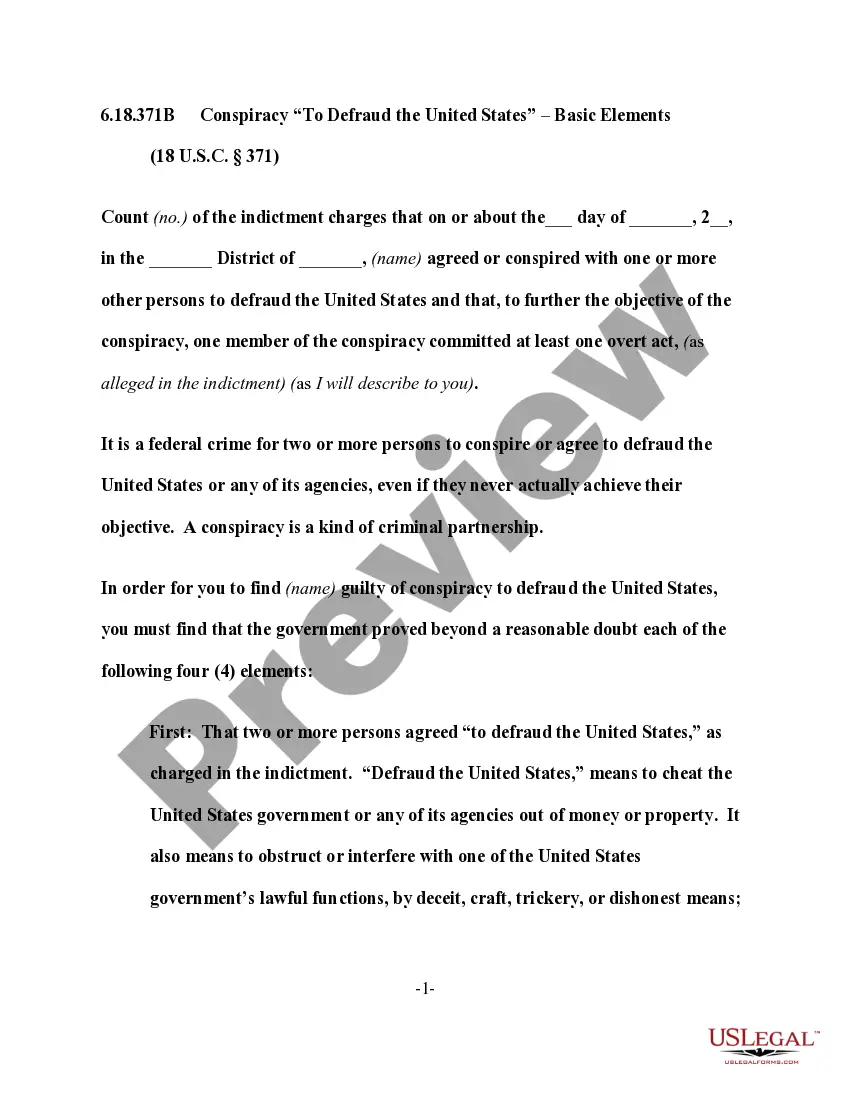
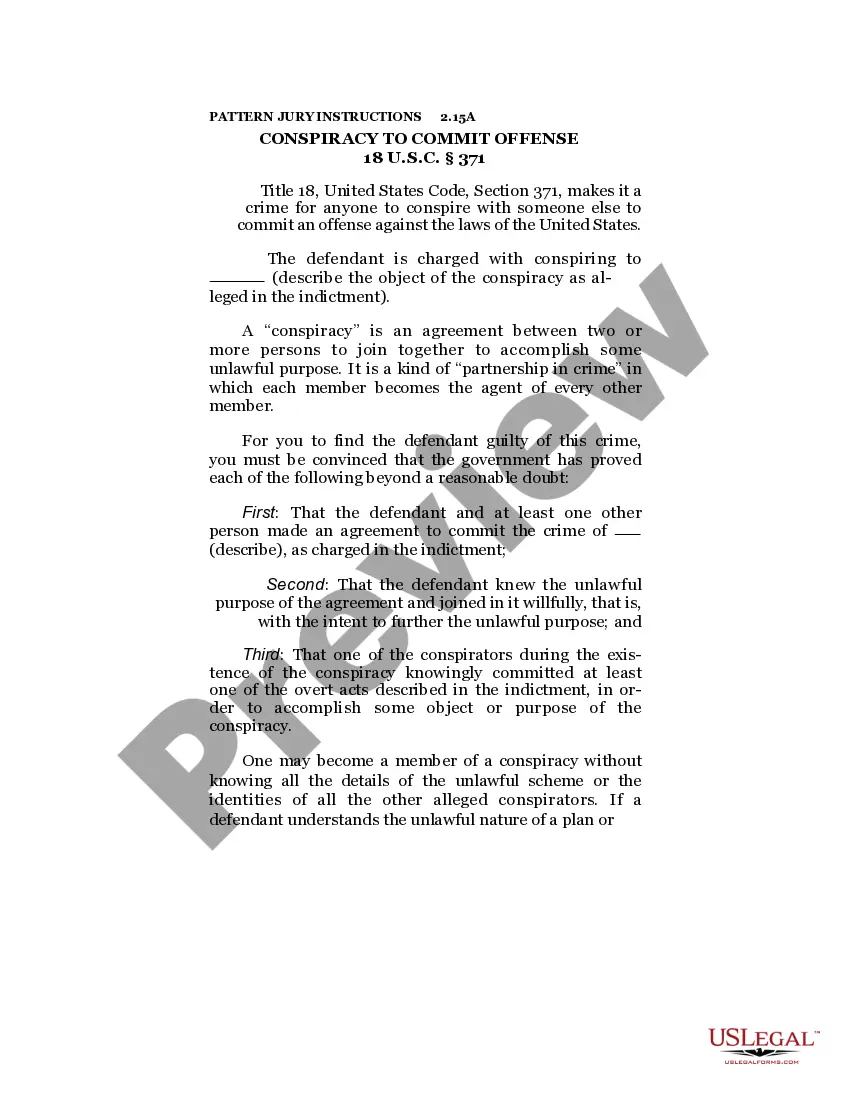
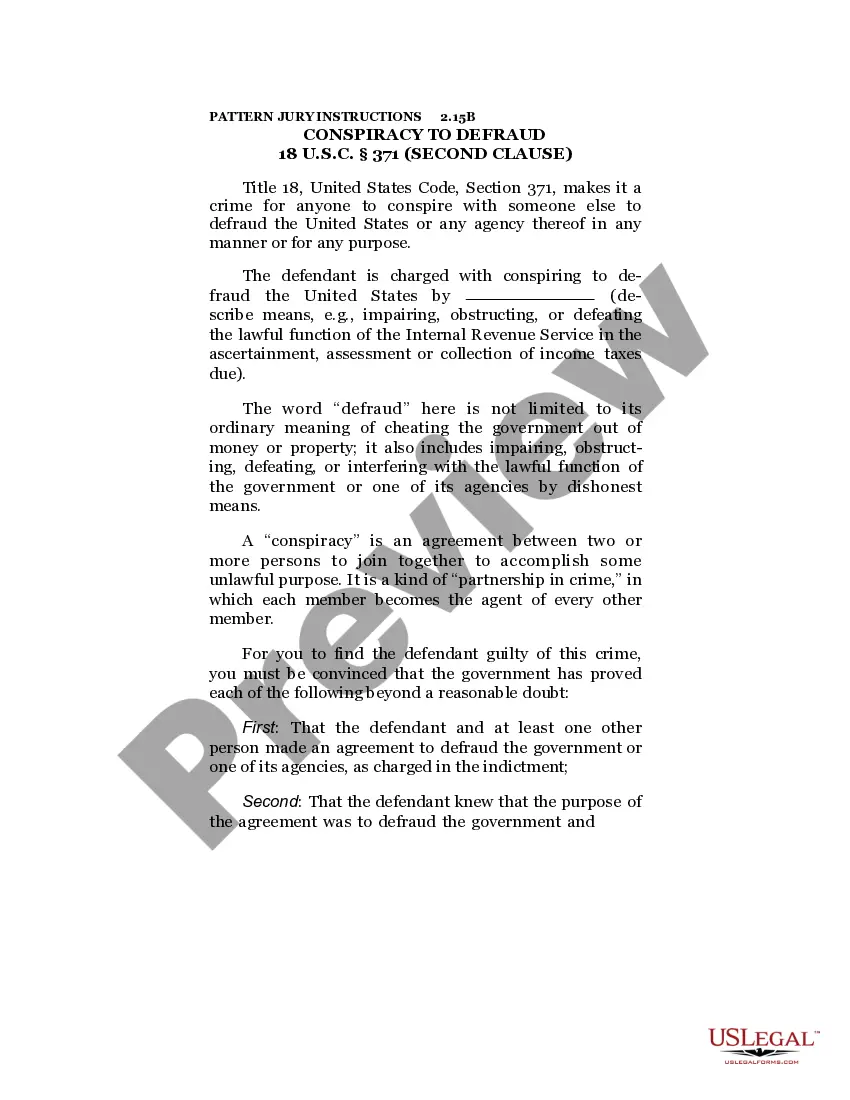
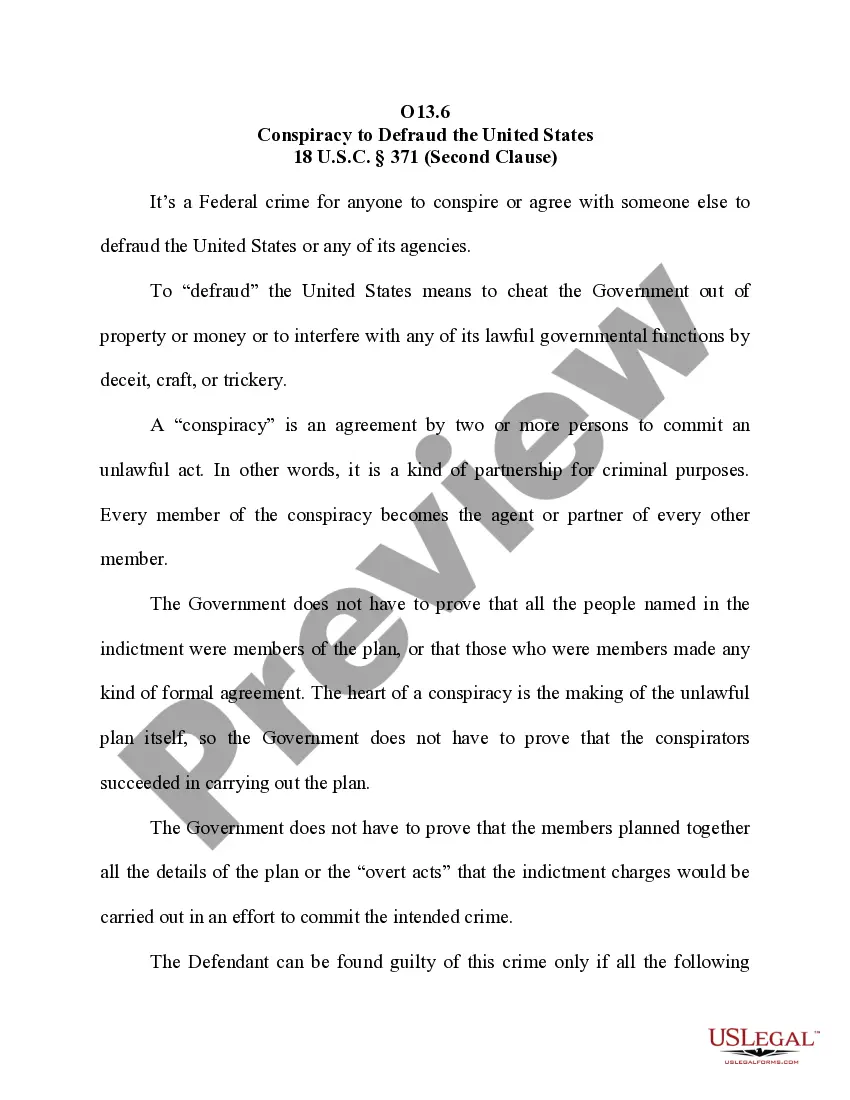
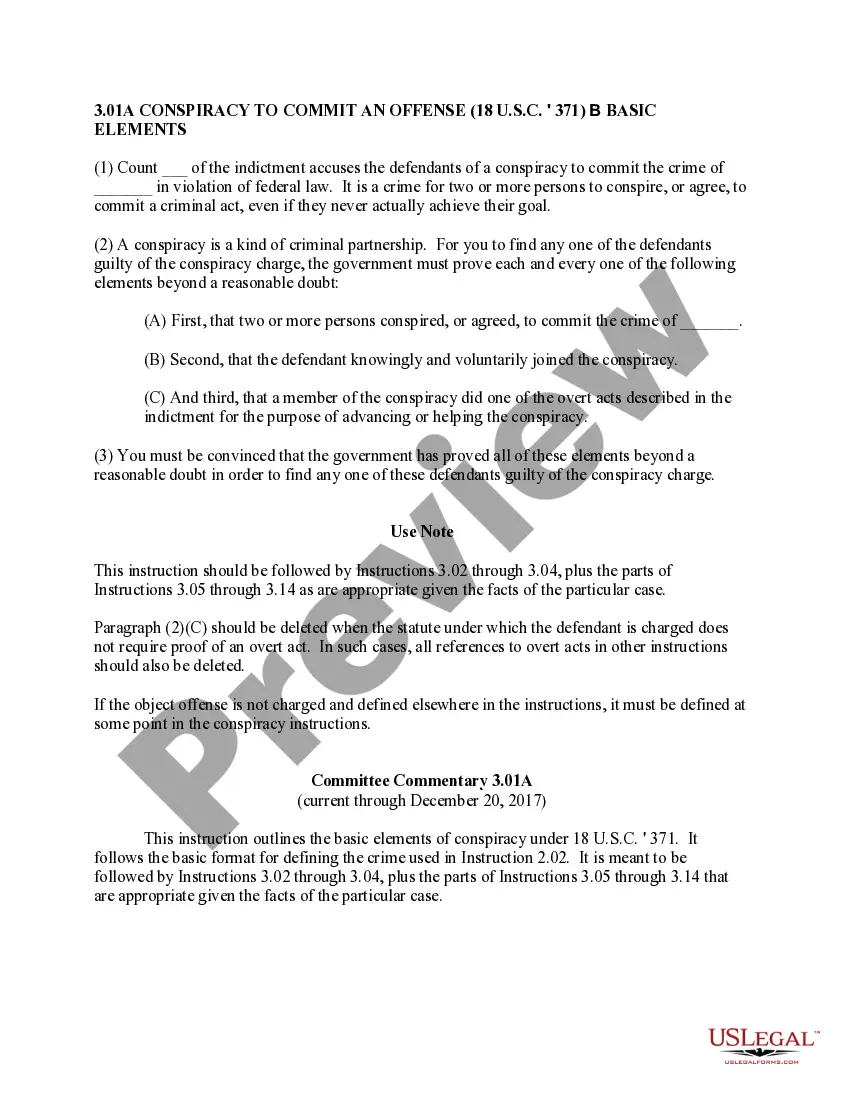
The Conspiracy to Commit an Offense Against the United States form outlines the basic elements required to establish a conspiracy charge under federal law. This legal form is essential for understanding the framework of conspiracy as defined by 18 U.S.C. § 371. It serves as a guide for the prosecution to prove that two or more individuals agreed to commit an offense against the United States, even if that crime was never completed. This form helps clarify the legal requirements and elements that need to be proven in court, distinguishing it from related forms addressing specific offenses or fraud against the government.
Form components explained
- Identification of the date and location of the alleged conspiracy.
- Details of the individuals involved in the agreement.
- Statement of the offense(s) that are the object of the conspiracy.
- Requirement of at least one overt act performed by a member of the conspiracy.
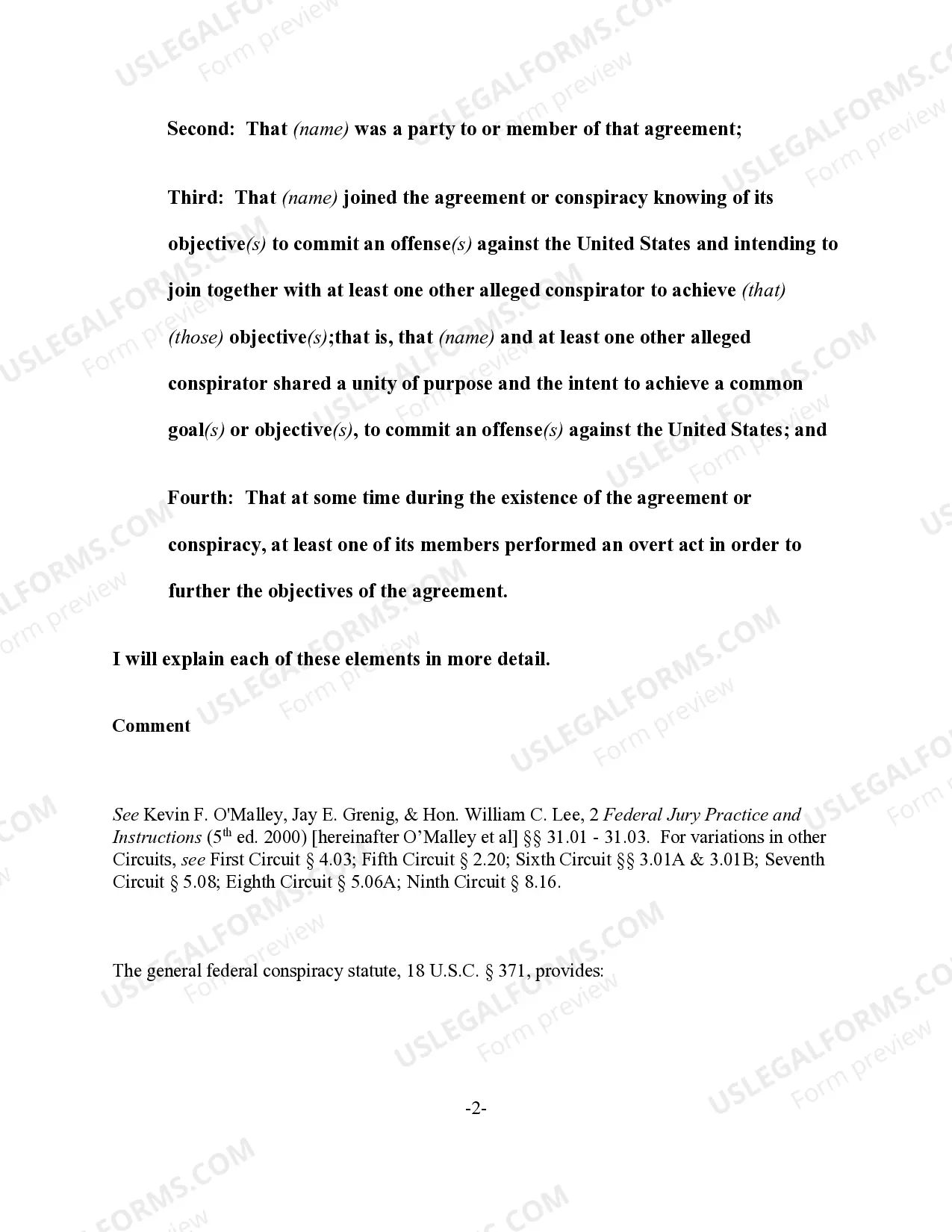
- Four essential elements that must be proven for a conviction.

When to use this form
This form is used in legal proceedings when individuals are accused of conspiring to commit a federal offense. It is applicable in cases where there is agreement among two or more parties to engage in illegal activities against the United States. This form serves to outline the necessary legal standards that must be met to charge someone with conspiracy, such as proving the agreement, intent, and actions taken in pursuit of the conspiracy.
Who needs this form
- Prosecutors handling conspiracy cases against individuals or groups.
- Defense attorneys representing clients accused of conspiracy.
- Legal professionals and law students studying federal conspiracy law.
- Individuals needing to understand their potential involvement in conspiracy charges.
How to complete this form
- Identify the parties involved in the conspiracy.
- Enter the specific date and district where the conspiracy took place.
- Describe the offenses that the conspirators agreed to commit.
- Include at least one overt act performed by a conspirator to further the conspiracy's objectives.
- Review and ensure all four elements of conspiracy are clearly addressed.
Notarization requirements for this form
Notarization is generally not required for this form. However, certain states or situations might demand it. You can complete notarization online through US Legal Forms, powered by Notarize, using a verified video call available anytime.
Get your form ready online
Our built-in tools help you complete, sign, share, and store your documents in one place.
Make edits, fill in missing information, and update formatting in US Legal Forms—just like you would in MS Word.
Download a copy, print it, send it by email, or mail it via USPS—whatever works best for your next step.
Sign and collect signatures with our SignNow integration. Send to multiple recipients, set reminders, and more. Go Premium to unlock E-Sign.
If this form requires notarization, complete it online through a secure video call—no need to meet a notary in person or wait for an appointment.
We protect your documents and personal data by following strict security and privacy standards.

Make edits, fill in missing information, and update formatting in US Legal Forms—just like you would in MS Word.

Download a copy, print it, send it by email, or mail it via USPS—whatever works best for your next step.

Sign and collect signatures with our SignNow integration. Send to multiple recipients, set reminders, and more. Go Premium to unlock E-Sign.

If this form requires notarization, complete it online through a secure video call—no need to meet a notary in person or wait for an appointment.

We protect your documents and personal data by following strict security and privacy standards.
Typical mistakes to avoid
- Failing to clearly define the offenses related to the conspiracy.
- Not providing sufficient details about the overt acts performed by conspirators.
- Overlooking the requirement to prove all four elements of conspiracy.
- Using vague language that does not adequately describe the agreement between parties.
Benefits of using this form online
- Convenience of accessing and filling out the form from anywhere.
- Editable format allowing for easy updates and corrections.
- Confidence in using legally vetted templates drafted by licensed attorneys.
- Quick download for immediate use in legal matters.
Legal use & context
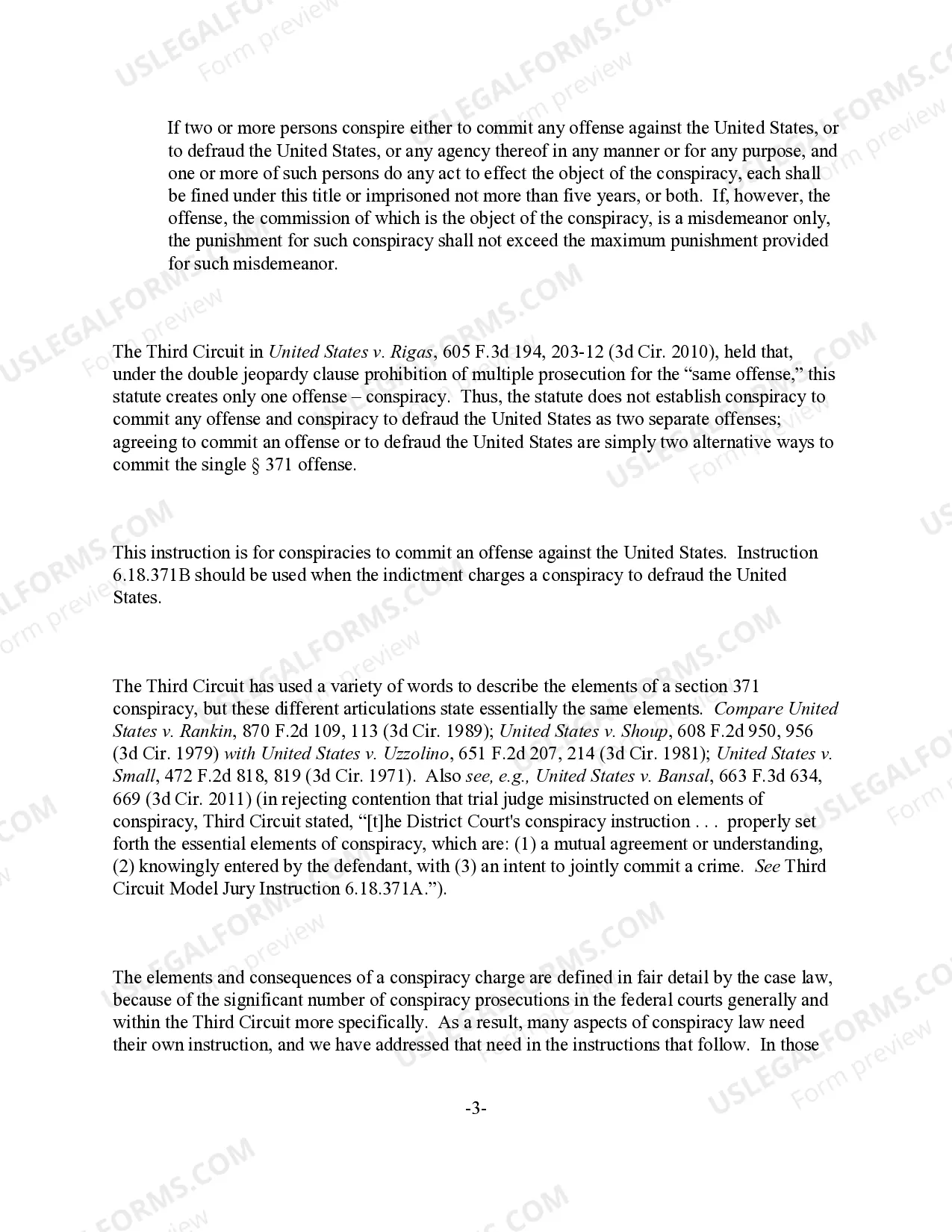
- Conspiracy charges under 18 U.S.C. § 371 are considered serious federal offenses.
- Understanding the elements is crucial for both prosecution and defense strategies.
- This form helps clarify the responsibilities and liabilities involved in conspiracy cases.
Main things to remember
- The form details the legal framework for conspiracy charges against the U.S.
- It specifies the four elements necessary for a conviction, which must be proved beyond a reasonable doubt.
- Legal professionals and accused individuals should use this form to understand their rights and obligations under federal conspiracy law.
Looking for another form?

Form popularity
FAQ
Conspiracy is an agreement between two or more people to commit an illegal act, along with an intent to achieve the agreement's goal. Most U.S. jurisdictions also require an overt act toward furthering the agreement.
To conspire to defraud the United States means primarily to cheat the Government out of property or money, but it also means to interfere with or obstruct one of its lawful governmental functions by deceit, craft or trickery, or at least by means that are dishonest.
Both offenses require the traditional elements of Section 371 conspiracy, including an illegal agreement, criminal intent, and proof of an overt act.
To convict you of criminal conspiracy, prosecutors must demonstrate that: you knowingly agreed to participate or assist in the planned crime; and. someone who was part of the agreement took some action toward carrying out the crime, known as an ?overt act.?
You must have 2 or more persons who 2. Intentionally 3. make an agreement 4. to violate federal law or defraud the United states, and then 5. Commit some overt act in furtherance of the agreement.
Elements of a Conspiracy 1 Two or more people agreed to commit a crime. 2 All conspirators had the specific intent to commit the crime. 3 At least one of the conspirators committed an overt act (most states)
The first requirement is the men's rea requirement which actually has two prongs. The first prong is that the defendant must have actually intended to agree to commit a crime. The second prong is that the defendant must have intended to accomplish the objective of the conspiracy when he entered into the agreement.