Issues-Case Submitted on Interrogatories
Understanding this form
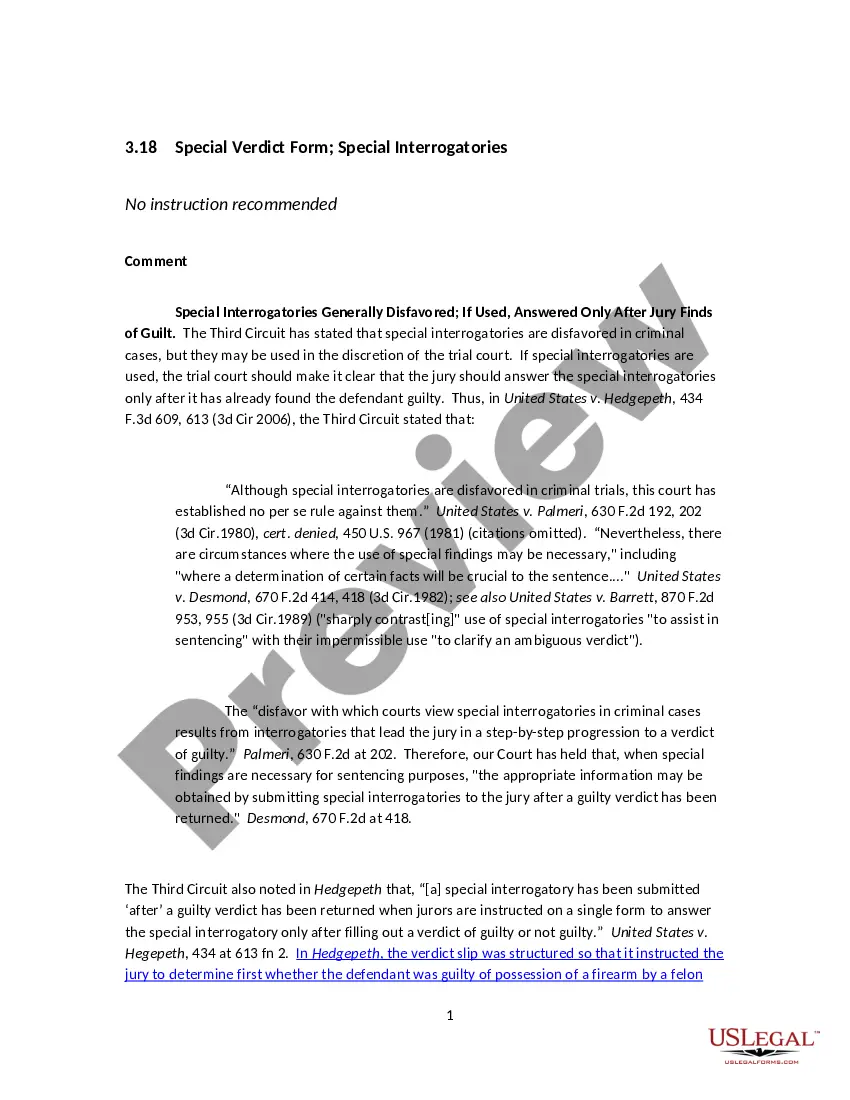
The Issues-Case Submitted on Interrogatories form is a legal document used during litigation, specifically for presenting issues in a case based on questions posed to opposing parties. This form facilitates the exchange of information and helps clarify the points of contention between parties, making it distinct from other discovery forms that may involve requests for documents or admissions.
Key parts of this document
- Identification of the parties involved in the case.
- Specific issues to be addressed in the interrogatories.
- Space for each party to respond to the presented interrogatories.
- Signature lines for all relevant parties.



When to use this document
This form should be used when parties in a legal dispute need to clarify specific issues that are in contention. It is typically utilized during the discovery phase of litigation, helping to gather essential information that will guide the proceedings. If you are involved in a legal case and need to formally present questions to the opposing party, this form is appropriate.
Who should use this form
This form is intended for:
- Litigants involved in civil or criminal cases who require clarification on issues.
- Attorneys seeking to gather information on behalf of their clients.
- Individuals representing themselves in legal matters, also known as pro se litigants.
Steps to complete this form
- Identify the parties involved in the case and enter their names.
- Clearly state the specific issues you want to address in the interrogatories.
- Provide a space for responses from each party.
- Ensure all parties sign the document to validate it.
- Submit the completed form to the appropriate court or party as required.
Does this form need to be notarized?
This form usually doesn’t need to be notarized. However, local laws or specific transactions may require it. Our online notarization service, powered by Notarize, lets you complete it remotely through a secure video session, available 24/7.
Get your form ready online
Our built-in tools help you complete, sign, share, and store your documents in one place.
Make edits, fill in missing information, and update formatting in US Legal Forms—just like you would in MS Word.
Download a copy, print it, send it by email, or mail it via USPS—whatever works best for your next step.
Sign and collect signatures with our SignNow integration. Send to multiple recipients, set reminders, and more. Go Premium to unlock E-Sign.
If this form requires notarization, complete it online through a secure video call—no need to meet a notary in person or wait for an appointment.
We protect your documents and personal data by following strict security and privacy standards.

Make edits, fill in missing information, and update formatting in US Legal Forms—just like you would in MS Word.

Download a copy, print it, send it by email, or mail it via USPS—whatever works best for your next step.

Sign and collect signatures with our SignNow integration. Send to multiple recipients, set reminders, and more. Go Premium to unlock E-Sign.

If this form requires notarization, complete it online through a secure video call—no need to meet a notary in person or wait for an appointment.

We protect your documents and personal data by following strict security and privacy standards.
Common mistakes to avoid
- Failing to specify the issues clearly, leading to confusion.
- Omitting signatures of relevant parties.
- Not adhering to state-specific requirements regarding formatting or submission.
Why complete this form online
- Convenient access to templates anytime and anywhere.
- Editable forms that allow users to customize according to their specific needs.
- Reliable resources drafted by licensed attorneys to ensure legal compliance.
Looking for another form?




Form popularity
FAQ
Interrogatories are lists of questions sent to the other party that s/he must respond to in writing. You can use interrogatories to find out facts about a case but they cannot be used for questions that draw a legal conclusion.
If you are unable to answer an interrogatory because it is too vague, ambiguous, or somehow objectionable, you can state an objection and the reason for your objection. You must then answer to the extent the interrogatory is not objectionable.
Interrogatories are to be raised at a pre-trial stage and must have a close connection with the matter in question, whereas cross examinations have a wider scope of questions that can be asked.
Interrogatories are lists of questions sent to the other party that s/he must respond to in writing. You can use interrogatories to find out facts about a case but they cannot be used for questions that draw a legal conclusion.
Generally, interrogatories are objectionable if they seek information that is not within the scope of discovery as defined in Maryland Rule 402 or Federal Rule 26(b). These are typically requests that are not relevant, unduly burdensome, broad, vague, privileged. or protected by the work product doctrine.
If interrogatories are being used as a form of discovery, the party being questioned must generally answer all the questions orally under oath.
Interrogatories are written questions sent by one party in a lawsuit to another party in that same suit, which the responding party must answer under penalty of perjury. Interrogatories allow the parties to ask who, what, when, where and why questions, making them a good method for obtaining new information.
Your answers to the interrogatories should usually be short, clear, and direct and should answer only the question that is being asked. This is not the time to set out your entire case or defense to the other side. Take the time to make sure your answers are correct and truthful.