Note-Taking by Jurors
What is this form?
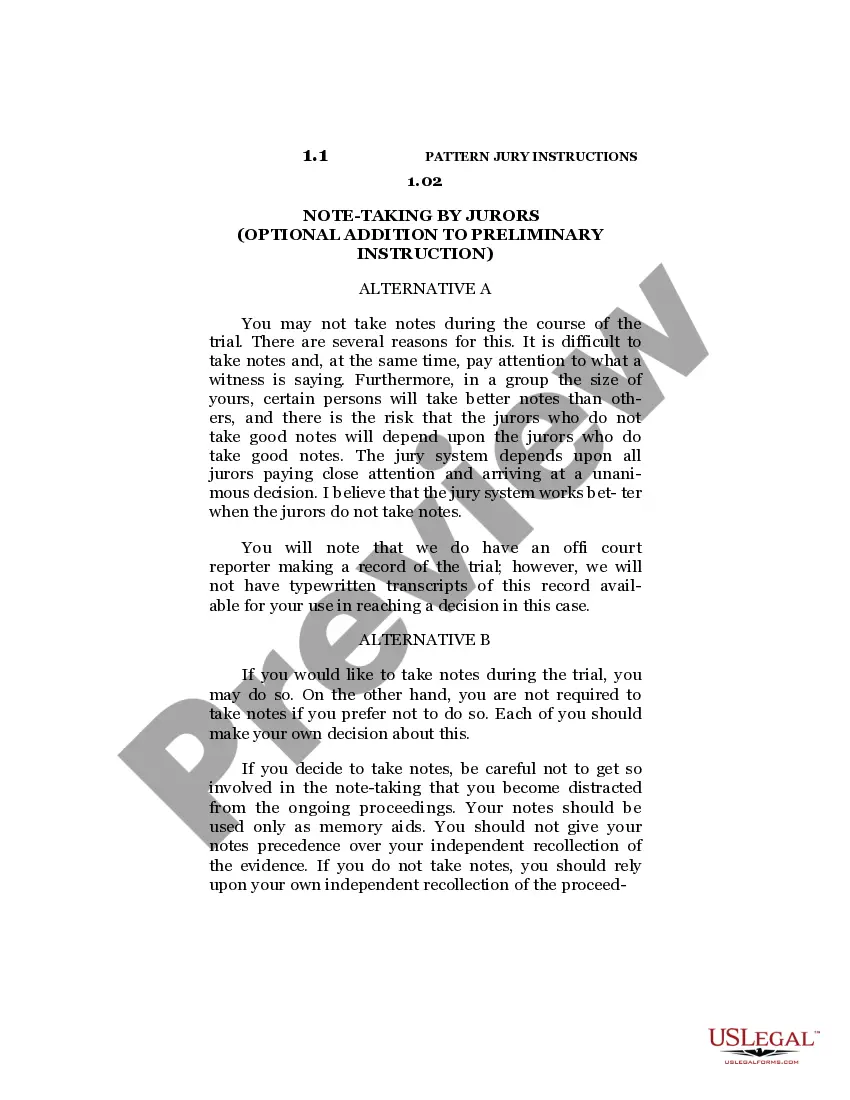
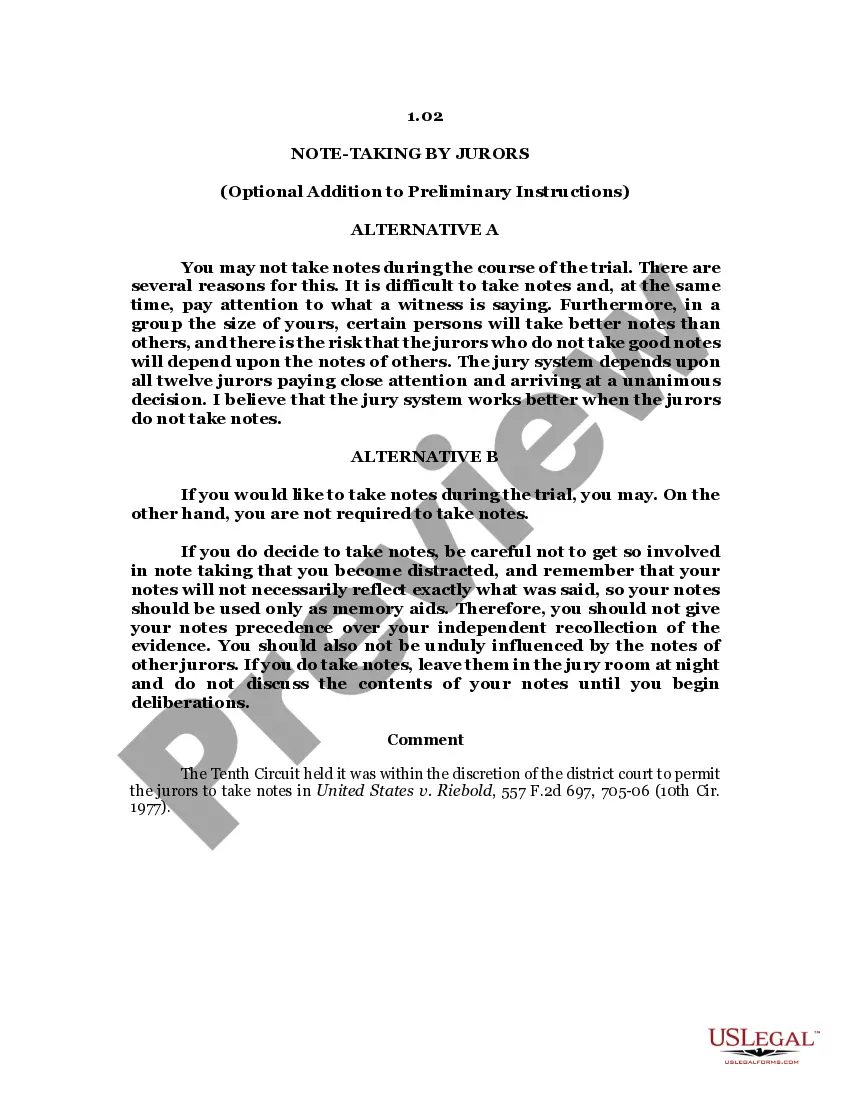
The Note-Taking by Jurors form provides guidance on whether jurors may take notes during a trial. This form outlines two alternatives: one that prohibits note-taking and another that allows it, giving jurors the option to decide based on their preference and comfort level. Understanding the framework of this form ensures that jurors are equipped to participate in the trial process effectively, regardless of their note-taking choice.
Main sections of this form
- Alternative A: Prohibition of note-taking with reasons provided.
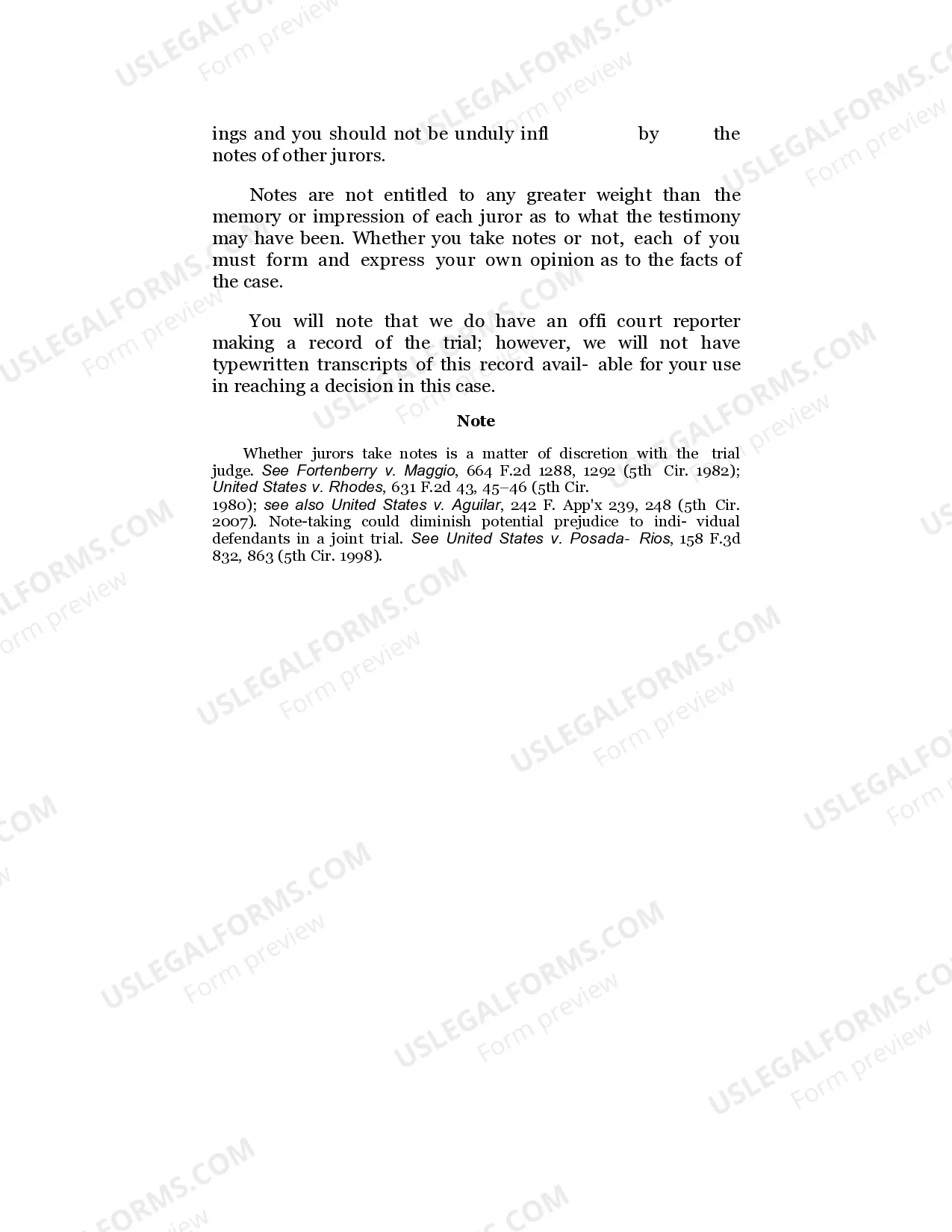
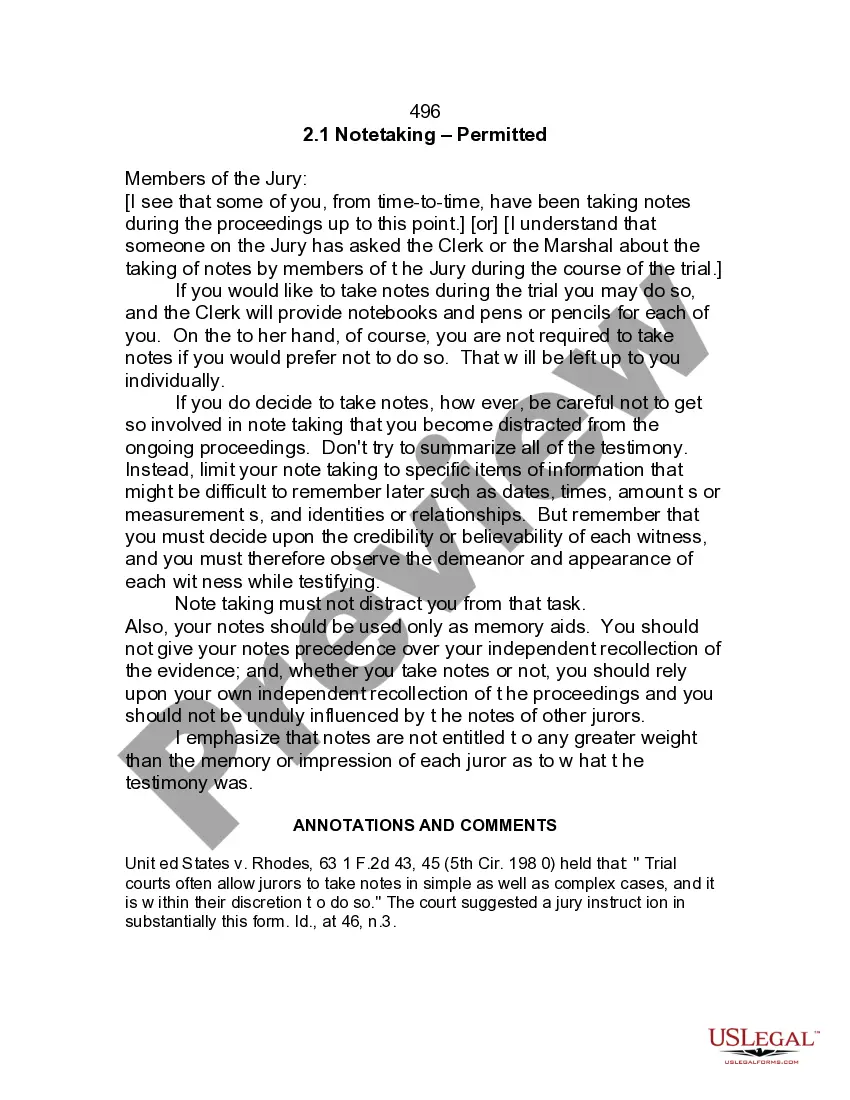
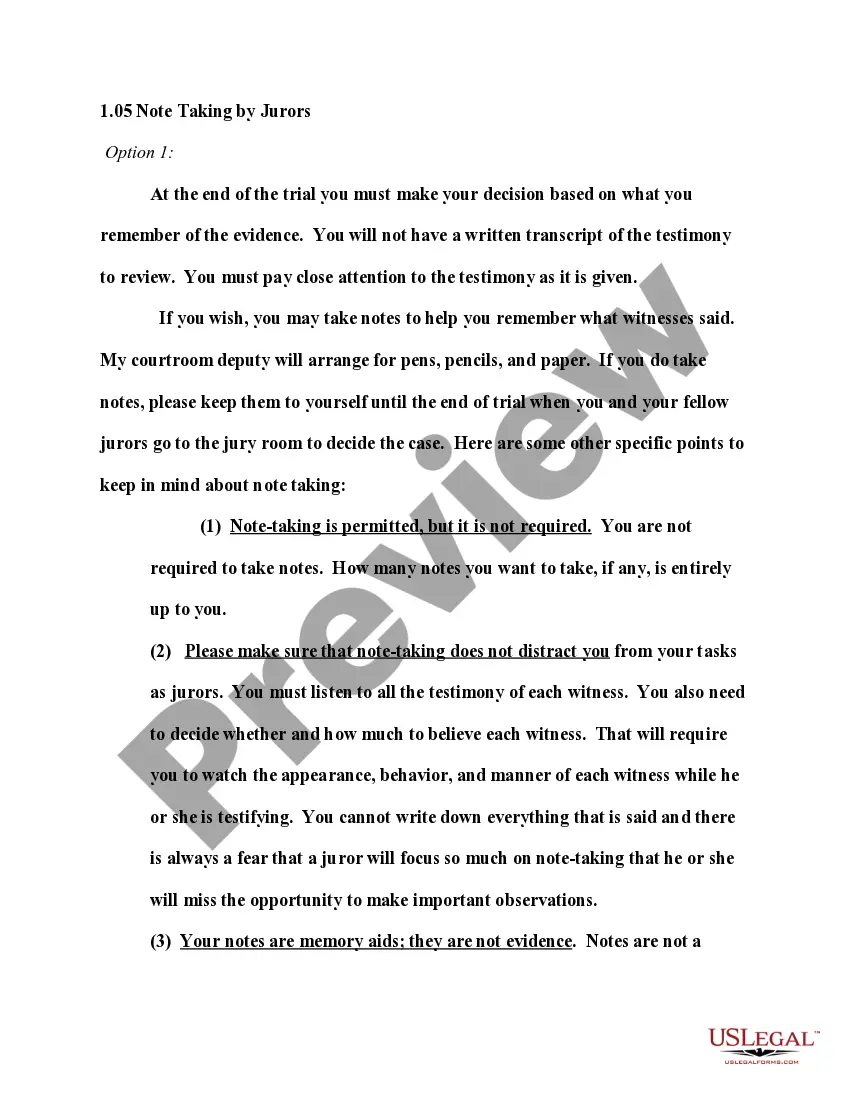
- Alternative B: Permission to take notes, emphasizing intent and caution.
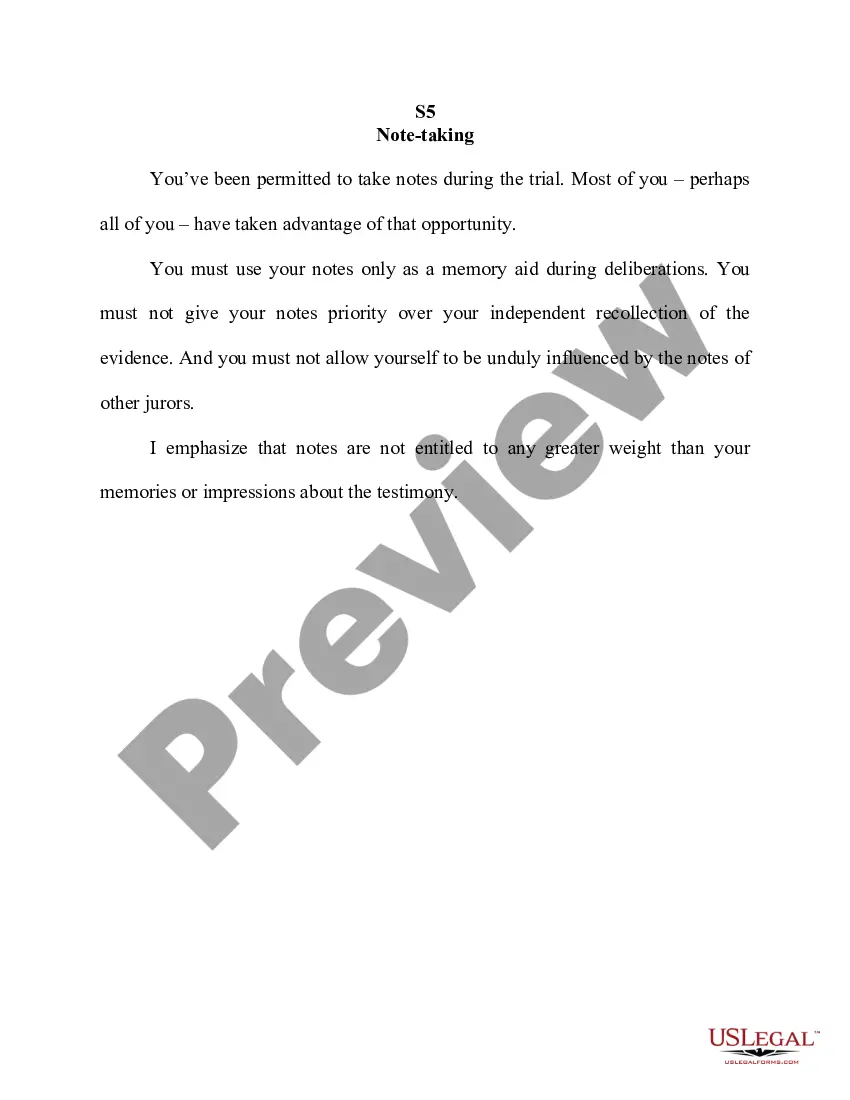
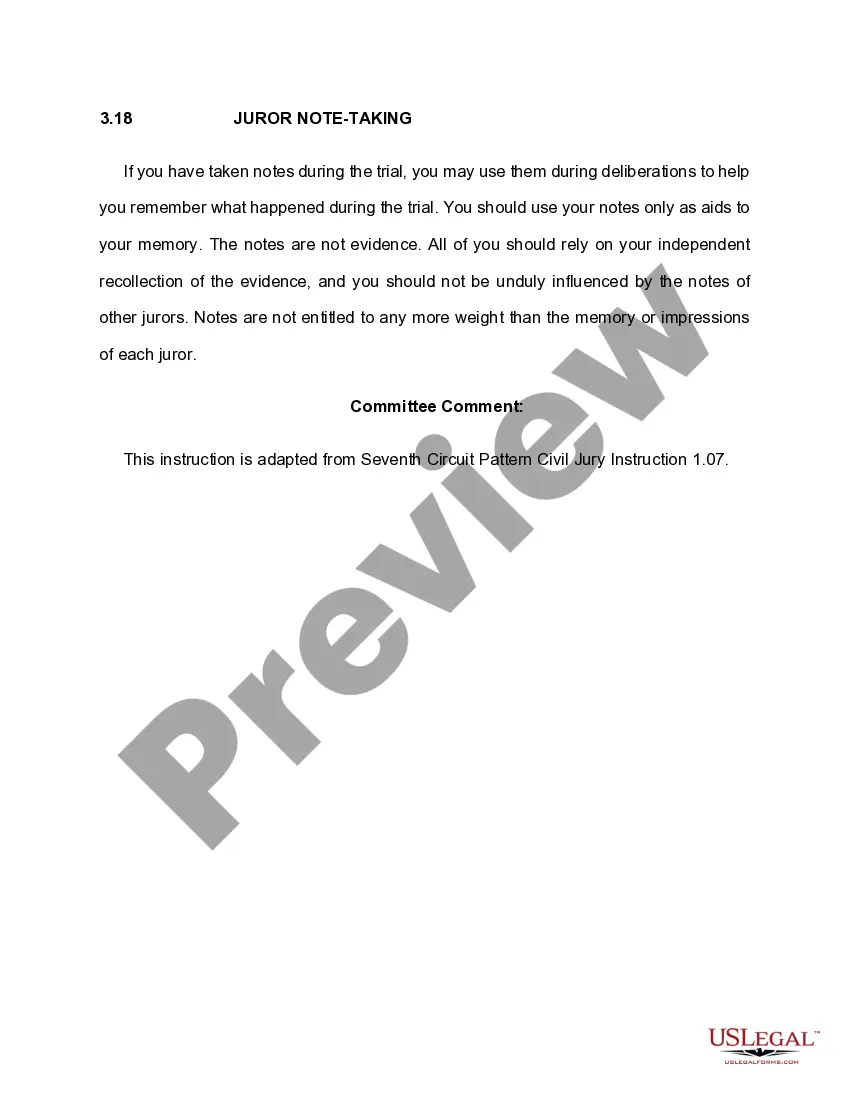
- Instructions on using notes as memory aids without distraction.
- Clarification that notes have no greater weight than jurors' individual recollections.

Common use cases
This form should be utilized during jury preliminary instructions before a trial commences. It aids in establishing ground rules around note-taking, helping jurors understand how to engage with the trial effectively. If a case involves complex evidence or multiple witnesses, this form can provide clarity on how to best record and recall information.
Who this form is for
- Judges who are responsible for issuing preliminary jury instructions.
- Attorneys seeking to present jury instructions regarding note-taking considerations.
- Jurors who need clarity on whether they can take notes during a trial.
Completing this form step by step
- Select Alternative A or Alternative B based on the trial judge's preference.
- Explain the reasoning clearly behind the choice of allowing or disallowing notes.
- Incorporate reminders about the importance of independent recollection among jurors.
- Ensure that the instructions are made clear to all jurors before the trial starts.
Notarization guidance
Notarization is generally not required for this form. However, certain states or situations might demand it. You can complete notarization online through US Legal Forms, powered by Notarize, using a verified video call available anytime.
Get your form ready online
Our built-in tools help you complete, sign, share, and store your documents in one place.
Make edits, fill in missing information, and update formatting in US Legal Forms—just like you would in MS Word.
Download a copy, print it, send it by email, or mail it via USPS—whatever works best for your next step.
Sign and collect signatures with our SignNow integration. Send to multiple recipients, set reminders, and more. Go Premium to unlock E-Sign.
If this form requires notarization, complete it online through a secure video call—no need to meet a notary in person or wait for an appointment.
We protect your documents and personal data by following strict security and privacy standards.

Make edits, fill in missing information, and update formatting in US Legal Forms—just like you would in MS Word.

Download a copy, print it, send it by email, or mail it via USPS—whatever works best for your next step.

Sign and collect signatures with our SignNow integration. Send to multiple recipients, set reminders, and more. Go Premium to unlock E-Sign.

If this form requires notarization, complete it online through a secure video call—no need to meet a notary in person or wait for an appointment.

We protect your documents and personal data by following strict security and privacy standards.
Common mistakes to avoid
- Failing to ensure all jurors understand the implications of their note-taking choice.
- Overlooking the need for clear instructions on how notes should be used.
- Not providing reminders about the importance of individual memory over notes.
Why complete this form online
- Convenience of accessing instant legal documentation tailored to your needs.
- Editability to customize instructions according to specific trial circumstances.
- Reliability of templates drafted by experienced licensed attorneys.
What to keep in mind
- Jurors can either be prohibited or allowed to take notes during a trial.
- Note-taking can enhance memory but should not distract from the trial proceedings.
- Clear communication of the rules is essential before the trial begins.
Looking for another form?

Form popularity
FAQ
2023 California Rules of Court Jurors must be permitted to take written notes in all civil and criminal trials. At the beginning of a trial, a trial judge must inform jurors that they may take written notes during the trial. The court must provide materials suitable for this purpose.
The jurors may refer to their notes during the proceedings and deliberations. (e) Any notes taken are confidential and shall not be available for examination or review by any party or other person. After the jury has rendered its verdict, the court shall ensure that the notes are promptly collected and destroyed.
2023 California Rules of Court Jurors must be permitted to take written notes in all civil and criminal trials. At the beginning of a trial, a trial judge must inform jurors that they may take written notes during the trial. The court must provide materials suitable for this purpose.
These states include Arizona, Arkansas, Connecticut, Missouri, New Jersey, New York, North Dakota, Ohio, Washington, Wisconsin, and Wyoming. Although only one state expressly prohibits this practice, in most jurisdictions whether members of a jury are allowed to take notes will depend upon the discretion of the judge.
These states include Arizona, Arkansas, Connecticut, Missouri, New Jersey, New York, North Dakota, Ohio, Washington, Wisconsin, and Wyoming. Although only one state expressly prohibits this practice, in most jurisdictions whether members of a jury are allowed to take notes will depend upon the discretion of the judge.
In general, it is not permitted. The judges feel it is important that jurors focus their attention on witnesses and information rather than on taking notes.
Any notes you have taken are for your own personal use. You may take your notes back into the jury room and consult them during deliberations, but do not show or read your notes to your fellow jurors during your deliberations. Your notes are not evidence.
The jurors were not allowed to take notes throughout the six-week trial. However, James said he and his fellow jurors wrote down questions they had on paper in the jury room during 15-minute breaks. Sometimes, those questions were answered during testimony in the trial.