Note Taking by Jurors
Understanding this form
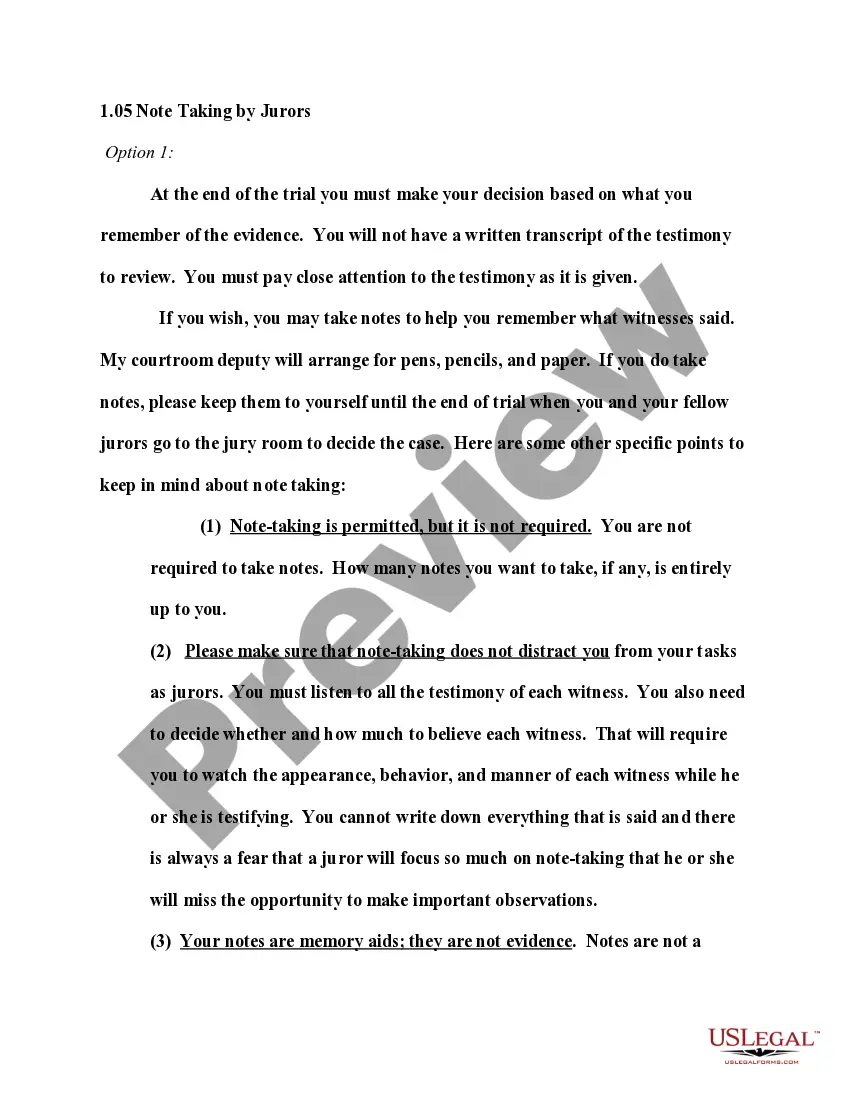
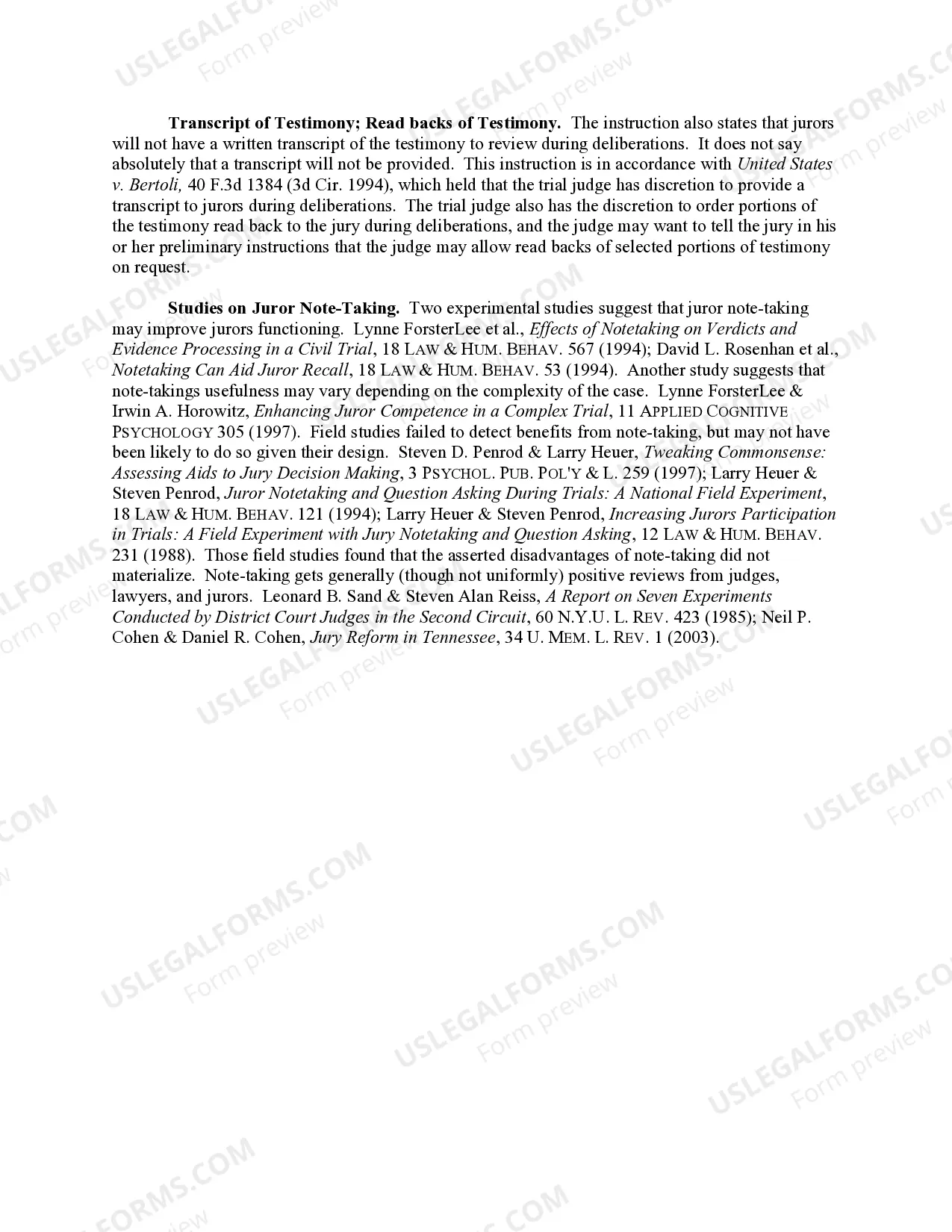
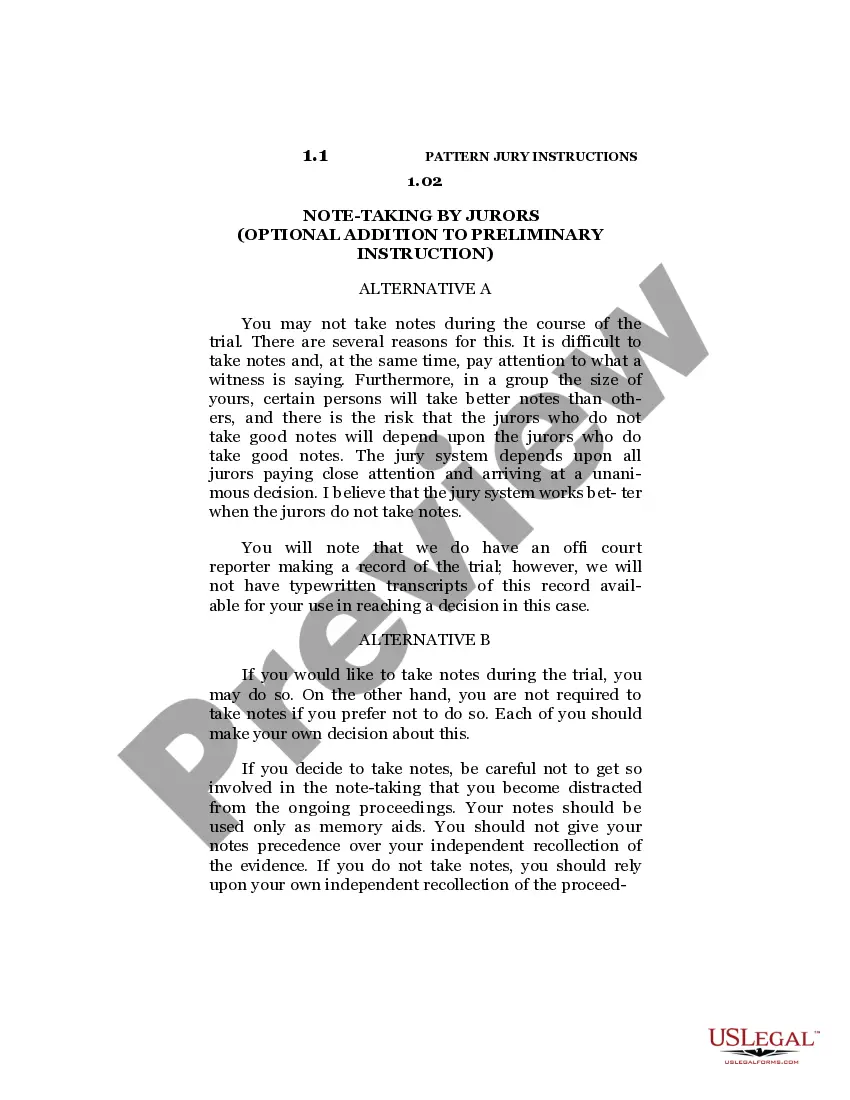
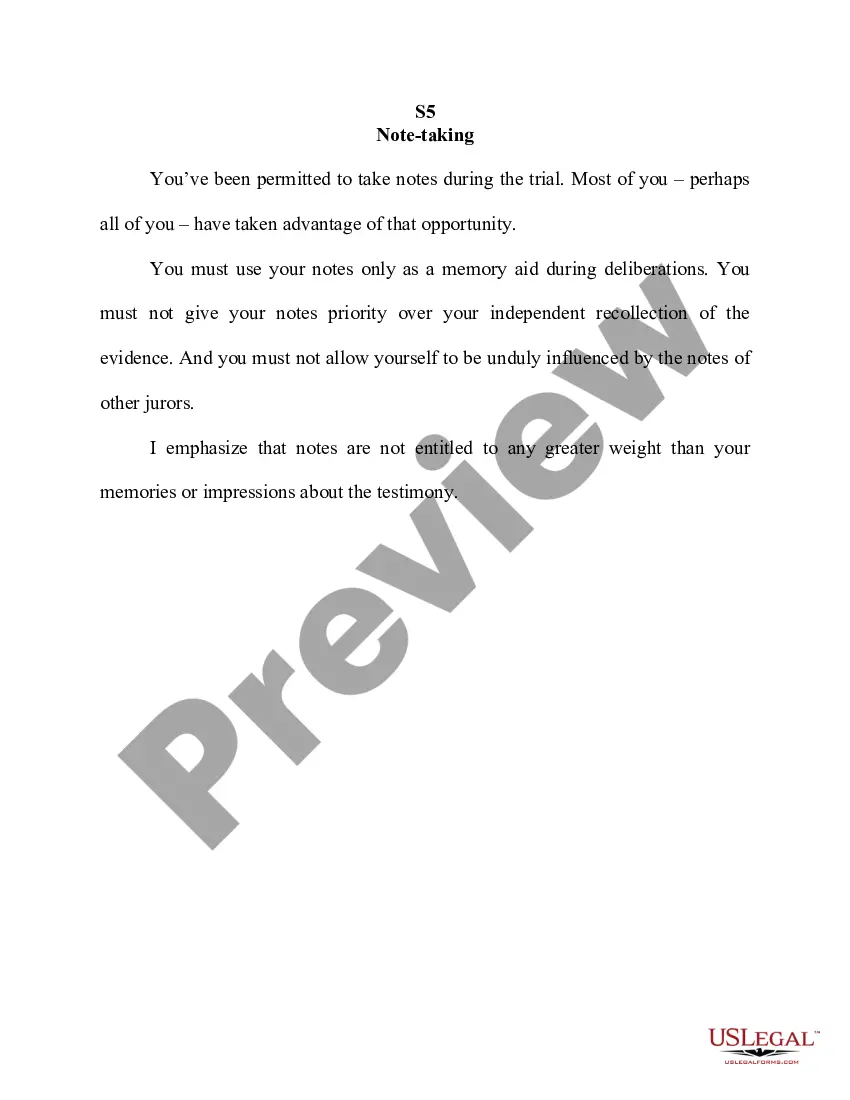
The "Note Taking by Jurors" instruction provides guidelines for jurors on whether and how they may take notes during a trial. This form emphasizes the importance of relying on memory while also allowing jurors the option to make notes for their own reference. It differentiates between permissible note-taking practices and the need for jurors to engage fully with the trial proceedings, highlighting that notes are aids to memory rather than record of the testimony.
Form components explained
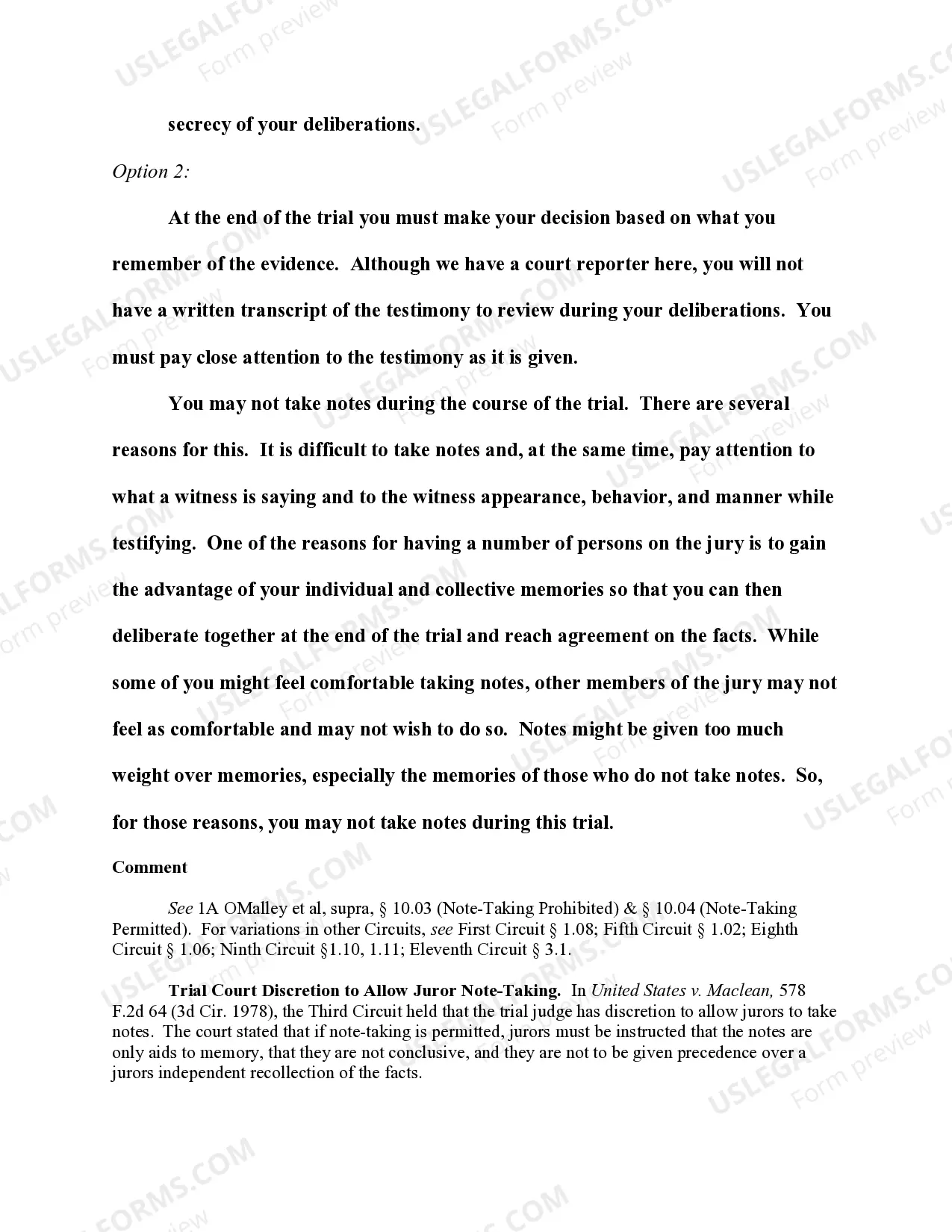
- Clarifies whether jurors may take notes during the trial.
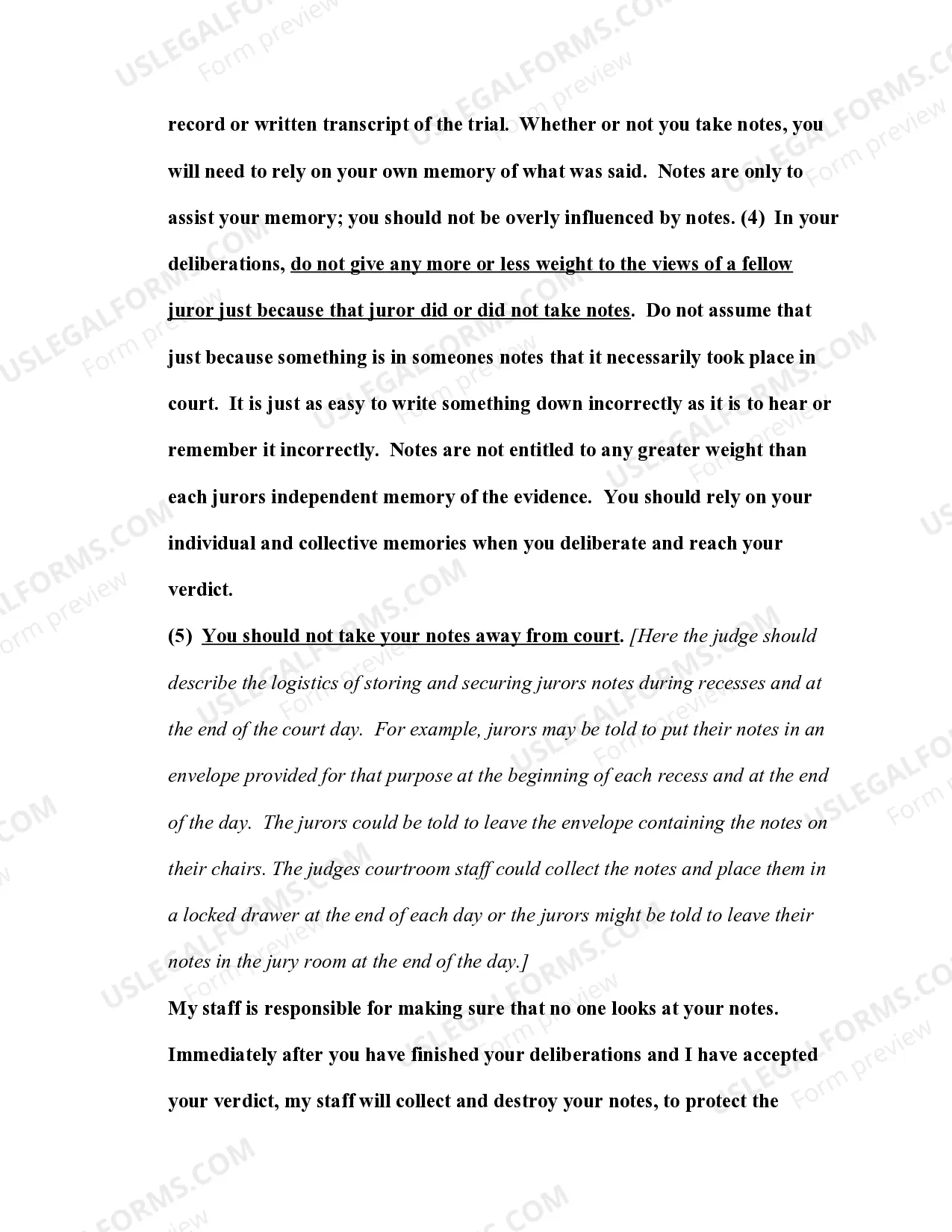
- Emphasizes that notes are not evidence and do not replace jurorsâ memory.
- Instructs on how to securely handle and store notes during trial breaks.
- Provides rules on the weight that notes should be given during deliberations.
- Outlines the judgeâs discretion to allow or prohibit note-taking based on trial context.

When to use this document
This form is used during jury trials to guide jurors on the practice of note-taking. It is particularly important during complex cases where details can be difficult to remember. Jurors may reference this instruction at any time during a trial to ensure they understand the protocols regarding note-taking and its role in their decision-making process.
Who needs this form
Eligibility for this form includes:
- Jurors serving in trial cases.
- Judges who wish to clarify note-taking rules to jurors.
- Legal practitioners advising jurors on trial protocol.
How to prepare this document
- Understand the guidelines regarding note-taking as provided by the judge.
- If allowed, use provided materials for making notes throughout the trial.
- Store your notes securely as instructed by courtroom personnel after each session.
- Use notes solely as aids during deliberations and focus on collective memories.
- Follow the judge's directive regarding the disposal of notes post-deliberation.
Notarization guidance
Notarization is not commonly needed for this form. However, certain documents or local rules may make it necessary. Our notarization service, powered by Notarize, allows you to finalize it securely online anytime, day or night.
Get your form ready online
Our built-in tools help you complete, sign, share, and store your documents in one place.
Make edits, fill in missing information, and update formatting in US Legal Forms—just like you would in MS Word.
Download a copy, print it, send it by email, or mail it via USPS—whatever works best for your next step.
Sign and collect signatures with our SignNow integration. Send to multiple recipients, set reminders, and more. Go Premium to unlock E-Sign.
If this form requires notarization, complete it online through a secure video call—no need to meet a notary in person or wait for an appointment.
We protect your documents and personal data by following strict security and privacy standards.

Make edits, fill in missing information, and update formatting in US Legal Forms—just like you would in MS Word.

Download a copy, print it, send it by email, or mail it via USPS—whatever works best for your next step.

Sign and collect signatures with our SignNow integration. Send to multiple recipients, set reminders, and more. Go Premium to unlock E-Sign.

If this form requires notarization, complete it online through a secure video call—no need to meet a notary in person or wait for an appointment.

We protect your documents and personal data by following strict security and privacy standards.
Mistakes to watch out for
- Assuming notes are permanent records of the testimony instead of memory aids.
- Writing down too much information and losing focus on witnessesâ behaviors.
- Using notes to influence deliberations instead of relying on personal recollection.
- Neglecting to secure notes properly during recesses.
- Overvaluing a fellow jurorâs notes based solely on their written information.
Why complete this form online
- Instant access to critical jury instructions without waiting for printed materials.
- Editable and easily shareable, ensuring all jurors can refer to the same guidelines.
- Convenience of having instructions available at all trial stages directly from a secure platform.
Legal use & context
- Juror notes are not considered official evidence and have no legal weight in court.
- Courts may allow or prohibit note-taking based on various factors, including case complexity.
- Guidelines ensure fairness in juror discussions and deliberations, mindful of both those who take notes and those who do not.
Main things to remember
- Juror note-taking can enhance memory but should not distract from trial proceedings.
- Notes must remain confidential and disposed of after the trial.
- Jurors should rely primarily on their memory during deliberations, regardless of notes taken.
- The judge has discretion on whether jurors may take notes.
Looking for another form?




Form popularity
FAQ
2023 California Rules of Court Jurors must be permitted to take written notes in all civil and criminal trials. At the beginning of a trial, a trial judge must inform jurors that they may take written notes during the trial. The court must provide materials suitable for this purpose.
2023 California Rules of Court Jurors must be permitted to take written notes in all civil and criminal trials. At the beginning of a trial, a trial judge must inform jurors that they may take written notes during the trial. The court must provide materials suitable for this purpose.
In general, it is not permitted. The judges feel it is important that jurors focus their attention on witnesses and information rather than on taking notes.
These states include Arizona, Arkansas, Connecticut, Missouri, New Jersey, New York, North Dakota, Ohio, Washington, Wisconsin, and Wyoming. Although only one state expressly prohibits this practice, in most jurisdictions whether members of a jury are allowed to take notes will depend upon the discretion of the judge.
Jurors are more likely to hear and keep track of a detail that they understand is stated precisely. Treat truly important details as truly important, and jurors will make note of the details ? and write them down.