Jury Instruction - Note-Taking - Permitted
What this document covers
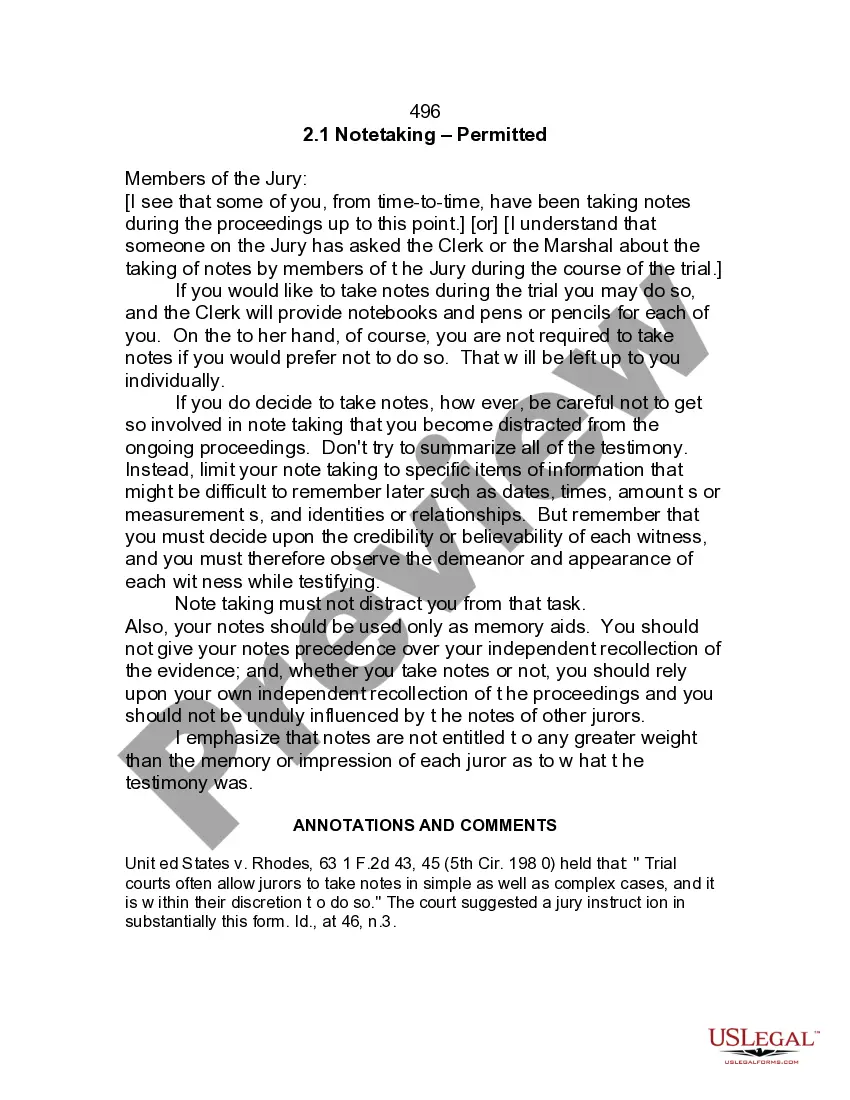
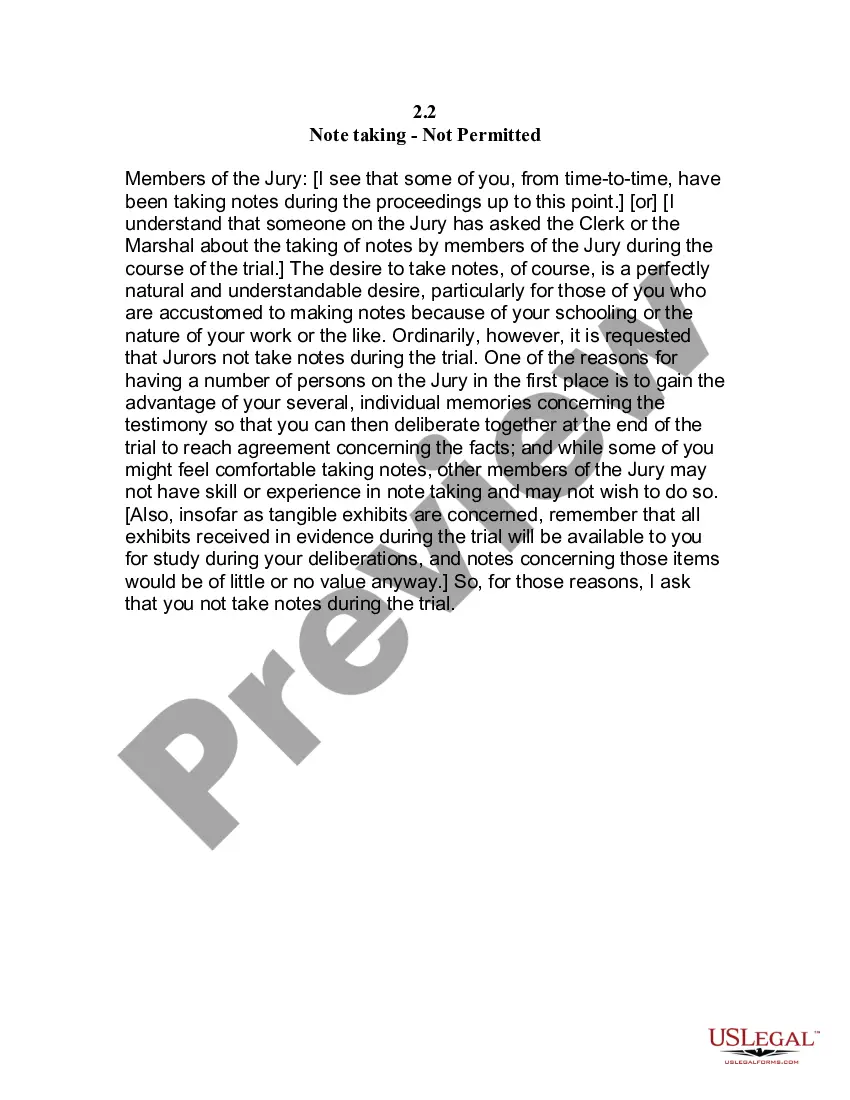
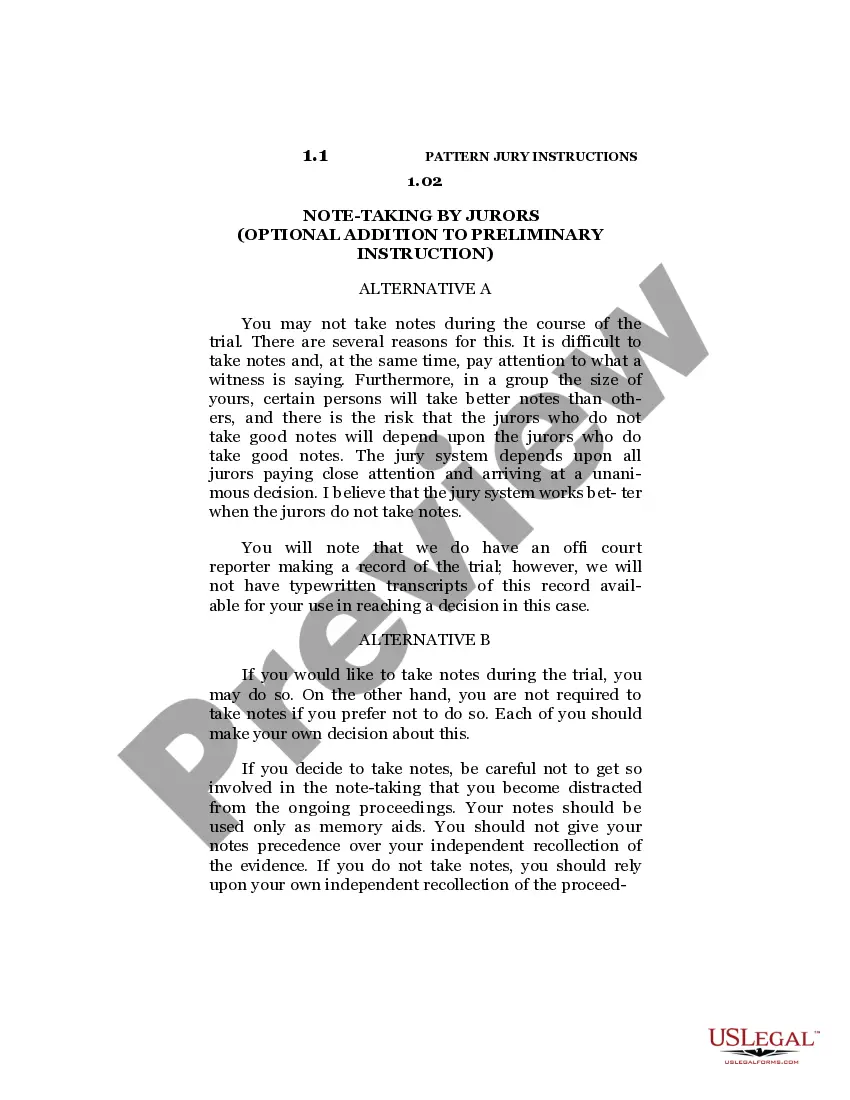
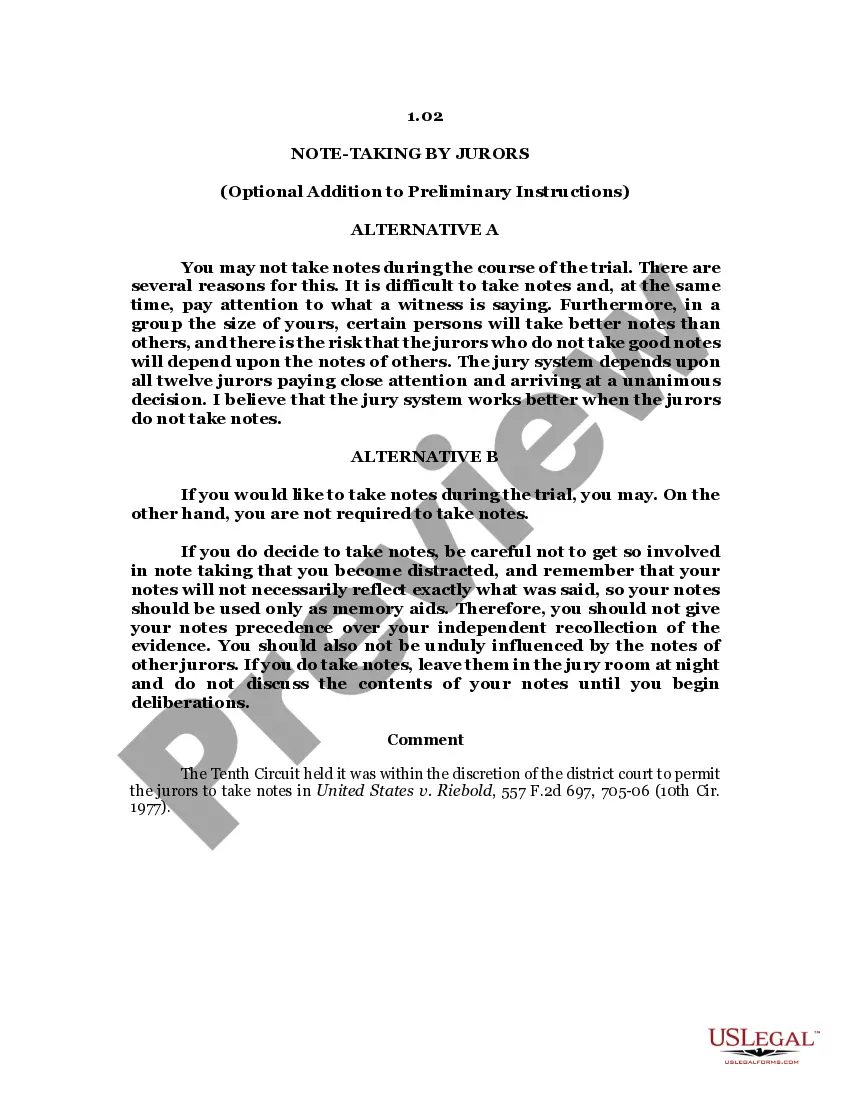
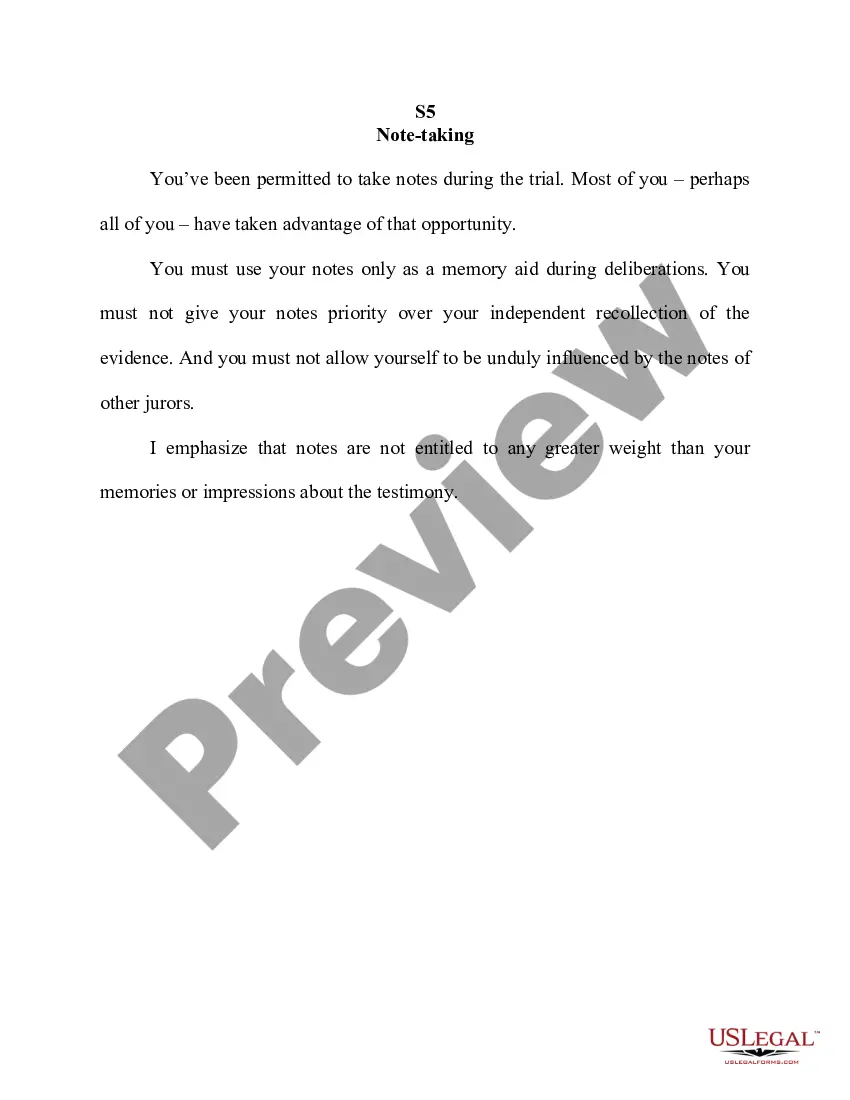
This form provides jury instructions regarding permitted note-taking during trial proceedings. It serves as a guideline for jurors, emphasizing the importance of maintaining focus on testimony while using notes as memory aids. This differs from other legal forms by specifically addressing the roles and responsibilities of jurors related to note-taking during trials.
Form components explained
- Instructions on whether jurors can take notes during the trial.
- Advice on how to take effective notes without distraction.
- Guidelines on the credibility and believability of witnesses.
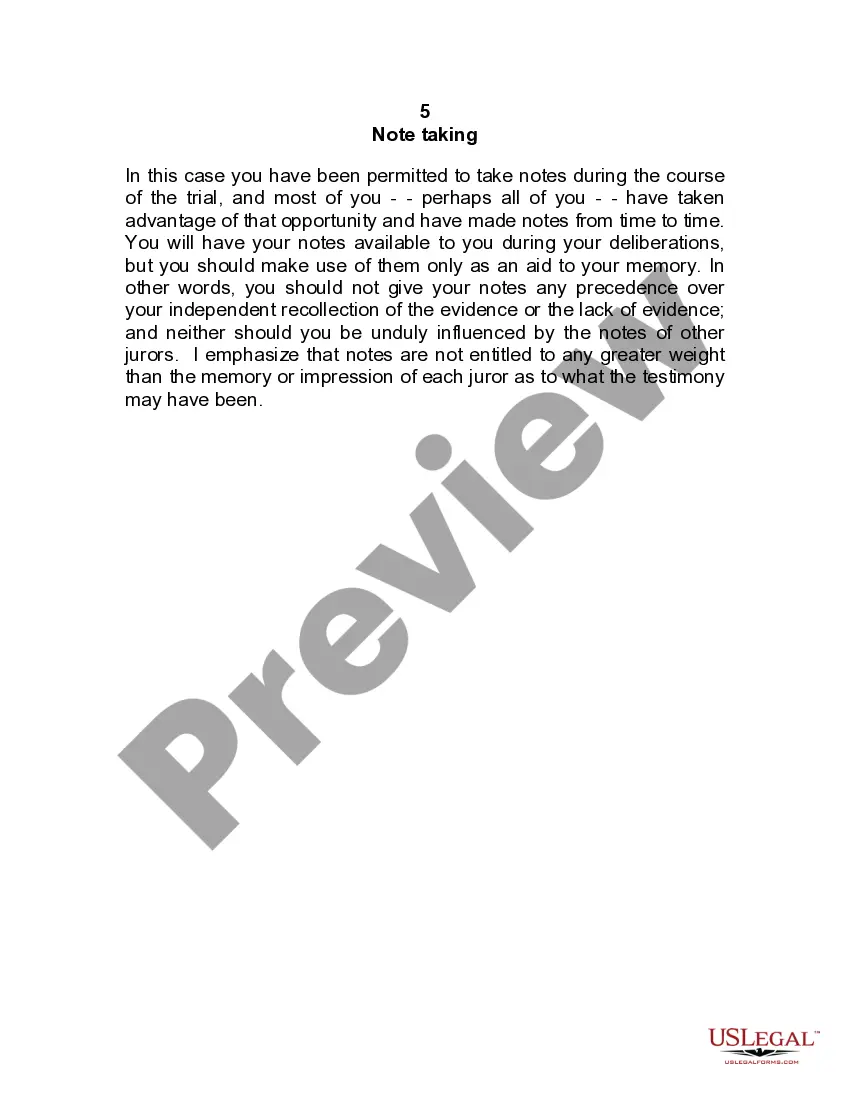
- Emphasis on relying on personal recollection over notes.
- Legal precedent for allowing note-taking during trials.
When this form is needed
This form is useful in any trial setting where jurors are permitted to take notes. It is applicable in both civil and criminal cases, particularly when the trial includes complex testimonies that jurors may wish to remember accurately. The instructions guide jurors in using notes effectively to aid their understanding and recall of the case.
Who needs this form
- Judges and court officials overseeing trials.
- Individuals serving as jurors in court cases.
- Attorneys seeking to understand the note-taking rules for jurors.
- Legal educators discussing jury procedures with students.
How to prepare this document
- Review the guidelines on note-taking provided in the form.
- Distribute notebooks and writing instruments to jurors, if applicable.
- Encourage jurors to take notes selectively on key details.
- Remind jurors to focus on witness demeanor and overall trial proceedings while taking notes.
- Instruct jurors to rely on their memory and impression of the evidence when deliberating.
Is notarization required?
Notarization is generally not required for this form. However, certain states or situations might demand it. You can complete notarization online through US Legal Forms, powered by Notarize, using a verified video call available anytime.
Get your form ready online
Our built-in tools help you complete, sign, share, and store your documents in one place.
Make edits, fill in missing information, and update formatting in US Legal Forms—just like you would in MS Word.
Download a copy, print it, send it by email, or mail it via USPS—whatever works best for your next step.
Sign and collect signatures with our SignNow integration. Send to multiple recipients, set reminders, and more. Go Premium to unlock E-Sign.
If this form requires notarization, complete it online through a secure video call—no need to meet a notary in person or wait for an appointment.
We protect your documents and personal data by following strict security and privacy standards.

Make edits, fill in missing information, and update formatting in US Legal Forms—just like you would in MS Word.

Download a copy, print it, send it by email, or mail it via USPS—whatever works best for your next step.

Sign and collect signatures with our SignNow integration. Send to multiple recipients, set reminders, and more. Go Premium to unlock E-Sign.

If this form requires notarization, complete it online through a secure video call—no need to meet a notary in person or wait for an appointment.

We protect your documents and personal data by following strict security and privacy standards.
Mistakes to watch out for
- Taking excessive notes that lead to distraction from the trial.
- Focusing on summarizing rather than noting key details.
- Overvaluing notes over personal recollection.
- Neglecting to observe witness demeanor while writing.
Benefits of completing this form online
- Convenient access to updated jury instruction templates.
- Easy editing and customization to fit specific trial needs.
- Quick download for immediate use in jury trials.
- Reliable guidance drafted by licensed attorneys.
Looking for another form?



Form popularity
FAQ
Most judges allow jurors to take notes during trials. At the commencement of the trial, the jury is handed small notepads and pencils for note taking. The judge also typically gives the jury some basic administrative instructions about what to do with the notebooks when they are finished each day.
Notes for Yourself. Before the trial, write down the points you want to make when you testify. Notes for Questioning Witnesses. Notes of the Evidence as Witnesses Speak. Check the Evidence. Organize Your Notes and Paper. Take Pens and Paper. Make Your Submissions (final arguments) OTHER CIVIL CASE TIP SHEETS:
Jurors are required to leave their notes in the courtroom/deliberation room at the end of each day, and they should not show their notes to one another until deliberations. They do not have to take notes. Notepads are available if they choose to use them.
Most judges allow jurors to take notes during trials. At the commencement of the trial, the jury is handed small notepads and pencils for note taking. The judge also typically gives the jury some basic administrative instructions about what to do with the notebooks when they are finished each day.
Eligibility. In terms of the Jury Amendment Act 2010, you may have 'good cause' to be excused if: jury service would cause undue hardship or serious inconvenience to you or your family. you have a disability that makes you unsuitable or incapable of effectively serving as a juror, without reasonable accommodation.
2021 California Rules of Court Jurors must be permitted to take written notes in all civil and criminal trials. At the beginning of a trial, a trial judge must inform jurors that they may take written notes during the trial.
(1) Tell the person it is improper for a juror to discuss the case or receive any information except in the courtroom. (2) Refuse to listen if the outsider persists. (3) Report the incident at once to the judge. Jurors have the duty to report to the judge any improper behavior by any juror.
In the UK, for example, jurors can take notes although they are not always told this and they are given no opportunity to review their notes prior to reaching a verdict.