Sample Letter for Judgment - Garnishment
About this form
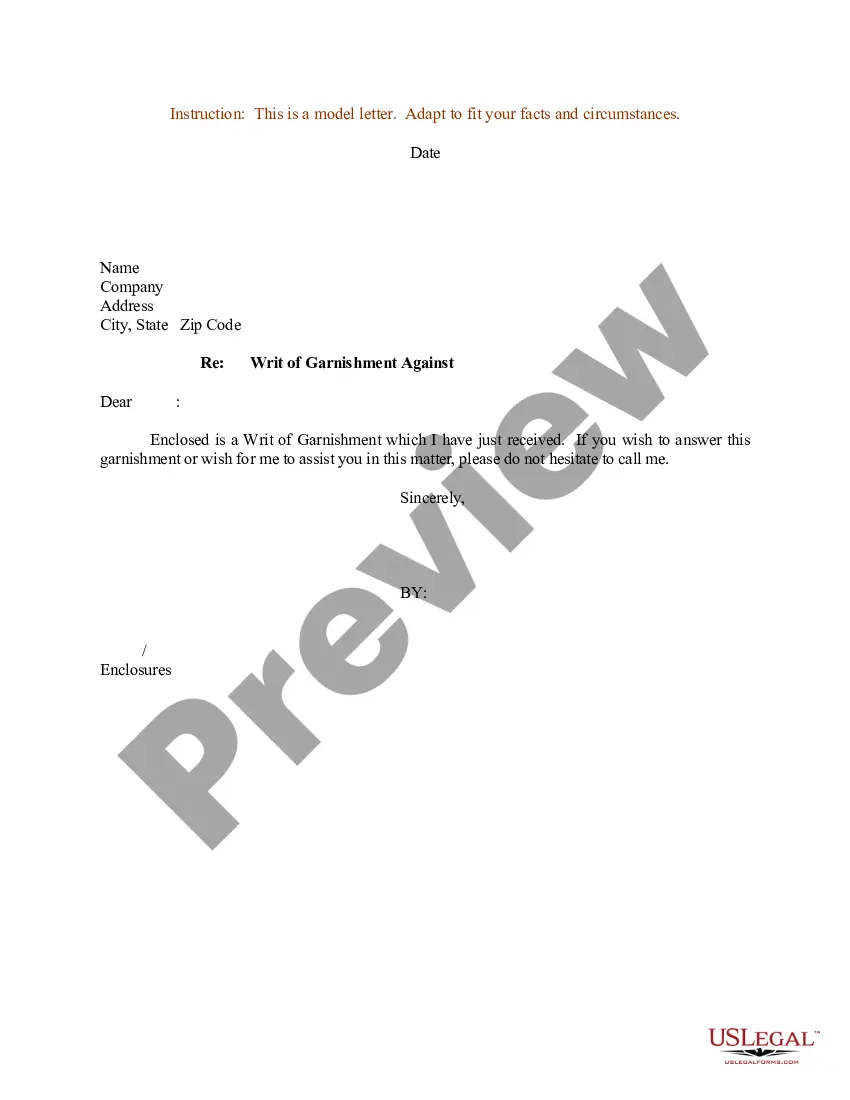
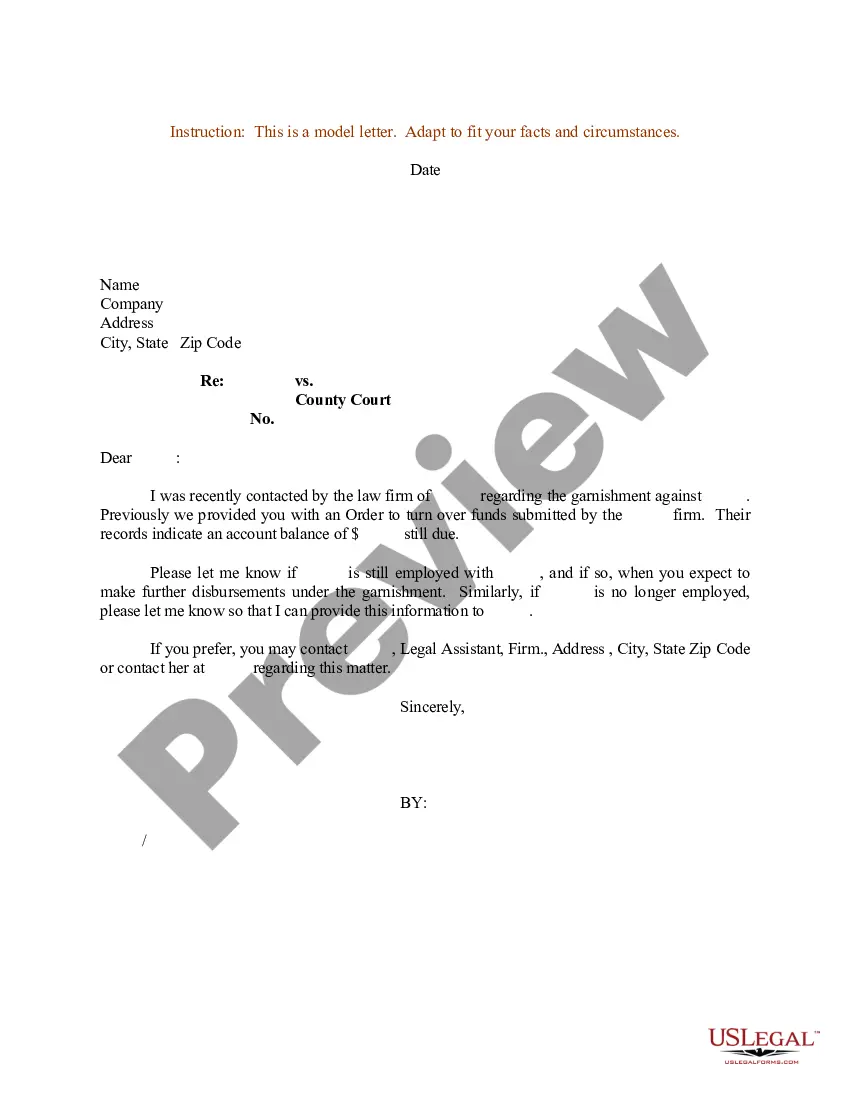
The Sample Letter for Judgment - Garnishment is a legal template designed to assist in formal communication regarding a judgment for garnishment. This form facilitates the notification of involved parties about the garnishment process, distinguishing it from other forms that may focus on judgment or general notification purposes.
Main sections of this form
- Date of the letter
- Sender's name and address
- Recipient's name and address
- Subject line indicating the judgment and garnishment
- Details of the parties involved in the garnishment



When to use this document
This form is used when a creditor seeks to enforce a court judgment through garnishment, allowing them to collect debts owed to them by taking funds directly from the debtor's wages or bank accounts. It is necessary when notifying the debtor and relevant financial institutions about the garnishment process.
Intended users of this form
This form is intended for:
- Creditors seeking to collect on a court judgment through garnishment
- Attorneys representing creditors in garnishment cases
- Individuals with a court order requiring payment from a debtor
Steps to complete this form
- Enter the date at the top of the letter.
- Provide the sender's name and address.
- Add the recipient's name and address in the designated section.
- Clearly state the subject line related to the judgment and garnishment.
- Fill in the names of the parties involved in the garnishment case.
Does this document require notarization?
This form does not typically require notarization to be legally valid. However, some jurisdictions or document types may still require it. US Legal Forms provides secure online notarization powered by Notarize, available 24/7 for added convenience.
Get your form ready online
Our built-in tools help you complete, sign, share, and store your documents in one place.
Make edits, fill in missing information, and update formatting in US Legal Forms—just like you would in MS Word.
Download a copy, print it, send it by email, or mail it via USPS—whatever works best for your next step.
Sign and collect signatures with our SignNow integration. Send to multiple recipients, set reminders, and more. Go Premium to unlock E-Sign.
If this form requires notarization, complete it online through a secure video call—no need to meet a notary in person or wait for an appointment.
We protect your documents and personal data by following strict security and privacy standards.

Make edits, fill in missing information, and update formatting in US Legal Forms—just like you would in MS Word.

Download a copy, print it, send it by email, or mail it via USPS—whatever works best for your next step.

Sign and collect signatures with our SignNow integration. Send to multiple recipients, set reminders, and more. Go Premium to unlock E-Sign.

If this form requires notarization, complete it online through a secure video call—no need to meet a notary in person or wait for an appointment.

We protect your documents and personal data by following strict security and privacy standards.
Common mistakes to avoid
- Failing to include the correct date, which can render the document ineffective.
- Inaccurate address information for parties involved, leading to delivery issues.
- Omitting relevant party names which may lead to confusion.
Benefits of using this form online
- Convenience of instant download and access at any time.
- Editability to personalize the form according to your specific needs.
- Reliability, as the forms are drafted by licensed attorneys to ensure compliance with legal standards.
Legal use & context
- This letter serves as an official document in the garnishment process.
- It must comply with applicable laws to enforce a court judgment successfully.
- Failure to follow proper procedures may hinder collection efforts.
Main things to remember
- The Sample Letter for Judgment - Garnishment is essential for notifying parties about garnishment actions.
- Completing the form accurately is critical for its effectiveness.
- Understanding state-specific requirements is vital for legal compliance.
Looking for another form?

Form popularity
FAQ
Make sure you state you are exercising your rights under the Fair Debt Collection Practices Act. Include a sentence or two describing why you are judgment-proof For example: I am judgment proof because I am living only on Social Security benefits, own limited exempt property, and cannot meet current expenses.
Change of Employment. The easiest thing to do is change your employer. Installment Plan. The IRS will let you pay your balance over time if you work out an installment plan with them. Offer in Compromise. Financial Hardship Exemption. Appeal. Bankruptcy.
If it's already started, you can try to challenge the judgment or negotiate with the creditor. But, they're in the driver's seat, and if they don't allow you to stop a garnishment by agreeing to make voluntary payments, you can't really force them to. You can, however, stop the garnishment by filing a bankruptcy case.
Wage garnishment is a legal procedure in which a person's earnings are required by court order to be withheld by an employer for the payment of a debt such as child support.
Further, if you think that quitting your job and simply finding another one will resolve the situation, you may be surprised to find that the garnishment order will follow you to your new job as well. As such, while quitting your job is certainly a legal option, you may do well to consider other recourse alternatives.