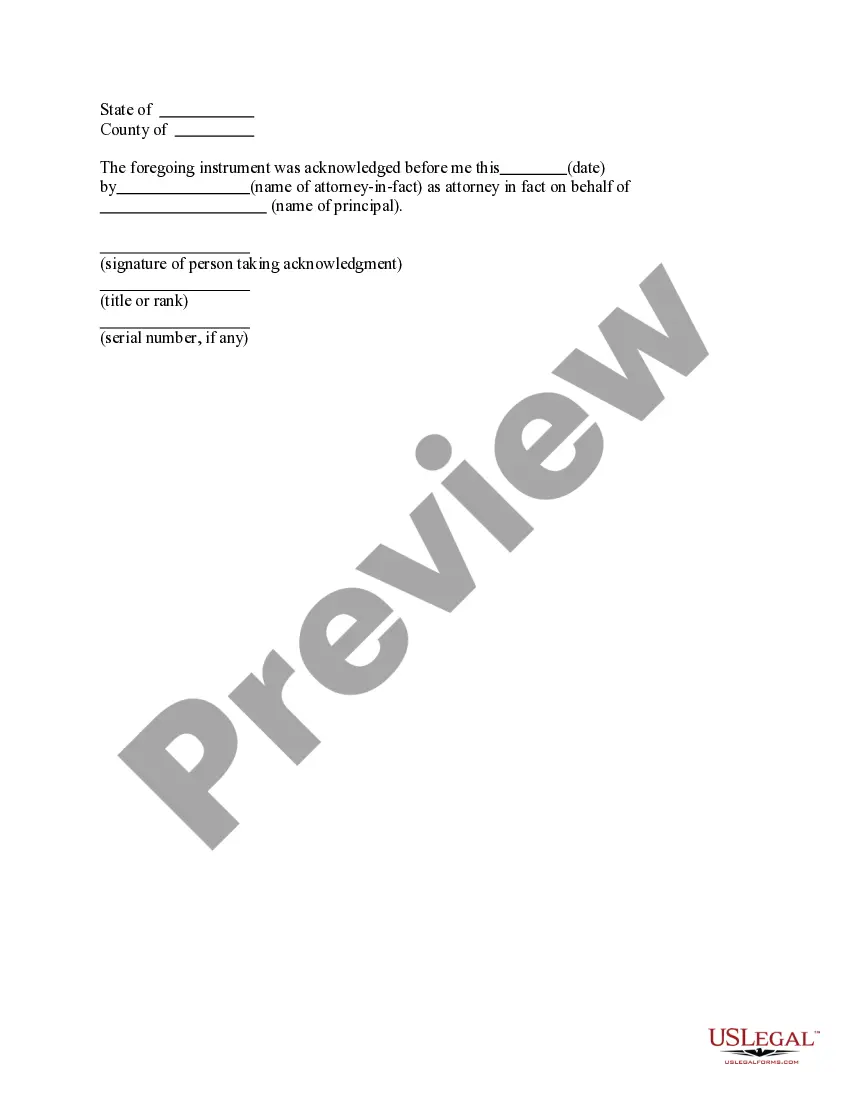
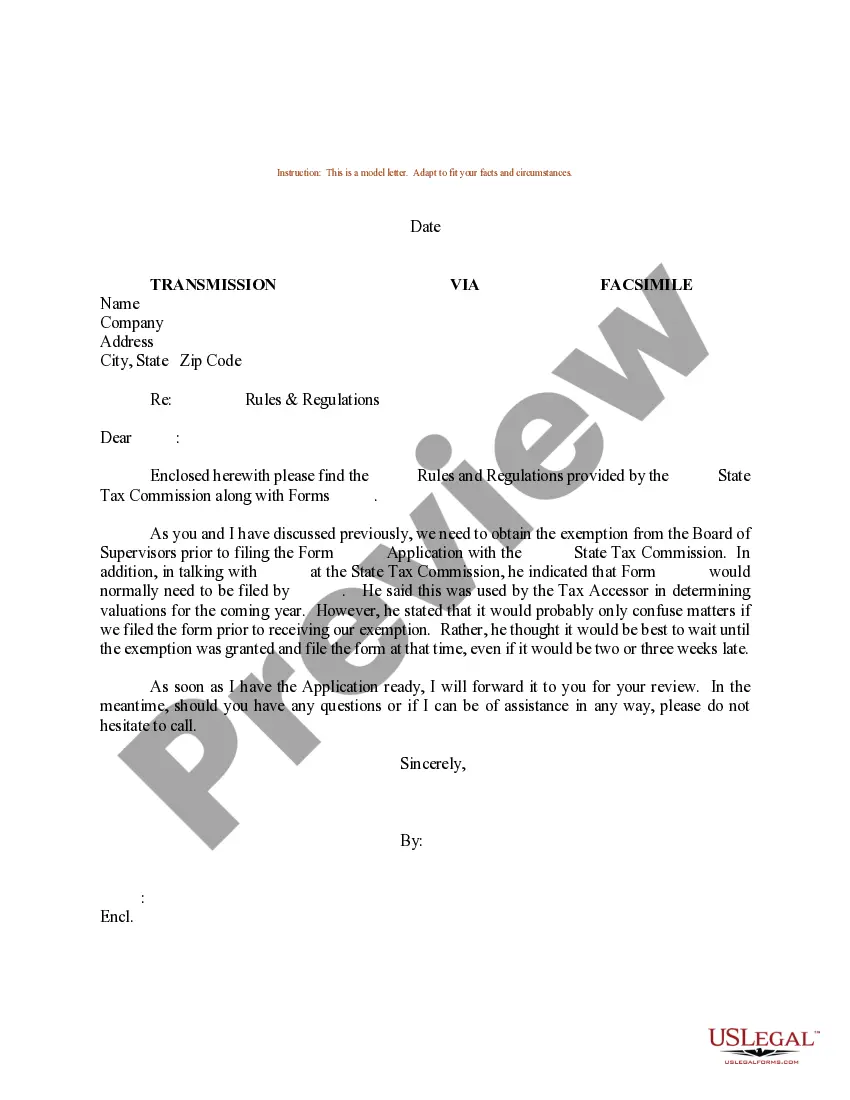
Sample Letter for Rules and Regulations
Overview of this form
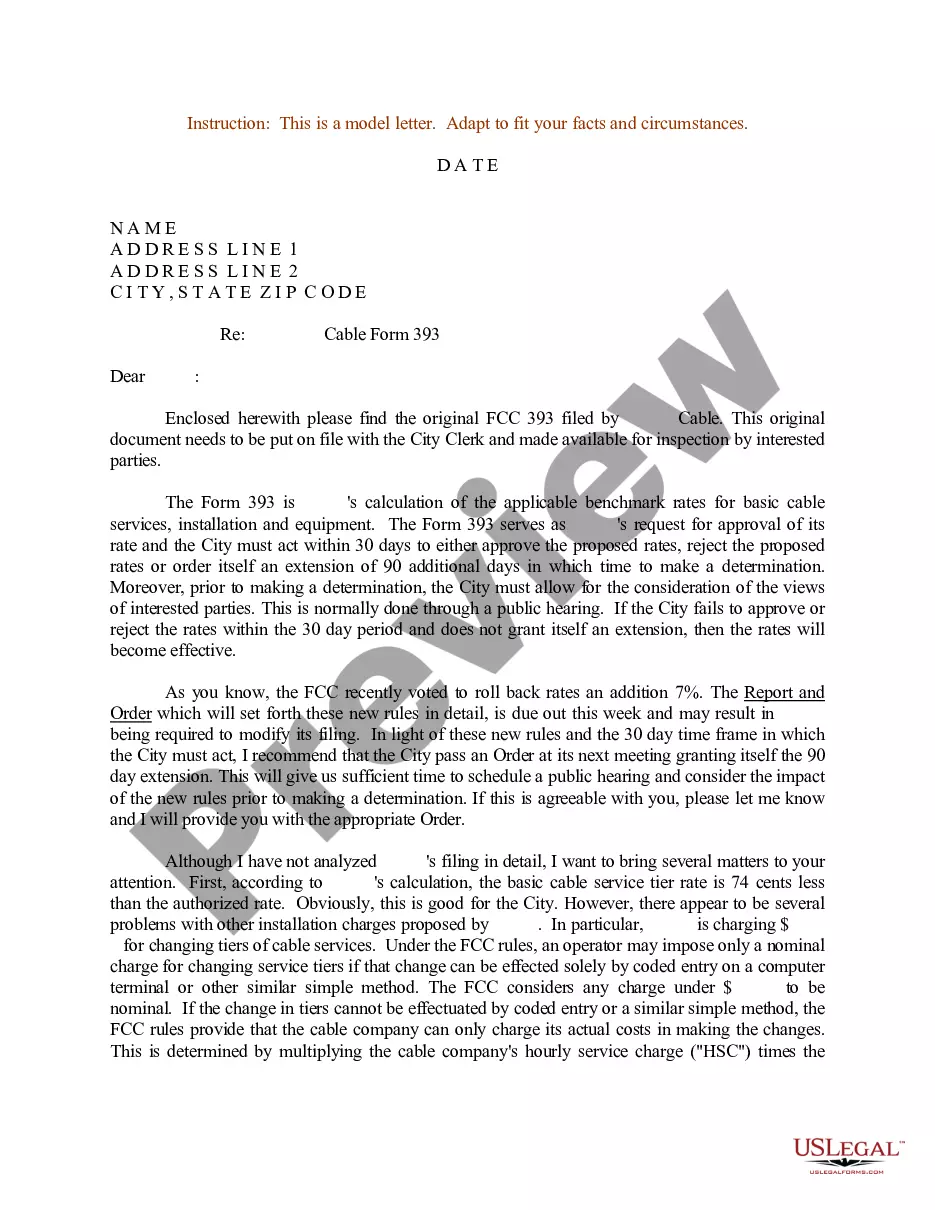
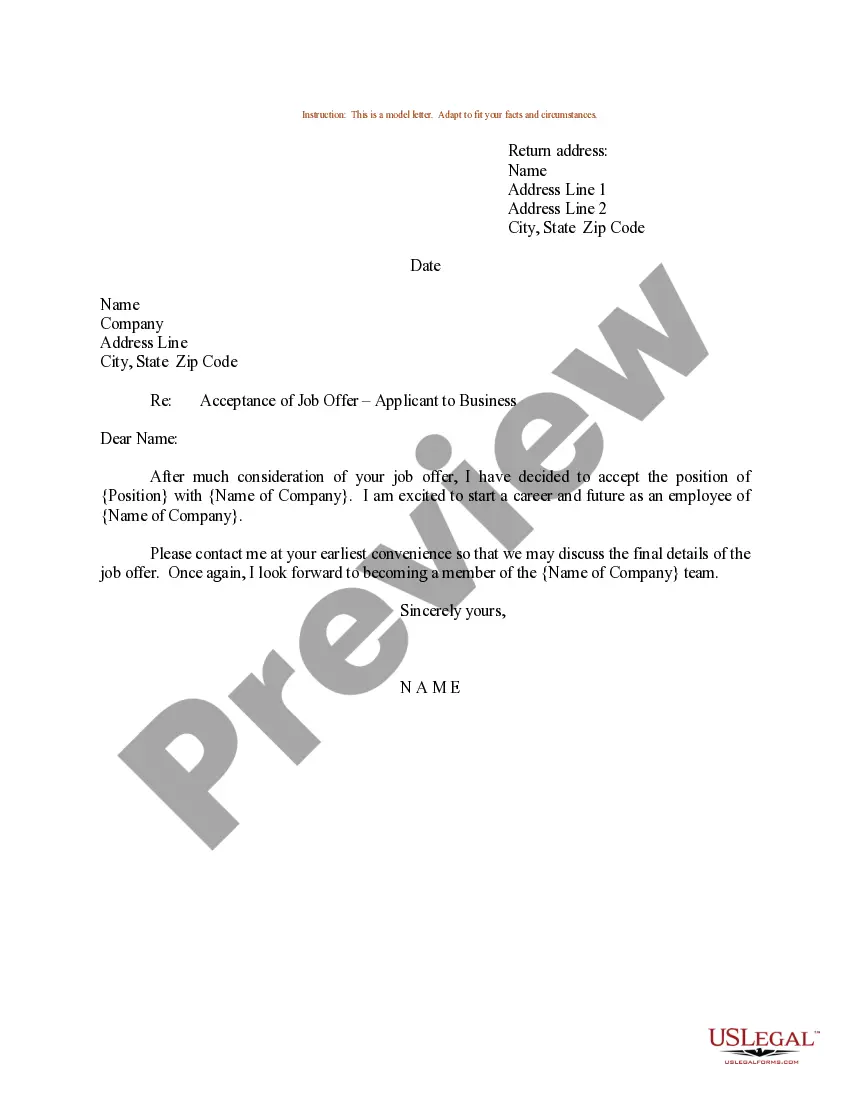
The Sample Letter for Rules and Regulations is a formal document used to communicate specific guidelines or regulations to a recipient. This form is essential for notifying individuals or organizations about the pertinent rules that govern a particular activity or behavior. Unlike other correspondence, this letter focuses specifically on outlining rules, making it a crucial tool for legal and organizational clarity.
Key components of this form
- Date of transmission.
- Recipient's name and address.
- Clear statement regarding the upcoming application.
- Contact information for inquiries.
- Signature of the sender.

When this form is needed
This form is typically used when you need to inform someone about the rules and regulations applicable to a specific context, such as a new policy, compliance issues, or operational standards. It can be used by businesses, organizations, or individuals when changes or clarifications in rules need to be communicated effectively.
Intended users of this form
- Businesses that need to communicate policies to employees.
- Organizations notifying members about compliance guidelines.
- Individuals writing to a party regarding specific regulations.
Instructions for completing this form
- Enter the date of sending the letter at the top.
- Fill in the recipient's name and full address.
- Clearly state your intent to send the application and any relevant details regarding the rules.
- Add your contact information to facilitate follow-up questions.
- Sign the letter to confirm authenticity.
Notarization guidance
Notarization is generally not required for this form. However, certain states or situations might demand it. You can complete notarization online through US Legal Forms, powered by Notarize, using a verified video call available anytime.
Get your form ready online
Our built-in tools help you complete, sign, share, and store your documents in one place.
Make edits, fill in missing information, and update formatting in US Legal Forms—just like you would in MS Word.
Download a copy, print it, send it by email, or mail it via USPS—whatever works best for your next step.
Sign and collect signatures with our SignNow integration. Send to multiple recipients, set reminders, and more. Go Premium to unlock E-Sign.
If this form requires notarization, complete it online through a secure video call—no need to meet a notary in person or wait for an appointment.
We protect your documents and personal data by following strict security and privacy standards.

Make edits, fill in missing information, and update formatting in US Legal Forms—just like you would in MS Word.

Download a copy, print it, send it by email, or mail it via USPS—whatever works best for your next step.

Sign and collect signatures with our SignNow integration. Send to multiple recipients, set reminders, and more. Go Premium to unlock E-Sign.

If this form requires notarization, complete it online through a secure video call—no need to meet a notary in person or wait for an appointment.

We protect your documents and personal data by following strict security and privacy standards.
Common mistakes
- Failing to include the date of the letter.
- Not clearly stating the rules or regulations being referenced.
- Neglecting to provide complete contact information for follow-up.
- Forgetting to sign the letter before sending.
Advantages of online completion
- Convenience of immediate access and download.
- Editability to customize the letter to specific needs.
- Reliability, as the form is drafted by licensed attorneys.
Summary of main points
- The Sample Letter for Rules and Regulations is essential for formal notification of guidelines.
- It is suitable for use by businesses, organizations, and individuals.
- Completing the form accurately helps avoid common mistakes and ensures effective communication.
Looking for another form?

Form popularity
FAQ
Most formal letters will start with 'Dear' before the name of the person that you are writing to: 'Dear Ms Brown,' or 'Dear Brian Smith,' You can choose to use first name and surname, or title and surname. 'Dear Sir/Madam,' Remember to add the comma.
Address or greet the concerned person properly like Dear Sir/Madam. Always mention the subject of writing the letter. Be concise in your letter. The tone of the letter should be very polite and not harsh. Write in a proper format and take care of the presentation of a letter. Mention the address and date correctly.
Contact Information (Include your contact information unless you are writing on letterhead that already includes it.) Your Name. Your Address. Date. Contact Information (The person or company you are writing to) Name. Title. Greeting (Salutation Examples) Body of Letter. Closing. Signature. Typed Signature.
Keep it focused. Business letters should have a clear objective. Proofread. Errors can cause misunderstandings. Avoid contractions. Write out each word fully. Be tactful.
Your Address. Your address, also known as the return address, should come first. The Date. Reference Line. Recipient's Name and Address. The Greeting. The Subject. The Text of Your Letter. The Closing.
Tips to Writing Warning Letters State the disciplinary actions that must be taken for the offending party's actions. Mention that there will be repercussions for any similar and further violations committed. End the letter by asking the offending party to avoid committing the same or any other violations.
Dear First Name: We are sending you this written warning under the progressive discipline policy because of your repeated violations of Company workplace safety rules. This is not the first time that we have spoken to you about disobeying safety rules. You explained summarize worker's explanation.
Sender's address. Date. Receiver's address. Subject. Salutation. Body of the letter. Complimentary closure. Signature line: sender's name, signature and designation.
Address or greet the concerned person properly like Dear Sir/Madam. Always mention the subject of writing the letter. Be concise in your letter. The tone of the letter should be very polite and not harsh. Write in a proper format and take care of the presentation of a letter. Mention the address and date correctly.