Sample Letter for Exception To Determination of Civil Penalty
Understanding this form
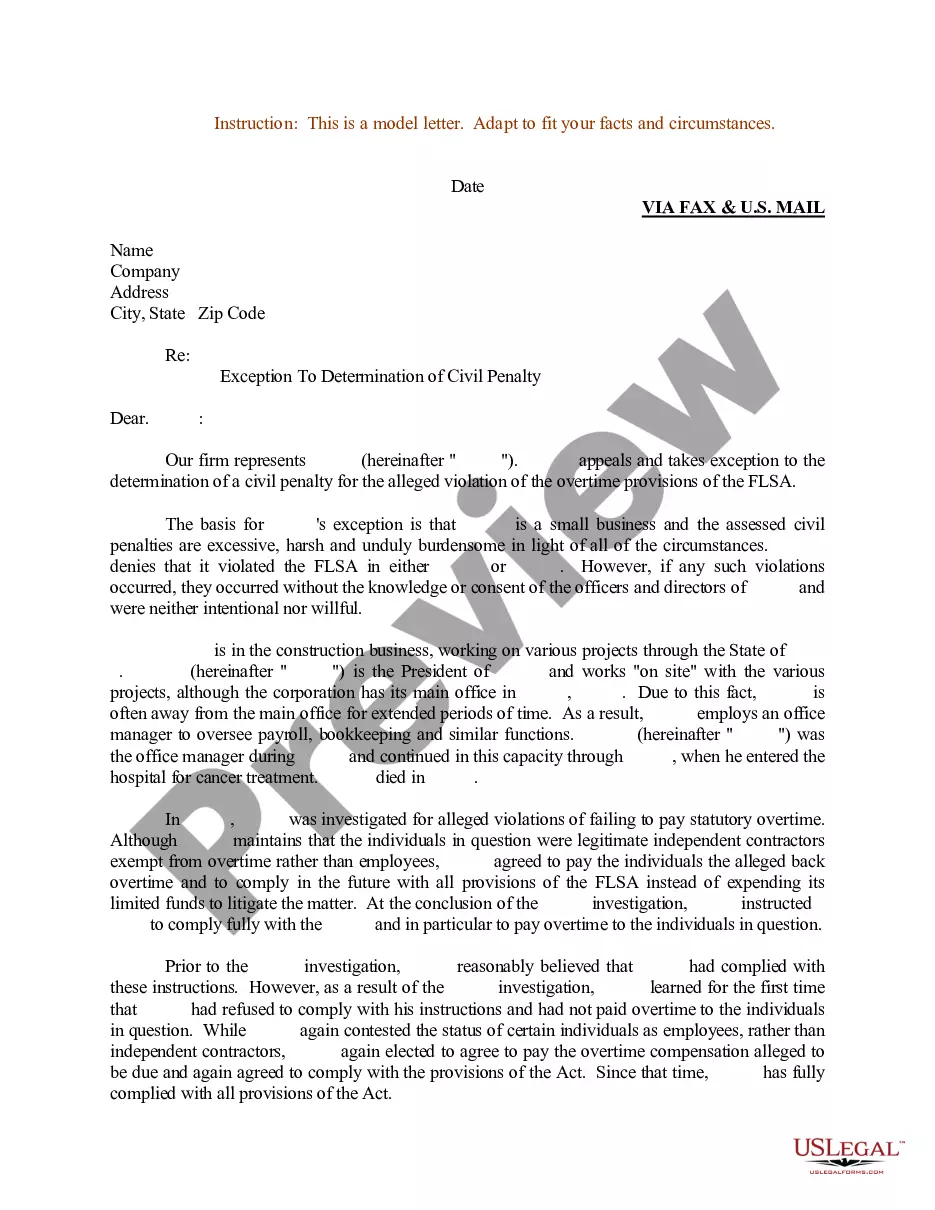
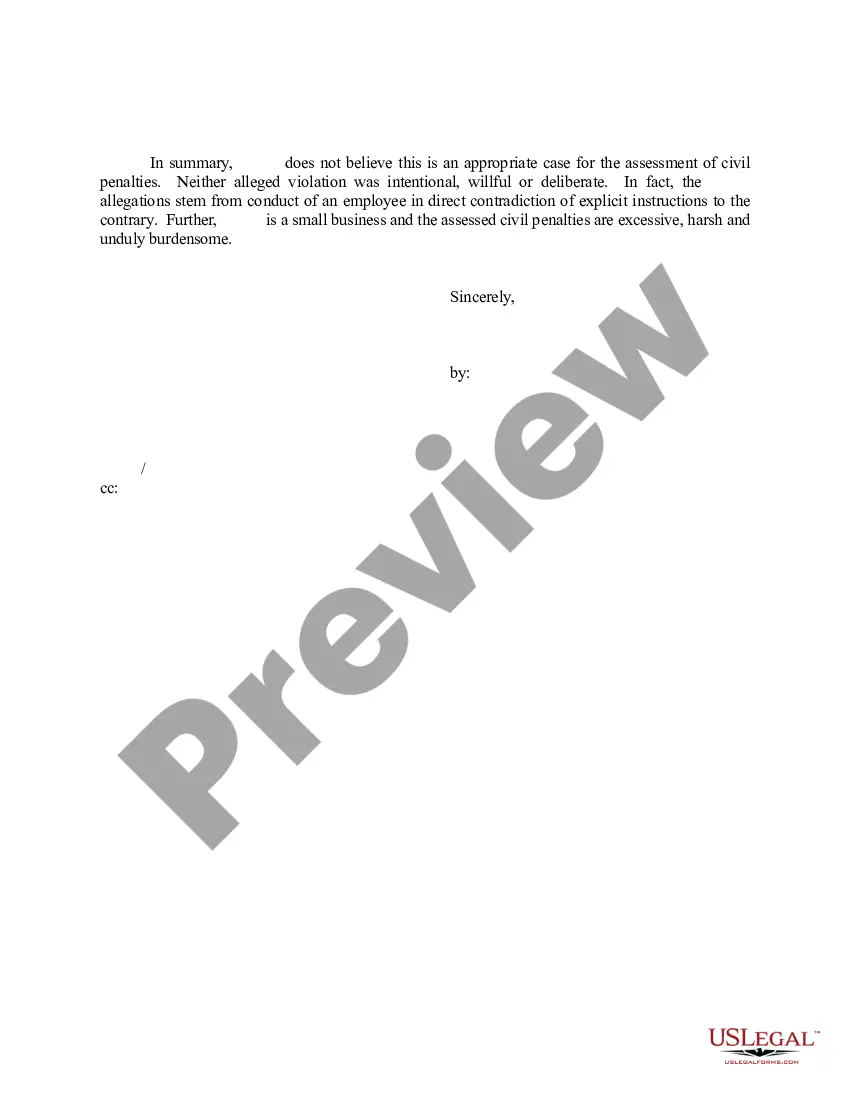
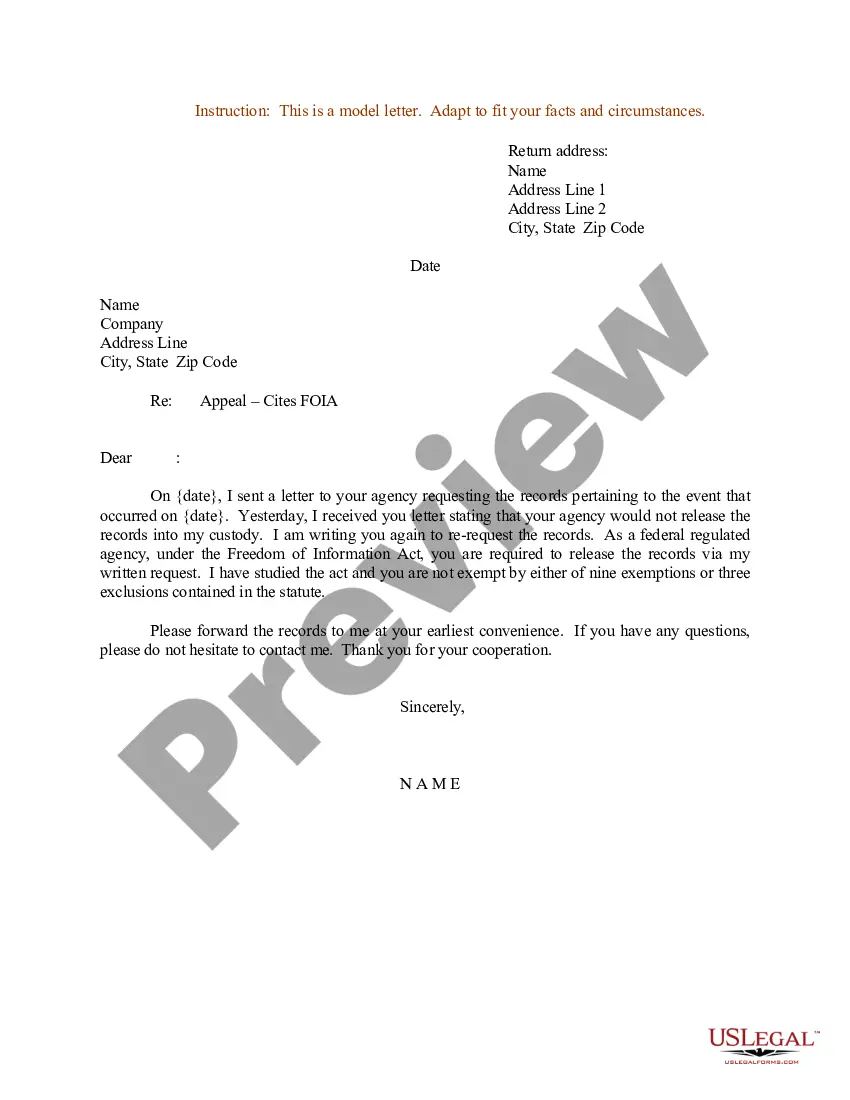
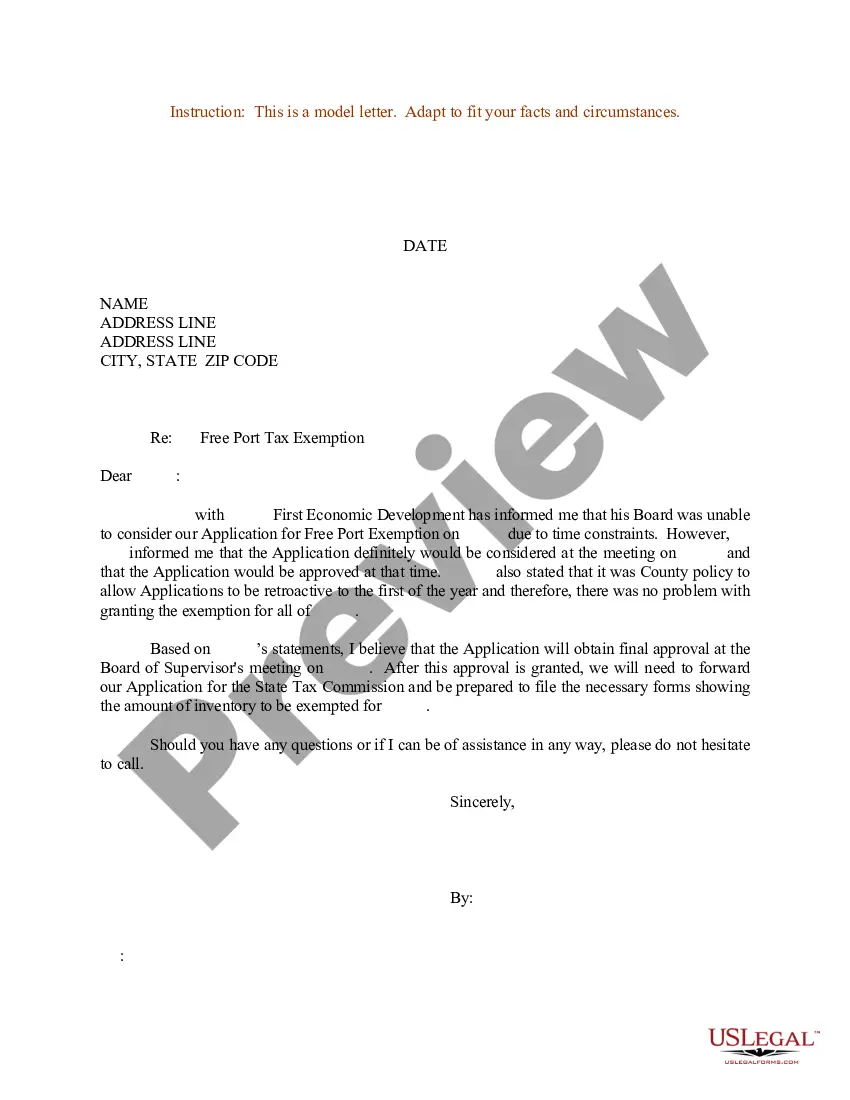
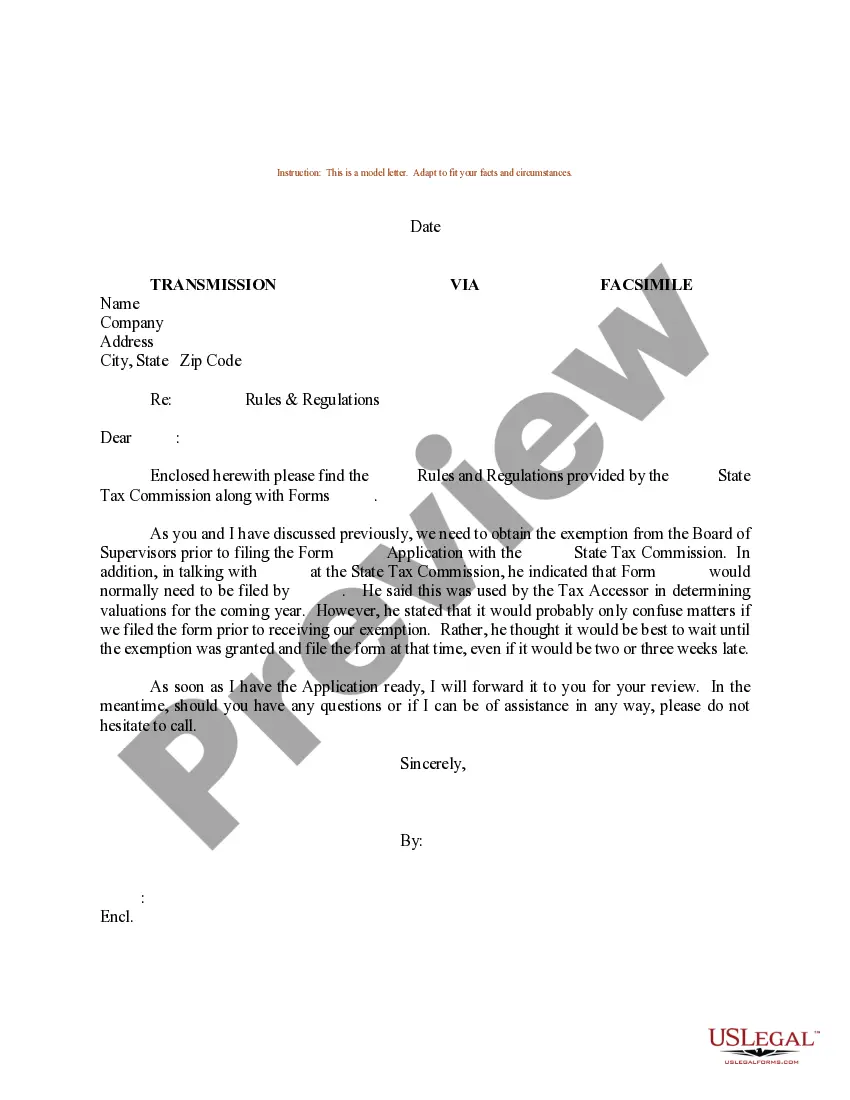
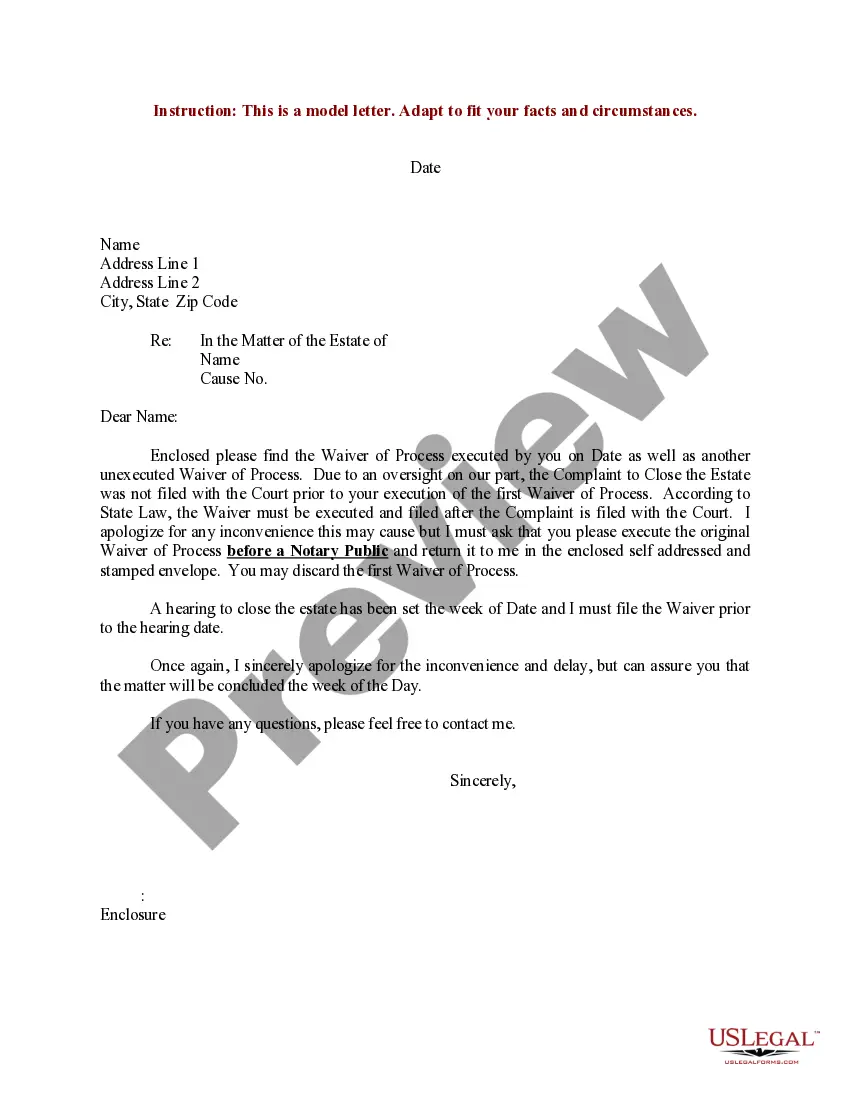
The Sample Letter for Exception To Determination of Civil Penalty is a formal document used to request reconsideration of a civil penalty imposed by a government agency. This form serves as a template for individuals or businesses to communicate their argument against the penalty, ensuring that their concerns are adequately presented. Unlike general appeal forms, this letter specifically focuses on exceptions and mitigating circumstances surrounding the determination of the penalty.
Form components explained
- Date of the letter
- Your name and contact information
- Recipient's name and address
- Subject line indicating the purpose of the letter
- A detailed explanation of the circumstances surrounding the civil penalty
- A request for the reconsideration of the penalty
When this form is needed
This form should be used when an individual or organization has received a civil penalty and believes they have valid reasons to contest it. Common scenarios include instances where there were mitigating factors, misunderstandings about compliance, or overreach by the governing authority. Using this letter allows the writer to formally present their case for an exception.
Who should use this form
- Individuals or businesses who have been issued a civil penalty
- Those seeking to contest or appeal the determination of a penalty
- Parties who believe they have mitigating circumstances justifying an exception
- Representatives acting on behalf of others in related scenarios
Steps to complete this form
- Enter the date the letter is being sent.
- Provide your name and contact information at the top.
- Include the recipient's name and address accurately.
- Clearly state the subject of the letter to indicate it is regarding the civil penalty.
- Compose a thorough but concise explanation of your case, including any supporting details that justify your request for an exception.
- Close with a formal request for reconsideration and include your signature.
Notarization requirements for this form
This form does not typically require notarization to be legally valid. However, some jurisdictions or document types may still require it. US Legal Forms provides secure online notarization powered by Notarize, available 24/7 for added convenience.
Get your form ready online
Our built-in tools help you complete, sign, share, and store your documents in one place.
Make edits, fill in missing information, and update formatting in US Legal Forms—just like you would in MS Word.
Download a copy, print it, send it by email, or mail it via USPS—whatever works best for your next step.
Sign and collect signatures with our SignNow integration. Send to multiple recipients, set reminders, and more. Go Premium to unlock E-Sign.
If this form requires notarization, complete it online through a secure video call—no need to meet a notary in person or wait for an appointment.
We protect your documents and personal data by following strict security and privacy standards.

Make edits, fill in missing information, and update formatting in US Legal Forms—just like you would in MS Word.

Download a copy, print it, send it by email, or mail it via USPS—whatever works best for your next step.

Sign and collect signatures with our SignNow integration. Send to multiple recipients, set reminders, and more. Go Premium to unlock E-Sign.

If this form requires notarization, complete it online through a secure video call—no need to meet a notary in person or wait for an appointment.

We protect your documents and personal data by following strict security and privacy standards.
Avoid these common issues
- Failing to include all relevant details about the penalty.
- Not addressing the letter to the correct department or individual.
- Omitting a clear request for reconsideration.
- Using overly complex language that may obscure key points.
Why use this form online
- Easy access to a professionally drafted letter template.
- Ability to edit the form to suit your specific circumstances.
- Instant downloads for quick use without waiting for postal delivery.
- Designed to ensure compliance with legal standards.
Summary of main points
- The Sample Letter for Exception To Determination of Civil Penalty is a crucial tool for contesting civil penalties.
- Users should provide clear, factual information supporting their appeal.
- Ensure that the letter is properly addressed and includes all essential components.
Looking for another form?

Form popularity
FAQ
1 the act of excepting or fact of being excepted; omission. 2 anything excluded from or not in conformance with a general rule, principle, class, etc. 3 criticism, esp. when it is adverse; objection.
The letter should include basic identifying information, an explanation of the legal obligation and reason for exemption, and clearly state that the writer is claiming the exemption. The Boy Scouts of America and other non-profit organizations can file exemption letters to be excluded from paying taxes.
For the best chance of success, a letter requesting exception to policy must fully describe the circumstances that justify the request for exception. It should include as much detail as possible such as: the requirement you're trying to circumvent. the Who, What, When, Why, and Where of the situation.
Exception Letter means the Division's first correspondence with a petitioner after the Division's initial review of a filed petition, which letter indicates whether or not the petition is incomplete.
An exception request is a type of coverage determination. An enrollee, an enrollee's prescriber, or an enrollee's representative may request a tiering exception or a formulary exception.
Tell them / remind them who you are (unless you interact frequently) Give the context for your request. Ask what you need to ask or tell them what you need to tell them. Invite further communication or discussion if useful.
The exception process is intended to be a generic method that applies to all IT/information security policies and standards.Requests for exception may be revoked in the event of a security incident or policy violation using established incident response procedures.
A tiering exception is a type of coverage determination used when a medication is on a plan's formulary but is placed in a nonpreferred tier that has a higher co-pay or co-insurance. Plans may make a tier exception when the drug is demonstrated to be medically necessary.