Sample Letter for Appeal Citing Freedom of Information Act
About this form
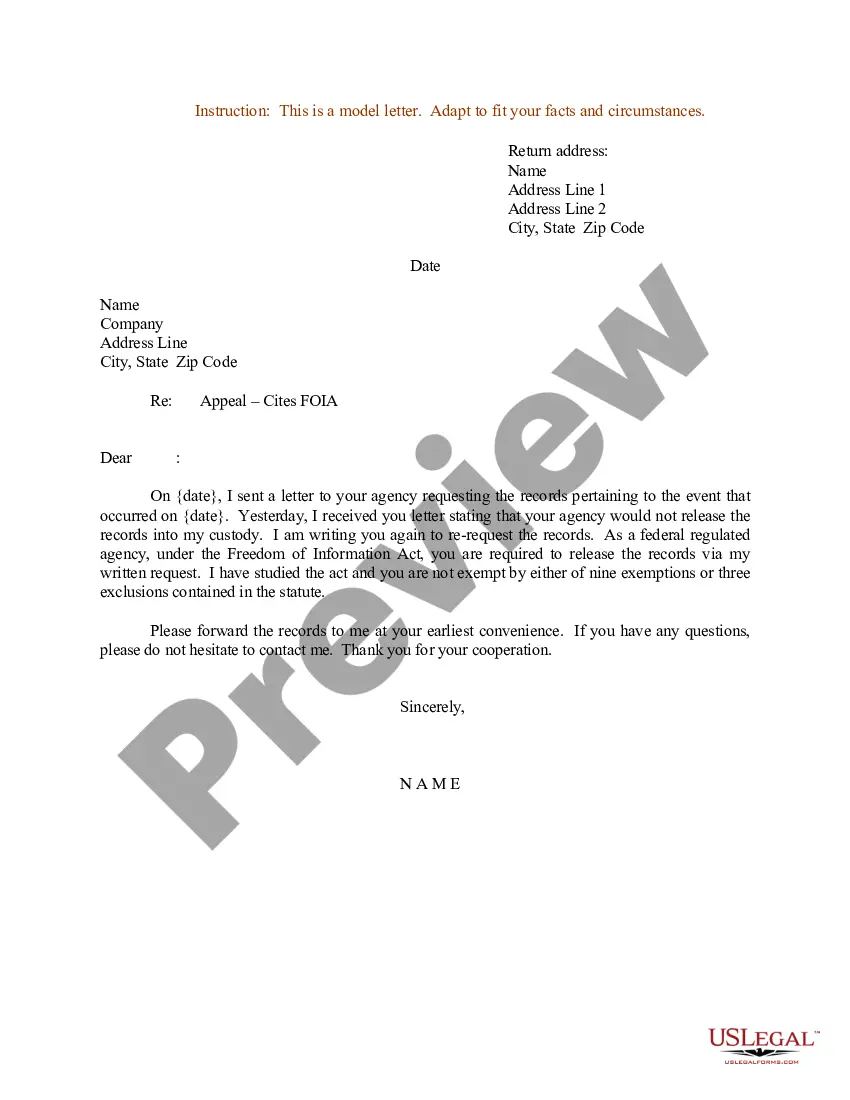
This Sample Letter for Appeal Citing Freedom of Information Act is a template designed to assist individuals in requesting access to government records under the Freedom of Information Act (FOIA). This letter serves as a formal appeal when a request for records has been denied or not adequately fulfilled. Unlike general request forms, this sample letter specifically outlines the intent to appeal, making it a focused document for this particular legal context.
What’s included in this form
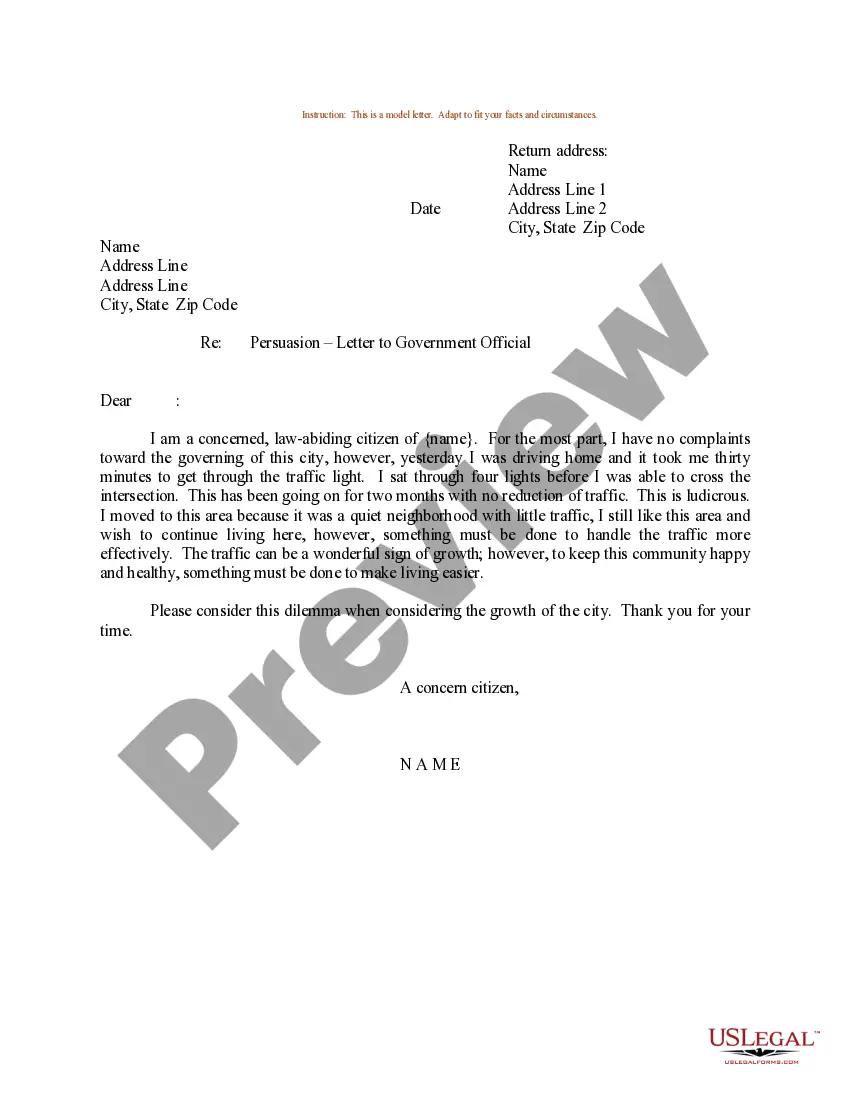
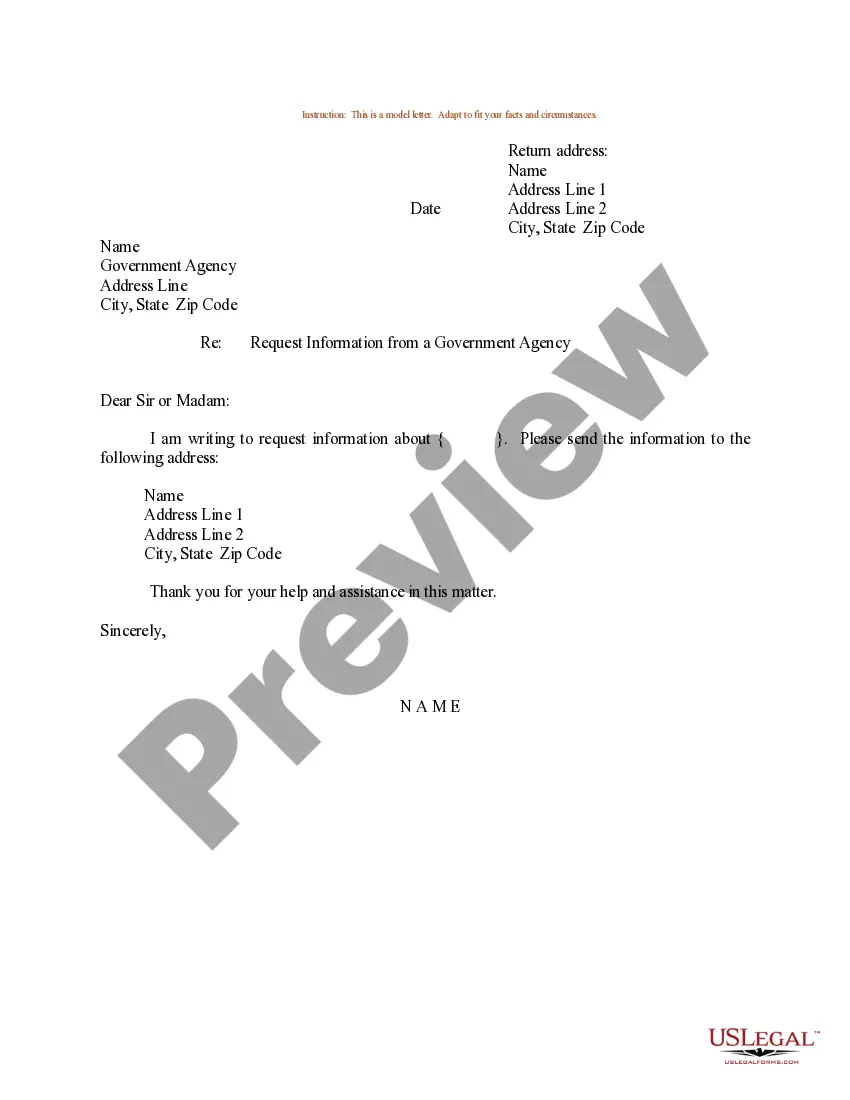
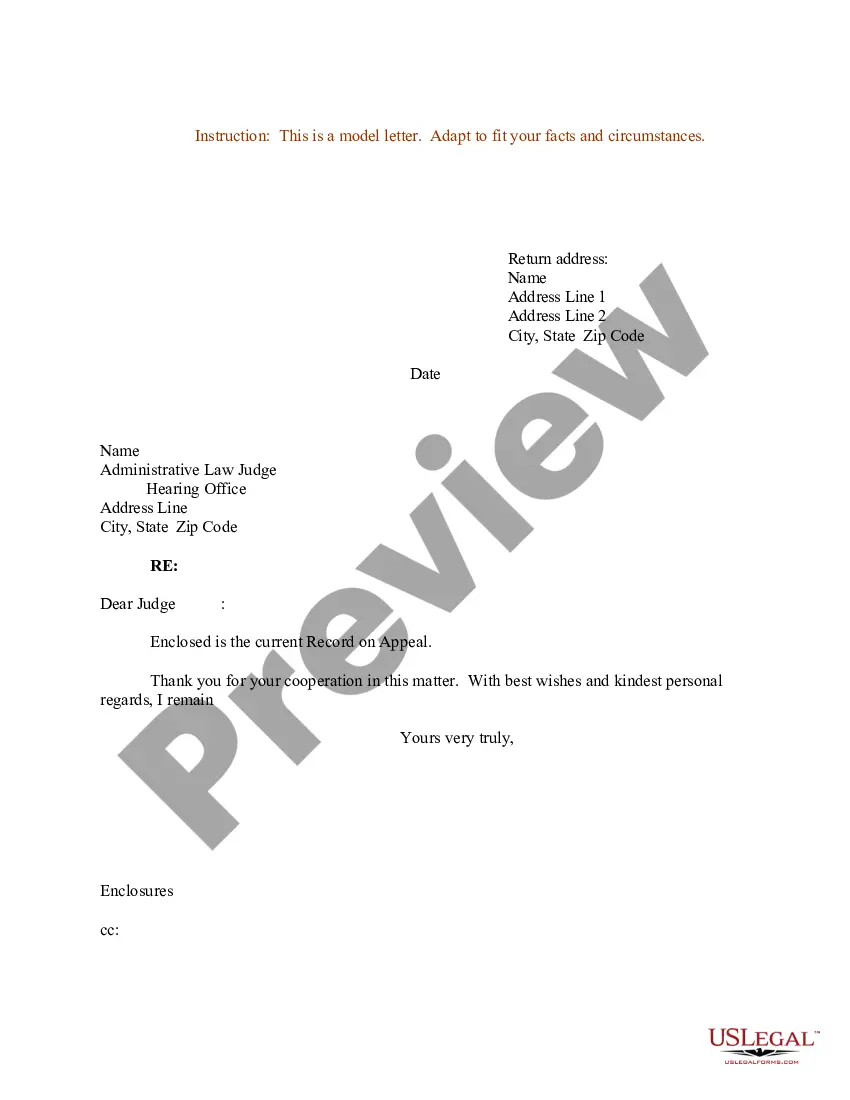
- Return address: Specify your name and address for correspondence.
- Date: Include the date you are sending the notice.
- Recipient details: Address the letter to the appropriate agency or official.
- Subject line: Clearly state the appeal and reference FOIA.
- Body of the letter: Request the records and indicate urgency politely.
- Closing: Thank the recipient and provide contact information for follow-up.
Situations where this form applies
This form should be used when you have submitted a request under the Freedom of Information Act and received a denial or incomplete response. It is appropriate for individuals seeking to challenge the decision and request a review of the agency's decision regarding access to specific records. Use this letter to strengthen your appeal and ensure your request is formally documented.
Intended users of this form
- Individuals or organizations seeking access to public government records.
- Anyone who has received a denial or inadequate response to a FOIA request.
- Advocates or representatives acting on behalf of others in the pursuit of records.
How to complete this form
- Identify the parties: Provide your details as the requester and the agencyâs information.
- Enter the date: Write the date of sending the appeal letter.
- Specify the subject: Clearly state this is an appeal under FOIA.
- Detail your request: Clearly outline the records you are appealing for and express the reason for your appeal.
- Sign and close the letter: Thank the recipient and include your contact information for any questions.
Notarization requirements for this form
This form does not typically require notarization unless specified by local law. However, always verify your local regulations to ensure all legal requirements are met for your appeal.
Get your form ready online
Our built-in tools help you complete, sign, share, and store your documents in one place.
Make edits, fill in missing information, and update formatting in US Legal Forms—just like you would in MS Word.
Download a copy, print it, send it by email, or mail it via USPS—whatever works best for your next step.
Sign and collect signatures with our SignNow integration. Send to multiple recipients, set reminders, and more. Go Premium to unlock E-Sign.
If this form requires notarization, complete it online through a secure video call—no need to meet a notary in person or wait for an appointment.
We protect your documents and personal data by following strict security and privacy standards.

Make edits, fill in missing information, and update formatting in US Legal Forms—just like you would in MS Word.

Download a copy, print it, send it by email, or mail it via USPS—whatever works best for your next step.

Sign and collect signatures with our SignNow integration. Send to multiple recipients, set reminders, and more. Go Premium to unlock E-Sign.

If this form requires notarization, complete it online through a secure video call—no need to meet a notary in person or wait for an appointment.

We protect your documents and personal data by following strict security and privacy standards.
Avoid these common issues
- Not addressing the letter to the correct agency or official.
- Failing to include the date of the original request.
- Being unclear about the specific records sought.
- Neglecting to provide contact information for follow-up.
- Using language that is overly aggressive or demanding.
Benefits of using this form online
- Convenient access: Download and complete the form from your home or office.
- Editability: Modify the template to fit your specific situation before sending.
- Legal reliability: Use professionally drafted content to ensure proper wording.
Looking for another form?

Form popularity
FAQ
If you want to file an appeal, you must submit your appeal and accompanying materials to the FOIA Appeals Officer by mail, courier service, fax, or email. All communications concerning your appeal should be clearly marked with the words: "FREEDOM OF INFORMATION APPEAL." Your appeal must be made in writing.
If the information you want is not publicly available, you can submit a FOIA request to the agency's FOIA Office. The request simply must be in writing and reasonably describe the records you seek. Most federal agencies now accept FOIA requests electronically, including by web form, e-mail or fax.
Can the FCC deny my FOIA request? Yes. If the Bureau or Office that is the custodian of the records determines that there are no records responsive to your request, or that one or more of the FOIA exemptions described above applies to the documents you request, your request will be denied in writing.
Under the statute, federal agencies are required to respond to a FOIA request within twenty working days, excluding Saturdays, Sundays, and legal holidays. This period does not begin until the request is actually received by the component that maintains the records sought.
You may file an appeal of an adverse agency determination in writing. You may submit your appeal via mail or electronically. If you send your appeal by mail, it must be postmarked, or in the case of electronic submissions, transmitted within 90 calendar days from the date of such determination.
In the United States, you can request government information about yourself using both the Freedom of Information Act (FOIA) and the Privacy Act. You will need to type up a request or use a form if the government agency has one.
If the information you want is not publicly available, you can submit a FOIA request to the agency's FOIA Office. The request simply must be in writing and reasonably describe the records you seek. Most federal agencies now accept FOIA requests electronically, including by web form, e-mail or fax.
Can the FCC deny my FOIA request? Yes. If the Bureau or Office that is the custodian of the records determines that there are no records responsive to your request, or that one or more of the FOIA exemptions described above applies to the documents you request, your request will be denied in writing.
Provide your name, address and telephone number. Specify whether you are making an FOIA or PA request. Provide as much detail as possible about the records you seek.