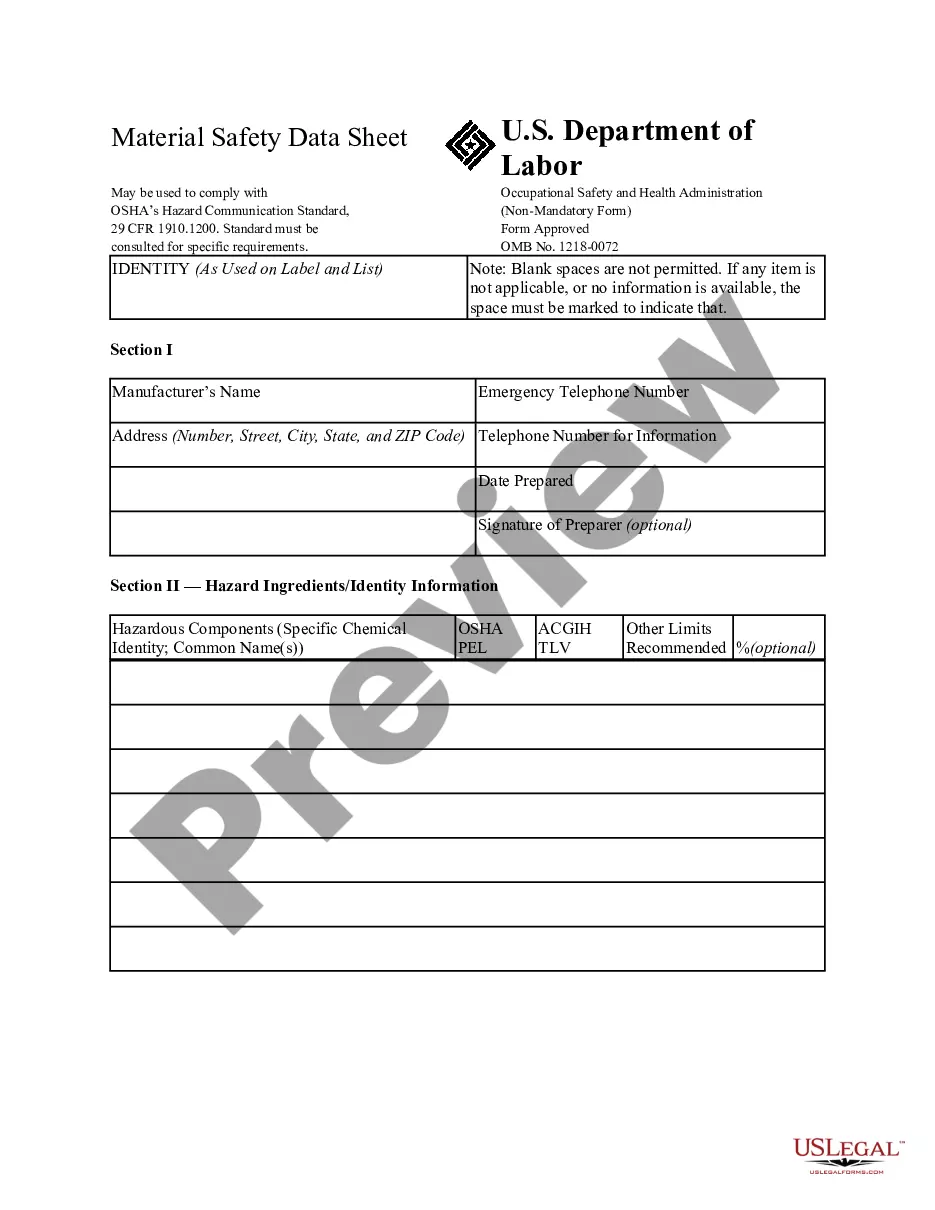
Material Safety Data Sheet from the U.S. Dept. of Labor and OSHA
About this form
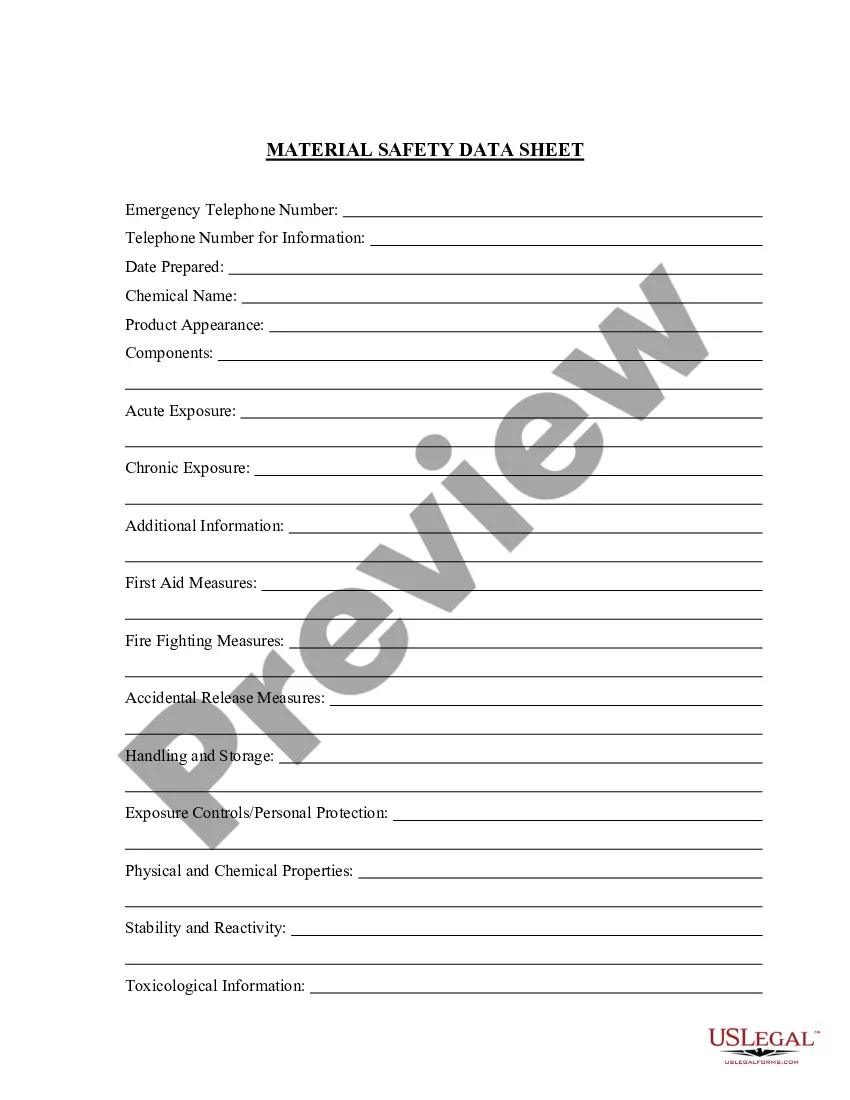
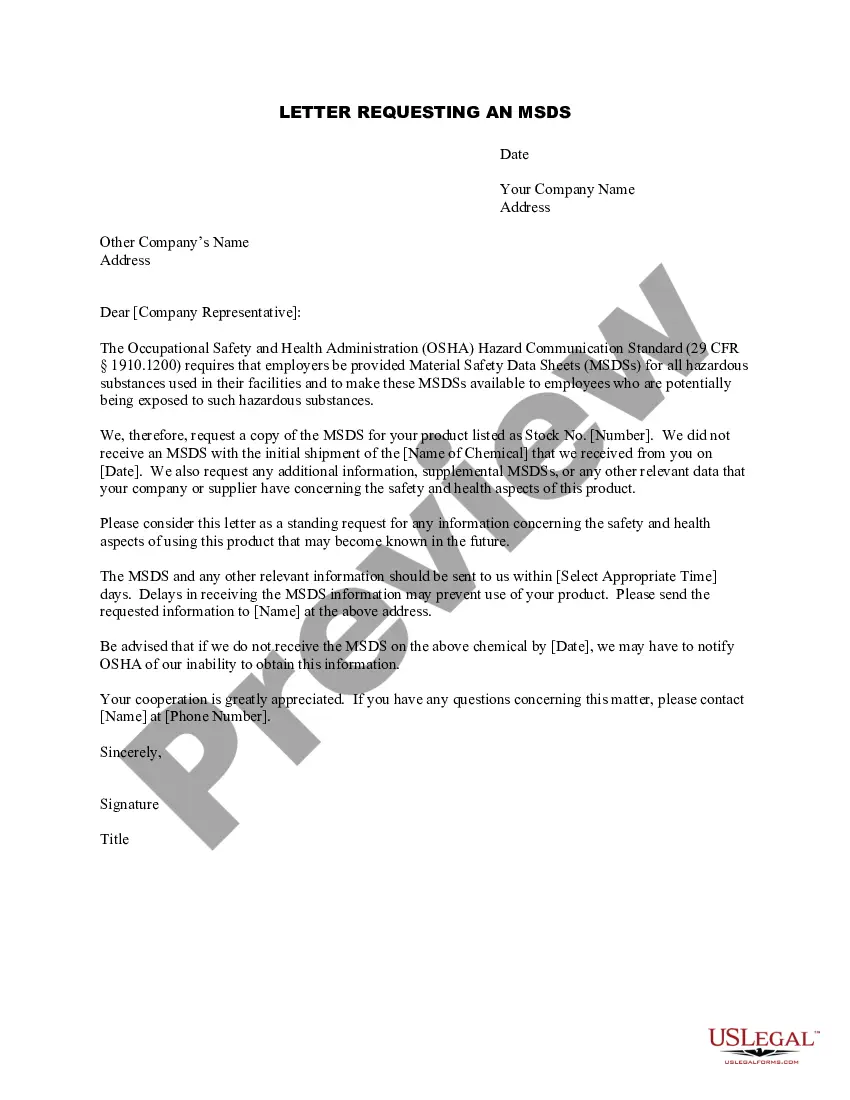
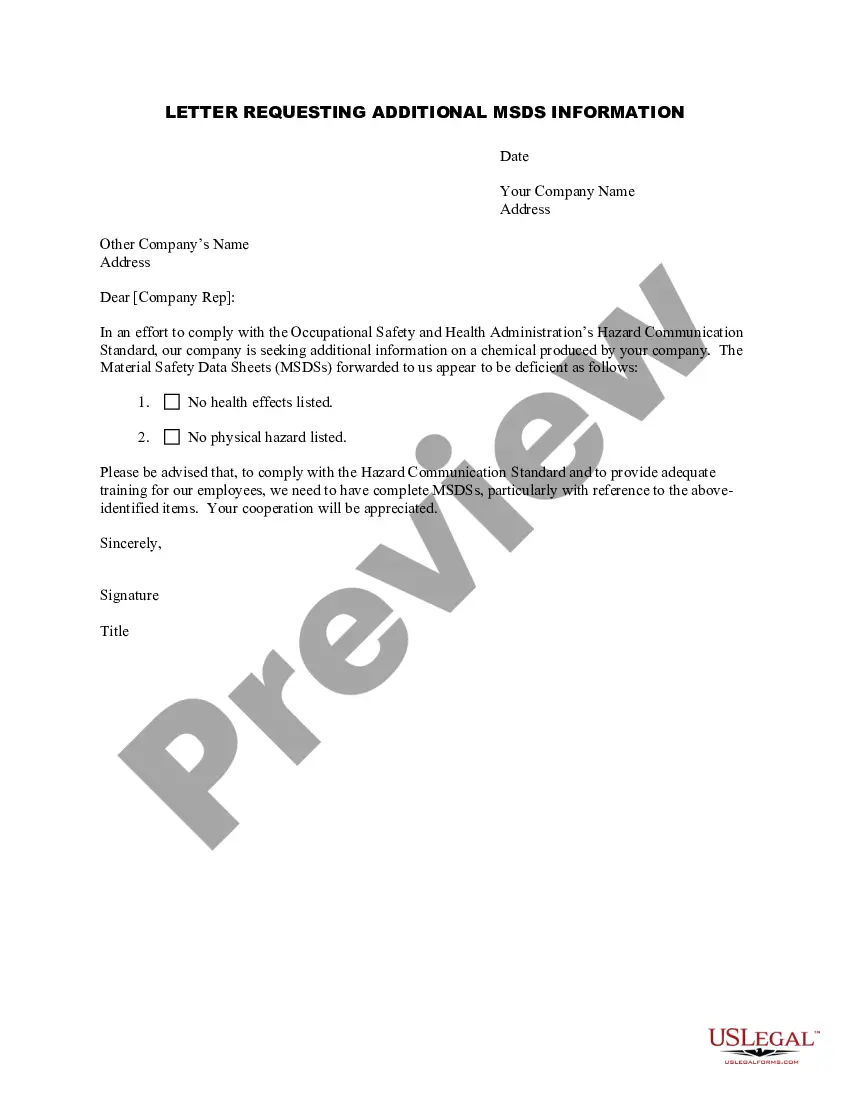
The Material Safety Data Sheet (MSDS), also known as the Safety Data Sheet (SDS), is a document that provides detailed information about the chemical properties, hazards, and handling requirements of a substance. It is essential for complying with OSHA's Hazard Communication Standard (29 CFR 1910.1200), which mandates that employers inform employees about the chemicals they may encounter in the workplace. This form is crucial for ensuring safety and health in environments where hazardous materials are used or stored.
Key parts of this document
- Identification of the chemical and its manufacturer.
- Hazardous ingredients and identity information.
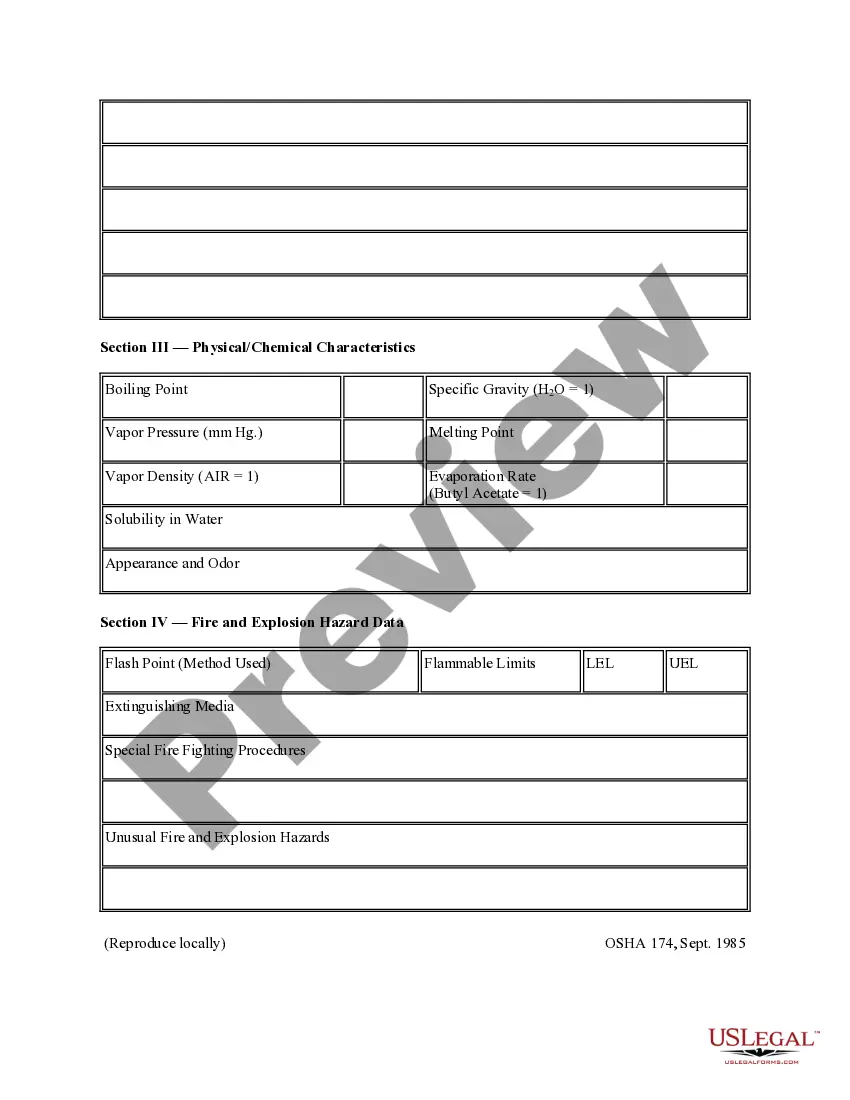
- Physical and chemical properties including boiling point and vapor pressure.
- Fire and explosion hazard data including flash point and extinguishing media.
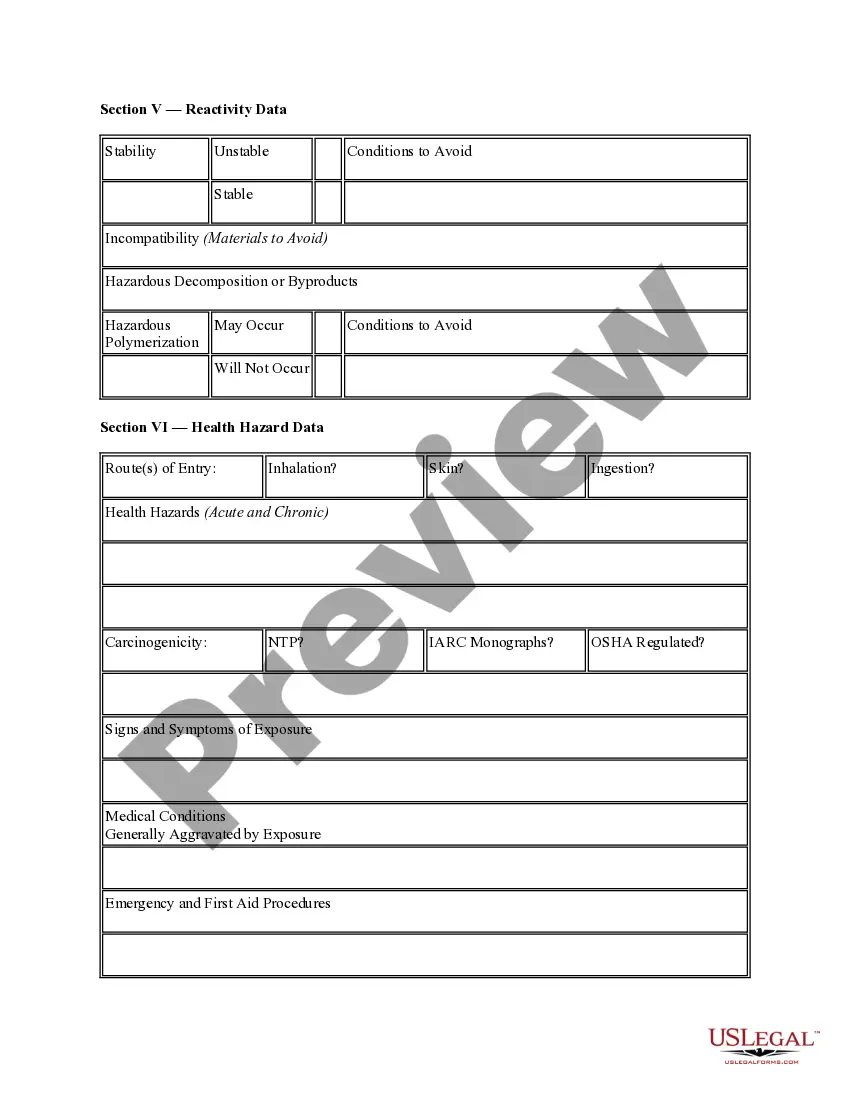
- Health hazard data such as routes of exposure and signs of exposure.
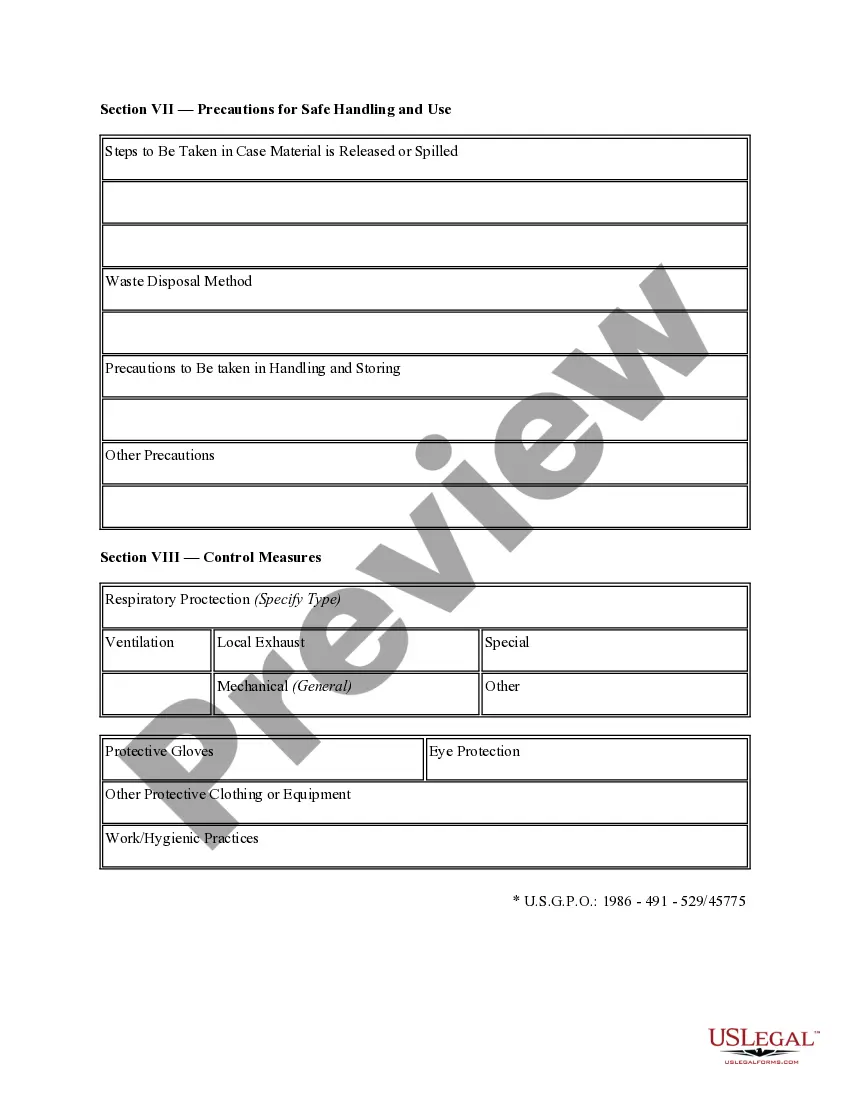
- Precautions for safe handling and use, including protective measures.

When this form is needed
This form should be used in any workplace where hazardous chemicals are handled. Employers must provide it whenever there are potentially dangerous substances present, such as in manufacturing, construction, or laboratories. It is also important during training sessions for employees about the chemicals they will be working with, ensuring they understand the risks and necessary safety precautions.
Who needs this form
This form is relevant for:
- Employers who handle or store hazardous materials.
- Employees who may be exposed to chemical hazards.
- Safety compliance officers responsible for workplace safety.
- Anyone conducting training on chemical safety practices.
Completing this form step by step
- Enter the product name and manufacturer information in the designated fields.
- List hazardous ingredients, including their concentrations and recommended limits.
- Provide physical and chemical properties, like flash point and boiling point.
- Detail the specific fire and explosion hazards associated with the chemicals.
- Include health hazard information, including symptoms of exposure and safety precautions.
- Ensure that emergency contact details are up to date and clearly stated.
Does this document require notarization?
This form usually doesn’t need to be notarized. However, local laws or specific transactions may require it. Our online notarization service, powered by Notarize, lets you complete it remotely through a secure video session, available 24/7.
Get your form ready online
Our built-in tools help you complete, sign, share, and store your documents in one place.
Make edits, fill in missing information, and update formatting in US Legal Forms—just like you would in MS Word.
Download a copy, print it, send it by email, or mail it via USPS—whatever works best for your next step.
Sign and collect signatures with our SignNow integration. Send to multiple recipients, set reminders, and more. Go Premium to unlock E-Sign.
If this form requires notarization, complete it online through a secure video call—no need to meet a notary in person or wait for an appointment.
We protect your documents and personal data by following strict security and privacy standards.

Make edits, fill in missing information, and update formatting in US Legal Forms—just like you would in MS Word.

Download a copy, print it, send it by email, or mail it via USPS—whatever works best for your next step.

Sign and collect signatures with our SignNow integration. Send to multiple recipients, set reminders, and more. Go Premium to unlock E-Sign.

If this form requires notarization, complete it online through a secure video call—no need to meet a notary in person or wait for an appointment.

We protect your documents and personal data by following strict security and privacy standards.
Mistakes to watch out for
- Failing to update the MSDS when there are changes in chemical compositions or regulations.
- Omitting important health hazard information which can lead to inadequate employee training.
- Not consulting OSHA guidelines, resulting in non-compliance.
- Using outdated templates that do not comply with the latest OSHA standards.
Why use this form online
- Easy access to updated legal requirements and compliance guidelines.
- Convenient editing options allowing for customization to specific workplace needs.
- Reliability as all forms are drafted by licensed attorneys familiar with current laws.
- Instant availability that saves time compared to traditional paperwork.
Legal use & context
- This form should be compliant with OSHA regulations to ensure it is legally valid.
- Companies may be subject to fines if they fail to maintain current MSDS for their chemicals.
- Properly completed forms can protect businesses from liability in case of chemical-related incidents.
What to keep in mind
- Understanding and utilizing the MSDS is essential for workplace safety.
- Proper completion and maintenance of this form can reduce risks and enhance compliance.
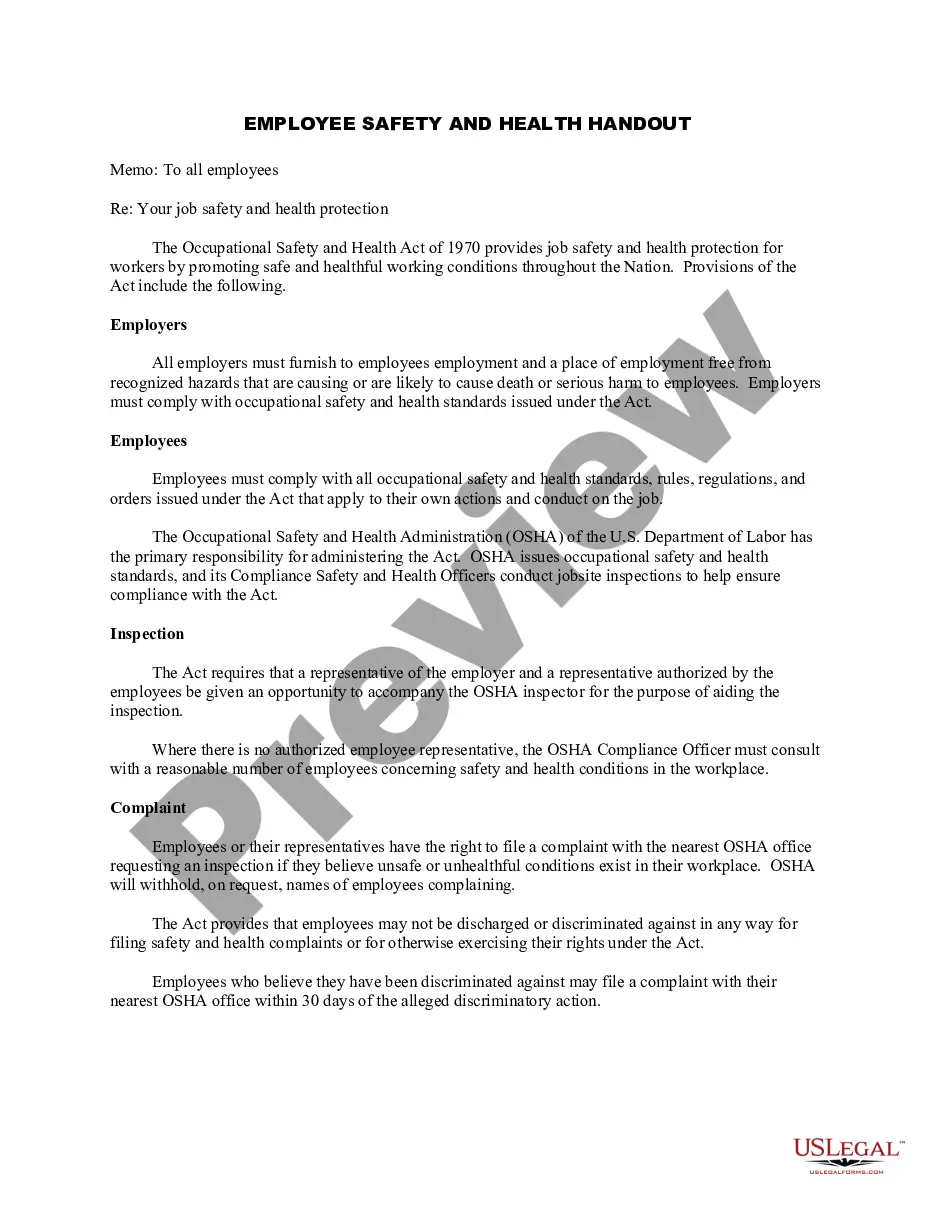
- Employers must ensure employees are trained and informed about hazardous materials present in the workplace.
Looking for another form?

Form popularity
FAQ
The public has a right to MSDS data upon request. They must be written in English and contain: the name of the chemical (same as on the label)
Some employers keep the MSDS information in a binder in a central location (e.g., in the pick-up truck on a construction site). Others, particularly in workplaces with hazardous chemicals, computerize the Material Safety Data Sheet information and provide access through terminals.
The name of the chemical (same as on the label) the chemical and common names of the substance. a listing of the ingredients. a statement of the ingredients that are known carcinogens or that present other known hazards. any specific hazards.
They may be sent with the chemical order (paper copy or e-mail attachment). Otherwise, go to the manufacturer's website and download it or request a copy.
MSDSonline a VelocityEHS solution is home to the industry leading online library of safety data sheets, or SDSs (formerly known as material safety data sheets, or MSDSs).
Chemical Safety's SDS and GHS database is a free service available to organizations of all types. For-profit organizations are granted permission to access Chemical Safety's SDS Search from Chemical Safety's website.
The Hazard Communication Standard (HCS) (29 CFR 1910.1200(g)), revised in 2012, requires that the chemical manufacturer, distributor, or importer provide Safety Data Sheets (SDSs) (formerly MSDSs or Material Safety Data Sheets) for each hazardous chemical to downstream users to communicate information on these hazards.
The name of the chemical (same as on the label) the chemical and common names of the substance. a listing of the ingredients. a statement of the ingredients that are known carcinogens or that present other known hazards. any specific hazards.
The Hazard Communication Standard (HCS) (29 CFR 1910.1200(g)), revised in 2012, requires that the chemical manufacturer, distributor, or importer provide Safety Data Sheets (SDSs) (formerly MSDSs or Material Safety Data Sheets) for each hazardous chemical to downstream users to communicate information on these hazards.