Special Improvement Project and Assessment
About this form
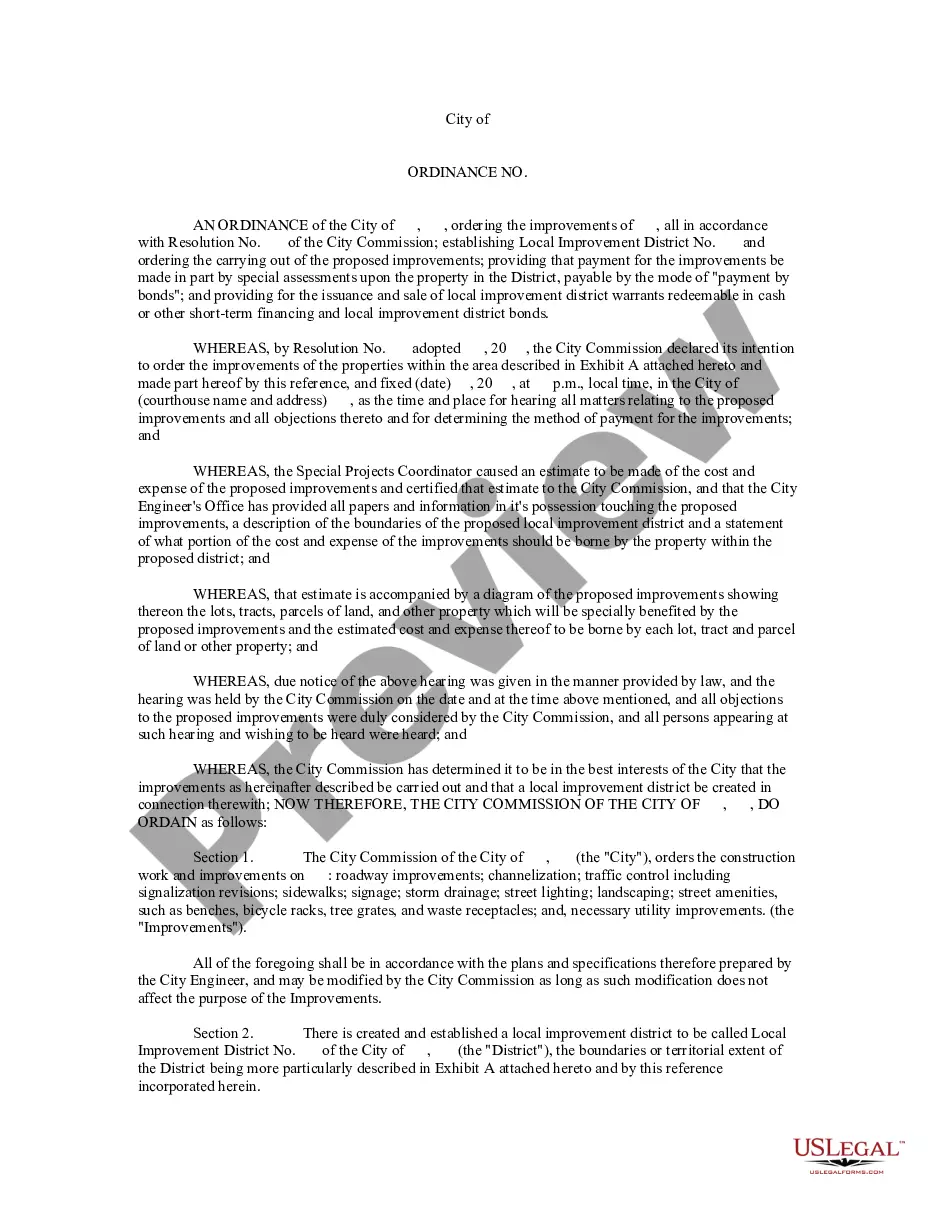
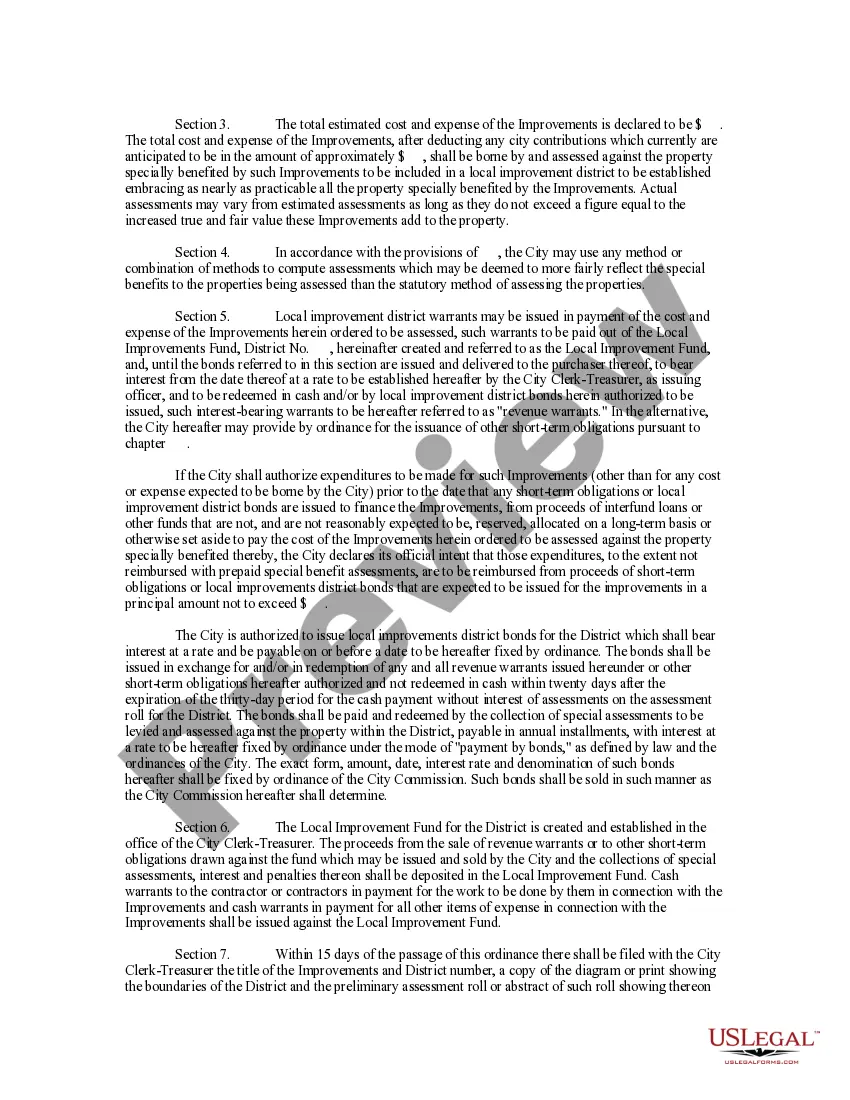
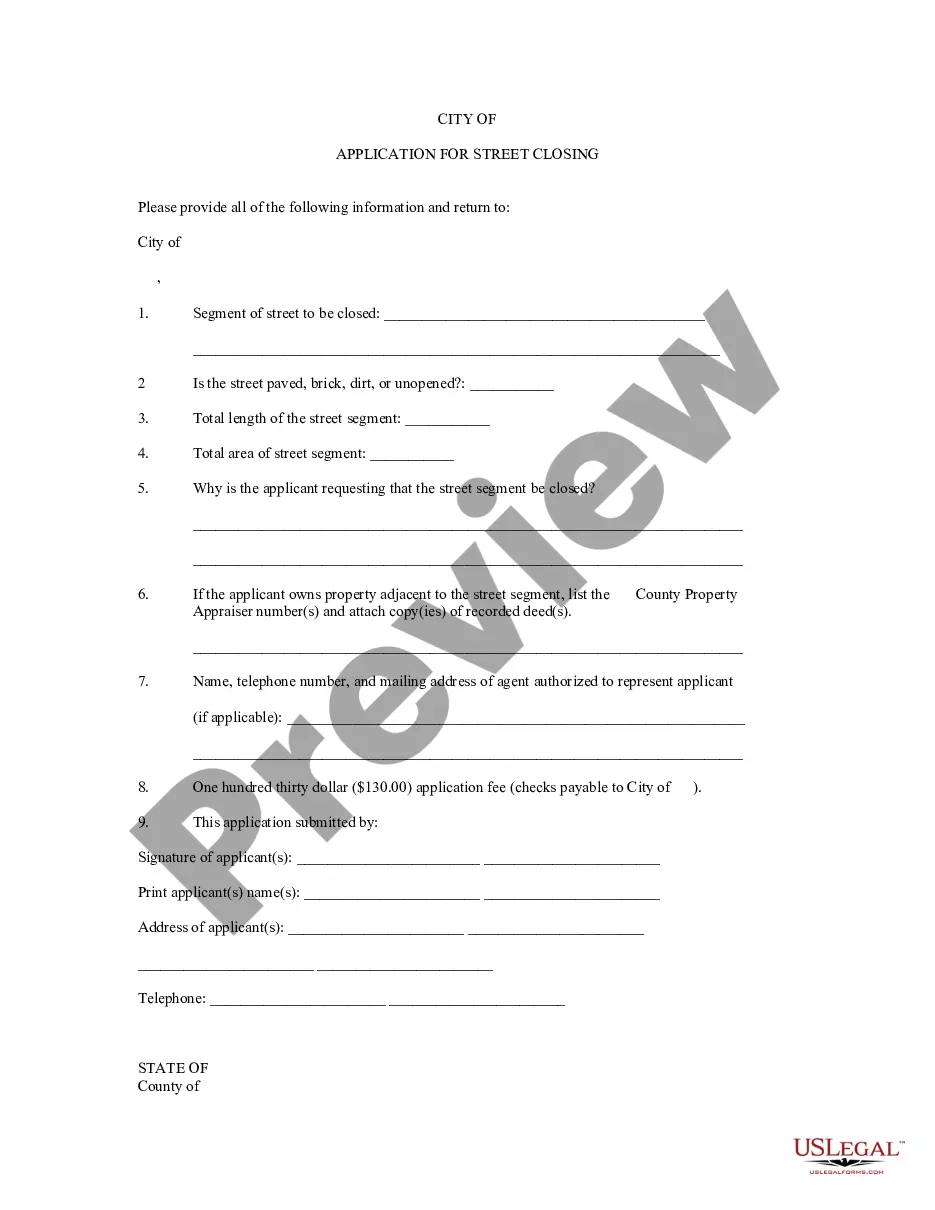
The Special Improvement Project and Assessment form is a legal document used by municipalities to outline and authorize improvements in a designated area, known as a Local Improvement District. This form specifies the type of improvements to be made, the method of financing through special assessments, and the responsibilities of property owners within the district. It differs from similar forms by focusing specifically on projects that enhance public infrastructure and are partially funded through assessments collected from properties that benefit from the improvements.
Form components explained
- Title and ordinance number to identify the specific project.
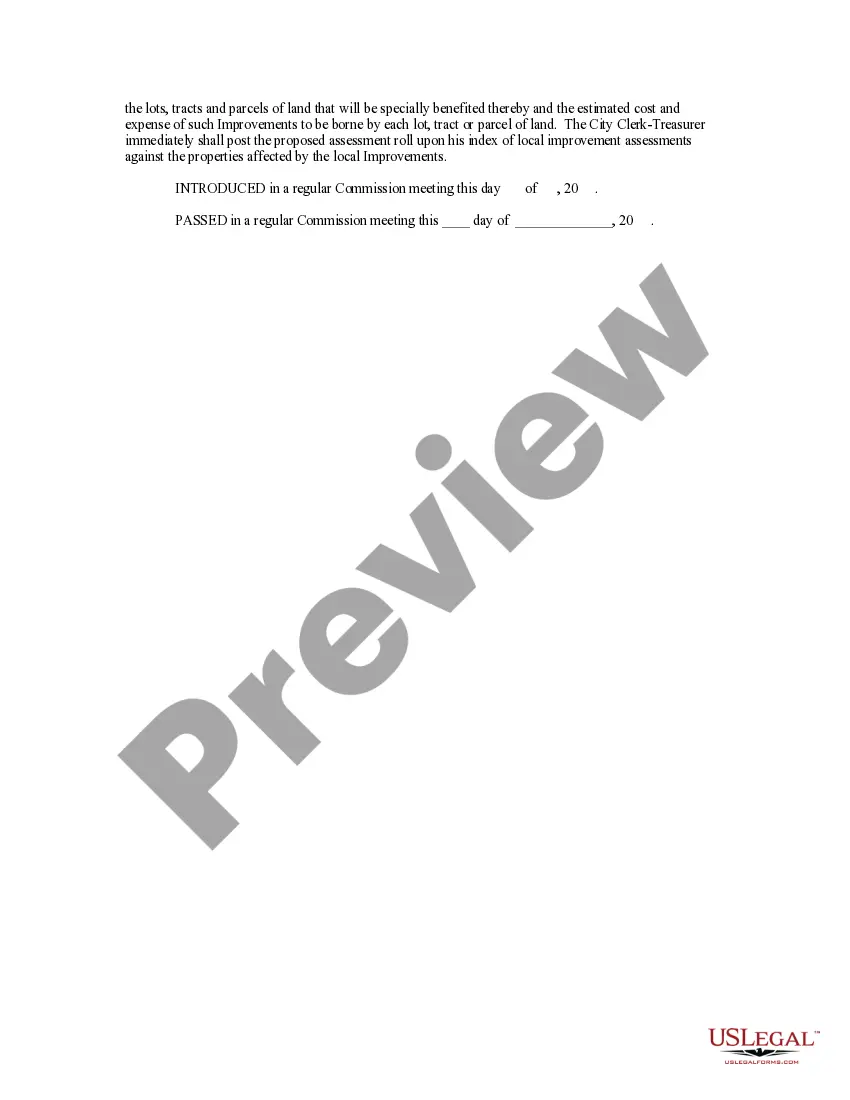
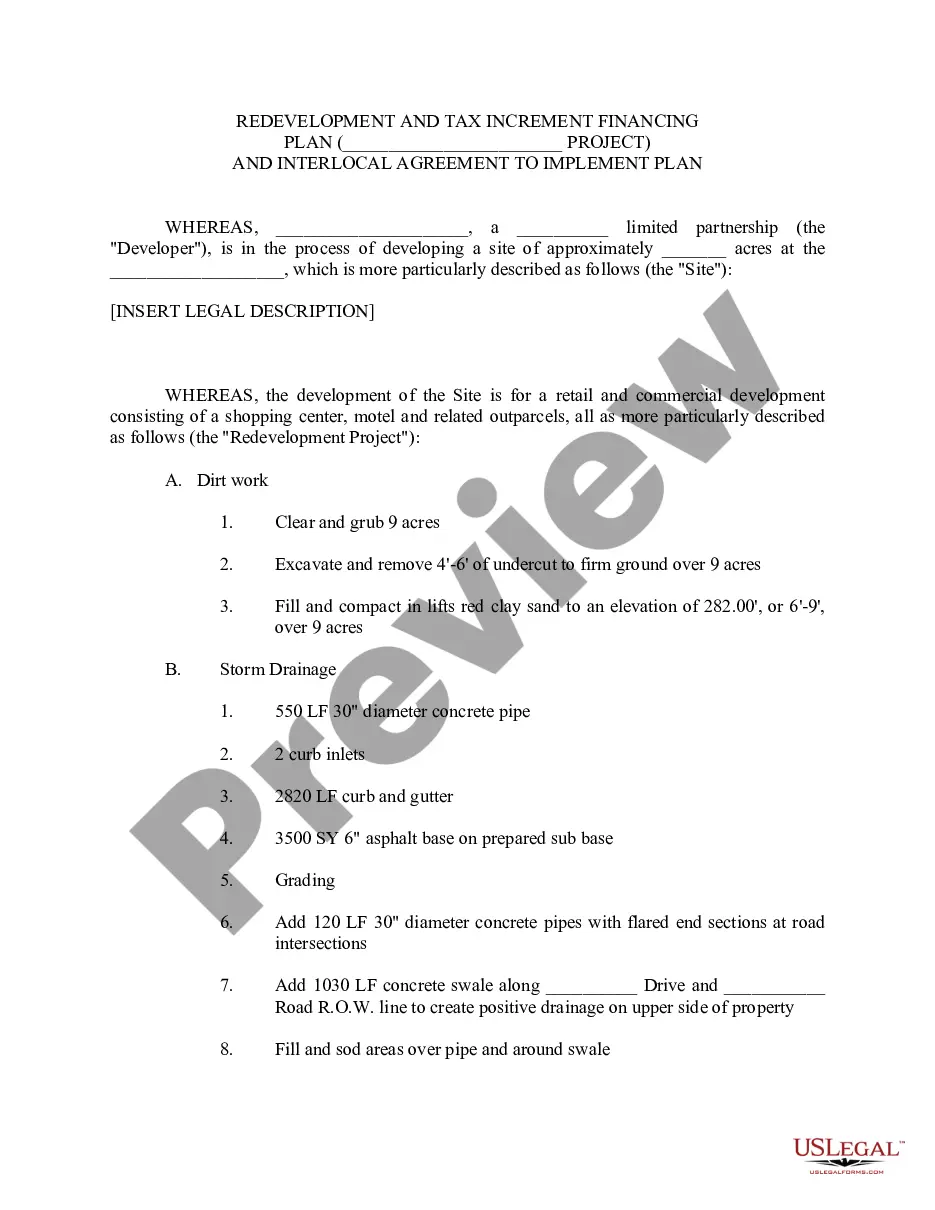
- Description of the improvements to be made (e.g., road, sidewalks, utilities).
- Establishment of Local Improvement District with defined boundaries.
- Estimated costs and method of assessment for property owners.
- Provisions for issuing local improvement warrants and bonds.
- Details on the public hearing process regarding the proposed improvements.
Situations where this form applies
This form should be used when a city or municipality decides to undertake special improvement projects that benefit specific properties. Common scenarios include road construction, installation of sidewalks, and enhancements to public utilities that require funding through property assessments. It is utilized during the planning phase, prior to executing the improvements and collecting assessments from property owners.
Who this form is for
- Municipal authorities overseeing public improvement projects.
- City planners and engineers responsible for project implementation.
- Property owners within the specified Local Improvement District.
- Legal professionals advising municipalities on local ordinances.
Instructions for completing this form
- Enter the municipality's name and details at the top of the form.
- Specify the types of improvements planned and their exact locations.
- Define the boundaries of the Local Improvement District in the attached exhibits.
- Provide estimated costs and how assessments will be allocated among property owners.
- Schedule and document the public hearing while collecting feedback from stakeholders.
Does this form need to be notarized?
Notarization is generally not required for this form. However, certain states or situations might demand it. You can complete notarization online through US Legal Forms, powered by Notarize, using a verified video call available anytime.
Get your form ready online
Our built-in tools help you complete, sign, share, and store your documents in one place.
Make edits, fill in missing information, and update formatting in US Legal Forms—just like you would in MS Word.
Download a copy, print it, send it by email, or mail it via USPS—whatever works best for your next step.
Sign and collect signatures with our SignNow integration. Send to multiple recipients, set reminders, and more. Go Premium to unlock E-Sign.
If this form requires notarization, complete it online through a secure video call—no need to meet a notary in person or wait for an appointment.
We protect your documents and personal data by following strict security and privacy standards.

Make edits, fill in missing information, and update formatting in US Legal Forms—just like you would in MS Word.

Download a copy, print it, send it by email, or mail it via USPS—whatever works best for your next step.

Sign and collect signatures with our SignNow integration. Send to multiple recipients, set reminders, and more. Go Premium to unlock E-Sign.

If this form requires notarization, complete it online through a secure video call—no need to meet a notary in person or wait for an appointment.

We protect your documents and personal data by following strict security and privacy standards.
Typical mistakes to avoid
- Failing to accurately define the boundaries of the improvement district.
- Not providing clear and detailed cost estimates for the improvements.
- Neglecting to adhere to local notice requirements for public hearings.
- Forgetting to attach necessary exhibits, such as diagrams of improvements.
Why complete this form online
- Immediate access to customizable templates to fit specific project needs.
- Convenient and efficient completion without the need for paper forms.
- Reduces errors through guided prompts and instructions during the filling process.
- Easier collaboration and sharing with municipal staff and legal counsel.
Legal use & context
- This form provides a legally recognized method for municipalities to fund improvements through property assessments.
- Proper use of this form ensures compliance with municipal codes, enhancing enforceability.
- Failure to follow stipulated procedures may lead to legal challenges from affected property owners.
Main things to remember
- The Special Improvement Project and Assessment form supports the funding of local infrastructure enhancements via property assessments.
- It is crucial to gather community input through public hearings before advancing with the project.
- Be thorough in completing the form to avoid common pitfalls that could hinder the improvement process.
Looking for another form?



Form popularity
FAQ
A special assessment tax is a surtax levied on property owners to pay for specific local infrastructure projects such as the construction or maintenance of roads or sewer lines.Special assessments may be levied for a pre-set number of years, and they are often not tax-deductible.
The special assessment becomes an obligation of the owners on the date the board or the membership adopts the resolution. The owner at the time the assessment is adopted is responsible for the payment of the special assessment, though the adoption of the assessment may create a lien against the owner's property.
How are special assessments calculated? The total cost of the repairs will be divided by all unit owners and calculated by the unit factor. Every condo corporation in Alberta gets 10,000 unit factors, which get divided by the square footage of each unit.
N. (Economics) (in the US) a special charge levied on property owners by a county or municipality to help pay the costs of a civic improvement that increases the value of their property.
Yes, you can deduct the special assessment if it was for maintenance and repairs. According to the IRS: Deductible real estate taxes generally don't include taxes charged for local benefits and improvements tending to increase the value of your property.
Examples. The most universally known special assessments are charges levied against lands when drinking water lines are installed; when sewer lines are installed; or when streets are paved with concrete or some other impervious surface.
N. (Economics) (in the US) a special charge levied on property owners by a county or municipality to help pay the costs of a civic improvement that increases the value of their property.
Most condo or HOA homeowners pay monthly fees. In some instances, assessments are tacked on to the monthly condo fees in small amounts until the debt is paid off; in other cases, the assessment is a one-time charge that must be paid by each homeowner as a lump sum.