New York Written request from the self-represented landlord that the court issue the JUDGMENT of POSSESSION, WARRANT of EVICTION, and TRANSCRIPT of JUDGMENT
What is this form?
This form is a written request for landlords who are representing themselves in court. It asks the court to issue a Judgment of Possession, a Warrant of Eviction, and a Transcript of Judgment. This document is essential for landlords who need to legally regain possession of their rental property and ensure compliance with court orders. It differs from other forms by specifically addressing eviction proceedings and the formal recognition of a landlord's rights under the law.
What’s included in this form
- Name of the landlord (Petitioner) and tenant (Respondent)
- Index Number for the case
- Statement of the basis for requesting the judgment and warrant
- Request for a Transcript of Judgment, if needed
- Verification of the Respondent's military status
- Signature of the landlord and date of submission
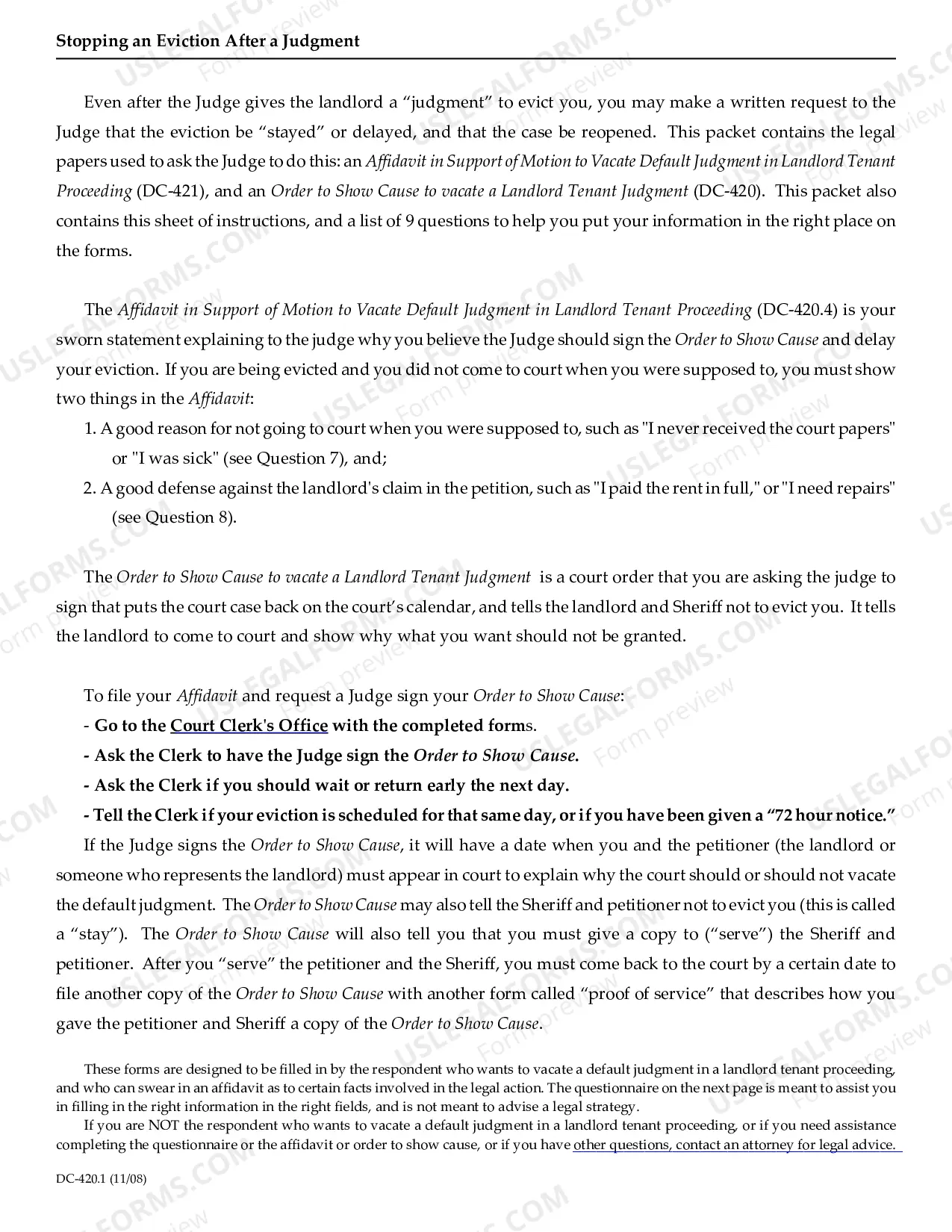
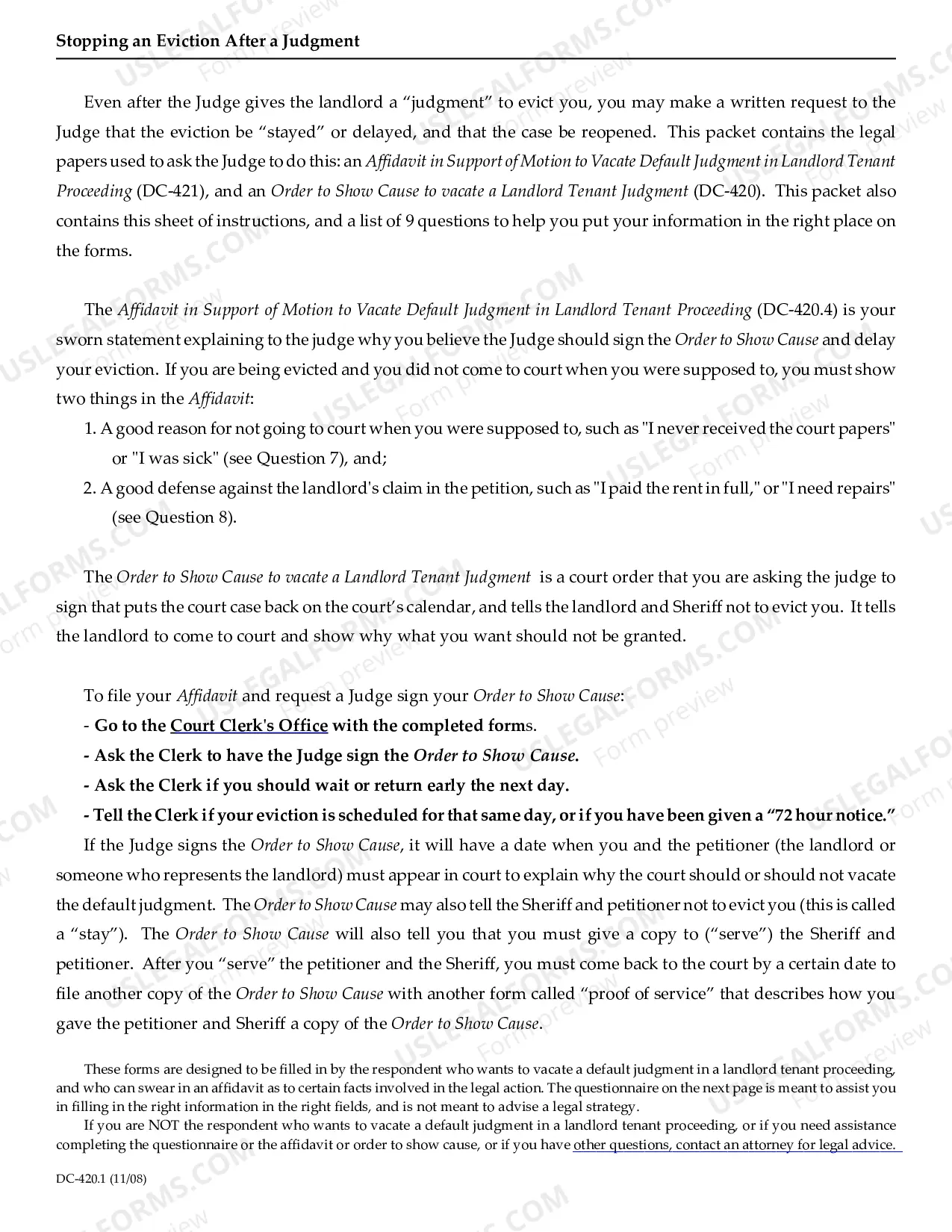
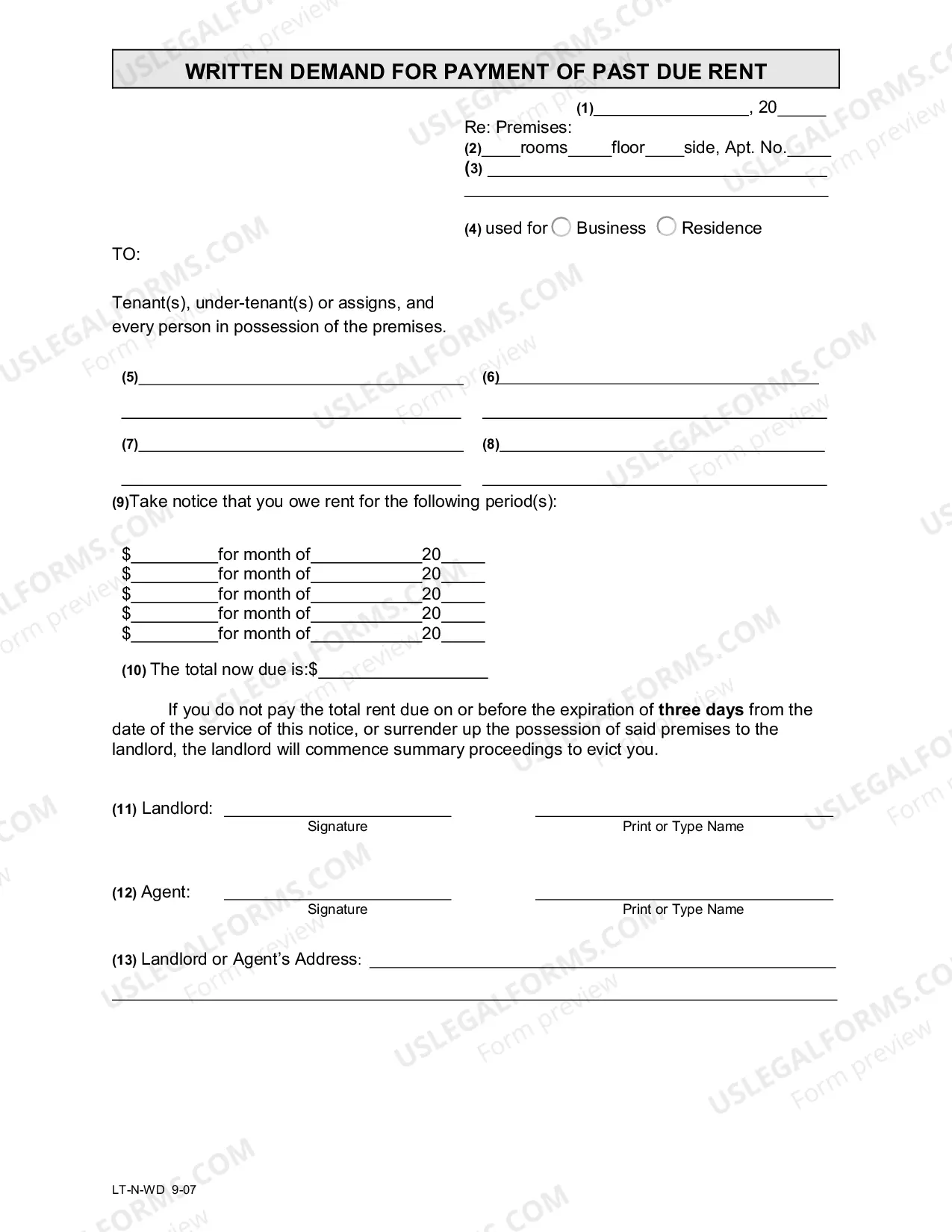
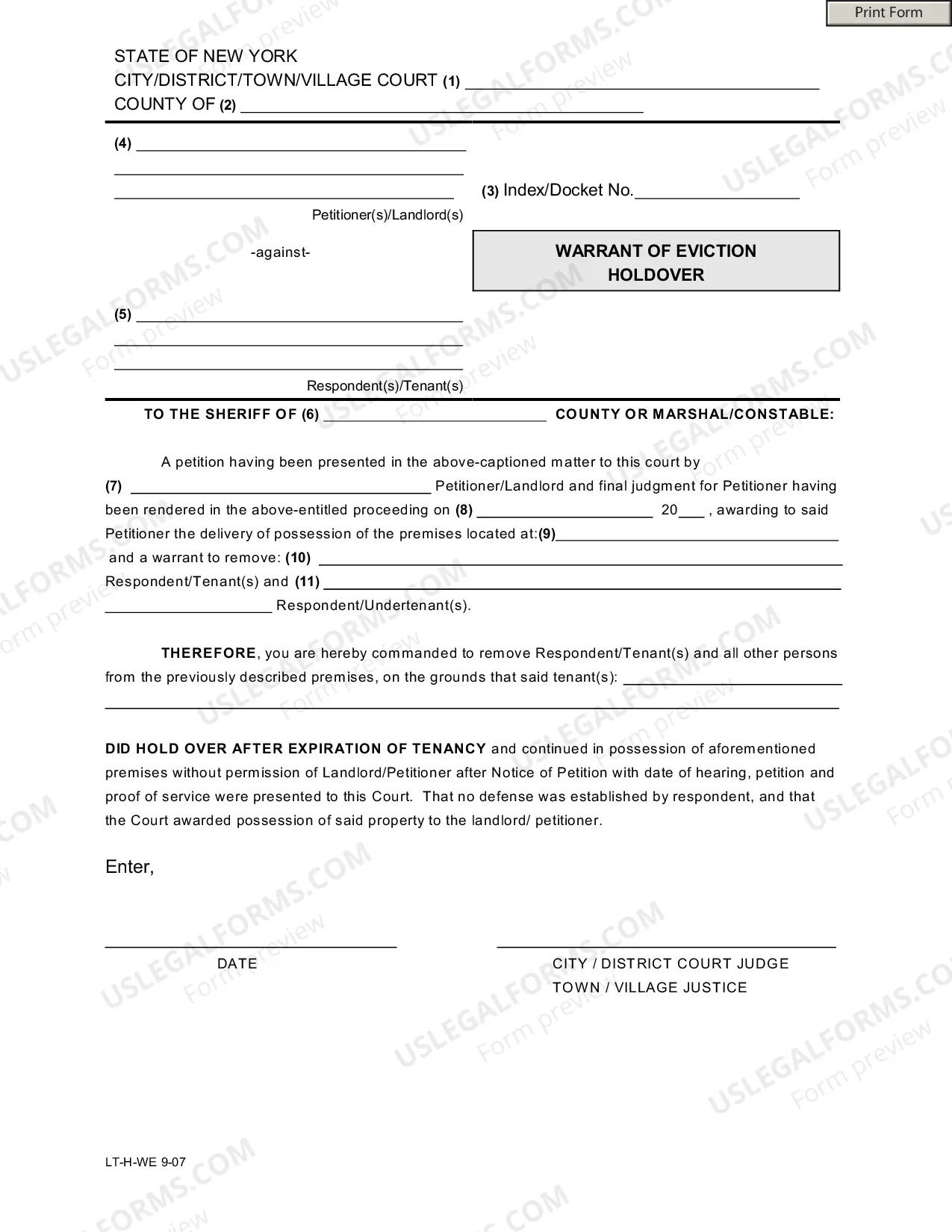
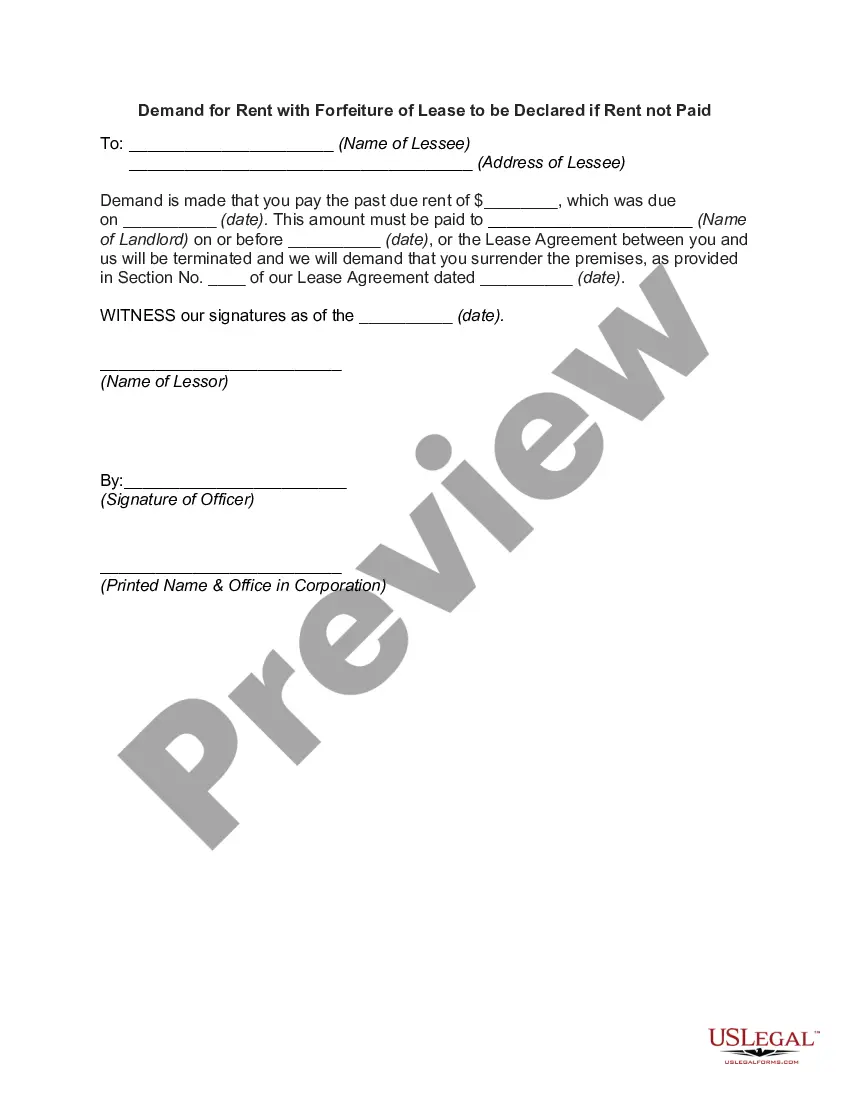
When this form is needed
Intended users of this form
- Self-represented landlords in eviction proceedings
- Landlords seeking to enforce a court judgment
- Landlords requiring eviction documentation without legal representation
Completing this form step by step
- Print or type the form using black ink only.
- Fill in the names of the parties involved and the Index Number.
- Check the relevant statement indicating the basis for the judgment and warrant request.
- Optionally, check the box if requesting a Transcript of Judgment and include the required fee.
- Sign and date the form, and provide your printed name and telephone number.
- Complete the Non-Military Affidavit if applicable.
Notarization guidance
Notarization is generally not required for this form. However, certain states or situations might demand it. You can complete notarization online through US Legal Forms, powered by Notarize, using a verified video call available anytime.
Get your form ready online
Our built-in tools help you complete, sign, share, and store your documents in one place.
Make edits, fill in missing information, and update formatting in US Legal Forms—just like you would in MS Word.
Download a copy, print it, send it by email, or mail it via USPS—whatever works best for your next step.
Sign and collect signatures with our SignNow integration. Send to multiple recipients, set reminders, and more. Go Premium to unlock E-Sign.
If this form requires notarization, complete it online through a secure video call—no need to meet a notary in person or wait for an appointment.
We protect your documents and personal data by following strict security and privacy standards.

Make edits, fill in missing information, and update formatting in US Legal Forms—just like you would in MS Word.

Download a copy, print it, send it by email, or mail it via USPS—whatever works best for your next step.

Sign and collect signatures with our SignNow integration. Send to multiple recipients, set reminders, and more. Go Premium to unlock E-Sign.

If this form requires notarization, complete it online through a secure video call—no need to meet a notary in person or wait for an appointment.

We protect your documents and personal data by following strict security and privacy standards.
Mistakes to watch out for
- Failing to use black ink or to type the form, which may lead to rejection.
- Omitting the Index Number or party names, which are essential for identification.
- Not including a stamped, self-addressed envelope for sending the judgment and warrant.
- Neglecting to complete the Non-Military Affidavit when necessary.
- Failing to check the relevant request statements accurately.
Benefits of using this form online
- Convenient access to legal forms 24/7 from the comfort of your home.
- Easy editing and customization to fit your specific case.
- Reliable templates drafted by licensed attorneys, ensuring legal compliance.
Looking for another form?

Form popularity
FAQ
Even if the judge signs a Warrant of Eviction, you may still be able to stop the eviction. If you are being evicted for ?Nonpayment of Rent,? you can stop the eviction by paying all of the rent that is owed. You can do this any time up until the Warrant of Eviction is executed.
Overview. In New York State, an eviction of a tenant is lawful only if an owner has brought a court proceeding and obtained a judgment of possession from the court. A sheriff, marshal or constable can carry out a court ordered eviction. An owner may not evict a tenant by use of force or unlawful means.
Overview. In New York State, an eviction of a tenant is lawful only if an owner has brought a court proceeding and obtained a judgment of possession from the court. A sheriff, marshal or constable can carry out a court ordered eviction. An owner may not evict a tenant by use of force or unlawful means.
It takes about 14 to 90 days from the issuance of the Notice to Vacate, depending on the reason for eviction and the lease agreement.
Most New York City evictions will take around 3 to 6 months. However, the reason for the eviction can impact the timing. If the tenant has violated the lease, you can evict them in less than 3 months. Evicting a holdover tenant can take a lot longer, especially if they claim you didn't properly serve them notice.
If you are rent-controlled or rent-stabilized, you may file a complaint with NYS Homes & Community Renewal (NYSHCR) at .hcr.ny.gov. If your complaint is found to be valid, the landlord will be ordered to correct it. Application forms are available at my community office or your local HCR office.
If the court stays the eviction, you must pay money to continue living there in the amount you paid as rent. In a nonpayment case, if you pay the full amount of the rent due to the court before the Marshal does the eviction, the Court must cancel the warrant of eviction.
An eviction stays on a person's record for three years if the landlord wins the case. If a tenant wins the case, or a judge dismisses the eviction, or the landlord withdraws the case because of an agreement ? the eviction still stays on your record for a year and doesn't show you're not at fault.