Answer and Counterclaim to Confirm Title
What is this form?
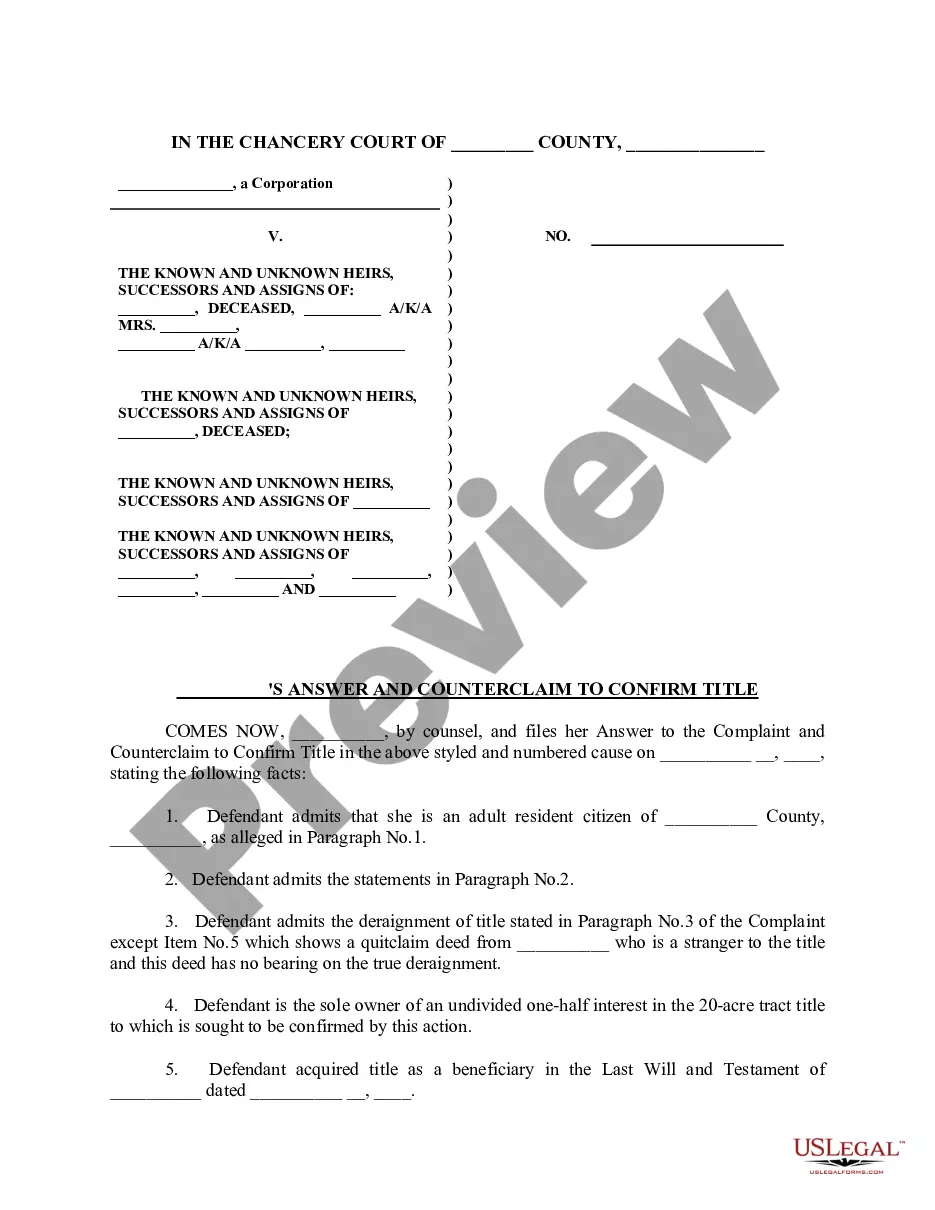
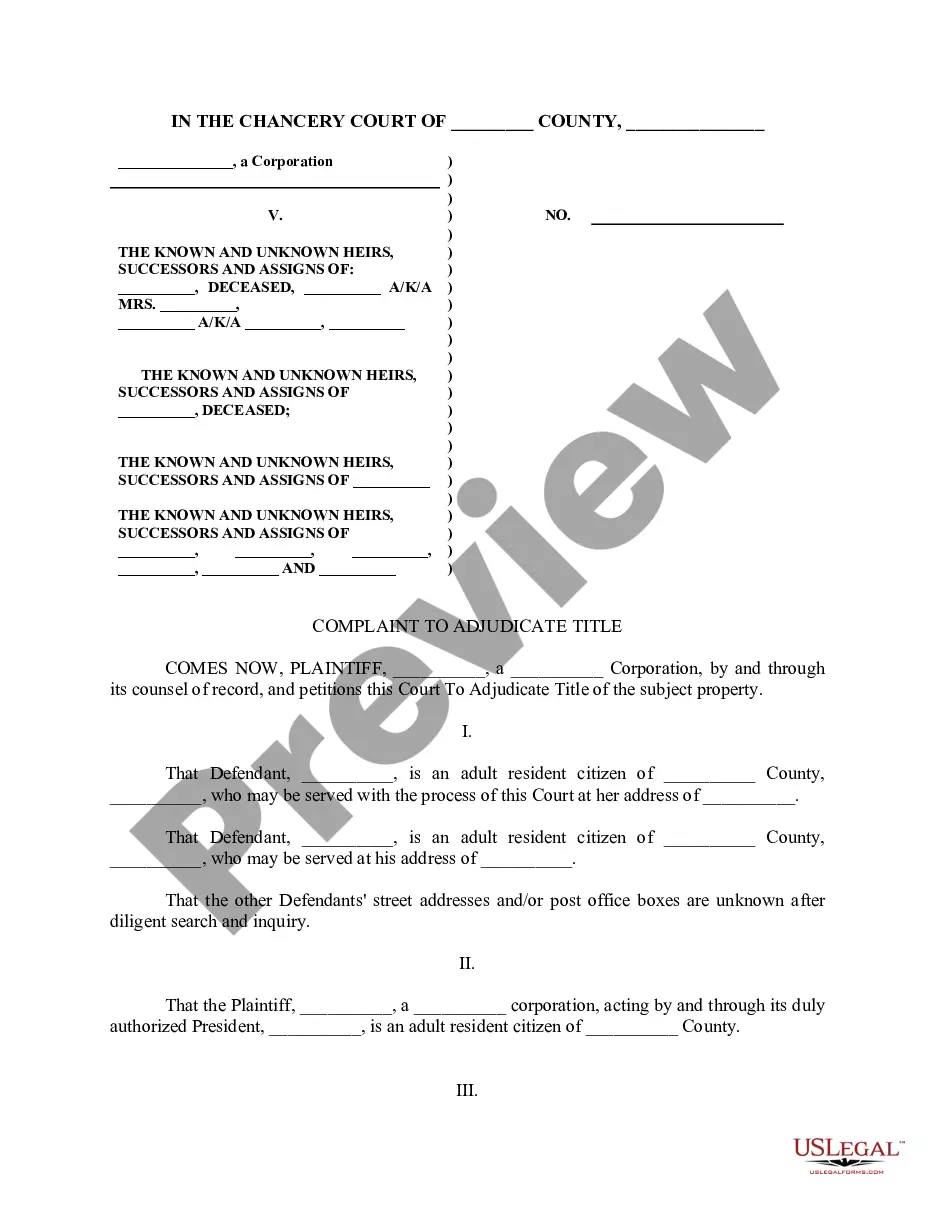
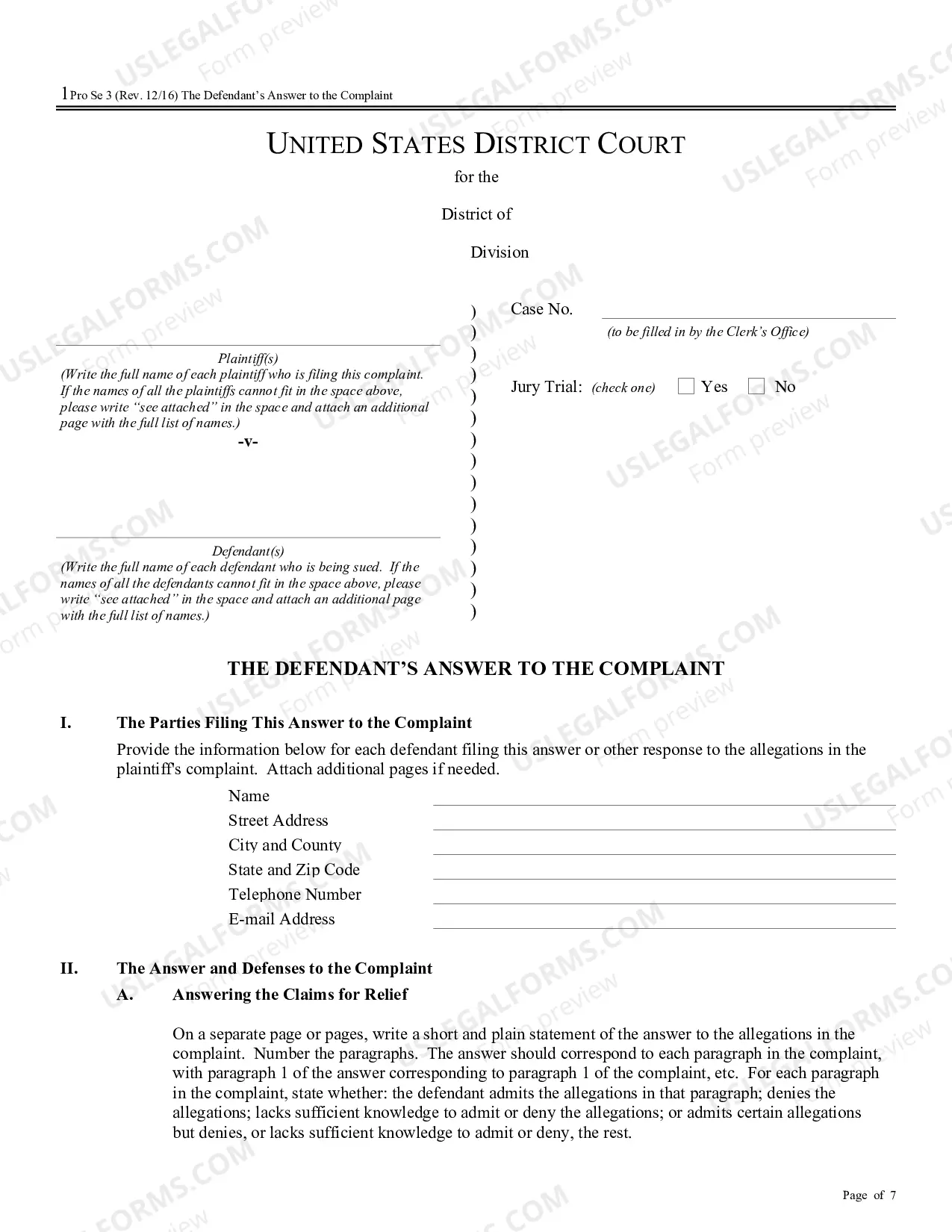
The Answer and Counterclaim to Confirm Title form is a legal document used in civil lawsuits concerning property ownership. This form allows a defendant to respond to a complaint and present their own claims regarding the title of a property. Unlike a standard complaint, this form combines both an answer to the accusations and a counterclaim, which asserts the defendant's rights to the property in question.
What’s included in this form
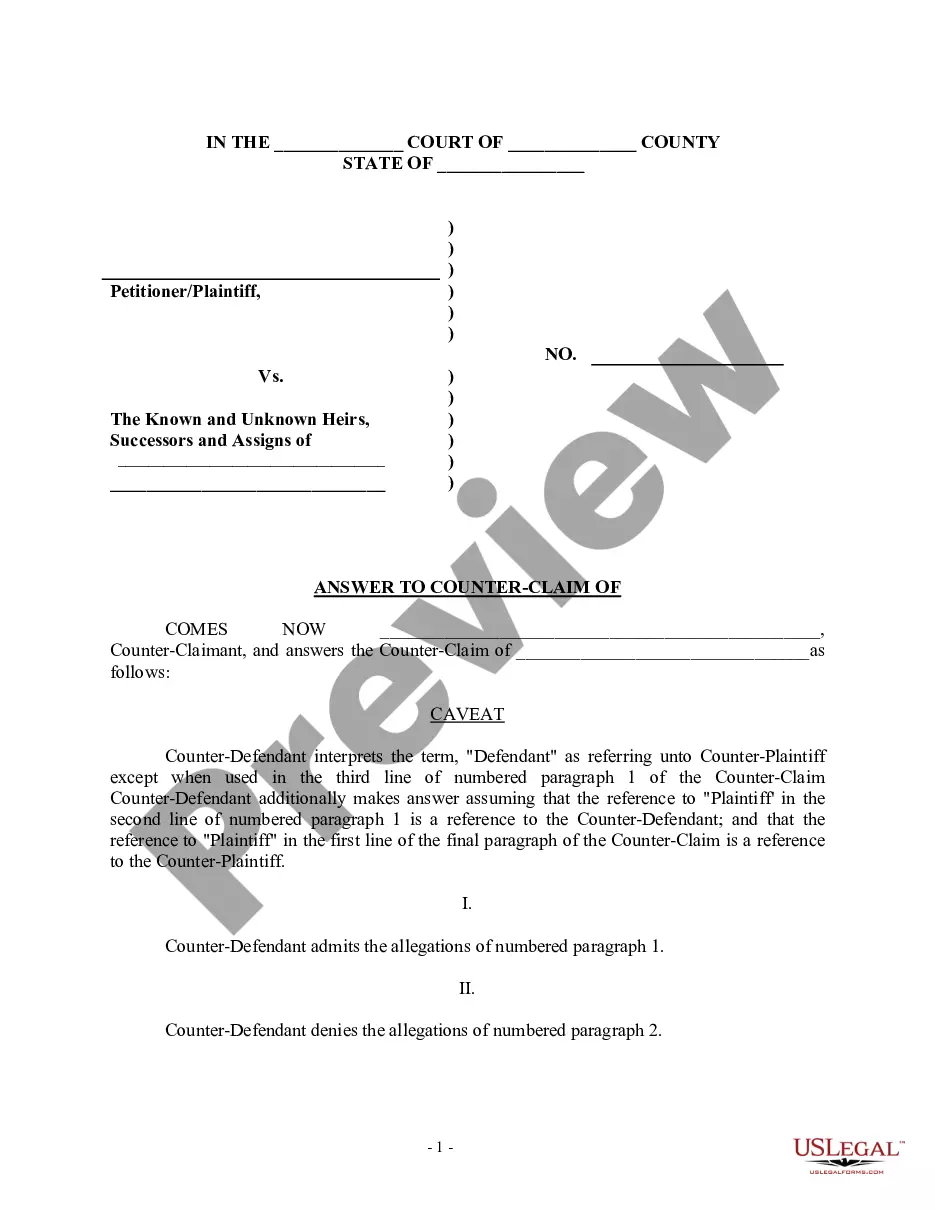
- Defendant's admission or denial of the allegations in the original complaint.
- Details regarding the defendant's ownership interest in the property.
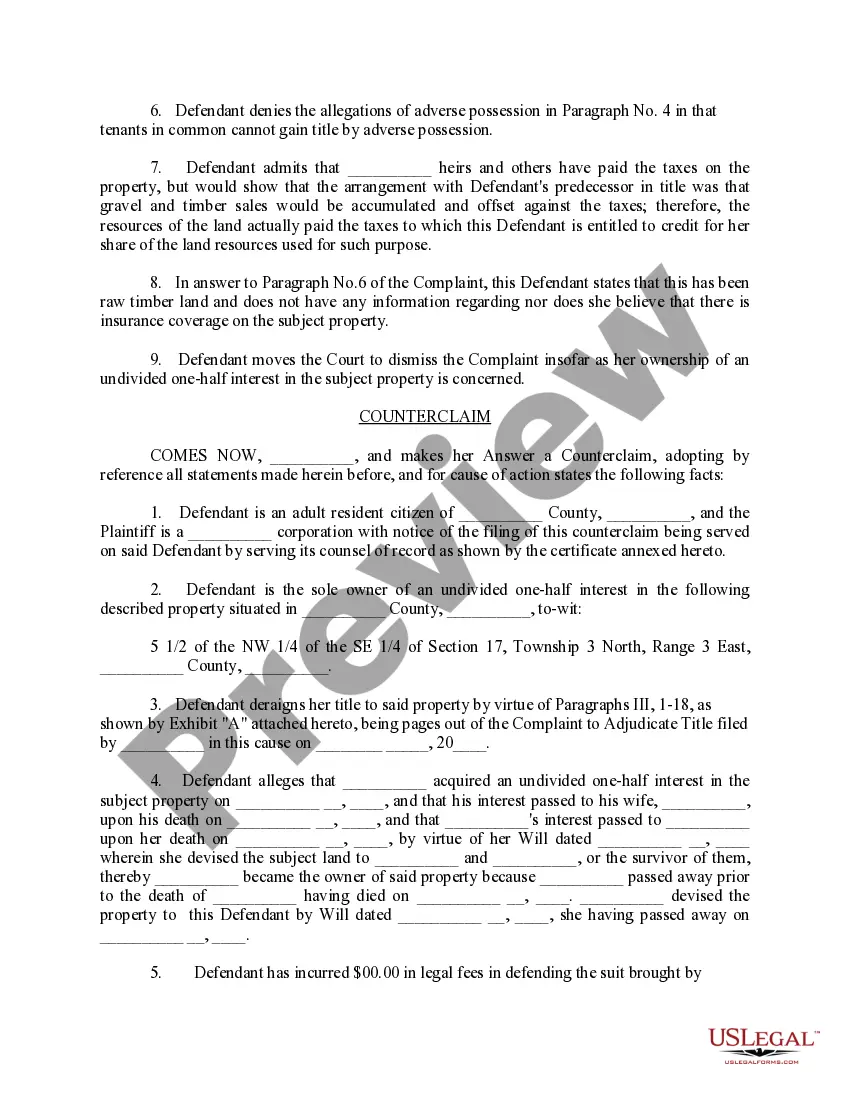
- A counterclaim section outlining additional claims the defendant has regarding the property title.
- References to legal documents supporting the defendant's claim of ownership.
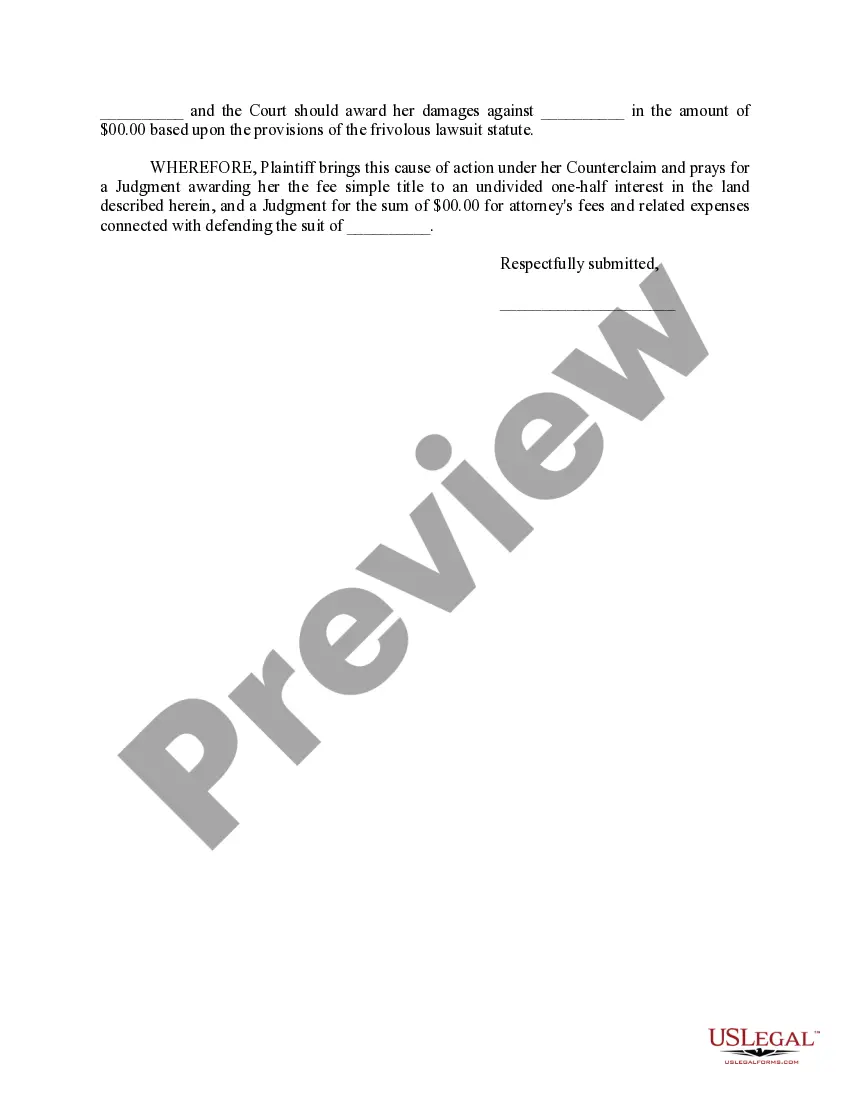
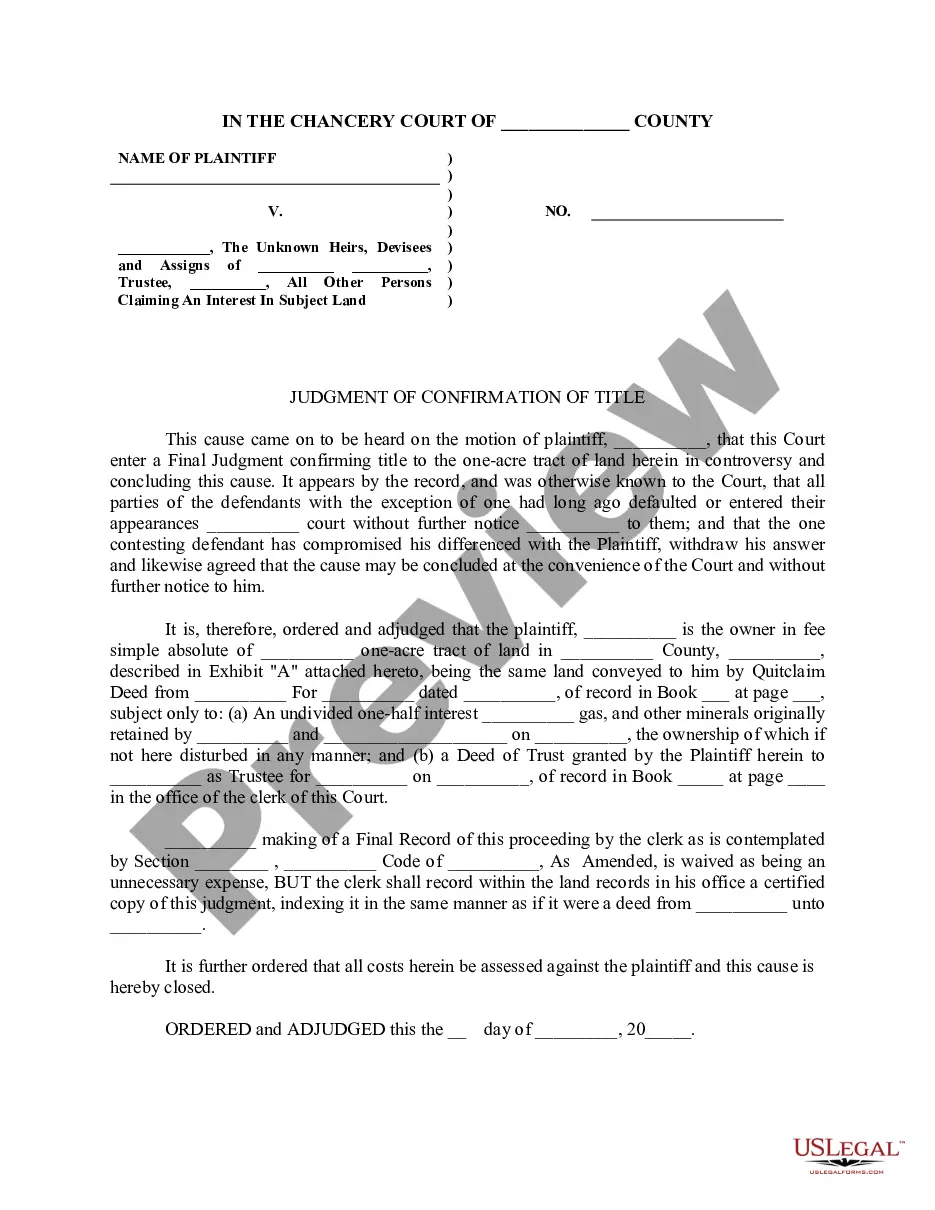
- Request for the court to confirm the title of the property in favor of the defendant.
When to use this form
This form is applicable in situations where a lawsuit is initiated to confirm the title of a property and a defendant wants to assert their ownership rights. It is particularly useful when disputes arise over property ownership among known and unknown heirs or when questions about the validity of the title are raised.
Intended users of this form
- Property owners who have received a lawsuit concerning their title.
- Individuals claiming ownership rights as heirs or beneficiaries of a deceased's estate.
- Defendants in a civil suit looking to formally assert their claims and respond to a complaint.
How to complete this form
- Identify and state the parties involved in the lawsuit, including their addresses and legal status.
- Review the original complaint thoroughly and outline your admissions and denials to each allegation.
- Describe your claim to the property, providing details about your ownership interest and any supporting documents, like a will or title records.
- Clearly write your counterclaim, detailing the basis of your ownership and any damages you are claiming.
- Sign and date the form, ensuring all required notations are made, including any attorney representation if applicable.
Does this document require notarization?
To make this form legally binding, it must be notarized. Our online notarization service, powered by Notarize, lets you verify and sign documents remotely through an encrypted video session.
Get your form ready online
Our built-in tools help you complete, sign, share, and store your documents in one place.
Make edits, fill in missing information, and update formatting in US Legal Forms—just like you would in MS Word.
Download a copy, print it, send it by email, or mail it via USPS—whatever works best for your next step.
Sign and collect signatures with our SignNow integration. Send to multiple recipients, set reminders, and more. Go Premium to unlock E-Sign.
If this form requires notarization, complete it online through a secure video call—no need to meet a notary in person or wait for an appointment.
We protect your documents and personal data by following strict security and privacy standards.

Make edits, fill in missing information, and update formatting in US Legal Forms—just like you would in MS Word.

Download a copy, print it, send it by email, or mail it via USPS—whatever works best for your next step.

Sign and collect signatures with our SignNow integration. Send to multiple recipients, set reminders, and more. Go Premium to unlock E-Sign.

If this form requires notarization, complete it online through a secure video call—no need to meet a notary in person or wait for an appointment.

We protect your documents and personal data by following strict security and privacy standards.
Avoid these common issues
- Failing to file the counterclaim within the specified time frame after receiving the original complaint.
- Not adequately responding to each allegation made in the complaint.
- Omitting relevant information or documents that support ownership claims.
- Incorrectly formatting the form according to local court requirements.
Why use this form online
- Immediate access to a professionally drafted template tailored by licensed attorneys.
- Easy to download, edit, and customize to meet your specific legal needs.
- Secure storage of your completed forms, simplifying future access and modification.
- Guided completion process, ensuring crucial sections are not overlooked.
Legal use & context
- This form is used in civil court proceedings involving property disputes.
- It should be filled out in accordance with local court rules to ensure effectiveness.
- Counterclaims made should be backed by evidence supporting ownership.
Looking for another form?

Form popularity
FAQ
An answer to a counterclaim is a written response by a Plaintiff to a Defendant's counterclaim. The answer to counterclaim must also state defenses to each of the Defendant's counterclaims in short, plain statements.
Provide the name of the court at the top of the Answer. You can find the information on the summons. List the name of the plaintiff on the left side. Write the case number on the right side of the Answer. Address the Judge and discuss your side of the case. Ask the judge to dismiss the case.
Provide the name of the court at the top of the Answer. You can find the information on the summons. List the name of the plaintiff on the left side. Write the case number on the right side of the Answer. Address the Judge and discuss your side of the case. Ask the judge to dismiss the case.
The answer to counterclaim must also state defenses to each of the Defendant's counterclaims in short, plain statements. Complete the top of the Answer to Counterclaim exactly as it appears in your, the Plaintiff's, complaint.
If you filed an answer and a counterclaim, the Plaintiff will likely file a response to your counterclaim.If you filed a motion, a hearing will be scheduled for the court to make a decision. After your motion is resolved (and assuming the case is not dismissed), the case will move forward from there.
Examples of counterclaims include:After a bank has sued a customer for an unpaid debt, the customer counterclaims (sues back) against the bank for fraud in procuring the debt. The court will sort out the different claims in one lawsuit (unless the claims are severed).
You have to answer the counterclaims. They have the same effect as your lawsuit. It is not wise to proceed with litigation without an attorney.
The name of the court - you can find this at the top of the Complaint you got. The Court Division - this is the county where the complaint was filed. The Docket No. The Plaintiff's name. The Defendant's name - your name. The kind of complaint you are answering.
When drafting an answer, one must: (1) follow the local, state, and federal court rules; (2) research the legal claims in the adversary's complaint; (3) respond to the adversary's factual allegations; and (4) assert affirmative defenses, counterclaims, cross-claims, or third-party claims, if applicable.