Jury Instruction - Controlled Substances - Possession With Intent To Distribute
About this form
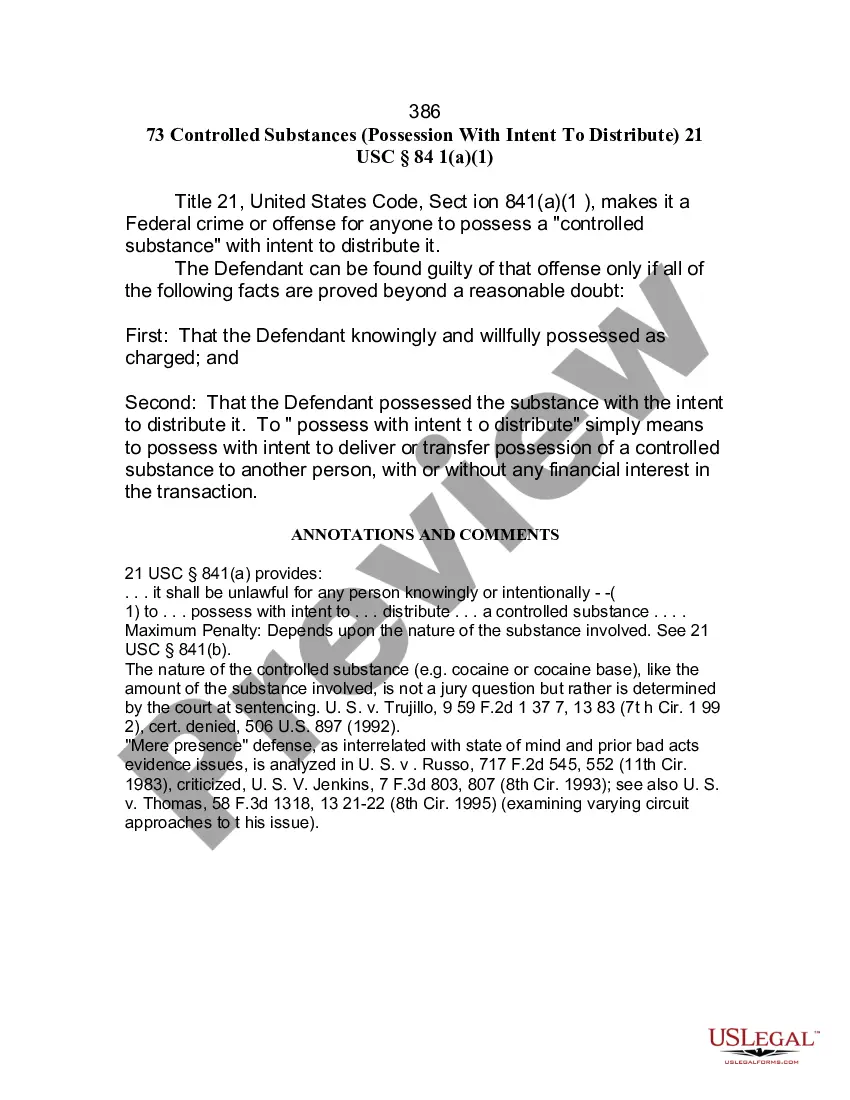
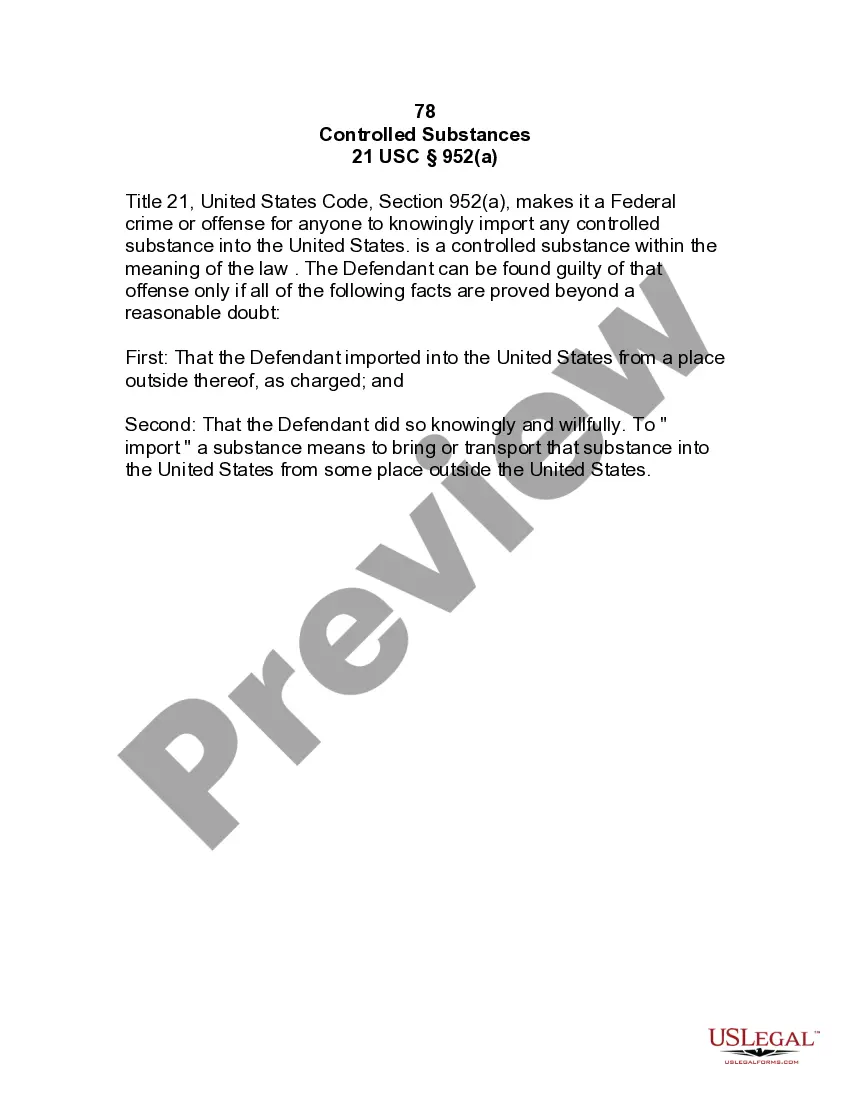
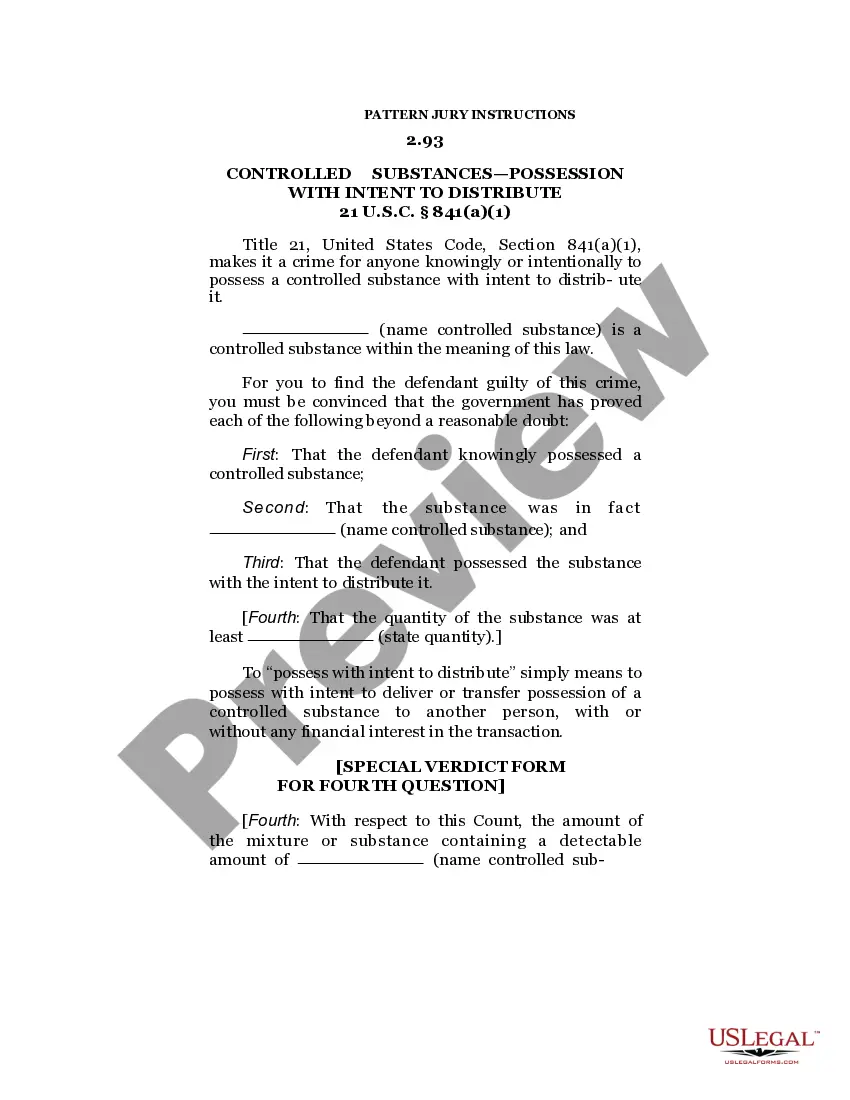
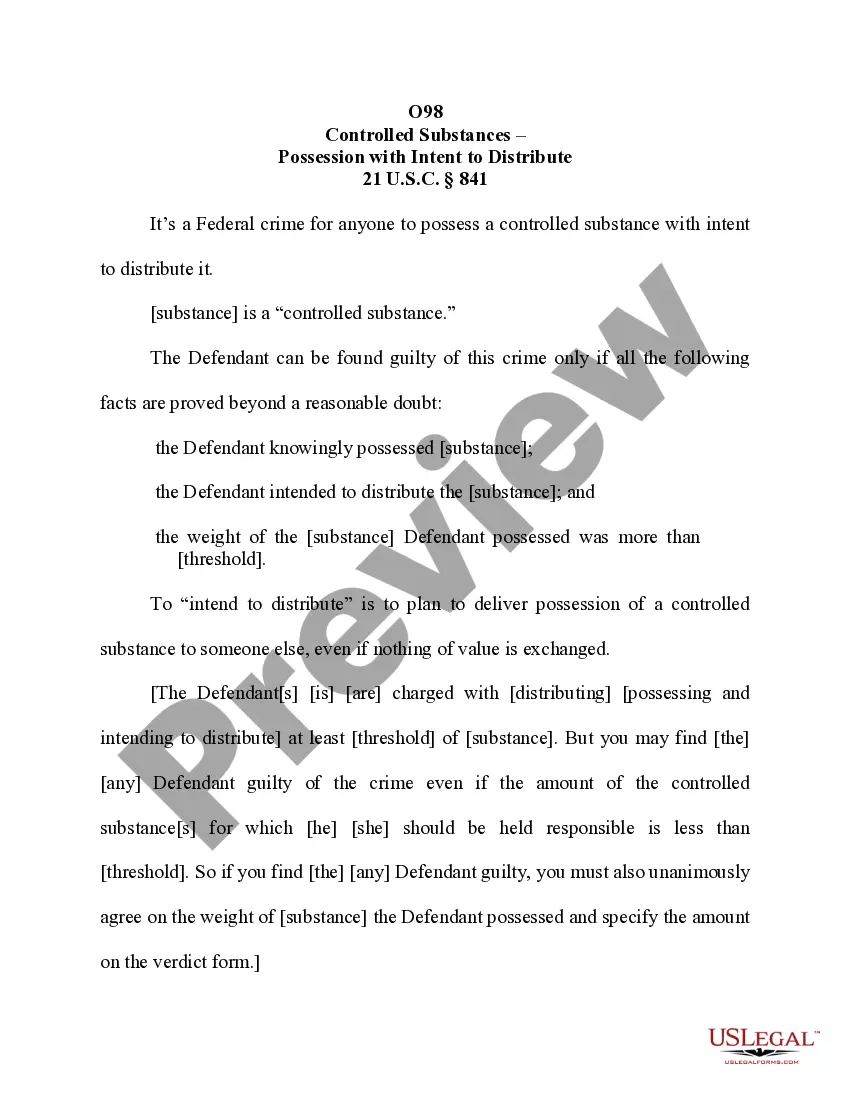
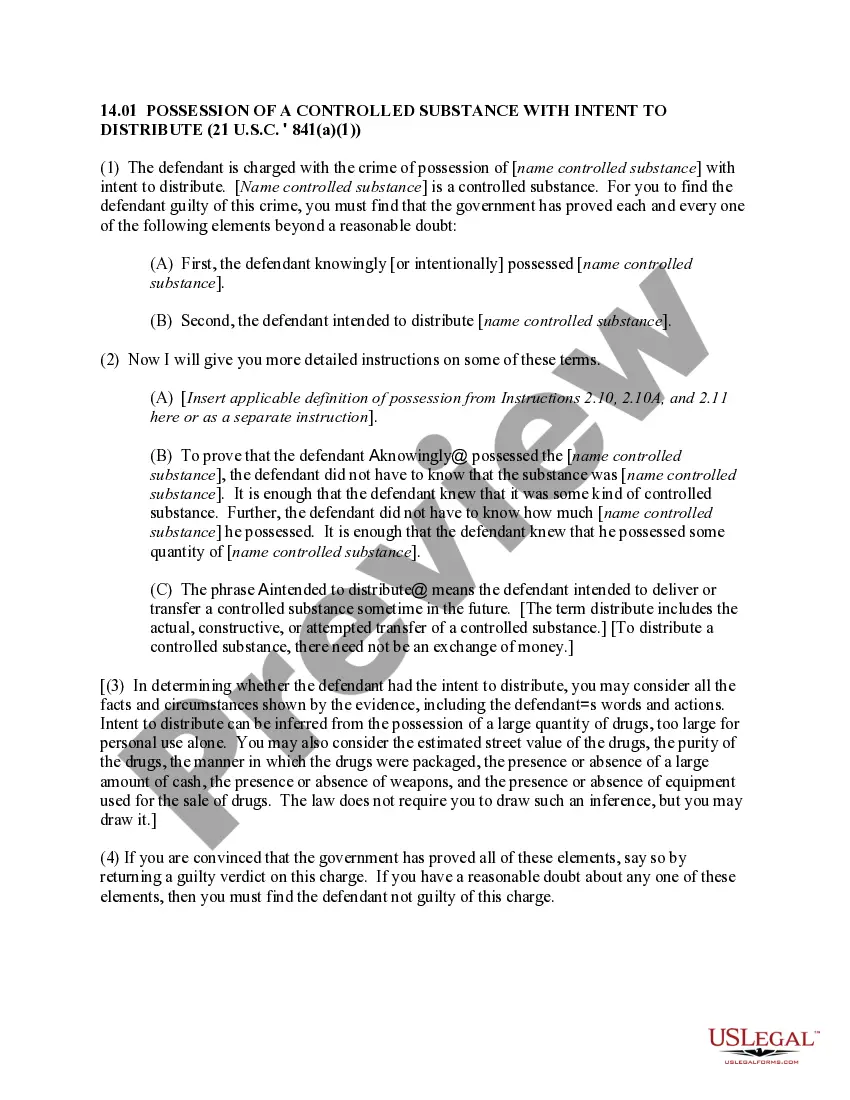
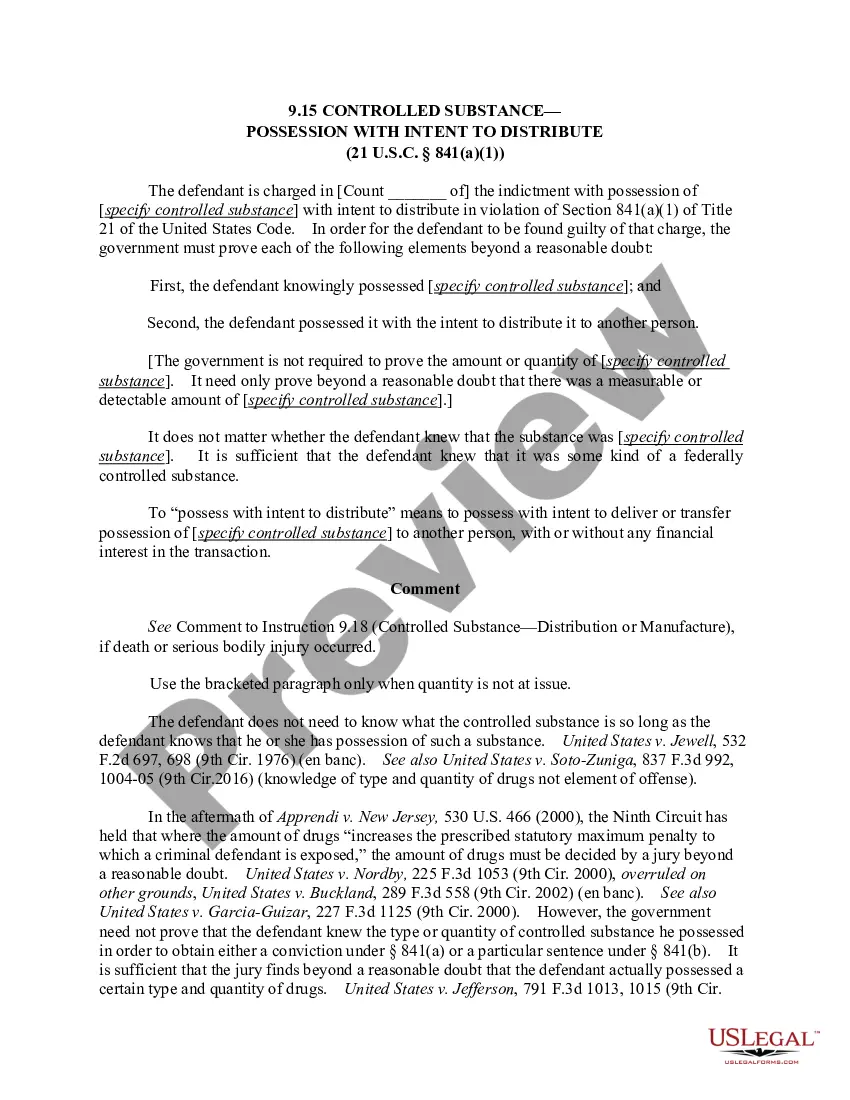
This form provides sample jury instructions related to the legal definitions and implications of possessing controlled substances with the intent to distribute. It is specifically designed for use in federal court cases under Title 21, United States Code, Section 841(a)(1). Unlike other jury instructions, this form focuses on the strict definitions and requirements necessary for a conviction regarding drug possession with intent to distribute.
Main sections of this form
- Definition of possession with intent to distribute.
- Criteria for proving guilt beyond a reasonable doubt.
- Maximum penalties associated with different controlled substances.
- Legal annotations and case references for further guidance.
Situations where this form applies
This form should be utilized during trials where a defendant is accused of possessing controlled substances with the intent to distribute them. It serves as a guideline for jurors to understand the specific legal definitions and evidentiary standards they must consider when deliberating the case. This is pertinent in both federal and relevant state prosecutions involving drug offenses.
Intended users of this form
- Defendants facing charges of possession with intent to distribute.
- Prosecutors who need to establish jury instructions in drug-related cases.
- Defense attorneys crafting a defense strategy in drug possession trials.
- Judges presiding over relevant cases to ensure accurate jury guidance.
Instructions for completing this form
- Review the definition of possession with intent to distribute provided in the form.
- Identify the key criteria that must be proven for a guilty verdict.
- Incorporate relevant legal annotations into your case presentation.
- Modify the questions as necessary to better suit the specifics of your case.
- Ensure all instructions are clear and tailored to the charges being presented.
Is notarization required?
In most cases, this form does not require notarization. However, some jurisdictions or signing circumstances might. US Legal Forms offers online notarization powered by Notarize, accessible 24/7 for a quick, remote process.
Get your form ready online
Our built-in tools help you complete, sign, share, and store your documents in one place.
Make edits, fill in missing information, and update formatting in US Legal Forms—just like you would in MS Word.
Download a copy, print it, send it by email, or mail it via USPS—whatever works best for your next step.
Sign and collect signatures with our SignNow integration. Send to multiple recipients, set reminders, and more. Go Premium to unlock E-Sign.
If this form requires notarization, complete it online through a secure video call—no need to meet a notary in person or wait for an appointment.
We protect your documents and personal data by following strict security and privacy standards.

Make edits, fill in missing information, and update formatting in US Legal Forms—just like you would in MS Word.

Download a copy, print it, send it by email, or mail it via USPS—whatever works best for your next step.

Sign and collect signatures with our SignNow integration. Send to multiple recipients, set reminders, and more. Go Premium to unlock E-Sign.

If this form requires notarization, complete it online through a secure video call—no need to meet a notary in person or wait for an appointment.

We protect your documents and personal data by following strict security and privacy standards.
Mistakes to watch out for
- Failing to modify the standard language of the form to fit the specific case.
- Neglecting to clarify the required burden of proof for jurors.
- Using outdated legal references or case law annotations.
Why use this form online
- Convenient access to professionally drafted legal language and definitions.
- Editable templates that can be tailored to specific cases and jurisdictions.
- Reliable content based on current legal standards across the United States.
Legal use & context
- The instructions provided help jurors understand the legal framework surrounding drug possession laws.
- These guidelines are enforceable in federal court and influence verdicts significantly.
- Understanding the legal definitions is critical for both prosecution and defense strategies.
Looking for another form?
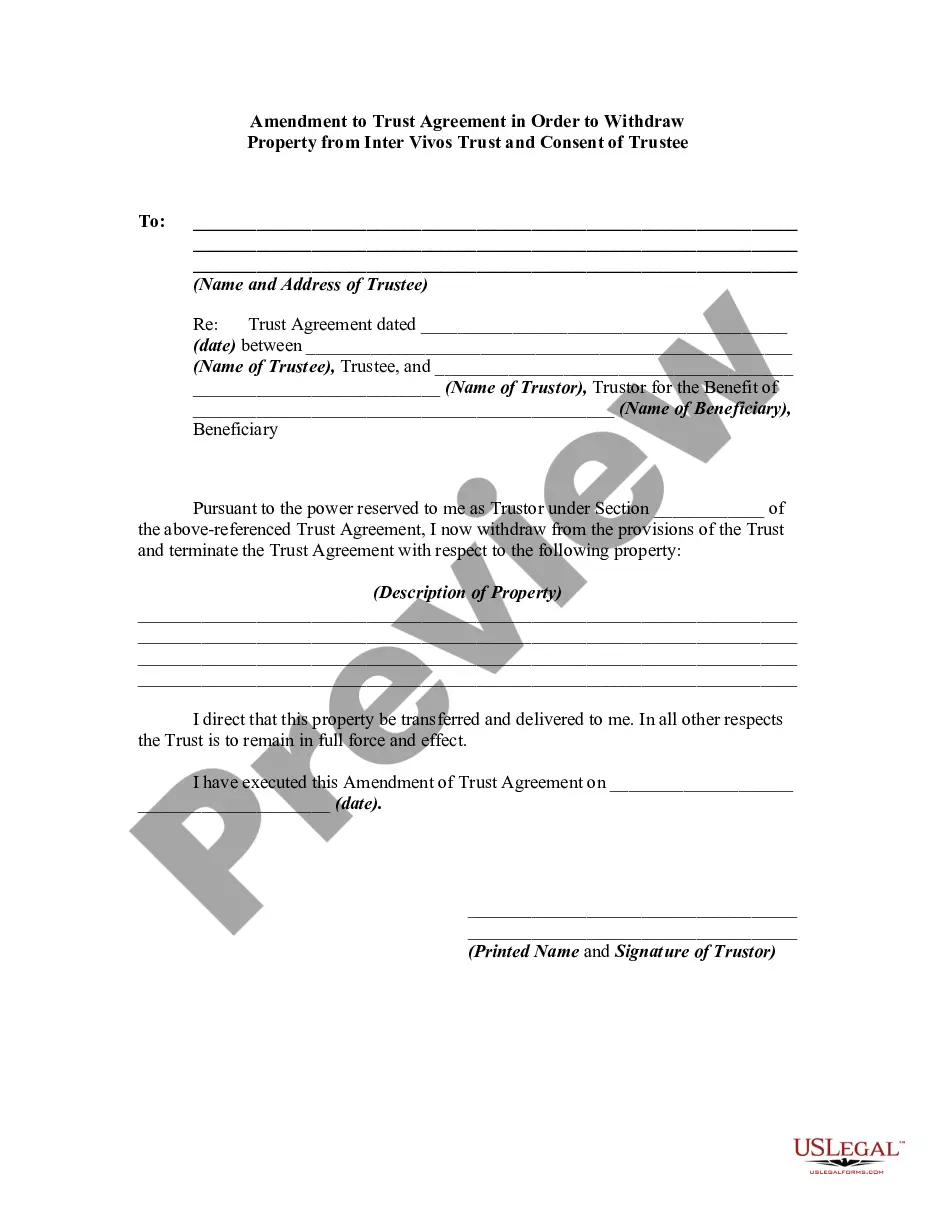

Form popularity
FAQ
Possessing other Schedule I or II narcotics is also considered a Class 1 Felony. Depending on the amount of the controlled substance found to be in your possession, you could face anywhere between a minimum sentence of 4 years and up to 50 years in prison. Fines range anywhere from $25,000 and up to $200,000.
According to HS 11350(a), possession of a controlled substance is a misdemeanor in California punishable by up to 364 days in county jail.However, depending on the facts of your case, you could be charged with a felony under HS 11350(a), punishable by 16 months, two or three years in state prison.
Under this element, the government must prove what the person possessing the drugs was planning to do with them. Typically, the intent to distribute, or sell, the controlled substance is assumed when the accused is holding an amount too large to be for only personal use.
Many drug possession convictions result in fines. These can range from very minor fines of $100 or less to significant fines of $100,000 or more. Incarceration. Jail or prison time is also possible when a person is convicted of possession of a controlled substance.
Circumstantial evidence of intent to sell narcotics or other drugs may include having a quantity of the drug greater than would be reasonable if the drug was for personal use, having possession of paraphernalia used for packaging or distributing drugs such as scales to weigh drugs, possession of large amounts of cash,
Possessing illegal drugs in California may be charged as a misdemeanor or as a felony, which is a more serious charge with greater consequences.
An intention to supply may be proved by direct evidence in the form of admissions or witness testimony, for example, surveillance evidence. Another method of proving an intention to supply is by inference.
A controlled substance is a regulated drug that has been placed on a schedule of controlled substances by the State of California. Some of these are always illegal, such as cocaine, heroin, or meth. Others are prescription drugs, such as painkillers like morphine and oxycodone.
You unlawfully possessed a controlled substance, You knew of its presence, You knew of its designation as a controlled substance, The drug is listed as a controlled substance in the Health and Safety Code, and.