UNANIMITY REQUIRED: DETERMINING AMOUNT OF CONTROLLED SUBSTANCE
Overview of this form
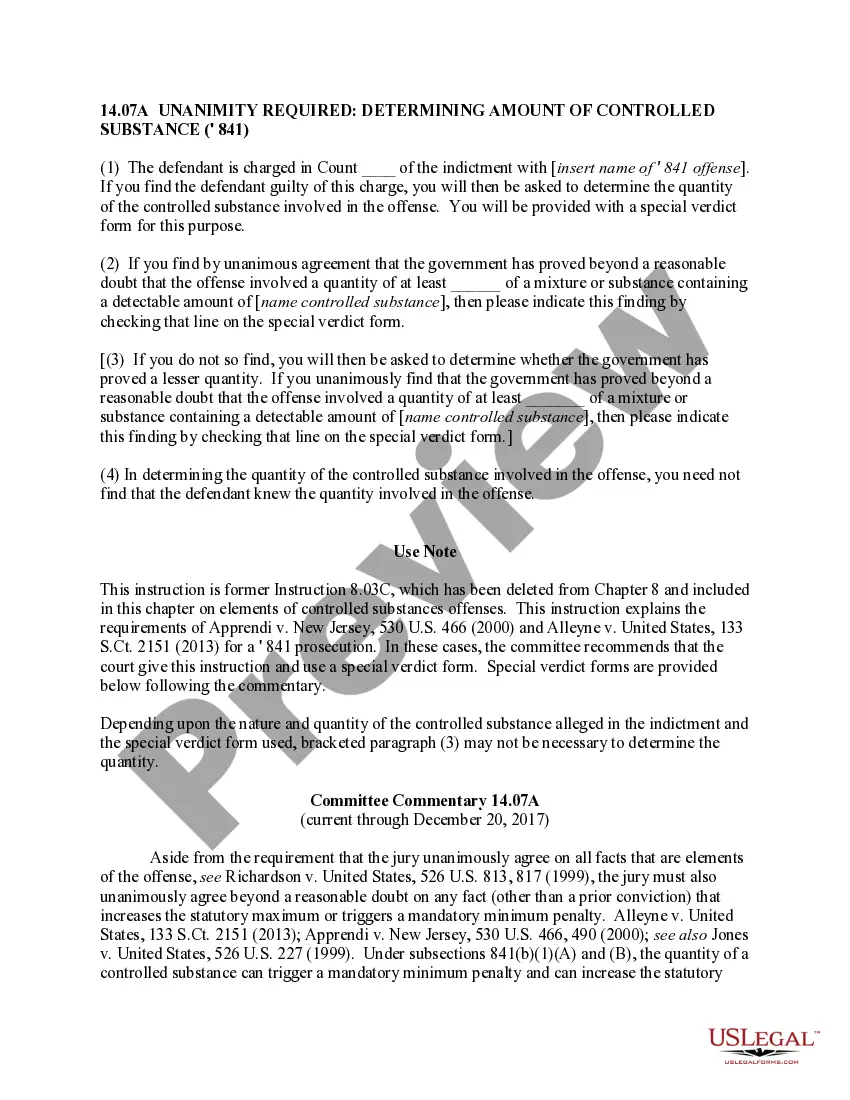
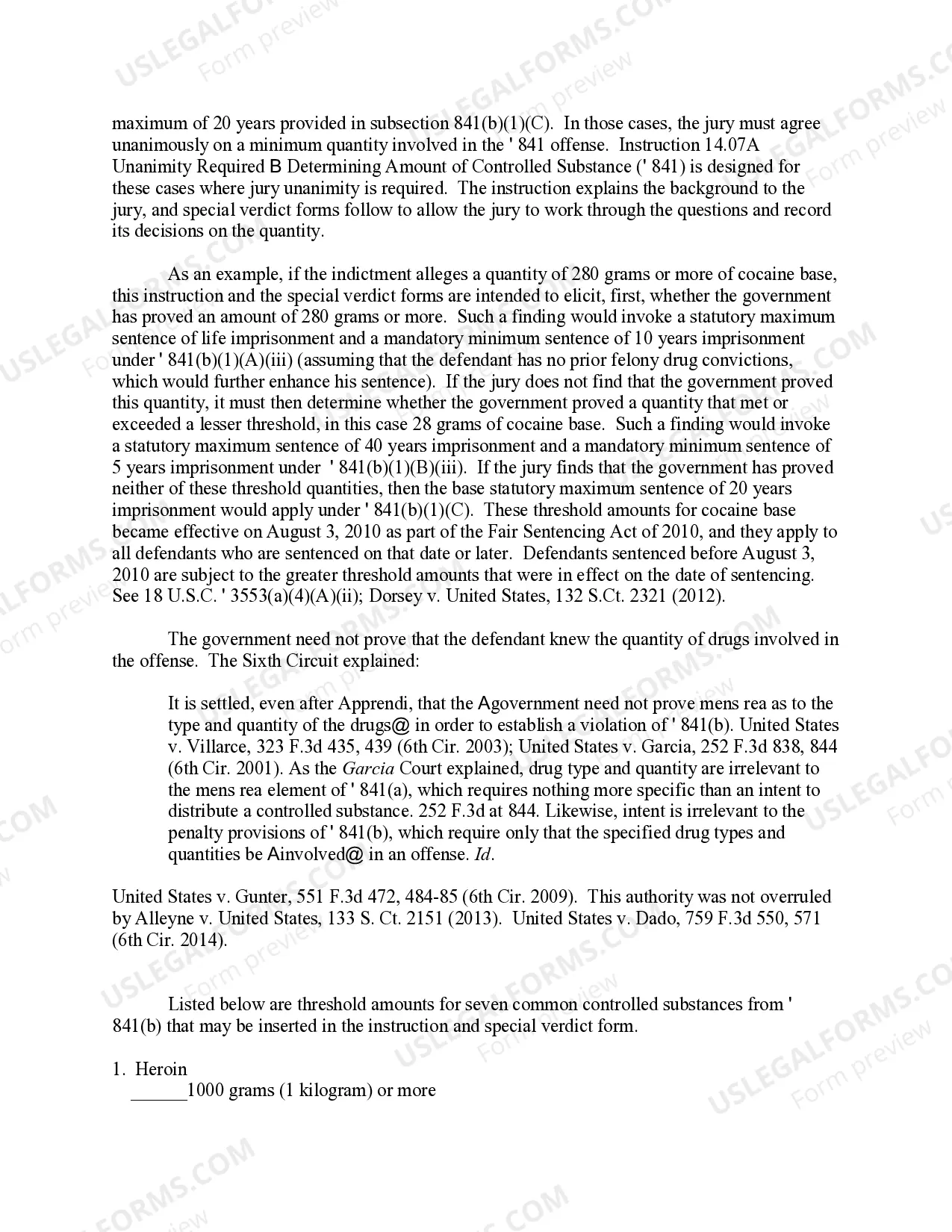
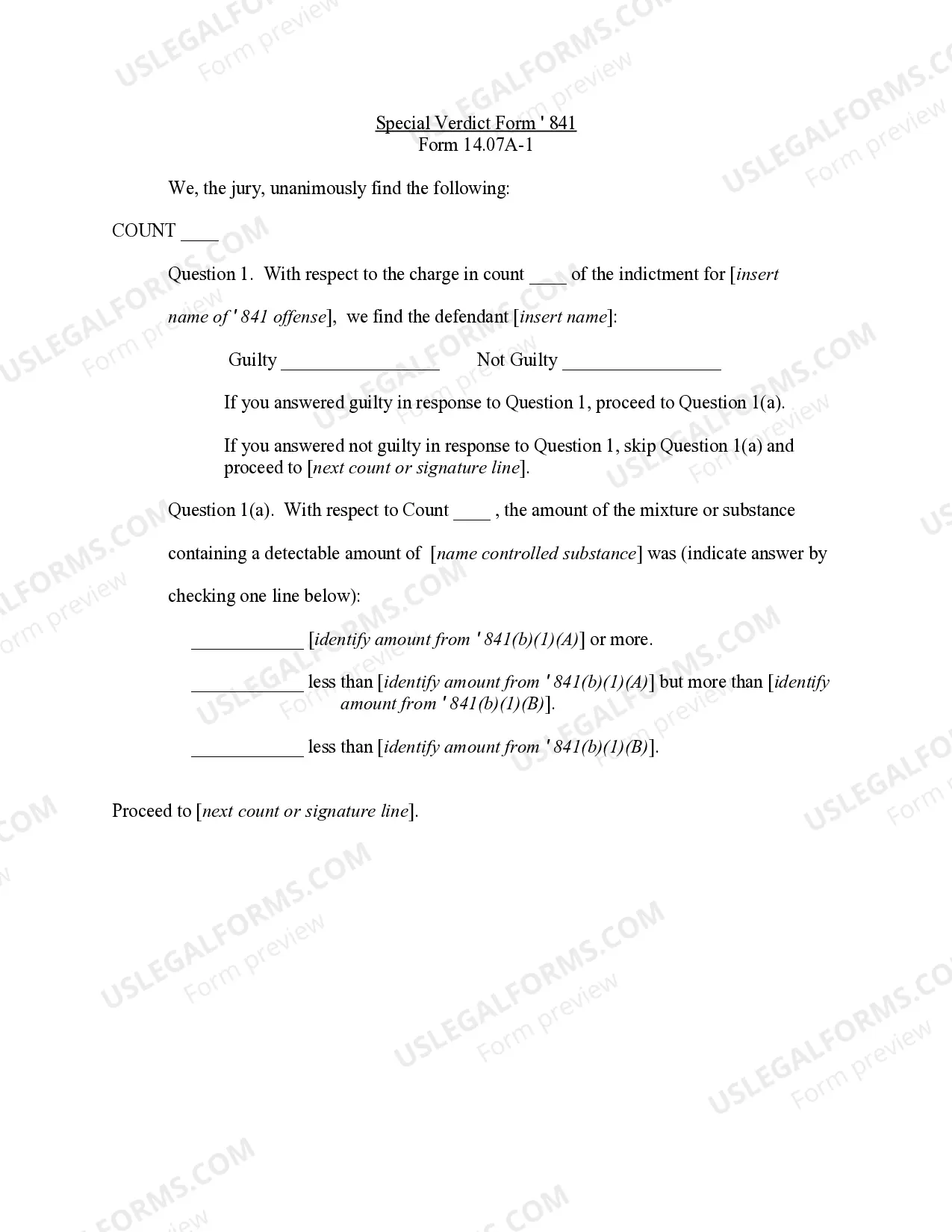
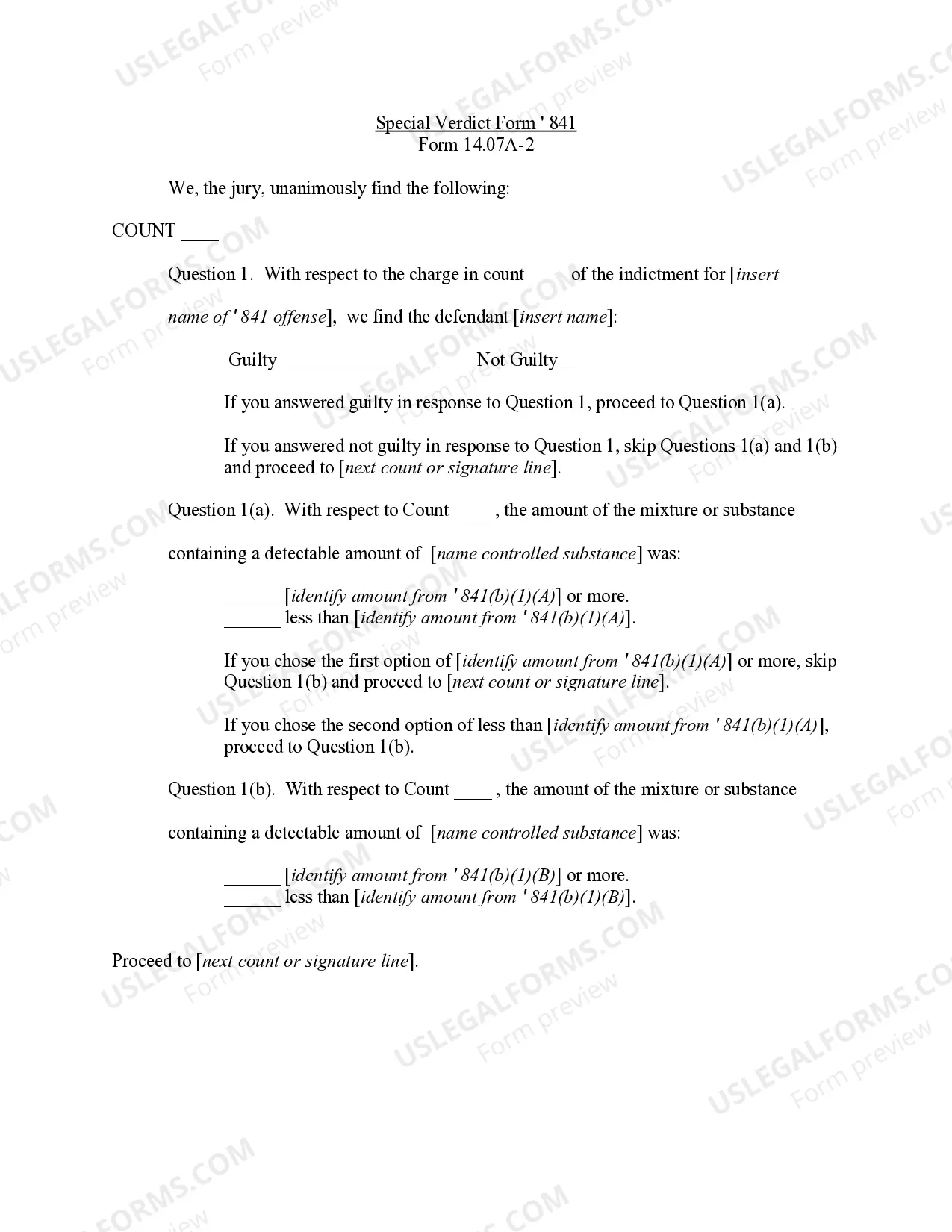
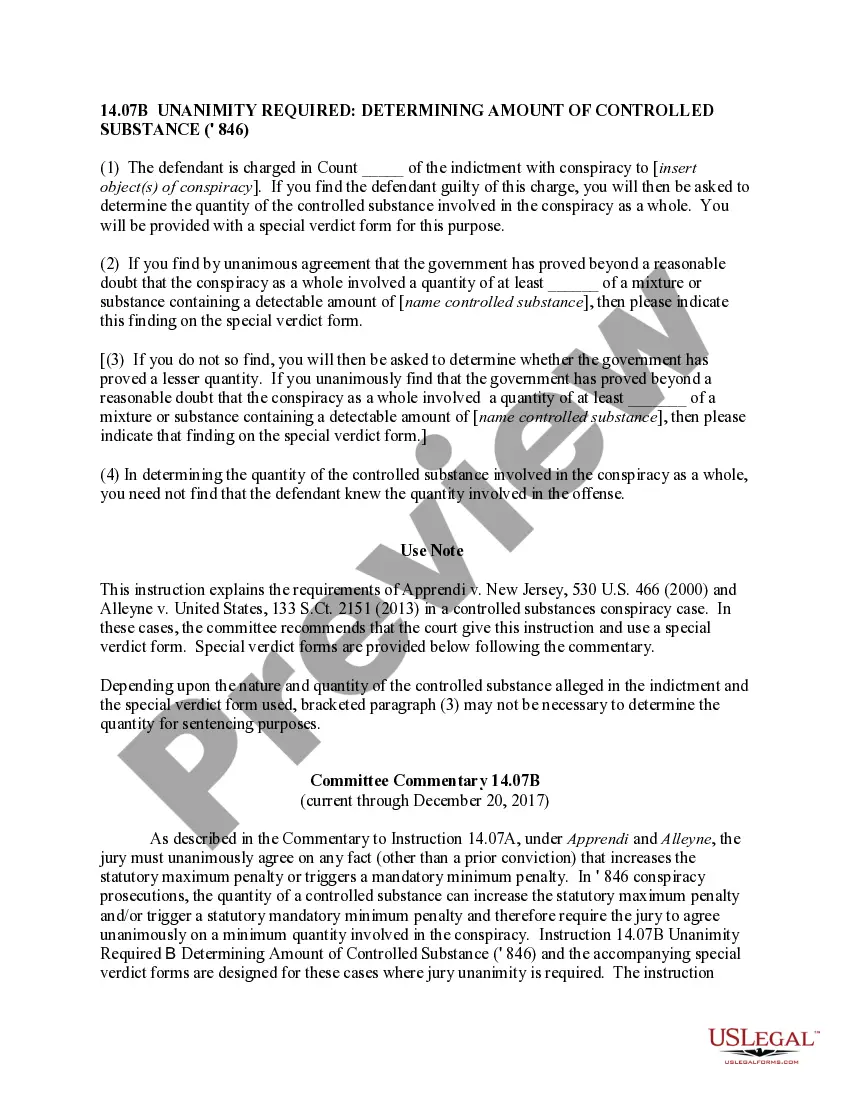
The Unanimity Required: Determining Amount of Controlled Substance form is a legal instruction used in federal prosecutions under 21 U.S.C. § 841. Its primary purpose is to guide juries on how to unanimously determine the quantity of a controlled substance involved in an offense. This form is essential for ensuring that jurors understand the requirements set forth by significant court rulings, such as Apprendi v. New Jersey and Alleyne v. United States, that impact sentencing based on drug quantities. Unlike other verdict forms, this form specifically addresses the nuances of drug quantity determinations in jury trials.
What’s included in this form
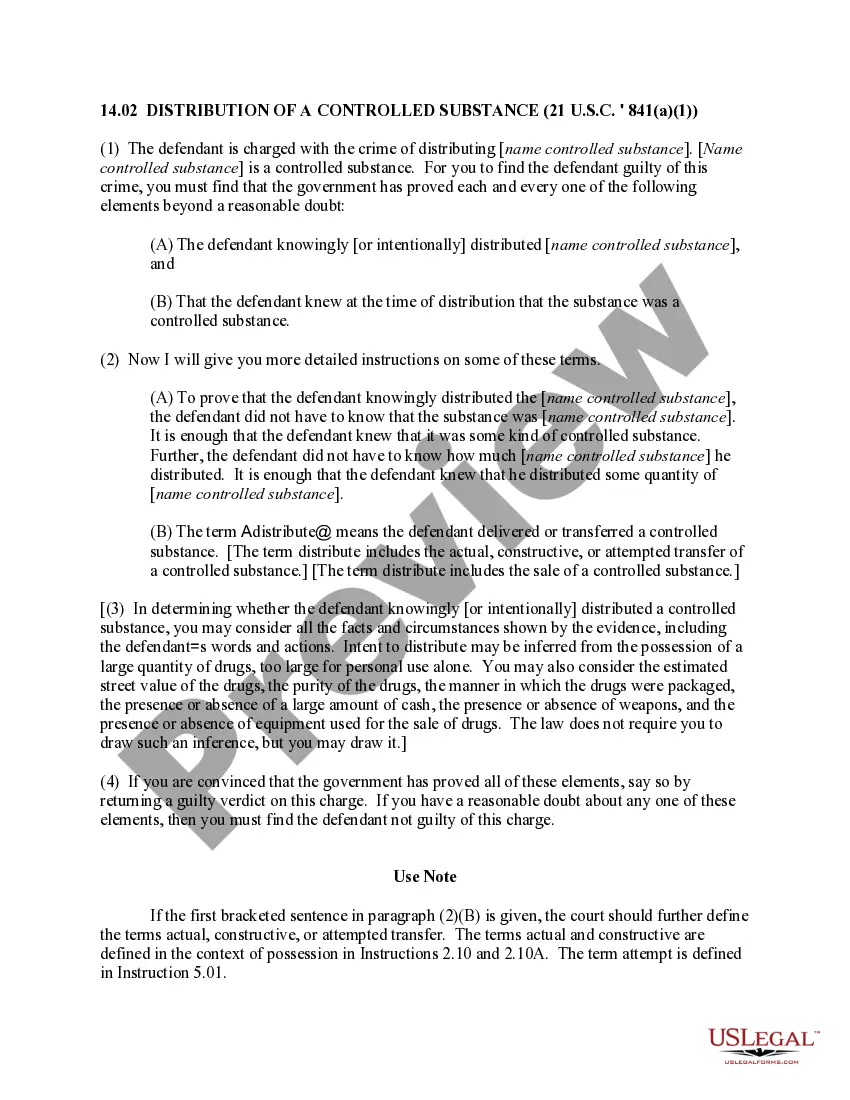
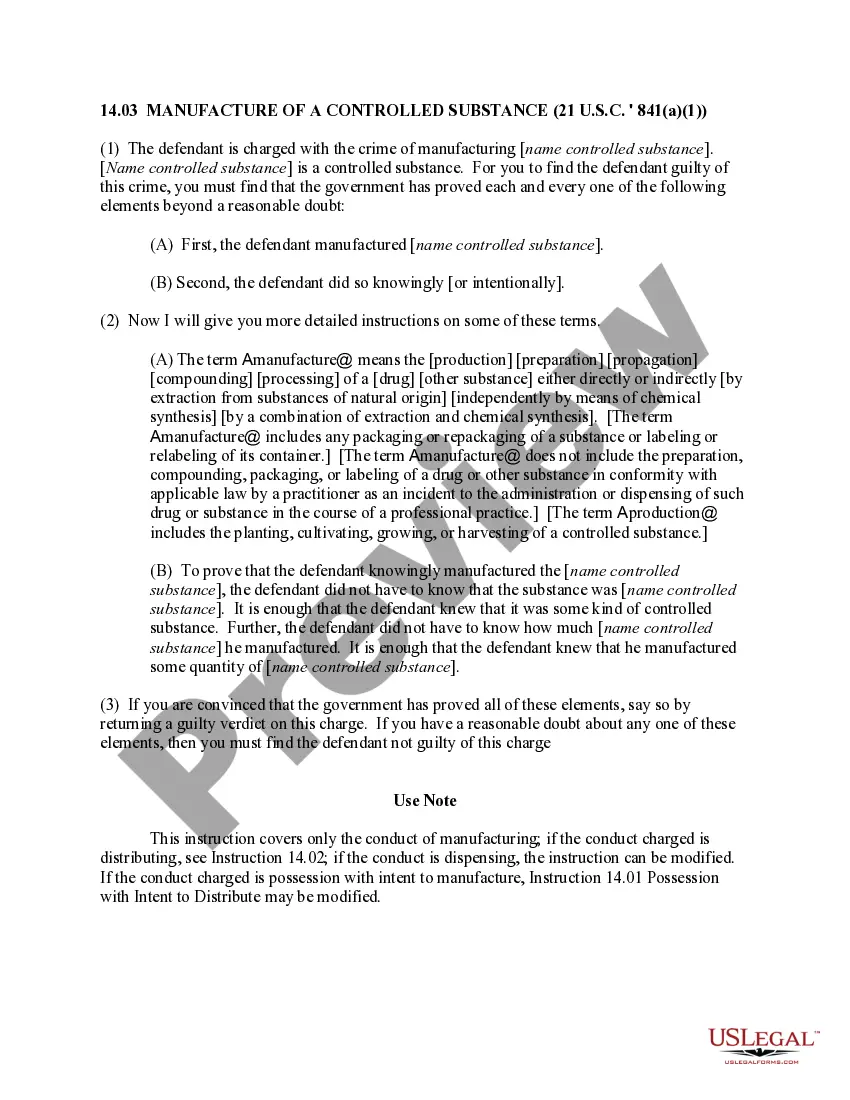
- Introduction to the charge against the defendant and reference to the specific offense under 21 U.S.C. § 841.
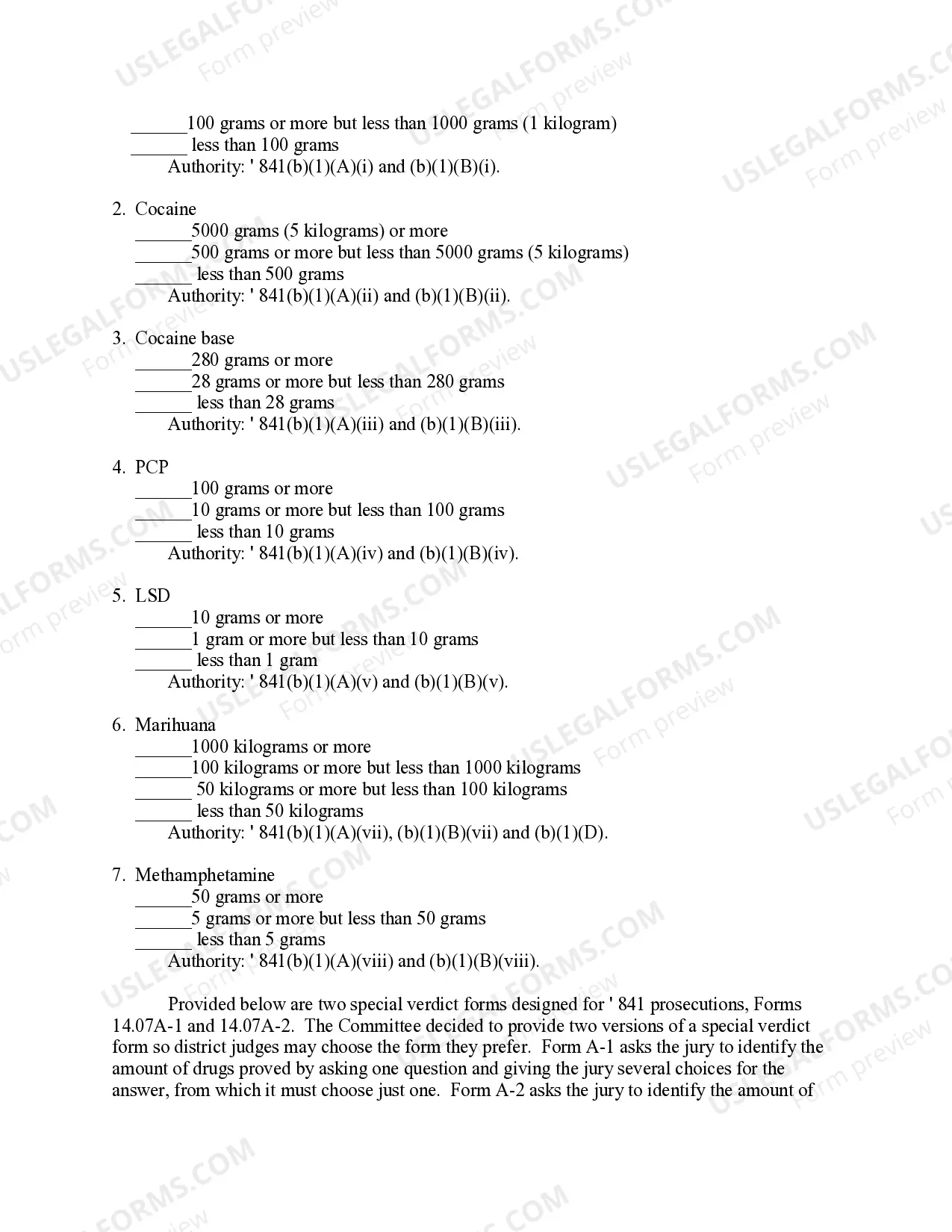
- Instructions for the jury to indicate findings regarding the quantity of the controlled substance.
- Clarification that jurors do not need to find the defendantâs knowledge of the substance quantity.
- Special verdict forms included for jurors to record their decisions on drug quantities.
- Reference to legal precedents affecting the interpretation of controlled substance offenses.


When to use this document
This form is used during federal drug offense trials when the jury must determine specific quantities of controlled substances related to the charges. It is necessary when drug amount is crucial to sentencing, particularly when the alleged quantities could trigger mandatory minimum sentences or increase statutory maximum penalties. The form should be utilized after a guilty finding on the primary charge, guiding jurors through the subsequent determination of drug quantities involved in the offense.
Who this form is for
This form is intended for:
- Jurors serving on federal drug offense cases under 21 U.S.C. § 841.
- Judges overseeing cases involving determinations of drug quantities.
- Legal professionals involved in the prosecution or defense of drug-related offenses.
- Anyone seeking to understand the juryâs role in determining drug quantities in controlled substance cases.
Steps to complete this form
- Identify the count related to the charge and confirm the defendant's name.
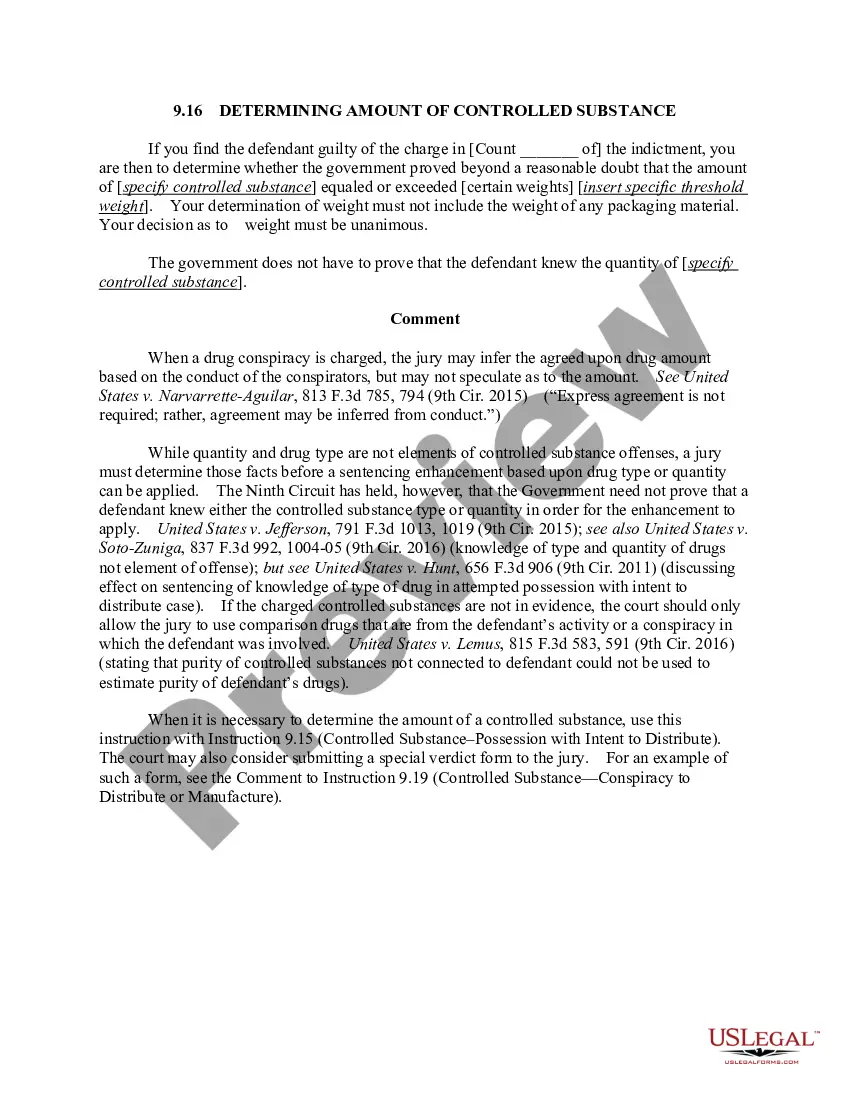
- Unanimously determine if the quantity of the controlled substance meets or exceeds the mentioned threshold.
- Use the special verdict form to indicate the juryâs findings regarding the quantity of the controlled substance.
- Ensure all jurors are in agreement on the findings before submitting the verdict.
- Proceed to document any further findings as required by the charges listed in the indictment.
Does this document require notarization?
Notarization is not commonly needed for this form. However, certain documents or local rules may make it necessary. Our notarization service, powered by Notarize, allows you to finalize it securely online anytime, day or night.
Get your form ready online
Our built-in tools help you complete, sign, share, and store your documents in one place.
Make edits, fill in missing information, and update formatting in US Legal Forms—just like you would in MS Word.
Download a copy, print it, send it by email, or mail it via USPS—whatever works best for your next step.
Sign and collect signatures with our SignNow integration. Send to multiple recipients, set reminders, and more. Go Premium to unlock E-Sign.
If this form requires notarization, complete it online through a secure video call—no need to meet a notary in person or wait for an appointment.
We protect your documents and personal data by following strict security and privacy standards.

Make edits, fill in missing information, and update formatting in US Legal Forms—just like you would in MS Word.

Download a copy, print it, send it by email, or mail it via USPS—whatever works best for your next step.

Sign and collect signatures with our SignNow integration. Send to multiple recipients, set reminders, and more. Go Premium to unlock E-Sign.

If this form requires notarization, complete it online through a secure video call—no need to meet a notary in person or wait for an appointment.

We protect your documents and personal data by following strict security and privacy standards.
Common mistakes to avoid
- Failing to achieve unanimous agreement on the quantity determination.
- Identifying incorrect quantities based on misunderstandings of the relevant statutes.
- Neglecting to clarify the difference between the charged offense and the quantity involved.
Benefits of using this form online
- Immediate access to correctly drafted legal forms by licensed attorneys.
- Streamlined process for jurors and judges to complete necessary determinations.
- Descriptive guidance on complex legal instructions makes the form easier to understand.
Legal use & context
- This form is based on federal law and is particularly important given the implications of drug quantity on sentencing.
- It addresses precedents set in key Supreme Court cases relevant to controlled substance offenses.
- Failure to correctly apply these instructions could result in appeal or retrial due to due process concerns.
Summary of main points
- This form is essential for jury determinations related to drug offenses under federal law.
- Unanimous agreement on the quantity of controlled substances is crucial for sentencing outcomes.
- Accurate completion of this form helps ensure that legal requirements are met during trials.
Looking for another form?

Form popularity
FAQ
The Controlled Substances Act requires that a pharmacy complete a biennial inventory of controlled substances every 2 years.
An inventory reconciliation report of all Schedule II drugs shall be compiled at least every three months and, in order to complete the report, the inventory must be compared with a review of drugs that entered and left the pharmacy since the previous inventory reconciliation.
How often must controlled substances be physically inventoried? Federal Law requires controlled substances to be physically inventoried once every two years (biennial inventory).
After the initial inventory is taken, the registrant shall take a new inventory of all stocks of controlled substances on hand at least every two years. The biennial inventory may be taken on any date which is within two years of the previous biennial inventory date.
Section 2925.03 Trafficking, aggravated trafficking in drugs. Ohio Revised Code. Chapter 2925 Drug Offenses. July 21, 2022.
Requirements of a prescription: A pharmacist may dispense a controlled substance (Schedule III, IV, & V) only pursuant to: a written prescription signed by a practitioner, facsimile of a written, signed Rx, an electronic Rx that meets requirements, or an oral Rx made by an individual practitioner.
As a reminder, DEA's regulations allow practitioners to distribute, without being registered with DEA as a distributor, up to 5% of the total controlled substances dispensed in a calendar year.
Federal law requires pharmacies to complete a controlled substance inventory biennially, or every 2 years, from the date of the first inventory. This is another requirement that varies among states and employers.