DISTRIBUTION OF A CONTROLLED SUBSTANCE
What is this form?
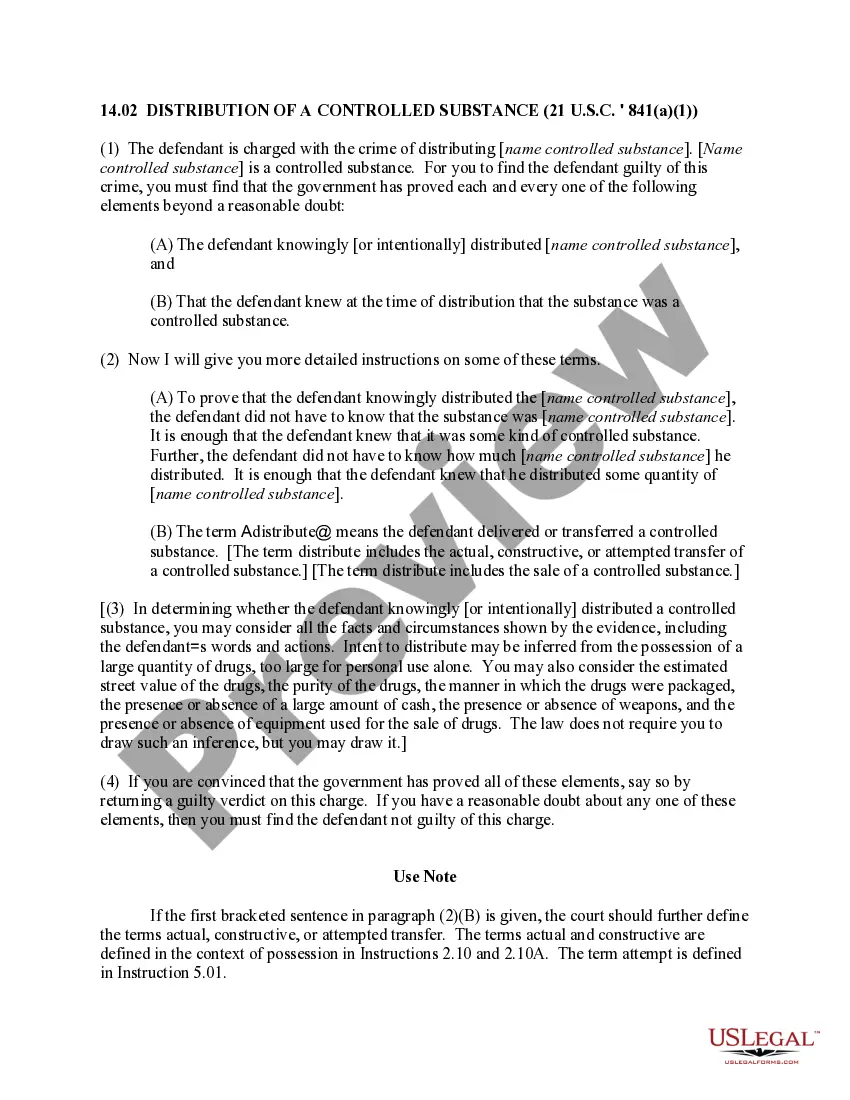
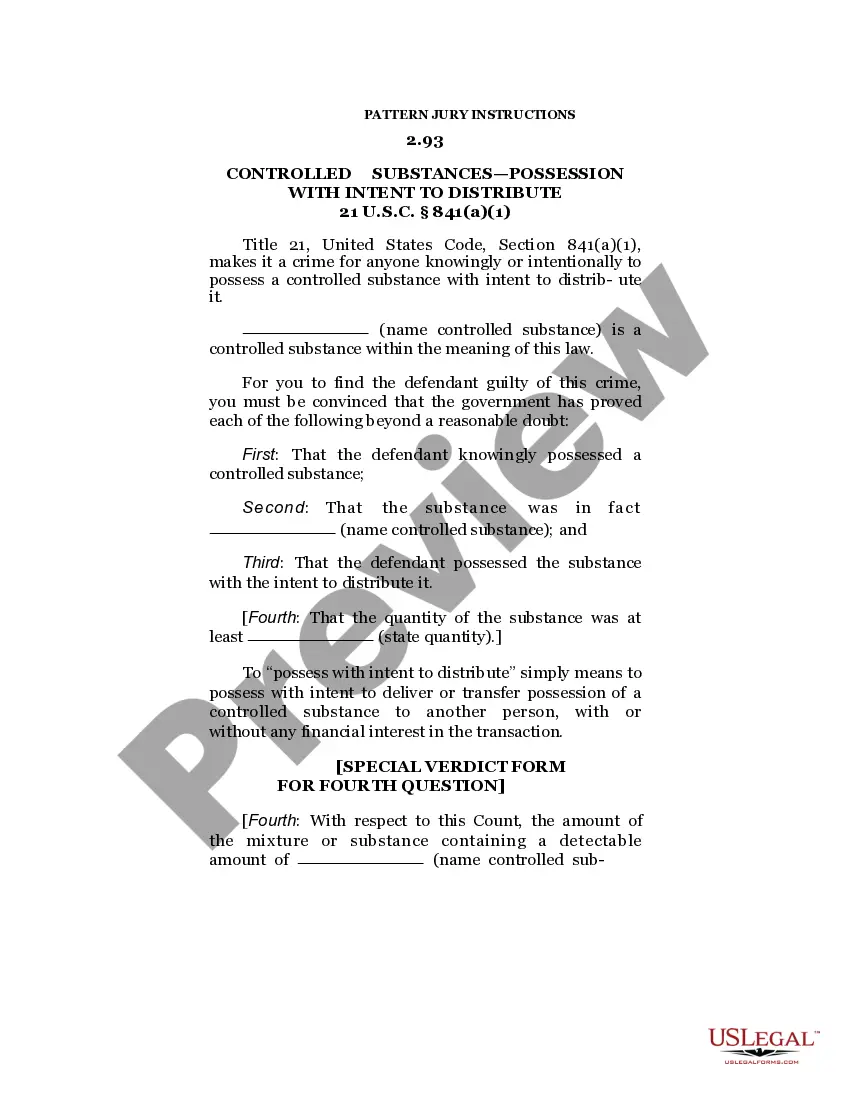
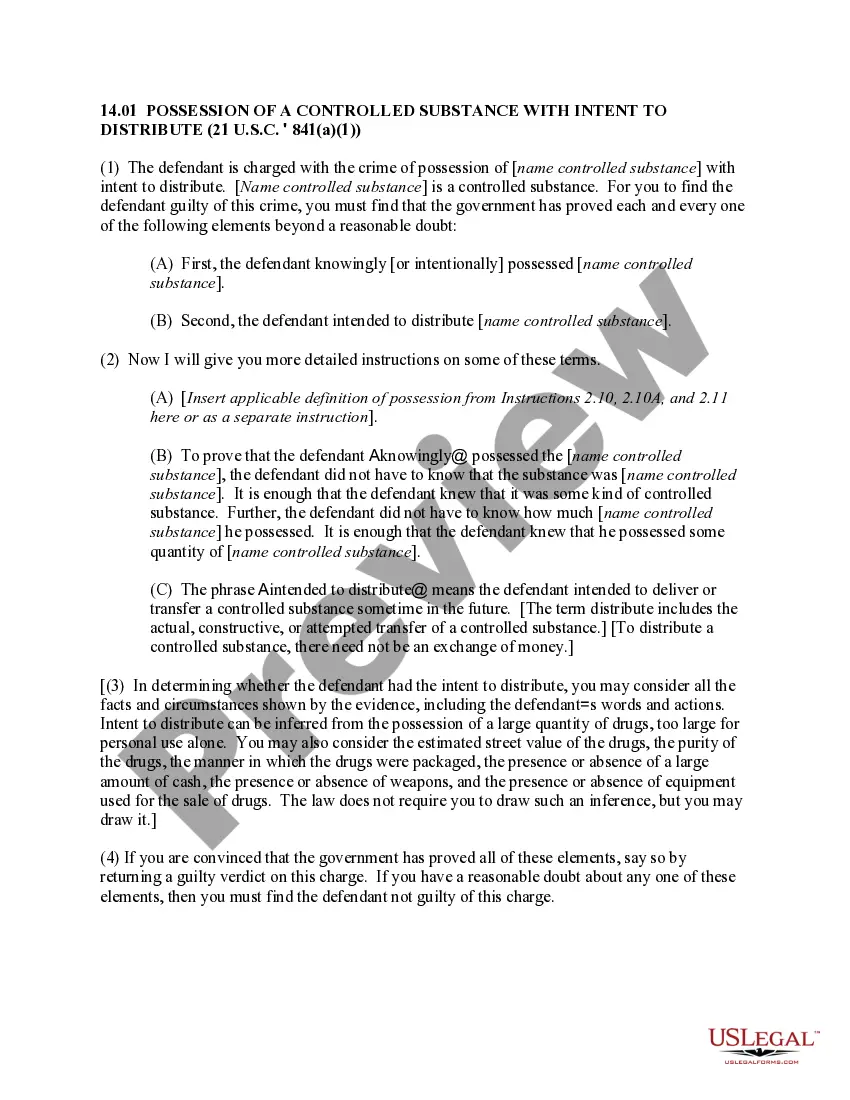
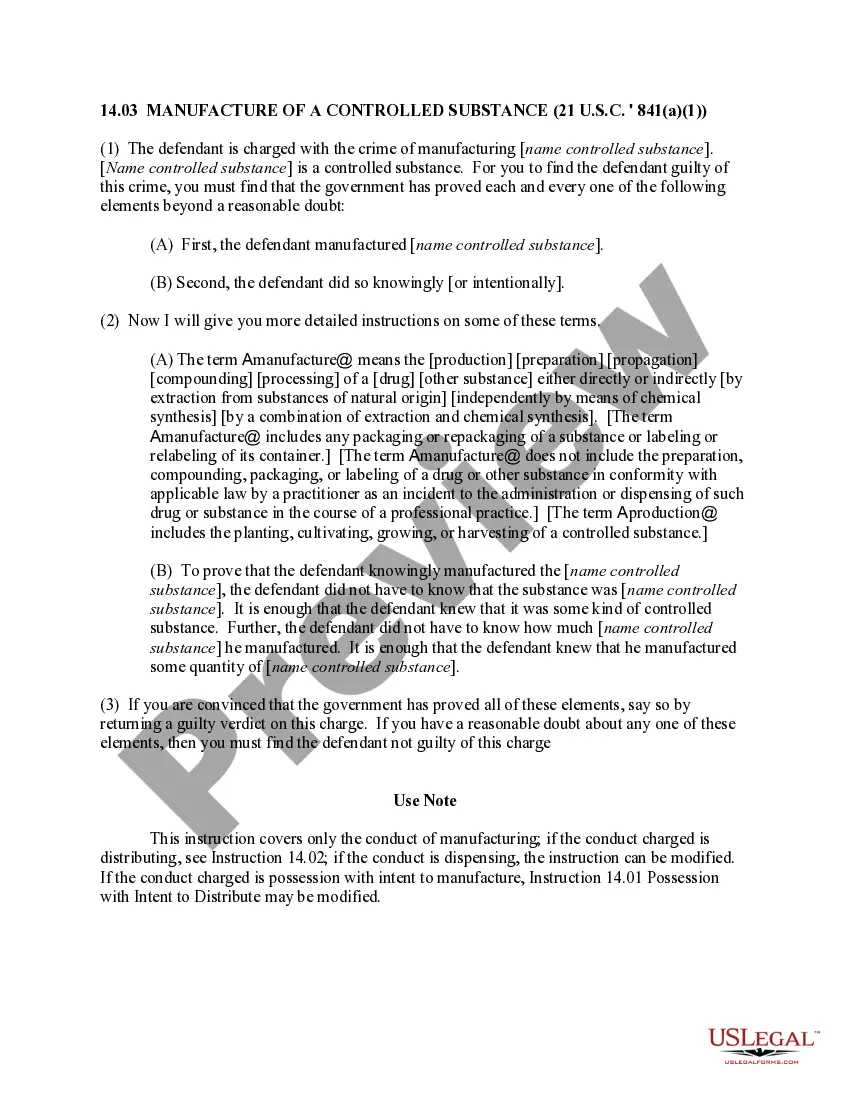
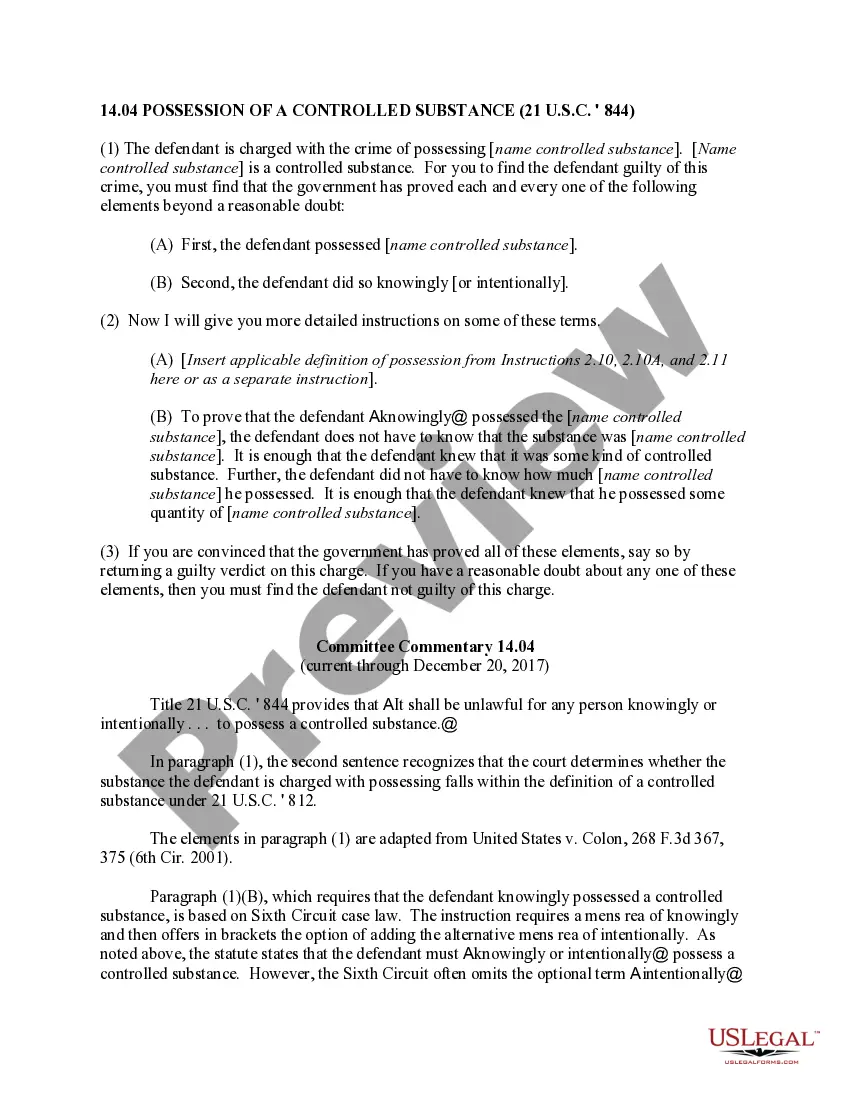
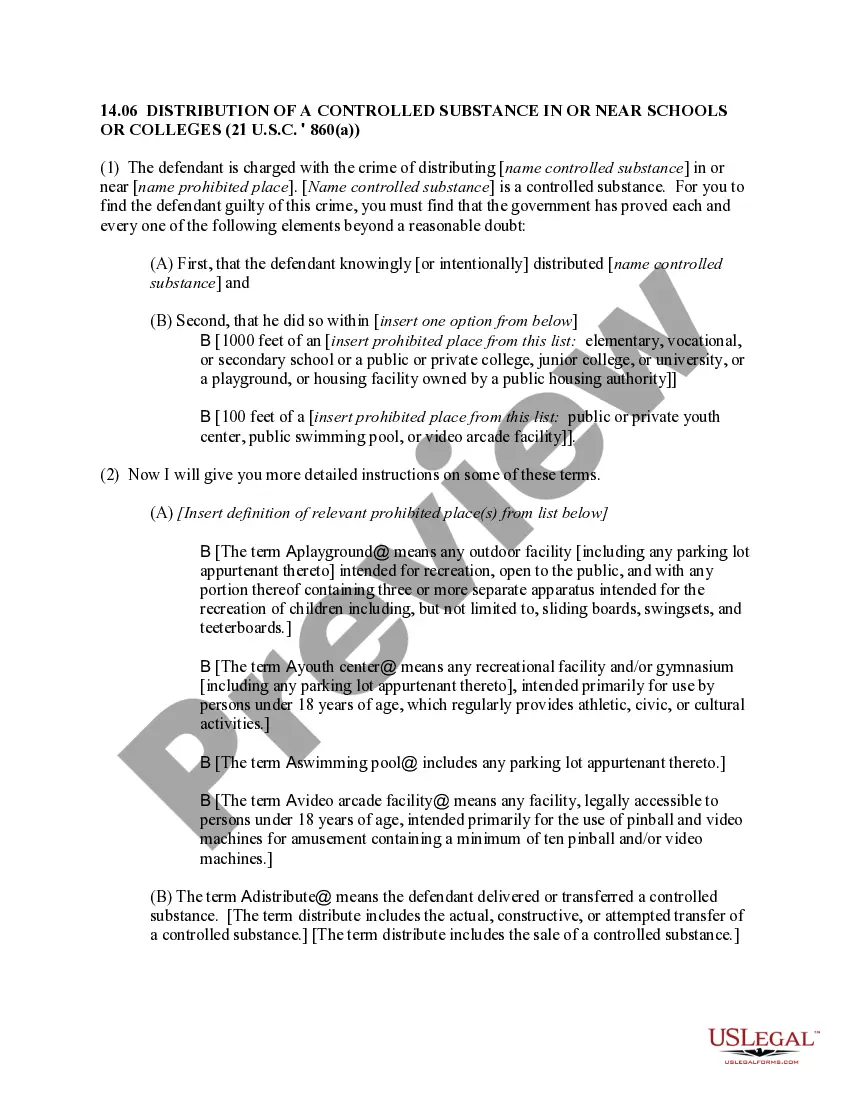
The Distribution of a Controlled Substance form is a legal document used in criminal cases involving the illegal distribution of controlled substances, as defined under 21 U.S.C. 841(a)(1). This form outlines the elements that must be proven for a conviction, distinguishing it from forms focused on possession or other drug-related offenses. The goal is to ensure clarity on the legal requirements necessary for establishing guilt in such cases.
Main sections of this form
- An overview of the charges related to the distribution of a specified controlled substance.
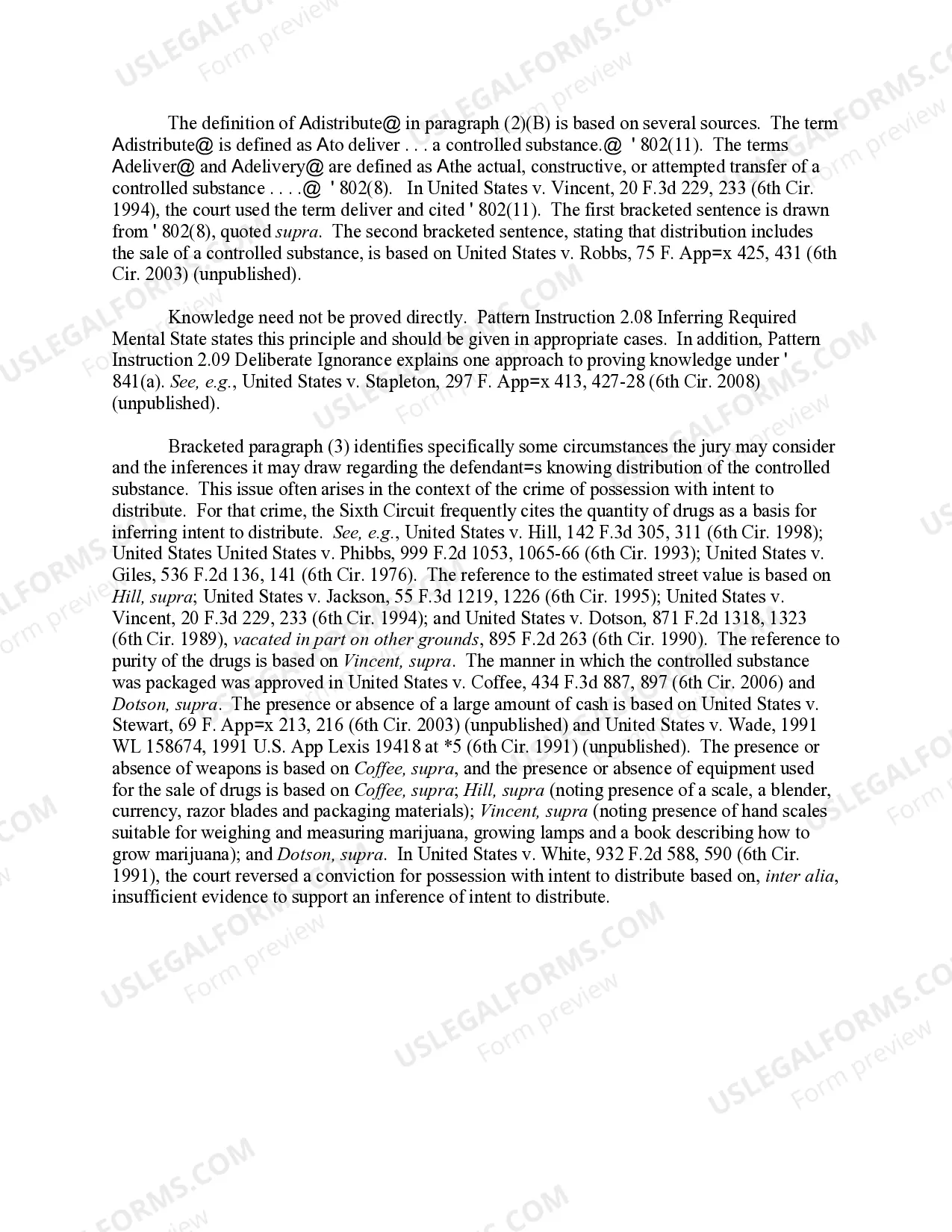
- Detailed definitions of key terms such as "distribute," including actual, constructive, or attempted transfers.
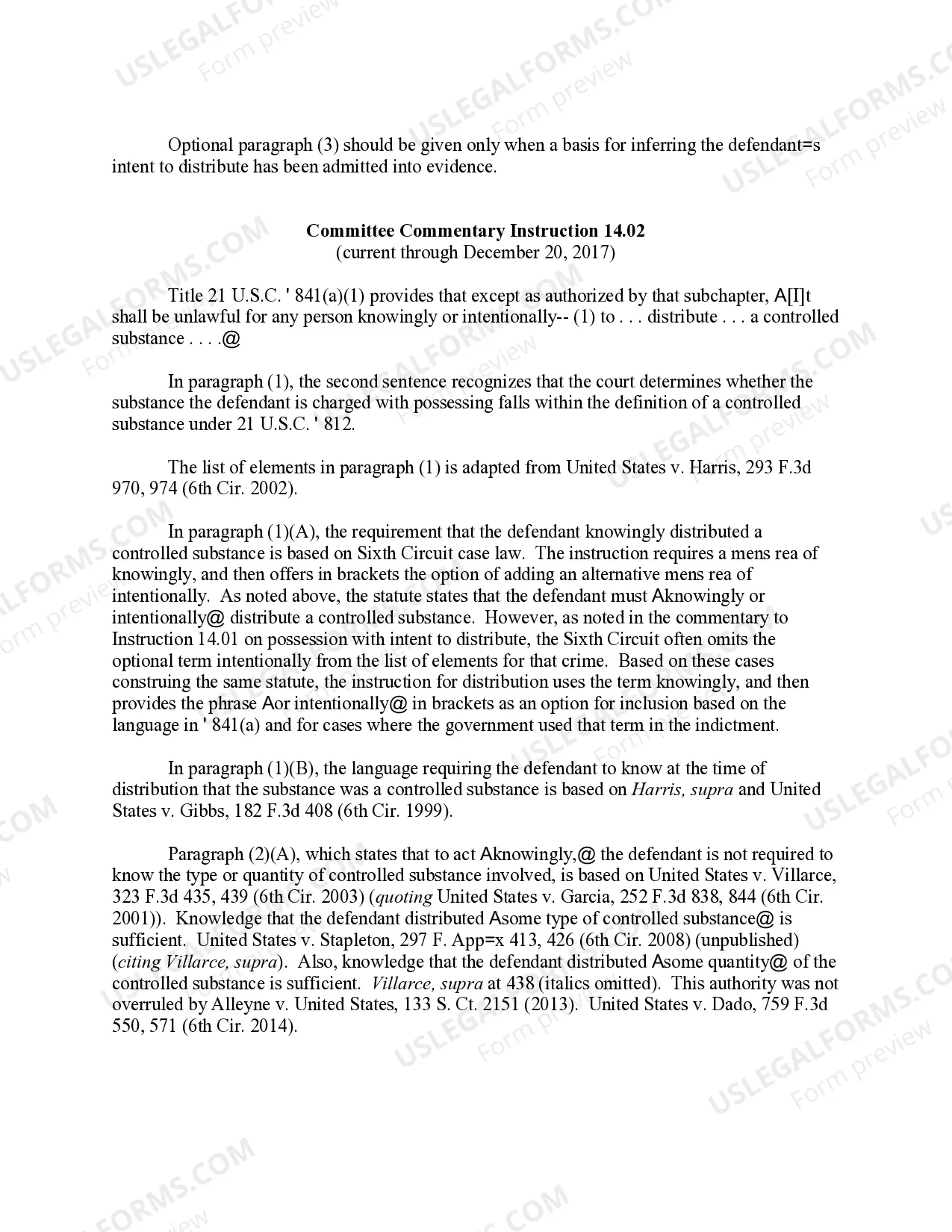
- Standard elements the prosecution must prove, including the defendant's knowledge and intent regarding the substance's legality.
- Instructions on how to consider evidence related to the defendant's intent, including the quantity and manner of distribution.
- A guideline for the jury on what to consider when reaching a verdict.

When to use this document
This form should be used when an individual is charged with distributing a controlled substance. It is essential in legal proceedings to outline the necessary elements that the prosecution must prove to secure a conviction. Scenarios can include drug trafficking cases, sales of illegal drugs, or distribution without proper permits.
Who needs this form
This form is relevant for:
- Defendants facing charges of drug distribution.
- Legal professionals representing clients in drug-related cases.
- Judges and juries in understanding the legal requirements necessary for conviction.
- Students and researchers studying criminal law related to drug offenses.
Steps to complete this form
- Identify the defendant's name and details regarding the controlled substance involved.
- State the facts surrounding the accused distribution, including dates and circumstances.
- Specify the quantity of the controlled substance distributed.
- Ensure that each element of the charge is addressed, including knowledge and intent aspects.
- Review the evidence that supports the charge, noting any relevant case law guiding the prosecution.
Notarization guidance
This form does not typically require notarization unless specified by local law. It is important to verify with local guidelines to ensure compliance.
Get your form ready online
Our built-in tools help you complete, sign, share, and store your documents in one place.
Make edits, fill in missing information, and update formatting in US Legal Forms—just like you would in MS Word.
Download a copy, print it, send it by email, or mail it via USPS—whatever works best for your next step.
Sign and collect signatures with our SignNow integration. Send to multiple recipients, set reminders, and more. Go Premium to unlock E-Sign.
If this form requires notarization, complete it online through a secure video call—no need to meet a notary in person or wait for an appointment.
We protect your documents and personal data by following strict security and privacy standards.

Make edits, fill in missing information, and update formatting in US Legal Forms—just like you would in MS Word.

Download a copy, print it, send it by email, or mail it via USPS—whatever works best for your next step.

Sign and collect signatures with our SignNow integration. Send to multiple recipients, set reminders, and more. Go Premium to unlock E-Sign.

If this form requires notarization, complete it online through a secure video call—no need to meet a notary in person or wait for an appointment.

We protect your documents and personal data by following strict security and privacy standards.
Common mistakes to avoid
- Failing to clearly define the controlled substance involved.
- Omitting key elements required for proving intent, such as circumstantial evidence.
- Neglecting to consider local laws which may impact the charges.
- Insufficient detailing of the facts surrounding the distribution.
Why use this form online
- Convenient access to legal documents drafted by licensed attorneys.
- Editability allows for customization based on specific case details.
- Reliable format ensures adherence to legal standards and requirements.
Looking for another form?
Form popularity
FAQ
Under the authority of the Controlled Substances Act of 1970, the Drug Enforcement Administration (DEA), Office of Diversion Control (OD) regulates the manufacture and distribution of controlled substances in the United States.
As a reminder, DEA's regulations allow practitioners to distribute, without being registered with DEA as a distributor, up to 5% of the total controlled substances dispensed in a calendar year.
Drug distribution refers to the movement of a drug to and from the blood and various tissues of the body (for example, fat, muscle, and brain tissue) and the relative proportions of drug in the tissues. (See also Introduction to Administration and Kinetics of Drugs.
The term ?distribute? means to deliver (other than by administering or dispensing) a controlled substance or a listed chemical.
In California, there is no differing penalty between sale, distribution and providing a drug to somebody else. They are often bundled into the same law and are dealt with equally.
Possession refers to someone having drugs for personal use only. Intent to distribute refers to drug trafficking and the sale of drugs. While possession is typically a minor crime, it can cause a person to be charged with a felony, especially if the person is found in possession of large amounts of drugs.
The term ?distribute? means to deliver (other than by administering or dispensing) a controlled substance or a listed chemical.
What is Drug Distribution? Drug distribution is the crime of selling, drug manufacturing, delivering or importing illegal drugs or unlawful controlled substances, such as marijuana, heroin, methamphetamine or cocaine. Under 21 U.S.C.