Certificate of Trust - Indebtedness
Understanding this form
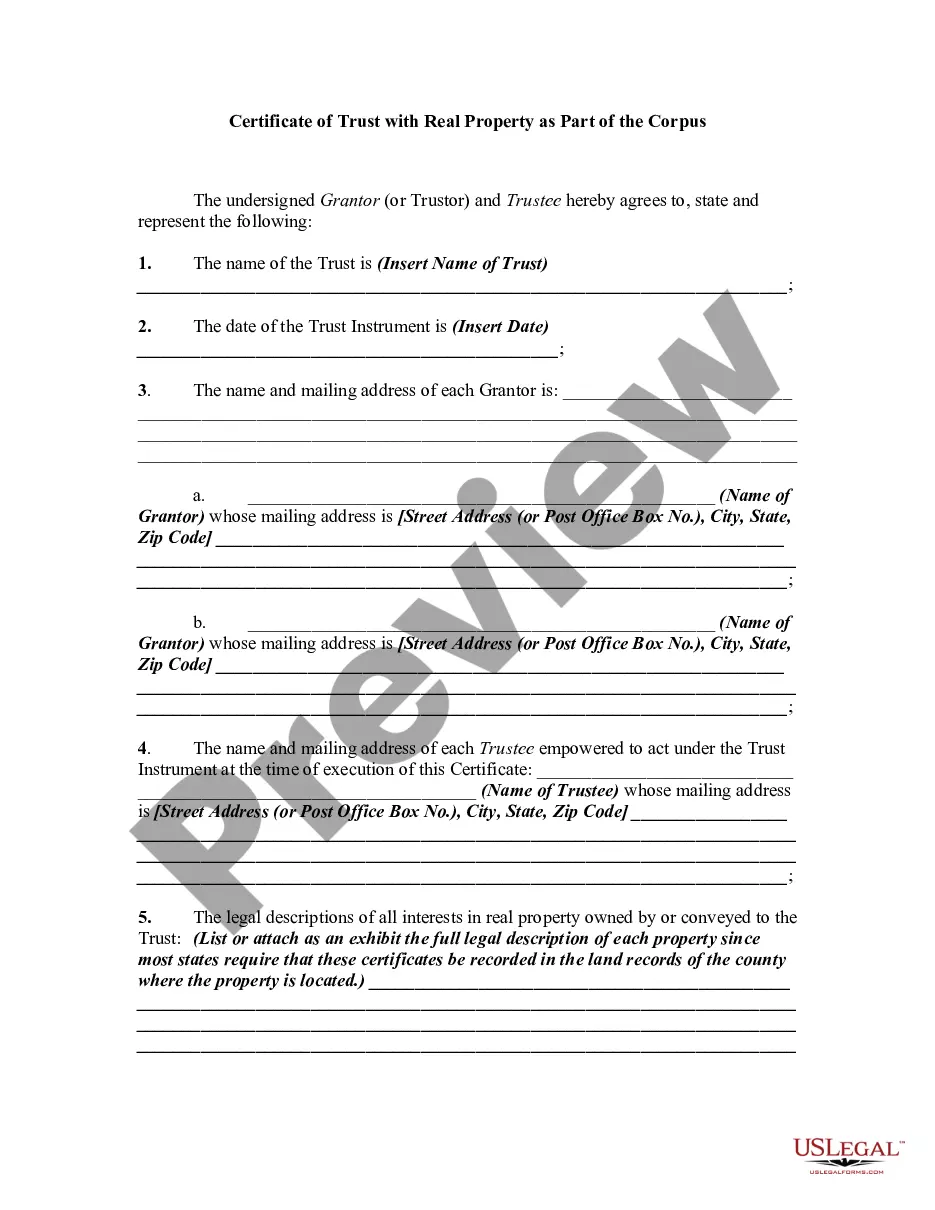
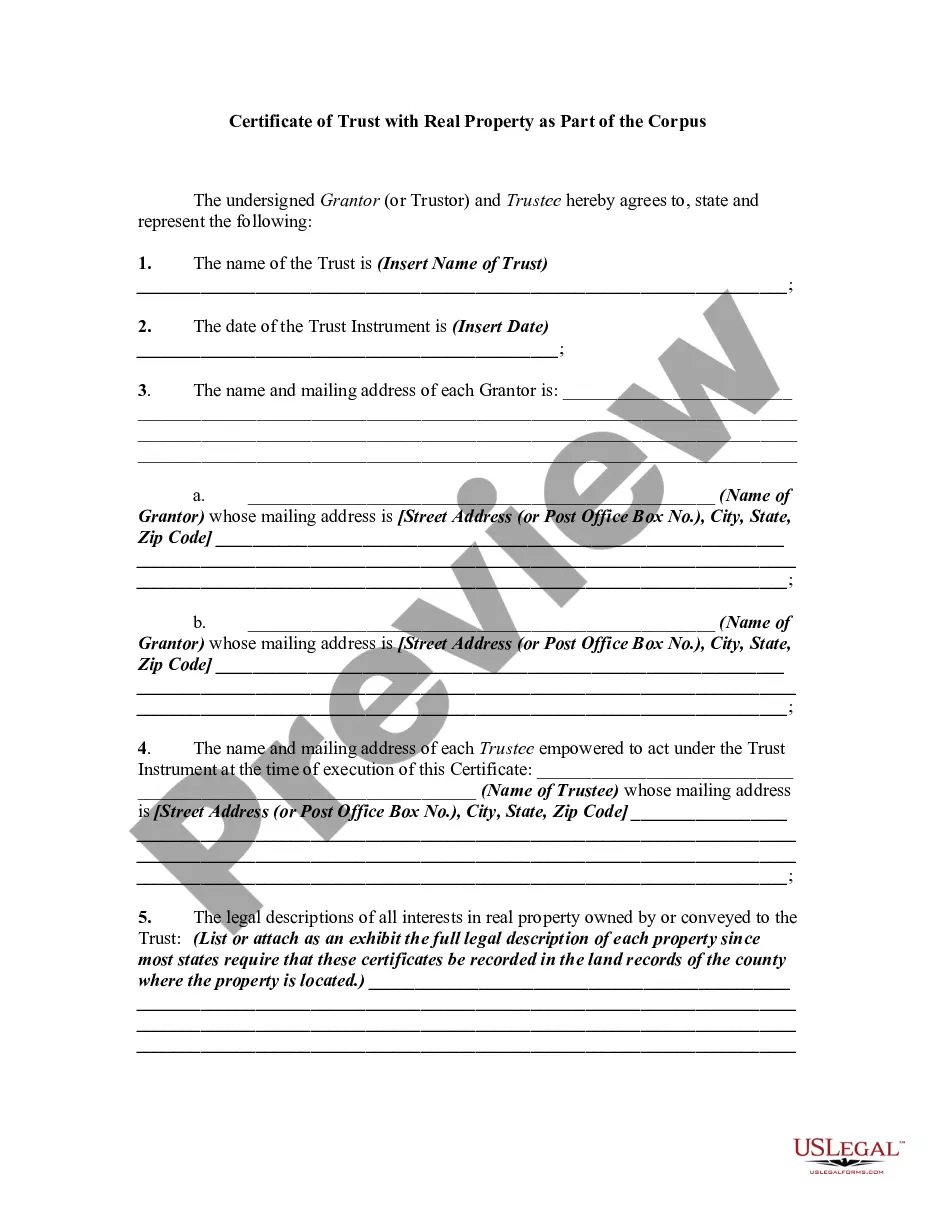
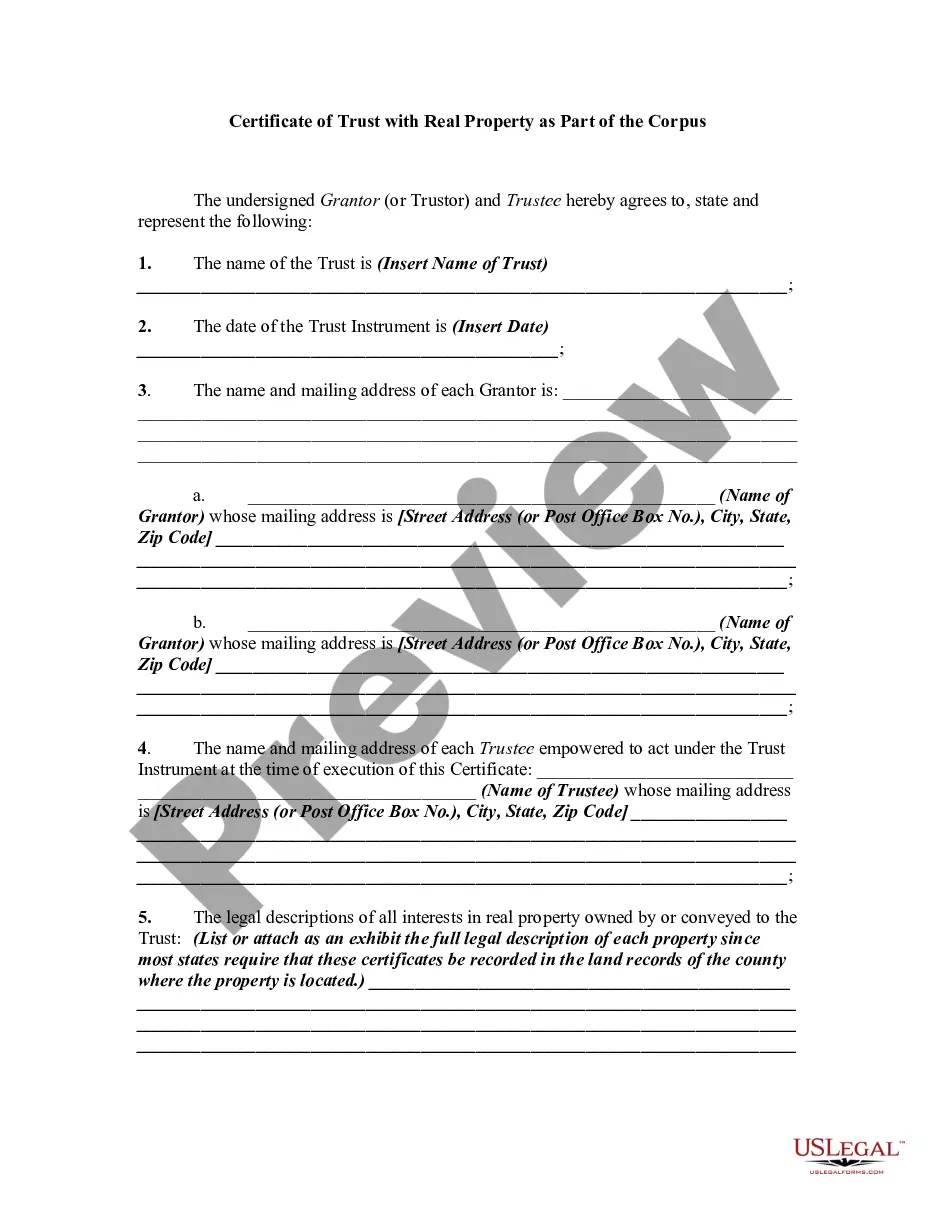
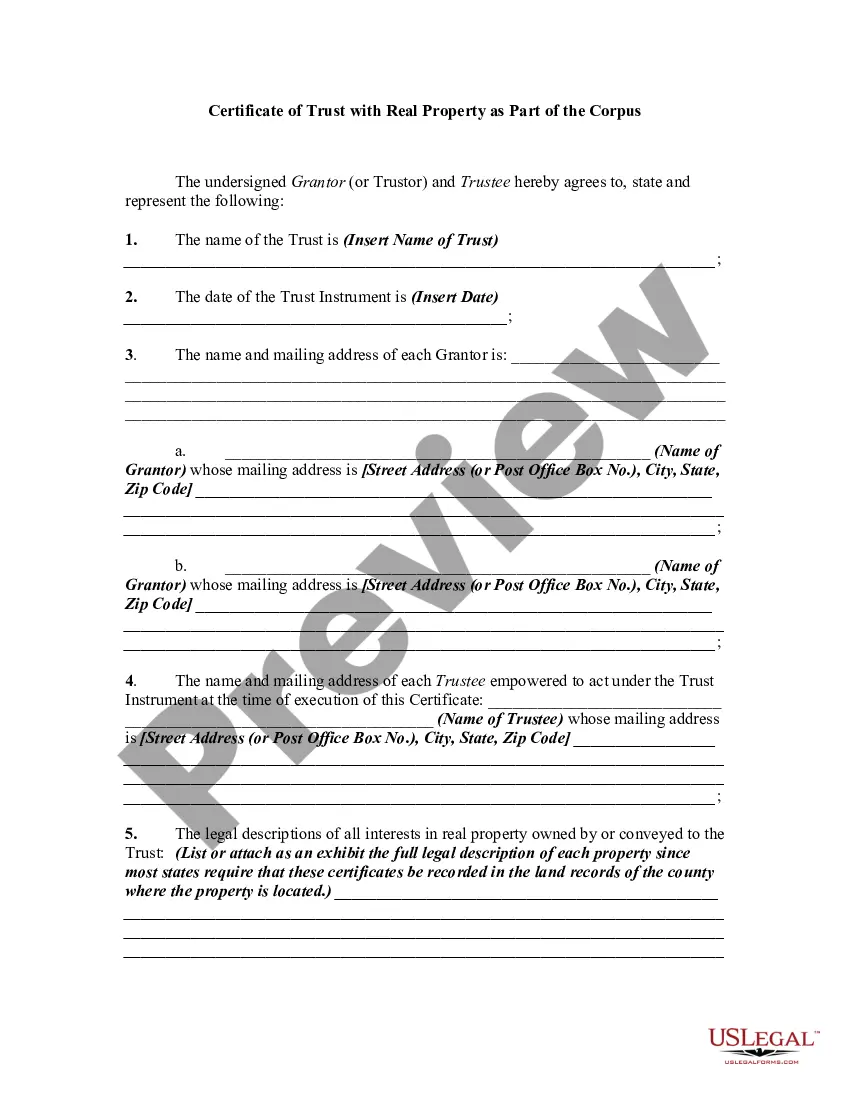
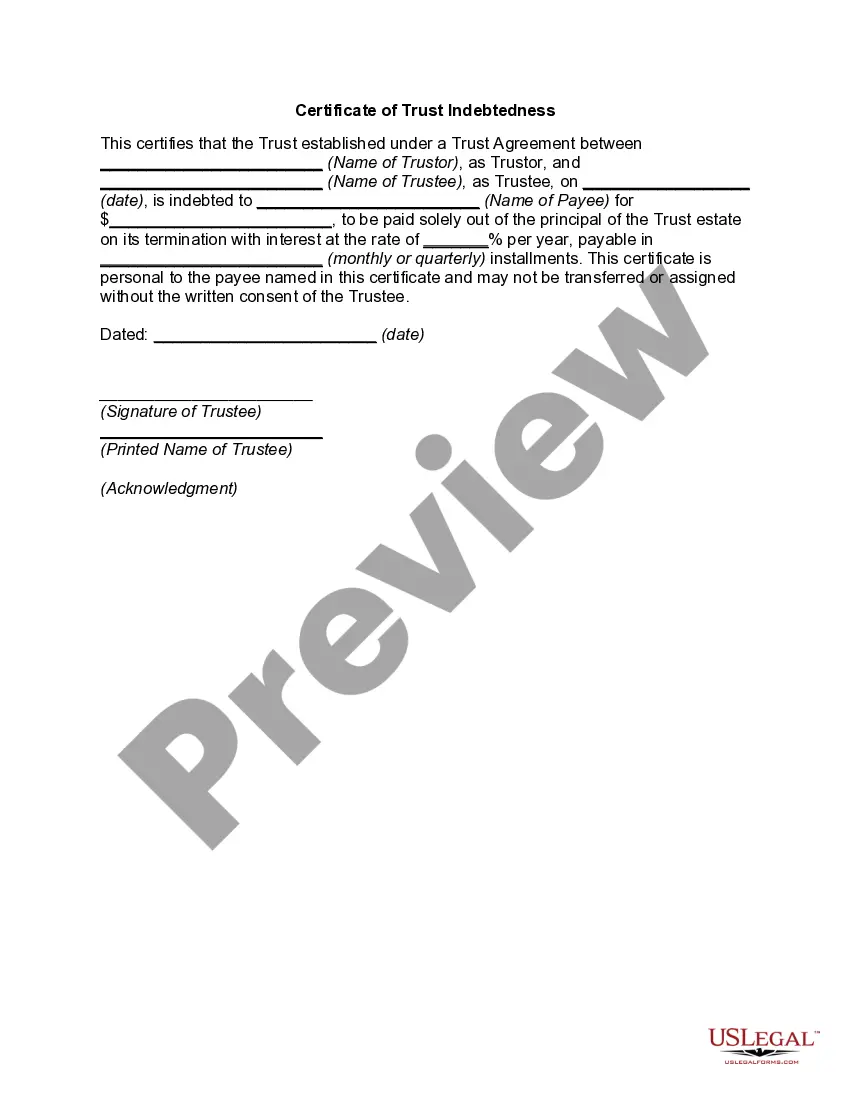
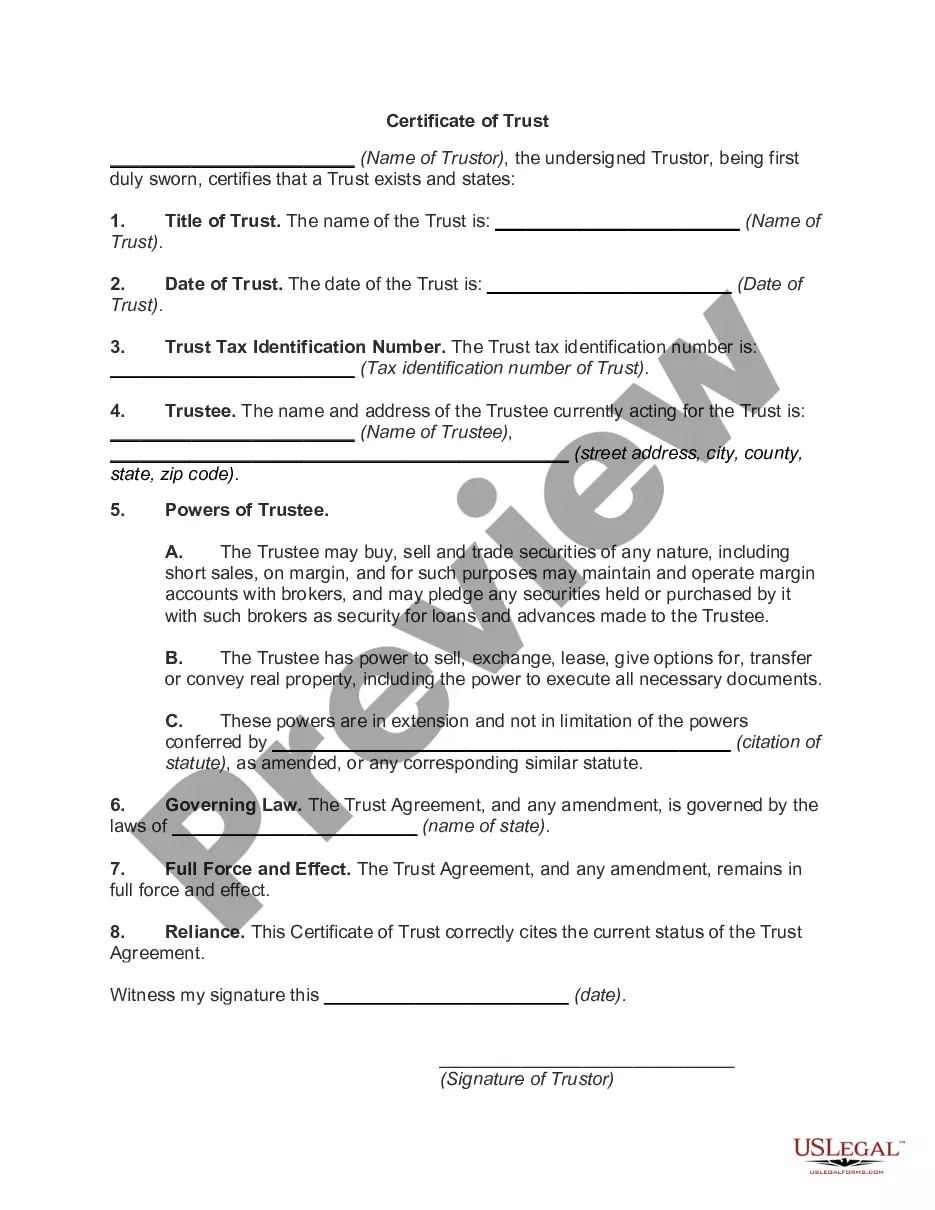
The Certificate of Trust - Indebtedness is a legal document that confirms the existence of a trust, outlines the powers of the trustee, and specifies the successor trustee(s). This form differs from other trust documents by providing a concise summary that enables the trustee to efficiently manage trust assets while maintaining confidentiality about the trust's terms.
Form components explained
- Name of the Trust
- Date of the Trust Instrument
- Names and addresses of each Grantor
- Names and addresses of each Trustee
- Legal descriptions of any real property associated with the Trust
- General powers of the Trustee
- Tax identification number of the Trust
When to use this form
This form is typically used when a trustee needs to prove the existence of a trust to third parties, such as banks or real estate entities, especially when handling trust property or obtaining financing. It is essential when a trustee is managing trust assets or executing transactions on behalf of the trust.
Who needs this form
This form is intended for:
- Trustees managing assets under a trust
- Grantors or Trustors establishing proof of a trust's existence
- Successor trustees taking over management of the trust
- Bank representatives or other financial institutions requesting proof of trust
Completing this form step by step
- Identify the name of the Trust and the date of the Trust Instrument.
- List the names and addresses of each Grantor and Trustee entitled to act.
- Provide legal descriptions of any real property owned by the Trust.
- Specify the Trustee's powers as granted in the Trust document.
- Complete the tax identification number of the Trust and other relevant details.
- Ensure that all necessary parties sign and date the Certificate of Trust.
Notarization requirements for this form
This form does not typically require notarization unless specified by local law. However, having a notary can add an extra layer of verification when dealing with third parties.
Get your form ready online
Our built-in tools help you complete, sign, share, and store your documents in one place.
Make edits, fill in missing information, and update formatting in US Legal Forms—just like you would in MS Word.
Download a copy, print it, send it by email, or mail it via USPS—whatever works best for your next step.
Sign and collect signatures with our SignNow integration. Send to multiple recipients, set reminders, and more. Go Premium to unlock E-Sign.
If this form requires notarization, complete it online through a secure video call—no need to meet a notary in person or wait for an appointment.
We protect your documents and personal data by following strict security and privacy standards.

Make edits, fill in missing information, and update formatting in US Legal Forms—just like you would in MS Word.

Download a copy, print it, send it by email, or mail it via USPS—whatever works best for your next step.

Sign and collect signatures with our SignNow integration. Send to multiple recipients, set reminders, and more. Go Premium to unlock E-Sign.

If this form requires notarization, complete it online through a secure video call—no need to meet a notary in person or wait for an appointment.

We protect your documents and personal data by following strict security and privacy standards.
Common mistakes
- Failing to include complete legal descriptions of real property.
- Not updating the form if there are changes in Trustees or Grantors.
- Overlooking signatures or not dating the document properly.
- Using outdated versions of the Certificate of Trust.
Why complete this form online
- Convenient access to professionally drafted templates.
- Editable fields to customize the document to your needs.
- Reliable and legal templates compliant with state laws.
Looking for another form?

Form popularity
FAQ
A certification of trust (or "trust certificate") is a short document signed by the trustee that simply states the trust's essential terms and certifies the trust's authority without revealing private details of the trust that aren't relevant to the pending transaction.
A trust document isn't required to be filed. If you are transferring real estate into a trust, a deed will need oo be filed at the county recorder's office.The declaration will detail the terms and conditions of the living trust, including who will serve as the Trustee.
The Trust Certification gives the generalities of the Trust and is completed and signed by all acting Trustees in the presence of a Notary Public, under penalty of perjury. What does the Trust Certification state?A statement that that the Trust has not been revoked, modified, or amended in any manner.
Look for an attorney to draw up the paperwork. In addition, you can go online and use a legal website, to search for a copy of a recorded living trust, or forms on a CD to make the living trust. Sign the living trust in front of a notary public to notarize it.
A certification of trust is a document that is used to certify that a trust was established. It provides important information, like the name of the trust, the trustees, and the date it was formed.It provides substantiation that property is being held in the trust.
A Certificate of Trust is recorded in the Official Records of the county in which any trust real property is located. It aids in clearing title to the property. Generally, where the trust owns no real property, there is no need to record a Certificate...
Generally, a Property Trust Will costs between £350 and A£500 plus VAT. It will cost more for couples registering together than it does for individuals. Usually, this is a fixed fee a one-off payment for the setup and registration of the plan.
A: An affidavit of trust and a certificate of trust are essentially the same thing. At least they serve the same functions. Simply put, an affidavit of trust is an abbreviated version of the trust agreement that provides general information about the terms of the trust.