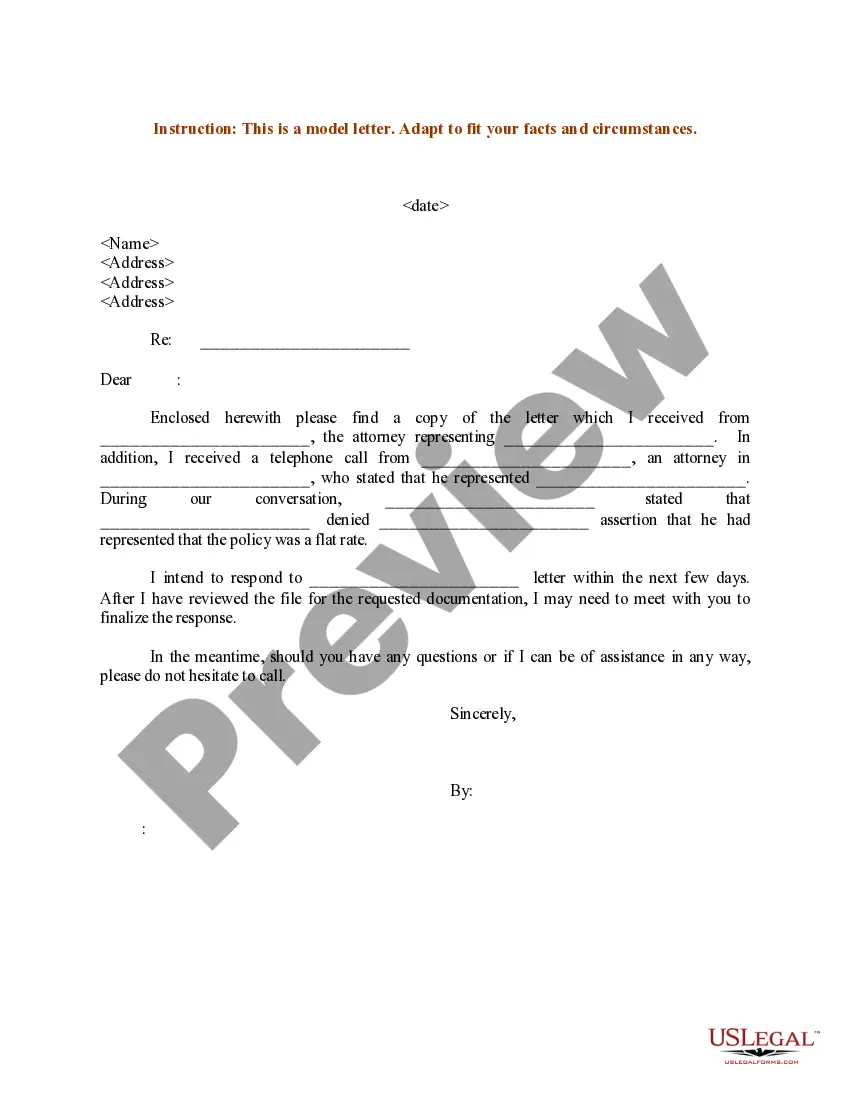
Sample Letter to Client with Litigation Update - Telephone Call
Overview of this form
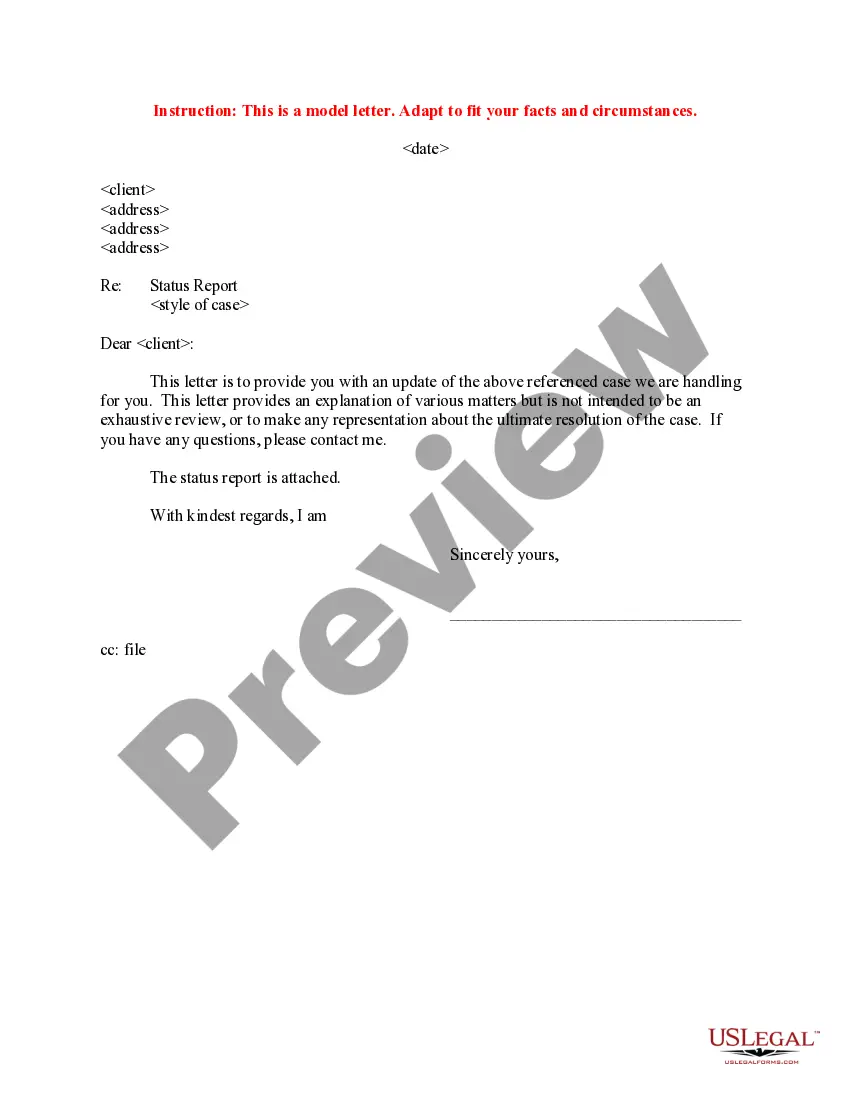
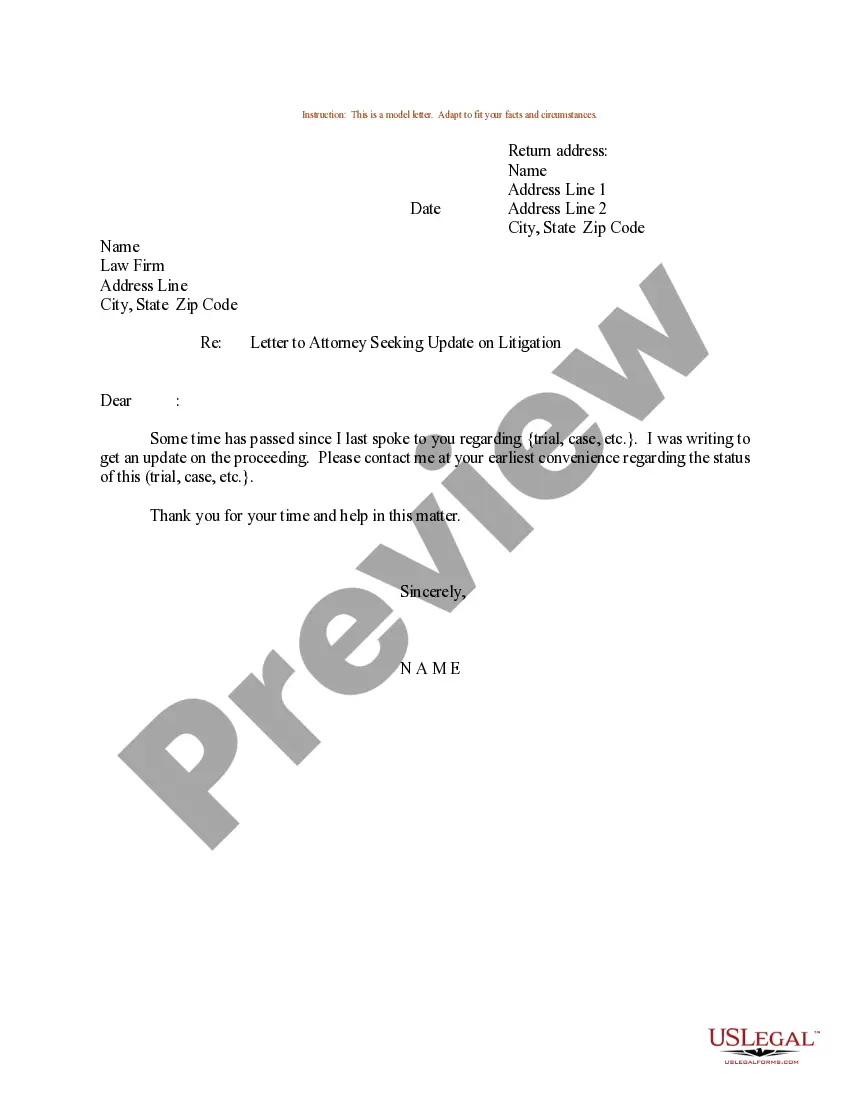
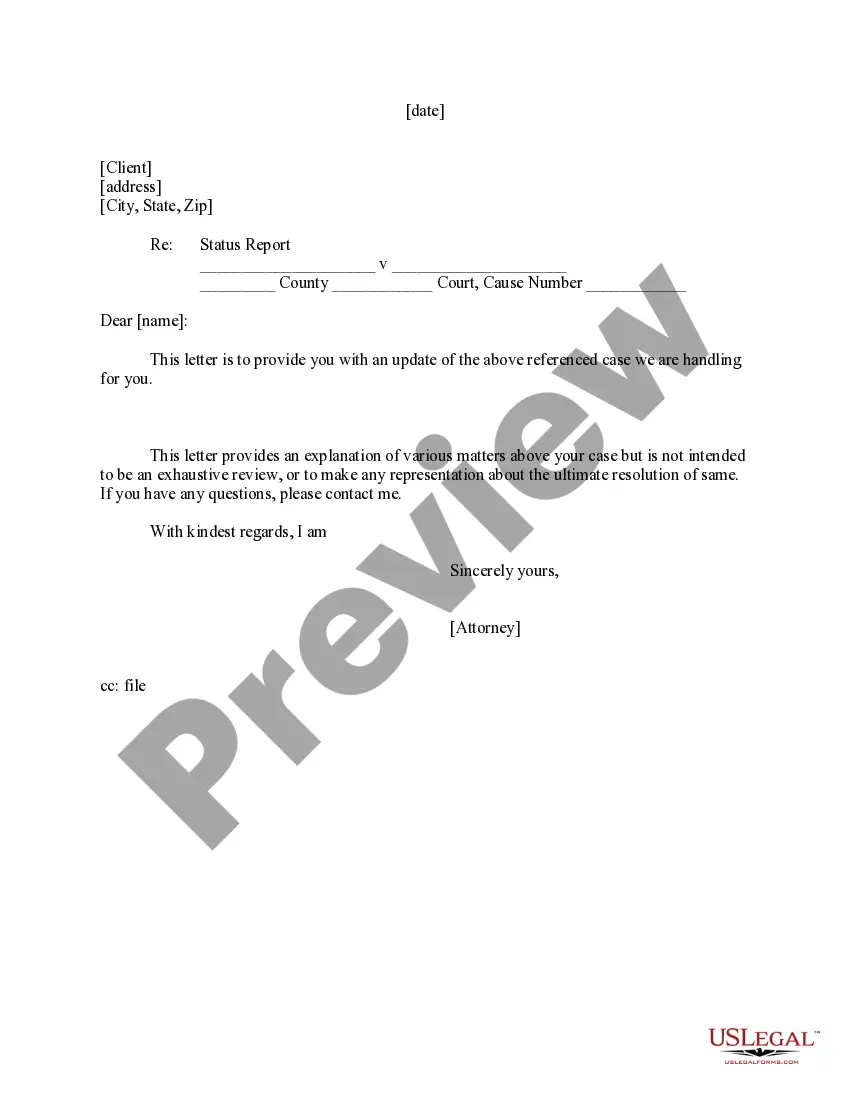
The Sample Letter to Client with Litigation Update - Telephone Call is a template designed to assist legal professionals in providing their clients with updates on ongoing litigation. This letter enables attorneys to communicate important information effectively and keeps clients informed about the status of their case. Unlike other forms of communication, this sample letter is formal and structured, ensuring clarity and professionalism in client interactions.
Main sections of this form
- Date: The date when the letter is drafted.
- Client's name and address: Essential for personalizing the correspondence.
- Subject line: Brief overview indicating the nature of the letter.
- Content body: Detailed update on the litigation status, including key developments.
- Closing: A formal way to conclude the letter, often including the attorney's name and contact information.
Common use cases
This form should be used when an attorney needs to provide their client with an update on the progress of their litigation. It is suitable for instances where there have been significant developments since the last communication or when the attorney wishes to ensure the client feels informed and engaged with the process. Common scenarios include informing clients after a court hearing, a settlement negotiation, or a significant change in strategy.
Intended users of this form
- Attorneys handling litigation cases who need to communicate with their clients.
- Legal assistants preparing formal communications on behalf of their attorneys.
- Law firms that require a standardized method for providing updates to clients.
How to complete this form
- Enter the current date at the top of the letter.
- Fill in the client's name and complete address to personalize the form.
- Include a clear subject line that sums up the letterâs purpose.
- Draft the body of the letter, detailing the latest developments in the litigation.
- Close the letter with a formal sign-off and include your name and contact details.
Notarization requirements for this form
This form does not typically require notarization unless specified by local law.
Get your form ready online
Our built-in tools help you complete, sign, share, and store your documents in one place.
Make edits, fill in missing information, and update formatting in US Legal Forms—just like you would in MS Word.
Download a copy, print it, send it by email, or mail it via USPS—whatever works best for your next step.
Sign and collect signatures with our SignNow integration. Send to multiple recipients, set reminders, and more. Go Premium to unlock E-Sign.
If this form requires notarization, complete it online through a secure video call—no need to meet a notary in person or wait for an appointment.
We protect your documents and personal data by following strict security and privacy standards.

Make edits, fill in missing information, and update formatting in US Legal Forms—just like you would in MS Word.

Download a copy, print it, send it by email, or mail it via USPS—whatever works best for your next step.

Sign and collect signatures with our SignNow integration. Send to multiple recipients, set reminders, and more. Go Premium to unlock E-Sign.

If this form requires notarization, complete it online through a secure video call—no need to meet a notary in person or wait for an appointment.

We protect your documents and personal data by following strict security and privacy standards.
Common mistakes
- Failing to include the clientâs full name or correct address.
- Writing overly technical content that may confuse the client.
- Neglecting to proofread for typos or grammatical errors before sending.
Advantages of online completion
- Easy customization to fit the specific situation of each client.
- Convenient access and storage, allowing for quick retrieval and updates.
- Assured compliance with legal standards through attorney-drafted content.
Legal use & context
This letter serves as an important communication tool that can enhance the attorney-client relationship and is often seen as documentation of outreach. While it does not replace formal court documents, it can be pivotal in keeping clients informed and involved in their legal matters.
Summary of main points
- This letter template is useful for updating clients on litigation progress.
- Personalization is crucial in maintaining client relations.
- Ensure clarity and professionalism in all communications.
Looking for another form?

Form popularity
FAQ
Step 1 Sender and Effective Date. (1) Sender's Name and Address; and. Step 2 Being Sent to and Reason for the Lawsuit. (3) Name of the Person or Entity to who the letter is being sent; Step 3 The Parties and Settlement Demand. Step 4 Governing Law and Signature.
Type your letter. Concisely review the main facts. Be polite. Write with your goal in mind. Ask for exactly what you want. Set a deadline. End the letter by stating you will promptly pursue legal remedies if the other party does not meet your demand. Make and keep copies.
Plan Out the Document Before You Begin. Write with Clear and Concise Language. Ensure the Correct Use of Grammar. Be as Accurate as Possible. Make Information Accessible. Ensure All Necessary Information Is Included. Always Use an Active Voice.
Step 1 Sender and Effective Date. (1) Sender's Name and Address; and. Step 2 Being Sent to and Reason for the Lawsuit. (3) Name of the Person or Entity to who the letter is being sent; Step 3 The Parties and Settlement Demand. Step 4 Governing Law and Signature.
The legal opinion should be written following a structure. It should be entitled OPINION or ADVICE and contain the title of the case in the heading. The first paragraphs should serve as an introduction to the legal opinion, laying out the salient facts and what you have been asked to advise about.
No, a demand letter is not necessary prior to filing a superior court limited/unlimited jurisdiction lawsuit in California.
State the facts: The facts are the answers to the client's questions. Analysis: For an easy analysis, first set out the provision of the law and the law itself. Answer the query: To answer the query, you will rely on the fact and analysis sections.
The opening paragraph states the legal issue the letter is addressing followed by the facts, a discussion of the law as it applies to the facts and a conclusion which is essentially the advice to the client. Often attorneys include headings to lead the client through this process to arrive at the same conclusion.
Be calm and professional. State clearly what relief you want. Specify what you will do next if the letter's recipient doesn't solve the problem immediately (give the recipient a deadline, say ten days, in which to act). The Escape Clause.