Escrow Agreement
Understanding this form
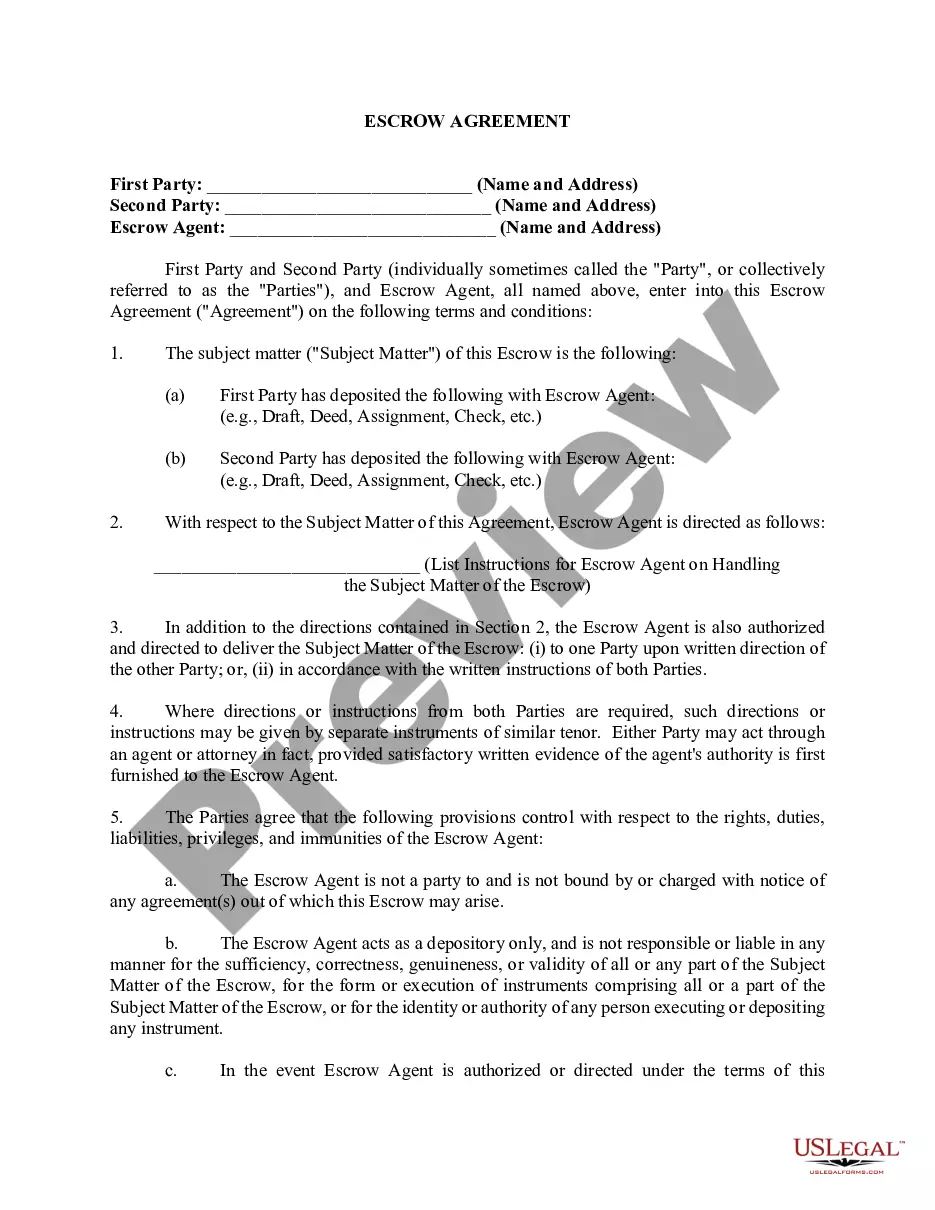
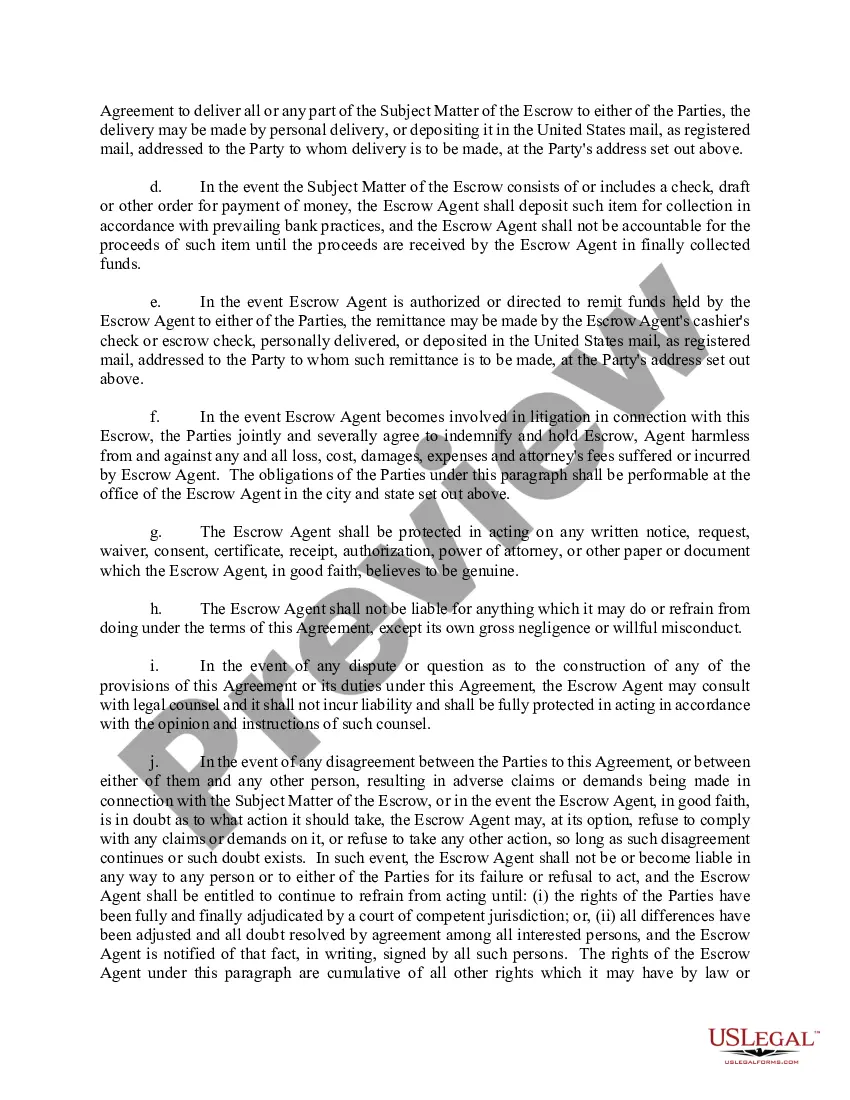
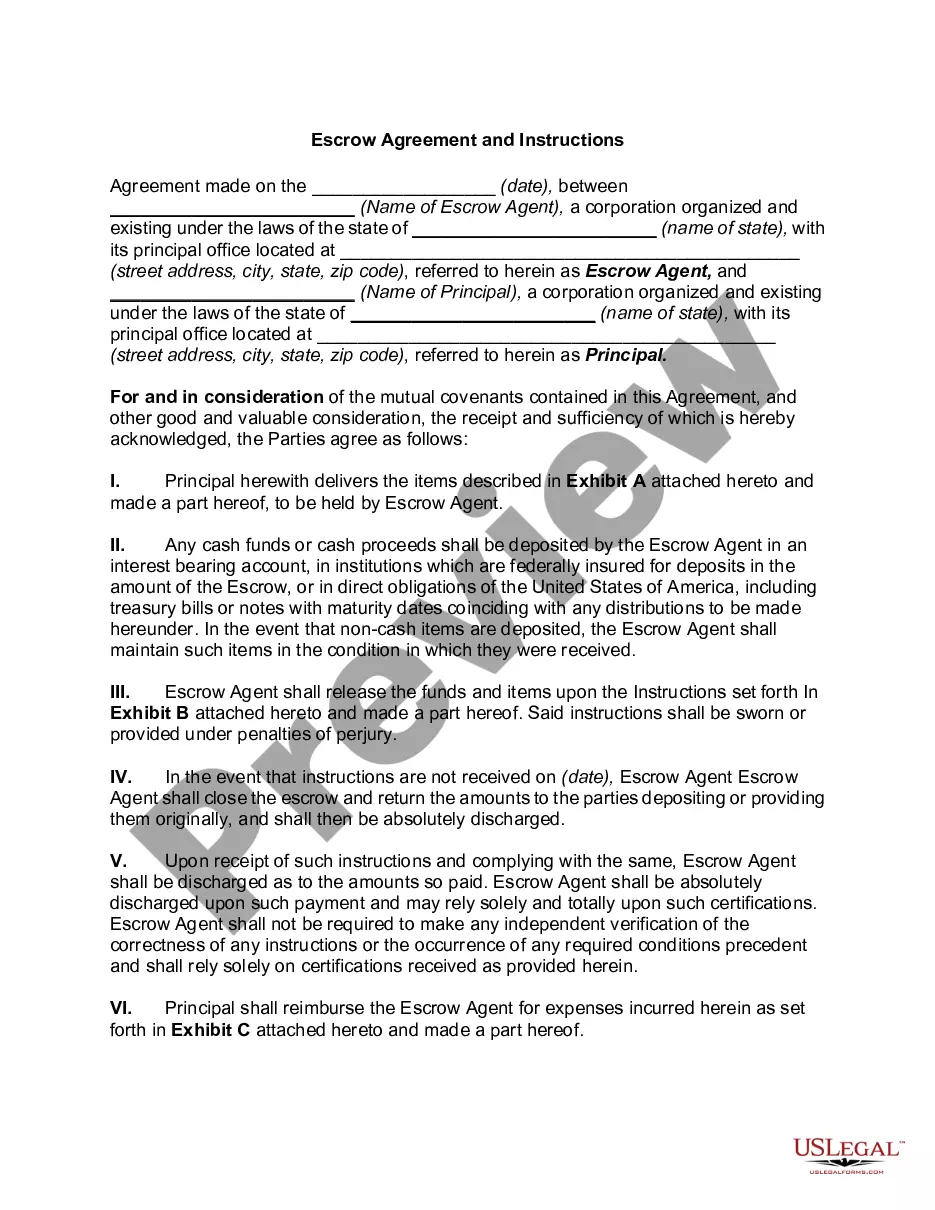
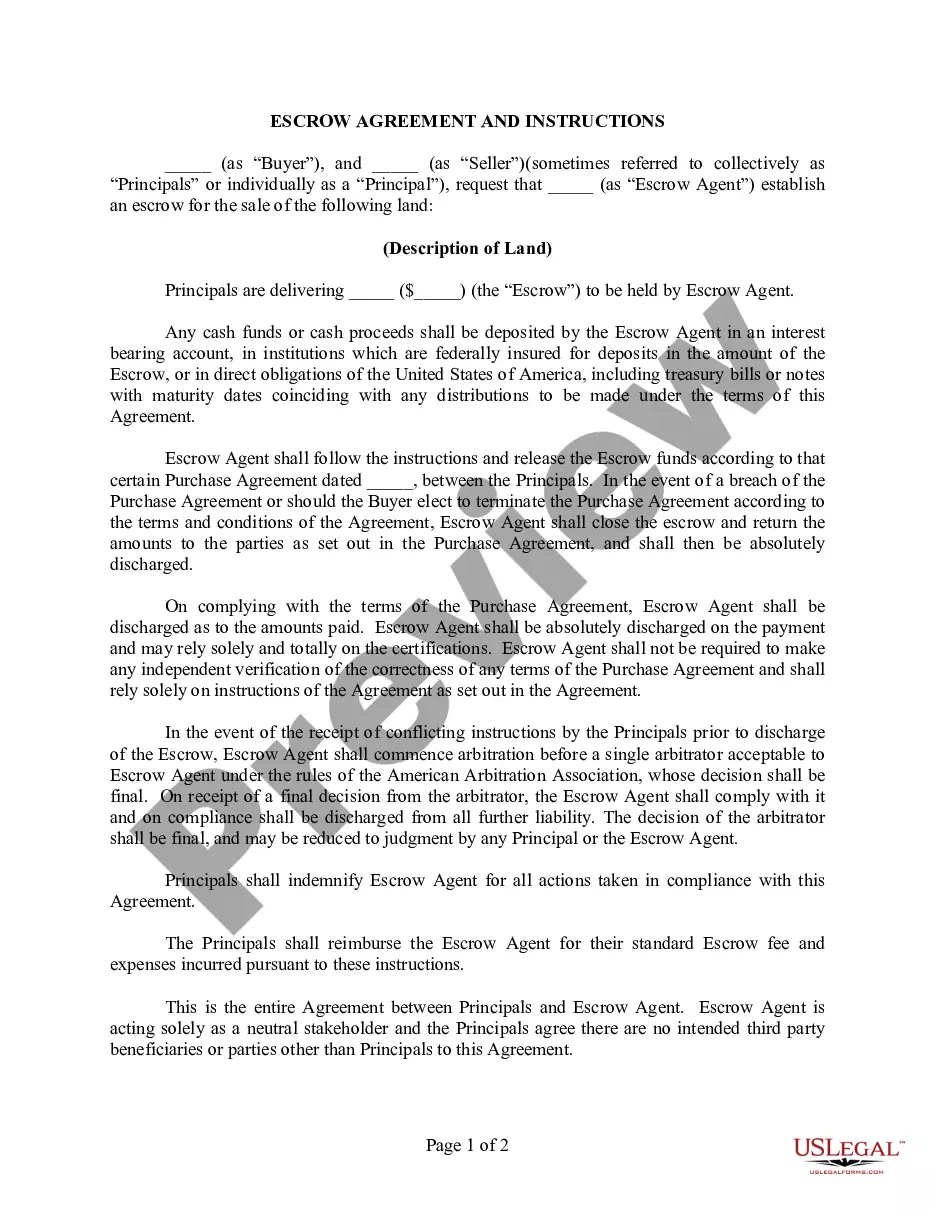
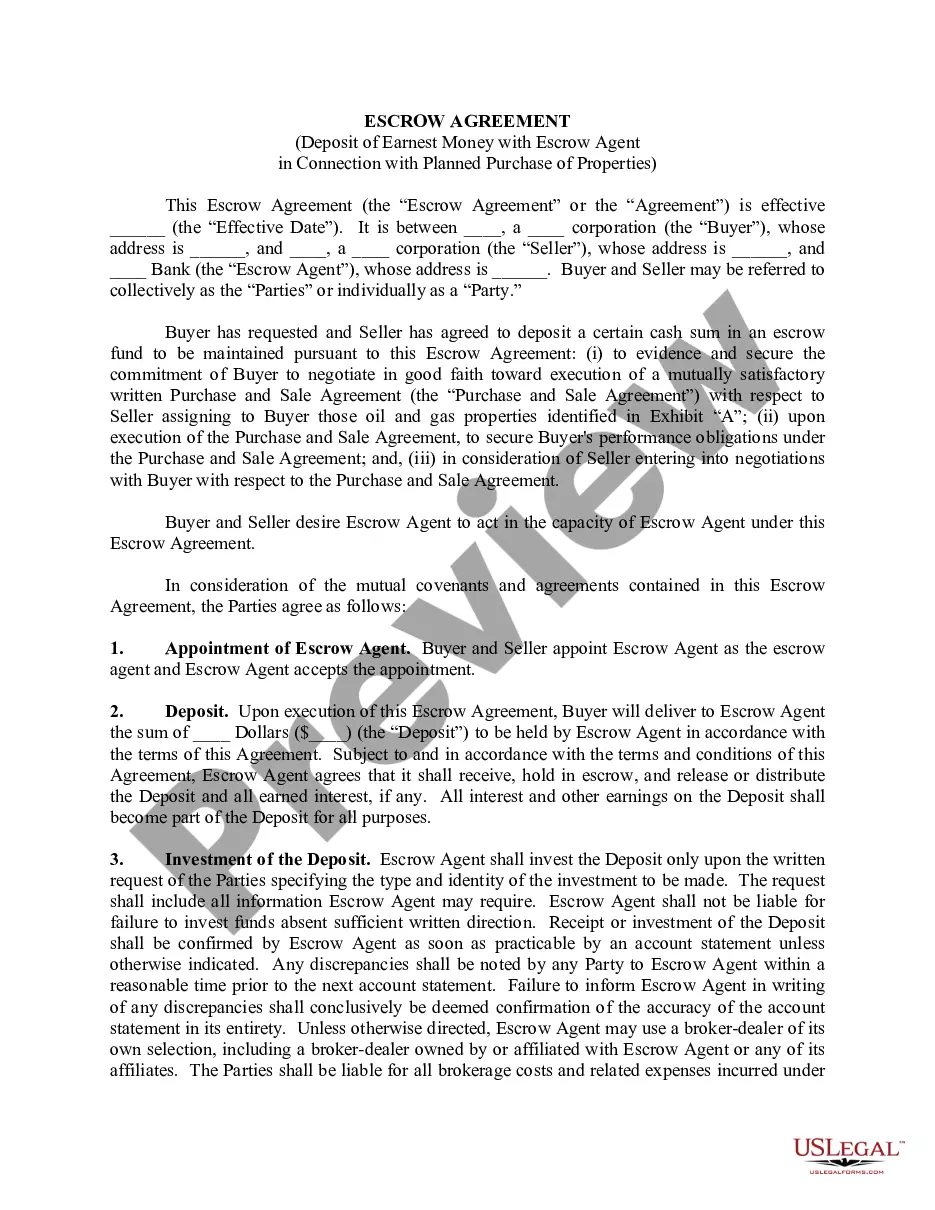
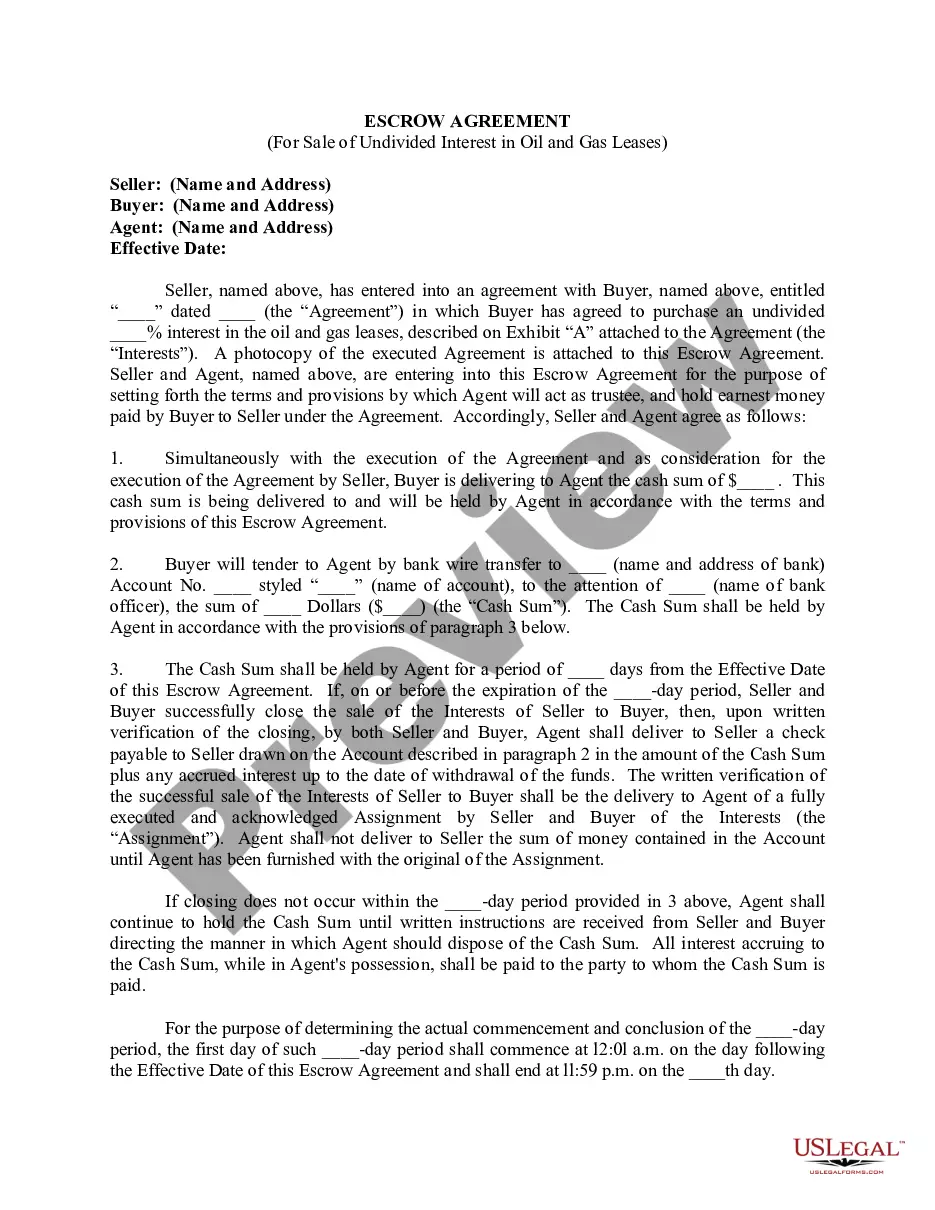
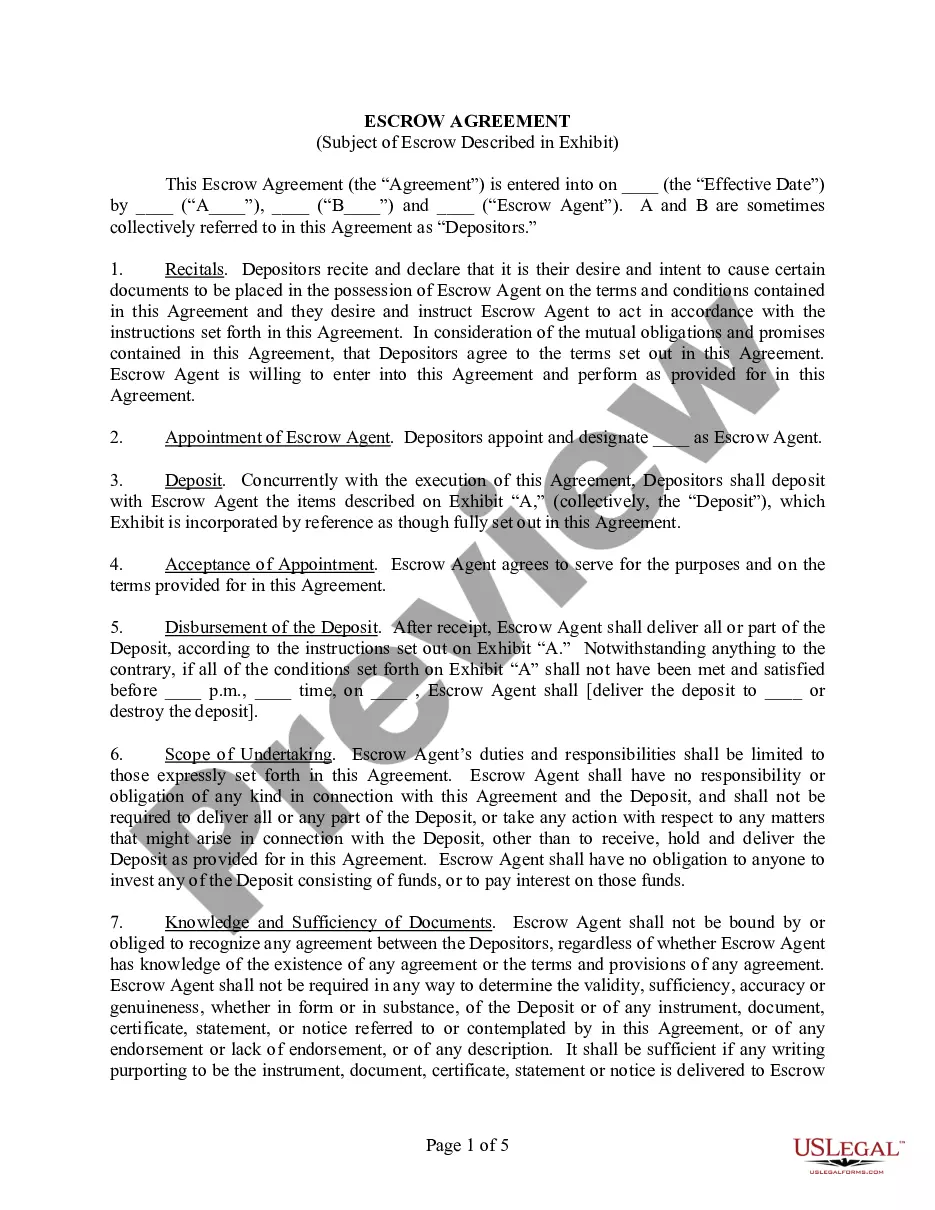
An escrow agreement is a legal document that establishes the terms under which a neutral third party, known as an escrow agent, holds funds or assets on behalf of two parties until certain conditions are met. This form is essential for ensuring that both parties fulfill their contractual obligations before the transaction is completed, providing security and trust in the process. Unlike other agreements, the escrow agreement specifically addresses the handling and distribution of escrowed assets, ensuring clarity and legal protection for all involved parties.
Form components explained
- Identification of the parties: Names and addresses of the first party, second party, and escrow agent.
- Subject matter: Description of what is being held in escrow.
- Instructions for the escrow agent: Directions on how to handle and distribute the subject matter.
- Provisions for disputes: Terms that outline the escrow agent's responsibilities in case of conflicts between the parties.
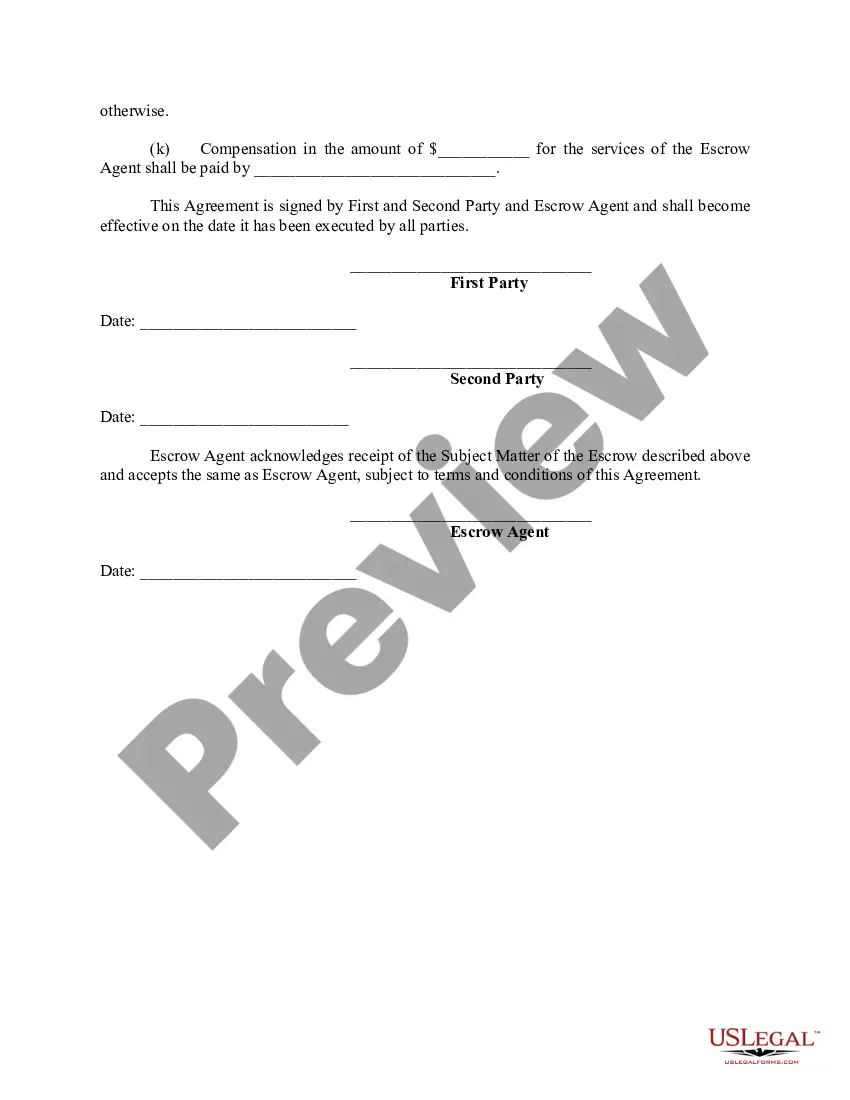
- Compensation details: Information on fees for the escrow agent's services.
When to use this document
This escrow agreement should be used when two parties are entering into a transaction that involves significant assets or funds, such as in real estate sales, business transactions, or any situation requiring a secure exchange. It ensures that assets are only released to the designated party once all agreed-upon conditions are satisfied, thus providing a protective measure for both buyers and sellers.
Who can use this document
This escrow agreement is suitable for:
- Individuals or businesses engaging in transactions that require trust arrangements.
- Real estate agents or buyers and sellers in property transactions.
- Legal representatives facilitating the transfer of assets on behalf of clients.
- Anyone requiring a documented assurance that their interests will be safeguarded until the agreement conditions are fulfilled.
Instructions for completing this form
- Identify the parties: Fill in the names and addresses of the first party, second party, and escrow agent.
- Specify the subject matter: Clearly describe what is being held in escrow.
- List instructions for the escrow agent: Provide detailed handling and distribution instructions based on the agreement.
- Complete provisions for disputes: Include terms to address how disputes will be handled.
- Sign and date the agreement: Ensure all parties sign and date the form to make it legally binding.
Notarization guidance
In most cases, this form does not require notarization. However, some jurisdictions or signing circumstances might. US Legal Forms offers online notarization powered by Notarize, accessible 24/7 for a quick, remote process.
Get your form ready online
Our built-in tools help you complete, sign, share, and store your documents in one place.
Make edits, fill in missing information, and update formatting in US Legal Forms—just like you would in MS Word.
Download a copy, print it, send it by email, or mail it via USPS—whatever works best for your next step.
Sign and collect signatures with our SignNow integration. Send to multiple recipients, set reminders, and more. Go Premium to unlock E-Sign.
If this form requires notarization, complete it online through a secure video call—no need to meet a notary in person or wait for an appointment.
We protect your documents and personal data by following strict security and privacy standards.

Make edits, fill in missing information, and update formatting in US Legal Forms—just like you would in MS Word.

Download a copy, print it, send it by email, or mail it via USPS—whatever works best for your next step.

Sign and collect signatures with our SignNow integration. Send to multiple recipients, set reminders, and more. Go Premium to unlock E-Sign.

If this form requires notarization, complete it online through a secure video call—no need to meet a notary in person or wait for an appointment.

We protect your documents and personal data by following strict security and privacy standards.
Mistakes to watch out for
- Failing to specify clear instructions for the escrow agent.
- Not providing complete and accurate party information.
- Overlooking crucial terms related to dispute resolution.
- Neglecting to sign and date the document, invalidating the agreement.
Advantages of online completion
- Convenience of instant access and download from anywhere.
- Editable fields allow customization to meet specific transaction needs.
- Reliability of templates drafted by licensed attorneys.
- Ability to complete transactions quickly and efficiently without delays.
Quick recap
- The Escrow Agreement protects both parties by ensuring proper handling of assets until conditions are met.
- Clearly defined roles and instructions can prevent disputes and misunderstandings.
- Always verify state-specific laws regarding the use of Escrow Agreements.
Looking for another form?
Form popularity
FAQ
The escrow holder will hold onto and transfer the funds and documents during the transaction. In most cases the seller chooses an escrow holder, but this may also be negotiated in the offer or contract. The deposit check should be made out to the escrow holder and taken to the escrow or title company.
A thorough escrow agreement will list out the information that should be included in JWI or any instructions, such as the amount to be released, the party to whom the funds should be delivered, payment instructions and tax characterizations, or alternatively attach an instructions template to the escrow agreement.
Escrow Letter means the letter from the Facility Agent acknowledged by the Company dated on or about the date hereof regarding the various payments to be made at or about the Closing in respect of the Closing.
Include your name, home address, and mortgage account number. Identify the error. Tell your servicer exactly what error you believe occurred. Do not write your letter on your payment coupon or other payment form you get from your servicer. Send the letter to the proper address.
Don't make any new major purchases that could affect your debt-to-income ratio. Don't apply, co-sign or add any new credit. Don't quit your job or change jobs. Don't change banks. Don't open new credit accounts. Don't close or consolidate credit card accounts without advice from your lender.
Warning: Don't use or get credit while you are in escrow. Fannie Mae has implemented a policy that will affect what you buy during escrow. Since most lenders use Fannie Mae guidelines, you need to be aware of this policy.This means that most lenders will re-pull your credit just prior to closing escrow.
Once you and the seller agree on a price and sign a mutually acceptable purchase agreement, your real estate agent will collect your earnest moneysort of like a good faith deposit which is ultimately applied to your down paymentand deposit it in an escrow account at the escrow company or service specified in the
For example, an escrow account can be used for the sale of a house.In this case, the buyer of the property deposits the payment amount for the house in an escrow account held by a third party. The seller can proceed with house inspections confident that the funds are there, and the buyer is capable of making payment.