Complaint regarding FLSA Equal Pay Act Title VII Civil Rights Act - Jury Trial Demand
About this form
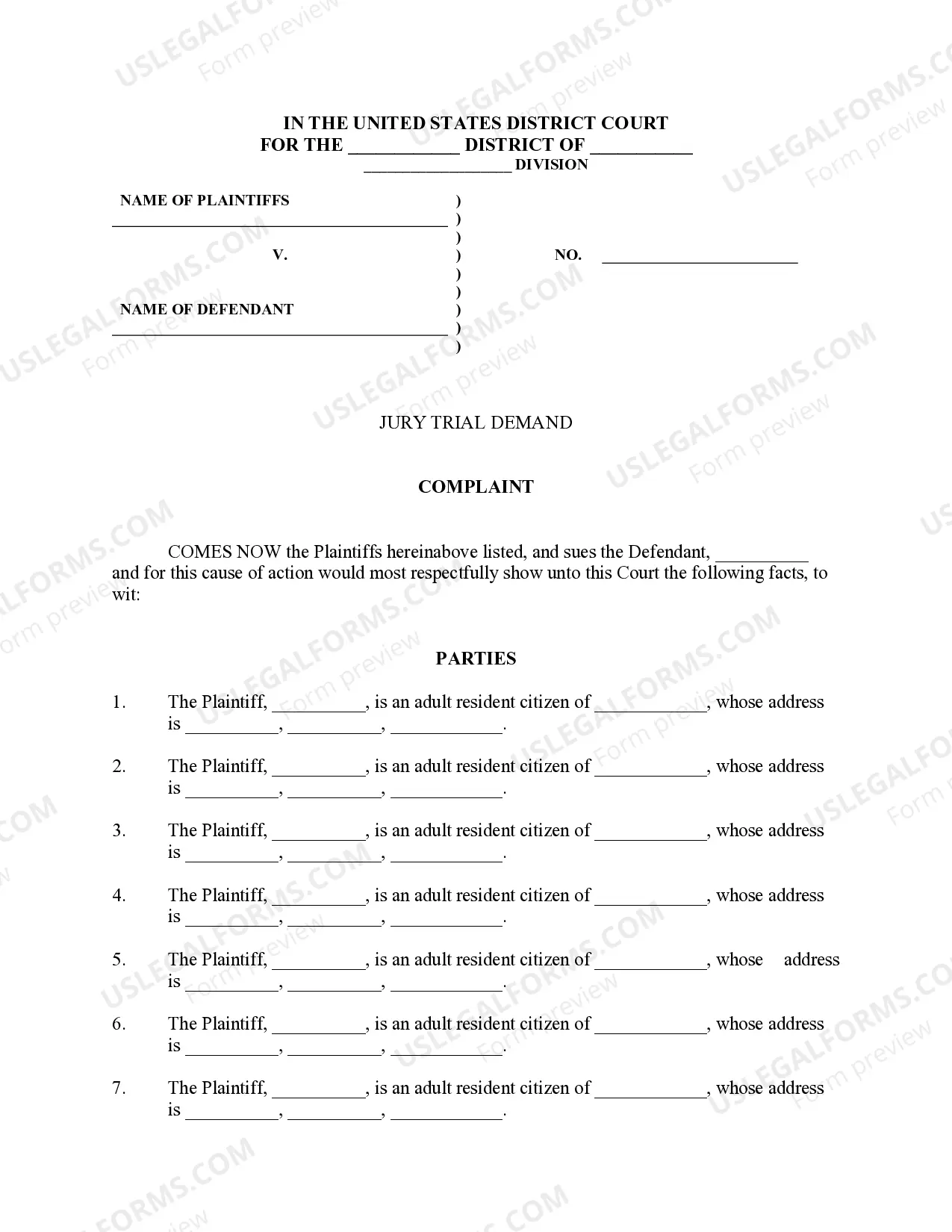
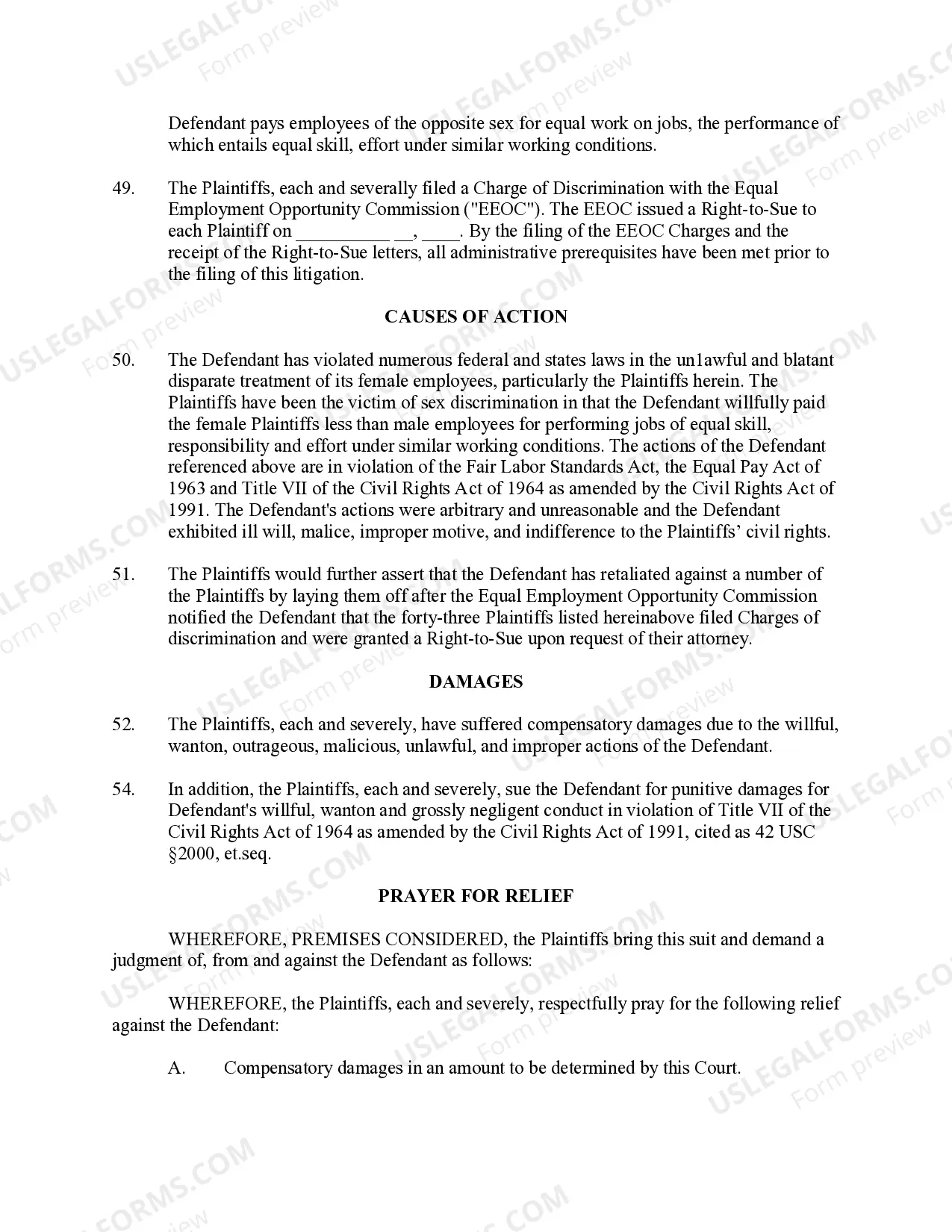
This Complaint regarding the FLSA Equal Pay Act and Title VII Civil Rights Act, along with the Jury Trial Demand, is designed for individuals seeking to file a lawsuit over wage discrimination. This form outlines specific allegations related to unequal pay based on sex and includes a demand for a jury trial, distinguishing it from other types of complaints that may not include such requests. Utilizing this form allows the plaintiffs to formally present their claims in court.
Key parts of this document
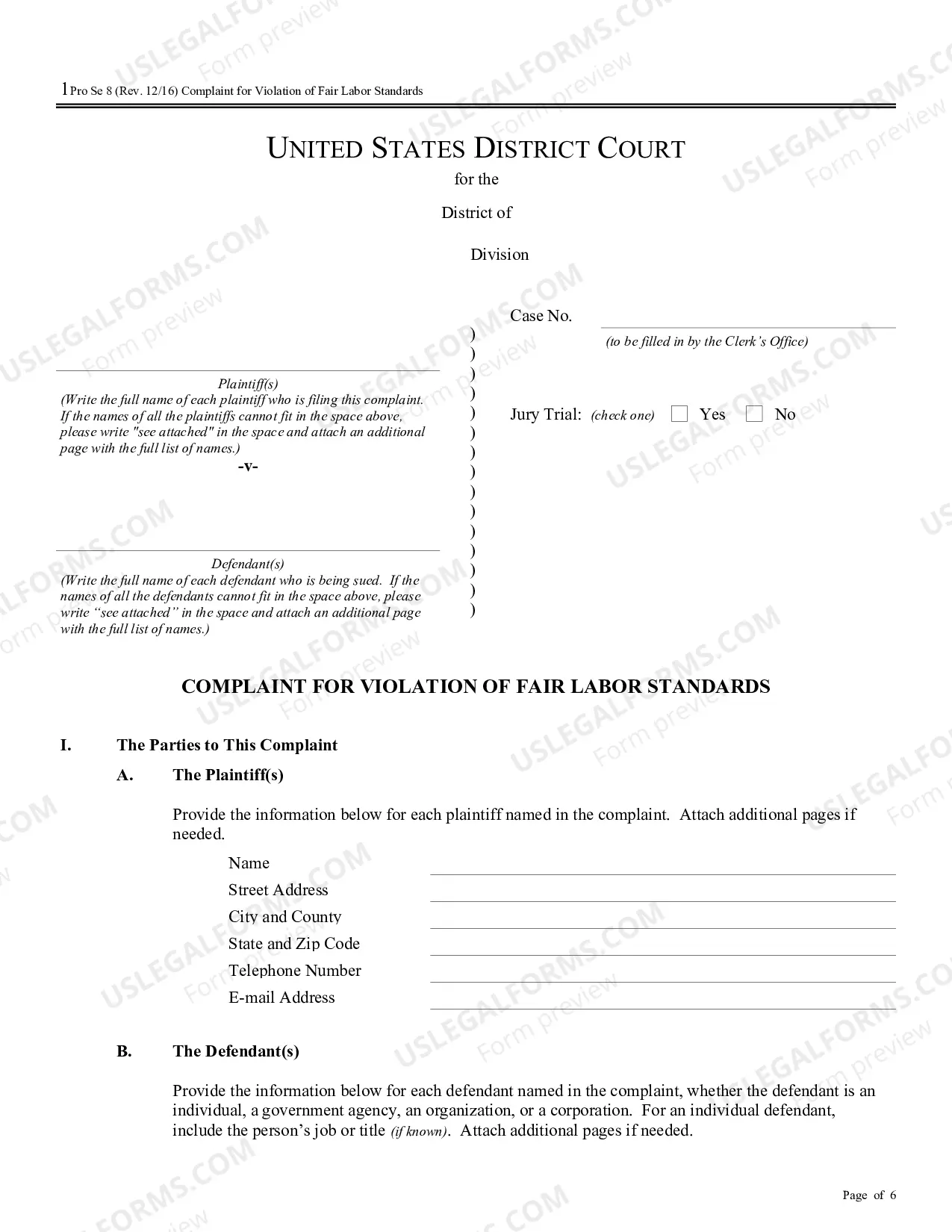
- Identification of plaintiffs and defendants with detailed addresses.
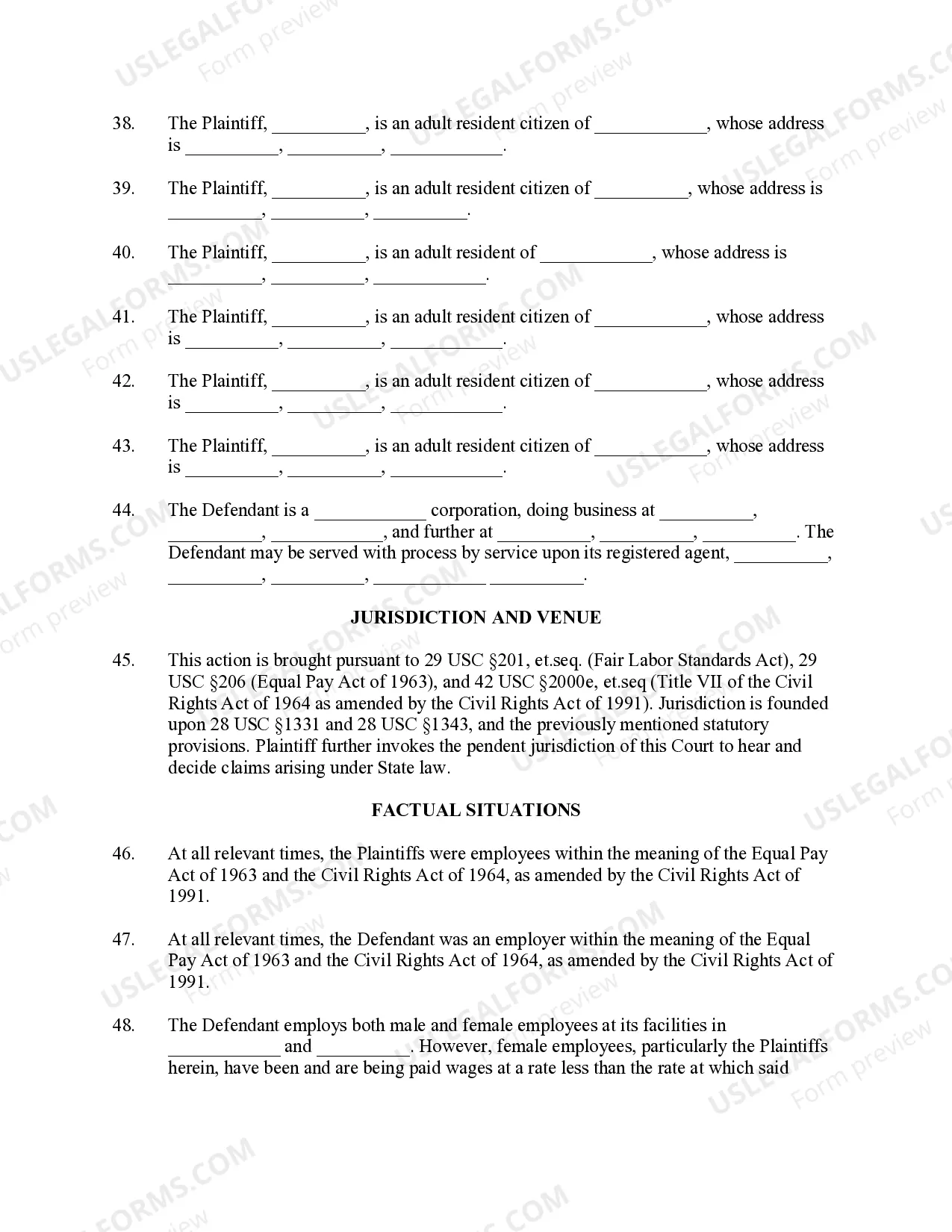
- Jurisdiction and venue information outlining the legal basis for the complaint.
- Factual background detailing the claims of wage discrimination.
- Legal causes of action citing specific laws violated.
- Request for compensatory and punitive damages.
- Prayer for relief summarizing the specific types of damages sought.




When to use this form
This form should be used when individuals believe they have experienced wage discrimination under the Equal Pay Act or Title VII of the Civil Rights Act. It is suitable for employees who have filed discrimination charges with the Equal Employment Opportunity Commission (EEOC) and received a Right to Sue letter. If you are seeking compensation for lost wages due to unequal pay for equal work, this form is necessary for initiating the legal process.
Intended users of this form
- Employees who believe they are victims of wage discrimination based on sex.
- Individuals who have received a Right to Sue notice from the EEOC.
- Group plaintiffs who seek to collectively address wage discrepancies.
How to complete this form
- Identify and list all parties involved in the lawsuit, including their addresses.
- Specify the jurisdiction and venue of the court where the complaint is filed.
- Detail the facts and circumstances related to the wage discrimination allegations.
- Cite the relevant federal and state laws that the defendant has allegedly violated.
- Clearly articulate the damages sought and other relief requested from the court.
Notarization requirements for this form
Notarization is not commonly needed for this form. However, certain documents or local rules may make it necessary. Our notarization service, powered by Notarize, allows you to finalize it securely online anytime, day or night.
Get your form ready online
Our built-in tools help you complete, sign, share, and store your documents in one place.
Make edits, fill in missing information, and update formatting in US Legal Forms—just like you would in MS Word.
Download a copy, print it, send it by email, or mail it via USPS—whatever works best for your next step.
Sign and collect signatures with our SignNow integration. Send to multiple recipients, set reminders, and more. Go Premium to unlock E-Sign.
If this form requires notarization, complete it online through a secure video call—no need to meet a notary in person or wait for an appointment.
We protect your documents and personal data by following strict security and privacy standards.

Make edits, fill in missing information, and update formatting in US Legal Forms—just like you would in MS Word.

Download a copy, print it, send it by email, or mail it via USPS—whatever works best for your next step.

Sign and collect signatures with our SignNow integration. Send to multiple recipients, set reminders, and more. Go Premium to unlock E-Sign.

If this form requires notarization, complete it online through a secure video call—no need to meet a notary in person or wait for an appointment.

We protect your documents and personal data by following strict security and privacy standards.
Common mistakes
- Failing to include all necessary parties in the complaint.
- Not providing sufficient factual details to support the claims.
- Overlooking jurisdictional requirements or filing in the wrong court.
- Neglecting to verify that all prerequisites for legal action have been met, such as filing with the EEOC.
Why complete this form online
- Convenient access to legal resources and templates at any time.
- Editable format allows for customization to fit specific cases.
- Supports compliance with legal standards, ensuring accuracy.
- Quick download and ease of submission for your legal needs.
Looking for another form?





Form popularity
FAQ
Title VII prohibits sexual or sex-based harassment. Harassment may violate Title VII if it is sufficiently frequent or severe to create a hostile work environment, or if it results in a "tangible employment action," such as refusal to hire or promote, firing, or demotion.
Title VII of the Civil Rights Act of 1964 (42 USC section 2000d) prohibits employment discrimination based on race, color, religion, sex or national origin. But in order to state a claim, the plaintiff must be an employee.
Employees, job applicants, former employees and applicants or training participants may be afforded the protection under Title VII. Independent contractors are not protected under Title VII. Despite Title VII's passage half a century ago, 200b race and gender discrimination 200b is still pervasive in the restaurant industry.
Business necessity. Bona fide occupational qualification. Seniority Systems. After-acquired evidence of employee misconduct.
Title VII prohibits employment discrimination based on race, color, religion, sex and national origin.
34. What are three general defenses an employer can raise if sued for violating Title VII of the Civil Rights Act? An employer can defend a Title VII case by establishing that an alleged discrimination was based on (a) merit, (b) seniority, or (c) a bona fide occupational qualification.
Terms in this set (4)Title VII of the Civil Rights Act of 1964 is a federal law that prohibits employers from discriminating against employees on the basis of sex, race, color, national origin, and religion. It generally applies to employers with 15 or more employees, including federal, state, and local governments.
Charges may be filed in person, by mail or by telephone by contacting the nearest EEOC office. If there is not an EEOC office in the immediate area, call toll free 800-669-4000 or 800-669-6820 ( TDD ) for more information.