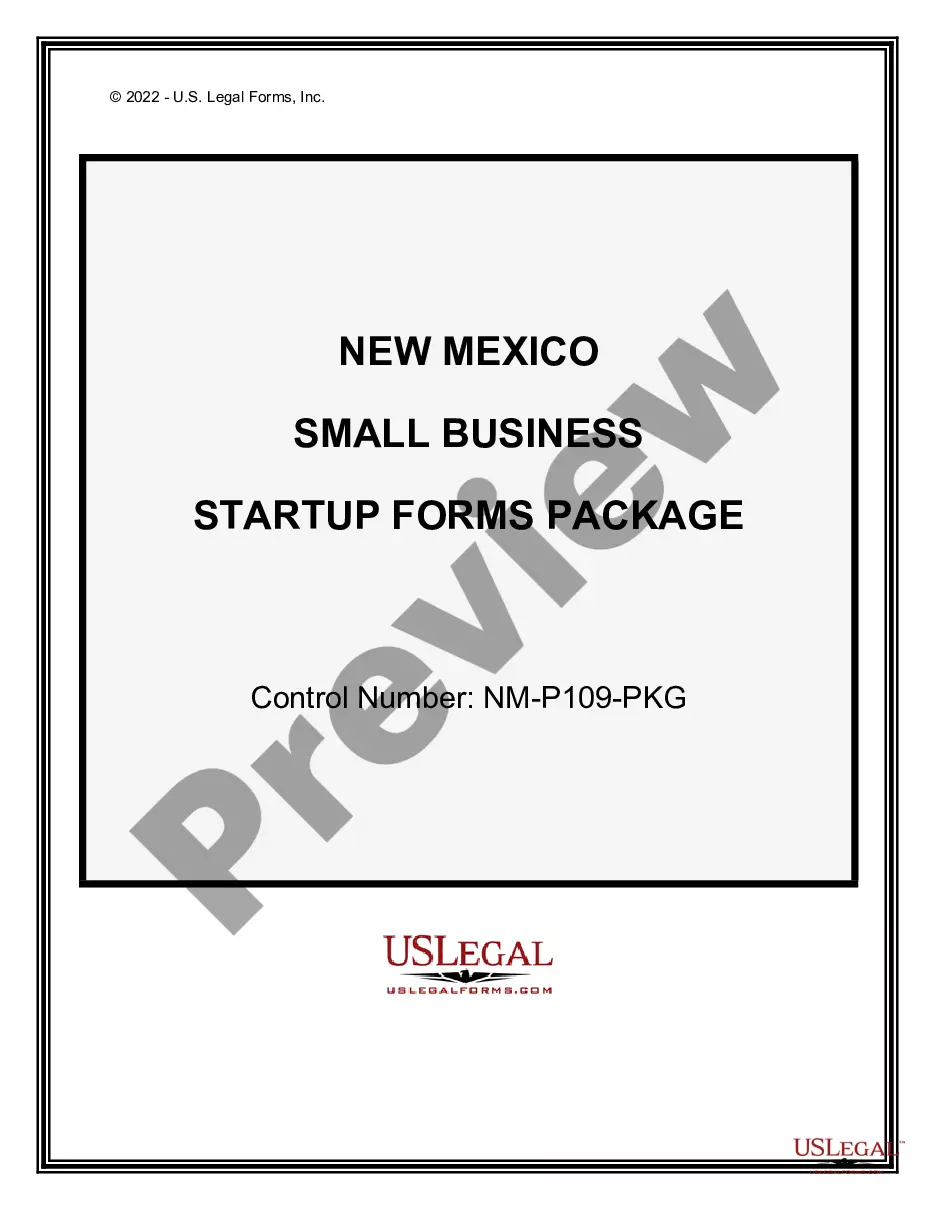
New Mexico Small Business Startup Package
Overview of this form package
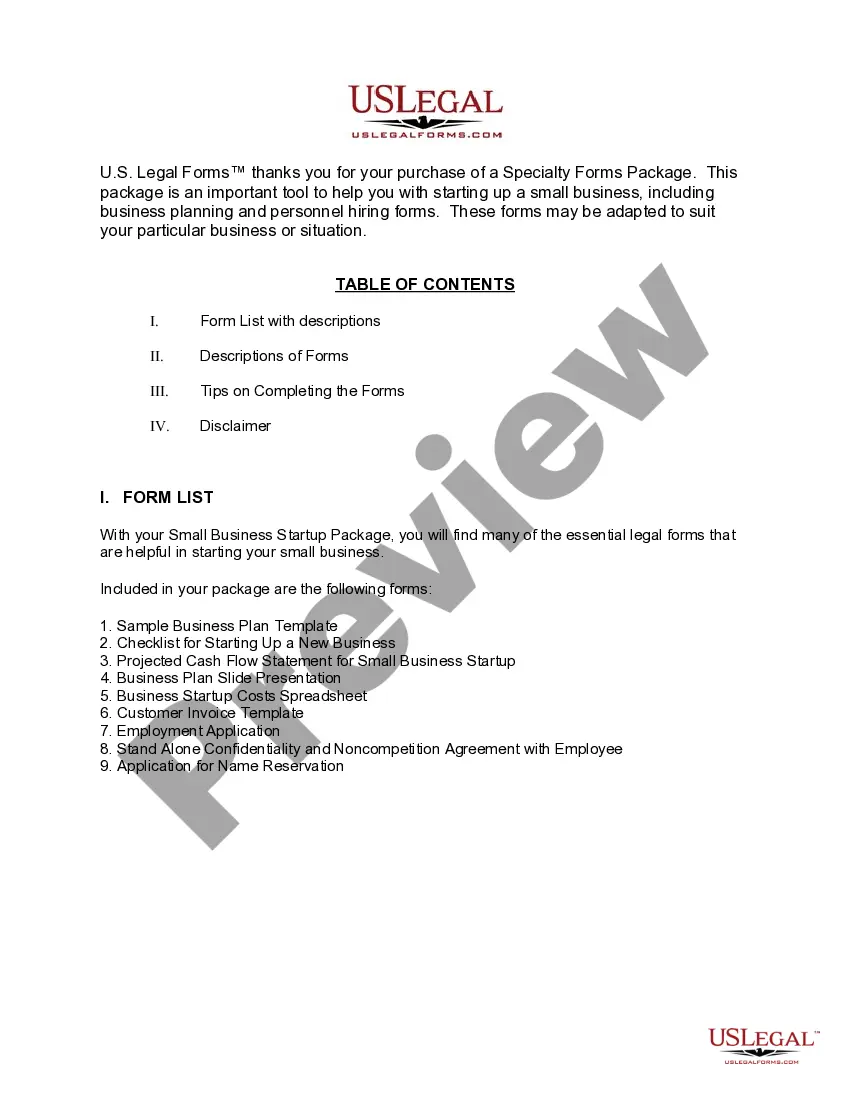
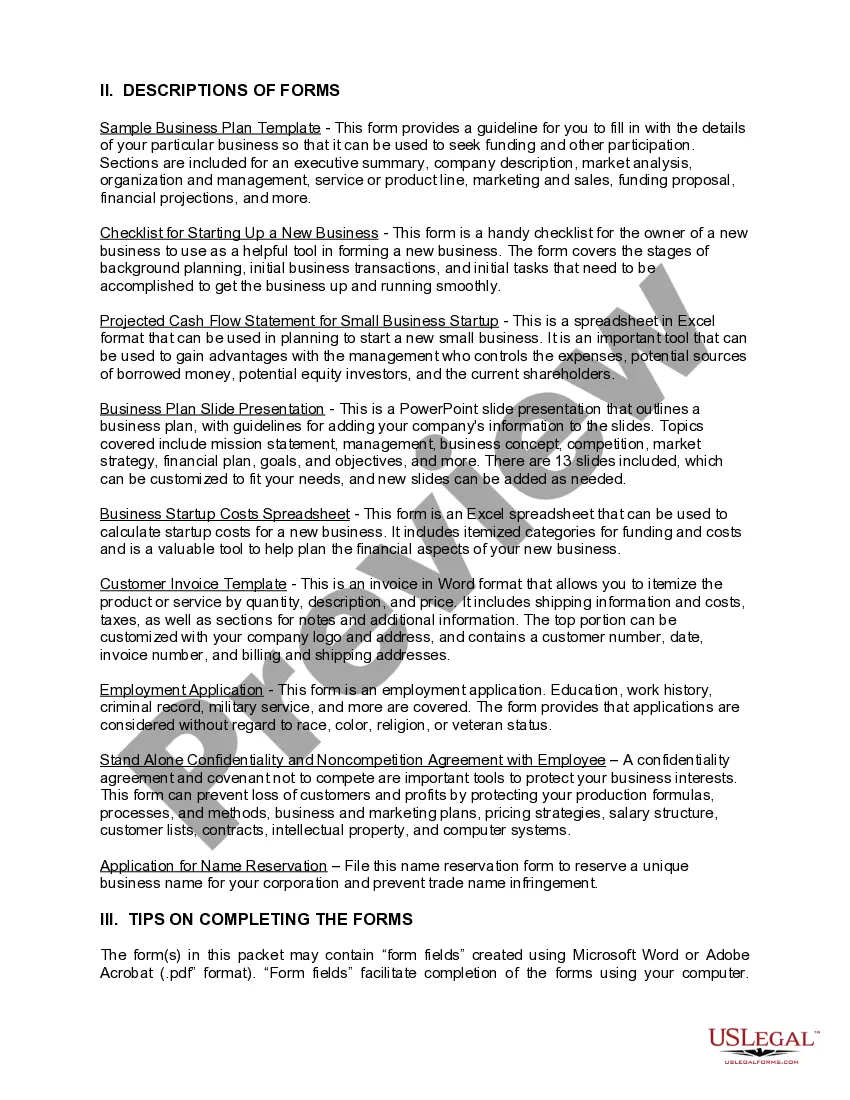
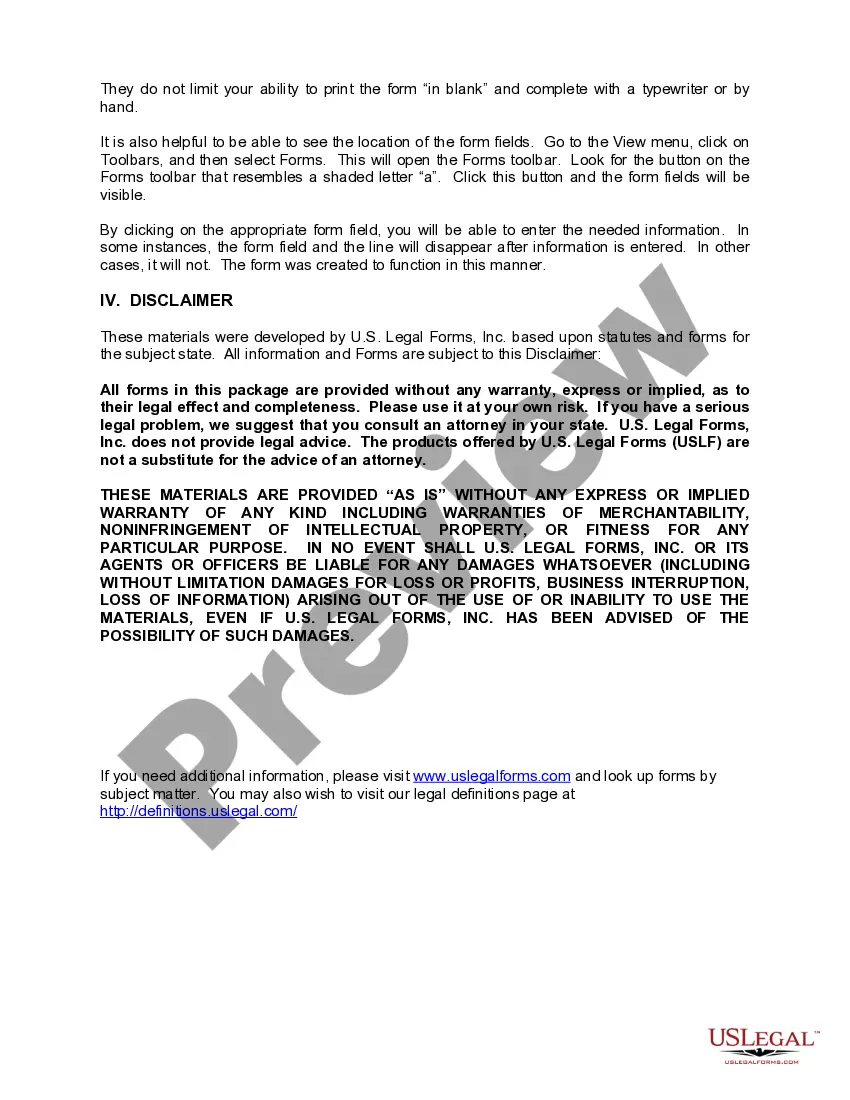
The New Mexico Small Business Startup Package is a comprehensive collection of essential legal forms designed to facilitate the successful launch of a new small business. This package is tailored to streamline the business startup process, providing users with the necessary tools to create a structured business plan, manage startup tasks, and handle initial operations effectively. Unlike generic form packages, this set includes state-specific resources to ensure compliance with New Mexico regulations.
Documents contained in this package
Situations where these forms applies
This package is ideal for individuals planning to start a small business in New Mexico. It is particularly useful when:
- Preparing a business plan to secure funding from investors or financial institutions.
- Creating a checklist to ensure all critical startup tasks are completed.
- Developing financial projections and analyzing cash flow needs.
- Ensuring compliance with employment laws by using standard hiring documents.
Who needs this form package
- Entrepreneurs launching a new small business in New Mexico.
- Business owners seeking to formalize their operations.
- Individuals applying for funding or investment.
- Business managers looking to standardize operational procedures.
How to prepare this document
- Review the included forms to understand their purpose and requirements.
- Fill out the Sample Business Plan Template with your business information.
- Use the Checklist for Starting Up a New Business to track your preparation tasks.
- Complete the Financial Statements and Cash Flow projections to evaluate your business viability.
- Customize the Customer Invoice Template to reflect your business branding.
- Ensure all employment-related forms are completed and filed correctly.
Notarization requirements for forms in this package
Most forms in this package do not require notarization. However, local laws or specific situations may demand it. Our online notarization service, powered by Notarize, lets you complete the process through a verified video call, available anytime.
Get your form ready online
Our built-in tools help you complete, sign, share, and store your documents in one place.
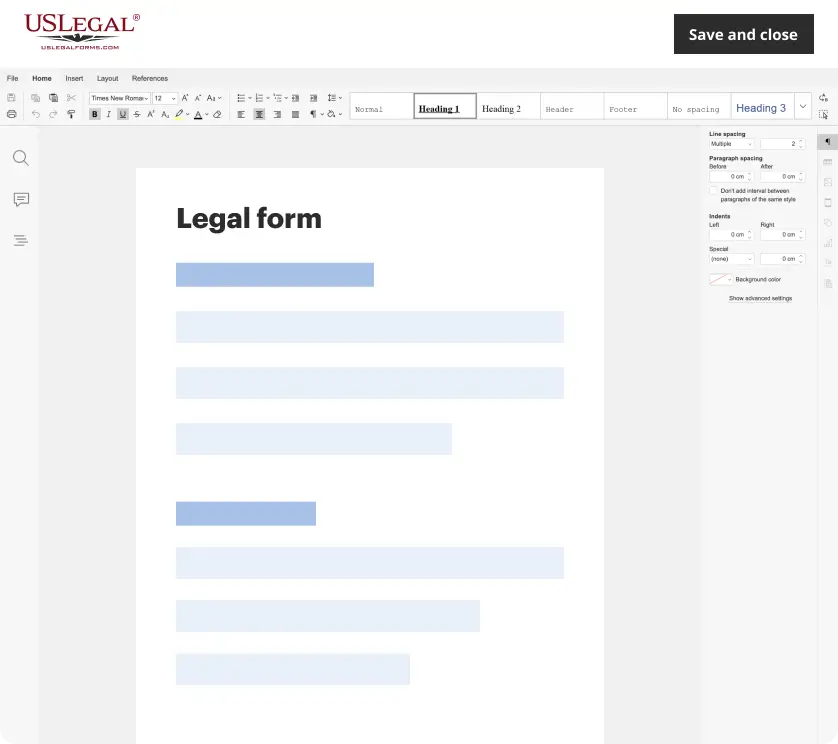
Make edits, fill in missing information, and update formatting in US Legal Forms—just like you would in MS Word.
Download a copy, print it, send it by email, or mail it via USPS—whatever works best for your next step.
Sign and collect signatures with our SignNow integration. Send to multiple recipients, set reminders, and more. Go Premium to unlock E-Sign.
If this form requires notarization, complete it online through a secure video call—no need to meet a notary in person or wait for an appointment.
We protect your documents and personal data by following strict security and privacy standards.
Make edits, fill in missing information, and update formatting in US Legal Forms—just like you would in MS Word.
Download a copy, print it, send it by email, or mail it via USPS—whatever works best for your next step.
Sign and collect signatures with our SignNow integration. Send to multiple recipients, set reminders, and more. Go Premium to unlock E-Sign.

If this form requires notarization, complete it online through a secure video call—no need to meet a notary in person or wait for an appointment.
We protect your documents and personal data by following strict security and privacy standards.
Common mistakes to avoid
- Failing to customize the business plan and financial projections to reflect the specific business model.
- Omitting critical steps in the business startup checklist.
- Neglecting to reserve a business name before proceeding with other operations.
- Not reviewing state-specific employment laws when using application forms.
Benefits of using this package online
- Convenience of downloading and printing forms from your home or office.
- Editability allows for easy customization of forms to meet specific business needs.
- Reliability of documents drafted by licensed attorneys for accuracy and compliance.
Looking for another form?


Form popularity
FAQ
The Grants.gov Database. It's a bit of a beast, but it's a helpful beast. SBIR and STTR Programs. U.S. Small Business Administration. Investigate Corporate Grants. Check for State Grants.
The 10 Most Reliable Ways to Fund a Startup. Seek a bank loan or credit-card line of credit. Trade equity or services for startup help. Negotiate an advance from a strategic partner or customer. Join a startup incubator or accelerator. Solicit venture capital investors. Apply to local angel investor groups.
Determine how much funding you'll need. Fund your business yourself with self-funding. Get venture capital from investors. Use crowdfunding to fund your business. Get a small business loan. Use Lender Match to find lenders who offer SBA-guaranteed loans. Small Business Administration investment programs.
Step 1: Choose a Business Idea. Step 2: Write a Business Plan. Step 3: Select a Business Entity. Step 4: Register a Business Name. Step 5: Get an EIN. Step 6: Open a Business Bank Account. Step 7: Apply for Business Licenses & Permits. Step 8: Find Financing.
You are located in a federally designated low-income community. You can demonstrate more than 30% reduction in revenue during an 8-week period beginning March 2nd, 2020 or later. You have 300 employees or less employees.
Choose a Business Name. The following are registered with the Secretary of State , who clears the name only in the state. Obtain your Federal Employers Identification Number (FEIN) from the IRS: The application forms, SS-4, are. Register with the State Taxation and Revenue for CRS tax number at their website.
Decide on a business name. Establish and publish a DBA (Fictitious Business Name) statement. Get a federal employer identification number (EIN). Determine if you need a permit or license for the type of business you have. Create a separate bank account for your business.
Choose a business name. File a trademark with the Secretary of State (optional). Obtain licenses, permits, and zoning clearance. Obtain an Employer Identification Number.
Savings. Personal Loans. Credit Cards. Bank Loan. Venture Capital and Angel Investors. Government Programs. Corporate Programs. Crowdfunding and Crowdlending.