North Carolina Fiduciary Deed for use by Executors, Trustees, Trustors, Administrators and other Fiduciaries
What this document covers
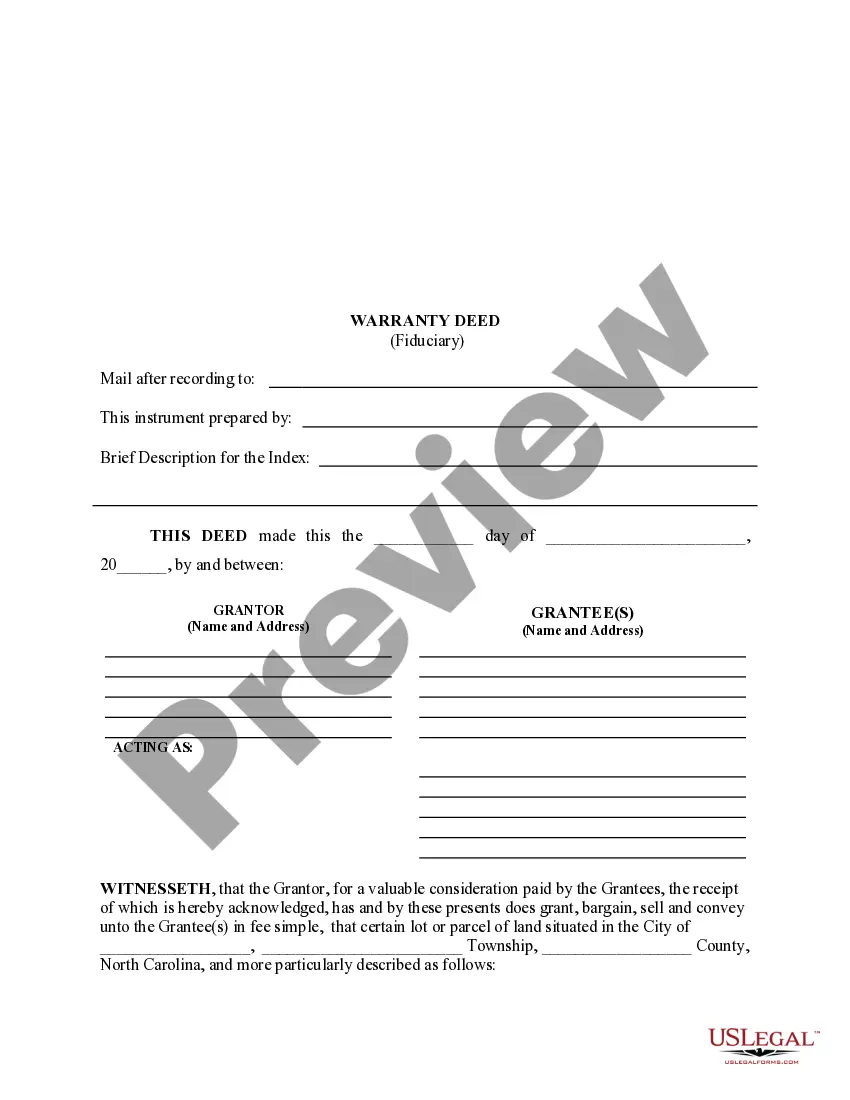
The Fiduciary Deed is a legal document specifically designed for use by executors, trustees, trustors, administrators, and other fiduciaries. This form allows these individuals to transfer property ownership on behalf of an estate or trust, ensuring that the instructions of the decedent or creator are followed. Unlike standard deeds, this fiduciary version acknowledges the special status of the grantor, who acts in a legal capacity to manage or distribute assets.
Key parts of this document
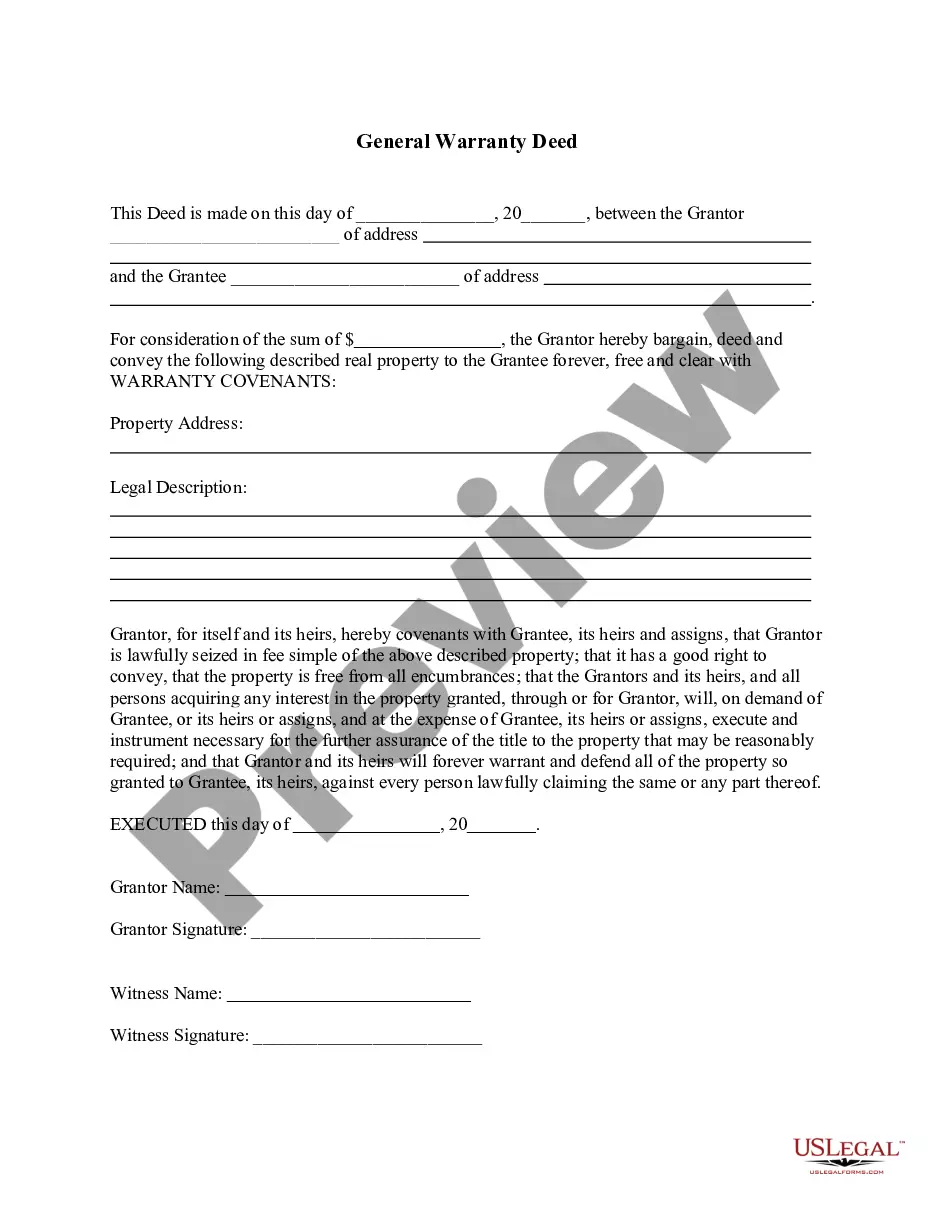
- Grantor and Grantee Information: Sections to fill in the names and addresses of the parties involved in the transaction.
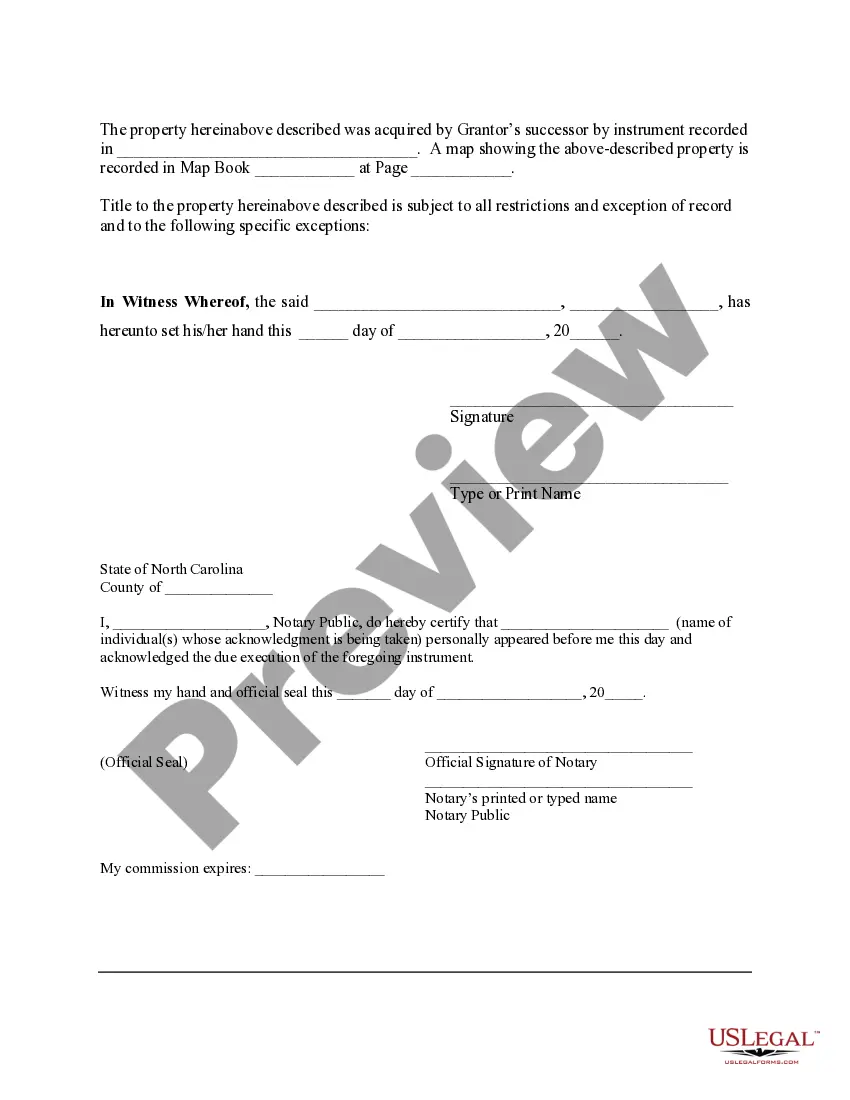
- Property Description: A detailed description of the property being transferred, including its location and any relevant identifiers.
- Execution and Acknowledgment: Areas for signatures and dates, along with a section for a notary public to certify the deed.
- Fiduciary Designation: Specify the role of the grantor, such as executor or trustee, enhancing the legal authority of the deed.
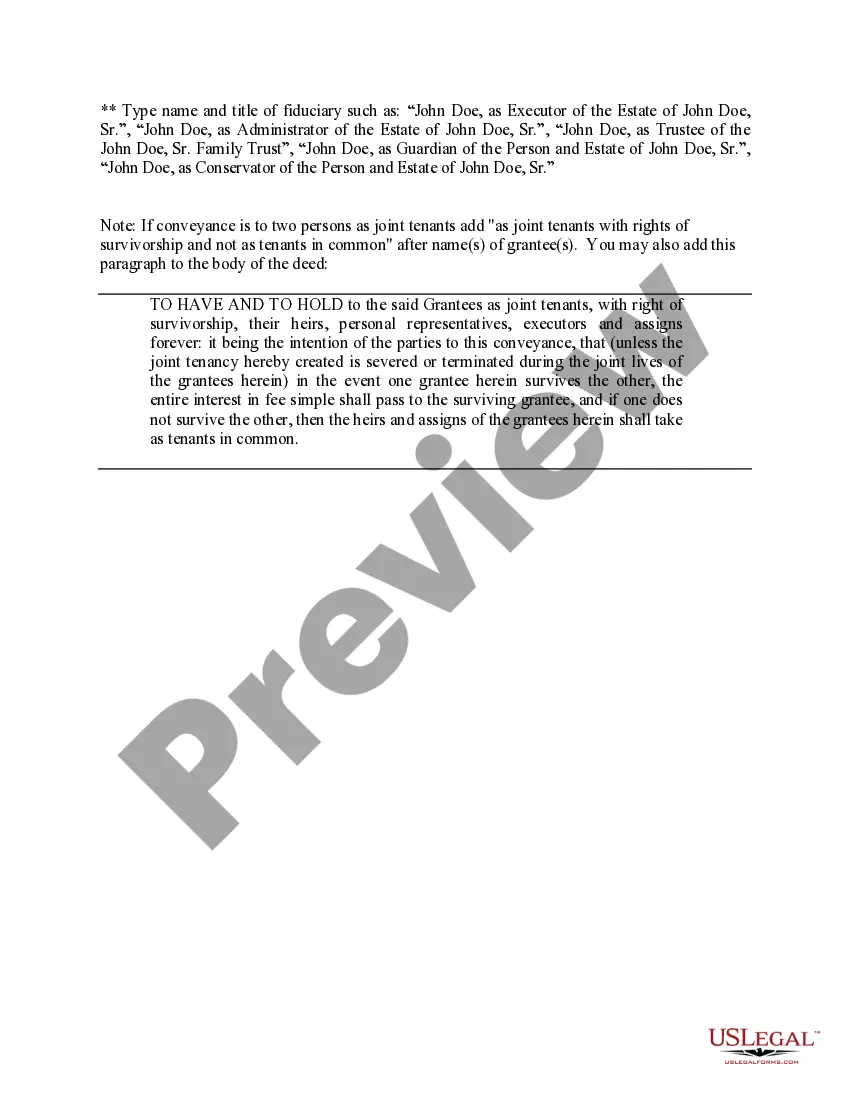
- Joint Tenancy Clause: An option for creating a joint tenancy with rights of survivorship, if applicable.



When this form is needed
This form should be used in situations where a fiduciary is required to convey real estate as part of managing an estate or trust. Typical scenarios include property transfers after a person's death, sales of trust property, or formalizing the distribution of assets among heirs. It ensures that the wishes of the deceased or the terms of the trust are honored legally.
Who needs this form
- Executors: Individuals appointed to carry out the instructions of a deceased person's will.
- Trustees: Persons who manage a trust on behalf of the beneficiaries.
- Administrators: Court-appointed appointees who oversee an estate when no will exists.
- Guardians: Individuals responsible for managing the affairs of minors or incapacitated persons.
- Conservators: Persons appointed to manage the financial affairs of a person unable to do so.
Completing this form step by step
- Identify the parties: Fill in the names and addresses of the grantor and grantee.
- Specify the property: Provide a thorough description of the property being conveyed.
- Declare the fiduciary role: Clearly state the capacity in which the grantor is acting, such as executor or trustee.
- Enter dates: Include the date of the deed's execution and the signing date.
- Sign and notarize: Have all parties sign the document in the presence of a notary public.
Notarization guidance
Notarization is required for this form to take effect. Our online notarization service, powered by Notarize, lets you verify and sign documents remotely through an encrypted video session, available 24/7.
Get your form ready online
Our built-in tools help you complete, sign, share, and store your documents in one place.
Make edits, fill in missing information, and update formatting in US Legal Forms—just like you would in MS Word.
Download a copy, print it, send it by email, or mail it via USPS—whatever works best for your next step.
Sign and collect signatures with our SignNow integration. Send to multiple recipients, set reminders, and more. Go Premium to unlock E-Sign.
If this form requires notarization, complete it online through a secure video call—no need to meet a notary in person or wait for an appointment.
We protect your documents and personal data by following strict security and privacy standards.
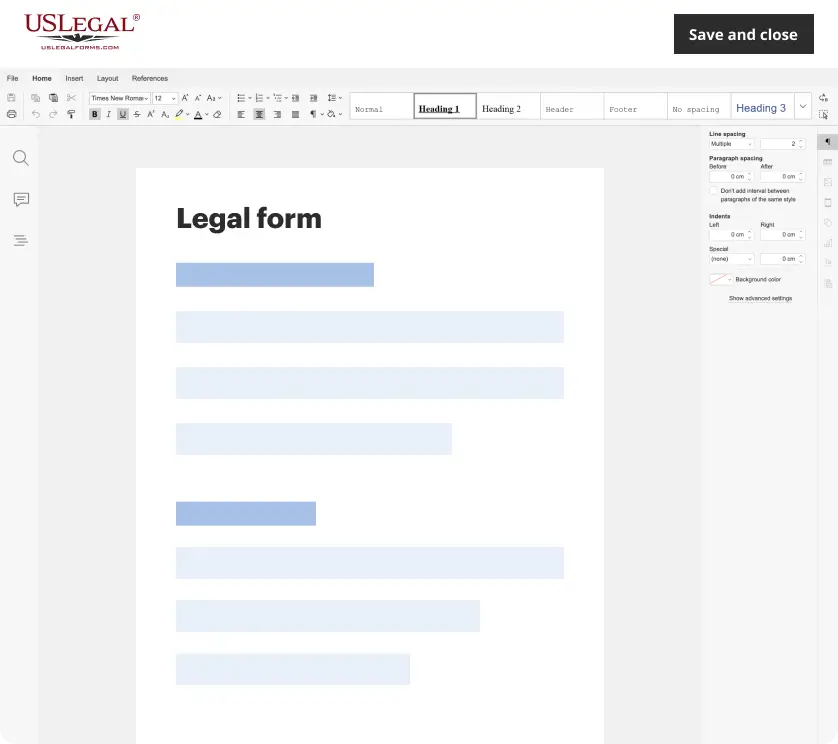
Make edits, fill in missing information, and update formatting in US Legal Forms—just like you would in MS Word.
Download a copy, print it, send it by email, or mail it via USPS—whatever works best for your next step.
Sign and collect signatures with our SignNow integration. Send to multiple recipients, set reminders, and more. Go Premium to unlock E-Sign.

If this form requires notarization, complete it online through a secure video call—no need to meet a notary in person or wait for an appointment.
We protect your documents and personal data by following strict security and privacy standards.
Avoid these common issues
- Failing to include a complete property description, which can lead to disputes.
- Neglecting to specify the fiduciary role, which can invalidate the deed.
- Not obtaining notarization when required, risking the legal standing of the document.
- Forgetting to include all required signatures, which can delay the process.
Benefits of using this form online
- Convenience of downloading and printing from home at any time.
- Editability to tailor the form according to specific needs before filling.
- Reliable format that adheres to legal standards, reducing the likelihood of errors.
Looking for another form?



Form popularity
FAQ
To get an executor deed, you need to be appointed as the executor through the probate process. After obtaining letters testamentary from the court, you can create the executor deed that will allow you to transfer estate property. Properly utilizing the North Carolina Fiduciary Deed for use by Executors, Trustees, Trustors, Administrators, and other Fiduciaries is crucial in ensuring all legal requirements are met, making the process seamless.
An executor's deed is a legal document that allows the executor of an estate to transfer property from the estate to the beneficiaries or other parties. This deed must be executed after the probate court validates the will and grants letters testamentary. It serves as proof of the executor's authority to convey the property. Familiarizing yourself with the North Carolina Fiduciary Deed for use by Executors, Trustees, Trustors, Administrators, and other Fiduciaries will aid you in handling these transactions smoothly.
In North Carolina, to obtain a letter of administration, you must file a petition with the probate court when no will exists. The court will review your petition, and if approved, you will receive letters of administration, granting you authority to manage the deceased's estate. It is essential to understand the role of a fiduciary in this process, and using the North Carolina Fiduciary Deed for use by Executors, Trustees, Trustors, Administrators, and other Fiduciaries can help clarify your responsibilities.
To obtain an executor deed, you must first be appointed as the executor by the probate court. After securing letters testamentary, you can prepare the executor deed, which transfers property from the estate to the beneficiaries, or to yourself if that is the case. The North Carolina Fiduciary Deed for use by Executors, Trustees, Trustors, Administrators, and other Fiduciaries can be instrumental in crafting this document correctly and ensuring compliance with state laws.
Yes, executors of estate accounts in North Carolina are considered fiduciaries. This means they have a legal and ethical obligation to act in the best interests of the estate and its beneficiaries. Executors must manage estate assets prudently and transparently, adhering to applicable laws. Understanding the responsibilities tied to the North Carolina Fiduciary Deed for use by Executors, Trustees, Trustors, Administrators, and other Fiduciaries can help executors fulfill their duties effectively.
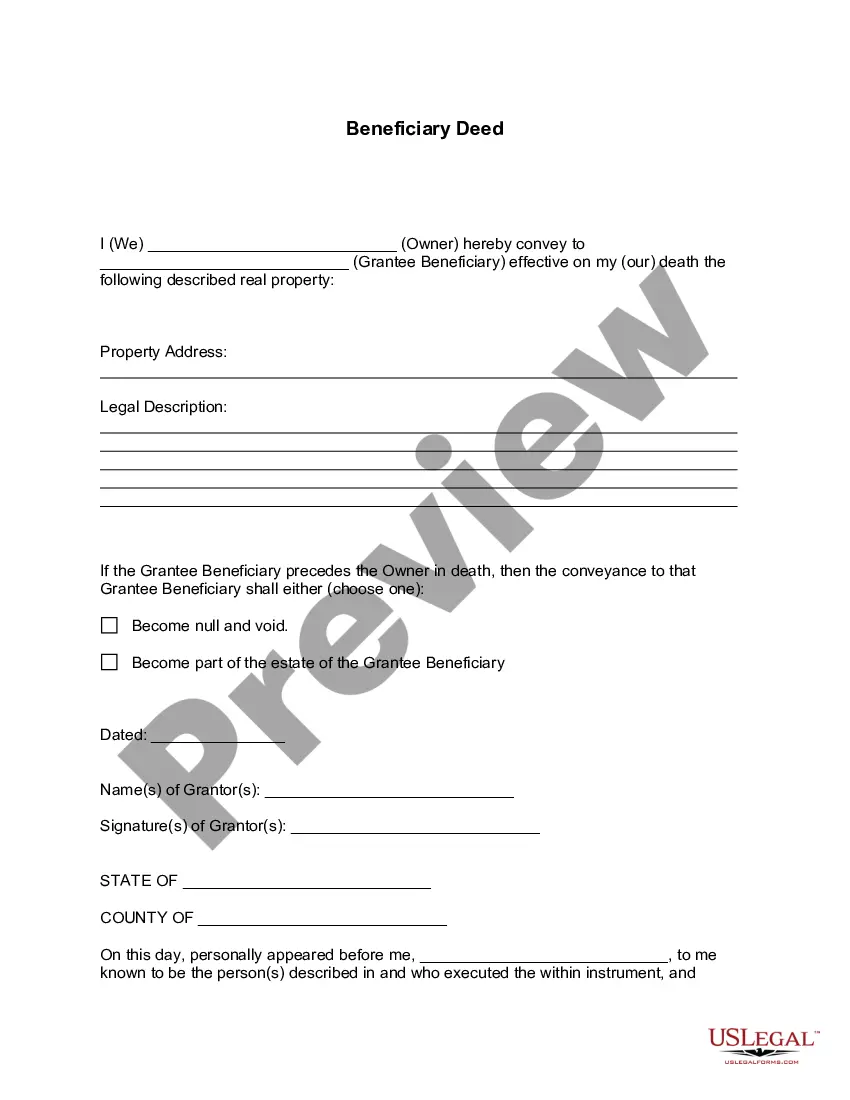
North Carolina does not recognize beneficiary deeds, which are designed to transfer property at death without going through probate. Instead, property owners can use a North Carolina Fiduciary Deed for use by Executors, Trustees, Trustors, Administrators, and other Fiduciaries to facilitate asset transfer. This deed allows fiduciaries to manage property effectively, ensuring a smooth transition during estate administration.
To obtain proof of an executor of an estate in North Carolina, you need to provide the court with the will, if one exists, and file a petition for probate. Once the court validates the will, it will issue letters testamentary, which serve as proof of your authority. This document confirms your role and enables you to act on behalf of the estate. Utilizing the North Carolina Fiduciary Deed for use by Executors, Trustees, Trustors, Administrators, and other Fiduciaries can streamline this process.