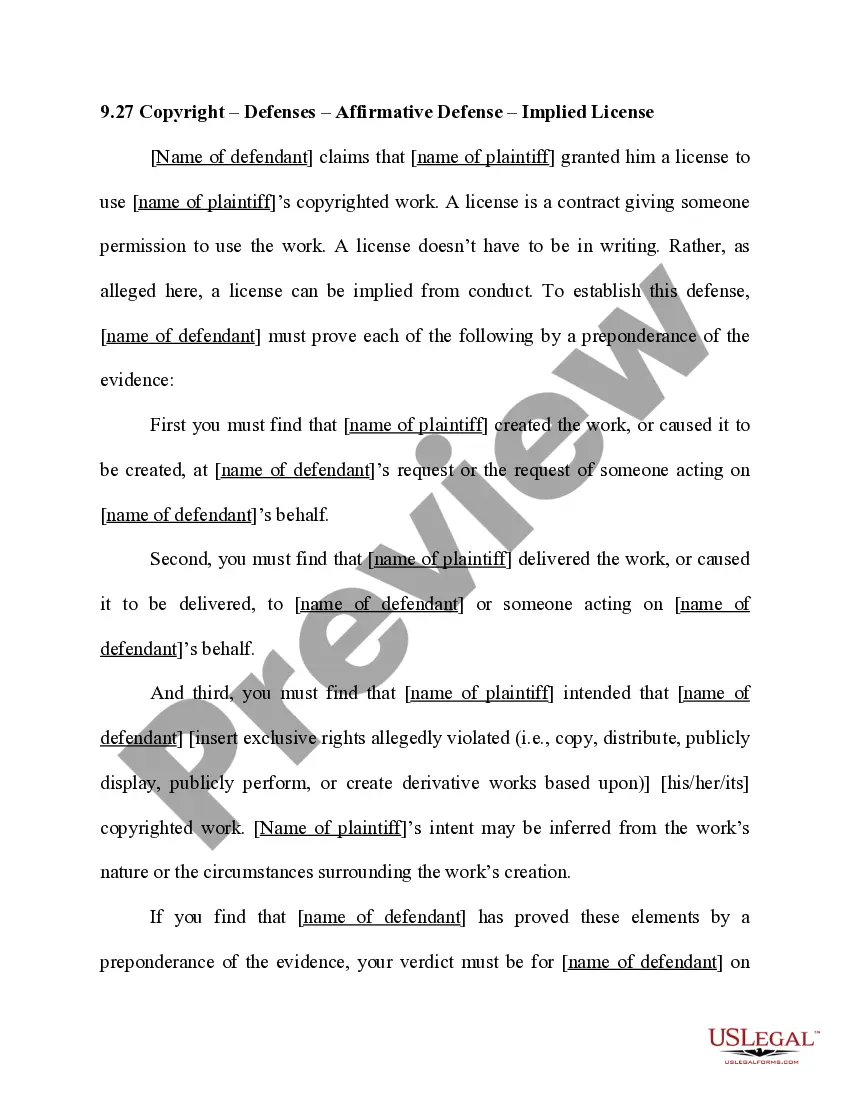
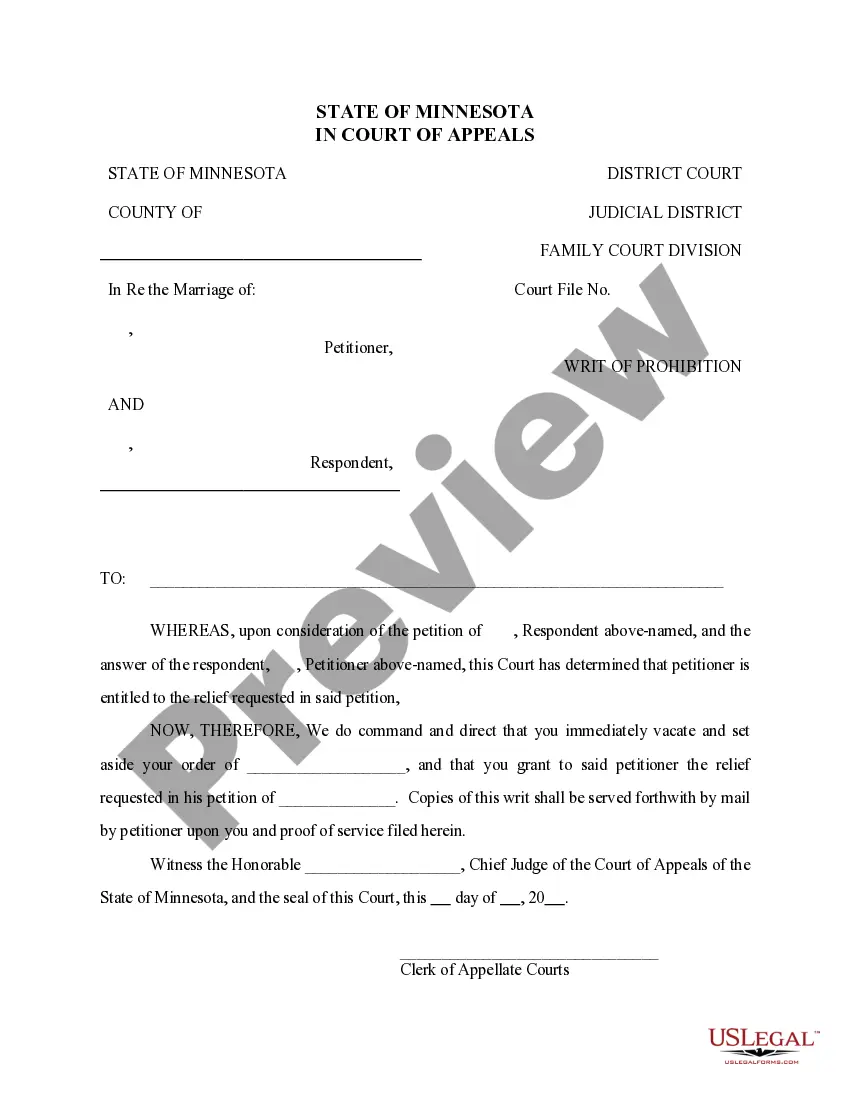
Writ from appeals court overturning order by lower court and ordering specific relief. (template)
Minnesota Writ of Prohibition overturning lower court judgment and awarding relief - template
Category:
State:
Minnesota
Control #:
MN-8883D
Format:
Word;
Rich Text
Instant download
Description
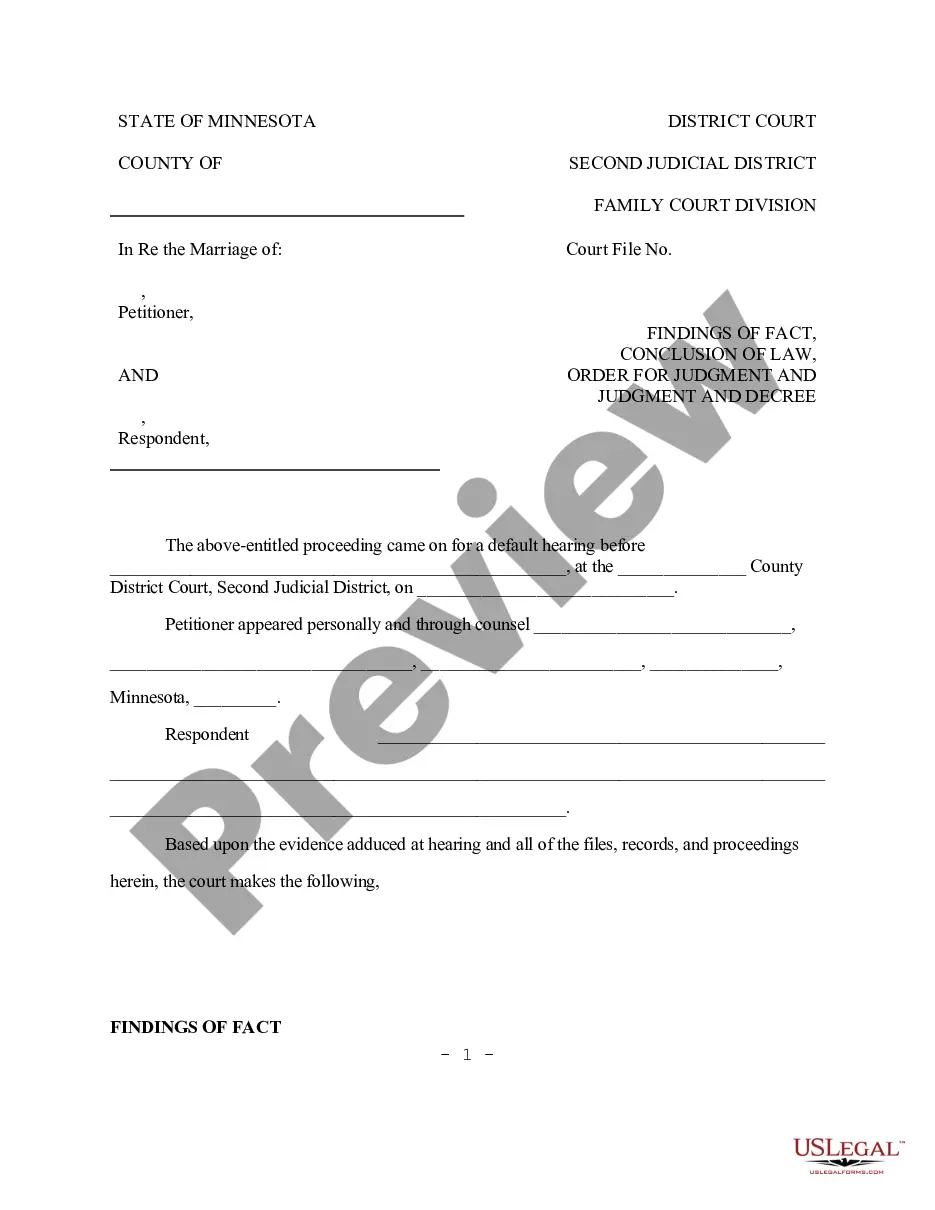
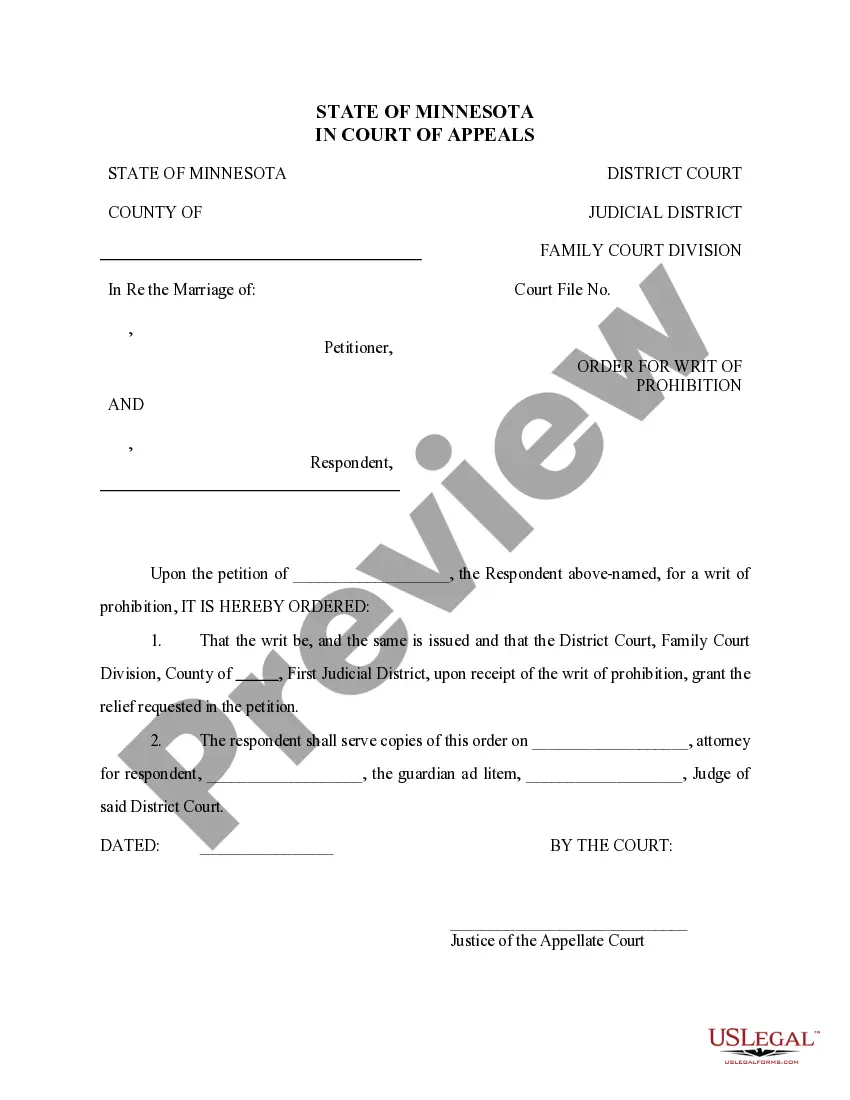

How to fill out Minnesota Writ Of Prohibition Overturning Lower Court Judgment And Awarding Relief - Template?
Obtain any type from 85,000 legal documents including Minnesota Writ of Prohibition reversing lower court ruling and granting relief - template online with US Legal Forms. Each template is crafted and revised by state-certified legal experts.
If you possess a subscription, Log In. Once you’re on the form’s webpage, click on the Download button and navigate to My documents to retrieve it.
If you have not yet subscribed, follow the instructions below: Check the state-specific criteria for the Minnesota Writ of Prohibition reversing lower court ruling and granting relief - template you wish to utilize. Review the description and preview the template. Once you’re certain the template meets your needs, simply click Buy Now. Choose a subscription option that aligns with your finances. Establish a personal account. Make a payment in one of two convenient methods: by credit card or through PayPal. Select a format to download the document in; two choices are available (PDF or Word). Download the file to the My documents tab. When your reusable template is prepared, print it out or save it to your device.
- With US Legal Forms, you will consistently have immediate access to the appropriate downloadable template.
- The service offers you access to forms and categorizes them to facilitate your search.
- Utilize US Legal Forms to acquire your Minnesota Writ of Prohibition reversing lower court ruling and granting relief - template quickly and easily.
Form popularity
FAQ
The term used for sending a case back to a lower court is called 'remand.' When a higher court decides to remand a case, it typically involves reviewing the lower court's decision. This process may include a Minnesota Writ of Prohibition overturning lower court judgment and awarding relief - template. By using this template, you can ensure that the proper procedures are followed, helping to achieve a fair outcome.
Rule 69 in Minnesota governs the enforcement of judgments and outlines the procedures for executing a judgment. This rule is critical for individuals seeking to ensure that their court-awarded relief is honored. Familiarizing yourself with Rule 69 can help you navigate the complexities of legal enforcement effectively.
To request a writ of execution in Minnesota, you need to complete the necessary court forms and submit them to the appropriate court. Ensure that you include all required information, including details of the judgment you wish to enforce. Following the correct procedure is essential in receiving the writ and achieving the relief you deserve.
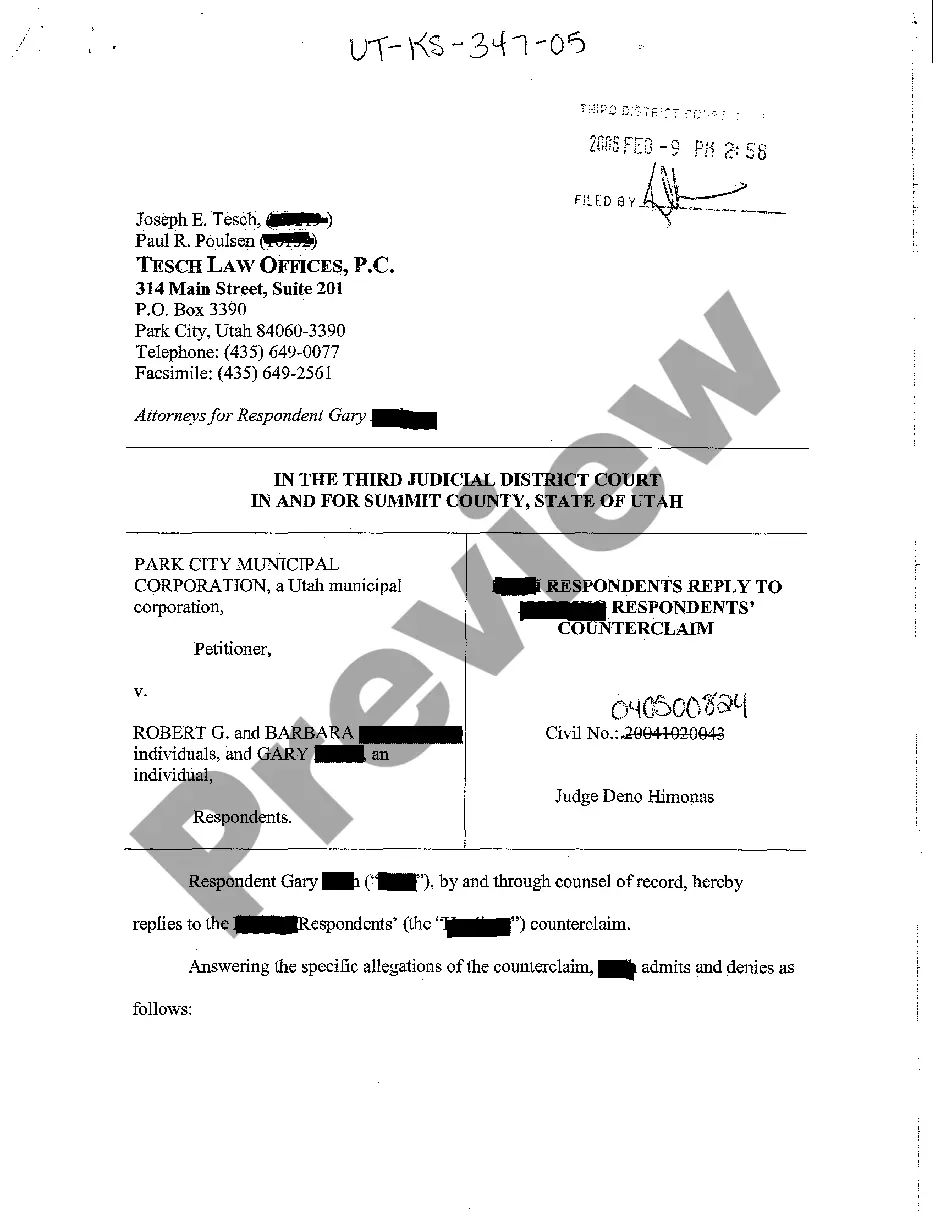
A writ of prohibition is a legal order that prevents a lower court from acting beyond its authority or jurisdiction. When you file for a writ of prohibition, you seek to halt proceedings that might lead to an unjust outcome. This legal tool is particularly useful when you aim to challenge a lower court's decision while pursuing a Minnesota writ of prohibition overturning lower court judgment and awarding relief.
To obtain a writ of execution in Minnesota, begin by filing the appropriate forms with the court after securing a judgment. You will need to provide specific details about the judgment and the relief you seek. This step is vital in enforcing your rights and ensuring compliance with the court's decision.
Rule of Practice 521 in Minnesota pertains to the procedures and guidelines for obtaining a writ of prohibition. This rule outlines the necessary steps to challenge a lower court's judgment when it is believed that the court exceeded its jurisdiction. Understanding this rule is crucial for anyone considering filing a Minnesota writ of prohibition overturning lower court judgment and awarding relief.
To obtain a writ of execution in Minnesota, you must first secure a judgment from the court. Once you have the judgment, you can file a request for the writ with the court that issued the judgment. This process allows you to enforce the judgment, and it is essential for ensuring that the awarded relief is implemented effectively.
In Minnesota, there are specific criteria under which a person may refuse jury duty. Valid reasons include financial hardship, personal health issues, or prior commitments. However, it is essential to formally request an exemption to avoid potential penalties. If you are uncertain about your obligations, the Minnesota Writ of Prohibition overturning lower court judgment and awarding relief - template can guide you in understanding your rights.
A Rule 60 motion in Minnesota allows a party to request the court to relieve them from a prior judgment or order. This motion can be crucial for rectifying mistakes or addressing newly discovered evidence. If you believe that a previous court decision was incorrect, you may find that this motion is a vital step in your legal strategy. The Minnesota Writ of Prohibition overturning lower court judgment and awarding relief - template can be a useful resource in crafting this motion.
Rule 521 of the Minnesota General Rules of Practice deals with the procedures for filing certain legal documents. It outlines specific requirements that must be met to ensure proper filing in court. Understanding these requirements is crucial for maintaining the integrity of your case. To navigate these rules effectively, consider the Minnesota Writ of Prohibition overturning lower court judgment and awarding relief - template.