Maryland Discovery Interrogatories for Divorce Proceeding for either Plaintiff or Defendant - Another Form
What this document covers
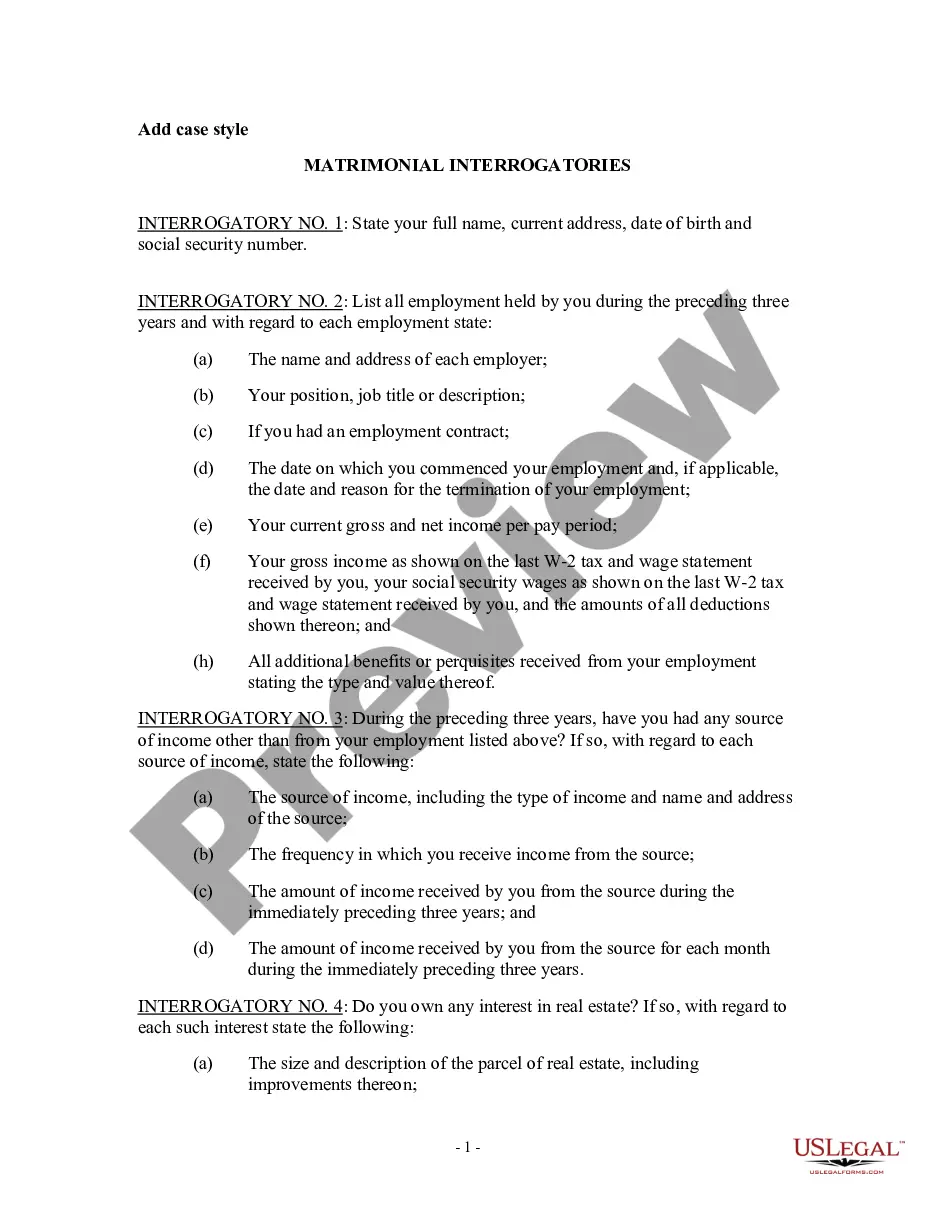
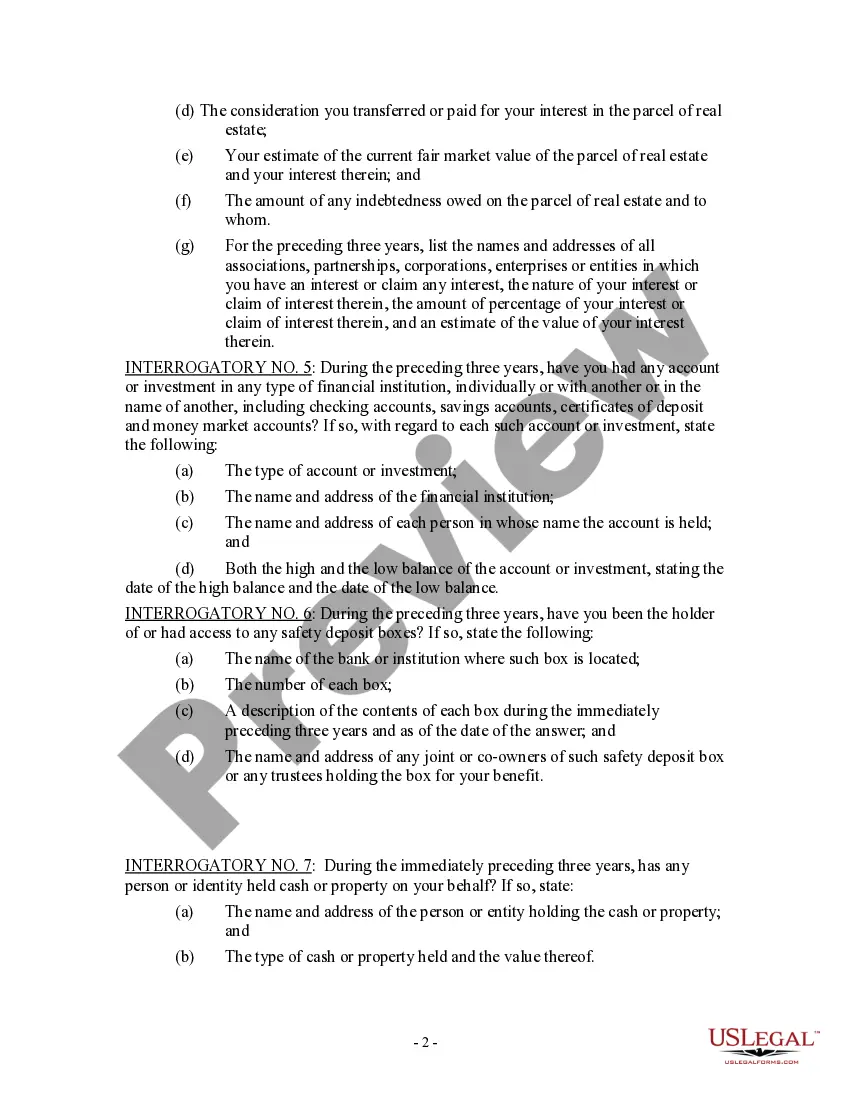
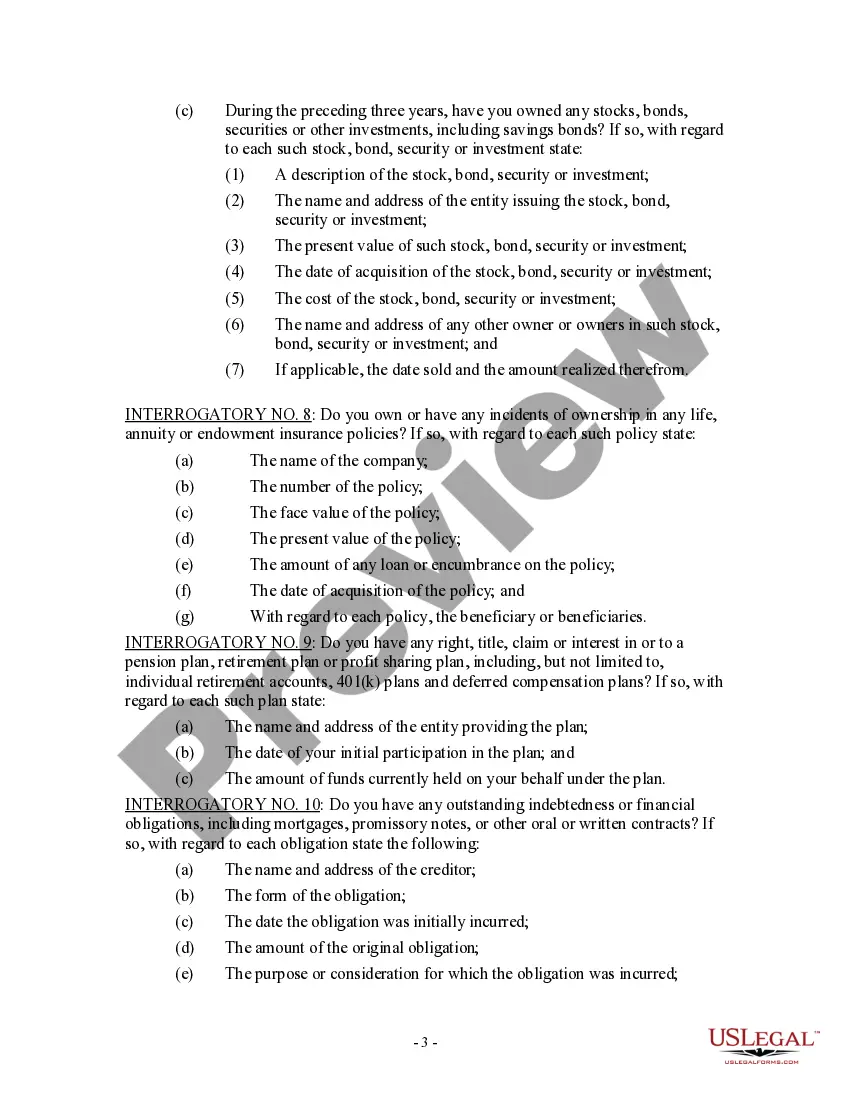
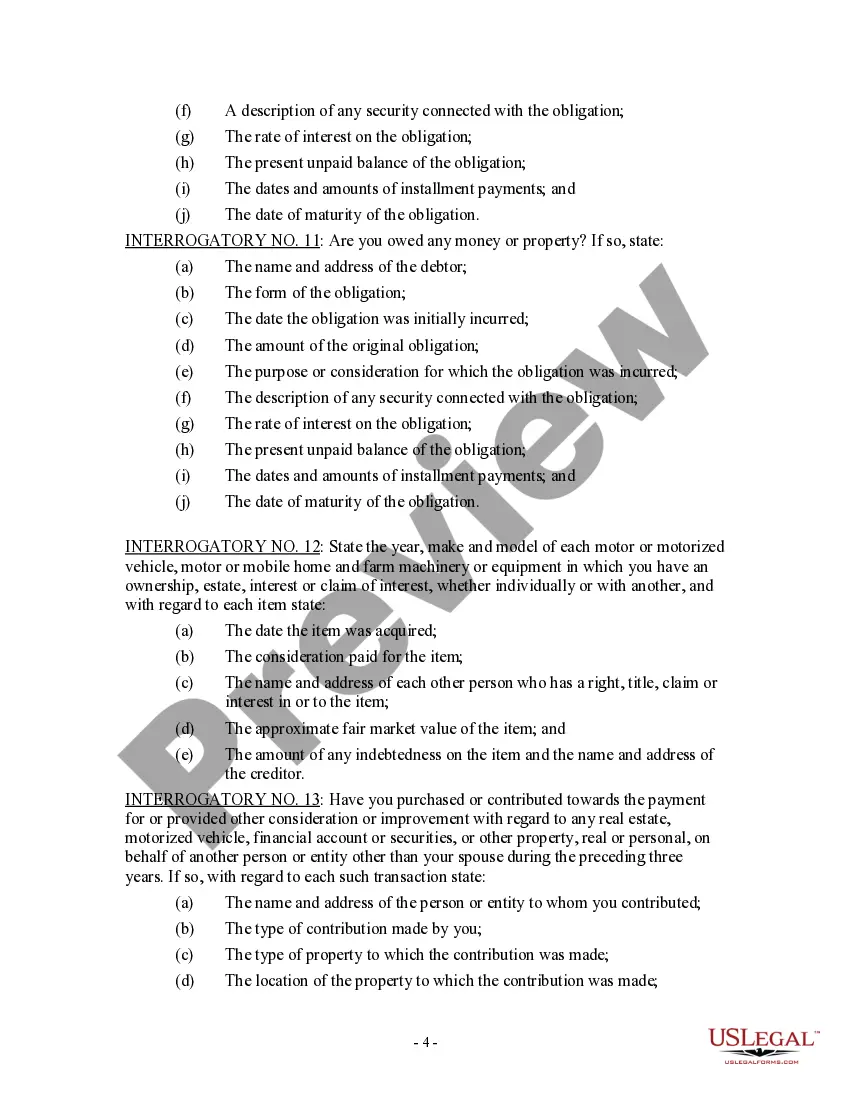
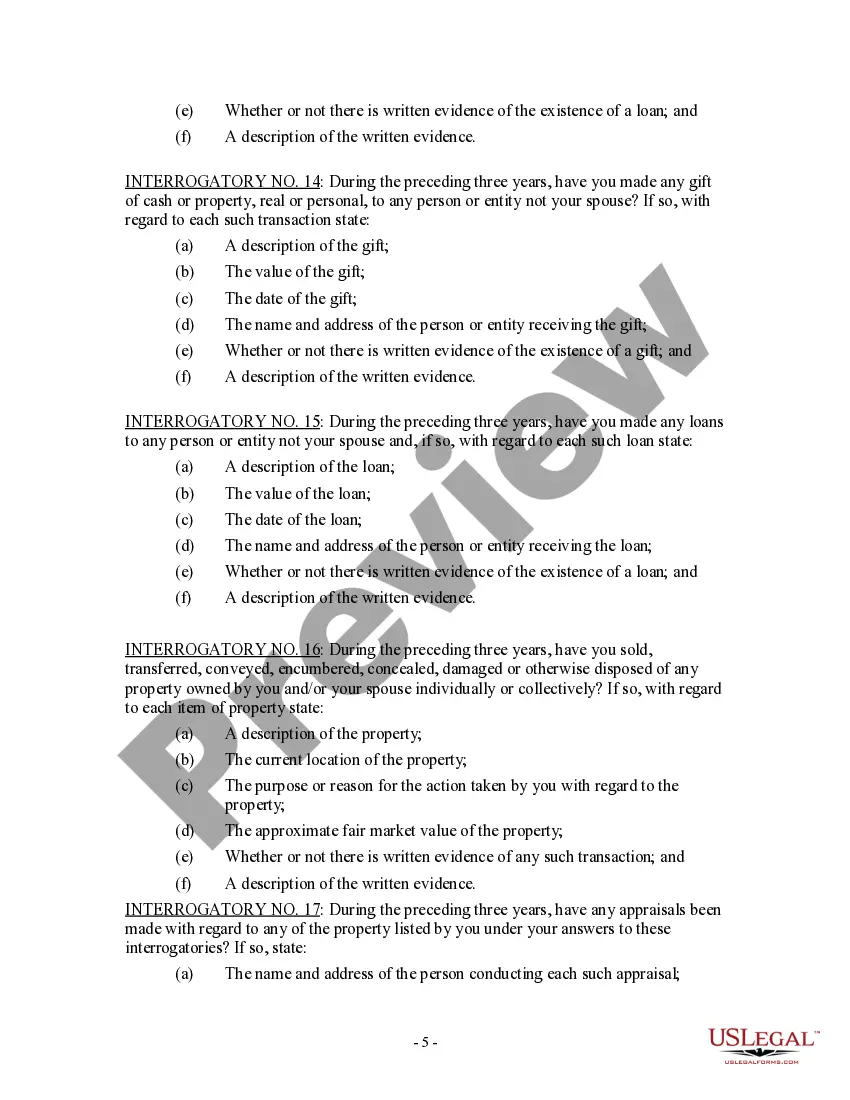
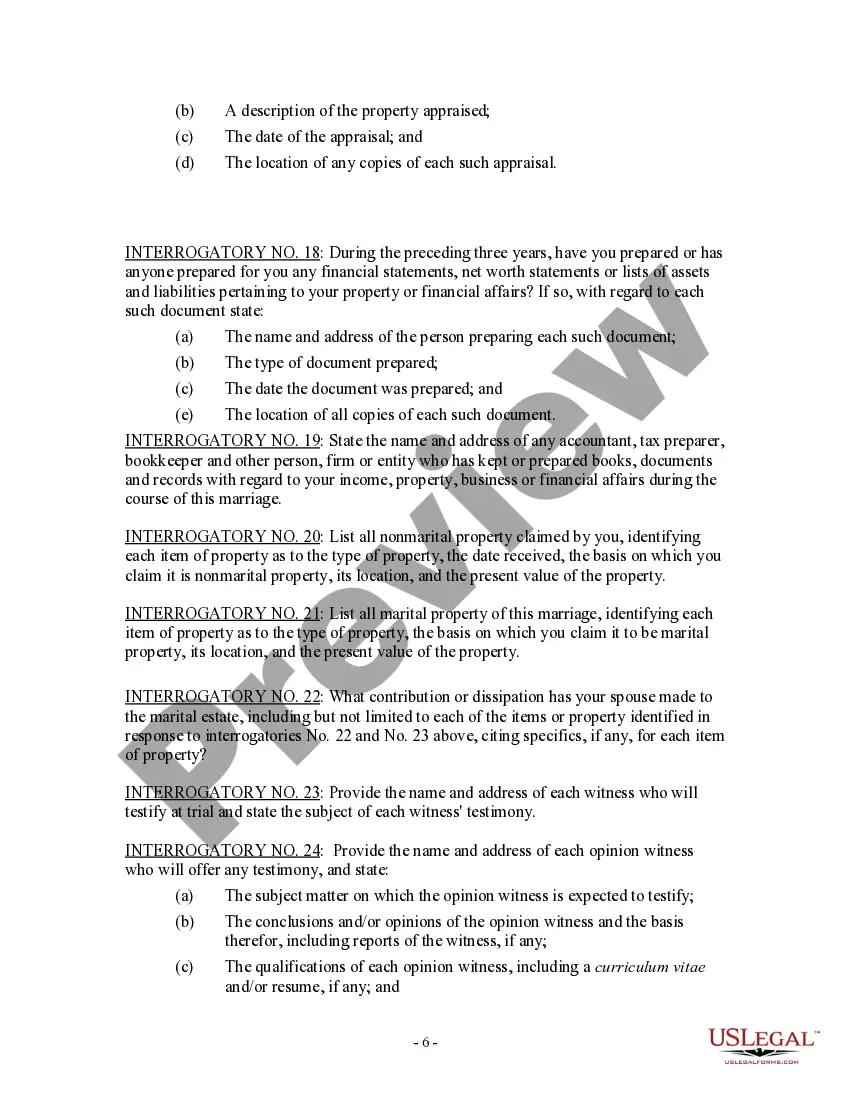
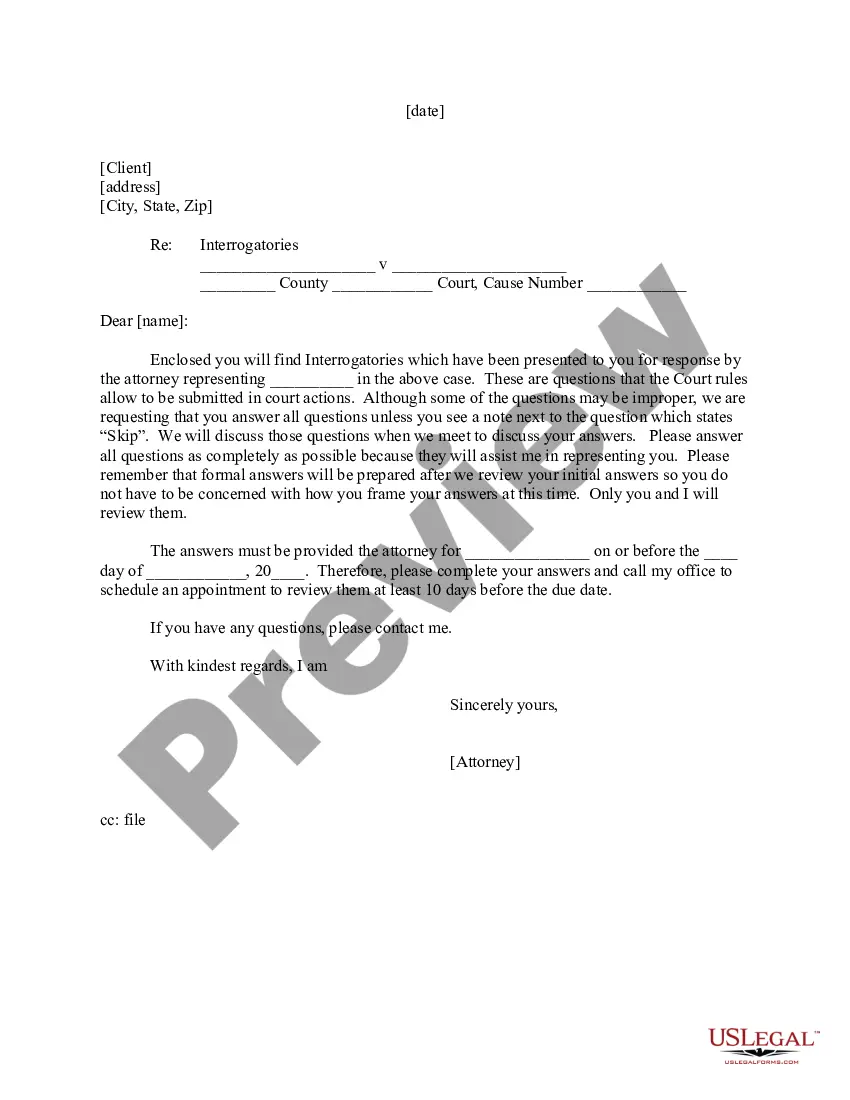
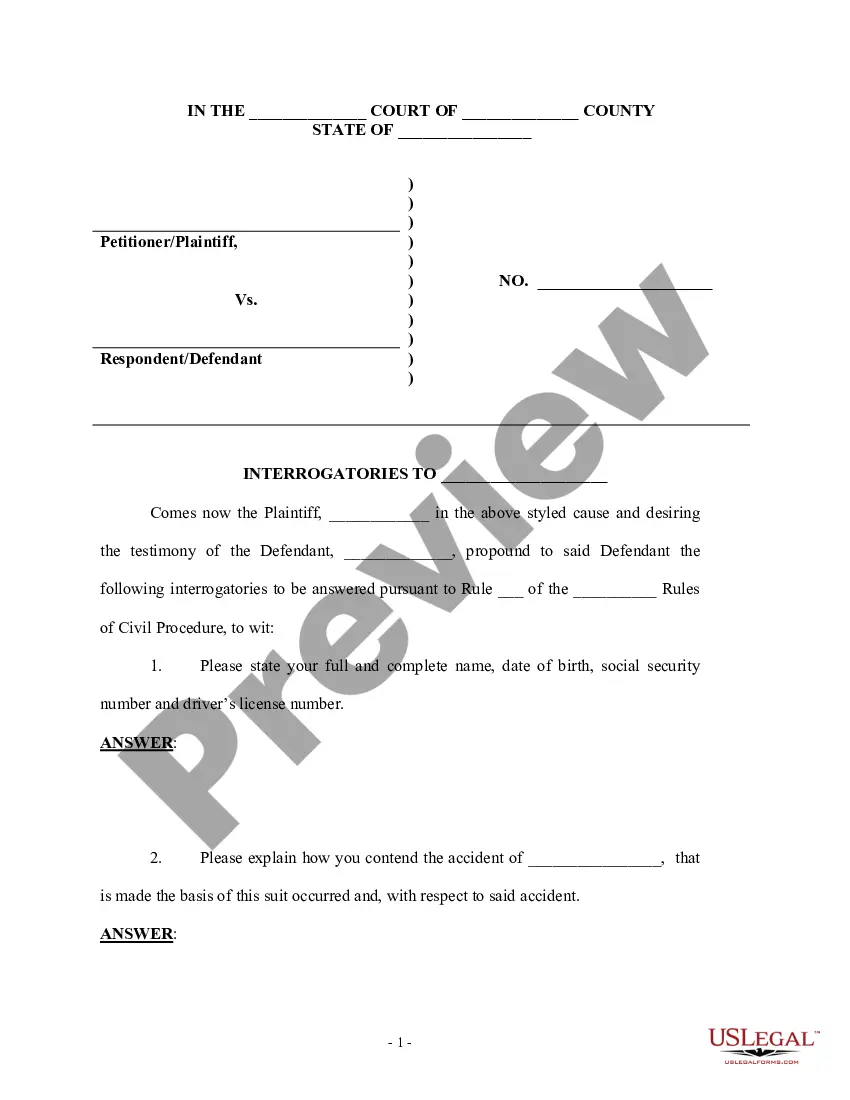
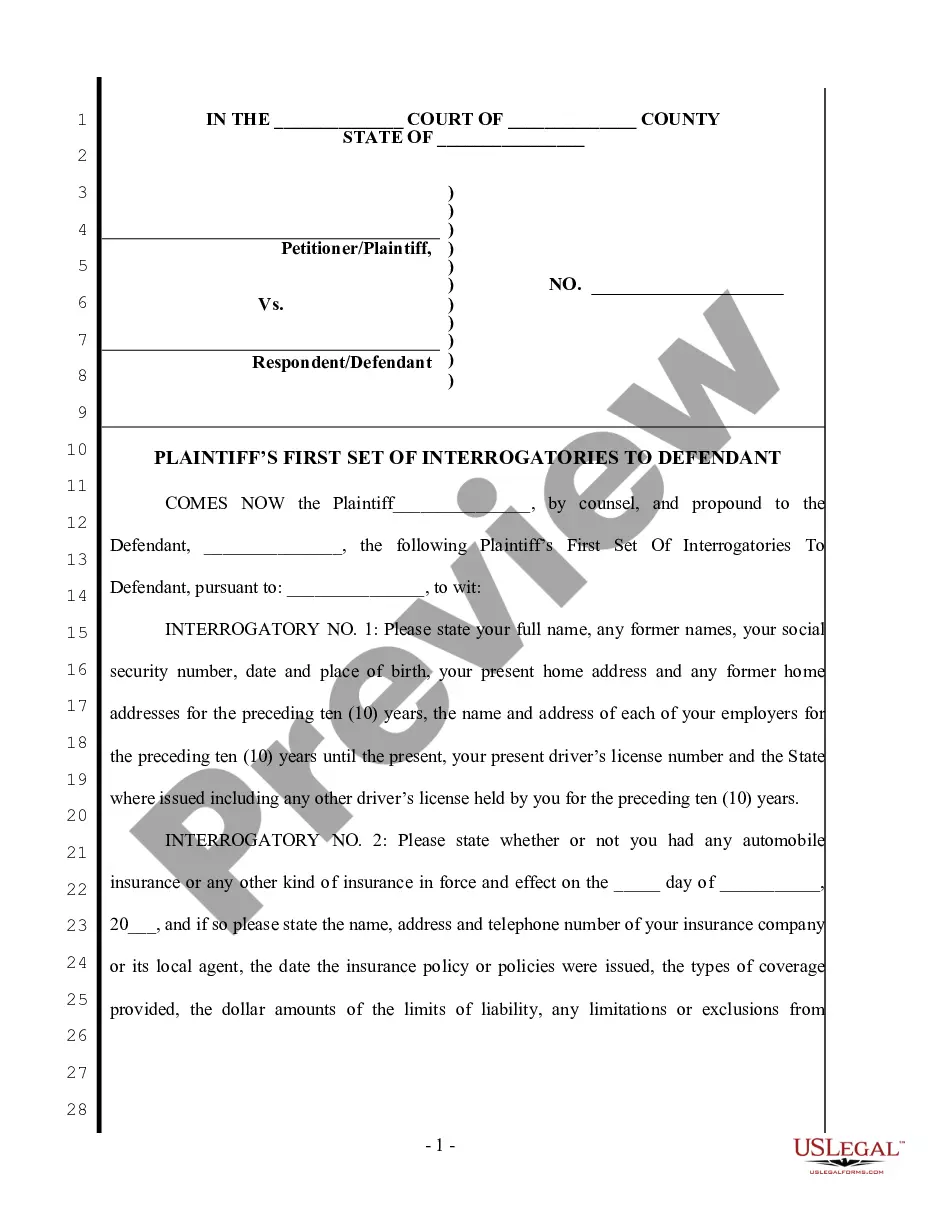
The Discovery Interrogatories for Divorce Proceeding is a legal document used in divorce cases for either the Plaintiff or Defendant. This form allows one party to request crucial information and documentation from the other party, helping to clarify financial and personal circumstances during the divorce process. Unlike other forms, this document not only contains interrogatories but also a request for the production of documents, which makes it comprehensive for discovery purposes.
Form components explained
- Interrogatories for personal details, including name, address, and date of birth.
- Questions regarding employment history and income sources.
- Requests for information on real estate interests and valuations.
- Details about bank accounts, investments, and financial obligations.
- Inquiries into other property ownership, gifts, and financial transactions.
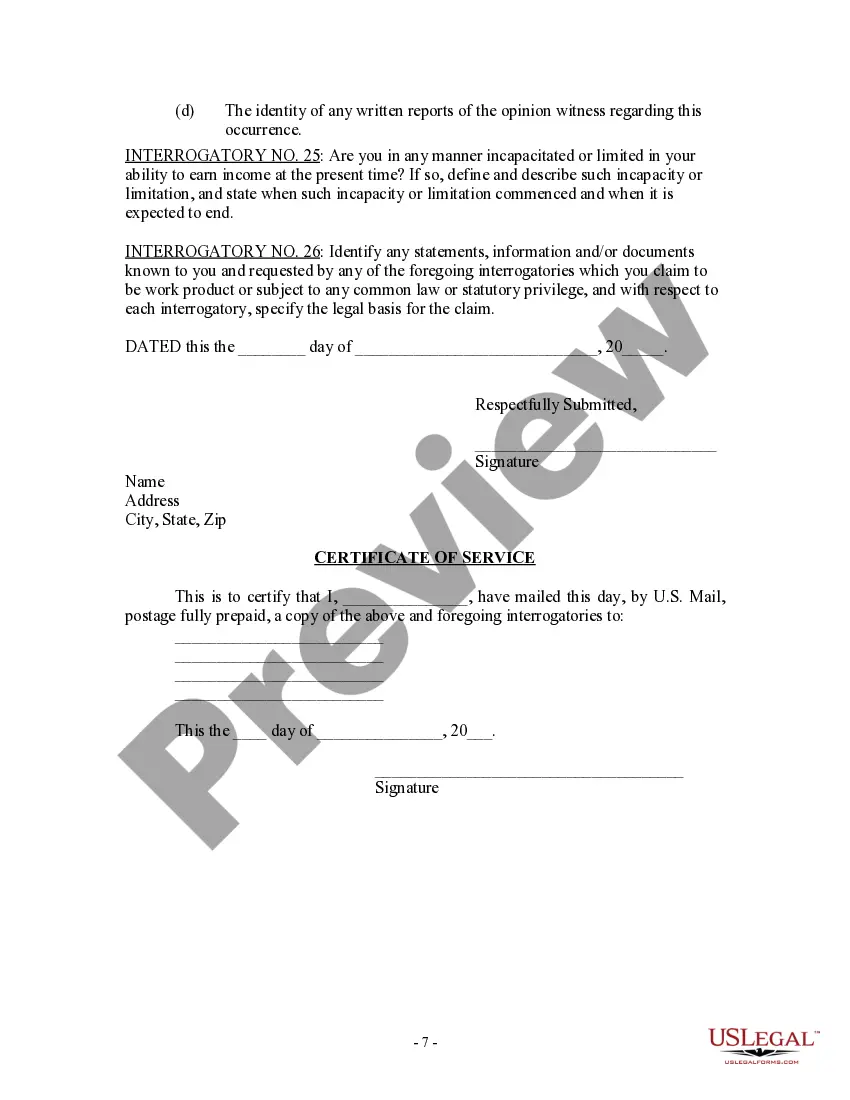
- Notice for filing with the court and certificate of service.
Situations where this form applies
This form should be utilized during divorce proceedings when one party seeks to gather detailed information about the other party's finances, assets, and liabilities. It is particularly important if there are disputes regarding property division, financial support, or when seeking transparency in financial matters to ensure an equitable settlement.
Intended users of this form
This form is intended for:
- Individuals who are involved in divorce proceedings, whether as the Plaintiff or Defendant.
- Legal representatives who are assisting clients in the divorce process.
- Parties needing to acquire financial disclosures from their spouse or partner during divorce litigation.
Steps to complete this form
- Identify the parties involved in the divorce and fill in their names and addresses.
- Complete each interrogatory by providing detailed answers to the questions posed, ensuring that all requested information is truthful and complete.
- Include any additional questions that are pertinent to your specific case.
- Sign and date the form, ensuring it is ready for submission to the court.
- Prepare a certificate of service to document that the interrogatories have been mailed to the other party.
Is notarization required?
This form usually doesn’t need to be notarized. However, local laws or specific transactions may require it. Our online notarization service, powered by Notarize, lets you complete it remotely through a secure video session, available 24/7.
Avoid these common issues
- Failing to answer every question completely.
- Not signing or dating the form before submission.
- Neglecting to keep a copy of the completed form for your records.
- Ignoring additional questions that may be relevant to your specific case.
- Not complying with the timeframe set for responses to interrogatories.
Benefits of completing this form online
- Convenient download and access whenever needed.
- Edit and customize the form to fit your specific situation.
- Reliable templates drafted by licensed attorneys to ensure legal compliance.
- Easy to save and store electronically, ensuring all documentation is organized.
- Streamlines the process of gathering necessary financial information for divorce proceedings.





Form popularity
FAQ
Rule 2-424 in Maryland outlines the regulations regarding interrogatories in civil cases. This rule provides specific guidelines on how many interrogatories can be sent, as well as deadlines for responses. Adherence to this rule is essential to ensure fairness and clarity during legal proceedings. Familiarity with rule 2-424 is key when using Maryland Discovery Interrogatories for Divorce Proceeding for either Plaintiff or Defendant - Another Form.
The Maryland mutual consent divorce law gets rid of the 12-month waiting period. It allows couples (and as of 2018, parents) to get a divorce with no wait, even if they can't afford to separate until the Judgment is final.
Maryland is one of the unique states that requires there to be a fault ground to get an immediate divorce without a waiting period. These grounds, however, are likely to be contested as they are adultery and cruelty.For now, the quickest route to obtain a divorce is an uncontested, no fault twelve month separation.
In a Maryland divorce, judges don't always divide marital property right down the middle using a 50/50 split. Because Maryland is an equitable distribution state, the divorce court will divide property fairly between the spouses, but not always equally.
Couples who are separated, whether informally or legally, are still married in the eyes of the law, regardless of how independent their lives have become. This means that if either spouse has a sexual relationship with another person during the separation period, they have probably committed adultery.
Grounds are required to obtain either type of divorce in Maryland.So no, you don't absolutely have to separate before getting a divorce in Maryland. Living apart for a year is not the only grounds for absolute divorce, however; it's just the only no fault grounds.
In the state of Maryland, it is still considered adultery if you are dating and having sexual intercourse with someone else who is not your spouse, even if you are separated.Once you are divorced, you are free to start dating.
Technically, there is no Legal Separation in Maryland. In Maryland, whether or not a couple is separated is a question of fact. If spouses are not having sexual relations and are not sleeping under the same roof (in the same residence), then they are considered to be separated.
For now, the quickest route to obtain a divorce is an uncontested, no fault twelve month separation. In order to meet the requirements for this type of divorce, it is important to clearly establish the separation date. This will determine the twelve-month mark for when you can file a complaint for absolute divorce.
Before filing for divorce, the spouses must have lived separate and apart without cohabitation (living together or having sexual relations) for 12 months without interruption. Mutual consent is a newer no fault ground for absolute divorce.