Georgia Executor's Deed
Overview of this form
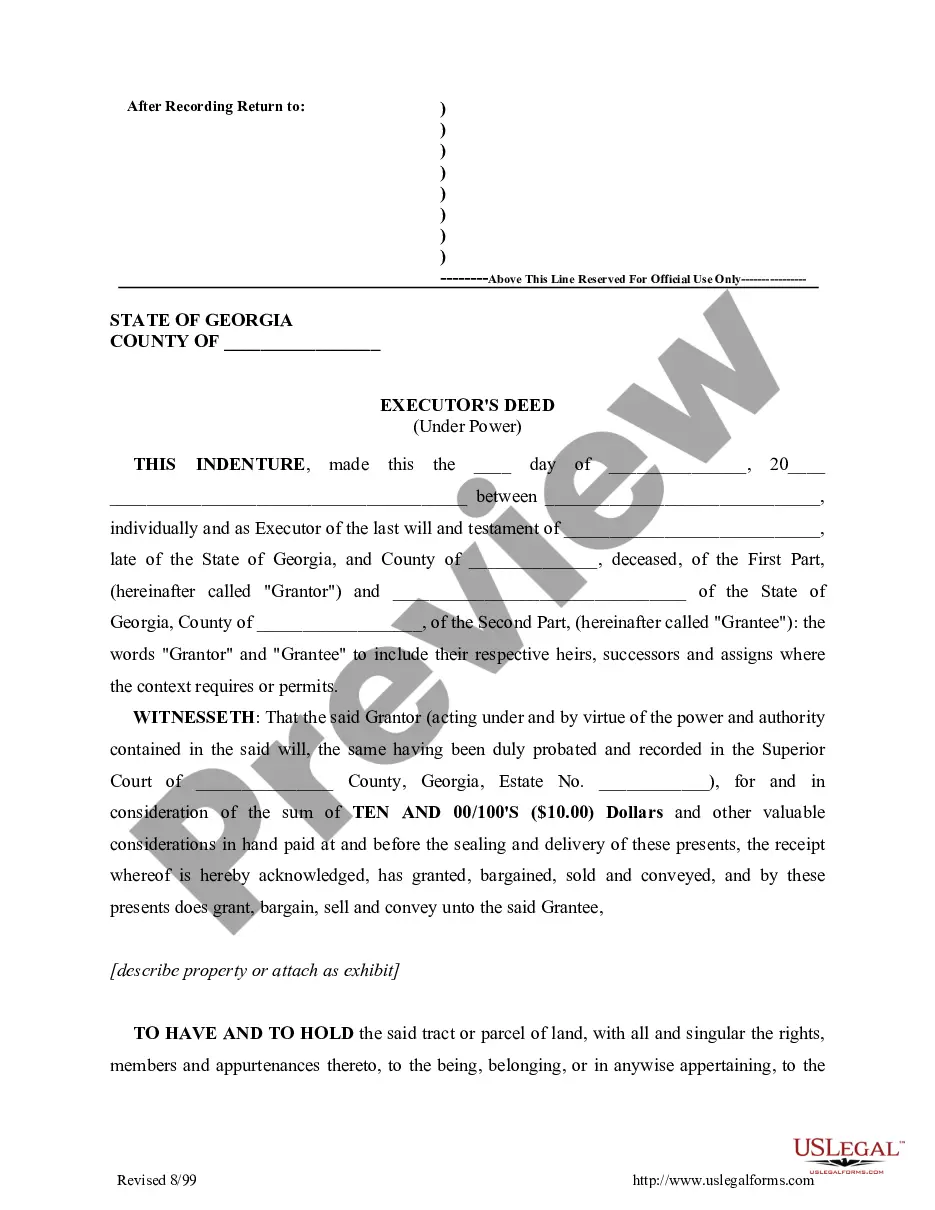
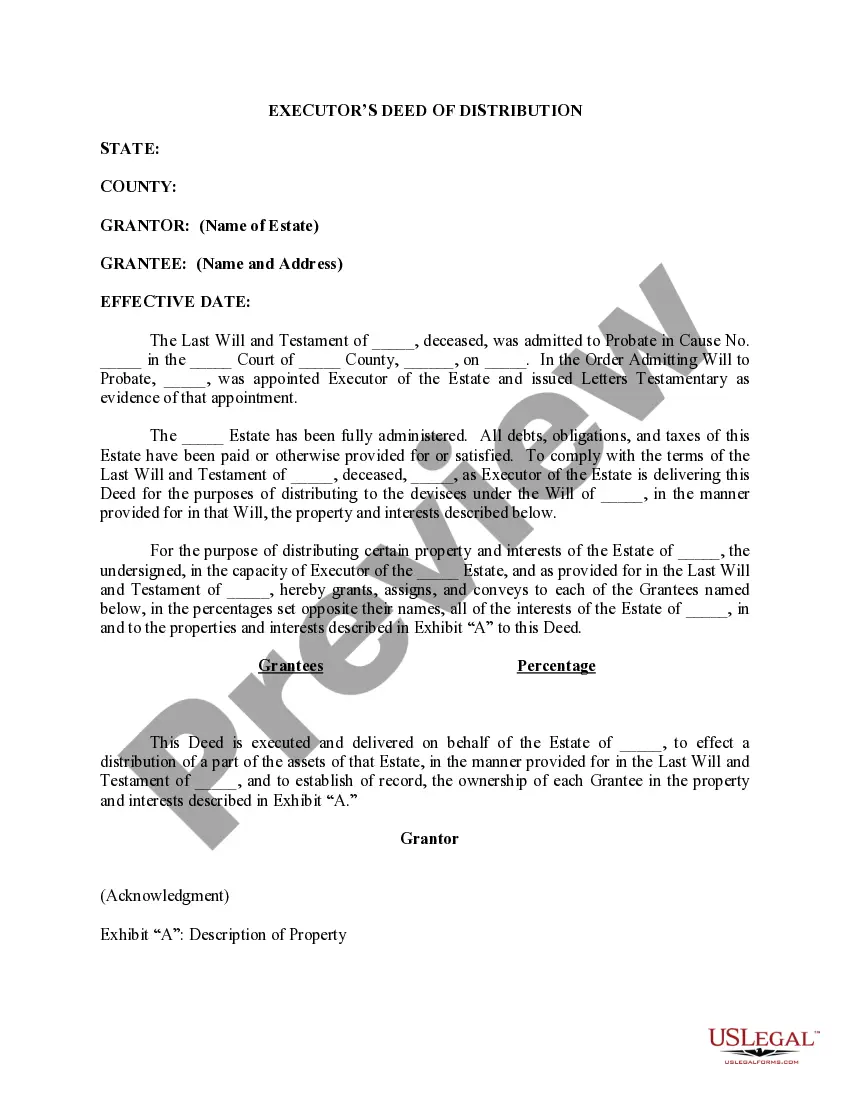
The Executor's Deed is a legal document used to transfer property ownership from a deceased individual, as specified in their will. This deed differs from general property transfer documents as it authorizes the executor of the deceased's estate to convey property rights based on the powers granted in the will. It's a crucial tool in ensuring that a decedent's assets are properly distributed according to their wishes.
What’s included in this form
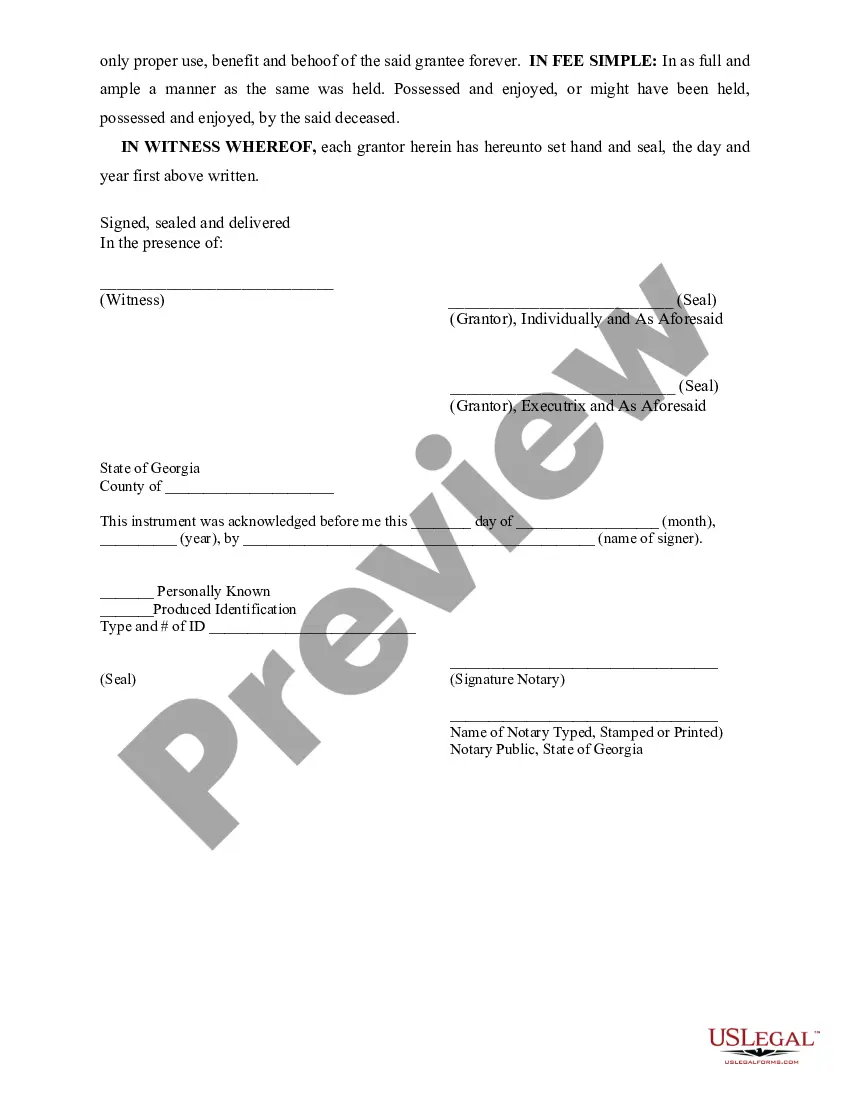
- Identification of the parties involved: This includes both the Grantor (executor) and the Grantee (new owner).
- Description of the property: Clearly outlines the property being transferred to the Grantee.
- Consideration clause: States the amount of consideration exchanged, typically a nominal sum.
- Execution clause: Includes signatures from the Grantor and witnesses, validating the deed.
- Notarization space: Designates an area for the notary public's signature and seal, affirming the document's authenticity.

When to use this document
This form should be used when an executor is tasked with transferring real estate or other property as part of settling an estate. It is particularly relevant after the death of an individual when the executor needs to fulfill the directives specified in a will regarding asset distribution.
Intended users of this form
This form is primarily for:
- Executors or personal representatives of an estate who are appointed to manage the distribution of a deceased person's assets.
- Heirs or beneficiaries who are receiving property through the estate settlement process.
Completing this form step by step
- Identify the Grantor: Fill in the name of the executor and the deceased's name.
- Identify the Grantee: Enter the name of the person or entity receiving the property.
- Describe the property: Provide a clear description of the property being transferred.
- Specify the consideration: State the amount exchanged for the property, usually a nominal figure.
- Sign and date the document: Ensure all required parties sign in the presence of witnesses and a notary public.
Is notarization required?
Yes, this form must be notarized to be legally valid. This requirement helps to confirm the identities of the signers and adds a layer of authenticity to the document. US Legal Forms offers integrated online notarization, providing a convenient and secure method to have your documents notarized via video call.
Get your form ready online
Our built-in tools help you complete, sign, share, and store your documents in one place.
Make edits, fill in missing information, and update formatting in US Legal Forms—just like you would in MS Word.
Download a copy, print it, send it by email, or mail it via USPS—whatever works best for your next step.
Sign and collect signatures with our SignNow integration. Send to multiple recipients, set reminders, and more. Go Premium to unlock E-Sign.
If this form requires notarization, complete it online through a secure video call—no need to meet a notary in person or wait for an appointment.
We protect your documents and personal data by following strict security and privacy standards.

Make edits, fill in missing information, and update formatting in US Legal Forms—just like you would in MS Word.

Download a copy, print it, send it by email, or mail it via USPS—whatever works best for your next step.

Sign and collect signatures with our SignNow integration. Send to multiple recipients, set reminders, and more. Go Premium to unlock E-Sign.

If this form requires notarization, complete it online through a secure video call—no need to meet a notary in person or wait for an appointment.

We protect your documents and personal data by following strict security and privacy standards.
Typical mistakes to avoid
- Failing to provide a complete description of the property, which can lead to confusion during the transfer.
- Not obtaining the required signatures from all parties involved.
- Neglecting to have the deed notarized, rendering it potentially invalid.
- Inaccurately naming the beneficiaries or misidentifying parties involved in the transfer.
Advantages of online completion
- Immediate access to downloadable forms simplifies the process of preparing legal documents.
- Forms can be edited easily to tailor them to specific circumstances.
- Availability of templates drafted by licensed attorneys ensures legal compliance.
Main things to remember
- The Executor's Deed facilitates the transfer of real estate after a person's death.
- Correctly filling out the form is crucial to avoid legal pitfalls.
- This form is specifically designed for use in Georgia, adhering to state laws.
- Notarization is required to enhance the legal validity of the deed.
Looking for another form?

Form popularity
FAQ
The Georgia Executor's Deed is a legal instrument used to transfer real property from a deceased person to a new owner, under the powers granted to the executor by the will. It is used after probate to carry out asset distributions and must identify the grantor (the executor) and the grantee, describe the property, include a nominal consideration, and be executed with witnesses and notarization.
An executor transfers property in Georgia by signing the Georgia Executor's Deed as the grantor and naming the grantee. The deed requires a clear property description, a nominal consideration, an execution clause with the grantor and witnesses, and a notary acknowledgment to authenticate the transfer and reflect the powers granted in the will.
To obtain a Georgia executor's deed, fill out the form with the grantor (the executor) and the grantee, provide a description of the property, include a nominal consideration, and complete the execution clause with signatures from the grantor and witnesses. Have the document notarized to finalize authentication.
An executor's deed is a transfer document used to move property from a decedent's estate by the executor, under the powers granted in the will. It includes the grantor and grantee, a property description, a nominal consideration, an execution clause with witnesses, and a notary space to authenticate the deed.
In Georgia, an executor's deed transfers property from the decedent's estate to the designated owner as directed by the will. The form includes the grantor (executor) and grantee, a property description, nominal consideration, an execution clause with witnesses, and a notary acknowledgment to authenticate the document.
This deed authorizes the executor of the deceased's estate to convey property rights based on the powers granted in the will, unlike typical deeds that transfer property from a living owner. The form also includes an execution clause with witnesses and a notary space to authenticate the probate-based transfer.