California Discovery Interrogatories from Defendant to Plaintiff with Production Requests
What this document covers
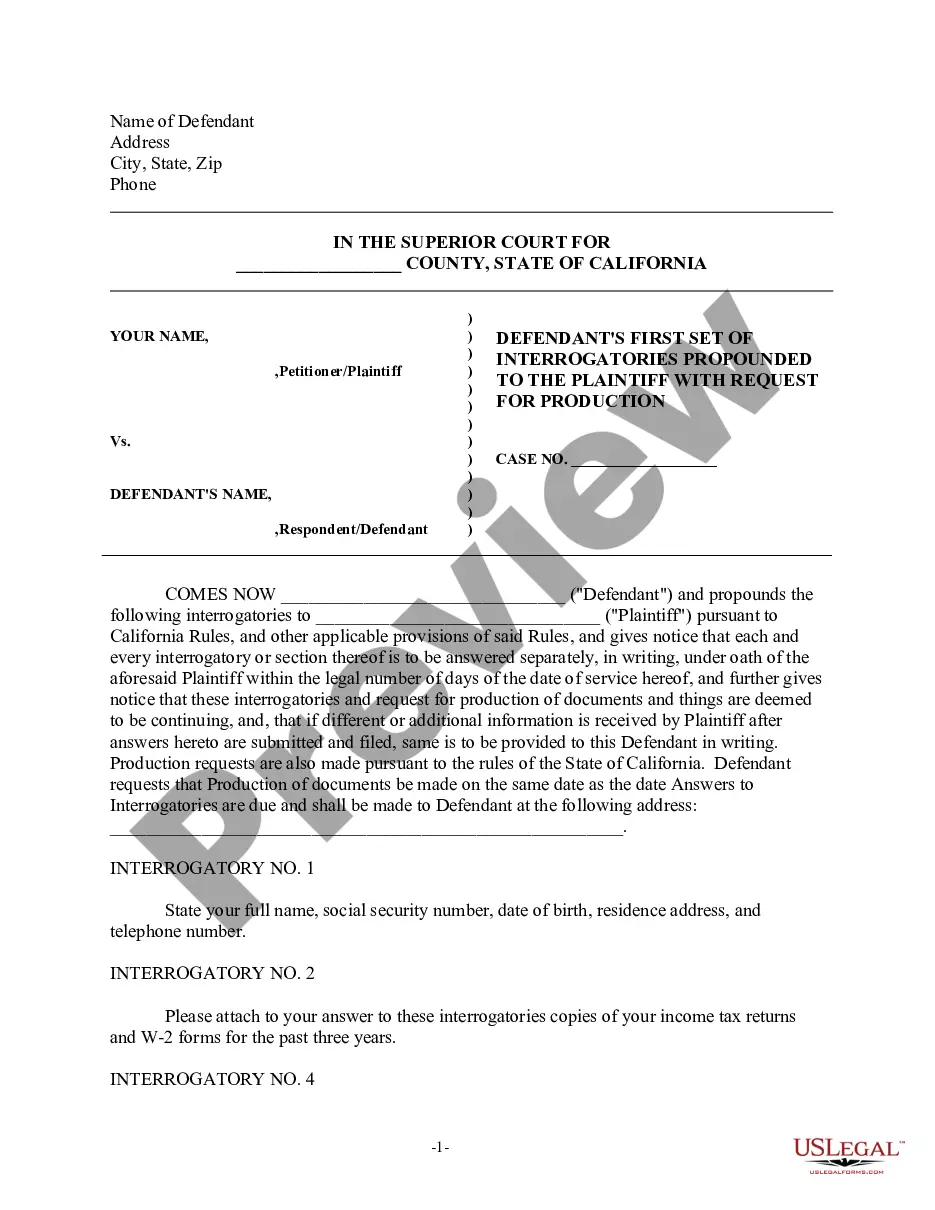
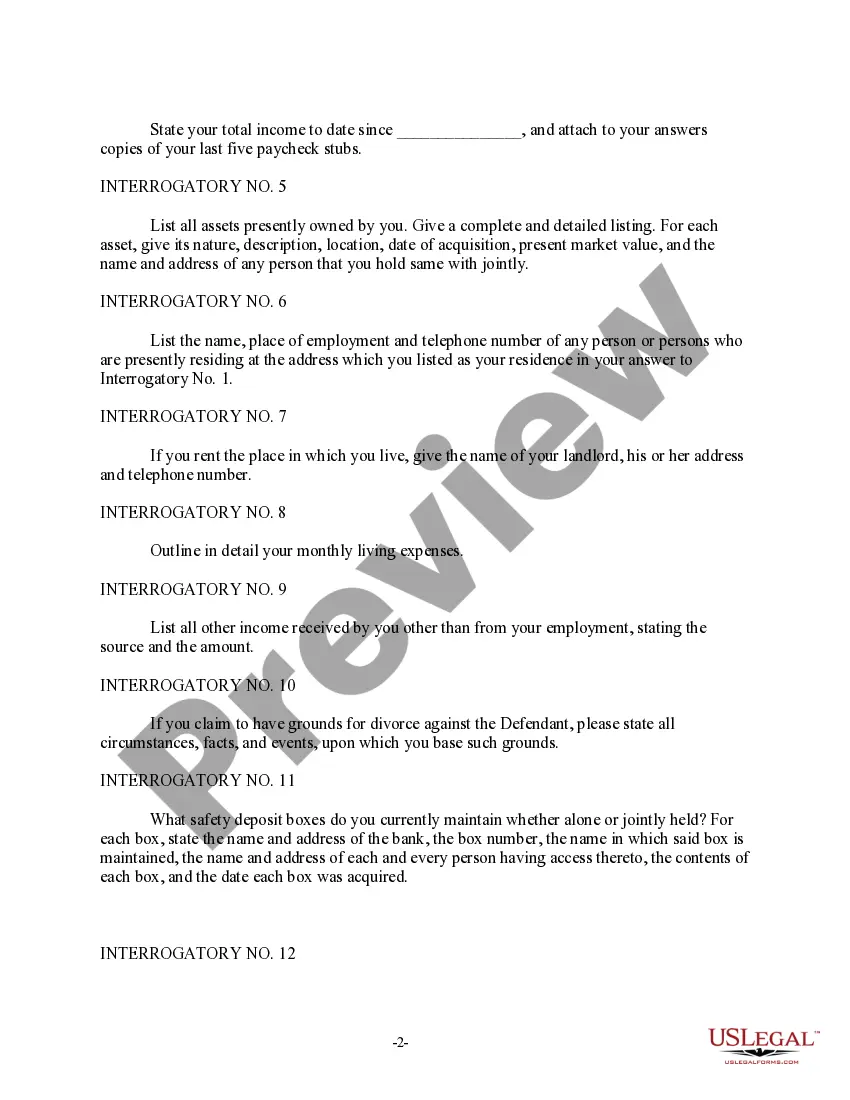
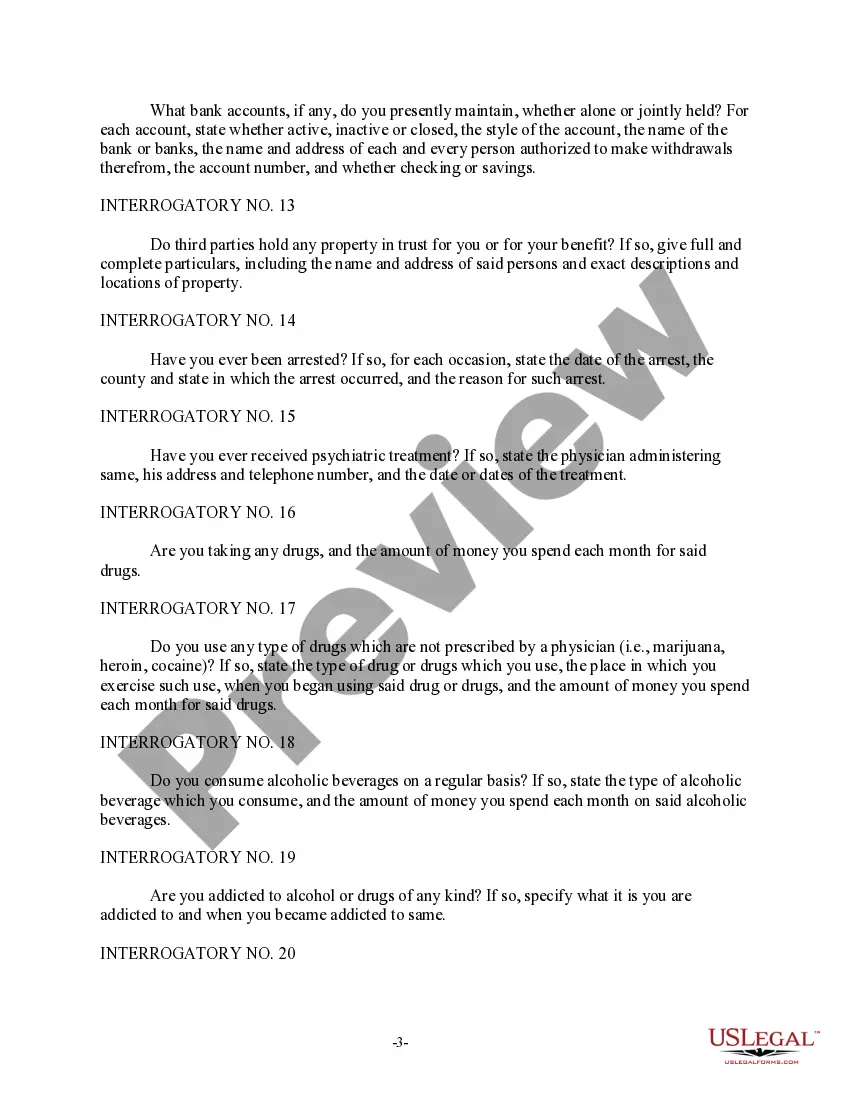
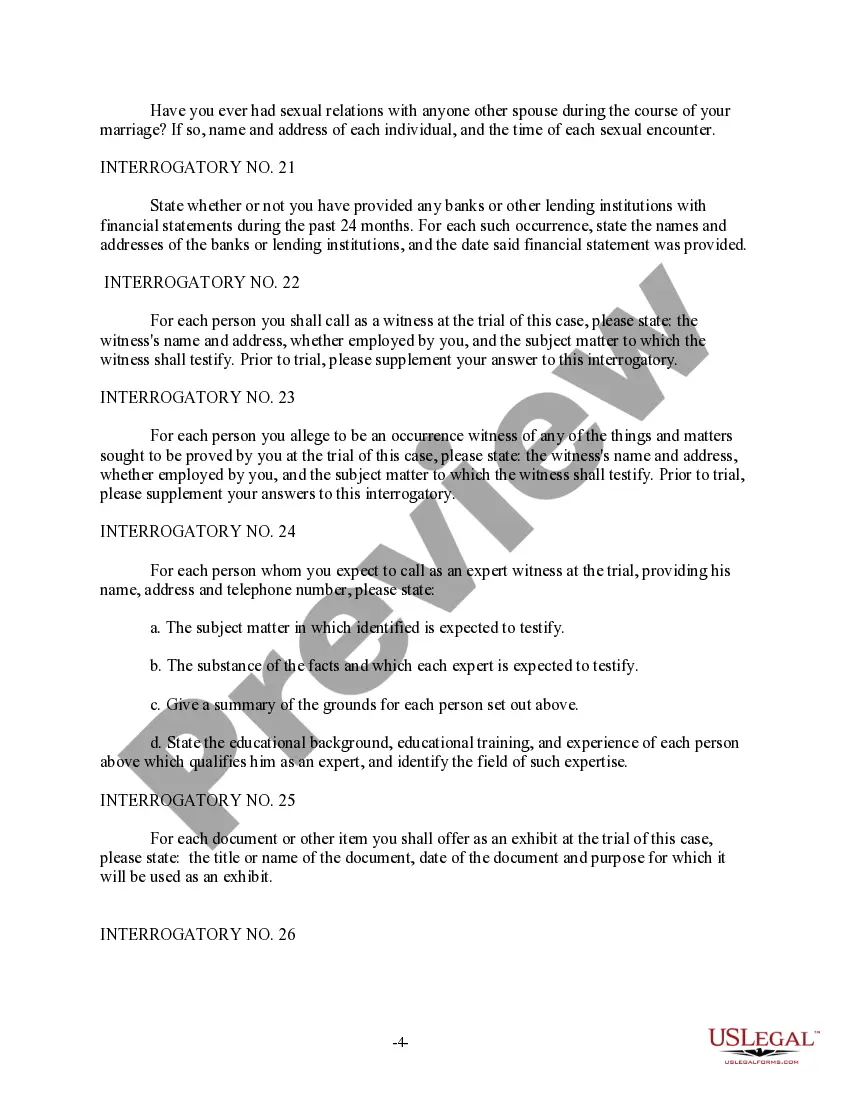
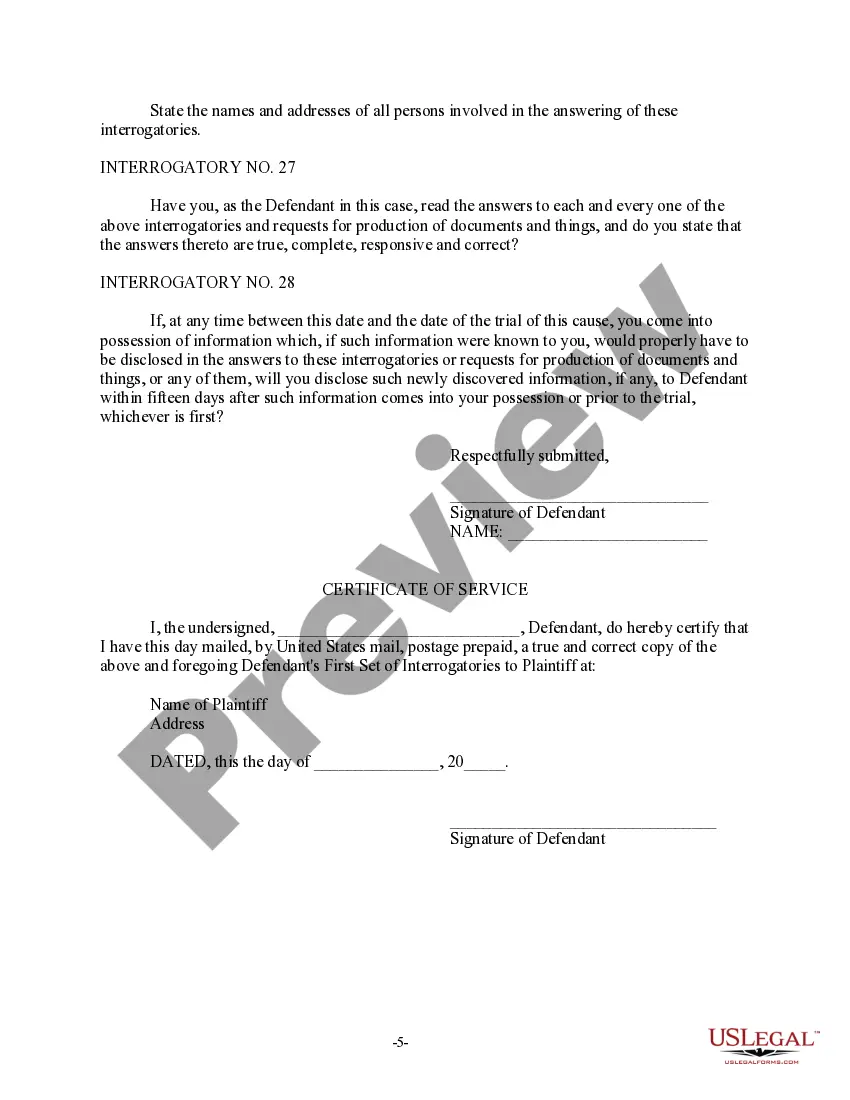
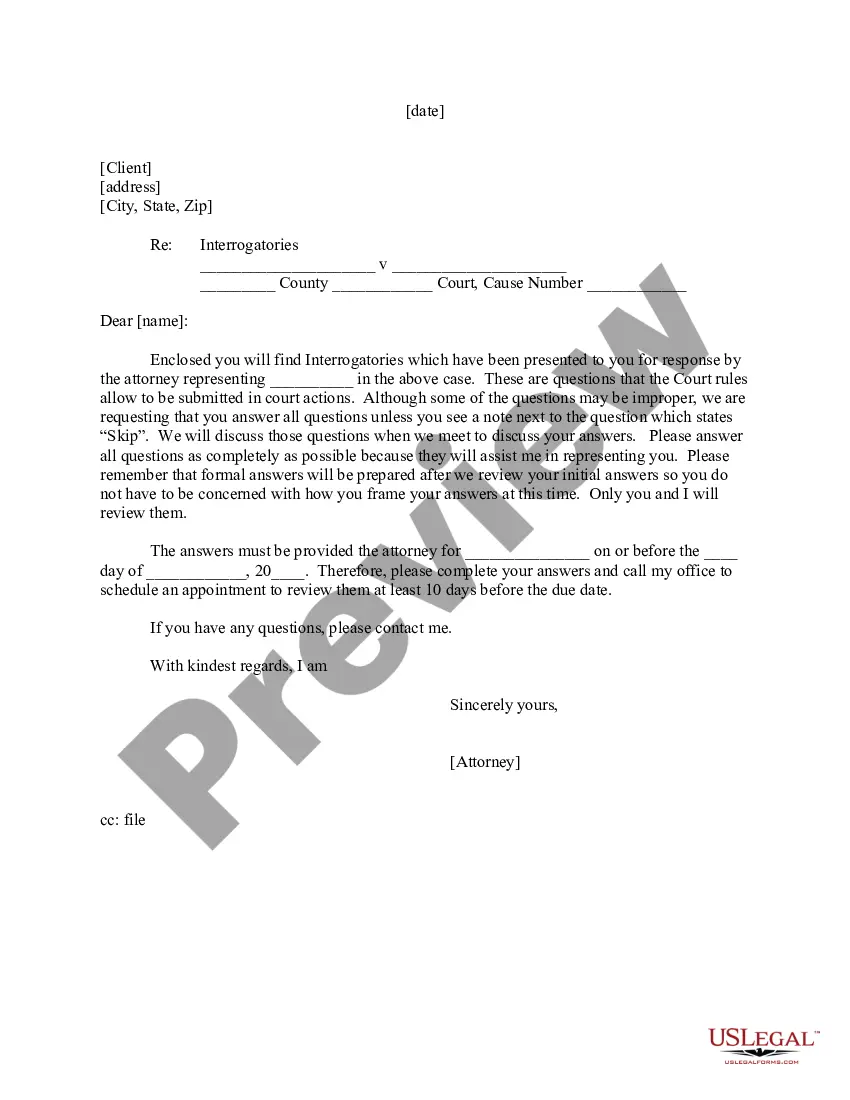
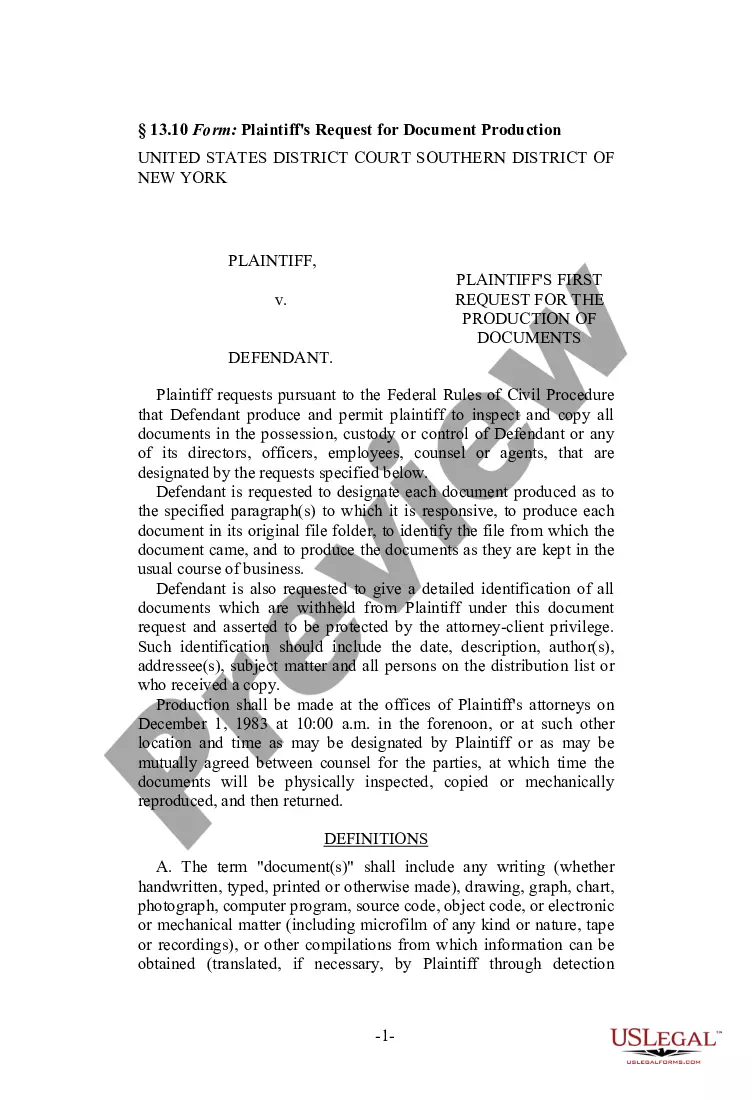
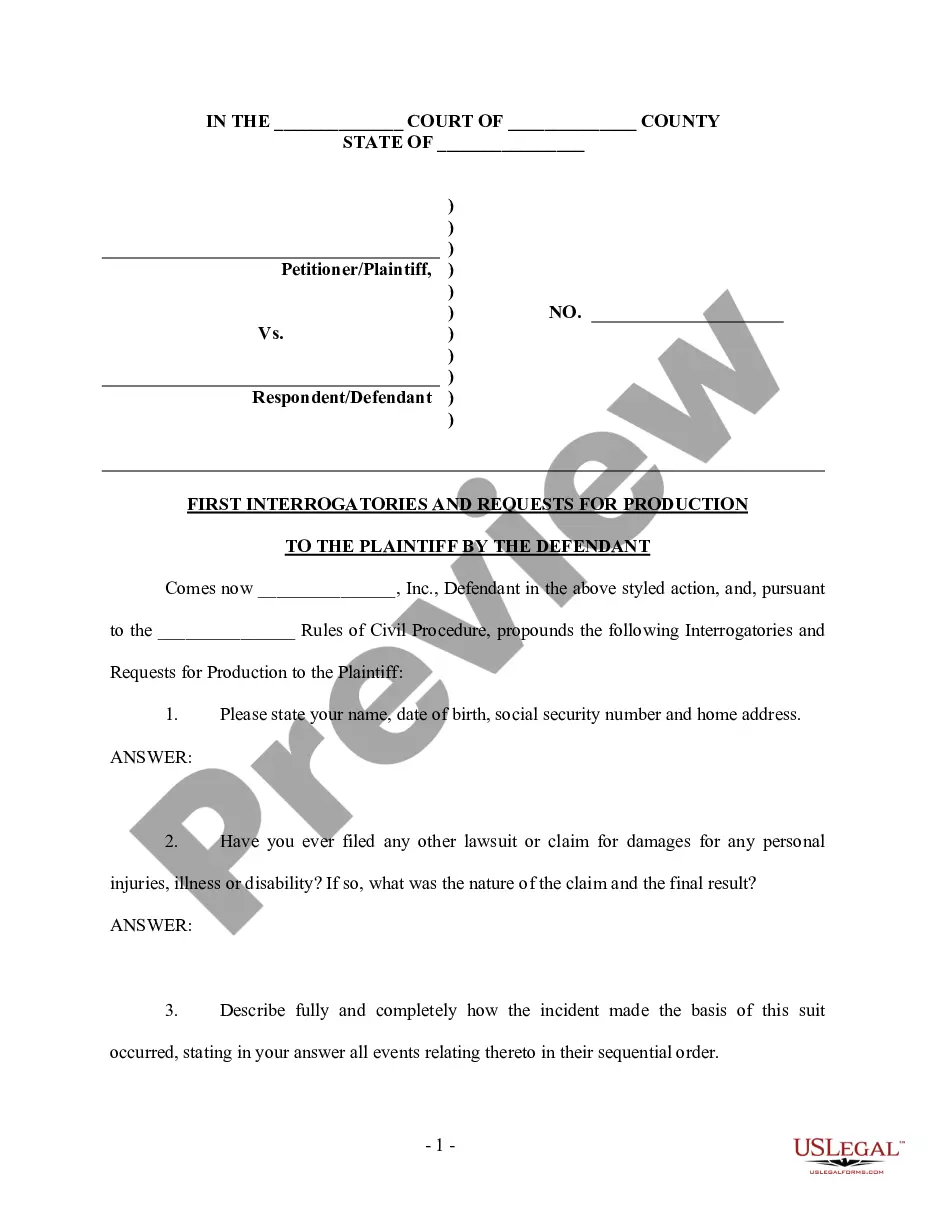
This form, titled Discovery Interrogatories from Defendant to Plaintiff with Production Requests, is a legal document used in divorce proceedings. It allows the Defendant to request detailed information from the Plaintiff through a series of interrogatories and requests for the production of relevant documents. This form helps gather necessary evidence and disclosures that may impact the outcome of the case, ensuring all parties have the information needed for a fair resolution.
Main sections of this form
- Interrogatories: A series of questions requiring the Plaintiff to provide detailed answers.
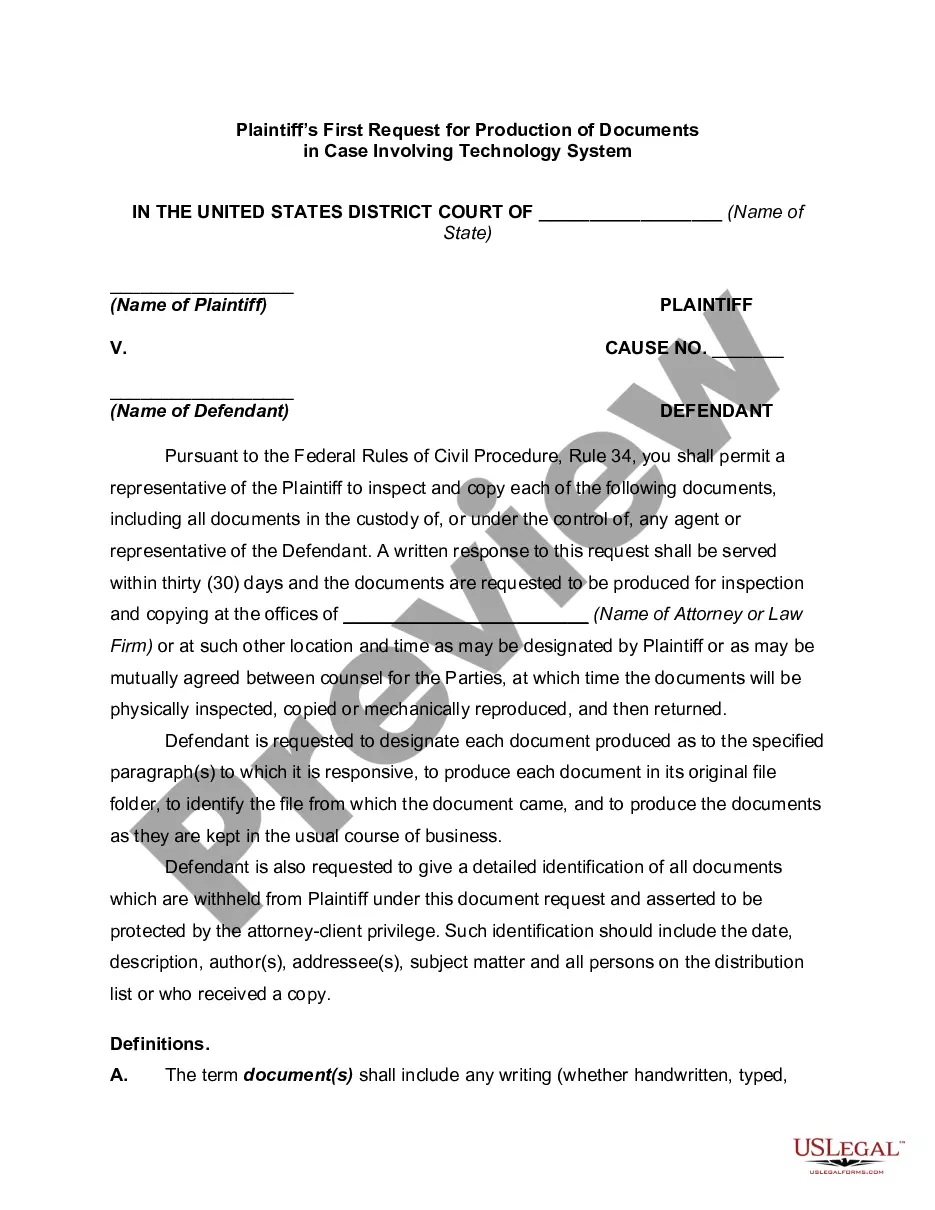
- Request for production: A demand for specific documents to be submitted by the Plaintiff.
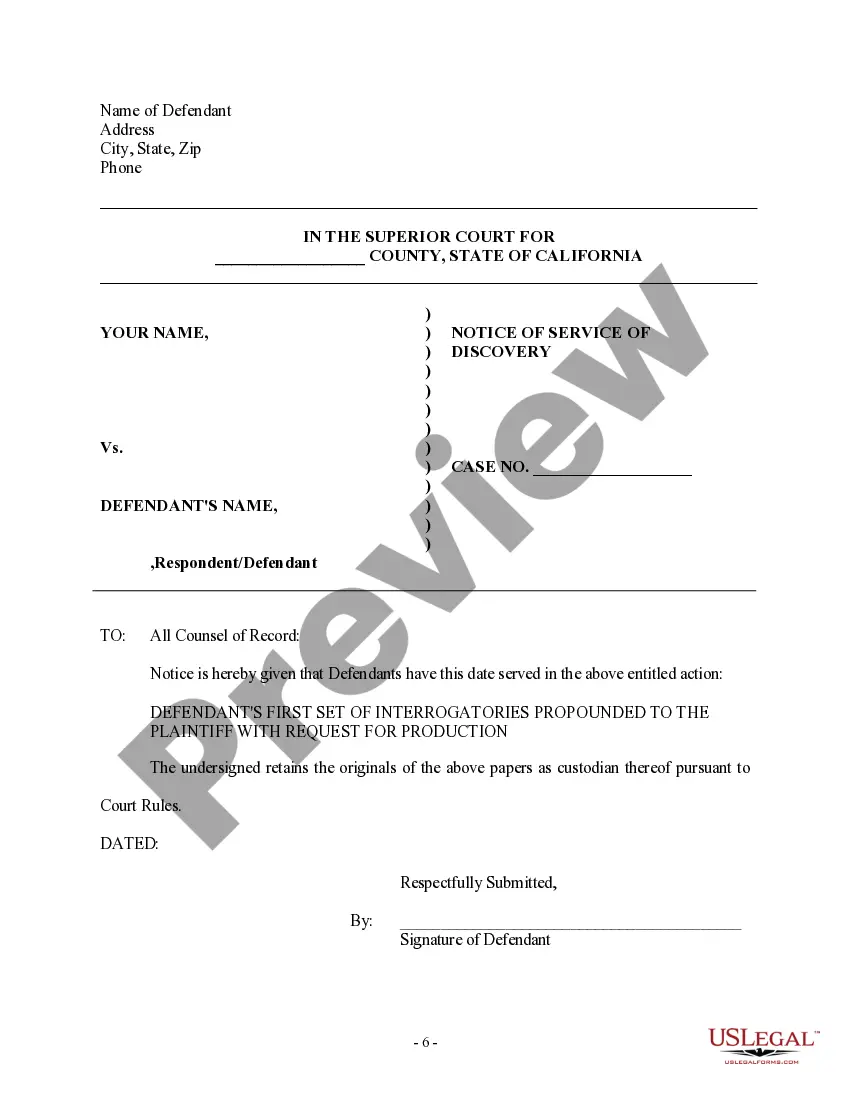
- Notice of filing: A formal notification document to be filed with the court clerk.
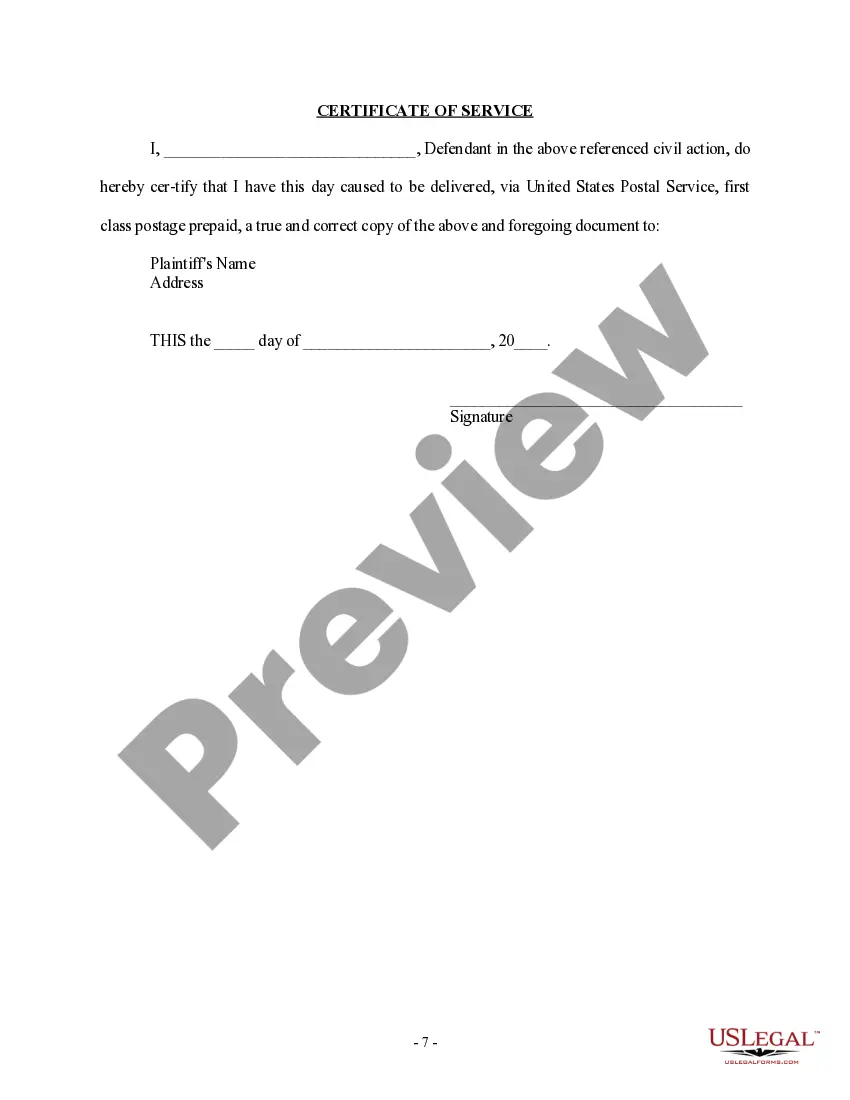
- Certification of service: A declaration that the Defendant has served the interrogatories to the Plaintiff.

When to use this form
This form should be used during a divorce action when the Defendant needs to gather specific information from the Plaintiff. It is particularly useful when there are disputes concerning finances, assets, or circumstances surrounding the divorce. Utilizing this form can help clarify issues that may arise during the proceedings and assist in preparing for potential trial.
Who this form is for
- Defendants in divorce proceedings seeking information from the Plaintiff.
- Attorneys representing clients in family law cases.
- Individuals with limited legal knowledge wanting to ensure proper information gathering during divorce litigation.
Completing this form step by step
- Identify the parties: Fill in the names and contact information of both the Defendant and Plaintiff.
- Answer interrogatories: The Plaintiff must respond to each interrogatory in writing and under oath.
- Gather supporting documents: Attach all requested documents, such as tax returns and asset lists, to the responses.
- File the form: Submit the completed Discovery Interrogatories with the relevant court clerk.
- Serve the Plaintiff: Ensure a copy of the interrogatories and notice of filing is delivered to the Plaintiff in a timely manner.
Does this document require notarization?
Notarization is generally not required for this form. However, certain states or situations might demand it. You can complete notarization online through US Legal Forms, powered by Notarize, using a verified video call available anytime.
Get your form ready online
Our built-in tools help you complete, sign, share, and store your documents in one place.
Make edits, fill in missing information, and update formatting in US Legal Forms—just like you would in MS Word.
Download a copy, print it, send it by email, or mail it via USPS—whatever works best for your next step.
Sign and collect signatures with our SignNow integration. Send to multiple recipients, set reminders, and more. Go Premium to unlock E-Sign.
If this form requires notarization, complete it online through a secure video call—no need to meet a notary in person or wait for an appointment.
We protect your documents and personal data by following strict security and privacy standards.

Make edits, fill in missing information, and update formatting in US Legal Forms—just like you would in MS Word.

Download a copy, print it, send it by email, or mail it via USPS—whatever works best for your next step.

Sign and collect signatures with our SignNow integration. Send to multiple recipients, set reminders, and more. Go Premium to unlock E-Sign.

If this form requires notarization, complete it online through a secure video call—no need to meet a notary in person or wait for an appointment.

We protect your documents and personal data by following strict security and privacy standards.
Common mistakes
- Failing to answer all interrogatories completely and accurately.
- Not filing the documents with the court or serving the Plaintiff properly.
- Neglecting to keep copies of all served documents for personal records.
- Omitting to supplement answers if new information arises before the trial.
Benefits of using this form online
- Convenient access: Downloadable forms save time and provide immediate assistance.
- Editability: Users can customize the form to fit their specific case needs.
- Professional drafting: Forms are created by licensed attorneys to ensure legal validity.
- Easy navigation: Clear instructions help simplify the completion of complex legal paperwork.
Legal use & context
- The interrogatories are used to gather necessary evidence during the discovery phase of divorce litigation.
- Failure to respond adequately to these requests can impact the outcome of the case.
- This form is enforceable in court, provided it follows legal standards and requirements as outlined by California law.
Looking for another form?

Form popularity
FAQ
In California, the standard limit for interrogatories is set at 35, according to the discovery rules. This limit applies to the total number of interrogatories served by one party to another, which includes all parts and subparts of the questions. Hence, when utilizing California Discovery Interrogatories from Defendant to Plaintiff with Production Requests, it's vital to count not just the main questions but also any follow-up inquiries. To efficiently navigate this process, consider leveraging platforms like US Legal Forms for customized and compliant interrogatory templates.
When crafting California Discovery Interrogatories from Defendant to Plaintiff with Production Requests, certain topics are off-limits. You cannot ask questions that invade a person's privacy, seek privileged information, or are irrelevant to the case at hand. This ensures that the discovery process remains fair and focused. Consequently, it's crucial to design your interrogatories with care to avoid objectionable inquiries.
The rule of 35 in California pertains to the limitations placed on discovery requests, specifically regarding the number of special interrogatories you can submit. This rule allows for a maximum of 35 interrogatories to be served, aimed at streamlining the discovery process. Therefore, when using California Discovery Interrogatories from Defendant to Plaintiff with Production Requests, it's essential to prioritize your inquiries to stay within this limit. By understanding these restrictions, you can strategically gather the necessary information to support your case.
Requests for production are not considered interrogatories; they serve different purposes in the discovery process. While interrogatories are written questions that a party must answer, requests for production ask for specific documents or physical items relevant to the case. When you use California Discovery Interrogatories from Defendant to Plaintiff with Production Requests, it's important to understand the distinction to file them correctly. Uslegalforms offers comprehensive tools to help you manage both types of discovery requests efficiently.
The rule of 35 interrogatories in California limits a party to serving a total of 35 interrogatories to another party in a single action. This helps manage the discovery process and prevents overwhelming the opposing party with excessive questions. When working with California Discovery Interrogatories from Defendant to Plaintiff with Production Requests, this rule ensures that both sides focus on the most pertinent questions. Uslegalforms can provide resources that help you navigate these limitations effectively.
In California, a plaintiff can serve discovery on a defendant once the defendant has answered the complaint. This timing is crucial, as it allows both parties to exchange information that can affect the outcome of the case. The California Discovery Interrogatories from Defendant to Plaintiff with Production Requests are particularly important during this phase, helping clarify issues and promoting settlement discussions. Consider uslegalforms to access templates and guidelines tailored for your specific needs.
The request for production rule in California allows a party to request documents and other tangible items that are relevant to the case. This rule is essential in the discovery process, as it helps both parties gather the necessary evidence. For California Discovery Interrogatories from Defendant to Plaintiff with Production Requests, you can seek documents that support your claims or defenses. Utilizing a platform like uslegalforms can streamline this process, ensuring you comply with all legal requirements.
The four main parts of discovery include interrogatories, requests for production, depositions, and requests for admissions. Each part plays a distinct role in gathering information and evidence before trial. California Discovery Interrogatories from Defendant to Plaintiff with Production Requests enables a targeted approach to obtain necessary documents and clarify facts. Understanding these components can empower you to handle your case more effectively.
Filling out a California interrogatories form involves careful attention to detail and clarity. You need to ensure you answer every interrogatory completely, using plain language to convey your responses clearly. If you're uncertain about how to proceed, utilizing platforms like uslegalforms can streamline the process. They provide templates and guidance, making it easier to navigate California Discovery Interrogatories from Defendant to Plaintiff with Production Requests effectively.
Several components make up the discovery process, including California Discovery Interrogatories from Defendant to Plaintiff with Production Requests, depositions, and requests for admissions. Each of these tools serves to uncover vital information about the case. Engaging in discovery helps all parties understand the facts and the evidence available. Familiarity with these elements can enhance your legal strategy.