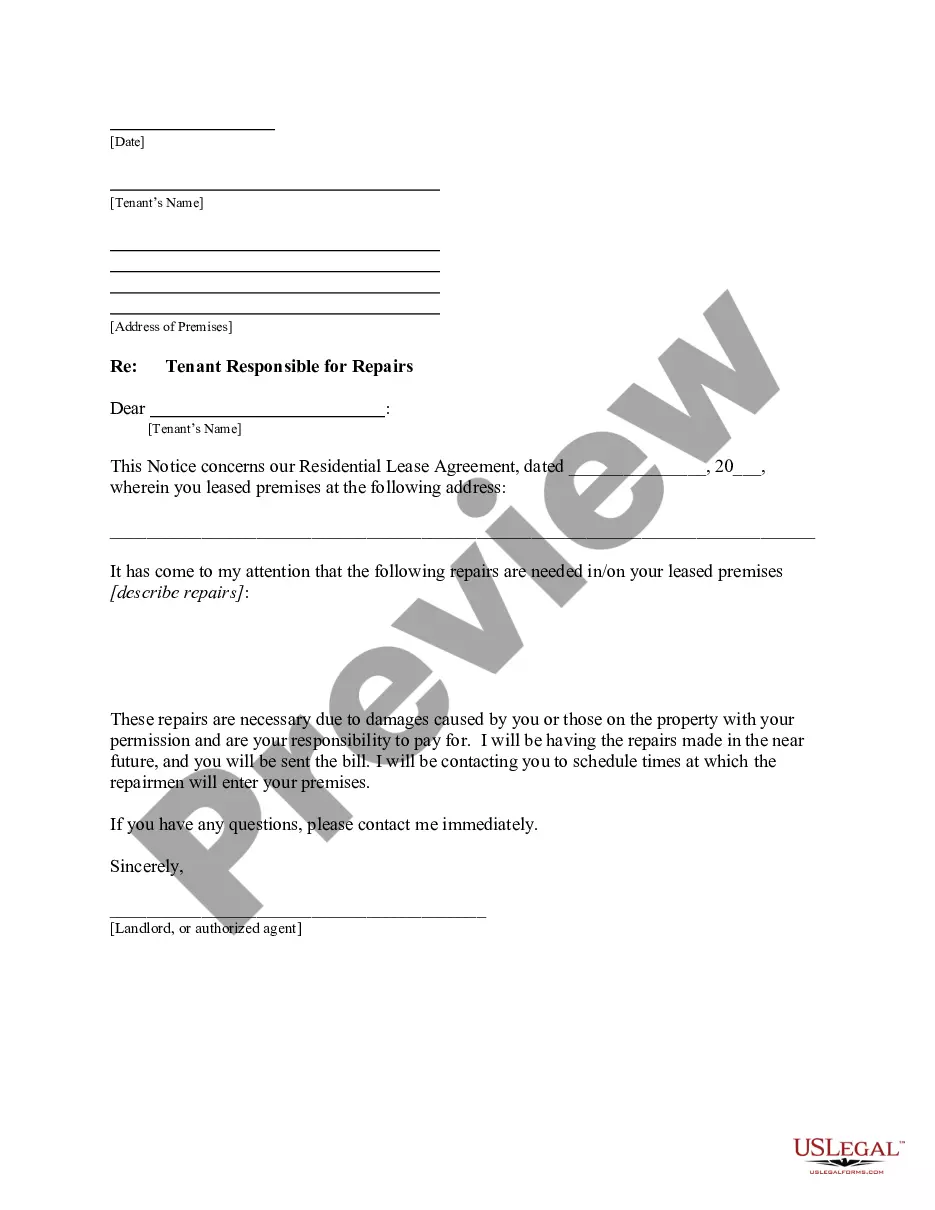
Mississippi Summons and Return
What is this form?
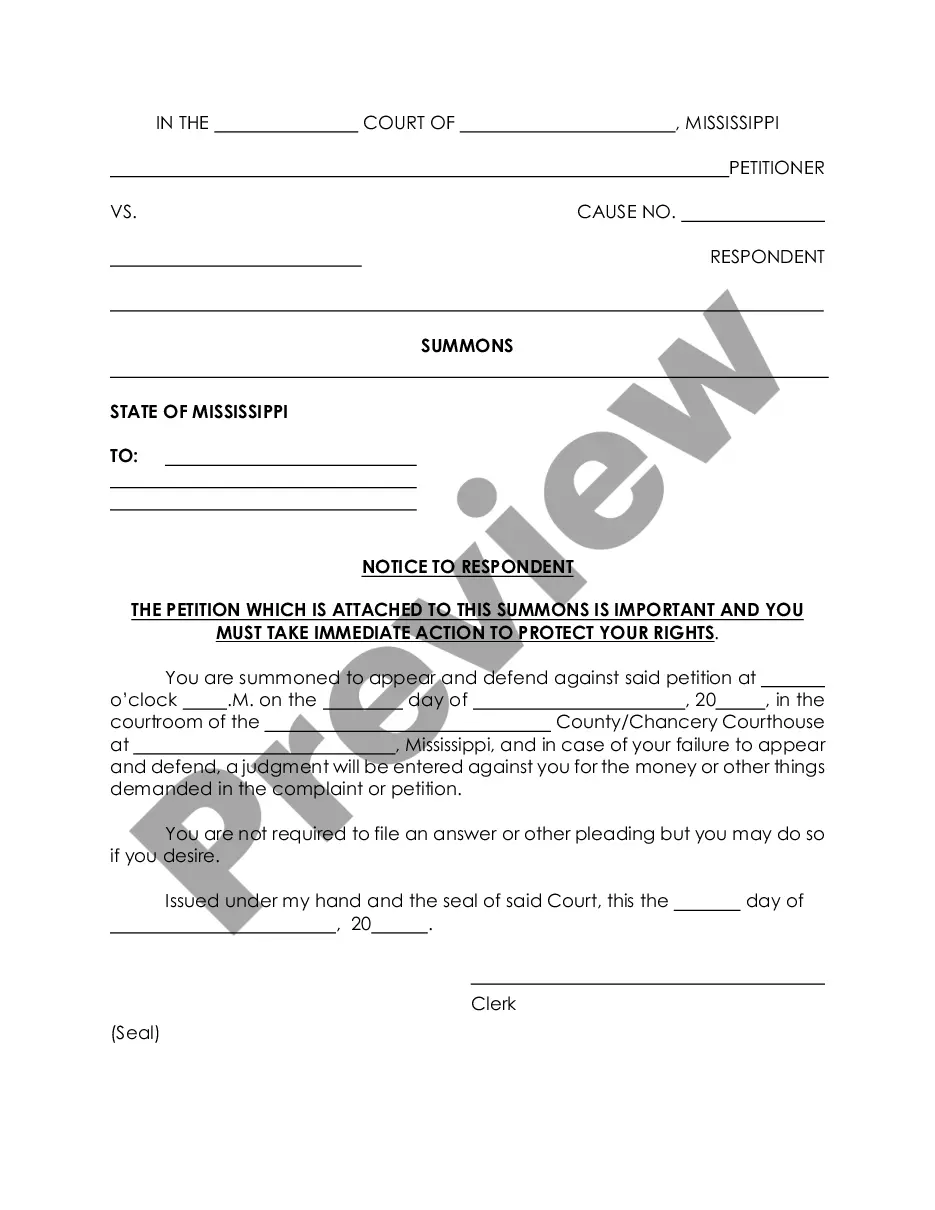
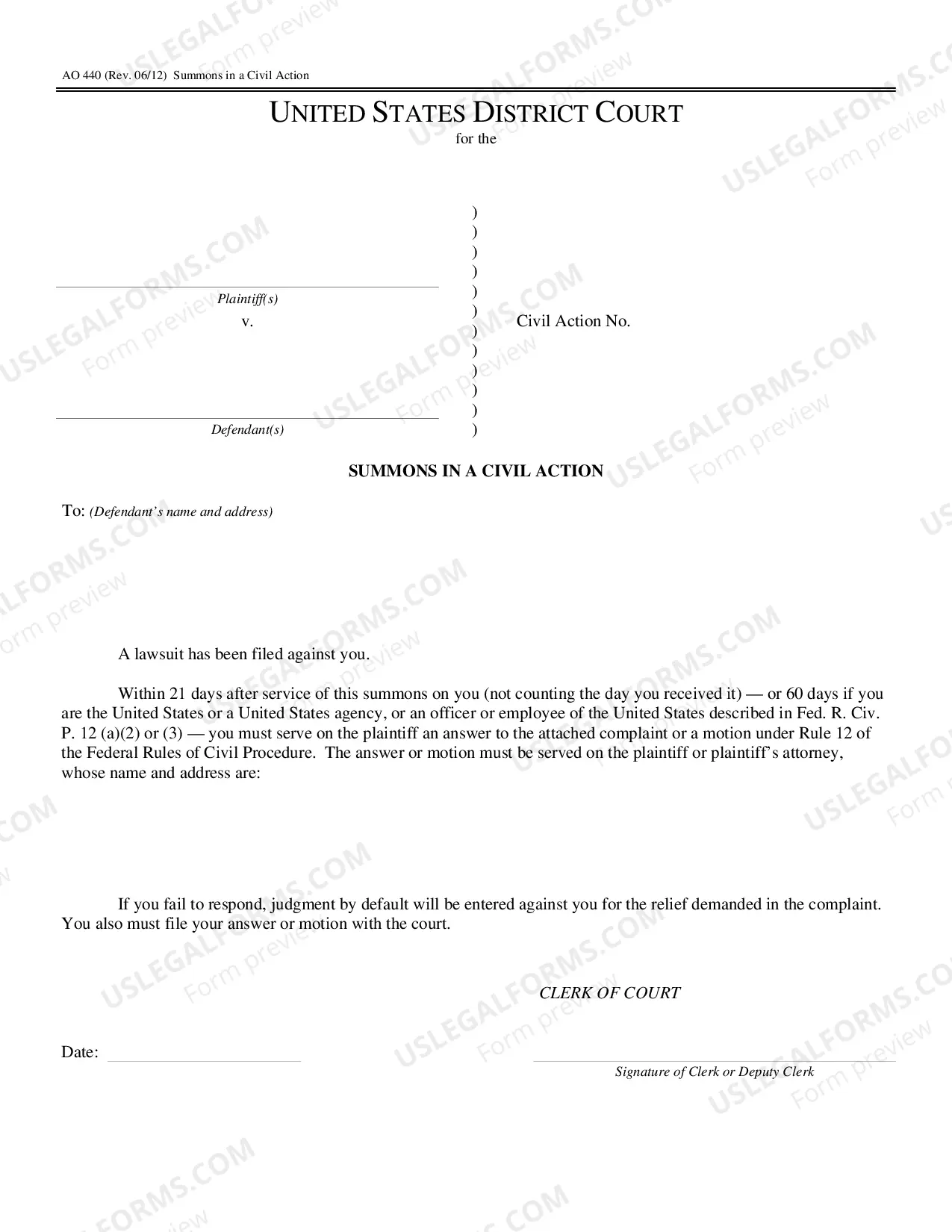
The Summons and Return form is an essential legal document used in domestic abuse cases in Mississippi. It serves as a notice to the respondent that they must appear in court to defend against allegations made in a petition for a Domestic Abuse Protective Order. This form differs from other summons because it is specifically related to cases of domestic violence, ensuring that the respondent is informed of the legal action and the importance of their participation in the proceedings.
Key parts of this document
- Court information: Details about the court handling the case.
- Petitioner and respondent names: Identification of both parties involved.
- Summons notice: Instructions for the respondent regarding their court appearance.
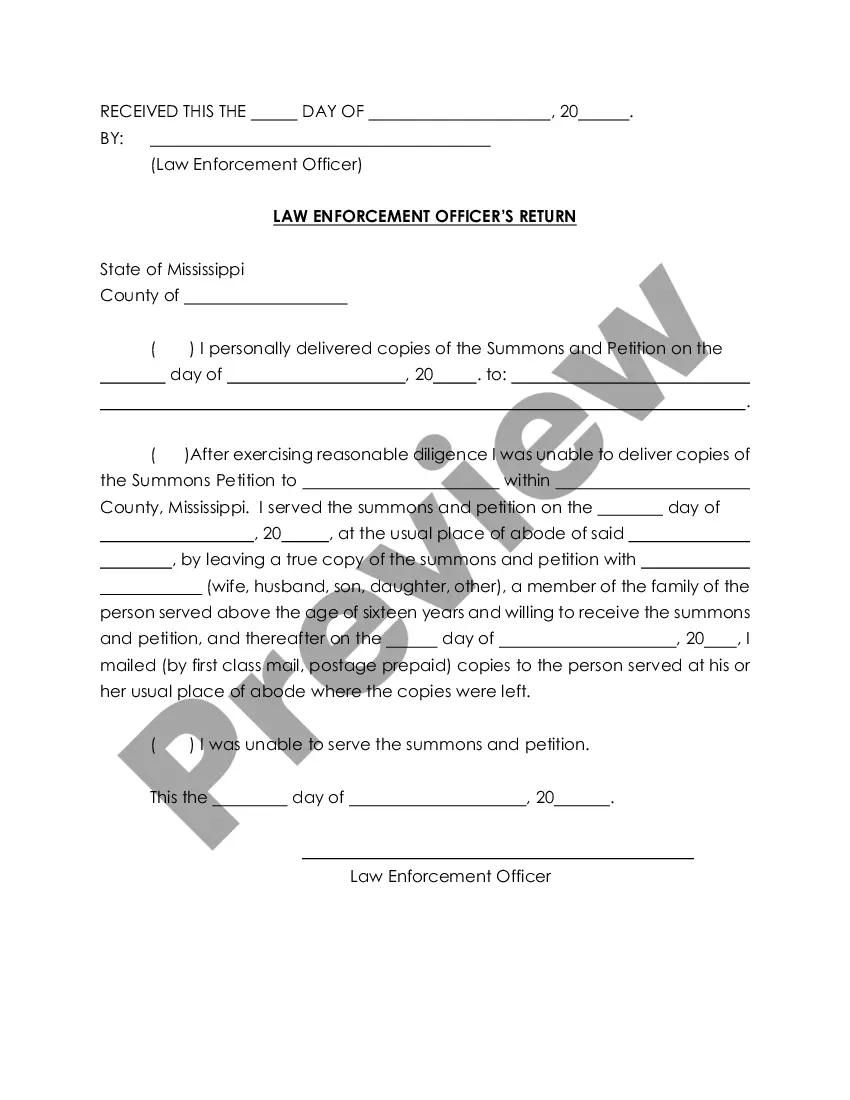
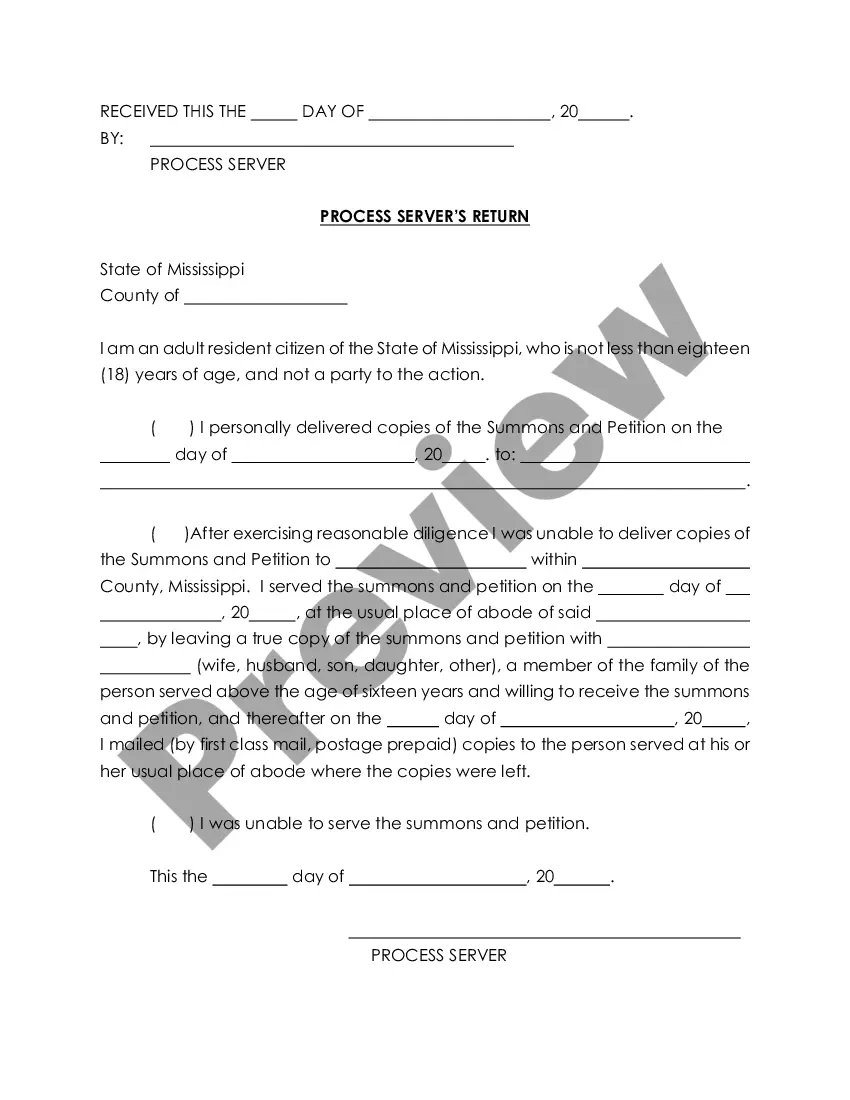
- Return of service section: Documentation of how and when the summons was delivered.
- Law enforcement officer's return: Record of service completion by a law enforcement officer or process server.
When to use this form
This form should be used when a petitioner seeks a Domestic Abuse Protective Order and needs to initiate legal proceedings. It is necessary to file this summons alongside the petition to inform the respondent of the allegations against them and to require their presence in court. Immediate action is essential to ensure that the respondent can defend their rights before the court.
Who needs this form
This form is intended for:
- Individuals filing for a Domestic Abuse Protective Order in Mississippi.
- Petitioners who need to formally notify a respondent of legal proceedings against them.
- Law enforcement officers or process servers responsible for delivering legal documents.
How to prepare this document
- Fill in the name and location of the court where the petition is filed.
- Enter the names of the petitioner and respondent accurately.
- Specify the date, time, and location for the court appearance.
- Complete the return of service section to document the delivery of the summons.
- Ensure all sections are signed by the appropriate authorities, including the Clerk of Court.
Does this form need to be notarized?
This form does not typically require notarization unless specified by local law. However, having it notarized can be beneficial as it adds an extra layer of legal verification to the document.
Get your form ready online
Our built-in tools help you complete, sign, share, and store your documents in one place.
Make edits, fill in missing information, and update formatting in US Legal Forms—just like you would in MS Word.
Download a copy, print it, send it by email, or mail it via USPS—whatever works best for your next step.
Sign and collect signatures with our SignNow integration. Send to multiple recipients, set reminders, and more. Go Premium to unlock E-Sign.
If this form requires notarization, complete it online through a secure video call—no need to meet a notary in person or wait for an appointment.
We protect your documents and personal data by following strict security and privacy standards.

Make edits, fill in missing information, and update formatting in US Legal Forms—just like you would in MS Word.

Download a copy, print it, send it by email, or mail it via USPS—whatever works best for your next step.

Sign and collect signatures with our SignNow integration. Send to multiple recipients, set reminders, and more. Go Premium to unlock E-Sign.

If this form requires notarization, complete it online through a secure video call—no need to meet a notary in person or wait for an appointment.

We protect your documents and personal data by following strict security and privacy standards.
Avoid these common issues
- Failing to include all necessary court information.
- Omitting the date and time of the court hearing.
- Not properly completing the return of service section.
- Providing incorrect names or details for the parties involved.
Advantages of online completion
- Convenient access from anywhere at any time.
- Ability to edit the form easily before downloading.
- Reliability, as forms are drafted by licensed attorneys to meet legal standards.
Looking for another form?


Form popularity
FAQ
What if the person being served refuses to accept the papers? In most cases, a defendant or target does not have to formally accept service in order for it to be considered effective. If the defendant comes to the door but refuses the papers, the process server may just have to leave them at their feet and walk away.
Search online to find someone to serve the summons. Put the words process server and the name of the state or country where the defendant lives. Ask your local sheriff's office to help.
If you are suing someone from a different state, a court in your state may not have power or "jurisdiction" over that person. In that case, you might have to sue the defendant in his or her location, which will probably be more expensive and inconvenient for you.
When a process server is unable to leave the documents with the defendant, they can sometimes serve the papers on another person. Leaving the papers with somebody who is not the defendant is called substitute service, or just subservice.
Provide the name of the court at the top of the Answer. You can find the information on the summons. List the name of the plaintiff on the left side. Write the case number on the right side of the Answer. Address the Judge and discuss your side of the case. Ask the judge to dismiss the case.
When the party that has to be served lives out of state, papers can usually be served by sending a copy of the paperwork to be served to that party by first-class mail, postage prepaid, and return receipt requested. The person who mails the papers must be at least 18 and NOT a party to the case.
Serving process across state lines can be tricky. Some states recognize the Uniform Interstate Deposition and Discovery Act, which makes the process easy. Others do not, and there are more steps that must be taken before a subpoena or other legal document can be served upon its recipient.
Current filing fees are: In district court, the fee for defendant's first filing is typically $223.00, but that might vary depending on the type of case. To verify your filing fee, click to visit Filing Fees and Waivers. In justice court, the fee for defendant's first filing is typically $71.