Motion State Garnishment With Stop
Description
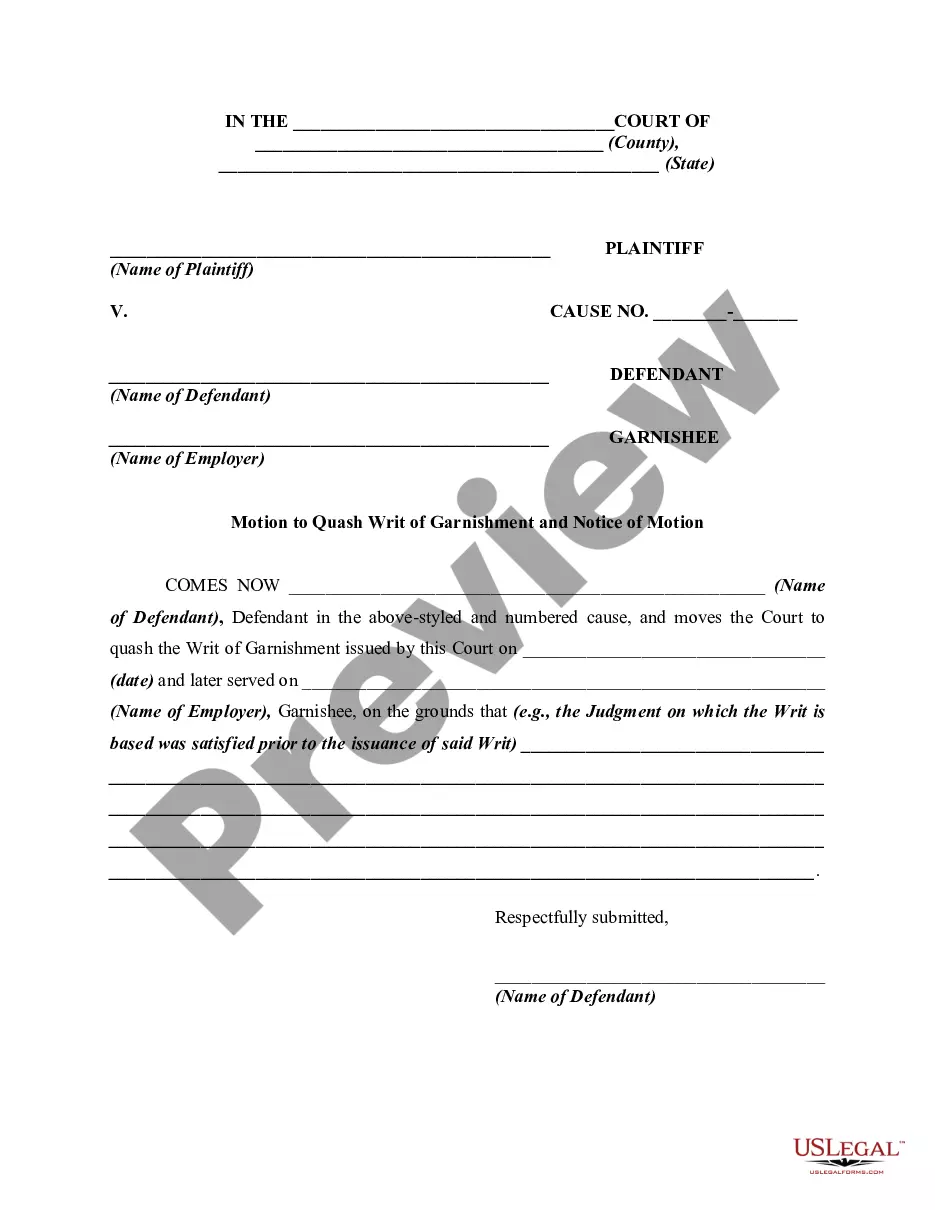
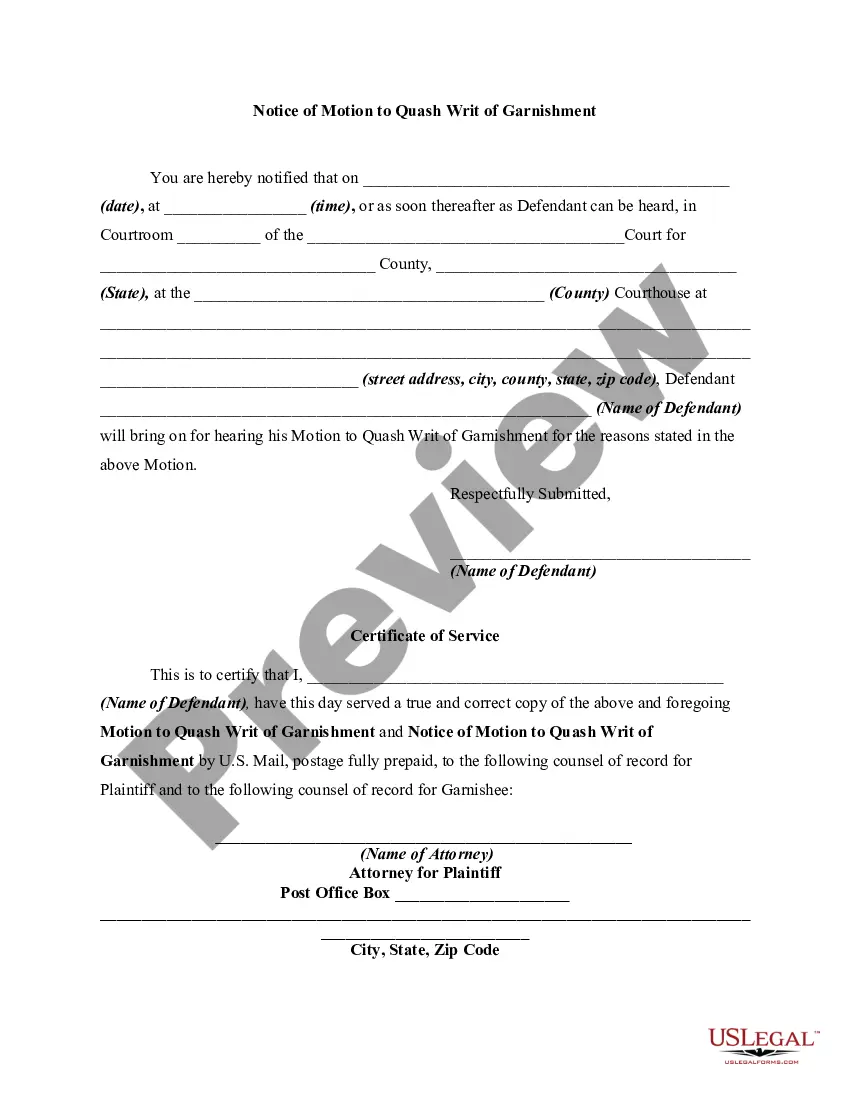
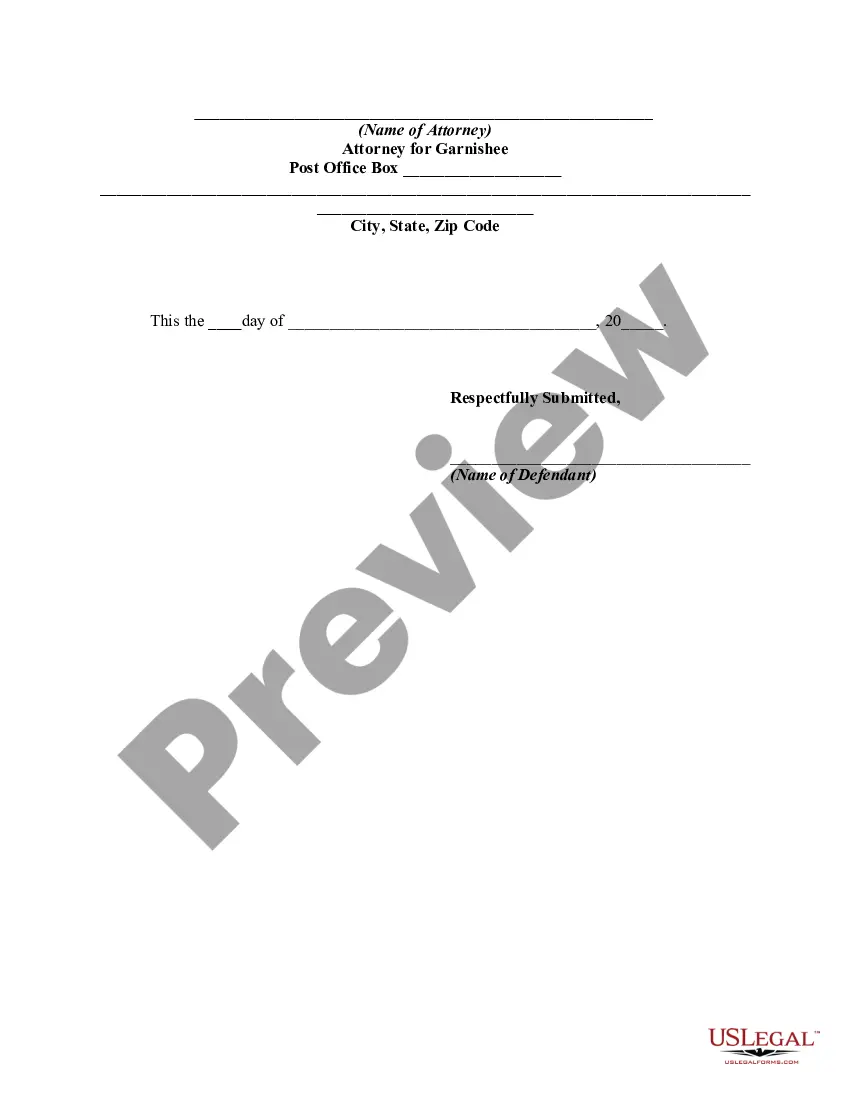
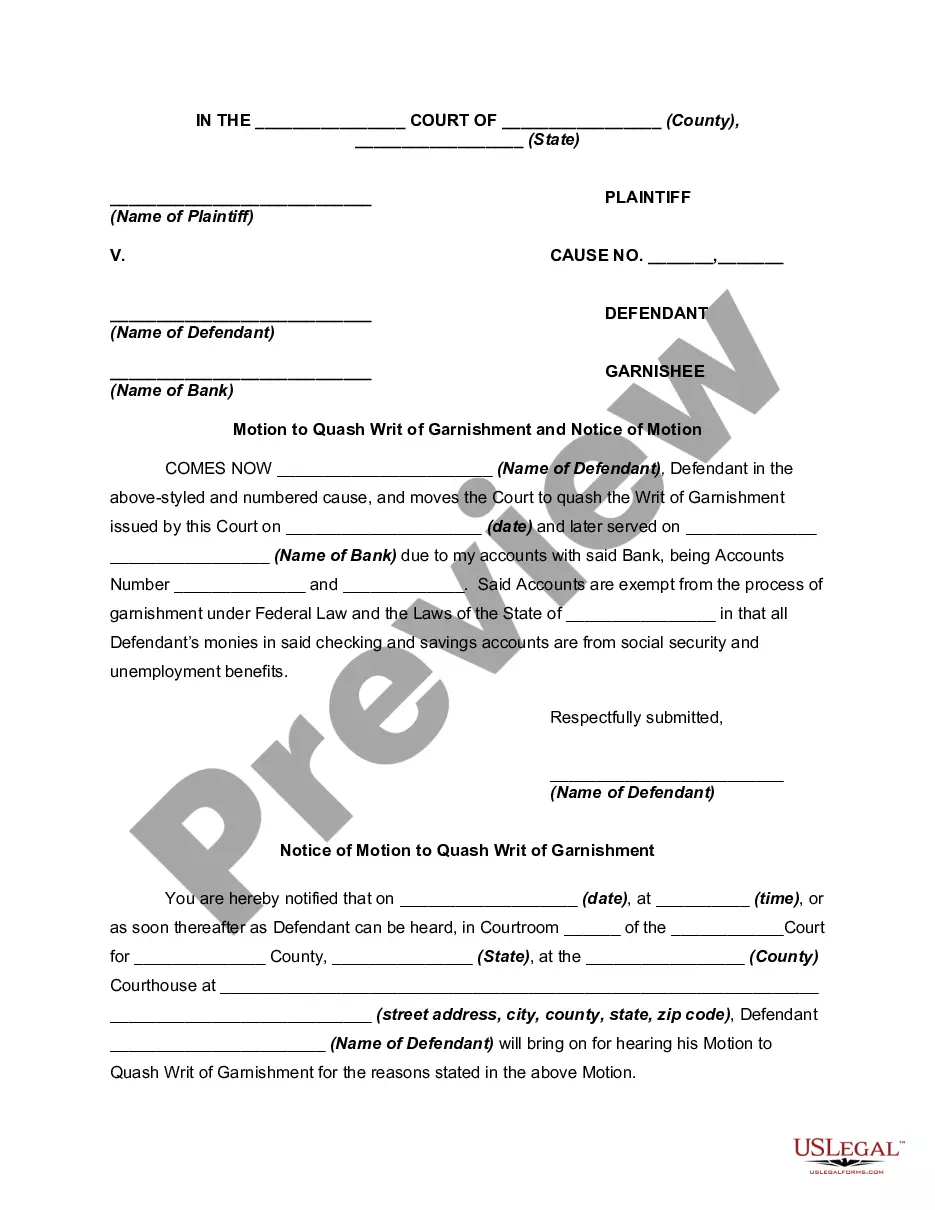
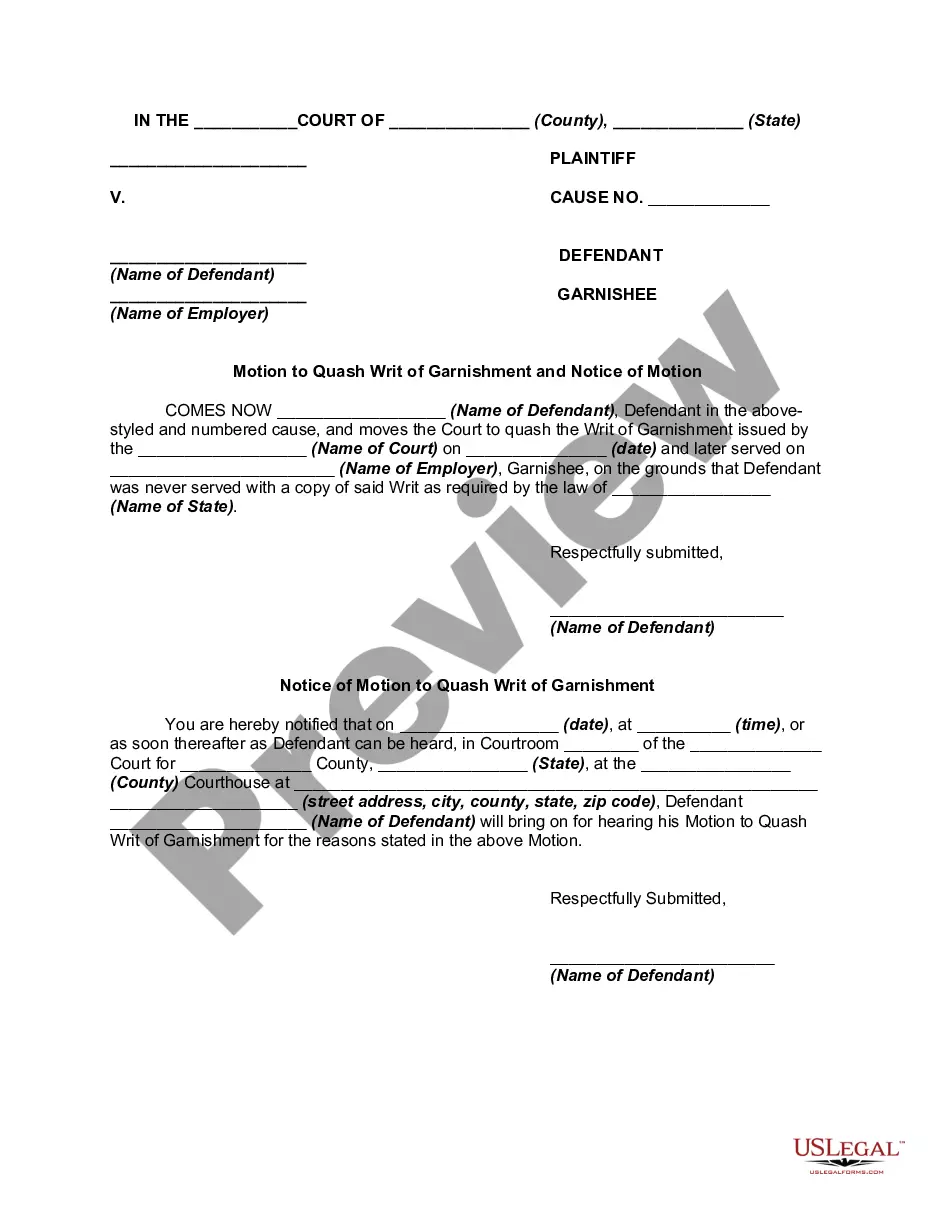
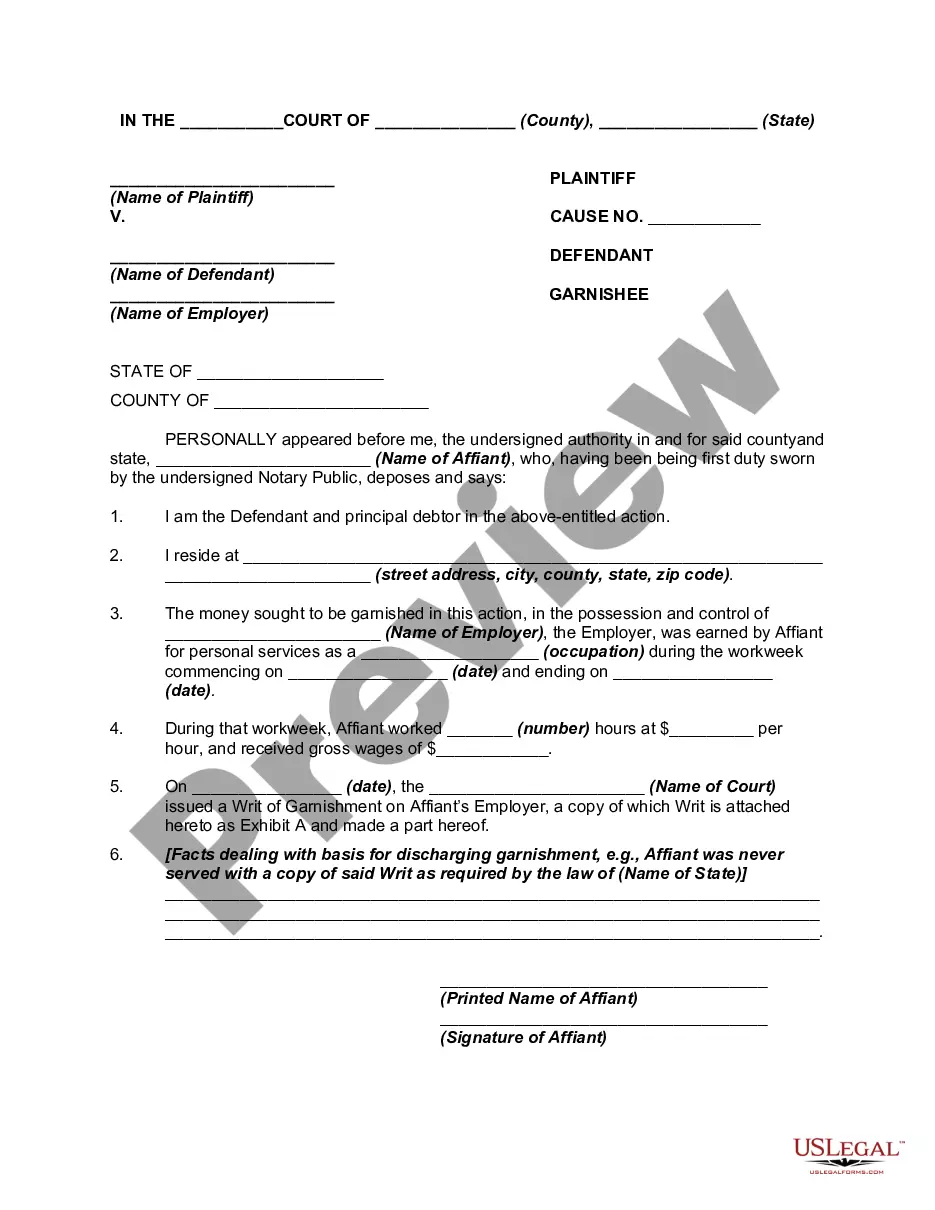
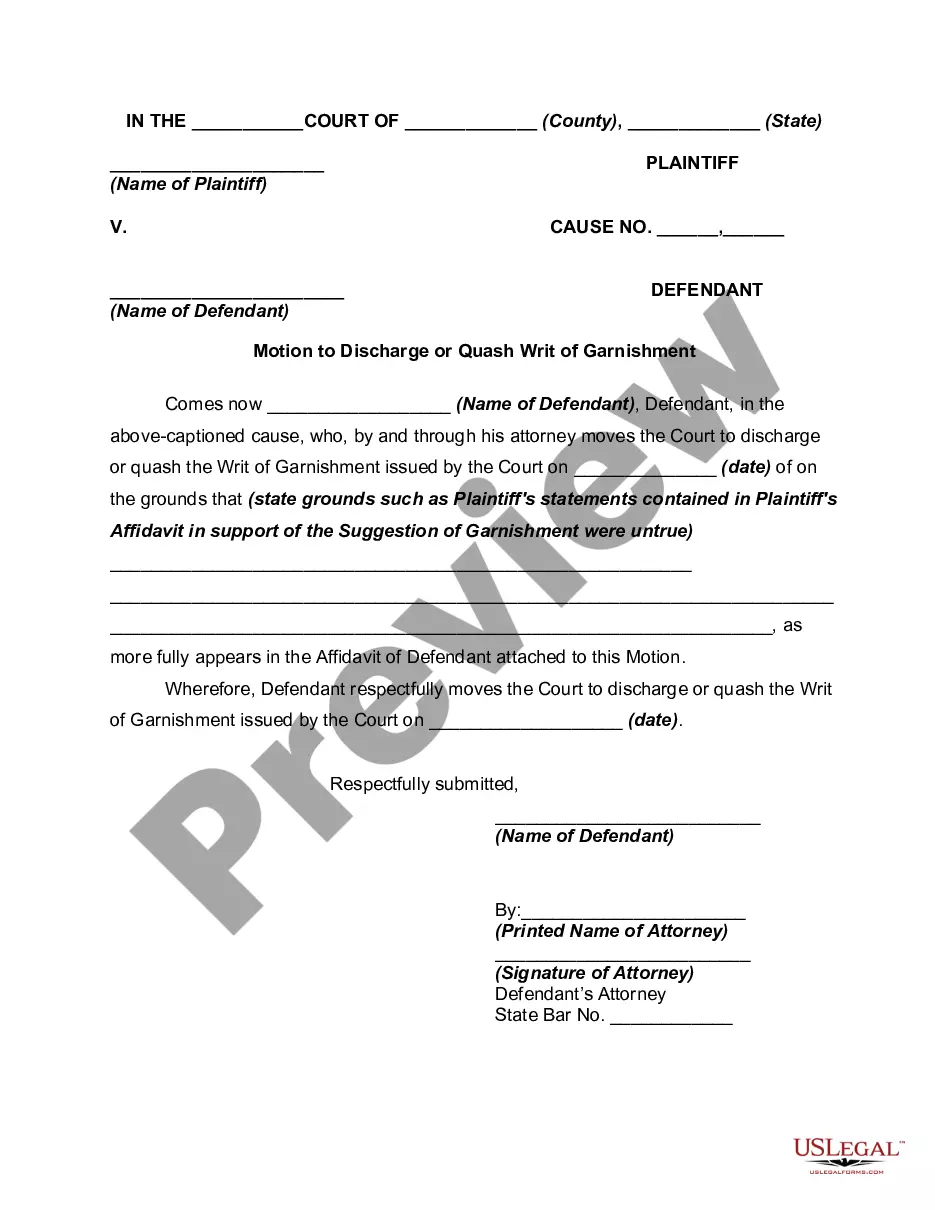
Get your form ready online
Our built-in tools help you complete, sign, share, and store your documents in one place.
Make edits, fill in missing information, and update formatting in US Legal Forms—just like you would in MS Word.
Download a copy, print it, send it by email, or mail it via USPS—whatever works best for your next step.
Sign and collect signatures with our SignNow integration. Send to multiple recipients, set reminders, and more. Go Premium to unlock E-Sign.
If this form requires notarization, complete it online through a secure video call—no need to meet a notary in person or wait for an appointment.
We protect your documents and personal data by following strict security and privacy standards.

Make edits, fill in missing information, and update formatting in US Legal Forms—just like you would in MS Word.

Download a copy, print it, send it by email, or mail it via USPS—whatever works best for your next step.

Sign and collect signatures with our SignNow integration. Send to multiple recipients, set reminders, and more. Go Premium to unlock E-Sign.

If this form requires notarization, complete it online through a secure video call—no need to meet a notary in person or wait for an appointment.

We protect your documents and personal data by following strict security and privacy standards.
Looking for another form?







How to fill out Motion Of Defendant To Discharge Or Quash Writ Of Garnishment And Notice Of Motion?
Regardless of whether it's for professional reasons or personal matters, individuals inevitably face legal situations at some stage in their lives. Completing legal documents requires meticulous attention, starting from selecting the appropriate form template. For instance, if you choose an incorrect version of a Motion State Garnishment With Stop, it will be denied upon submission. Thus, it's essential to have a trustworthy source for legal documents like US Legal Forms.
In case you want to acquire a Motion State Garnishment With Stop template, adhere to these straightforward guidelines.
With a vast US Legal Forms catalog available, you won't have to waste time searching for the correct sample online. Utilize the library’s straightforward navigation to find the right form for any circumstance.
- Locate the sample you require by using the search bar or catalog navigation.
- Review the form’s details to confirm it suits your case, state, and county.
- Click on the form’s preview to inspect it.
- If it is the wrong form, return to the search option to find the Motion State Garnishment With Stop template you need.
- Obtain the file if it meets your requirements.
- If you already possess a US Legal Forms account, simply click Log in to access previously saved templates in My documents.
- If you haven’t created an account yet, you can download the form by clicking Buy now.
- Choose the appropriate pricing option.
- Complete the account registration form.
- Select your payment method: you can use a credit card or PayPal account.
- Pick the document format you wish and download the Motion State Garnishment With Stop.
- After downloading, you can complete the form using editing software or print it out and finish it by hand.
Form popularity
FAQ
To write a letter to stop a garnishment, begin by clearly stating your intention to halt the motion state garnishment with stop. Include your name, address, and details about the garnishment in question, such as the creditor's name and the court case number. Attach any documentation that supports your request, such as proof of hardship or a settlement agreement. Finally, send the letter to both the creditor and the court, and consider using a method that provides confirmation of delivery.
While avoiding wage garnishment entirely is challenging, there are options available to mitigate its effects. You can negotiate with creditors or file for bankruptcy as a last resort. Consulting with a professional can help you explore motions state garnishment with stop and other strategies to regain control over your finances.
The most effective way to stop wage garnishment is to file a motion state garnishment with stop in the appropriate court. This motion can either contest the validity of the garnishment or negotiate a payment plan. Additionally, working with services like US Legal Forms can guide you through this process and ensure that you take the right steps to protect your earnings.
A motion to dismiss the garnishment action is a legal request to stop the garnishment process altogether. This motion can challenge the legality of the garnishment based on specific grounds, such as improper notice or errors in the initial judgment. If approved, this motion can provide significant relief, so it's important to seek legal advice regarding motions state garnishment with stop.
In Minnesota, garnishment laws define the specific limits on what can be taken from your wages to satisfy a debt. Generally, creditors cannot garnish more than 25% of your disposable earnings. You can also file a motion state garnishment with stop to challenge or reduce this amount. Understanding these regulations helps you protect your income.
To effectively write a letter to stop a garnishment, begin with a clear subject line indicating your intention. In the body, clearly state your reasons for requesting a motion state garnishment with stop, providing specific details about your case, like any errors or financial hardships you're experiencing. Make sure to include your contact information for any follow-up. Sending this letter promptly can help halt any further garnishment actions.
To request a payment plan that may stop a wage garnishment, contact the creditor or agency overseeing the garnishment. Explain your financial situation and propose a realistic payment plan. Emphasize your willingness to meet your obligations, focusing on how a motion state garnishment with stop could benefit both parties. Document your request and keep a record of all communications to ensure clarity and follow-up.
When writing an objection letter for wage garnishment, start by addressing the court or appropriate agency that issued the garnishment order. Clearly state your objection and provide details about the motion state garnishment with stop. Include any evidence that supports your claim, such as financial hardships or inaccuracies in the garnishment amount. Ensure you keep a copy for your records and send your letter via certified mail.
Responding to a wage garnishment letter requires prompt action. First, review the letter and gather any relevant information regarding the motion state garnishment with stop. Draft a response that outlines your reasons for contesting the garnishment or agreeing to a compromise, if applicable. Sending your response promptly helps ensure your rights are preserved and prevents unnecessary deductions from your wages.
To write a letter to stop a garnishment, begin by clearly stating your intention to halt the motion state garnishment with stop. Include your name, address, and account details to identify your situation. Be concise in explaining why you believe the garnishment should be stopped, and attach any supporting documents that reinforce your case. Finally, send the letter via certified mail to ensure it reaches the correct party.