Discharge Garnishment For Non Residents
Description
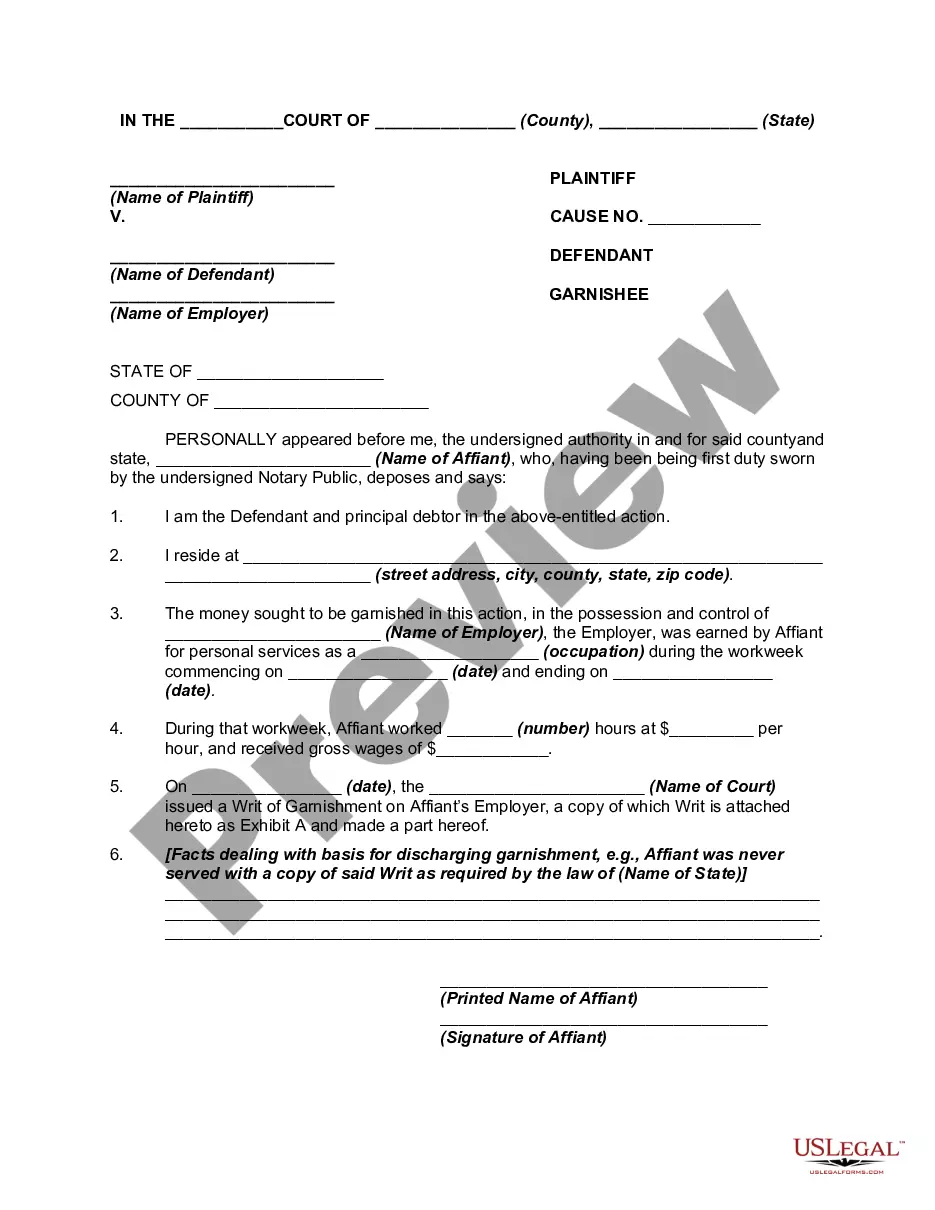
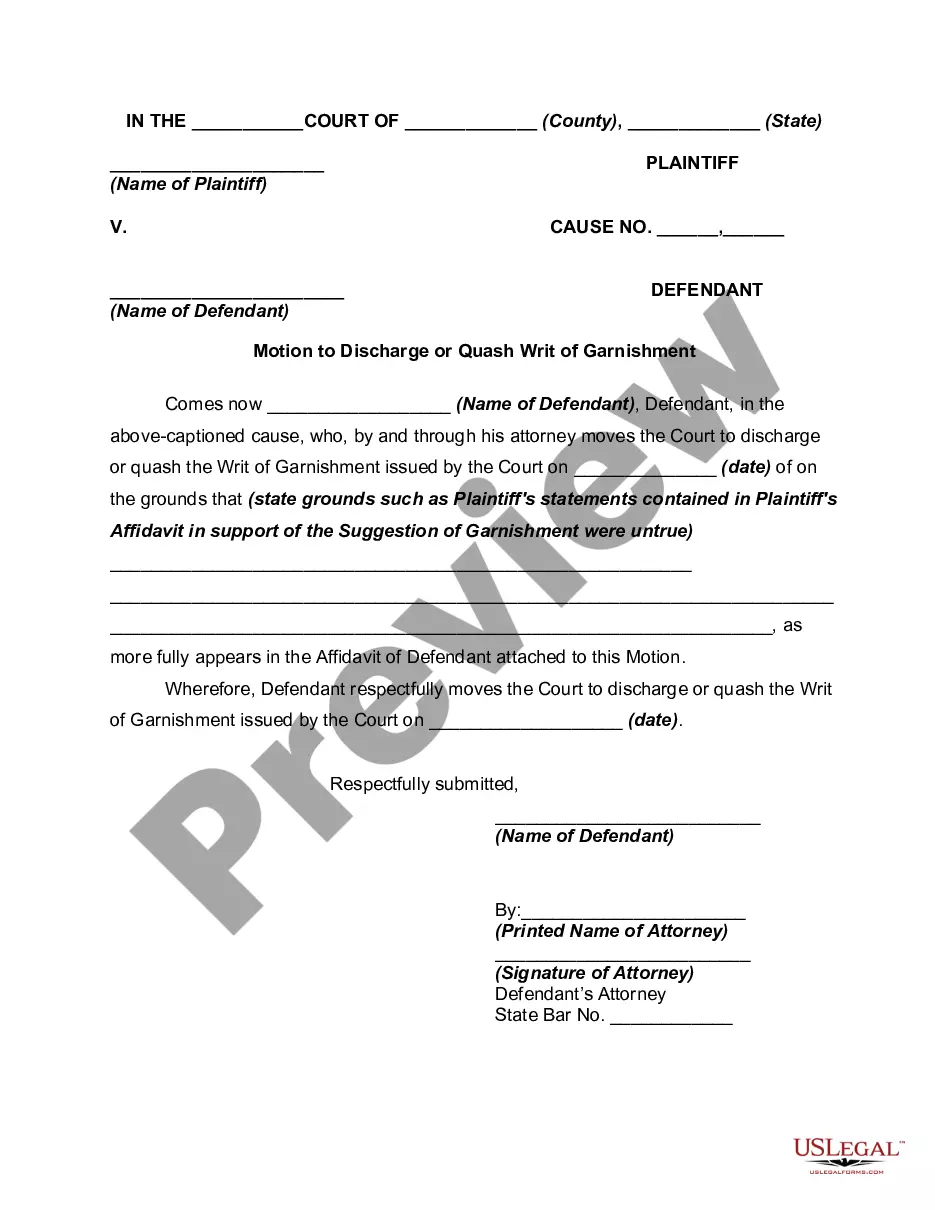
Get your form ready online
Our built-in tools help you complete, sign, share, and store your documents in one place.
Make edits, fill in missing information, and update formatting in US Legal Forms—just like you would in MS Word.
Download a copy, print it, send it by email, or mail it via USPS—whatever works best for your next step.
Sign and collect signatures with our SignNow integration. Send to multiple recipients, set reminders, and more. Go Premium to unlock E-Sign.
If this form requires notarization, complete it online through a secure video call—no need to meet a notary in person or wait for an appointment.
We protect your documents and personal data by following strict security and privacy standards.

Make edits, fill in missing information, and update formatting in US Legal Forms—just like you would in MS Word.

Download a copy, print it, send it by email, or mail it via USPS—whatever works best for your next step.

Sign and collect signatures with our SignNow integration. Send to multiple recipients, set reminders, and more. Go Premium to unlock E-Sign.

If this form requires notarization, complete it online through a secure video call—no need to meet a notary in person or wait for an appointment.

We protect your documents and personal data by following strict security and privacy standards.
Looking for another form?




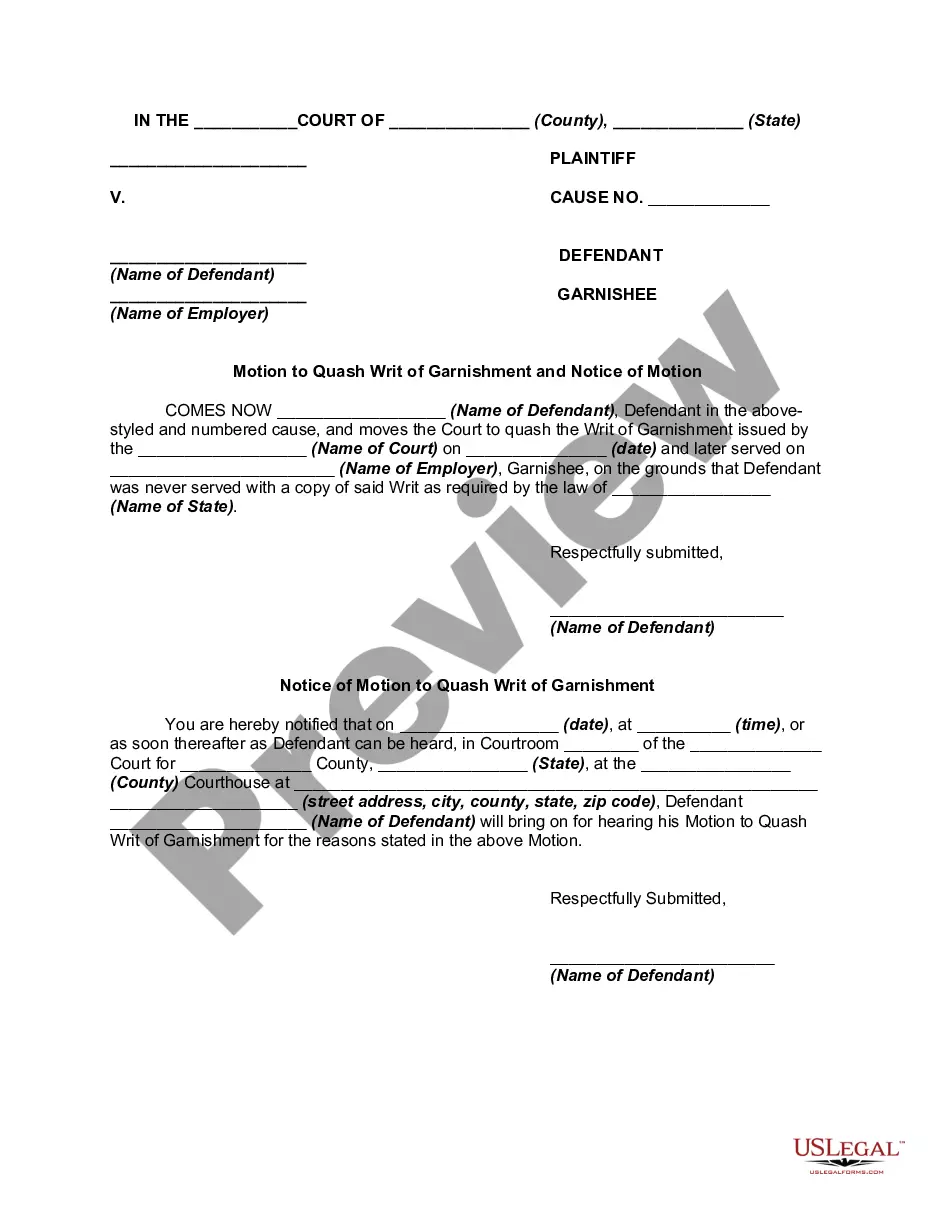
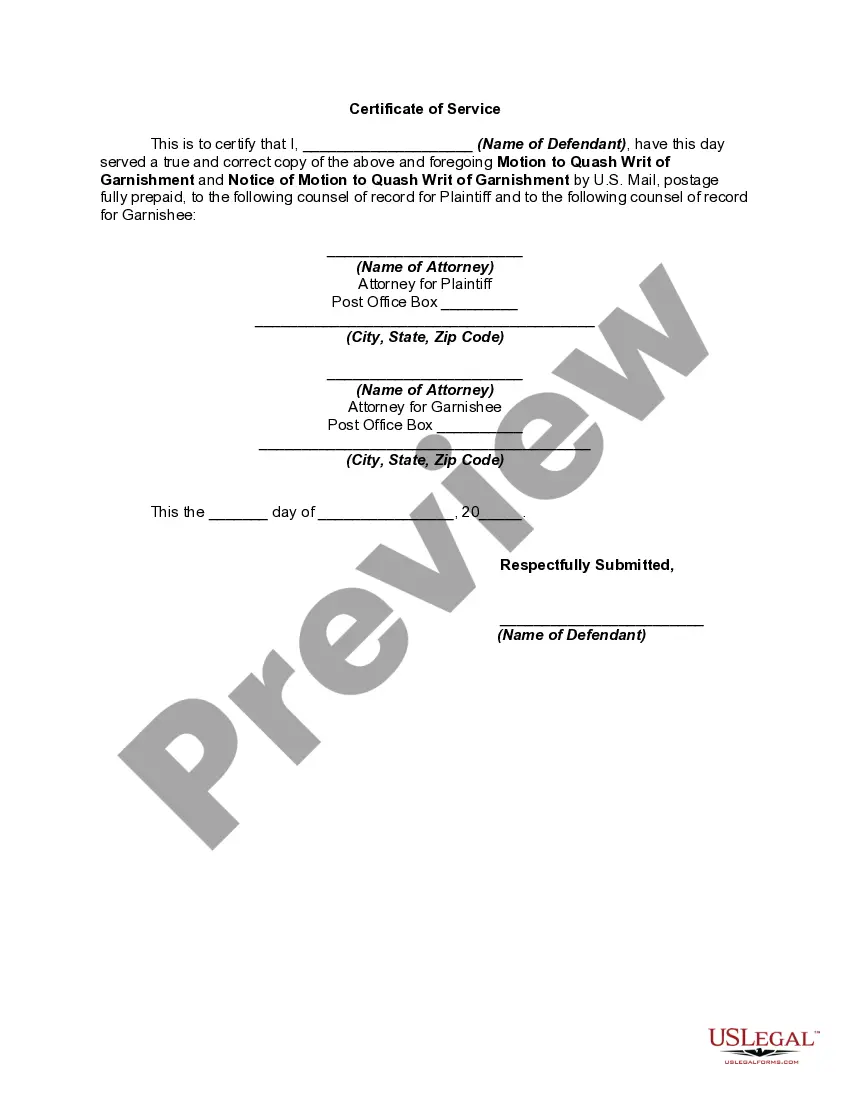
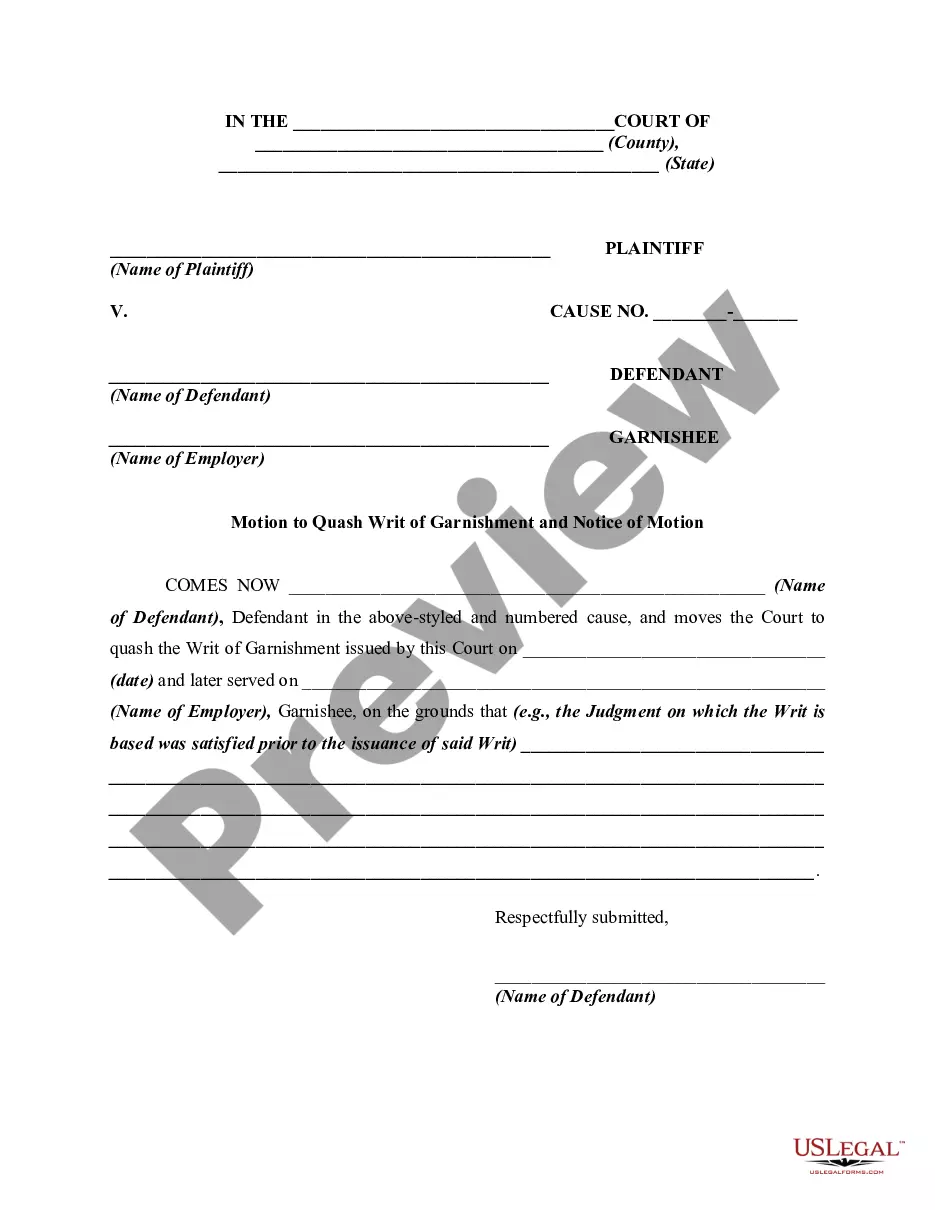
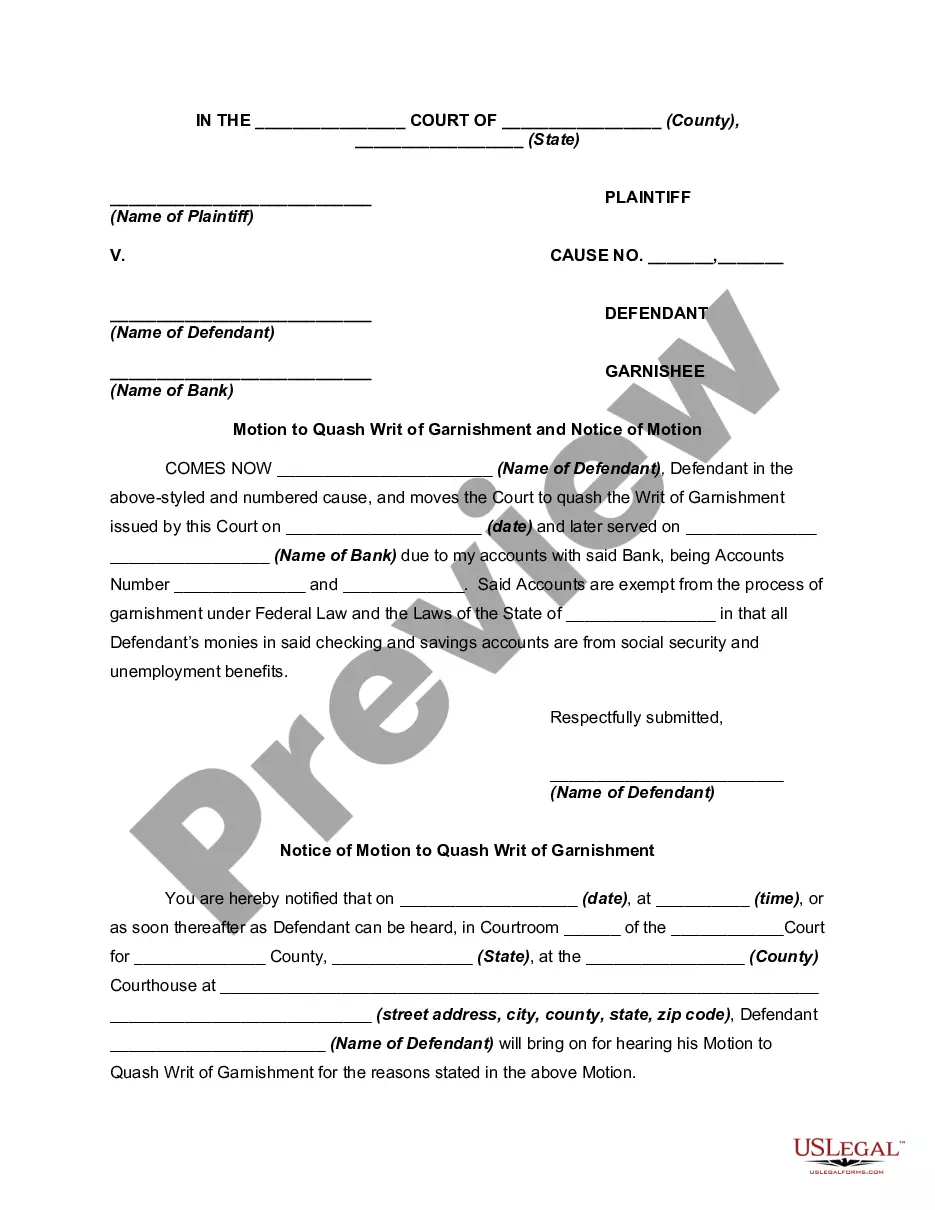
How to fill out Motion Of Defendant To Discharge Or Quash Writ Of Garnishment For Failure To Serve Copy Of Writ On Defendant And Notice Of Motion?
- If you are a returning user, log in to your account and locate the necessary template by selecting the Download button. Ensure your subscription is active; otherwise, renew it according to your plan.
- For new users, begin by previewing the form description to verify that it aligns with your requirements and local laws.
- If the form doesn't meet your needs, employ the Search tab to find a suitable alternative.
- After locating the correct document, click the Buy Now button and select your preferred subscription plan. Create an account to gain access to the extensive library.
- Complete your purchase using credit card information or your PayPal account to finalize the subscription.
- Download the form to your device, allowing you to fill it out and access it at any time through the My Forms section.
With US Legal Forms, you tap into a robust collection of over 85,000 editable legal forms, more than any competitor offers at a similar cost. This extensive library, coupled with access to premium experts for form completion assistance, ensures your documents are accurate and legally sound.
Don't let legal processes overwhelm you. Experience the convenience of US Legal Forms today and take control of your legal needs!
Form popularity
FAQ
Yes, garnishments can occur across state lines. If a creditor obtains a judgment in one state, they may seek to enforce it in another by garnishing wages or bank accounts. This can be particularly complicated for non-residents, making knowledge of discharge garnishment for non residents a necessity. To help you navigate these complexities, USLegalForms offers comprehensive resources and forms that can assist you in understanding your rights.
Certain states, such as Texas and North Carolina, have limitations on wage garnishment, making it challenging for creditors to access wages directly. However, even in states that restrict this practice, creditors may still pursue other legal means to collect debts. Understanding the nuances of discharge garnishment for non residents is vital in these scenarios. You can find valuable resources and information about state laws on USLegalForms.
Yes, your wages can still be garnished even if you were never officially served with court papers. This situation often arises in default judgments, where the court sides with the creditor based on the evidence they provide. It is essential to understand that non-residents may face different rules when it comes to discharge garnishment for non residents. To address this, you can consider using USLegalForms to navigate your options.
To fill out a wage garnishment exemption, begin by gathering your financial information, including income, expenses, and any applicable financial hardships. Clearly specify your grounds for exemption, addressing factors that qualify under the law, such as low income or essential expenses. Utilizing platforms like USLegalForms can provide you with the forms and guidance needed to effectively submit your exemption request for discharge garnishment for non residents.
Yes, in many cases, a creditor can garnish your wages without prior notice, as they secure a court judgment first. However, you should receive a notification after the garnishment has commenced. It is important to know your rights, particularly when dealing with discharge garnishment for non residents, as you may have legal avenues to contest it or apply for exemptions.
A garnishment may be considered invalid if it lacks proper court authorization, if the debt is disputed, or if the creditor does not follow legal procedures. Additionally, if you qualify for exemptions or if the amount deducted exceeds state limits, you can argue the garnishment is not valid. To explore your options for ensuring discharge garnishment for non residents, consider legal resources or forms from platforms like USLegalForms.
To fill out a challenge to a garnishment form, start by gathering information about your case, including court documents and details of the debt. Clearly state your reasons for challenging the garnishment, focusing on any legal grounds, such as inaccuracies in the debt amount or issues pertaining to discharge garnishment for non residents. If you need assistance, platforms like USLegalForms offer resources and guidance for this process.
To stop a wage garnishment immediately in New Jersey, you may file a motion with the court that issued the garnishment. Provide valid reasons for the discharge garnishment for non residents, such as financial hardship or incorrect debt. Additionally, consult an attorney or use platforms like USLegalForms to assist with the process and ensure you meet all legal requirements.
Yes, you can be garnished without being personally served court papers, depending on state laws. Sometimes creditors can obtain a judgment without notifying you in advance. If you're a non-resident and are worried about being garnished unexpectedly, our Discharge Garnishment for Non Residents service can assist you in navigating the legal landscape and protecting your interests.
Once your wages are garnished, a portion of your paycheck is withheld and sent to the creditor until the debt is settled. This can impact your financial situation, so understanding the implications is crucial. If you’re a non-resident dealing with wage garnishment, our platform offers valuable resources and steps to discharge garnishment for non residents, helping you regain control of your finances.