Washington Deeds
Deeds are essential documents for property transfers in Washington. Our attorney-drafted templates are straightforward and quick to complete.

Similar documents: key differences
- Warranty Deed vs. Quitclaim Deed — Warranty deeds provide guarantees about ownership, while quitclaim deeds do not.
- General Warranty Deed vs. Special Warranty Deed — General warranty deeds cover the entire ownership period; special warranty deeds cover only the grantor’s ownership period.
- Deed of Trust vs. Mortgage — A deed of trust involves a third-party trustee, while a mortgage directly involves the lender.
- Grant Deed vs. Bargain and Sale Deed — Grant deeds ensure the seller has not transferred the property to someone else; bargain and sale deeds do not provide such guarantees.
Search for more forms
Types of Deed forms
Warranty Deed for Parents to Child with Reservation of Life Estate
Transfer property from parents to a child while retaining rights to use it during their lifetime.
Deed and Purchaser's Assignment of Real Estate Contract - with Individual Acknowledgment
Facilitate the transfer of real estate by assigning a contract to another party, ensuring all obligations are upheld.
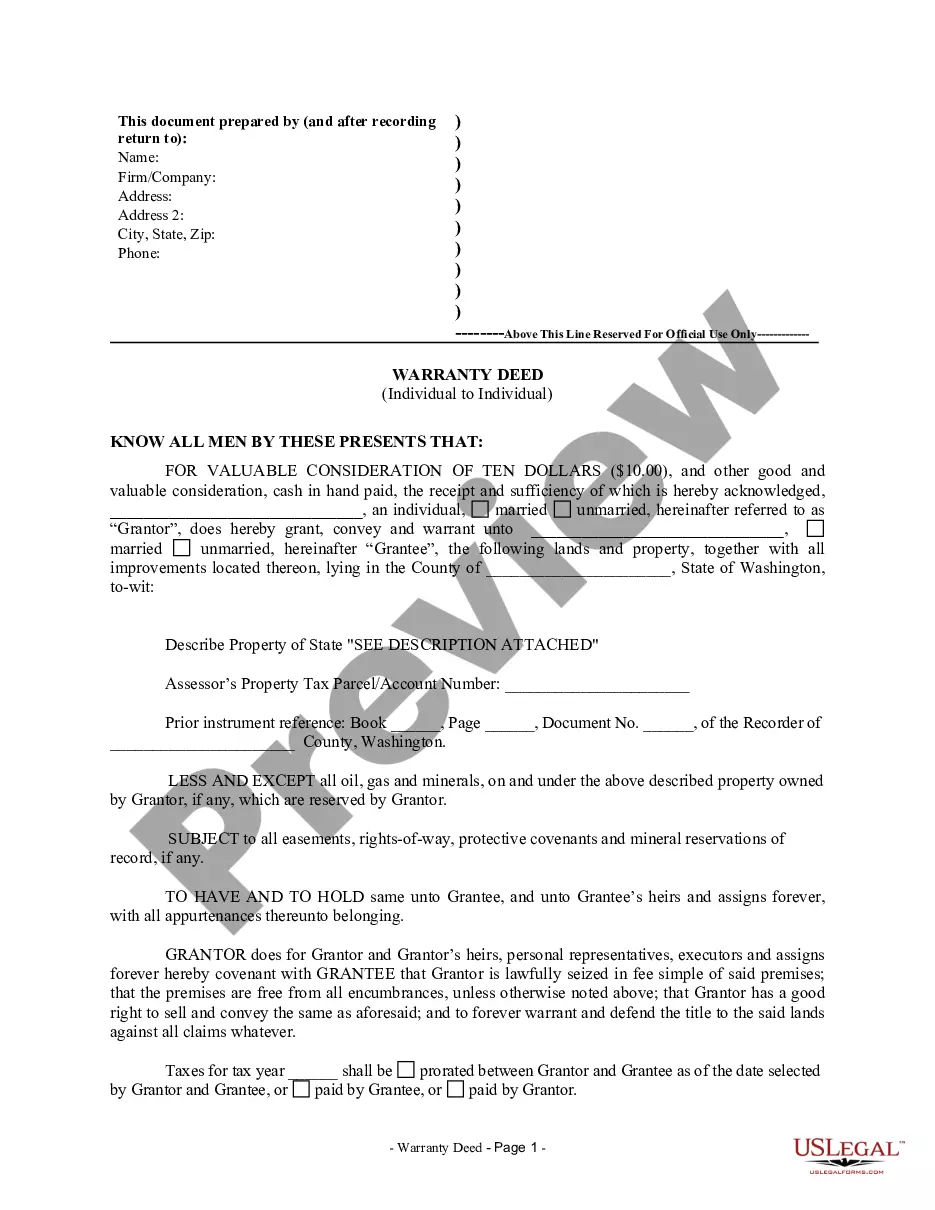
Warranty Deed - From Individual → Individual
Secure property transfer between individuals with assurances against claims and encumbrances.
Statutory - from Individual → 2 Individuals
When transferring property from one individual to two, ensure rights and responsibilities are clear with this essential deed.
Warranty Deed - From Individual → LLC
Perfect for transferring property ownership from an individual to an LLC, this document ensures legal compliance and protects both parties' interests.
Warranty Deed - From Partnership → Partnership
Use this to legally transfer property ownership between limited partnerships, ensuring clear title and rights.
Warranty Deed - From Corporation → Individual
Use this form when transferring property from a corporation to an individual, ensuring clear ownership and title rights.
Warranty Deed - From Corporation → 2 Individuals
Transfer property ownership from a corporation to two individuals, ensuring their rights as joint tenants with survivorship.
Warranty Deed - From Corporation → Husband & Wife
Secure property ownership transfer from a corporation to a couple while addressing easements and mineral rights.
Warranty Deed - From Husband & Wife → Corporation
Use this form to transfer property ownership from individuals to a corporation, ensuring clear title and legal rights.
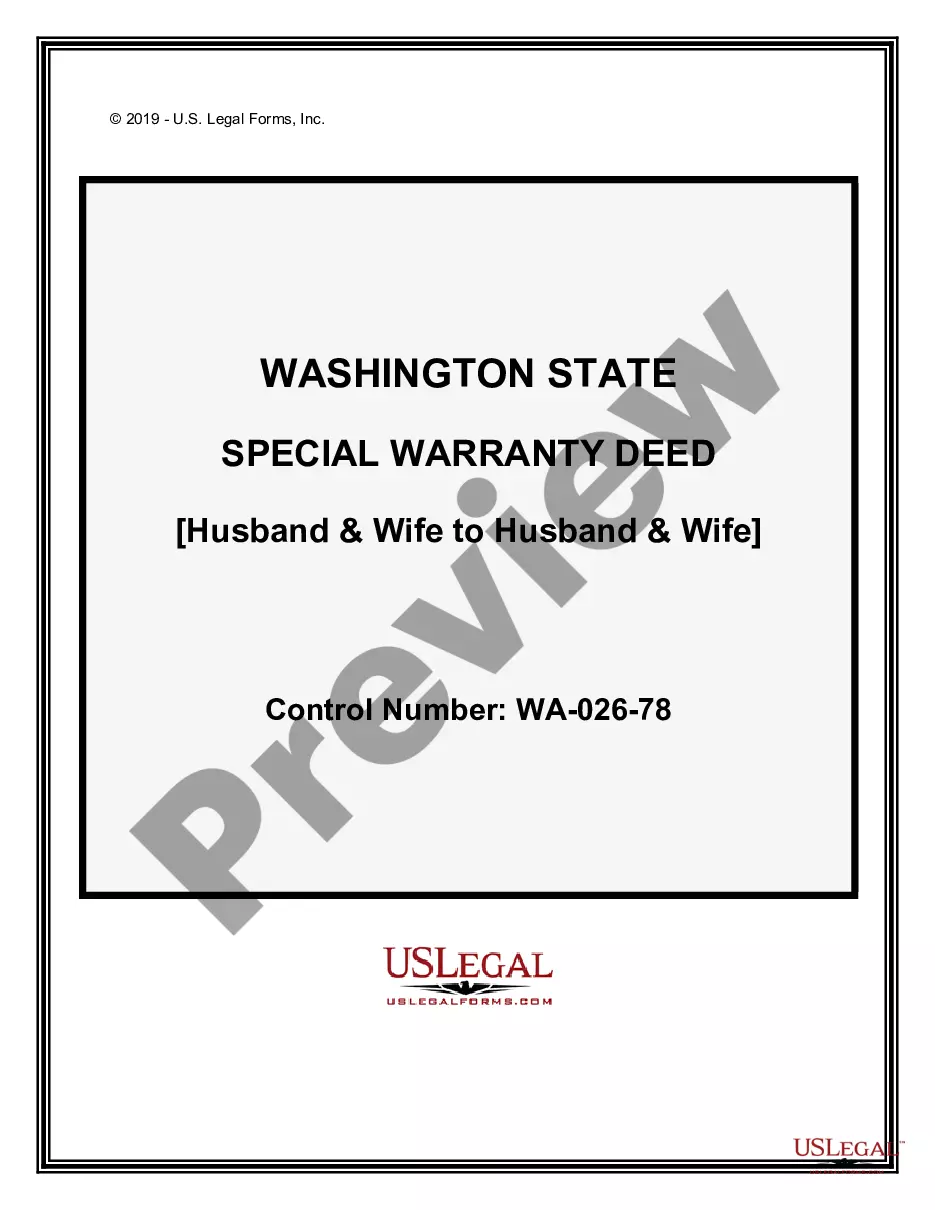
Special Warranty Deed from Husband & Wife / Two Individuals to Husband & Wife / Two Individuals
Use this to transfer property ownership between individuals, ensuring proper title conveyance and specifying how the property will be held.
Quitclaim Deed - with Individual Acknowledgment
Transfer property rights easily with this straightforward deed, ideal for resolving ownership issues among individuals.
Quitclaim Deed - with Representative Acknowledgment
Use this form to transfer property ownership without warranties, ideal for clearing title issues or involving multiple parties.
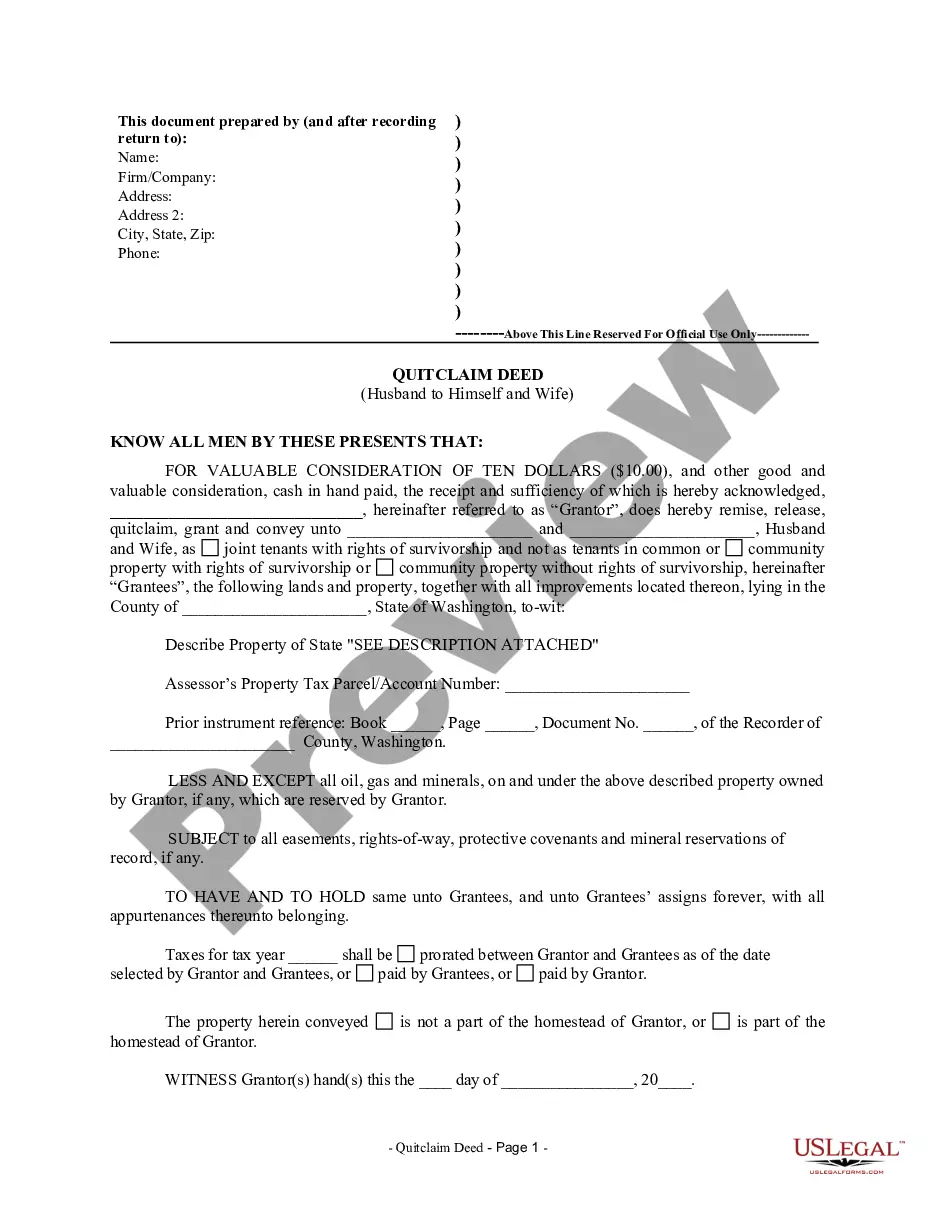
Quitclaim Deed - From 2 Individuals → Individual
Transfer property ownership rights between two individuals to one. Useful for simplifying estate matters or consolidating ownership.
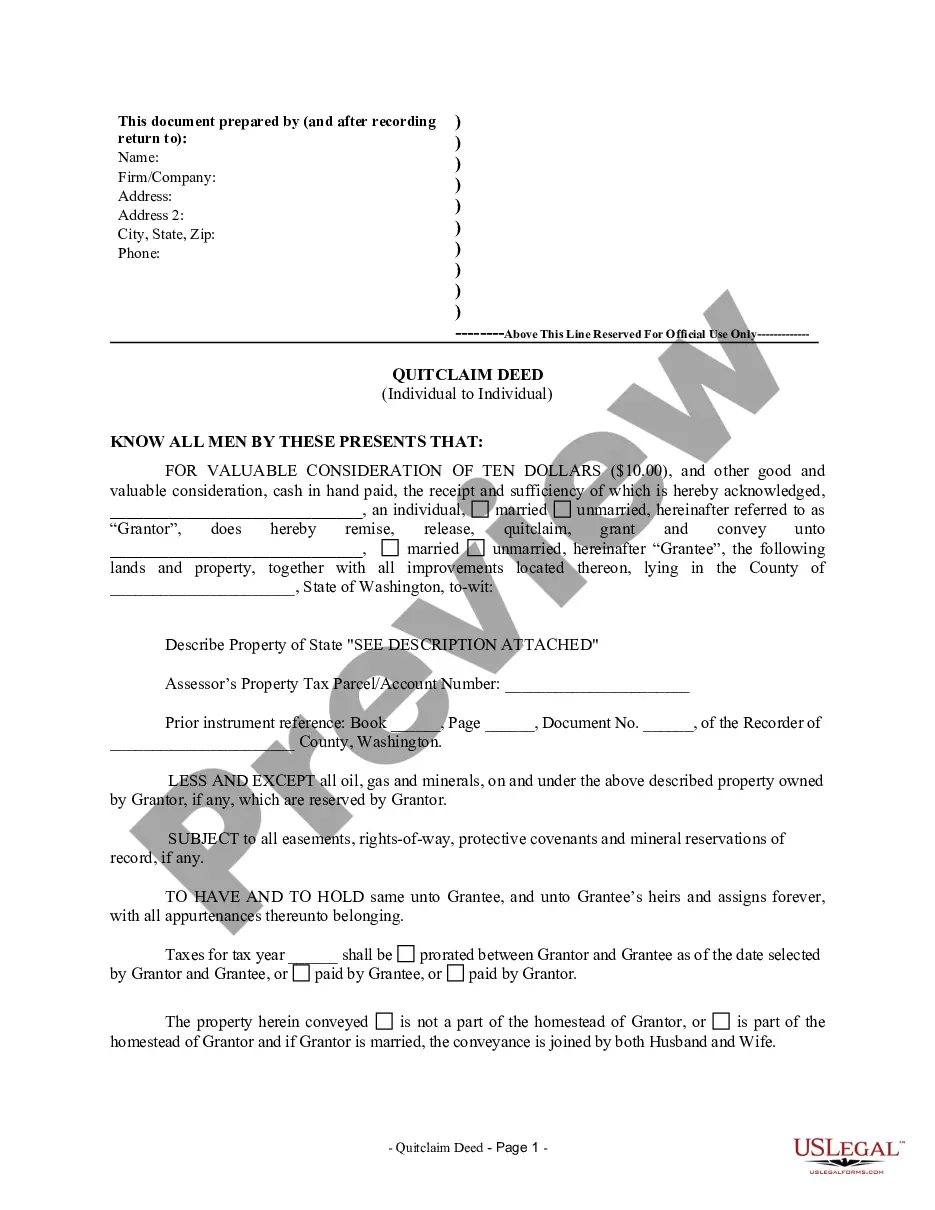
Quitclaim Deed - From Individual → Individual
Transfer property ownership easily between individuals, without warranties, using this straightforward deed.
Quitclaim Deed - From Individual → 2 Individuals in Joint Tenancy
Easily transfer ownership of property to two individuals as joint tenants, ensuring shared rights and responsibilities.
Quitclaim Deed - From Individual → 2 Individuals
Easily transfer property rights between individuals using this straightforward deed, ensuring clarity on ownership and rights.
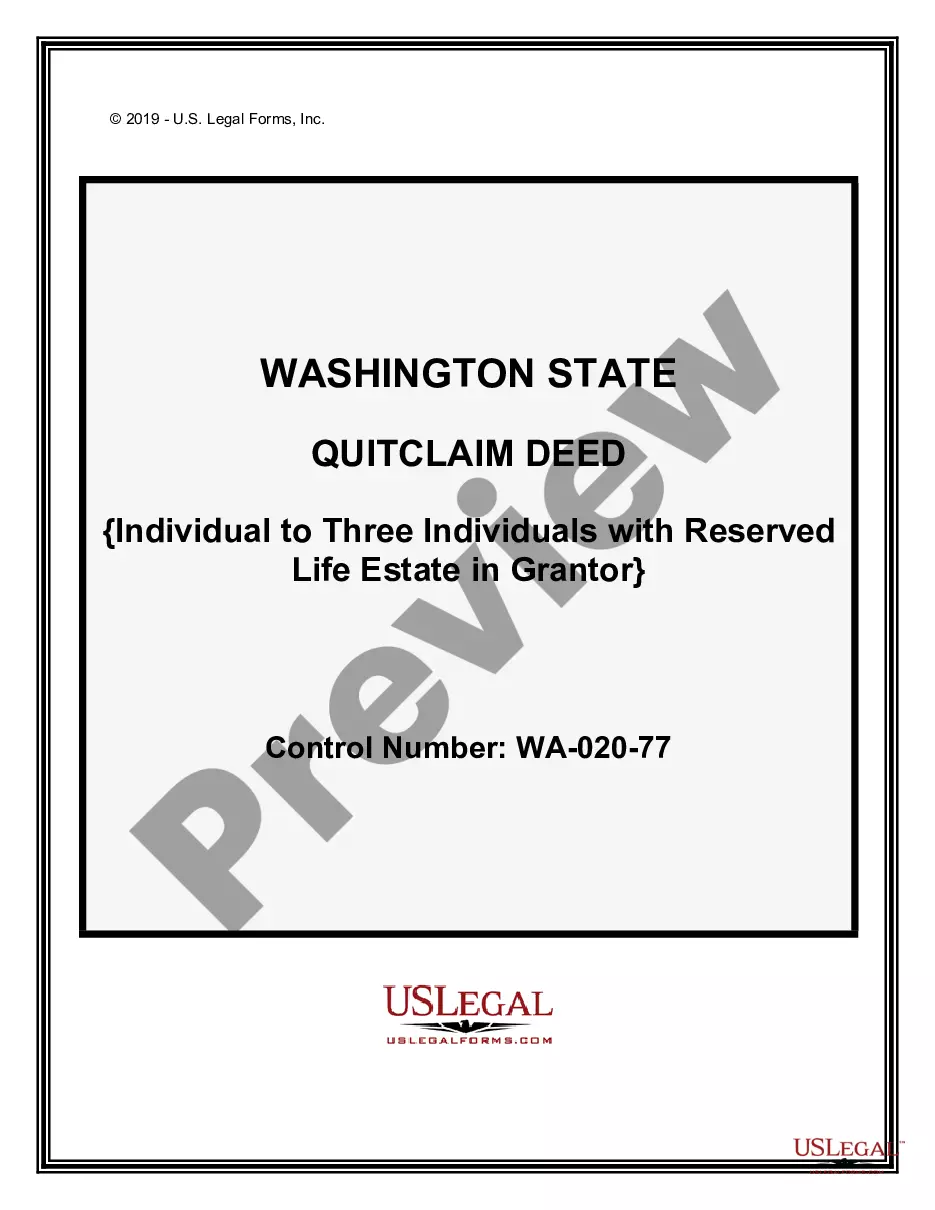
Quitclaim Deed - From Individual → 3 Individuals
Transfer property ownership to multiple individuals while retaining the right to live on the property for life.
Quitclaim Deed - From LLC → LLC
Transfer ownership of property between two LLCs, ensuring clarity and protection for both parties during the transaction.
Quitclaim Deed - From 2 Individuals → Corporation
Transfer property ownership from two individuals to a corporation with this straightforward legal document.
Quitclaim Deed - From LLC → Individual
Transfer ownership of property from a limited liability company to an individual easily and effectively.
Bargain and Sale Deed - with Individual Acknowledgment
Securely transfer real estate with this deed, featuring individual acknowledgment to protect both parties in the transaction.
Bargain and Sale Deed - with Representative Acknowledgment
Use this document to transfer real estate in Washington, providing a clear record of ownership without extensive warranties.
From Husband & Wife → Husband
Use this document to transfer property ownership from a couple to one partner, especially during divorce or property settlement.
Transfer on Death Deed - Individual to Three Individuals - Does NOT Include Alternate Beneficiaries.
Securely designate how your property transfers to three individuals after your death, without alternative beneficiaries. Ensure your wishes are honored.
TOD - from Individual → Individual
Secure property transfer to a beneficiary upon death, ensuring no probate delays.
TOD - from Individual → Individual
Transfer property ownership easily upon death without court involvement. Ideal for those wishing to ensure property passes directly to a chosen individual.
TOD - from Individual → 2 Individuals
Easily transfer property ownership to two individuals upon death, ensuring a smooth transition without probate complications.
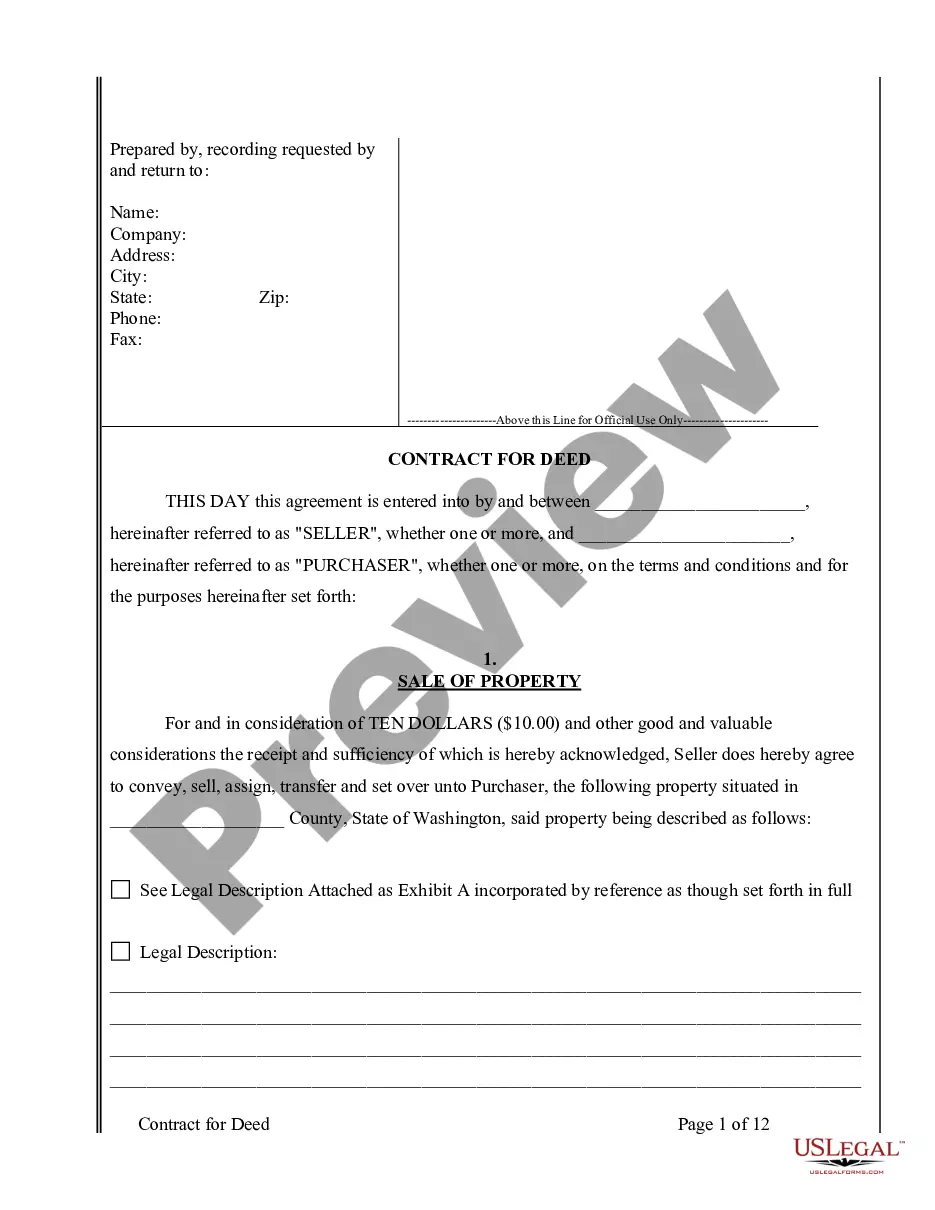
Agreement or Contract for Deed for Sale and Purchase of Real Estate
Ideal for buyers and sellers seeking to formalize a real estate sale with flexible payment terms.
Assignment of Contract for Deed by Seller
Assign rights and responsibilities under a contract for deed to another party, ensuring clarity in ownership transfer without recourse.
Contract for Deed Seller's Annual Accounting Statement
Track annual financial details for a seller in a contract for deed arrangement, ensuring transparent record-keeping and accountability.
Notice of Assignment of Contract for Deed
Use this document to formally notify parties of the assignment of a contract for deed, ensuring all parties are aware of the transaction.
Seller’s Financing Disclosure
Ensure transparency in financial terms when selling residential property through a contract or agreement for deed. Discover how to protect both parties.
Final Notice of Forfeiture and Vacate Request
Address issues related to contract for deed defaults and property forfeiture to protect your rights.
Notice of Intent to Enforce Forfeiture Provisions of Contact for Deed
Notify parties of your intention to enforce forfeiture provisions, which can protect your interests in a contractual agreement.
Buyer's Notice of Intent to Vacate and Surrender Property
Notify the seller of your intention to vacate the property after fulfilling your contract for deed obligations.
Buyer's Request for Accounting from Seller Under Contract for Deed
Request a detailed accounting of your payments and remaining balance under a contract for deed.
Final Notice of Default — Past Due Payments
Use this notice to formally inform a party about their overdue payments under a contract for deed before taking further action.
Executor's Deed - Executor to Individuals as Joints Tenants with Right of Survivorship
Used to transfer property to individuals as joint tenants, ensuring rights of survivorship, this deed is crucial for estate planning.
Fiduciary Deed for Use by Executors, Trustees, Trustors, Administrators and Other Fiduciaries
Essential for executors, trustees, and other fiduciaries to transfer property and manage estates effectively.
Personal Representative Deed Confirming and Transferring Joint Tenants Interest in Real Property.
Confirm joint ownership and transfer property interests seamlessly, ensuring clarity in real estate dealings.
Common Washington Deed documents
- Warranty Deed — Provides a guarantee of clear title to the property.
- Quitclaim Deed — Transfers any interest in property without warranties.
- Grant Deed — Ensures the property hasn’t been transferred to someone else.
- Deed of Trust — Secures a loan with real property as collateral.
- Bargain and Sale Deed — Indicates a sale without guarantees about the title.
- Gift Deed — Transfers property without any exchange of money.
Complete Washington Deeds packages
Bundle every form you need for a complete situation — not just one document.

 11 forms
Washington Contract for Deed Package
Access everything you need for owner-financed real estate transactions in one convenient package.
- Washington Agreement or Contract for Deed for Sale and Purchase of Real Estate a/k/a Land or Executory Contract
- Washington Notice of Intent to Enforce Forfeiture Provisions of Contact for Deed
- Washington Final Notice of Forfeiture and Request to Vacate Property under Contract for Deed
- Washington General Notice of Default for Contract for Deed
- Washington Seller's Disclosure of Forfeiture Rights for Contract for Deed
- Washington Seller's Disclosure of Financing Terms for Residential Property in connection with Contract or Agreement for Deed a/k/a Land Contract
- Washington Contract for Deed Seller's Annual Accounting Statement
- Washington Notice of Default for Past Due Payments in connection with Contract for Deed
- Washington Final Notice of Default for Past Due Payments in connection with Contract for Deed
- Washington Assignment of Contract for Deed by Seller
- Washington Notice of Assignment of Contract for Deed
4 forms
Washington Satisfaction, Cancellation or Release of Mortgage Package
Access multiple forms to release or cancel a mortgage in one convenient package.
- Washington Satisfaction, Release or Cancellation of Deed of Trust by Corporation
- Washington Satisfaction, Release or Cancellation of Deed of Trust by Individual
- Letter Notice to Borrower of Satisfaction of Mortgage
- Letter to Recording Office for Recording of Satisfaction of Mortgage
4 forms
Washington Assignment of Mortgage Package
Get everything needed to assign a mortgage, all in one convenient package.
8 forms
Washington Commercial Property Sales Package
Access everything needed for closing a commercial real estate transaction, all in one convenient package.
- Washington Installments Fixed Rate Promissory Note Secured by Commercial Real Estate
- Addendum for Continued Marketing of Property by Seller due to Contingencies
- Environmental Assessment, Threatened or Endangered Species, And Wetlands Addendum
- Contract for the Sale and Purchase of Real Estate - No Broker - Commercial Lot or Land
- Exchange Addendum to Contract - Tax Free Exchange Section 1031
- Option For the Sale and Purchase of Real Estate - Commercial Lot or Land
- Option For the Sale and Purchase of Real Estate - Commercial Building
- Tax Free Exchange Agreement Section 1031
8 forms
Washington Option to Purchase Package
Everything needed to secure a right to purchase or sell property in one package.
- Washington Option to Purchase Addendum to Residential Lease - Lease or Rent to Own
- Washington Residential Rental Lease Agreement
- Option For the Sale and Purchase of Real Estate - Residential Lot or Land
- Option For the Sale and Purchase of Real Estate - Residential Home
- Option For the Sale and Purchase of Real Estate - Commercial Lot or Land
- Option For the Sale and Purchase of Real Estate - Commercial Building
- Option For the Sale and Purchase of Real Estate - Farm Land
- Option For the Sale and Purchase of Real Estate - General Form
FAQs
A deed legally transfers ownership of property from one person to another.
The type of deed depends on the nature of the property transfer and desired guarantees.
A valid deed must be properly signed, delivered, and often recorded.
You can obtain a copy from the local land records office where it was recorded.
Yes, a deed can be contested if there are disputes over ownership or validity.
Key legal points
- A deed must be signed and delivered to be valid.
- Deeds may require notarization or witnesses under certain conditions.
- Different types of deeds serve various purposes in property transactions.
- Title insurance can protect against potential title issues.
- Deeds can be revoked or modified under specific circumstances.
- Recording a deed in the local land records office is often necessary.
How to get started
Begin your process with these simple steps.
- Find a template or package that fits your situation.
- Review the description, preview, and signing requirements.
- Get full access with a subscription.
- Complete it in the online editor.
- Export or send: download, email, USPS mail, notarize online, or send for e-signature (Premium).
Practical tip
Consider using a warranty deed for a sale to ensure clear title protection.