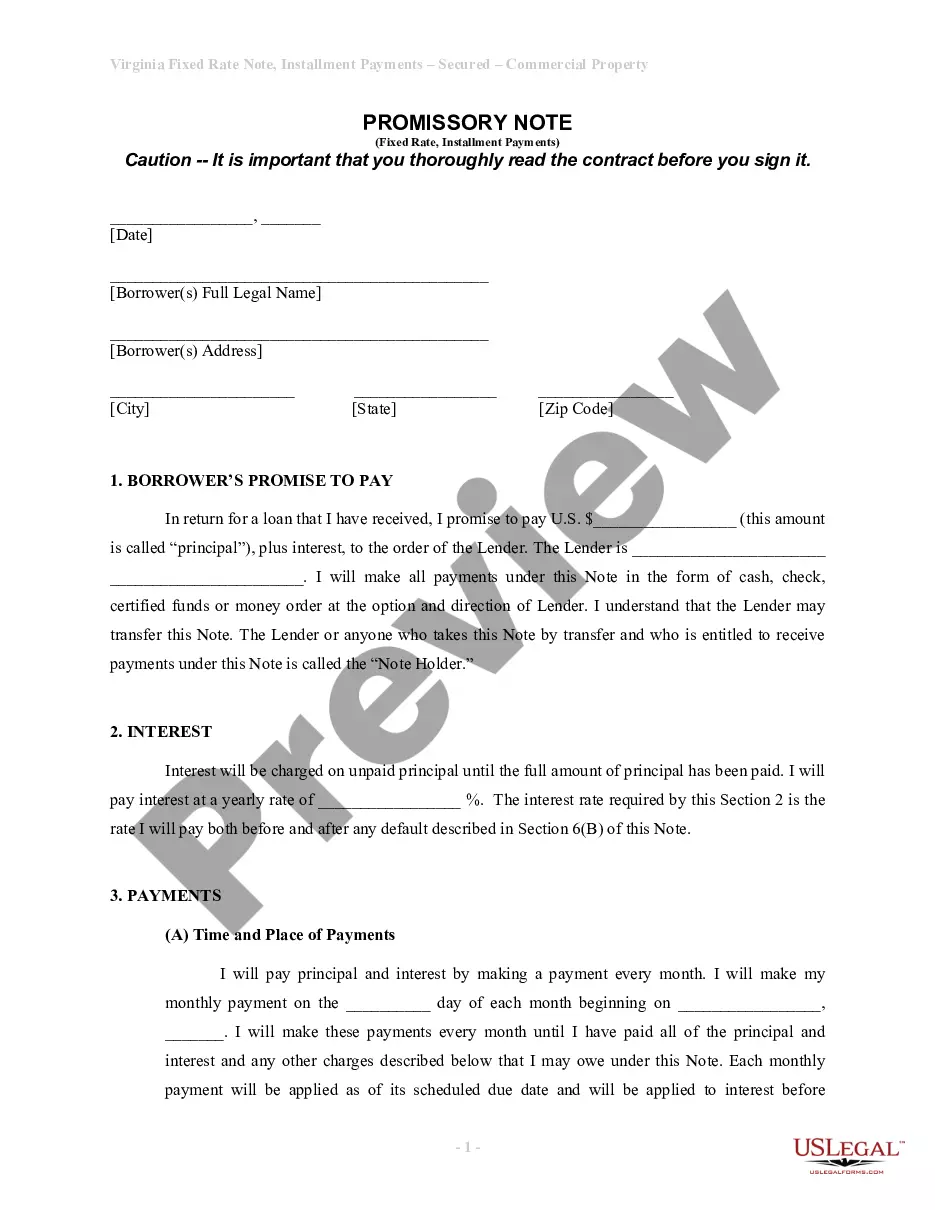
Washington Deed of Trust - Long Form - with representative acknowledgment
About this form
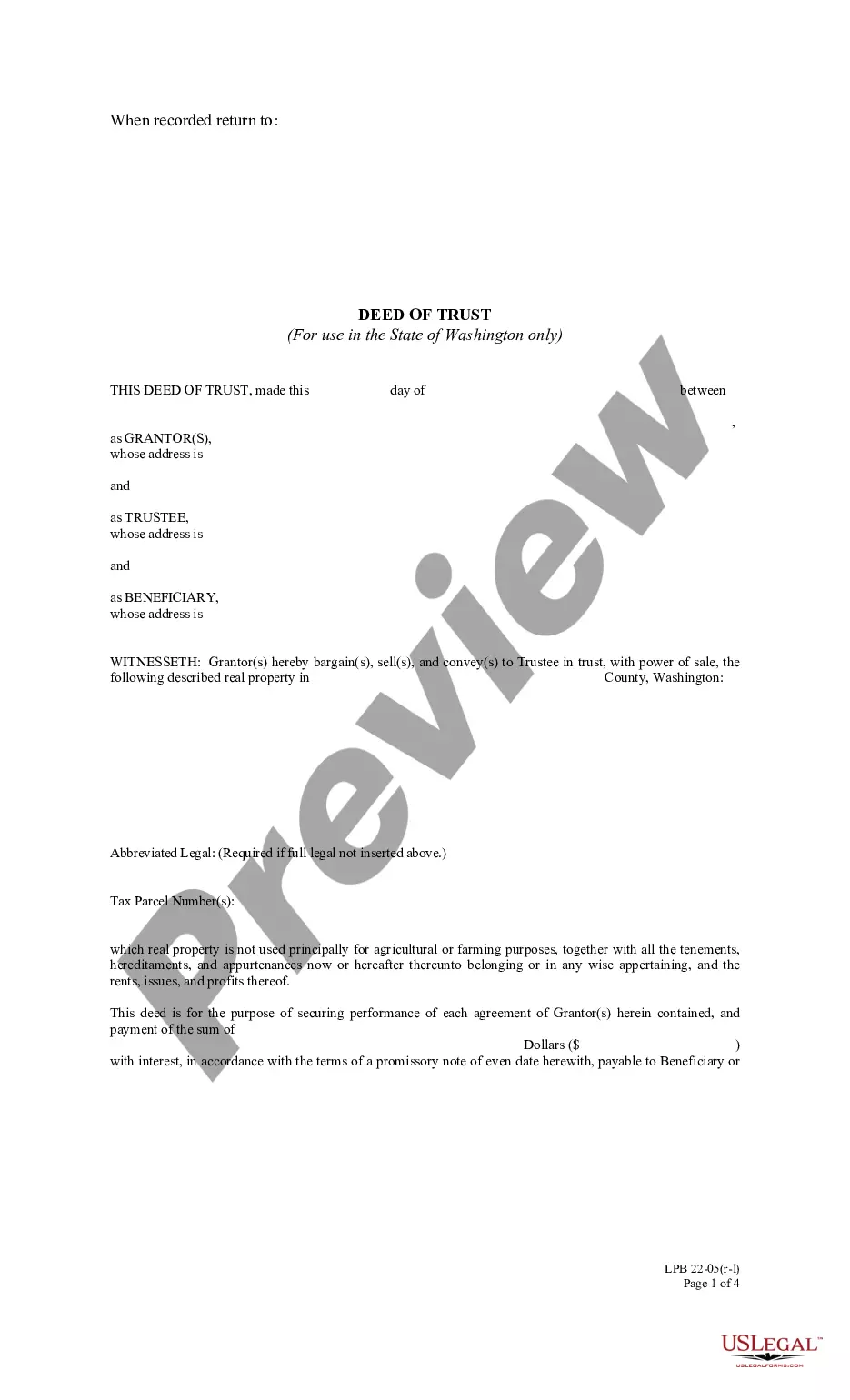
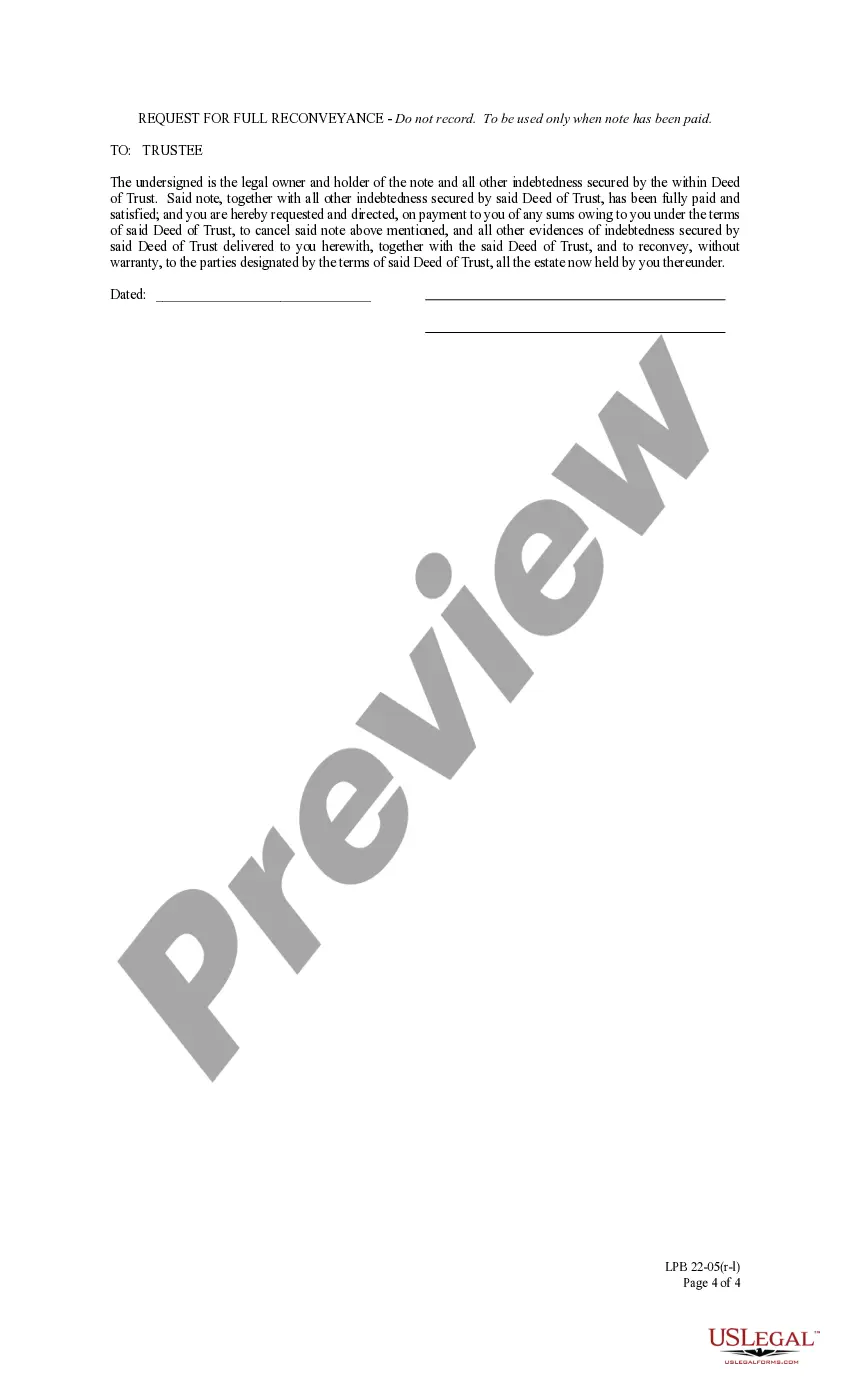
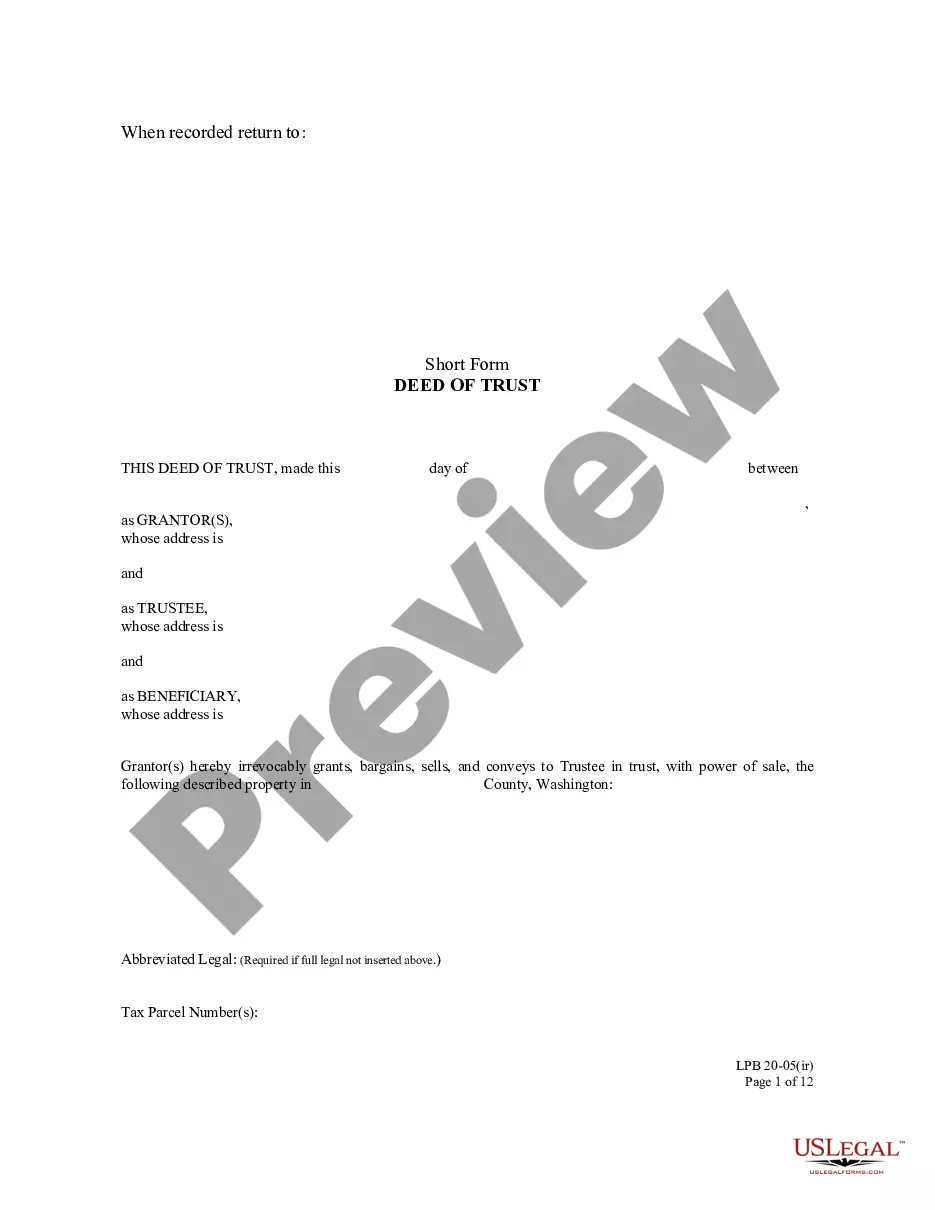
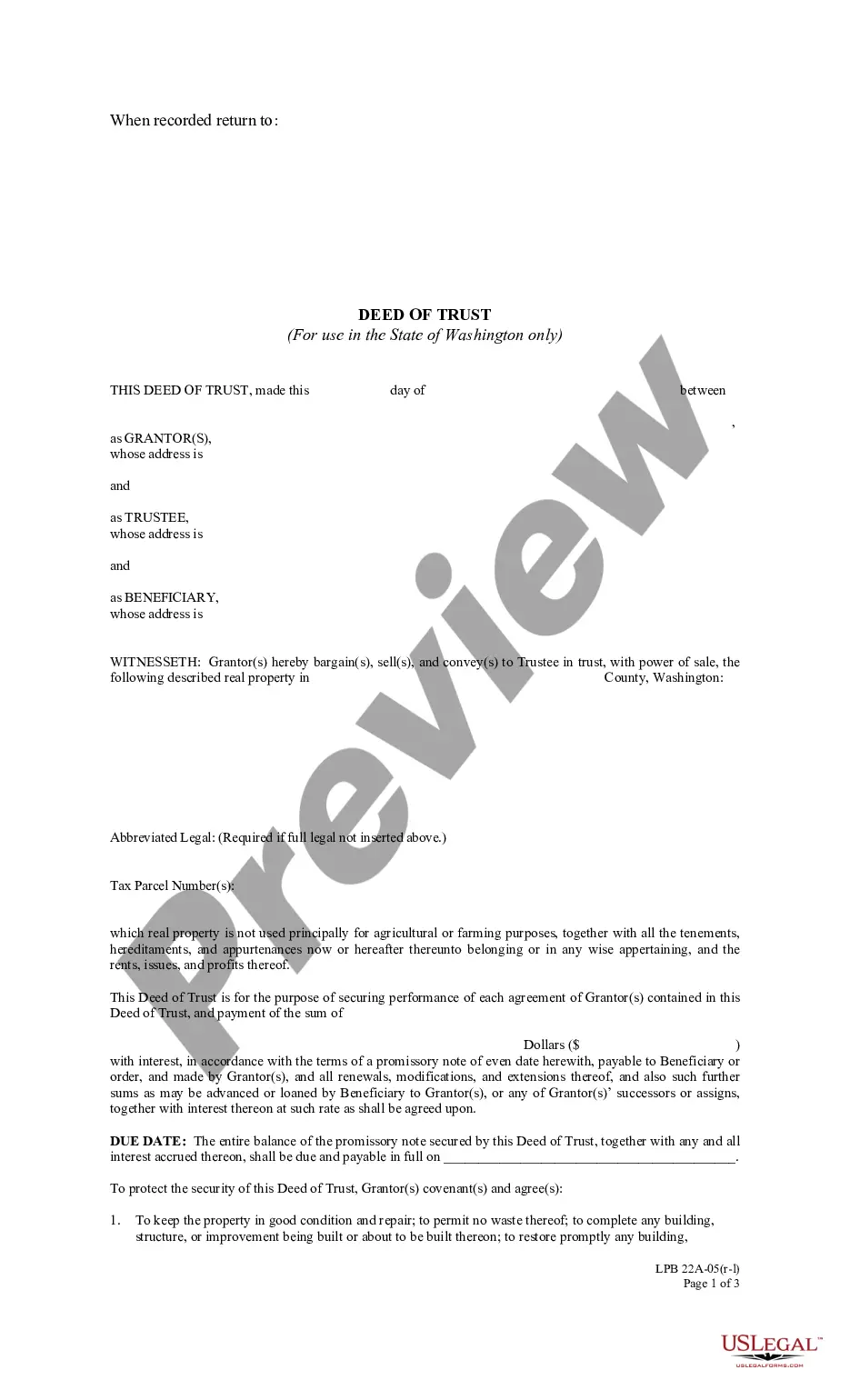
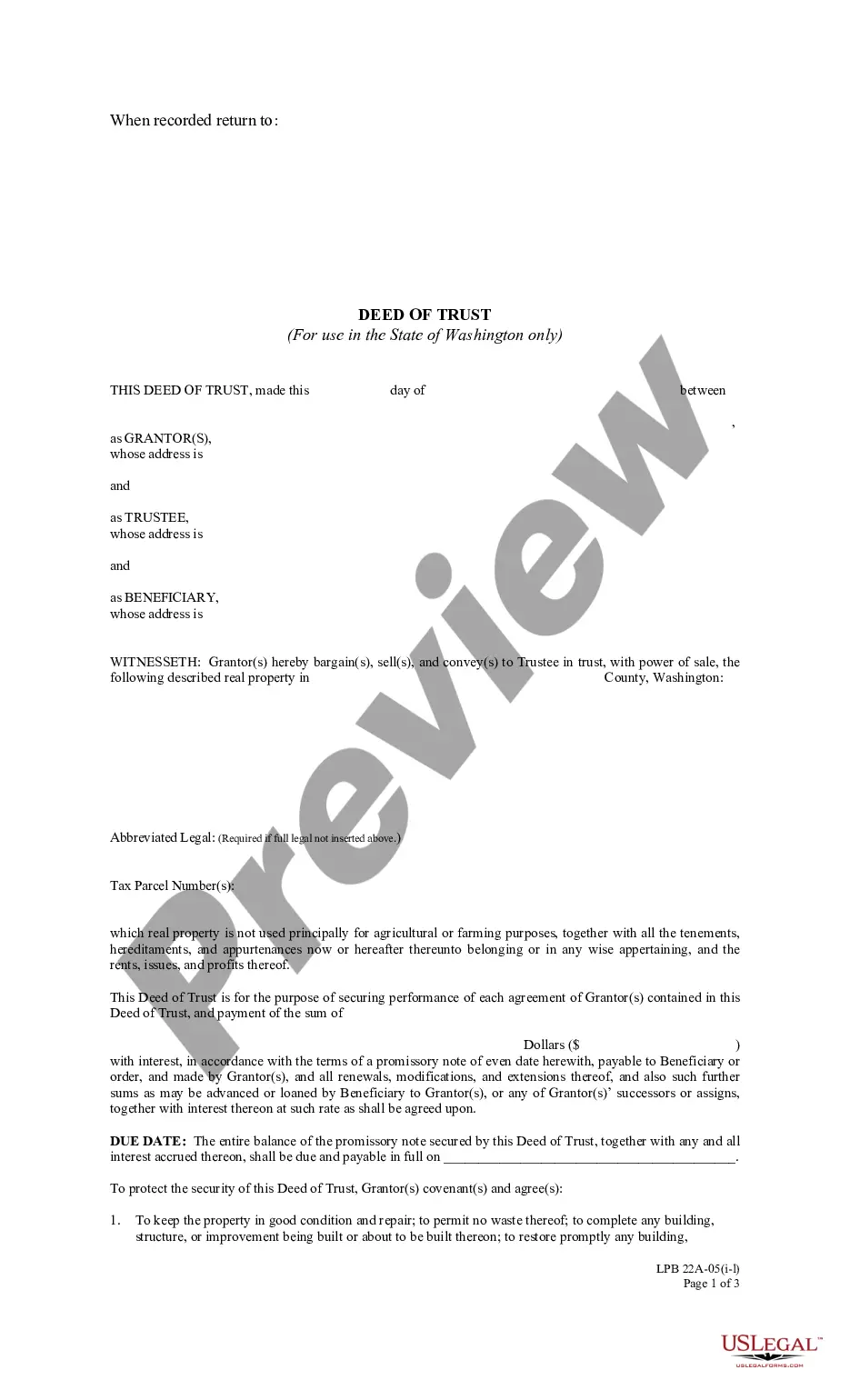
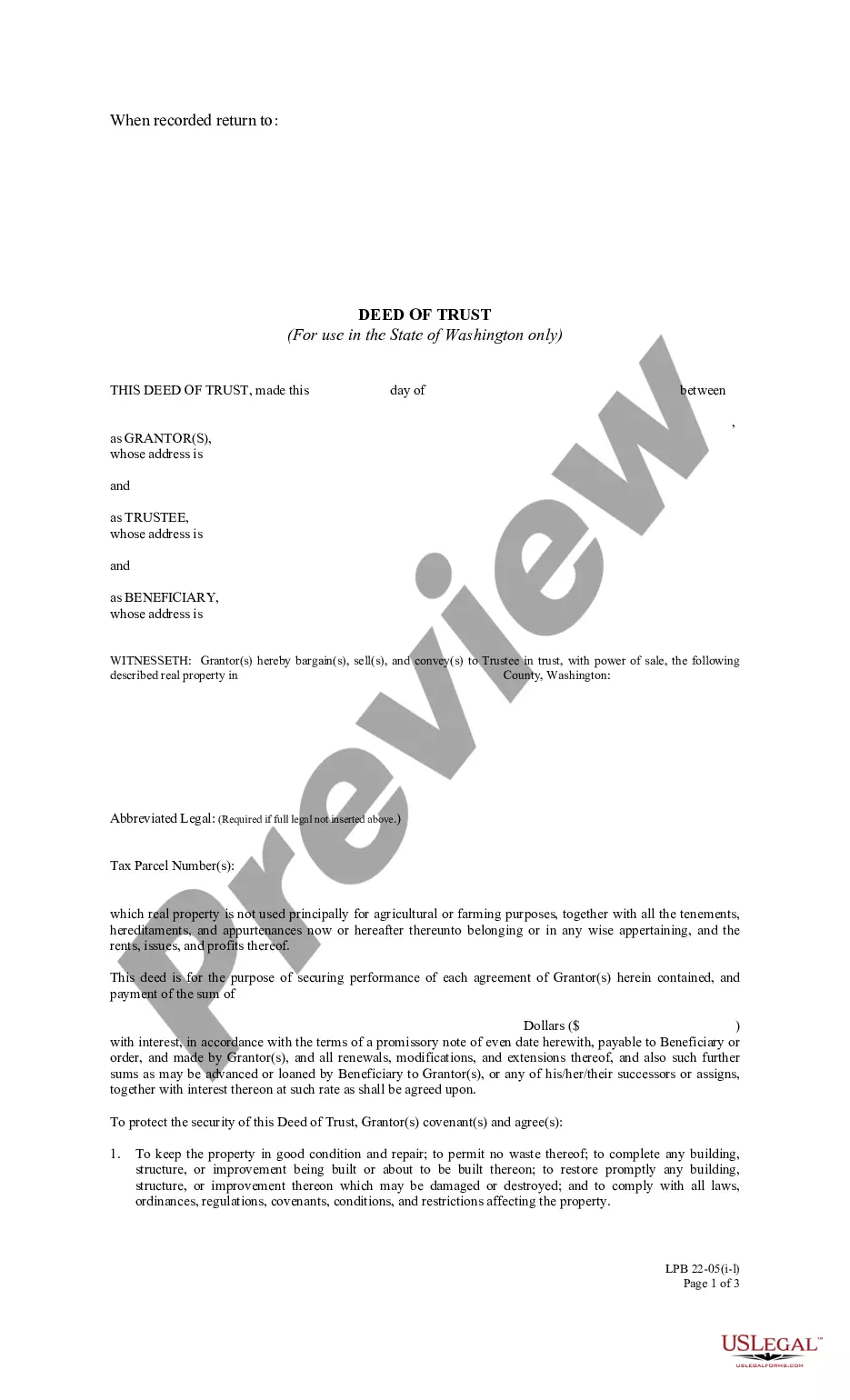
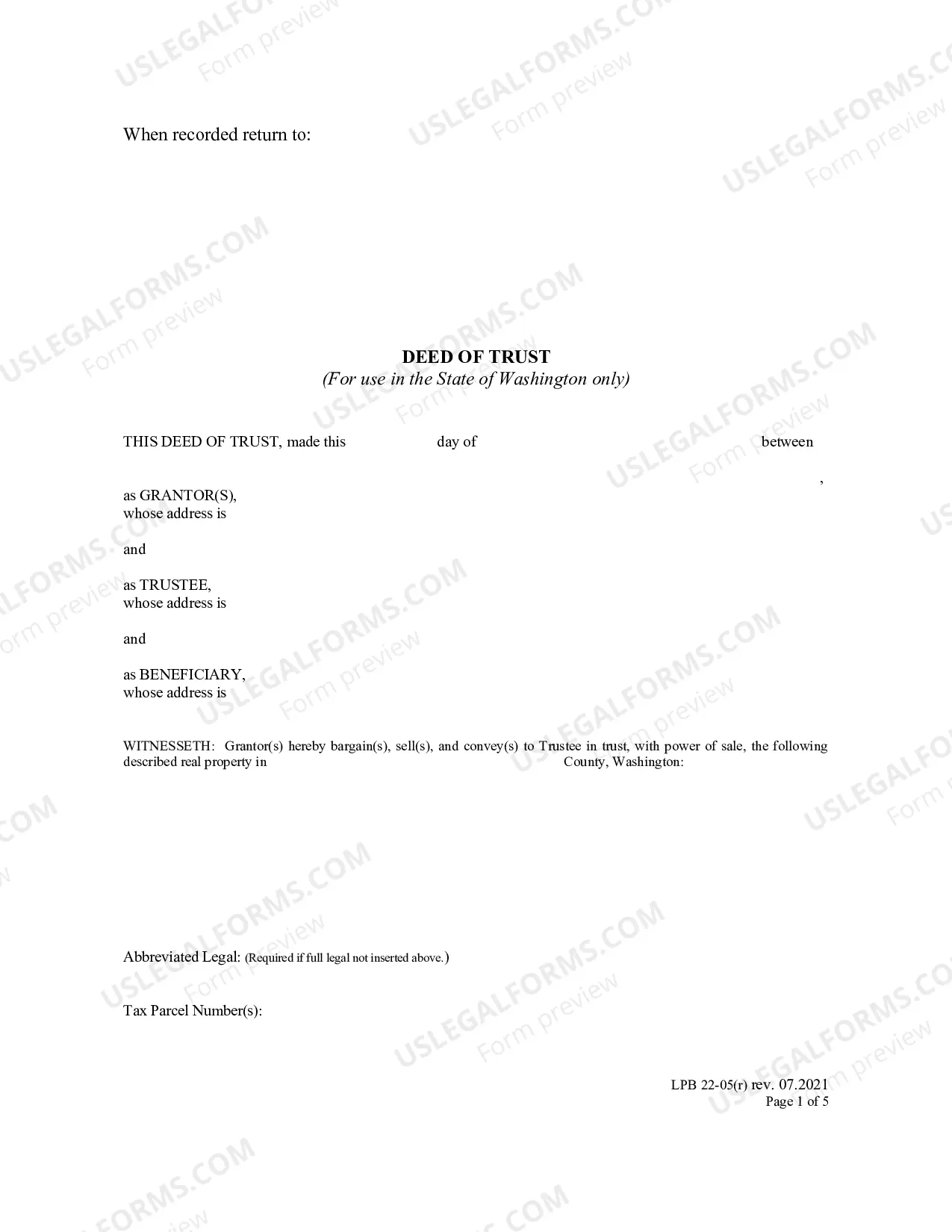
A Deed of Trust is a legal document used in land transactions in Washington State. This long form includes a representative acknowledgment and is specifically structured to secure a real property loan. Unlike a mortgage, which involves only the borrower and lender, a Deed of Trust adds a third party known as a trustee, who holds the property title until the debt is fully paid. This form is essential for securing an agreement between the borrower and lender and outlines the rights and obligations of all parties involved.
What’s included in this form
- Identification of the Grantor(s), Trustee, and Beneficiary with their respective addresses.
- Description of the real property being secured, including the legal description and tax parcel number.
- Agreement details, including the loan amount, interest rate, and terms of the promissory note.
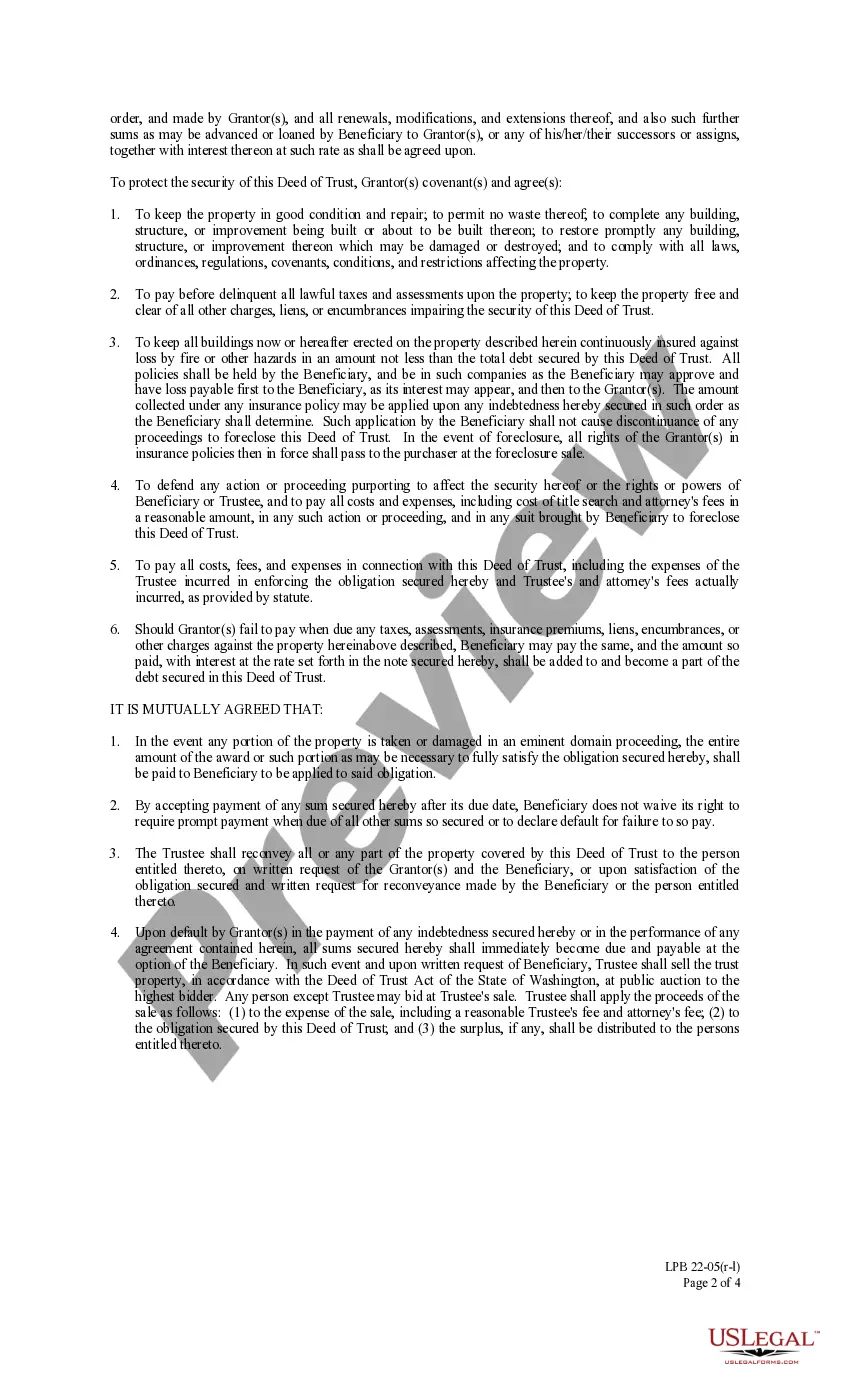
- Covenants of the Grantor(s) to maintain the property and comply with laws.
- Provisions concerning insurance and protection of the property.
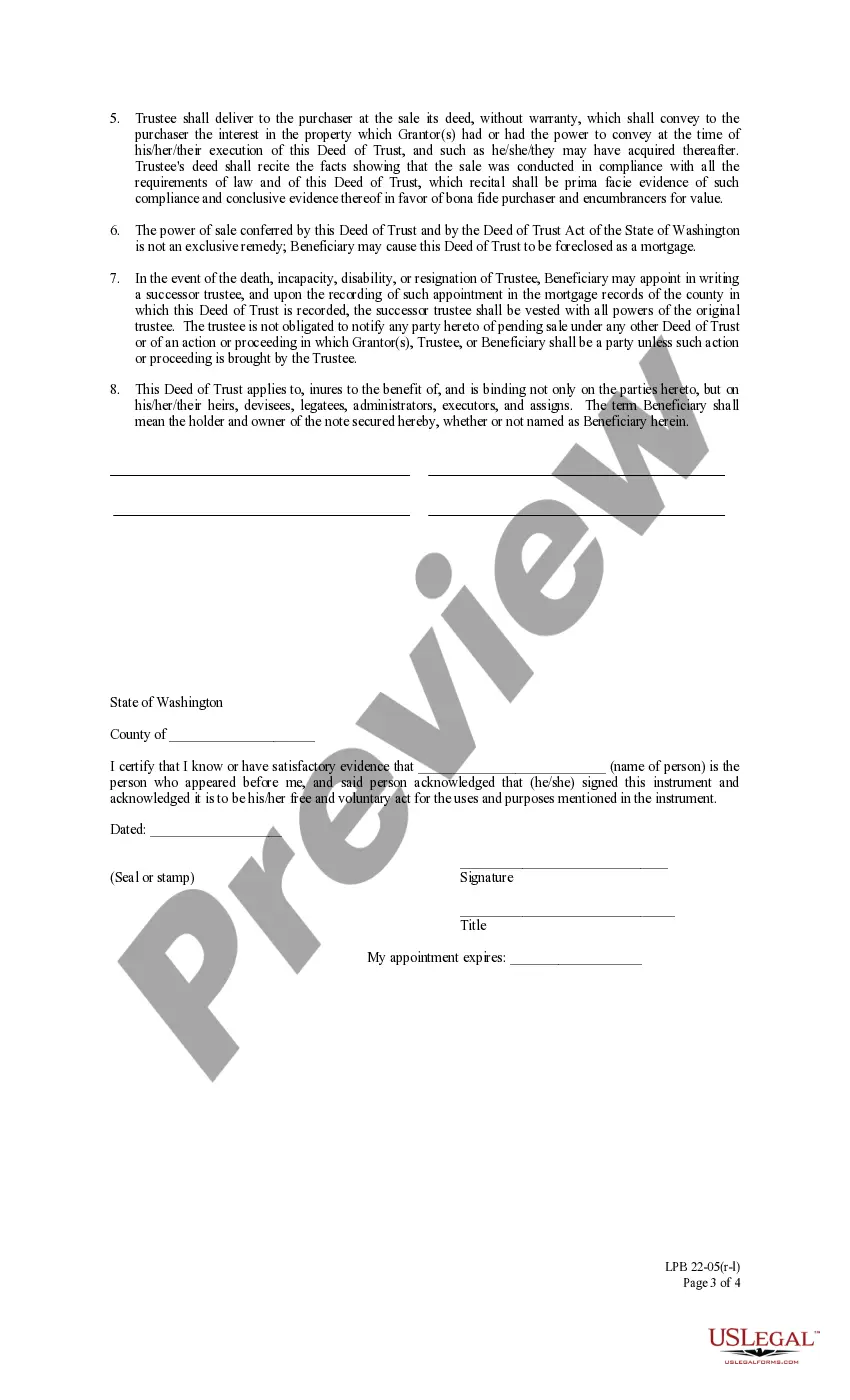
- Default and foreclosure procedures if the Grantor(s) fail to meet their obligations.
When to use this document
This form is used when a borrower (Grantor) is securing a loan with real estate in Washington State. It is commonly utilized in situations where an individual or entity needs to borrow money and offers property as collateral. This is particularly relevant in real estate transactions involving purchasing a home or refinancing an existing mortgage.
Who needs this form
- Individuals or entities looking to secure a loan with real property in Washington.
- Lenders who require a formal agreement to protect their investment in the property.
- Real estate professionals involved in land transactions requiring a secure financing agreement.
How to prepare this document
- Identify and list the Grantor(s), Trustee, and Beneficiary along with their addresses.
- Describe the property being secured with a complete legal description and tax parcel number.
- Enter the loan amount and terms as outlined in the promissory note.
- Review and complete the covenants to maintain the property in good standing.
- Ensure the acknowledgment section is signed in front of a notary public, if required.
Notarization guidance
To make this form legally binding, it must be notarized. Our online notarization service, powered by Notarize, lets you verify and sign documents remotely through an encrypted video session.
Get your form ready online
Our built-in tools help you complete, sign, share, and store your documents in one place.
Make edits, fill in missing information, and update formatting in US Legal Forms—just like you would in MS Word.
Download a copy, print it, send it by email, or mail it via USPS—whatever works best for your next step.
Sign and collect signatures with our SignNow integration. Send to multiple recipients, set reminders, and more. Go Premium to unlock E-Sign.
If this form requires notarization, complete it online through a secure video call—no need to meet a notary in person or wait for an appointment.
We protect your documents and personal data by following strict security and privacy standards.

Make edits, fill in missing information, and update formatting in US Legal Forms—just like you would in MS Word.

Download a copy, print it, send it by email, or mail it via USPS—whatever works best for your next step.

Sign and collect signatures with our SignNow integration. Send to multiple recipients, set reminders, and more. Go Premium to unlock E-Sign.

If this form requires notarization, complete it online through a secure video call—no need to meet a notary in person or wait for an appointment.

We protect your documents and personal data by following strict security and privacy standards.
Mistakes to watch out for
- Leaving out the complete legal description of the property.
- Failing to have the document notarized if required.
- Not entering the correct loan amount and terms.
- Omitting signatures from any of the necessary parties.
- Failing to include all covenants that the Grantor(s) must agree to.
Why complete this form online
- Convenience of completing and downloading the form from anywhere at any time.
- Editable fields allow users to input specific information easily.
- Access to professionally drafted documents prepared by licensed attorneys.
- Easy storage and retrieval of legal documents in digital format.
Looking for another form?
Form popularity
FAQ
Yes, there are key differences between the two. With a deed, you transfer the ownership of the property to one party. In contrast, a deed of trust does not mean the holder owns the property. In an arrangement involving a deed of trust, the borrower signs a contract with the lender with details regarding the loan.
When you are ready to sign a deed of trust, the parties will need to sign in the presence of a notary public.The deed of trust must then be recorded with the county where the property is located, and each of the parties (the trustor, trustee, and lender) should keep a copy of the recorded document.
A deed of trust (DOT), is a document that conveys title to real property to a trustee as security for a loan until the grantor (borrower) repays the lender according to terms defined in an attached promissory note. This process is called a Trustee Sale.
A deed of trust acts as an agreement between youthe homebuyerand your lender. It states not just that you'll repay the loan, but that a third party called the trustee will hold legal title to the property until you do. A deed of trust is the security for your loan, and it's recorded in the public records.
Trust deeds can be a valuable aid to financial stability, but they are not right for everybody. They are best suited to people who have a regular income and can commit to regular payments.
A Deed of Trust is a type of secured real-estate transaction that some states use instead of mortgages.A deed of trust involves three parties: a lender, a borrower, and a trustee. The lender gives the borrower money. In exchange, the borrower gives the lender one or more promissory notes.
Sign the deed of trust form in the presence of a notary. You'll have to provide your identification to the notary with a federally issued photo ID such as a Washington driver's license or military ID card. Once you sign the deed in front of the notary, the notary will then notarize the form.
Whether you have a deed of trust or a mortgage, they both serve to assure that a loan is repaid, either to a lender or an individual person. A mortgage only involves two parties the borrower and the lender. A deed of trust adds an additional party, a trustee, who holds the home's title until the loan is repaid.
In financed real estate transactions, trust deeds transfer the legal title of a property to a third partysuch as a bank, escrow company, or title companyto hold until the borrower repays their debt to the lender. Trust deeds are used in place of mortgages in several states.