Washington Deed of Trust - Amended Long Form - with individual acknowledgment
What this document covers
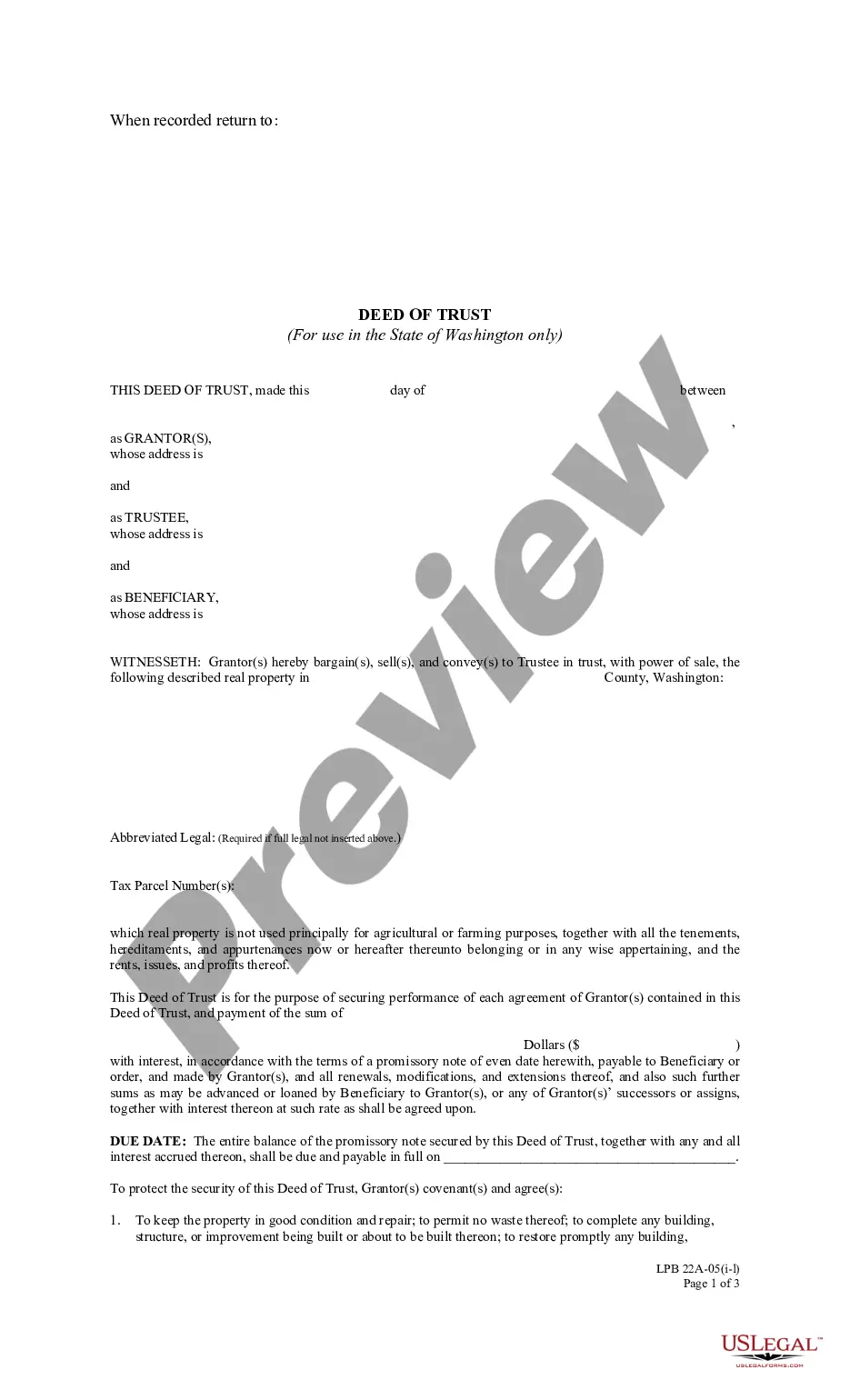
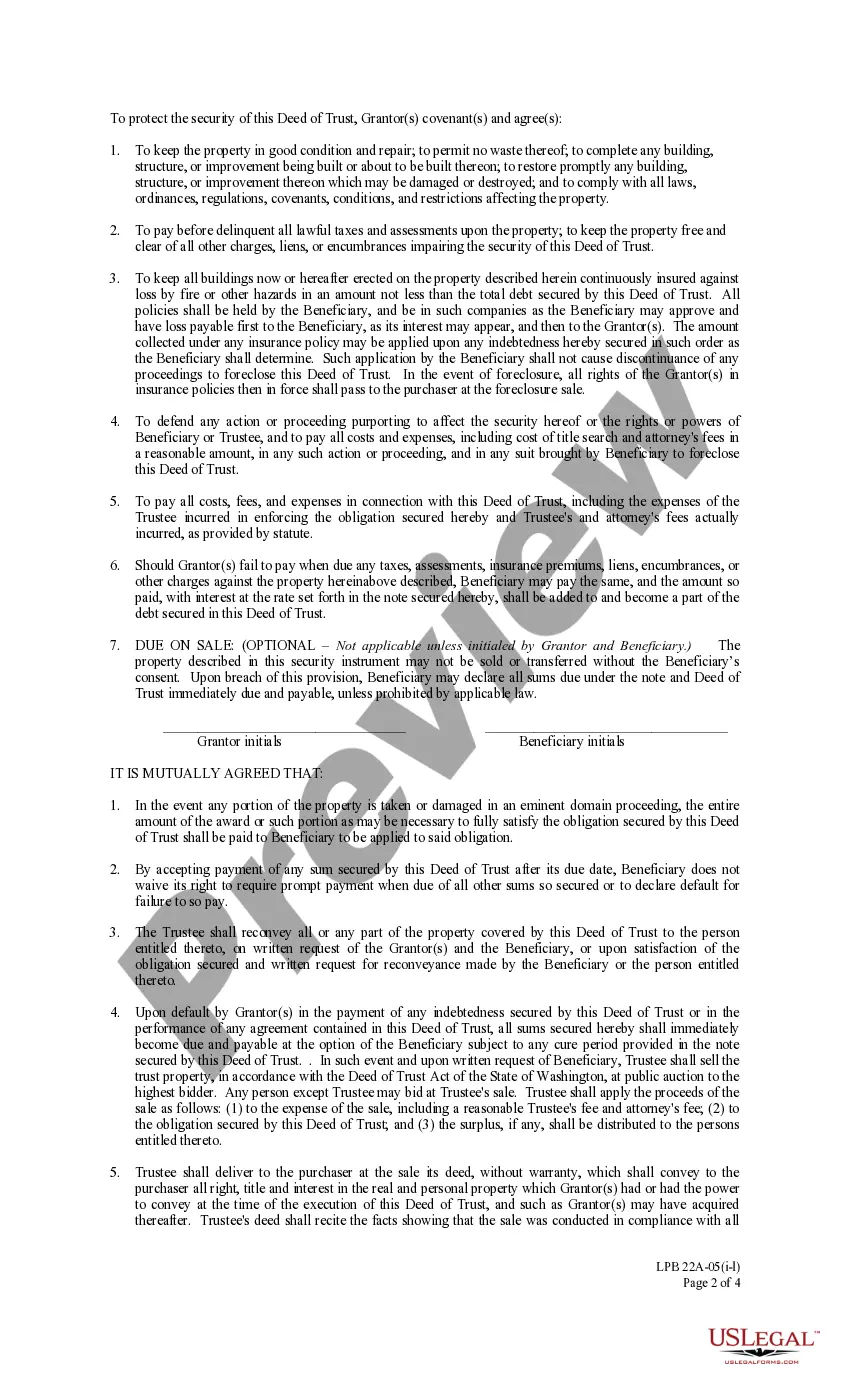
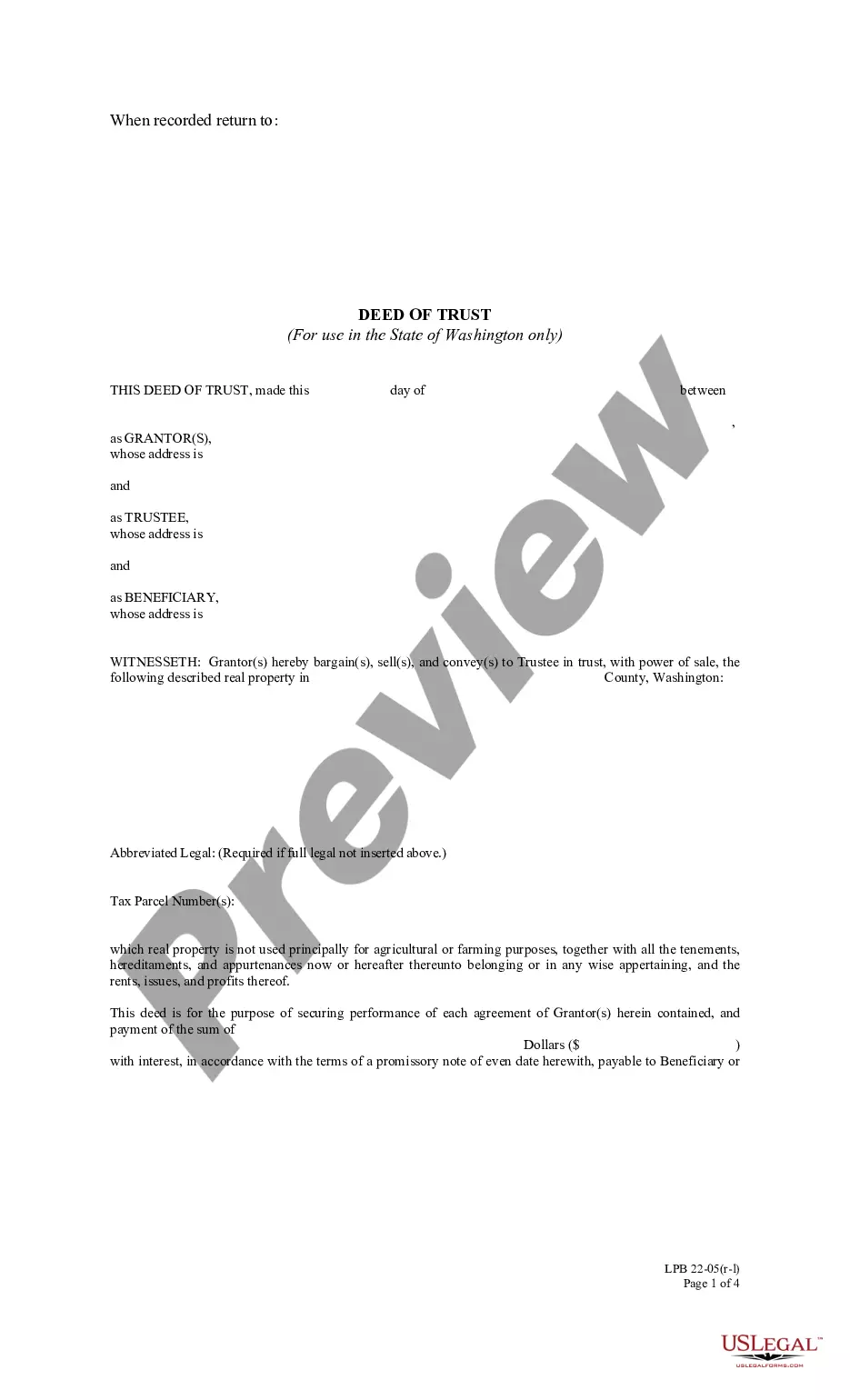
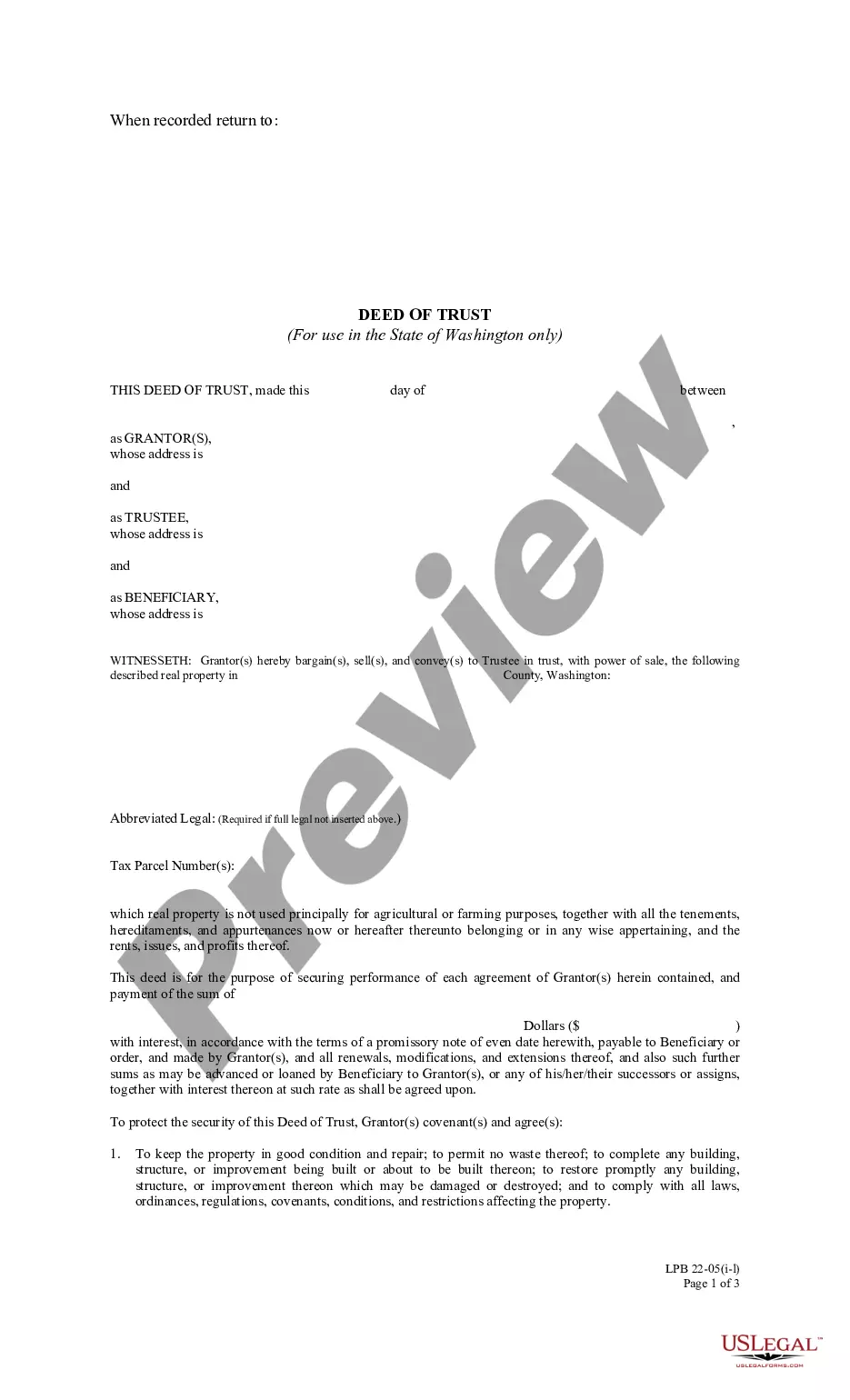
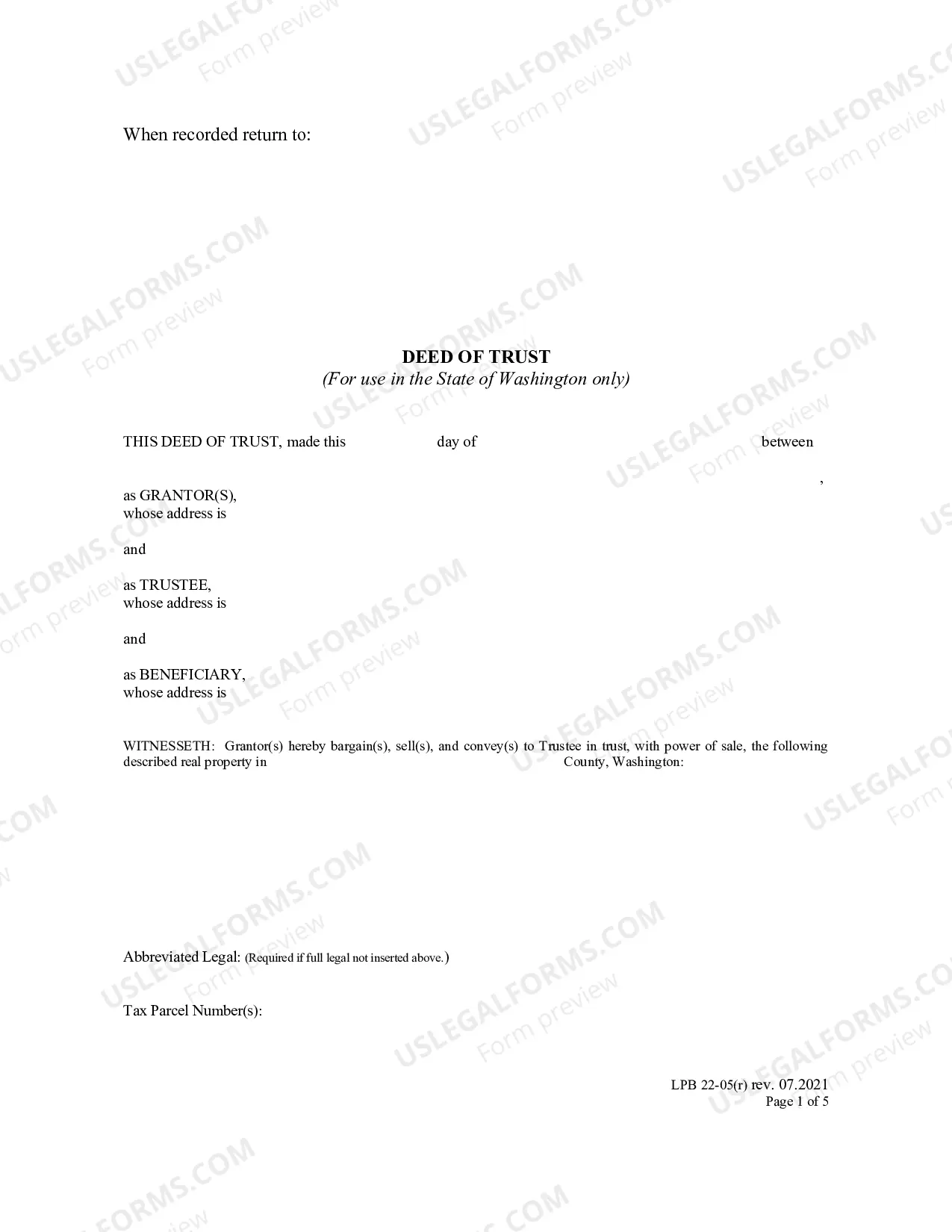
The Deed of Trust - Amended Long Form is a legal document used in Washington state for securing a loan with real property as collateral. It outlines the terms of the loan and the obligations of the borrower (Grantor) to the lender (Beneficiary). This form differs from other property transfer documents as it specifically creates a trust arrangement where a Trustee holds the property title until the debt is repaid.
Key parts of this document
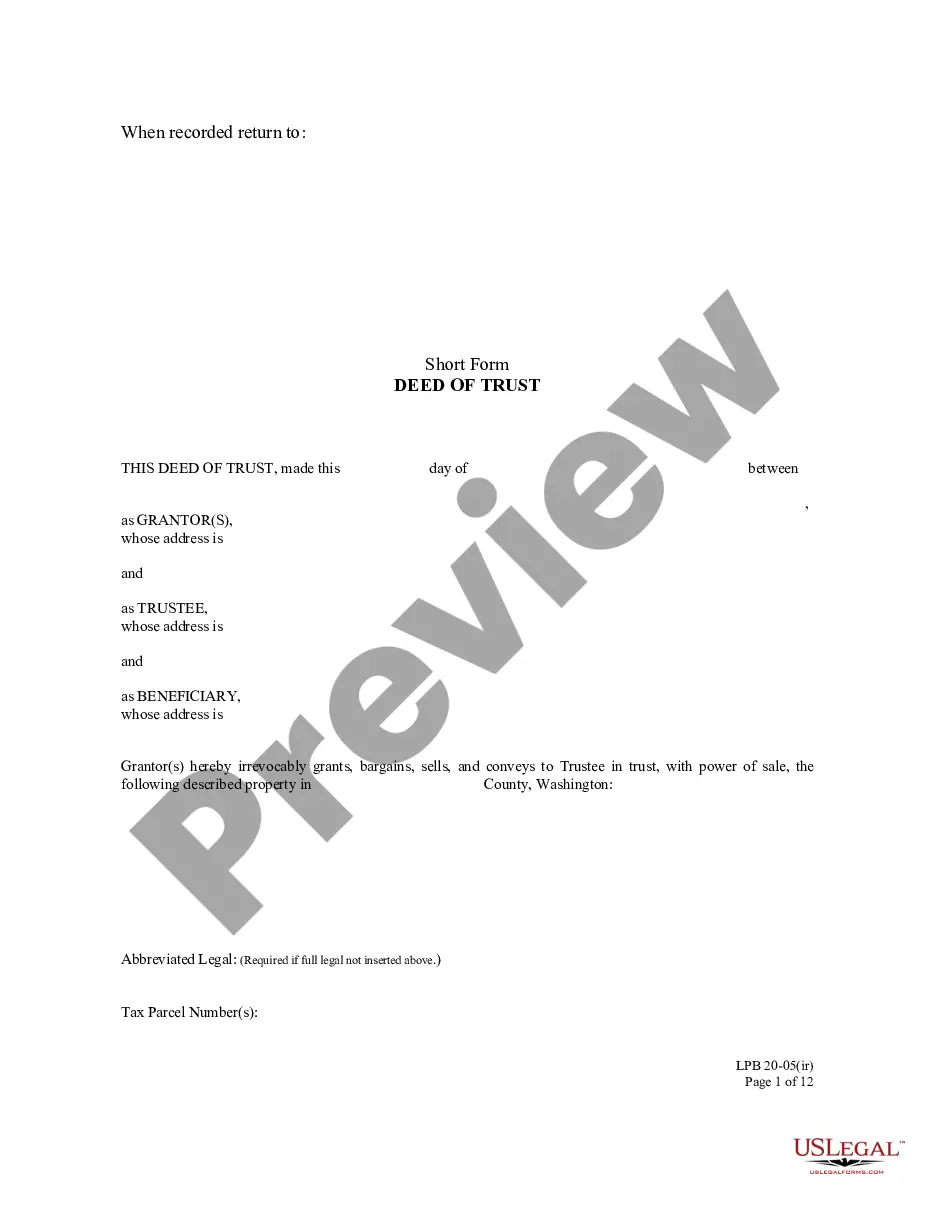
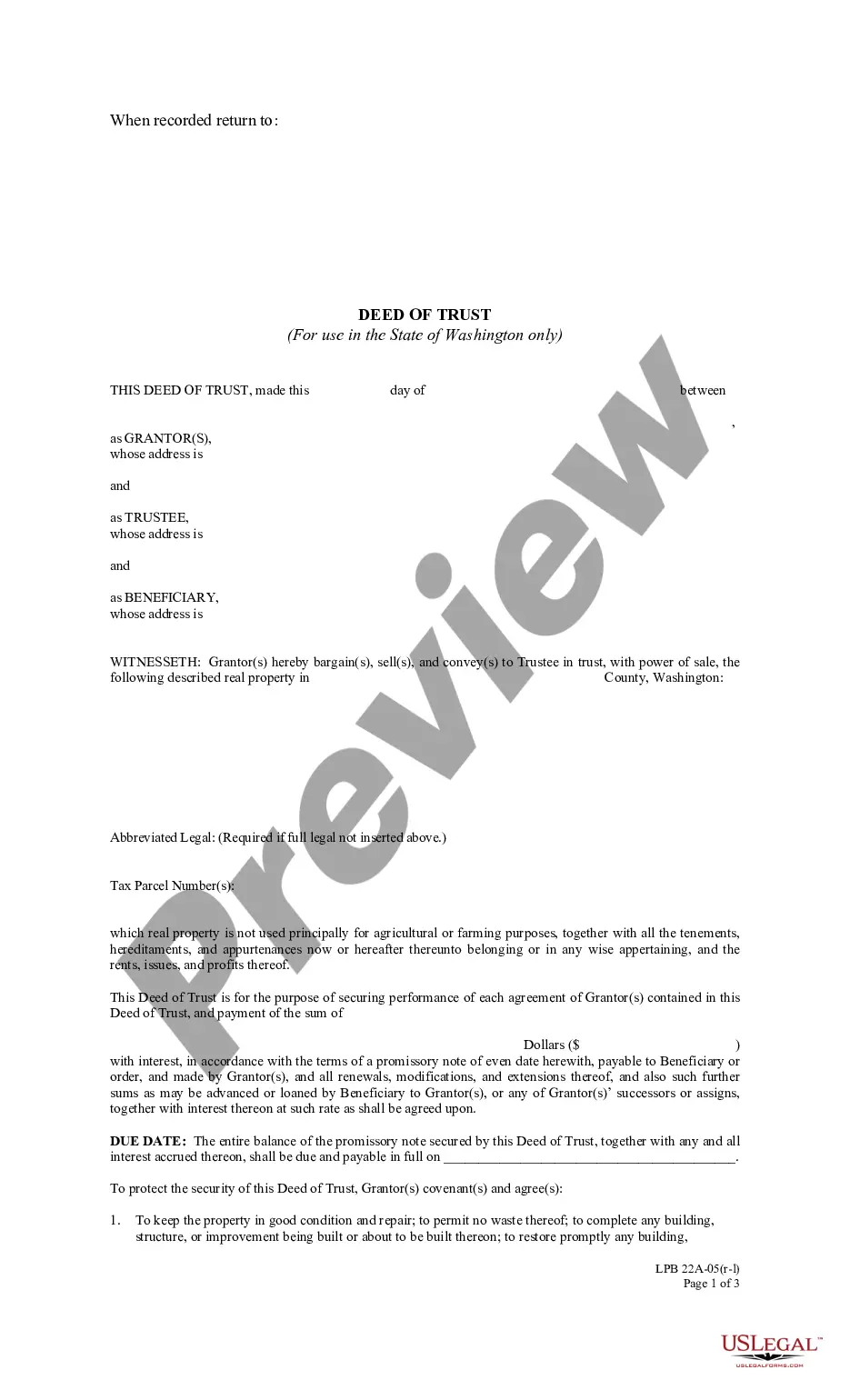
- Identification of the parties involved: Grantor(s), Trustee, and Beneficiary.
- Description of the real property being secured, including its location and tax parcel number.
- Details of the loan amount, interest rate, and payment terms.
- Obligations of the Grantor to maintain the property, pay taxes and insurance.
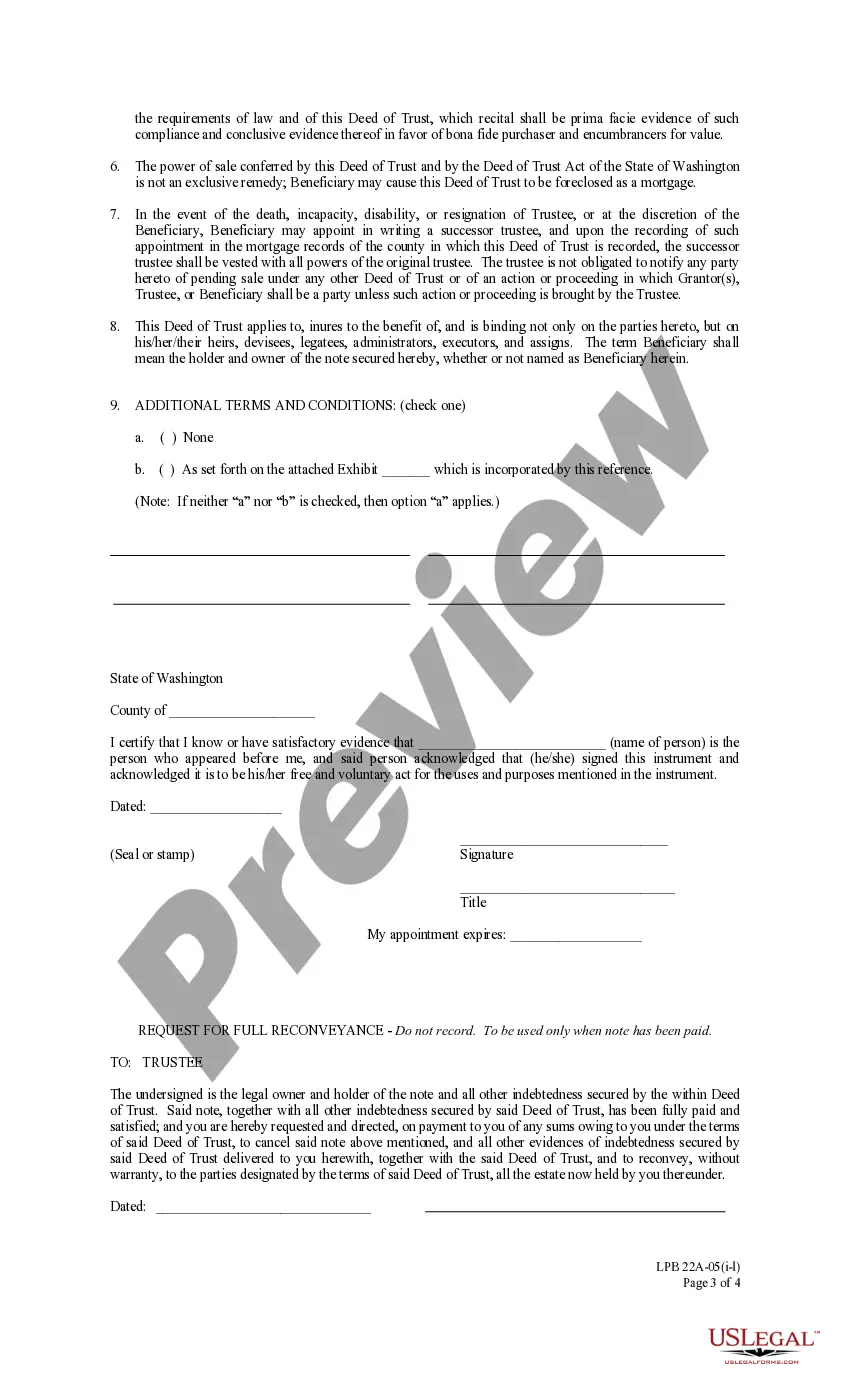
- Provisions for default and foreclosure procedures.
- Notary acknowledgment to validate the signatures.

When to use this document
This Deed of Trust should be used when a borrower wants to secure a loan using real property as collateral. It is essential when you are taking out a mortgage or refinancing an existing loan in Washington. Additionally, it can be used to clarify the rights and responsibilities of all parties involved in the transaction.
Who this form is for
- Individuals or entities borrowing money secured by real estate.
- Lenders or institutions providing loans secured by property.
- Trustees appointed to oversee the fulfillment of the loan agreement.
How to complete this form
- Identify the parties: Fill in the names and addresses of the Grantor(s), Trustee, and Beneficiary.
- Specify the property: Clearly describe the real property being used as collateral, including its location and tax parcel number.
- Enter the loan amount: Fill in the total loan amount and the applicable interest rate.
- Detail the due date: Indicate when the full balance of the loan is due.
- Sign and notarize: Ensure that all parties sign the document and have it notarized to validate the agreement.
Notarization guidance
Notarization is required for this form to take effect. Our online notarization service, powered by Notarize, lets you verify and sign documents remotely through an encrypted video session, available 24/7.
Get your form ready online
Our built-in tools help you complete, sign, share, and store your documents in one place.
Make edits, fill in missing information, and update formatting in US Legal Forms—just like you would in MS Word.
Download a copy, print it, send it by email, or mail it via USPS—whatever works best for your next step.
Sign and collect signatures with our SignNow integration. Send to multiple recipients, set reminders, and more. Go Premium to unlock E-Sign.
If this form requires notarization, complete it online through a secure video call—no need to meet a notary in person or wait for an appointment.
We protect your documents and personal data by following strict security and privacy standards.

Make edits, fill in missing information, and update formatting in US Legal Forms—just like you would in MS Word.

Download a copy, print it, send it by email, or mail it via USPS—whatever works best for your next step.

Sign and collect signatures with our SignNow integration. Send to multiple recipients, set reminders, and more. Go Premium to unlock E-Sign.

If this form requires notarization, complete it online through a secure video call—no need to meet a notary in person or wait for an appointment.

We protect your documents and personal data by following strict security and privacy standards.
Mistakes to watch out for
- Failing to correctly identify all parties involved in the transaction.
- Not providing a complete property description, leading to future disputes.
- Omitting the due date or terms of repayment, which can complicate enforcement.
- Not having the document notarized, making it potentially unenforceable.
Why use this form online
- Convenience of downloading and filling out the form from anywhere.
- Editability allows users to customize the form easily to fit their specific requirements.
- Access to professionally drafted templates, ensuring legality and adequacy.
Looking for another form?
Form popularity
FAQ
Unlike jurats, an acknowledgment does not need to be signed in the presence of a notary. However, the affiant does need to swear or affirm that they signed under their own free will.
Only you, as the notary, may make corrections to the notary certificate. Illegible/ Expired Notary Seal: Stamp impressions that are too dark, too light, incomplete, smudged, or in any way unreadable may cause an otherwise acceptable document to be rejected for its intended use.
To void a notarization that was not completed, simply line through the journal entry, initial it, and make a notation explaining the reason the notarization was cancelled.
This is a form that shows that a notary public has established the identity of the signer(s) and witnessed the signature of a document. It only demonstrates that the document has been signed and does not make any claims about the information in the document.
In California, Notaries are not allowed to correct certificates after the signer has left their presence. The only way to fix a mistake is for the Notary and signer to meet again to complete a new certificate.
If the document has already been signed, the signer can sign his or her name again above or next to the first signature. You can then proceed with the notarization. You may want to notate in your journal that the signer was instructed to sign again in your presence.
The Individual Acknowledgment certificate is used when an individual is signing and acknowledging on his or her own behalf.
What Is An Acknowledgment? The purpose of an acknowledgment is for a signer, whose identity has been verified, to declare to a Notary or notarial officer that he or she has willingly signed a document.The signer may either sign the document before appearing before you, or in your presence.
The preparer of the document adds both acknowledgment certificates for the notary public to decide and execute the acknowledgment certificate most appropriate to the situation. However, most documents that name two principal signers will generally include two notarial certificatesone for each signer.