Michigan Deeds
Deeds are essential documents for transferring property ownership. Our attorney-drafted templates make the process quick and straightforward.

Similar documents: key differences
- Warranty Deed vs. Quitclaim Deed — Warranty deeds offer guarantees of title, while quitclaim deeds do not.
- Grant Deed vs. Special Warranty Deed — Grant deeds convey ownership with full warranties; special warranty deeds limit warranties to the period of ownership.
- Executor’s Deed vs. Administrator’s Deed — Executor’s deeds are used by executors of wills, while administrator’s deeds are used in intestate situations.
- Gift Deed vs. Sale Deed — Gift deeds transfer property without payment; sale deeds involve a financial transaction.
Search for more forms
Types of Deed forms
Enhanced Life Estate
Transfer property to a trust while retaining certain rights and privileges, ensuring your intentions are secure after passing.
Warranty Deed from Trustee to Individual
Transfer property ownership from a trust to an individual, ensuring legal clarity and proper documentation during the transaction.
Enhanced Life Estate - from Individual → Individual
Use this document to transfer property while retaining ownership rights, allowing you to bypass probate and protect the property for the recipient.
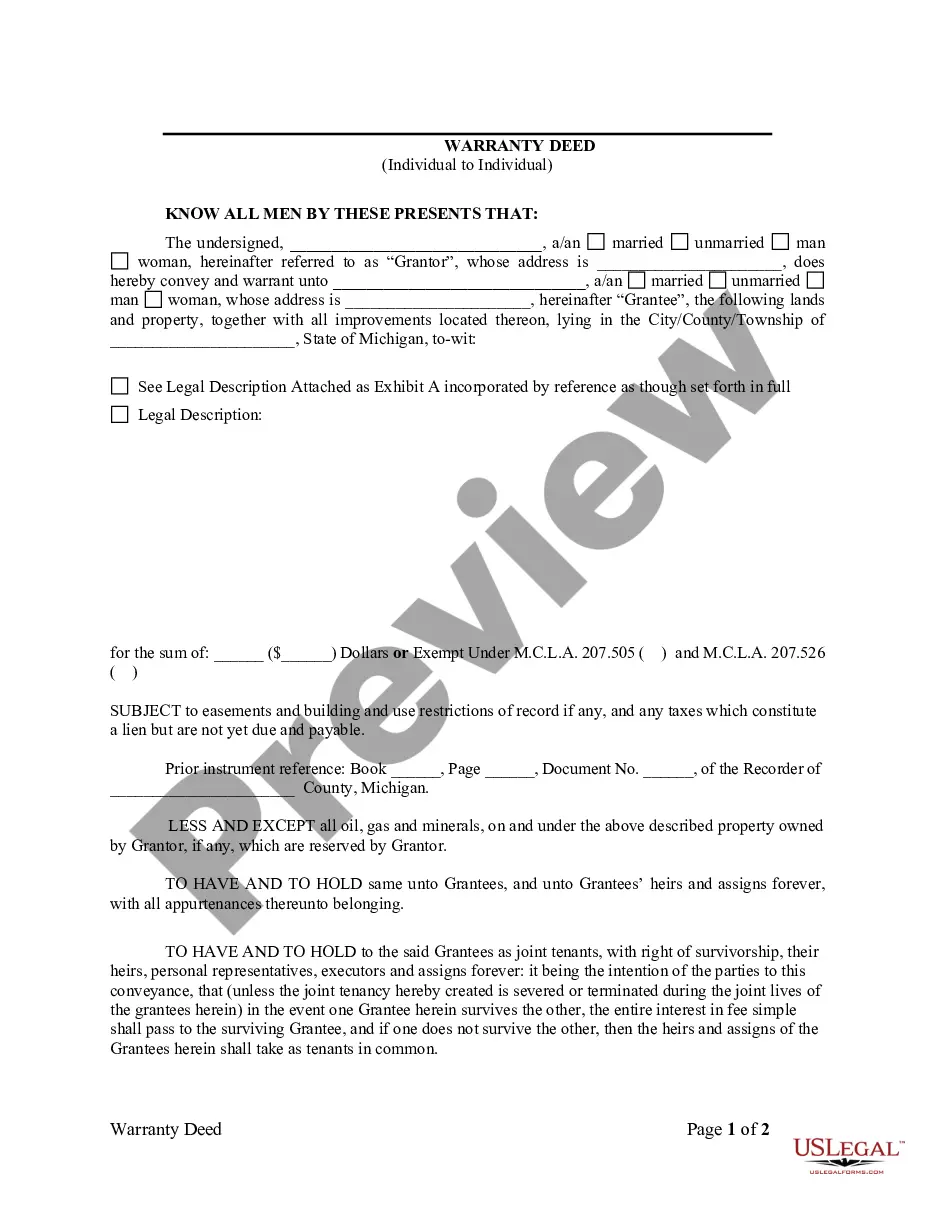
Warranty Deed - From Individual → Individual
Convey property between individuals with this deed, ensuring intentions for ownership rights and obligations are clearly stated.
Warranty Deed - From Individual → 2 Individuals
Use this form to transfer property ownership from one individual to two individuals, ensuring clear documentation of the transaction.
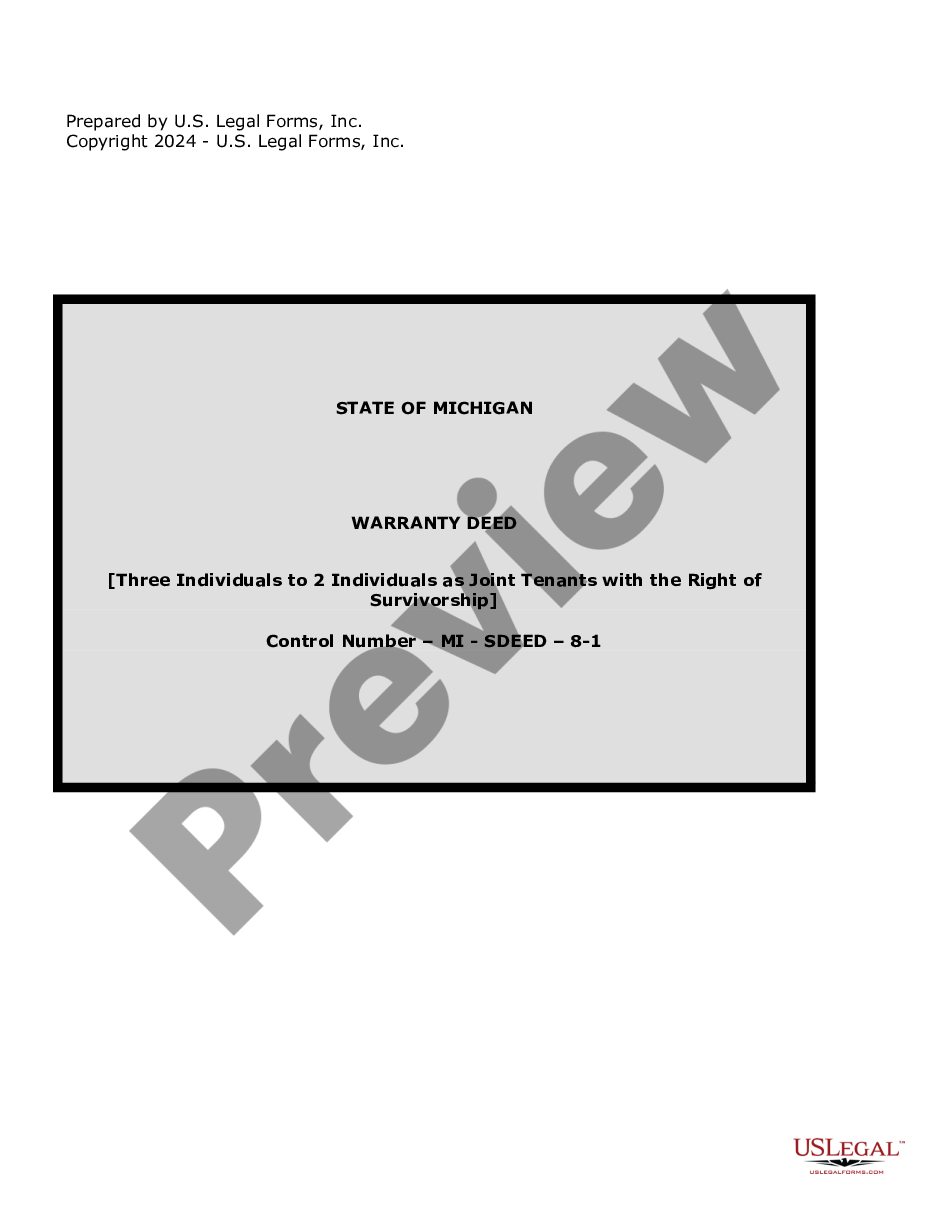
Warranty Deed - From 3 Individuals → 2 Individuals in Joint Tenancy
Use this document to transfer property from three individuals to two as joint tenants, ensuring rights of survivorship.
Enhanced Life Estate - from Individual → 3 Individuals
Utilize this deed to transfer property rights to three individuals while retaining control during your lifetime, ensuring easy transfer upon death.
Warranty Deed - From Individual → 3 Individuals
Use this document to transfer property ownership from one individual to three others, ensuring all legal rights are properly conveyed.
Enhanced Life Estate - from Individual → 4 Individuals
Use this deed to transfer property rights to multiple individuals while maintaining certain controls over the property during your lifetime.
Warranty Deed - From Individual → LLC
Transfer property ownership from an individual to an LLC with this legal form, ensuring clear title and rights.
Special Warranty Deed Form
Use this document to transfer property ownership with limited warranties, protecting the buyer from claims related to the seller's ownership.
Quitclaim Deed
Conveniently transfer property ownership to a trust, protecting assets without the complexities of a traditional deed.
Quitclaim Deed
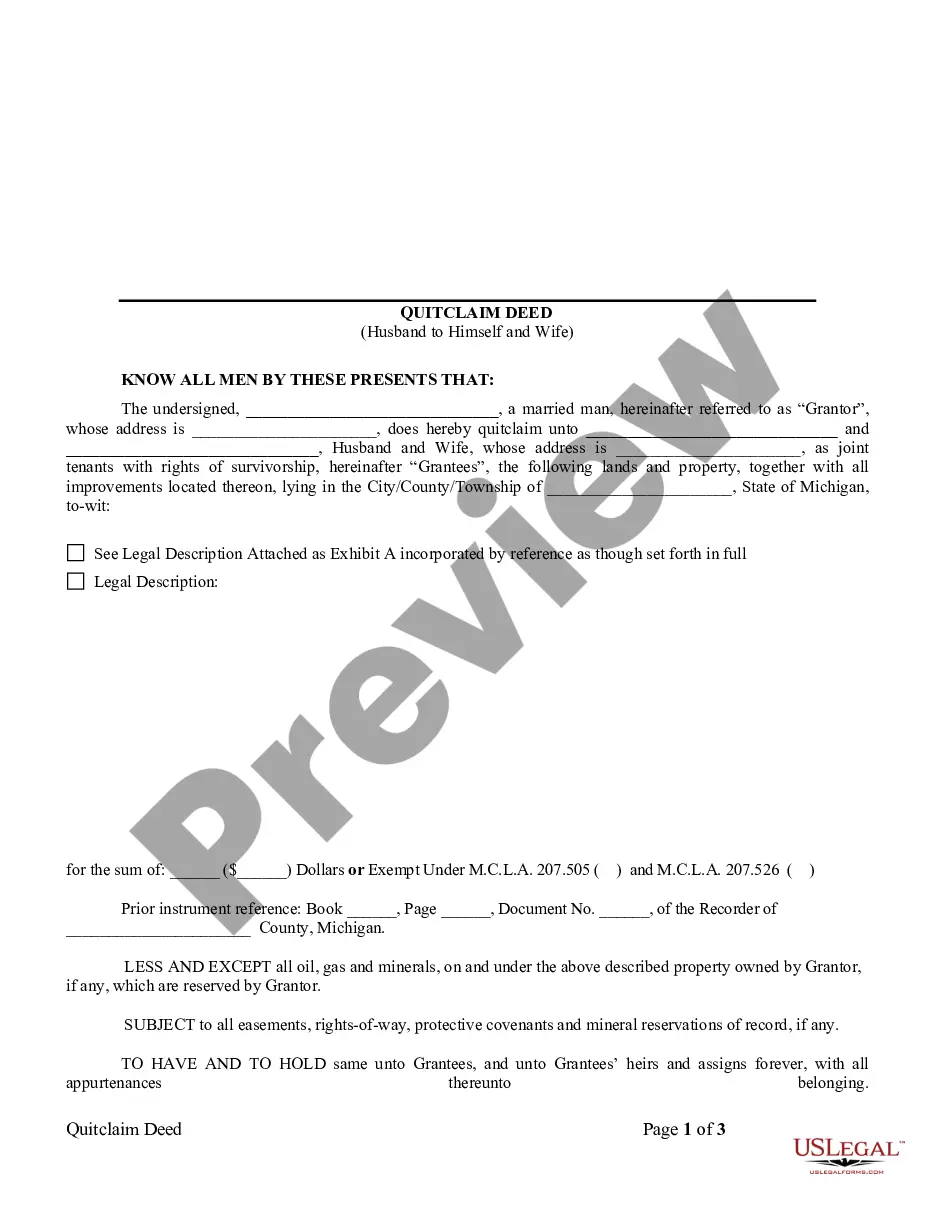
Ideal for transferring property ownership without a warranty, this form is commonly used when one party wants to relinquish their interest in real estate.
Quitclaim Deed - From 5 Individuals → Individual
Transfer ownership of property from multiple individuals to one with this essential real estate form.
Quitclaim Deed - From 4 Individuals → Individual
Transfer property from multiple people to one individual easily. Ideal for co-owners changing property rights without involving lawyers.
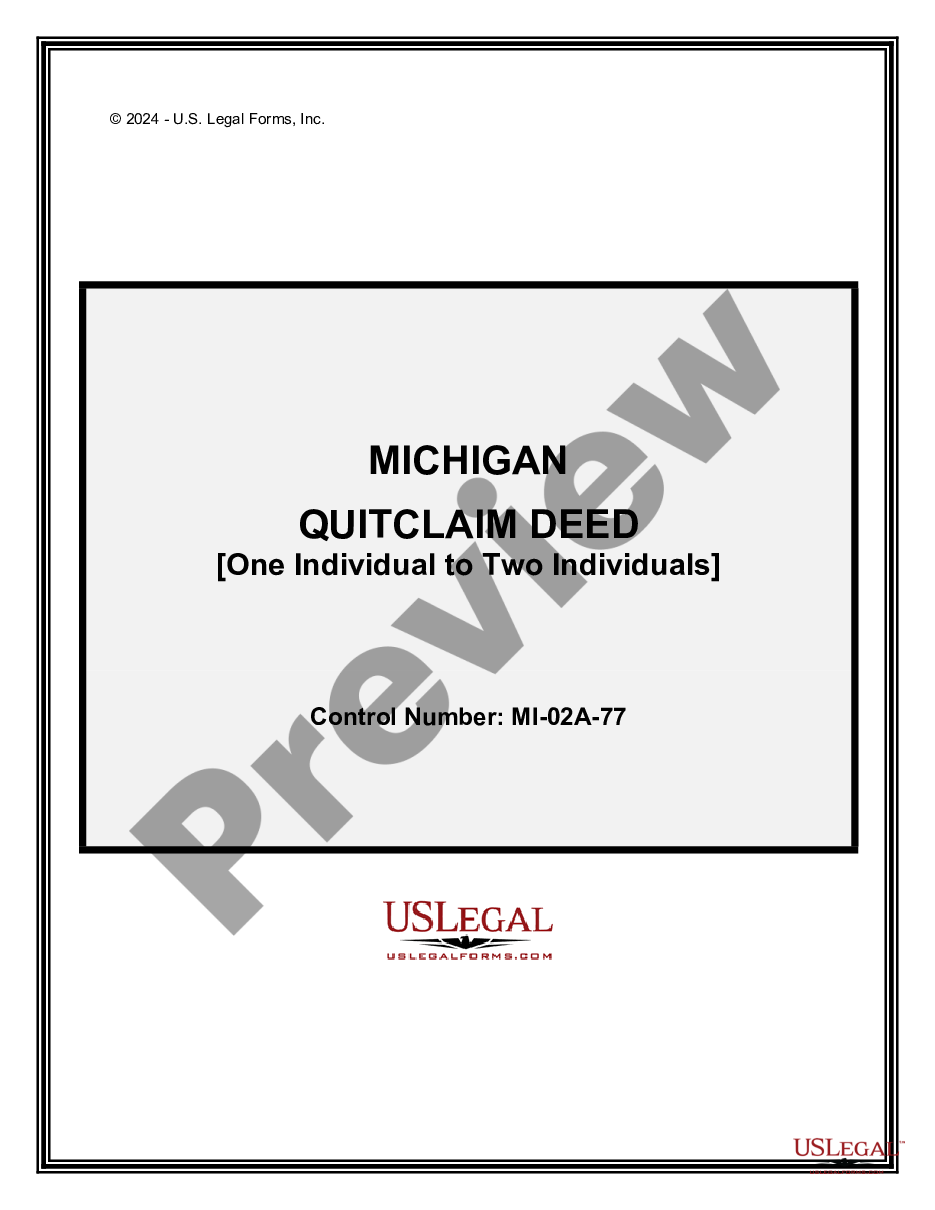
Quitclaim Deed - From Individual → 2 Individuals
Securely transfer property ownership from one person to two others, simplifying the process without the need for a formal title search.
Quitclaim Deed - From Individual → 2 Individuals in Joint Tenancy
Transfer ownership of property to two individuals in joint tenancy, ensuring joint rights to the property.
Quitclaim Deed - From 3 Individuals → 3 Individuals
Use this document to transfer property ownership among three individuals without warranties, simplifying the process of property conveyance.
Quitclaim Deed - From 2 Individuals → 3 Individuals
Transfer property ownership from two individuals to three using a quitclaim deed, making it a straightforward solution for property transfers among family or co-owners.
Quitclaim Deed - From Individual → 4 Individuals
Use this to transfer property from one person to four individuals, ensuring all parties are legally acknowledged.
Quitclaim Deed - From 2 Individuals → 4 Individuals
Transfer property rights between two and four individuals with ease and clarity using this essential deed.
Grant Deed from a Grantor to Two Grantees
This document is essential for transferring property ownership to two individuals, ensuring clarity and legal validity in real estate transactions.
Beneficiary Deed
Secure the transfer of real property to a beneficiary upon your death, allowing for a smoother estate transfer process.
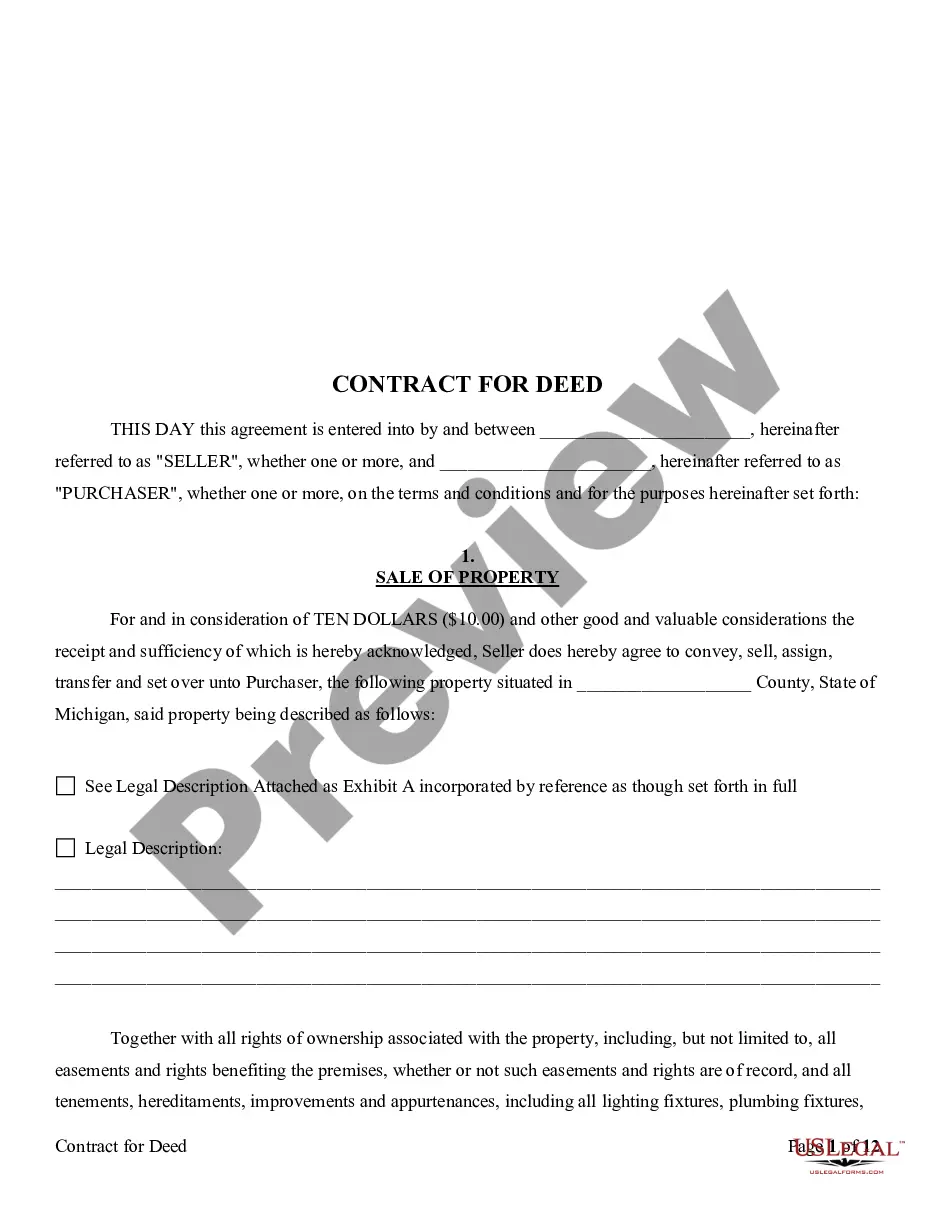
Agreement or Contract for Deed for Sale and Purchase of Real Estate
Use this document when buying or selling real estate through an agreement for deed, enabling flexible payment terms and ownership transfer.
Assignment of Contract for Deed by Seller
Use this template to transfer a contract for a deed without recourse, ensuring the assignee takes on all seller obligations.
Contract for Deed Seller's Annual Accounting Statement
Understand your financial position as a seller with this annual accounting statement for a contract for deed.
Notice of Assignment of Contract for Deed
Utilize this document to formalize the transfer of rights in a contract for deed, ensuring clear ownership and responsibilities.
Seller’s Financing Disclosure
Complete this form to disclose financing terms when selling residential property under a contract or agreement for deed.
Buyer's Notice of Intent to Vacate and Surrender Property
Notify the seller of your intent to vacate the property under a contract for deed. This ensures a smooth transition and confirms your commitment to the agreement.
General Notice of Default for Contract for Deed
Use this notice to address a default on a contract for deed, ensuring clear communication of financial obligations.
Buyer's Request for Accounting from Seller Under Contract for Deed
Request a detailed accounting of your payments under a contract, including interest and fees, crucial for tax records.
Final Notice of Default — Past Due Payments
Notify your buyer of missed payments and the risk of contract termination due to default. Protect your rights as a seller with this critical notice.
Final Notice of Forfeiture and Vacate Request
Use this notice if you're facing property forfeiture due to a default on a contract. It's crucial for protecting your rights.
Personal Representative's Deed of Distribution to an Individual
Use this document when distributing property to an individual as part of the estate settlement process, ensuring a clear legal transfer.
Fiduciary Deed for Use by Executors, Trustees, Trustors, Administrators and Other Fiduciaries
Essential for transferring property among fiduciaries, this deed simplifies the process of property ownership for trustees and administrators.
Fiduciary Deed
Use this form to officially transfer property from an estate to a buyer, ensuring clear legal ownership following a person’s death.
Common Michigan Deed documents
- Warranty Deed — guarantees that the seller holds clear title to the property.
- Quitclaim Deed — transfers whatever interest the seller has in the property without guarantees.
- Grant Deed — conveys property ownership and includes implied warranties of title.
- Special Warranty Deed — offers limited warranties for the property’s title.
- Executor’s Deed — used to transfer property from a deceased person's estate.
- Gift Deed — conveys property as a gift without payment.
- Tax Deed — transfers property after a tax foreclosure.
Complete Michigan Deeds packages
Bundle every form you need for a complete situation — not just one document.

 11 forms
Michigan Contract for Deed Package
Everything needed for an owner-financed real estate transaction in one place, with multiple related legal forms.
- Michigan Agreement or Contract for Deed for Sale and Purchase of Real Estate a/k/a Land or Executory Contract
- Michigan Notice of Intent to Enforce Forfeiture Provisions of Contact for Deed
- Michigan Final Notice of Forfeiture and Request to Vacate Property under Contract for Deed
- Michigan General Notice of Default for Contract for Deed
- Michigan Seller's Disclosure of Forfeiture Rights for Contract for Deed
- Michigan Seller's Disclosure of Financing Terms for Residential Property in connection with Contract or Agreement for Deed a/k/a Land Contract
- Michigan Contract for Deed Seller's Annual Accounting Statement
- Michigan Notice of Default for Past Due Payments in connection with Contract for Deed
- Michigan Final Notice of Default for Past Due Payments in connection with Contract for Deed
- Michigan Assignment of Contract for Deed by Seller
- Michigan Notice of Assignment of Contract for Deed
4 forms
Michigan Satisfaction, Cancellation or Release of Mortgage Package
Easily manage mortgage releases and cancellations with this package, featuring all the necessary forms in one convenient location.
4 forms
Michigan Assignment of Mortgage Package
Access multiple legal forms to effectively assign your mortgage rights to a third party, all in one convenient package.
8 forms
Michigan Commercial Property Sales Package
Find everything needed for closing a commercial real estate transaction in one convenient package, including multiple essential legal forms.
- Michigan Installments Fixed Rate Promissory Note Secured by Commercial Real Estate
- Addendum for Continued Marketing of Property by Seller due to Contingencies
- Environmental Assessment, Threatened or Endangered Species, And Wetlands Addendum
- Contract for the Sale and Purchase of Real Estate - No Broker - Commercial Lot or Land
- Exchange Addendum to Contract - Tax Free Exchange Section 1031
- Option For the Sale and Purchase of Real Estate - Commercial Lot or Land
- Option For the Sale and Purchase of Real Estate - Commercial Building
- Tax Free Exchange Agreement Section 1031
8 forms
Michigan Option to Purchase Package
Secure your right to purchase or sell property with multiple related legal forms for peace of mind.
- Michigan Option to Purchase Addendum to Residential Lease - Lease or Rent to Own
- Michigan Residential Rental Lease Agreement
- Option For the Sale and Purchase of Real Estate - Residential Lot or Land
- Option For the Sale and Purchase of Real Estate - Residential Home
- Option For the Sale and Purchase of Real Estate - Commercial Lot or Land
- Option For the Sale and Purchase of Real Estate - Commercial Building
- Option For the Sale and Purchase of Real Estate - Farm Land
- Option For the Sale and Purchase of Real Estate - General Form
FAQs
A trust and a will serve different purposes; both can be beneficial.
Your assets may be distributed according to state laws, which may not reflect your wishes.
It's wise to review your plan every few years or after major life changes.
Beneficiary designations can override your will; ensure they align with your overall plan.
Yes, you can designate separate agents for financial and healthcare decisions.
Key legal points
- Deeds are necessary for any transfer of real estate ownership.
- Many deeds require notarization or witnesses in Michigan.
- Different deeds serve various purposes based on ownership and guarantees.
- A property deed is essential for proving ownership.
- Deeds can be used to add or remove individuals from property titles.
- The type of deed affects the buyer's protection against title defects.
- Deeds should be recorded with the appropriate county office to ensure public notice.
How to get started
Begin your journey in minutes with these steps.
- Find a template or package that fits your situation.
- Review the description, preview, and signing requirements.
- Get full access with a subscription.
- Complete it in the online editor.
- Export or send: download, email, USPS mail, notarize online, or send for e-signature (Premium).
Practical tip
Consider using a warranty deed for secure property transfers, as it provides stronger protection.