Michigan Fiduciary Deed for use by Executors, Trustees, Trustors, Administrators and other Fiduciaries
What is this form?
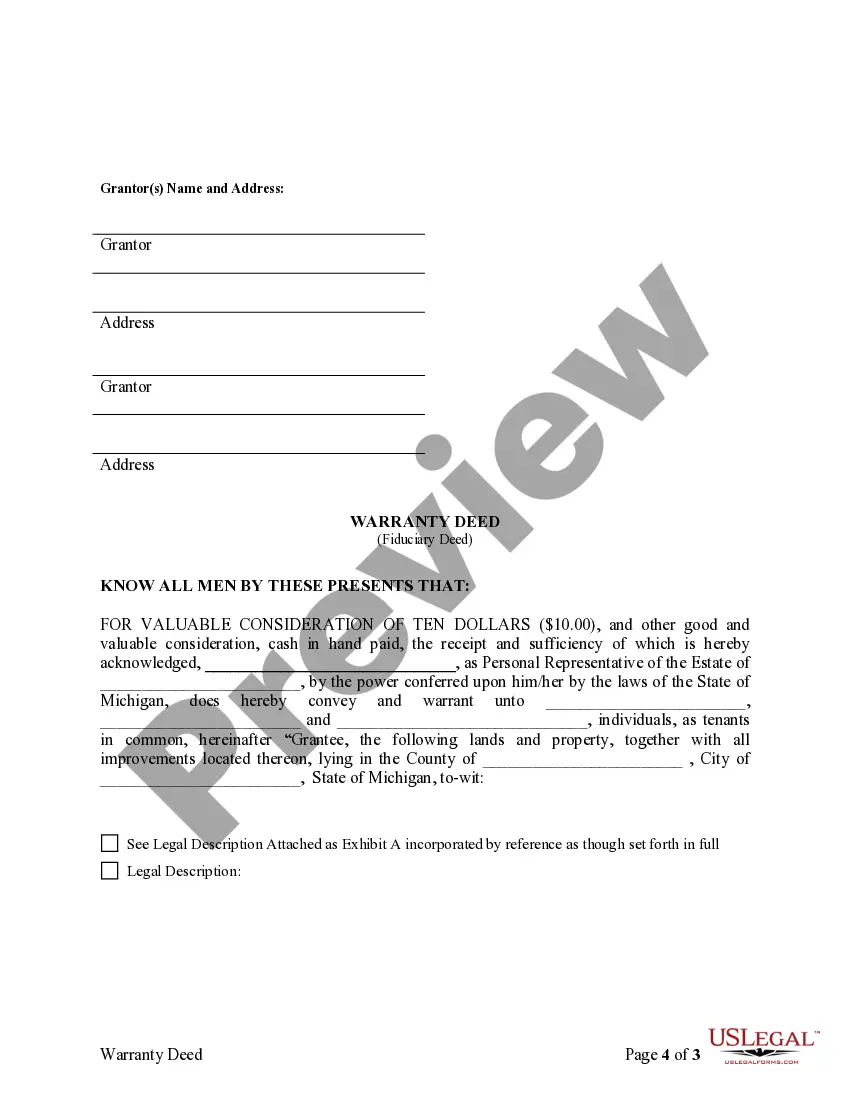
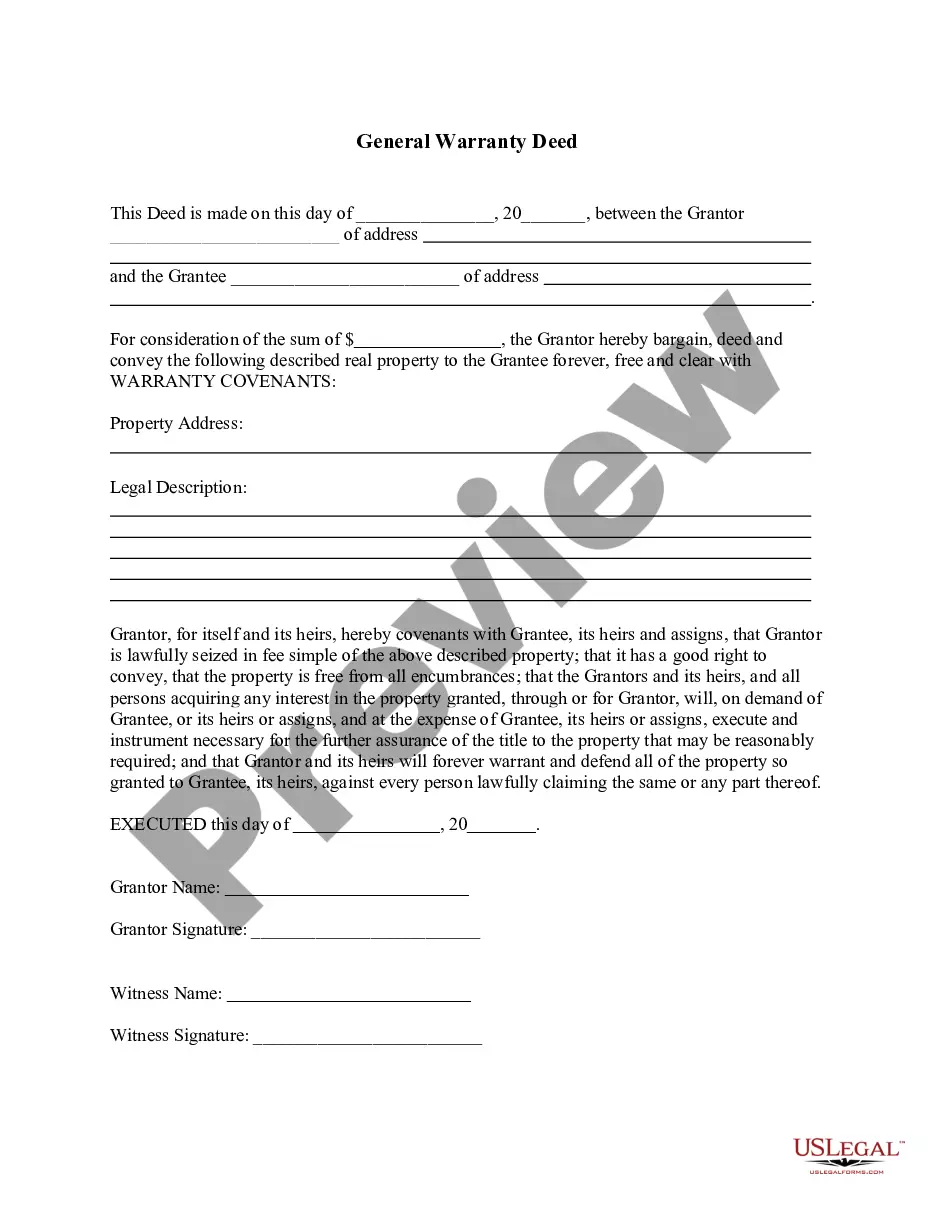
The Fiduciary Deed is a legal document used by executors, trustees, guardians, conservators, and other fiduciaries to transfer property ownership. This deed differs from standard property deeds as it involves the legal representative of an estate or trust rather than the property owner directly. It ensures that property is conveyed in accordance with the terms of a will or trust, making it essential for effective estate management.
Main sections of this form
- Grantor details: Identifies the personal representative or fiduciary.
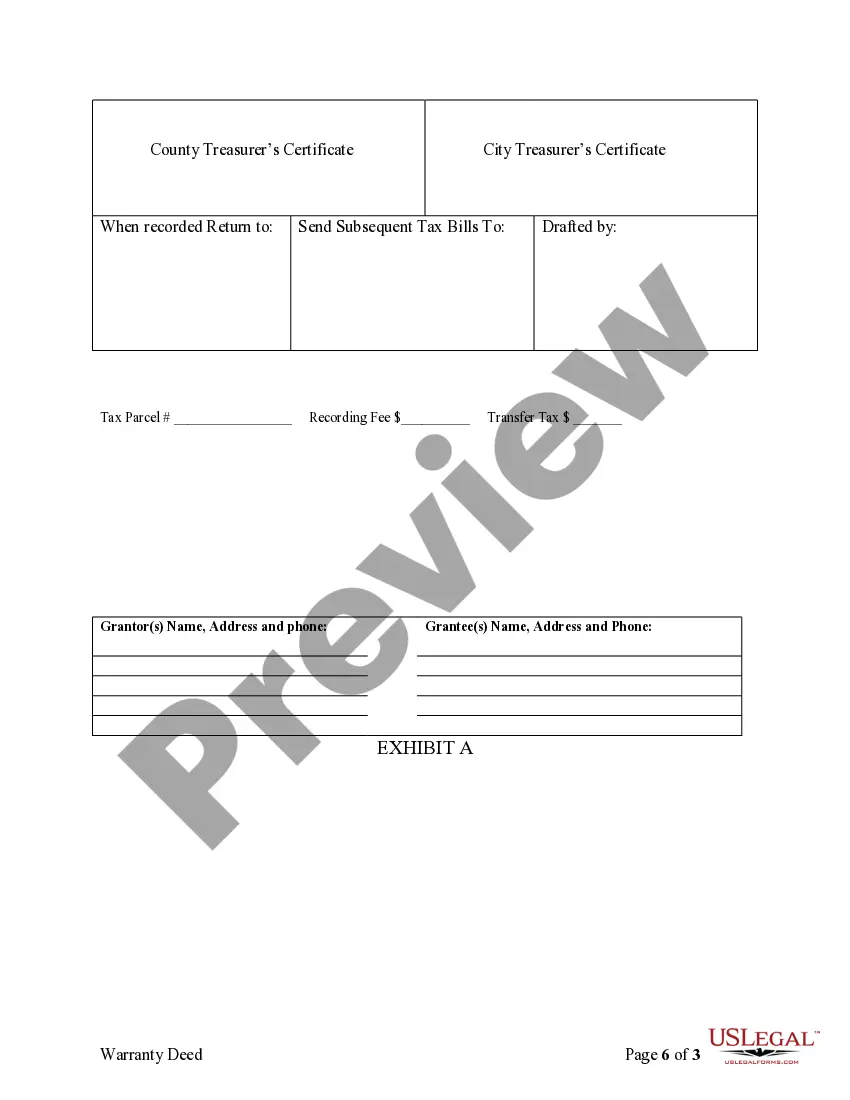
- Property description: Clear identification of the real estate being transferred.
- Beneficiary information: Lists individuals receiving the property as tenants in common.
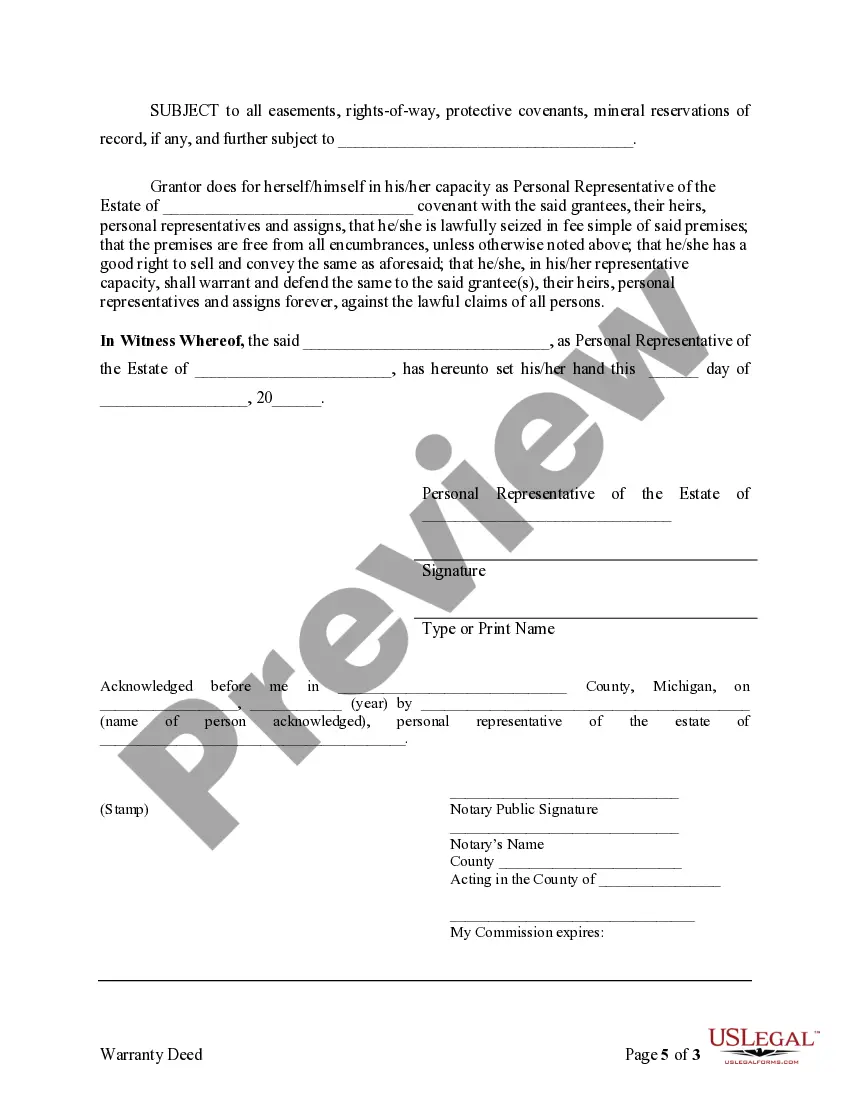
- Signatures: Requires signatures from the personal representative and notary public.
- Legal compliance: Includes necessary affirmations related to Michigan property transfer laws.



When to use this form
This Fiduciary Deed is used in various scenarios, such as when an executor is distributing property as specified in a will, when a trustee is managing a trustâs assets, or when a guardian is transferring property on behalf of a minor. This form is essential when ensuring that property transactions under fiduciary duties comply with legal requirements, particularly during estate settlements or trust distributions.
Who should use this form
This form is intended for:
- Executors of a will who need to transfer property from an estate.
- Trustees managing and distributing assets from a trust.
- Guardians making decisions on behalf of a minor or incapacitated individual.
- Administrators appointed to handle an estate without a will.
- Any fiduciary who has been legally designated to oversee and manage property transfers.
How to complete this form
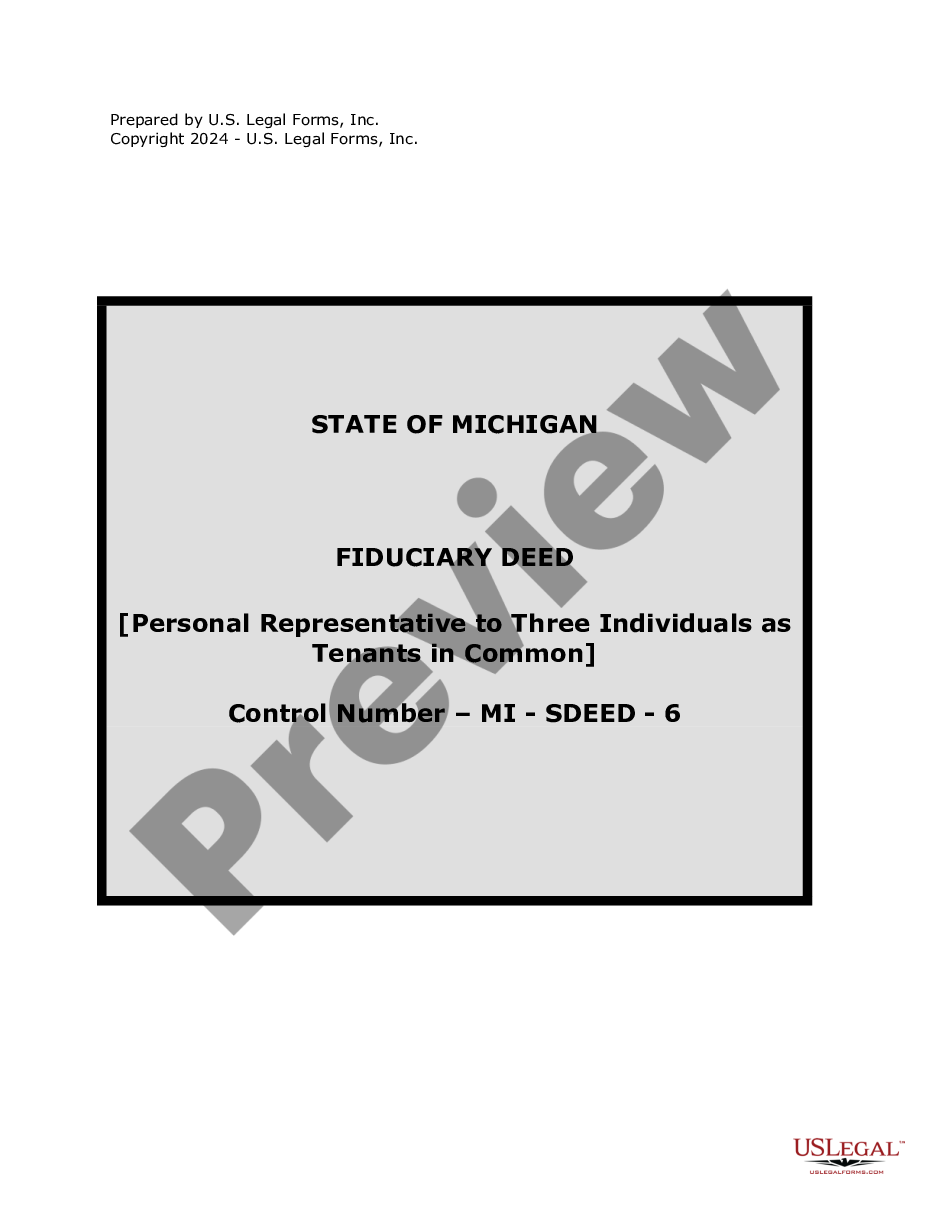
- Identify the parties: Enter the name of the personal representative (grantor) responsible for the deed.
- Specify the property: Provide a detailed description of the real estate being transferred.
- List beneficiaries: Include the names of individuals receiving the property as tenants in common.
- Sign the document: Ensure the personal representative signs the deed in front of a notary public.
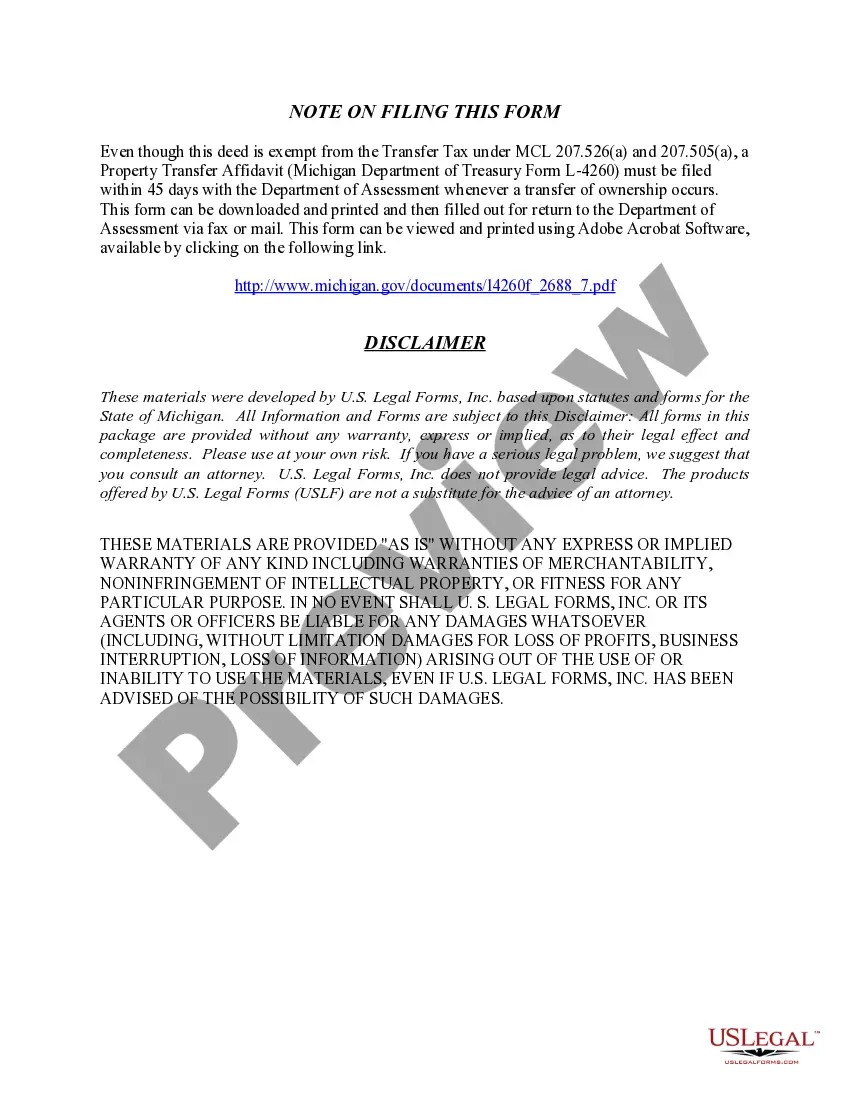
- File the necessary affidavit: After execution, remember to complete and file the Property Transfer Affidavit with the appropriate state department.
Notarization requirements for this form
Yes, this form must be notarized to be legally valid. The personal representative's signature needs to be witnessed and verified by a notary public to authenticate the deed and ensure the legitimacy of the property transfer.
Get your form ready online
Our built-in tools help you complete, sign, share, and store your documents in one place.
Make edits, fill in missing information, and update formatting in US Legal Forms—just like you would in MS Word.
Download a copy, print it, send it by email, or mail it via USPS—whatever works best for your next step.
Sign and collect signatures with our SignNow integration. Send to multiple recipients, set reminders, and more. Go Premium to unlock E-Sign.
If this form requires notarization, complete it online through a secure video call—no need to meet a notary in person or wait for an appointment.
We protect your documents and personal data by following strict security and privacy standards.

Make edits, fill in missing information, and update formatting in US Legal Forms—just like you would in MS Word.

Download a copy, print it, send it by email, or mail it via USPS—whatever works best for your next step.

Sign and collect signatures with our SignNow integration. Send to multiple recipients, set reminders, and more. Go Premium to unlock E-Sign.

If this form requires notarization, complete it online through a secure video call—no need to meet a notary in person or wait for an appointment.

We protect your documents and personal data by following strict security and privacy standards.
Common mistakes to avoid
- Failing to include all required signatures, which can render the deed invalid.
- Not accurately describing the property, leading to potential legal disputes.
- Neglecting to file the Property Transfer Affidavit within the specified timeframe.
Benefits of using this form online
- Convenience: Easily download and complete the form from anywhere with internet access.
- Editability: Fill out form fields directly on your computer, ensuring accurate completion.
- Time-saving: Instant access reduces the time typically required to obtain legal documents.
What to keep in mind
- The Fiduciary Deed is essential for transferring property by legal representatives.
- It is specifically tailored to meet Michigan's legal requirements.
- Proper completion and notarization are crucial for the deed's validity.
Looking for another form?



Form popularity
FAQ
A trustees deed is typically used when a trustee transfers property held in trust to a beneficiary or another party. Utilizing a Michigan Fiduciary Deed for use by Executors, Trustees, Trustors, Administrators, and other Fiduciaries ensures that the transaction is legally sound and recognized. This deed protects the interests of all parties involved during the property transfer. For assistance in drafting or understanding these documents, visit uslegalforms for reliable templates and information.
In Michigan, a trust does not need to be filed with the court, which simplifies the process for Executors, Trustees, Trustors, Administrators, and other Fiduciaries. However, having a Michigan Fiduciary Deed can provide clarity and ensure all parties understand their responsibilities. This deed can be beneficial when transferring property held in trust. For those seeking guidance, our platform offers resources to navigate these legal requirements smoothly.
A fiduciary deed in Michigan is a specific type of deed used by individuals acting in a fiduciary capacity to transfer property ownership. This deed is essential for Executors, Trustees, Trustors, Administrators, and other Fiduciaries to legally convey real estate, ensuring that the transfer is valid and recognized by law. Utilizing a Michigan Fiduciary Deed for use by Executors, Trustees, Trustors, Administrators, and other Fiduciaries simplifies the process and protects all parties involved.
Fiduciary law in Michigan governs the actions and responsibilities of individuals acting on behalf of others, such as Executors, Trustees, and Administrators. This body of law mandates that fiduciaries act in the best interest of the beneficiaries and adhere to ethical standards in managing assets. Understanding Michigan's fiduciary law is essential for anyone involved in these roles, and resources like USLegalForms can provide the necessary forms and guidance to ensure compliance.
The primary purpose of a fiduciary deed is to facilitate the transfer of property by individuals acting in a fiduciary role, such as Executors, Trustees, Trustors, and Administrators. This deed provides a legal framework that ensures all parties involved acknowledge the transfer, protecting the interests of beneficiaries. By using a Michigan Fiduciary Deed for use by Executors, Trustees, Trustors, Administrators, and other Fiduciaries, you can streamline the process and ensure compliance with state laws.
While serving as a fiduciary can be rewarding, it also comes with responsibilities that may pose challenges. Fiduciaries may face personal liability if they fail to act in the best interests of beneficiaries, which can lead to legal complications. Additionally, managing assets and adhering to legal requirements can be time-consuming and demanding, making it crucial for fiduciaries to understand their duties and consider resources like USLegalForms for guidance.
A fiduciary deed is a legal document used by individuals acting in a fiduciary capacity, such as Executors, Trustees, Trustors, Administrators, and other Fiduciaries, to transfer property. In contrast, an executor deed specifically pertains to the actions of an executor managing an estate after a person's death. Both documents serve to convey title, but the fiduciary deed encompasses a broader range of fiduciary roles, making it more versatile in Michigan.
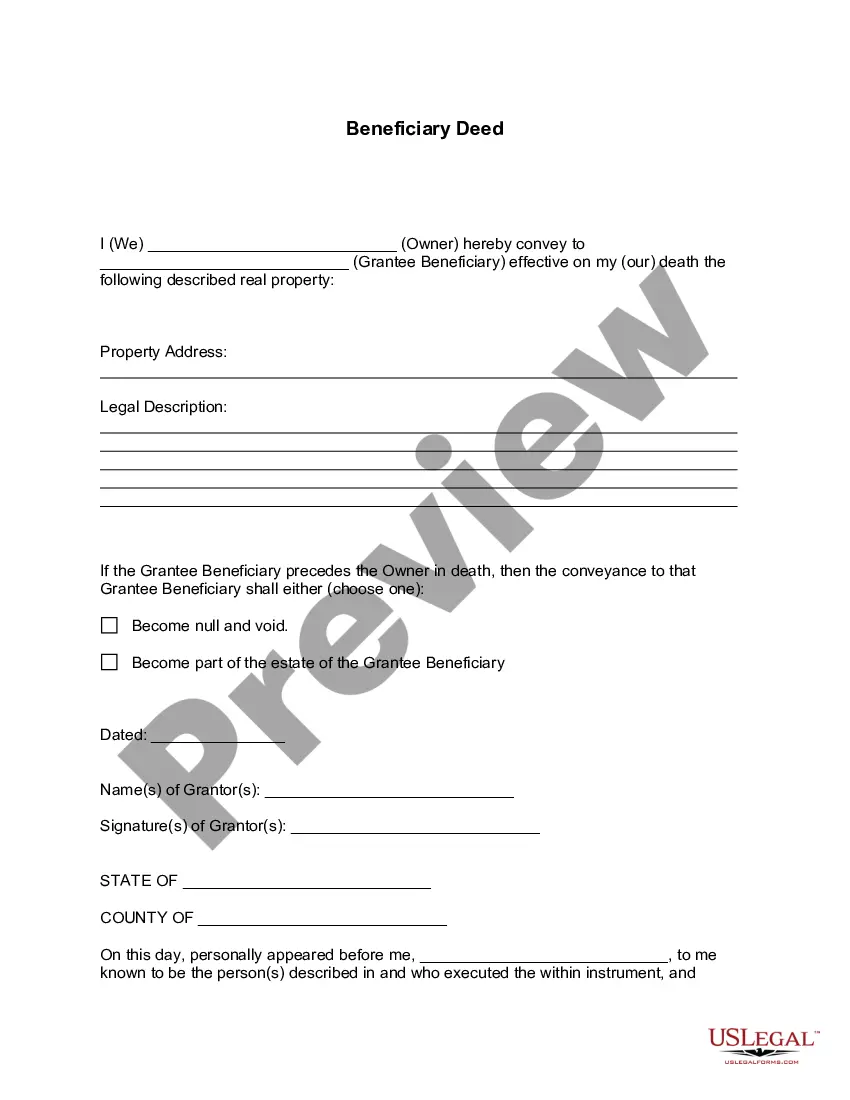
The ladybird deed, while useful, has several disadvantages when considering the Michigan Fiduciary Deed for use by Executors, Trustees, Trustors, Administrators and other Fiduciaries. One key concern is that it does not avoid probate. As a result, property transferred through this deed may still be subject to the probate process. Additionally, if the grantor becomes incapacitated, the ladybird deed does not provide clear instructions for managing the property, which can complicate matters for fiduciaries. For those looking for a more straightforward solution, exploring the Michigan Fiduciary Deed options on the US Legal Forms platform might offer better clarity and control.