Consciousness of Guilt (Flight, Concealment, Use of an Alias, etc.) (revised 2017)
Overview of this form
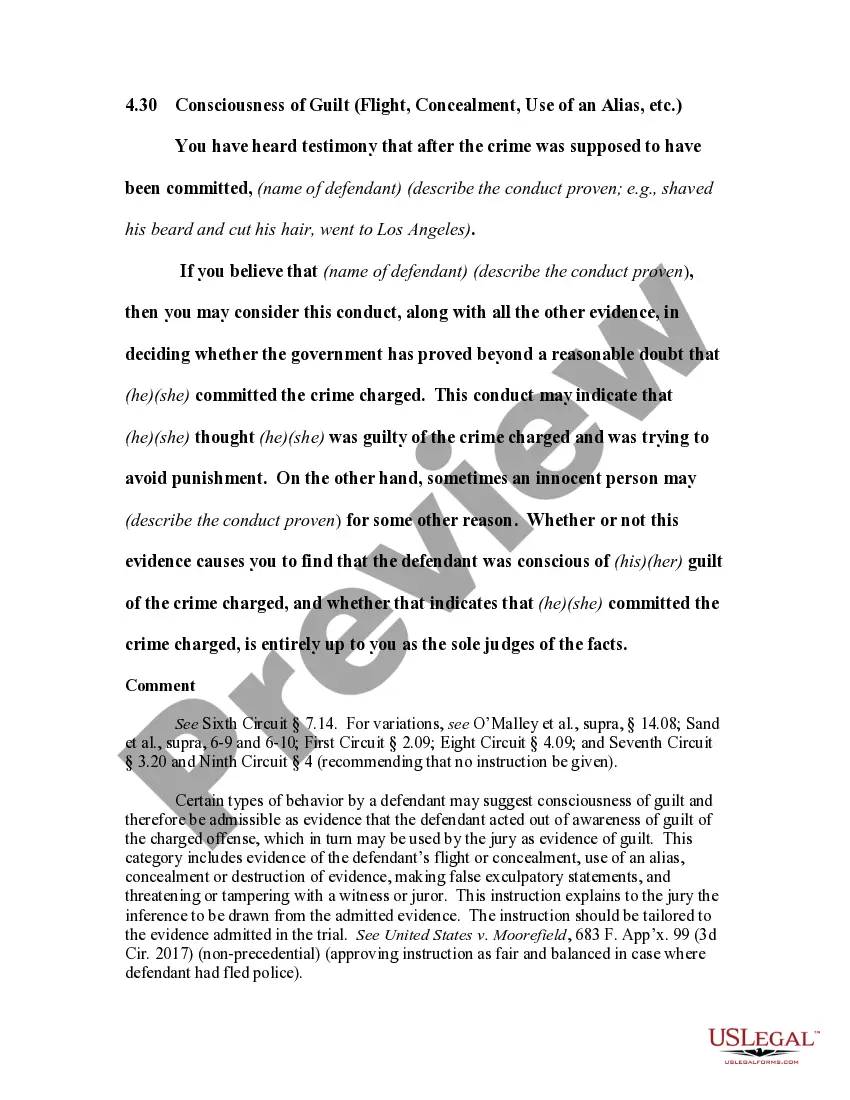
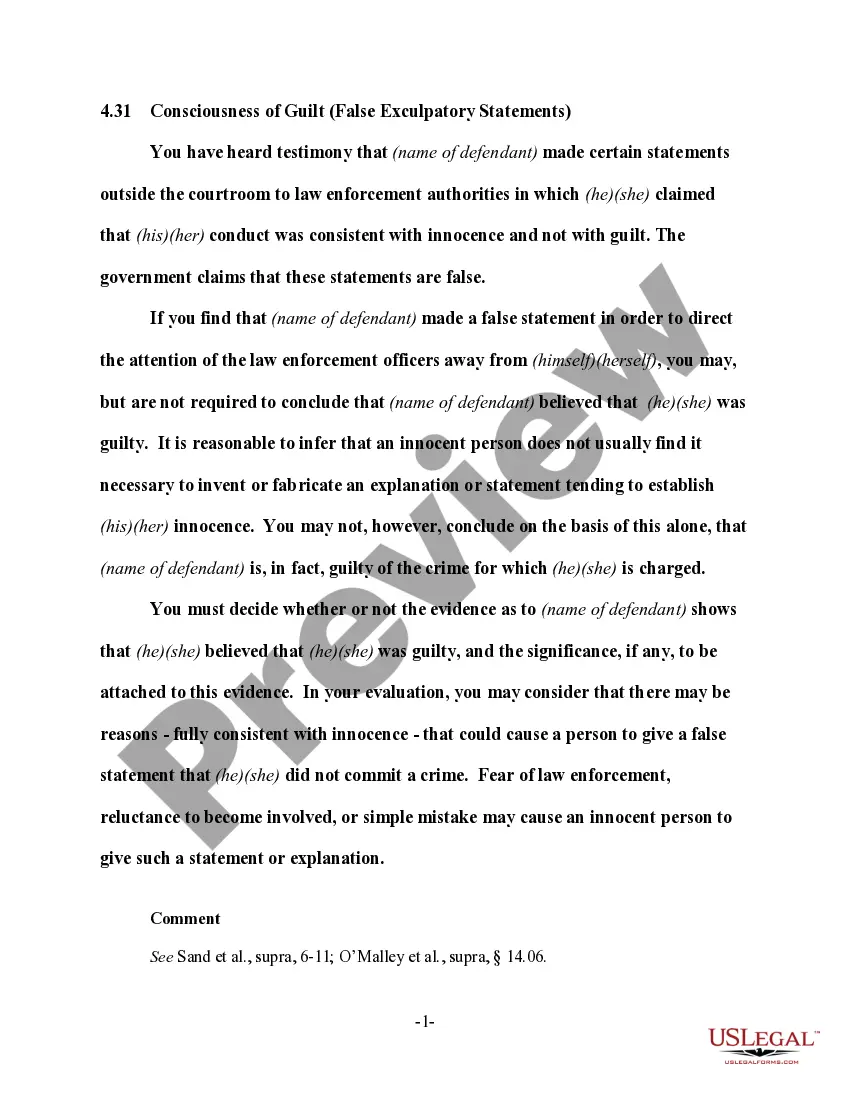
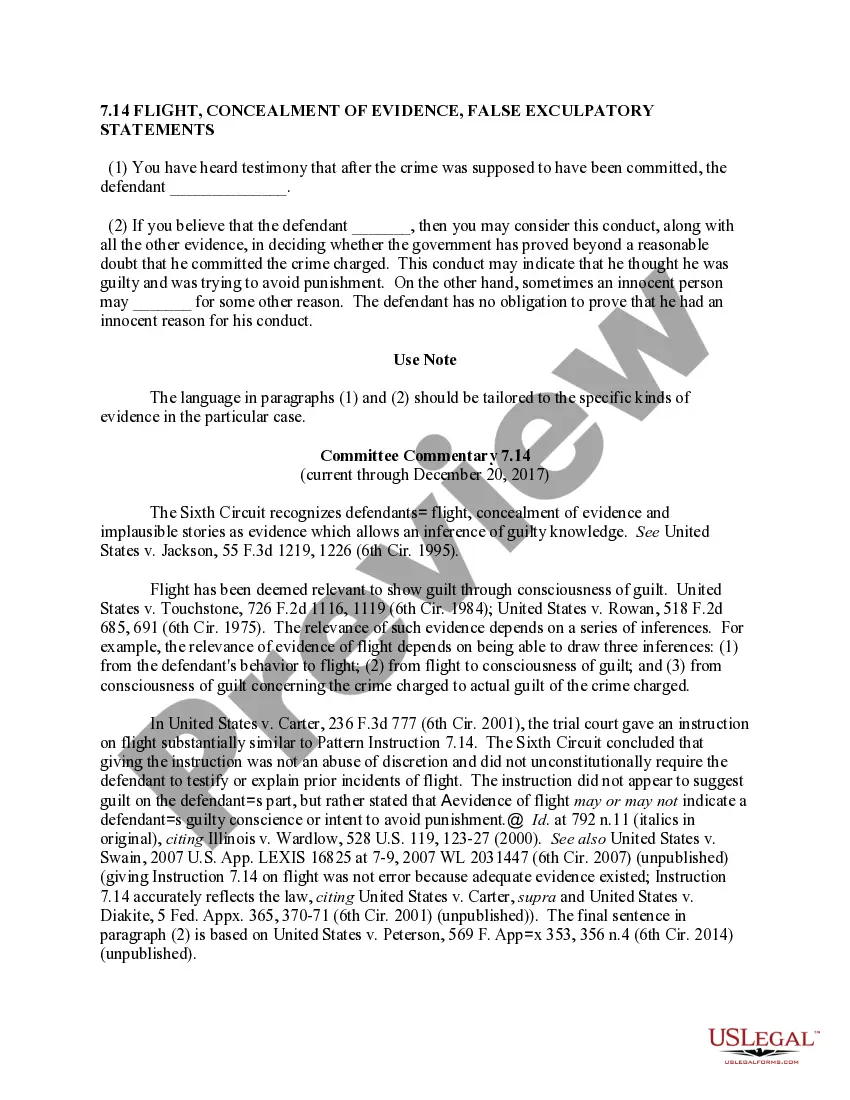
The Consciousness of Guilt form is a legal document used in criminal proceedings to instruct a jury on how to interpret certain behaviors of a defendant after an alleged crime, such as fleeing, concealment, or using an alias. This instruction helps jurors understand how such actions may indicate a defendant's awareness of potential guilt, thus influencing their decision during a trial. Unlike other legal forms, this specific instruction focuses on circumstantial evidence and its implications for the jury's evaluation of guilt or innocence.
Key components of this form
- Identification of the defendant and description of relevant conduct.
- Guidance on how to interpret the defendant's actions, such as flight or concealment.
- Inclusion of judicial standards for evaluating evidence of consciousness of guilt.
- Clarification that flight or concealment alone does not prove guilt but may suggest it.
- Instructions specific to the context of the trial.
When to use this document
This form is utilized during criminal trials when there is evidence suggesting that a defendant may have tried to evade law enforcement or hide evidence shortly after the alleged crime was committed. It is essential when analyzing behaviors that jurors may interpret as signs of guilt, thereby informing their deliberation on the case's merits.
Intended users of this form
- Judges presiding over criminal cases where consciousness of guilt evidence is relevant.
- Defense attorneys advocating for the defendant's rights and a fair trial.
- Prosecutors seeking to substantiate claims of guilt through circumstantial evidence.
Instructions for completing this form
- Identify the defendant by name in the context of the trial.
- Describe the conduct that suggests consciousness of guilt (e.g., fleeing, using an alias).
- Clearly state that the jury must consider this conduct alongside other evidence.
- Instruct the jury on the legal standard and implications of consciousness of guilt.
- Emphasize that the jury must not rely solely on this evidence to determine guilt.
Is notarization required?
This form does not typically require notarization unless specified by local law. It can be utilized during criminal proceedings where jury instructions are provided without the need for a notarized document.
Get your form ready online
Our built-in tools help you complete, sign, share, and store your documents in one place.
Make edits, fill in missing information, and update formatting in US Legal Forms—just like you would in MS Word.
Download a copy, print it, send it by email, or mail it via USPS—whatever works best for your next step.
Sign and collect signatures with our SignNow integration. Send to multiple recipients, set reminders, and more. Go Premium to unlock E-Sign.
If this form requires notarization, complete it online through a secure video call—no need to meet a notary in person or wait for an appointment.
We protect your documents and personal data by following strict security and privacy standards.

Make edits, fill in missing information, and update formatting in US Legal Forms—just like you would in MS Word.

Download a copy, print it, send it by email, or mail it via USPS—whatever works best for your next step.

Sign and collect signatures with our SignNow integration. Send to multiple recipients, set reminders, and more. Go Premium to unlock E-Sign.

If this form requires notarization, complete it online through a secure video call—no need to meet a notary in person or wait for an appointment.

We protect your documents and personal data by following strict security and privacy standards.
Mistakes to watch out for
- Failing to provide a contextual description of the defendant's conduct.
- Overemphasizing the importance of flight or concealment as definitive proof of guilt.
- Not tailoring the instruction to specific evidence admitted during the trial.
Why complete this form online
- Convenient access to legally drafted forms from licensed attorneys.
- Editable templates to accommodate specific case details.
- Reliable and up-to-date legal content ensuring compliance with current laws.
Legal use & context
- The form assists in explaining how certain behaviors post-crime can indicate guilt.
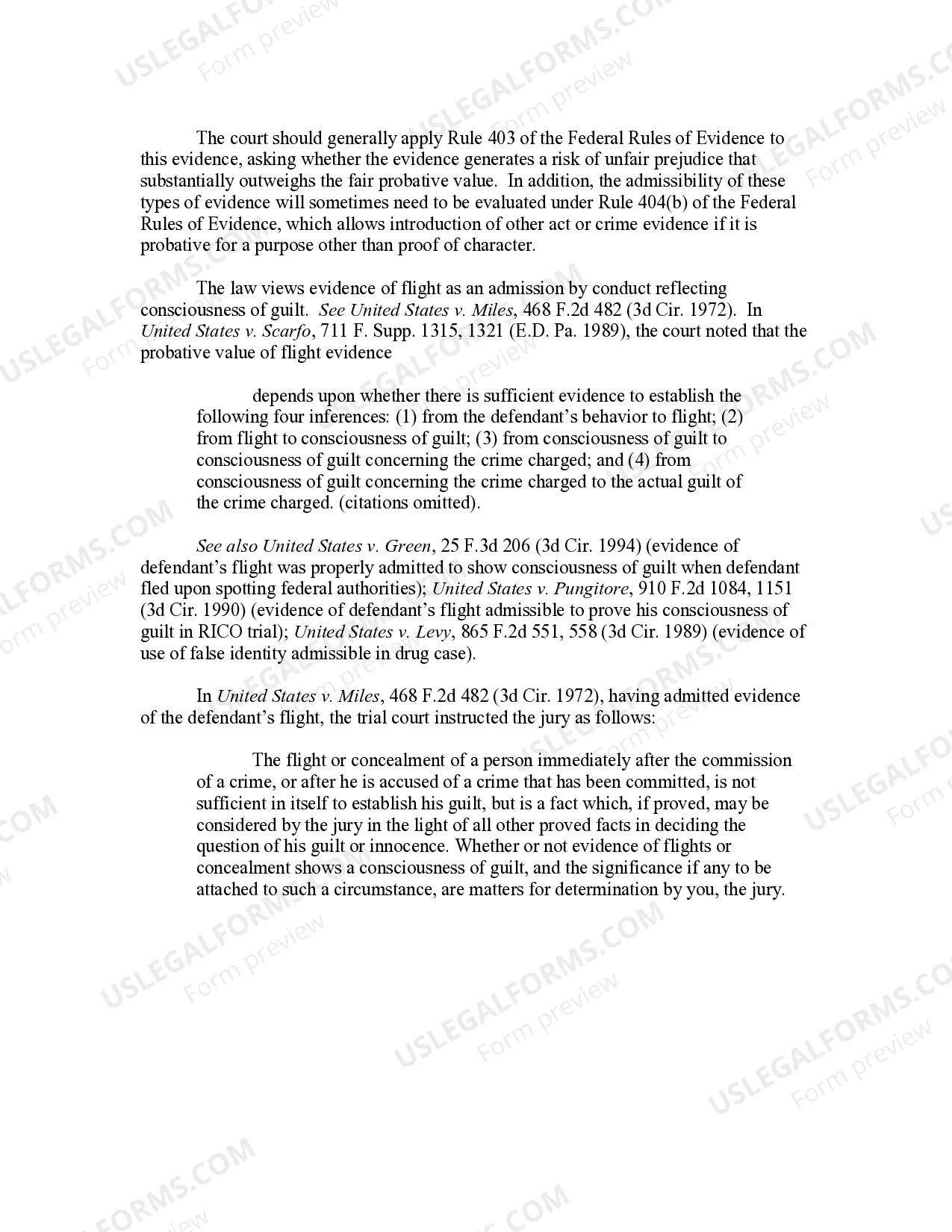
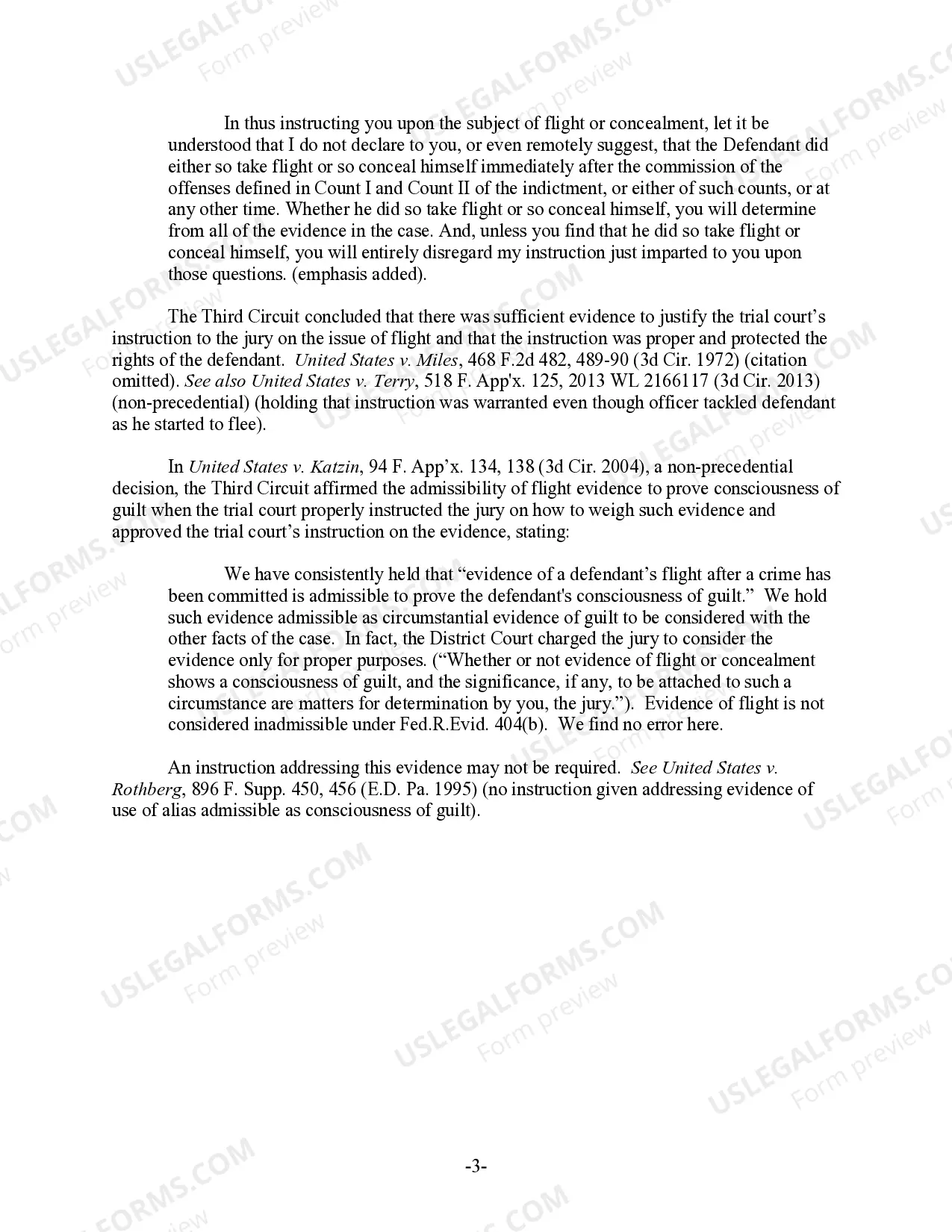
- It is supported by legal precedents that validate the use of behavior as evidence in court.
- Jurors are directed to consider this form in conjunction with all evidence presented during the trial.
- It is critical that the jury understands the implications of the defendant's actions to arrive at a fair verdict.
Looking for another form?

Form popularity
FAQ
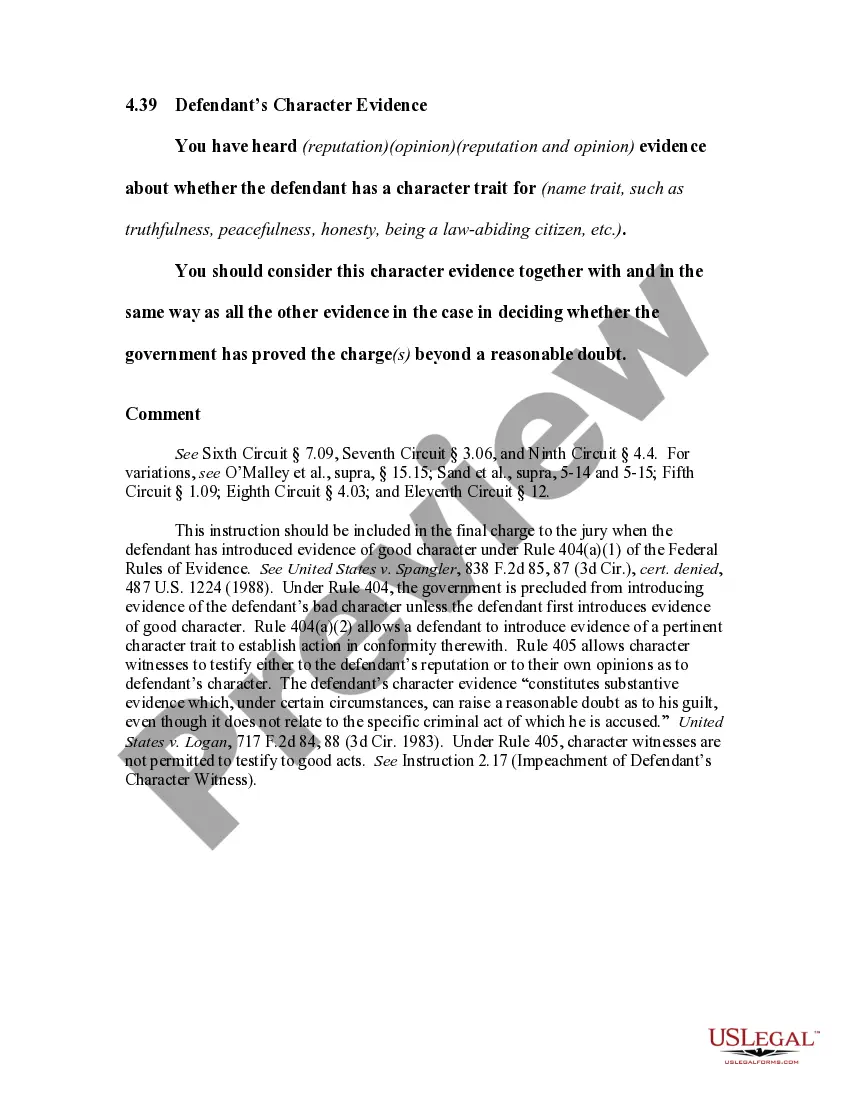
In criminal cases, the so-called ?mercy rule? permits a criminal defendant to introduce evidence of pertinent character traits of the defendant and the victim.
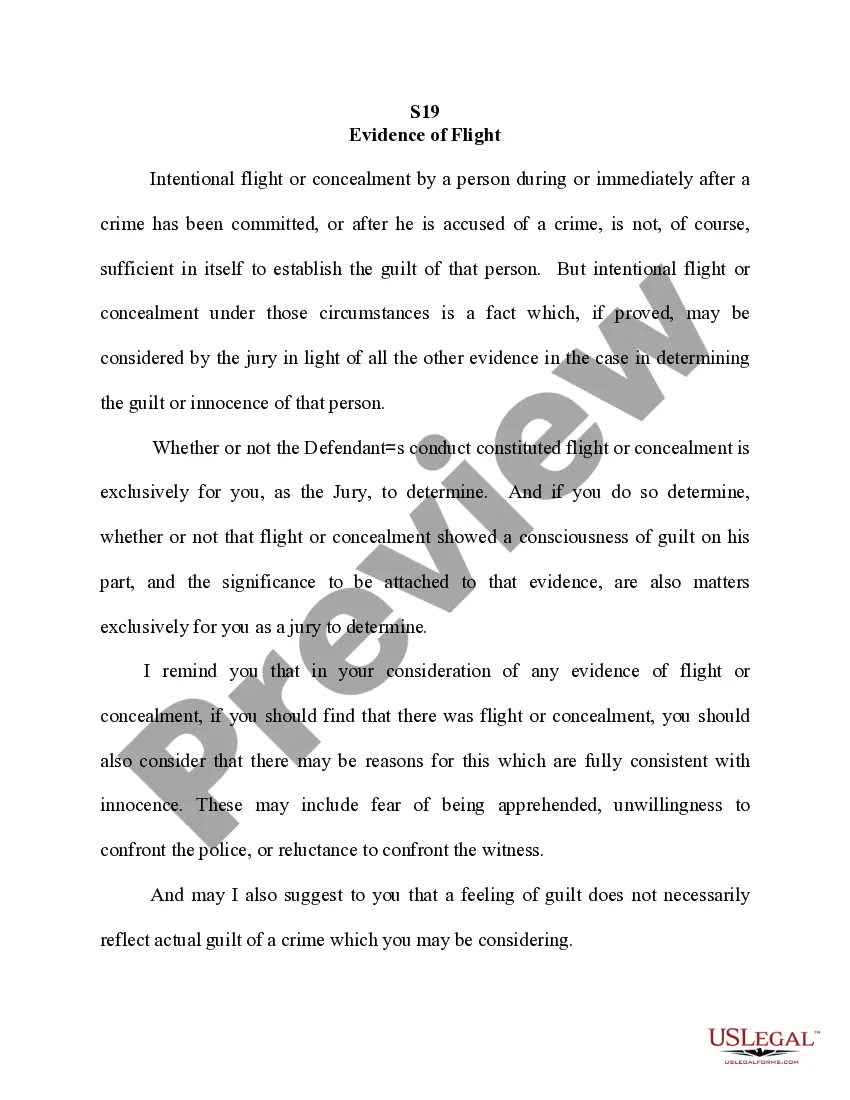
(B) Flight. Evidence that a defendant took flight after a crime, attempted to avoid detection, or tried to escape from custody, is admissible to show consciousness of guilt. A foundation is required showing that defendant was under arrest or otherwise knew he was a suspect for the crime.
Flight, in the context of criminal law, means when a person accused of a crime runs away or hides to avoid arrest or prosecution.
A CONSCIOUSNESS OF GUILT MAY, FOR EXAMPLE, BE EVINCED BY A FALSE ALIBI, A FALSE EXPLANATION FOR ONE'S ACTIONS, INTIMIDATION OF A WITNESS, DESTRUCTION OR CONCEALMENT OF EVIDENCE OR FLIGHT. 2. THE DEFENDANT MAY INTRODUCE EVIDENCE OF AN INNOCENT EXPLANATION FOR THE CONDUCT TO REBUT THE CONSCIOUSNESS OF GUILT INFERENCE.
It refers to a powerful and highly incriminating inference that a judge or jury may draw from the statements or conduct of a defendant (accused) after a crime has been committed suggesting that the defendant knows he or she is guilty of the charged crime.
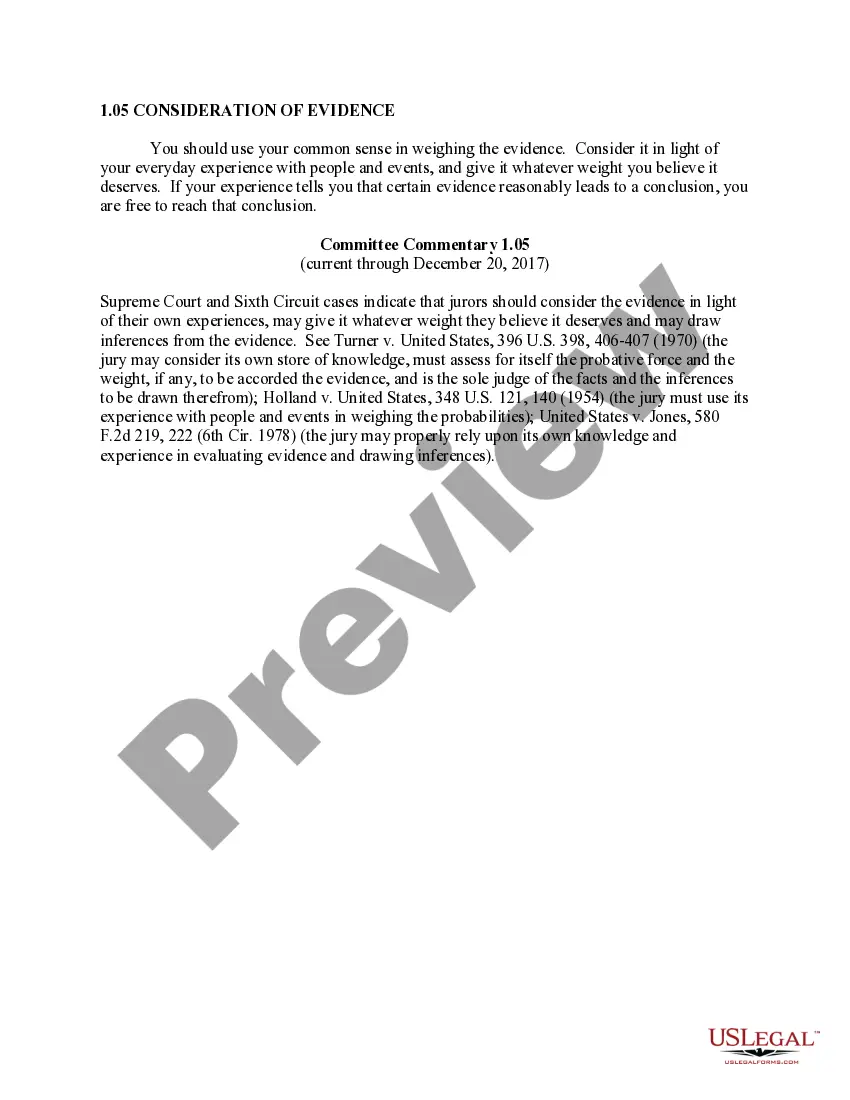
Topic 4: Circumstantial Evidence Indirect evidence does not by itself prove the offence, but through interpretation of the circumstances and in conjunction with other evidence may contribute to a body of evidence that could prove guilt beyond a reasonable doubt (Justice Department Canada, 2017).
In other words, the defendant's conduct after the crime is circumstantial (indirect) evidence that the defendant intended to commit the crime, or, in fact, committed the crime. Some of the most common types of consciousness of guilt are: Fleeing from the crime scene or jurisdiction. False statements and lies.
A presumption of guilt is any presumption within the criminal justice system that a person is guilty of a crime, for example a presumption that a suspect is guilty unless or until proven to be innocent.
Intentional flight after a defendant is accused of a crime is not alone sufficient to conclude that he or she is guilty. Flight does not create a presumption of guilt. At most, it may provide the basis for an inference of consciousness of guilt. But flight may not always reflect feelings of guilt.