Delaware Warranty Deed from Individual to a Trust
About this form
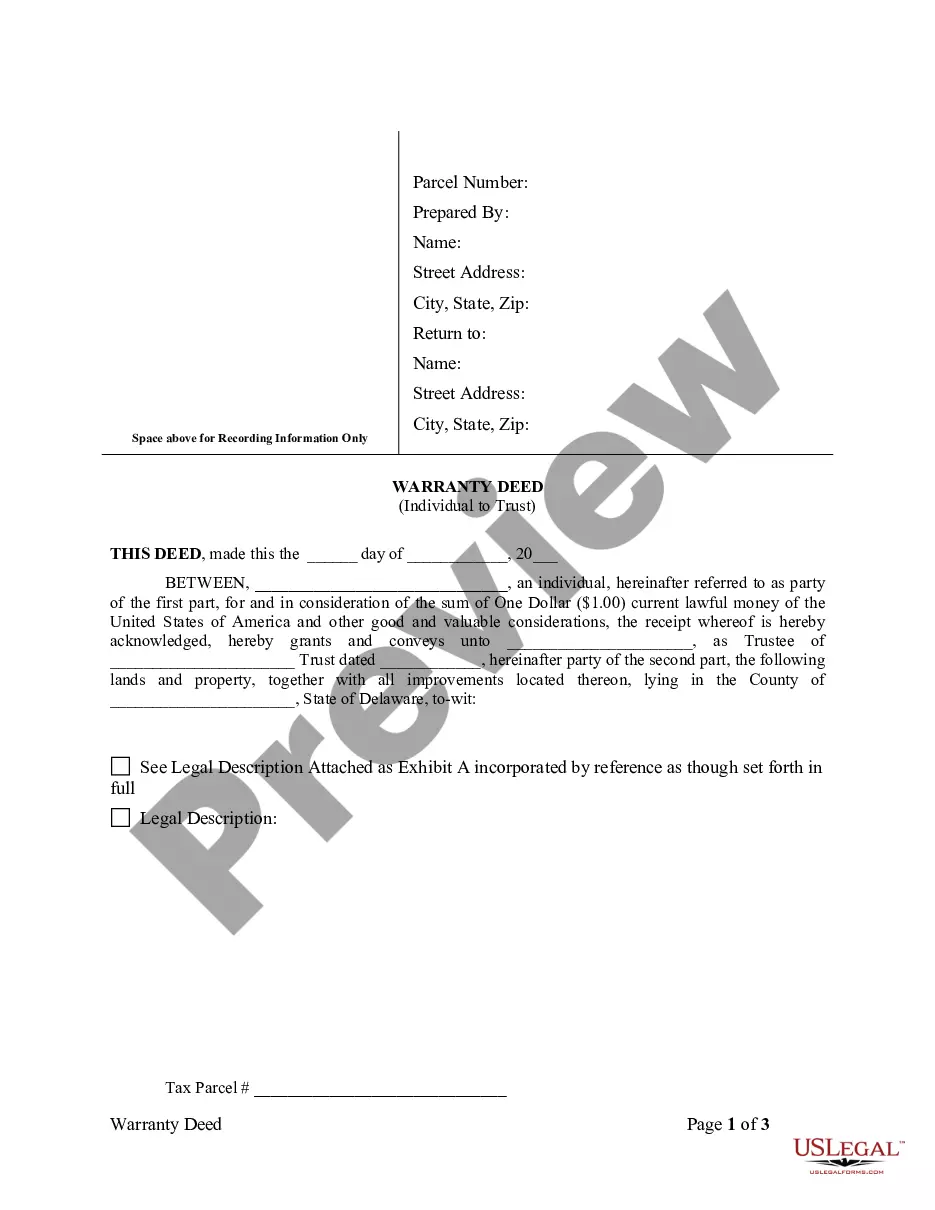
A Warranty Deed from Individual to a Trust is a legal document that enables an individual (the grantor) to transfer ownership of property to a trust (the grantee). This form guarantees that the grantor legally owns the property and has the right to transfer it. It is distinct from other deeds, such as quitclaim deeds, because it offers a warranty of title, ensuring the trust against future claims on the property. This form ensures compliance with state laws and protects all parties involved in the transaction.
Key components of this form
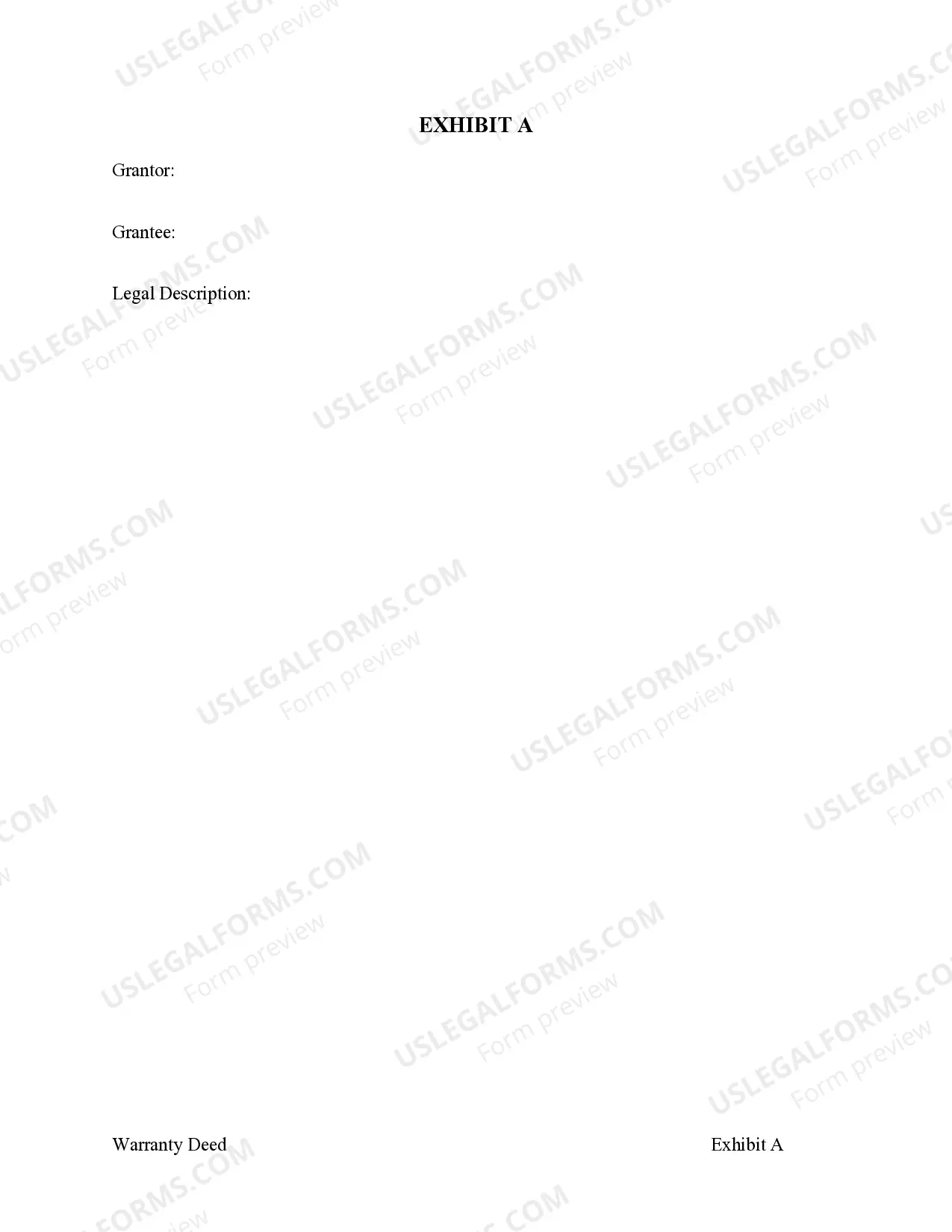
- Legal description of the property being conveyed, typically referenced as an attachment.
- Reservation of oil, gas, and mineral rights by the grantor, if applicable.
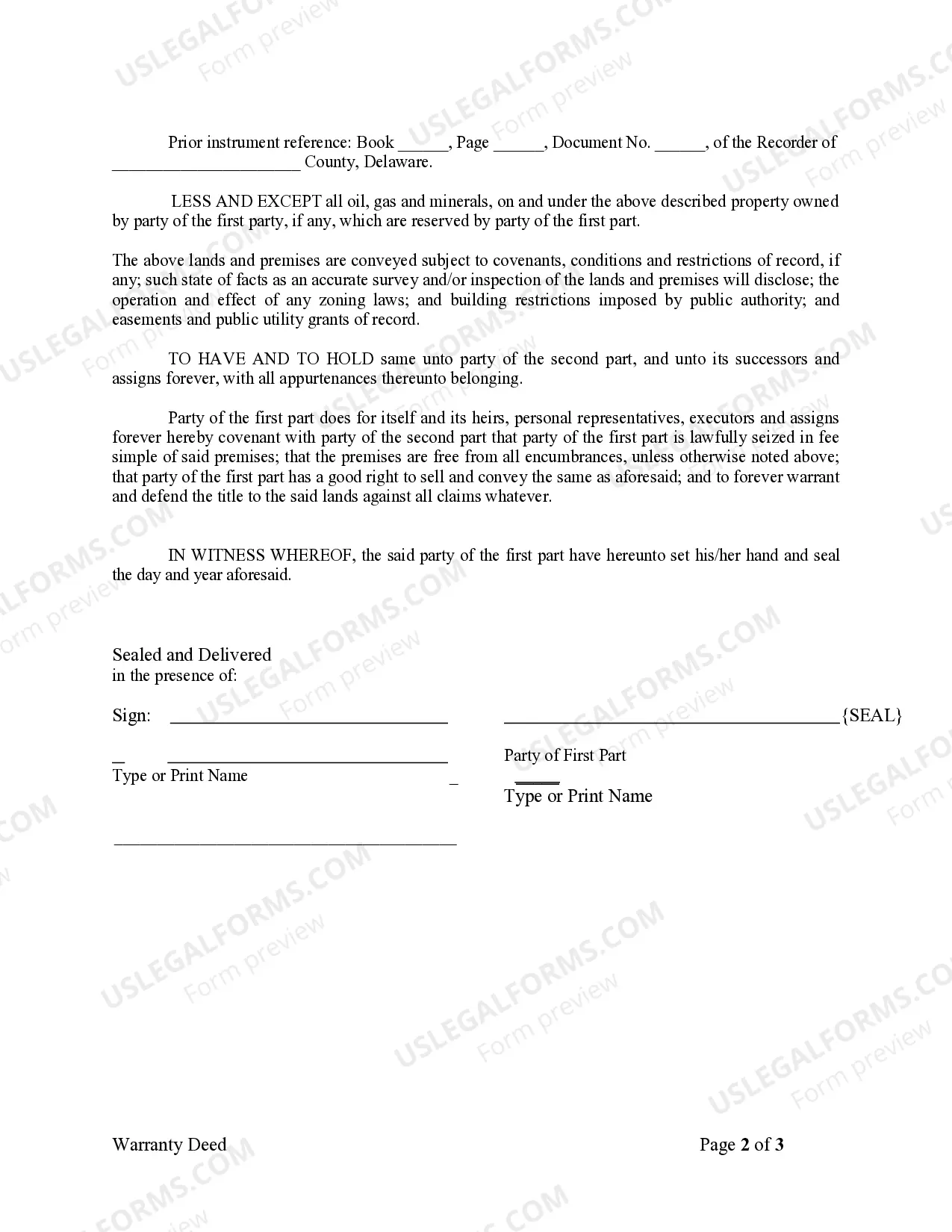
- Covenant by the grantor asserting that they are the lawful owner of the property.
- Statement confirming the property is free from encumbrances, unless otherwise noted.
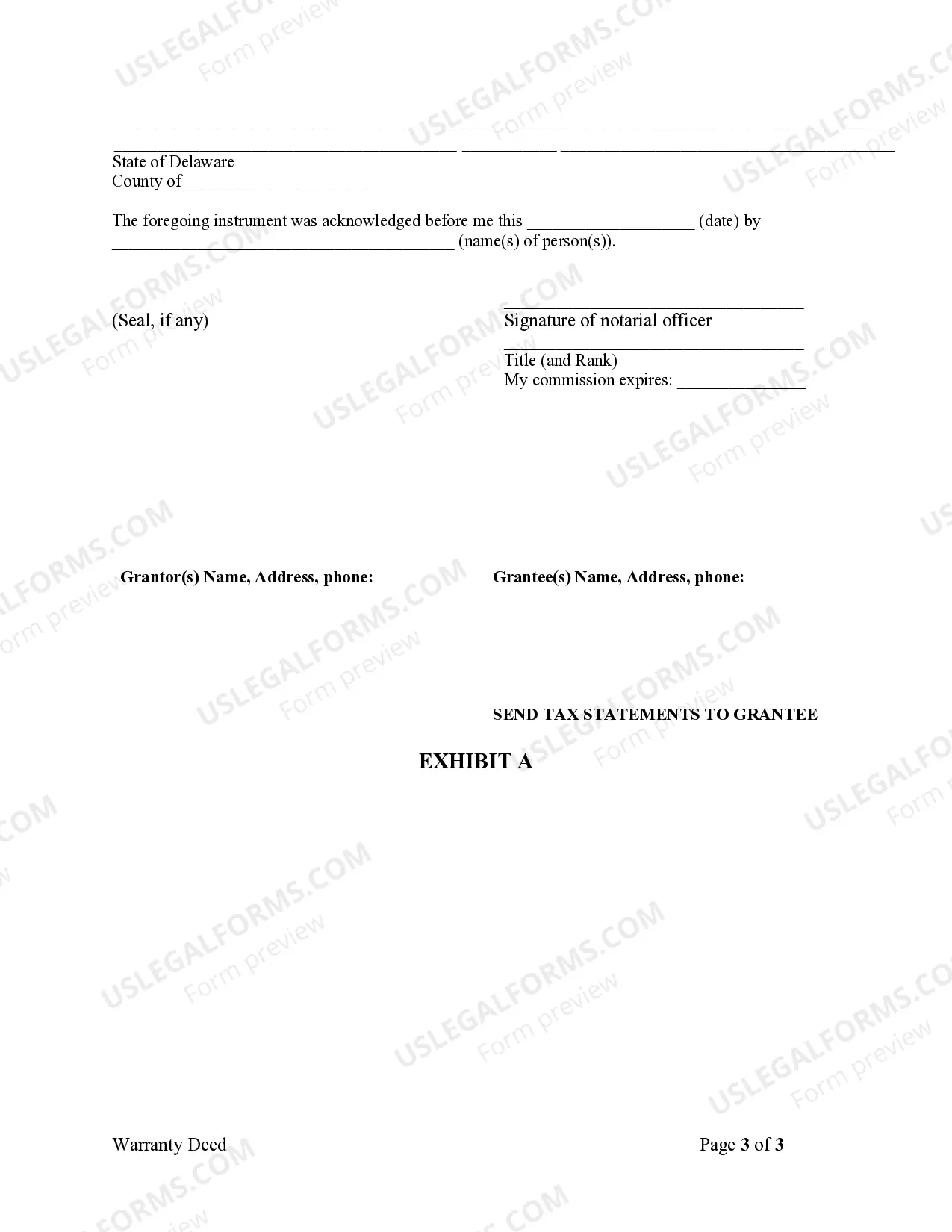
- Signatures of all parties involved, including a notary acknowledgment.



When to use this form
This warranty deed is used when an individual wants to transfer real property to a trust for various reasons, such as estate planning, asset protection, or simplifying the management of property. It is ideal in scenarios where the individual wishes to ensure the trust has a legally enforceable title to the property while reserving certain rights to themselves.
Who this form is for
- Individuals who are the current owners of real estate and wish to transfer it to a trust.
- Trustees who need to formalize the acquisition of property held in trust.
- Estate planners looking to manage property assets efficiently for beneficiaries.
Instructions for completing this form
- Identify the parties involved: the grantor (individual) and the grantee (trust).
- Provide a detailed legal description of the property in the designated area.
- Specify any reservations, such as oil, gas, and mineral rights, if applicable.
- Include the grantor's covenants regarding ownership and encumbrances.
- Sign the document in the presence of a notary public, ensuring all required signatures are obtained.
Notarization requirements for this form
Yes, this form must be notarized to be legally valid. A notary public will verify the identities of the parties signing the document, ensuring authenticity. US Legal Forms offers integrated online notarization for added convenience, allowing users to complete their documents securely via video call without the need to travel.
Get your form ready online
Our built-in tools help you complete, sign, share, and store your documents in one place.
Make edits, fill in missing information, and update formatting in US Legal Forms—just like you would in MS Word.
Download a copy, print it, send it by email, or mail it via USPS—whatever works best for your next step.
Sign and collect signatures with our SignNow integration. Send to multiple recipients, set reminders, and more. Go Premium to unlock E-Sign.
If this form requires notarization, complete it online through a secure video call—no need to meet a notary in person or wait for an appointment.
We protect your documents and personal data by following strict security and privacy standards.

Make edits, fill in missing information, and update formatting in US Legal Forms—just like you would in MS Word.

Download a copy, print it, send it by email, or mail it via USPS—whatever works best for your next step.

Sign and collect signatures with our SignNow integration. Send to multiple recipients, set reminders, and more. Go Premium to unlock E-Sign.

If this form requires notarization, complete it online through a secure video call—no need to meet a notary in person or wait for an appointment.

We protect your documents and personal data by following strict security and privacy standards.
Avoid these common issues
- Failing to provide a complete and accurate legal description of the property.
- Not reserving oil, gas, and mineral rights correctly, leading to unintentional forfeiture.
- Omitting signatures from required parties or the notary acknowledgment.
- Incorrectly assuming that a warranty deed does not need to adhere to state-specific guidelines.
Why use this form online
- Convenient access to legal forms that can be downloaded and completed at your own pace.
- Editability allows for personalization to fit individual circumstances.
- Reliability of forms drafted by licensed attorneys, ensuring legal compliance.
What to keep in mind
- The Warranty Deed from Individual to a Trust is crucial for transferring property into a trust.
- Always include detailed legal descriptions and note any exclusions, like mineral rights.
- Ensure the document is signed and notarized for legal effectiveness.
- This deed is beneficial for estate planning, protecting property for future beneficiaries.
Looking for another form?
Form popularity
FAQ
While placing property in a trust offers many advantages, there are some disadvantages to consider. For instance, creating a trust and transferring assets like a Delaware Warranty Deed from Individual to a Trust can involve upfront costs and administrative duties. Additionally, once the property is in the trust, it may limit your control over it if terms are placed on the trust's management. It's essential to weigh these factors carefully when planning your estate.
To transfer accounts to a trust, start by contacting your financial institutions to understand their specific requirements. You will usually need to provide your trust documentation, such as a Delaware Warranty Deed from Individual to a Trust. It's important that the trust document is clear and properly executed to facilitate account changes. This process ensures that your assets are effectively managed according to your estate planning goals.
To transfer assets into a trust, you typically prepare relevant documents like a Delaware Warranty Deed from Individual to a Trust for property. You will also need to retitle bank accounts, investments, and other assets in the name of the trust. Each type of asset may require a different process, so being organized and informed is crucial. It's often beneficial to seek professional guidance to ensure proper transfers.
Transferring property to a trust offers various benefits, such as avoiding probate and ensuring smooth transitions for beneficiaries. A Delaware Warranty Deed from Individual to a Trust is a common method to facilitate this transfer, providing clear ownership documentation. Furthermore, a trust can help manage assets during incapacity or after death, offering protection and peace of mind. It's a strategic move for effective estate planning.
Assets are moved into a trust by creating a legal document, such as a Delaware Warranty Deed from Individual to a Trust. This deed clearly outlines the transfer of ownership from an individual to the trust, making it clear who holds title to the property. Once the deed is executed and recorded, the assets are officially part of the trust. Using the right legal tools is essential for a smooth transfer.
To put your house in a trust in Delaware, you first need to establish the trust by drafting a trust agreement. After that, you will execute a Delaware Warranty Deed from Individual to a Trust to transfer your property into the trust. Make sure to record this deed with the appropriate county office, ensuring that the property is legally recognized under the trust.
A disadvantage of a warranty deed is that it provides a stronger guarantee than other types of deeds, which can be a burden if there are any liens on the property. If a problem arises regarding the title, the grantor may be held liable. Therefore, using a Delaware Warranty Deed from Individual to a Trust requires thorough due diligence prior to execution.
The best way to put your house in trust is to consult with an estate planning attorney who can help you draft the necessary documents. You will need to create a trust and utilize a Delaware Warranty Deed from Individual to a Trust for the property transfer. This approach ensures that both legal and tax implications are carefully considered.
One key advantage of a Delaware trust is its favorable tax treatment. Delaware allows for flexibility in trust administration, making it easier to manage assets over time. Additionally, a Delaware Warranty Deed from Individual to a Trust can protect your property from probate, offering peace of mind for your heirs.
To transfer a warranty deed, first, you need to prepare the new deed with the correct details about the property and the new owner. Next, you need to have the current owner sign the deed. Finally, submit the Kansas Warranty Deed from Individual to a Trust to the county for recording, which makes the transfer official.