Colorado Warranty Deed for Husband and Wife to Individual
What is this form?
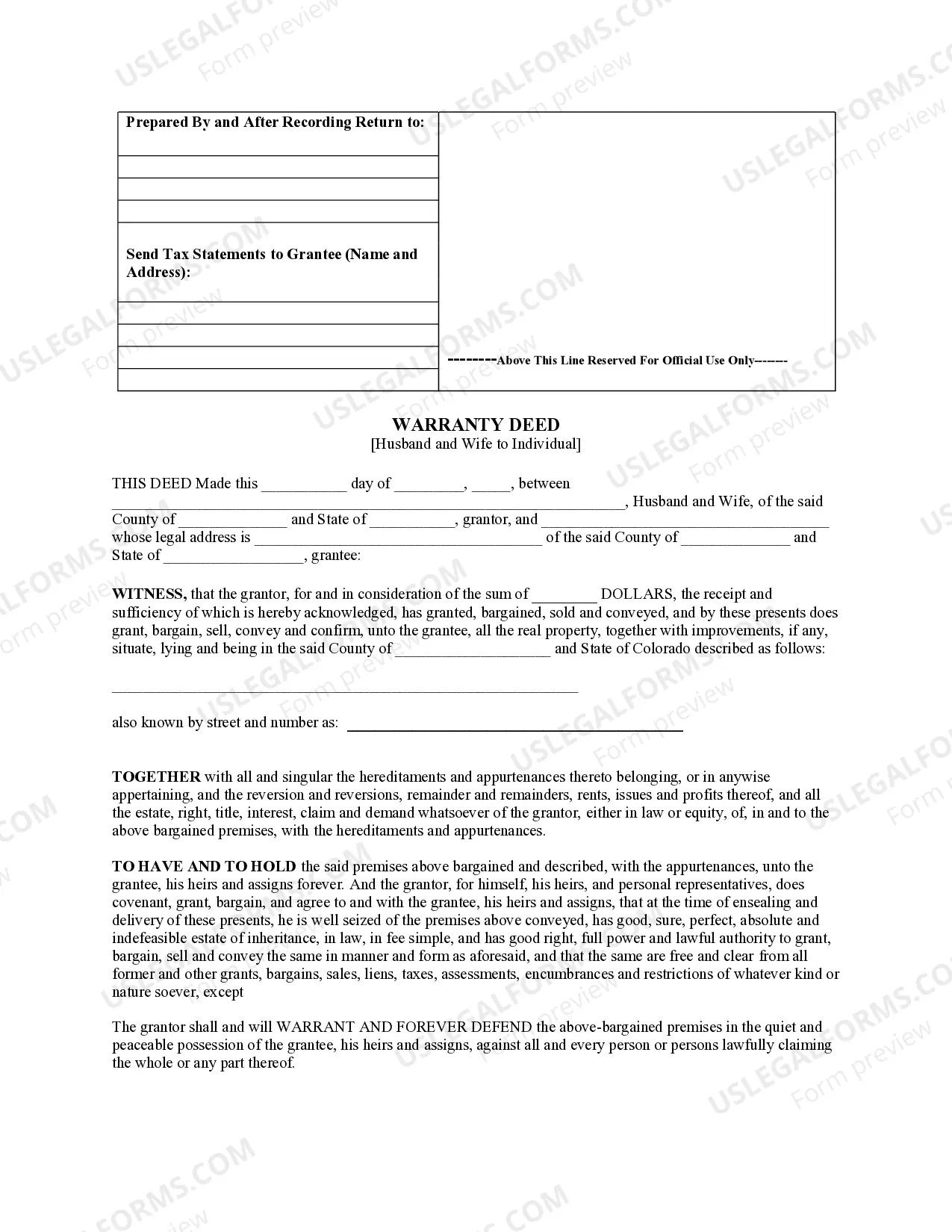
This Warranty Deed for Husband and Wife to Individual is a legal document used to transfer property ownership from a married couple (the grantors) to a single individual (the grantee). This form is essential for documenting the transfer of real estate and provides a warranty, assuring the grantee that the grantors hold a clear title to the property. Unlike other types of deeds, this warranty deed offers greater protection to the grantee against any claims on the property.
Key components of this form
- Identification of the grantors (husband and wife) and the grantee (individual).
- Legal description of the property being transferred.
- Clauses regarding the warranty of title and assurances against encumbrances.
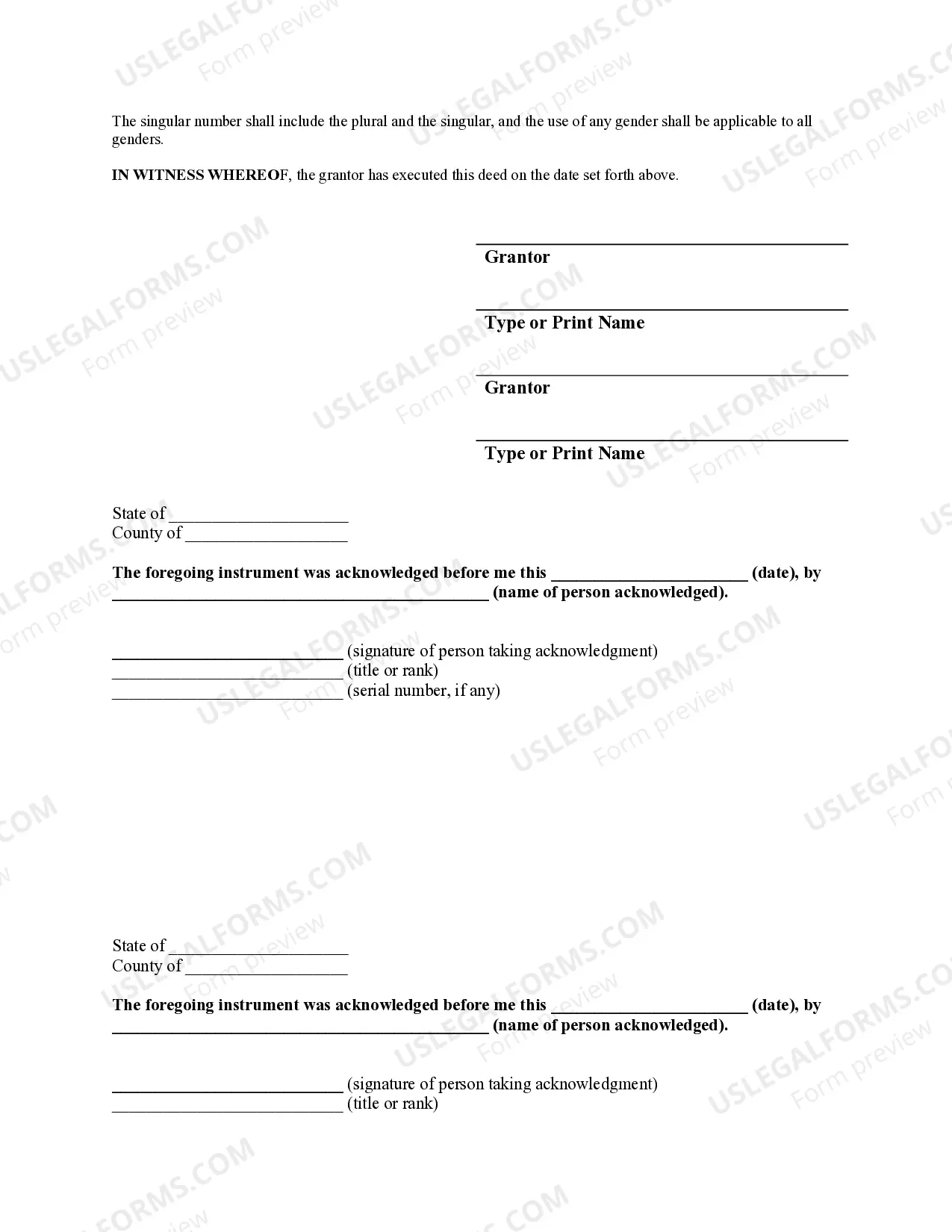
- Spaces for signatures and notarization, affirming the validity of the deed.
- Details on the consideration amount, confirming the transaction's legitimacy.





When to use this form
This form is typically used when a married couple wishes to transfer ownership of real property to an individual, often in scenarios such as gifting property to a family member, selling property while retaining a life estate, or consolidating ownership after a divorce. It formalizes the transfer and protects the interests of both parties involved.
Who needs this form
- Couples seeking to transfer property to a designated individual.
- Individuals receiving property from a married couple.
- Attorneys assisting clients in real estate transactions.
- Homeowners looking to formalize the transfer to mitigate future disputes.
Instructions for completing this form
- Identify the parties involved by entering the names of the husband and wife as grantors and the individual as the grantee.
- Provide a detailed legal description of the property being conveyed.
- Enter the consideration amount (the value agreed upon for the transfer).
- Sign the document in the presence of a notary public for validation.
- Ensure all fields are filled out completely before submitting the deed for recording.
Does this document require notarization?
Yes, this form must be notarized to be legally valid. Notarization helps verify the identity of the grantors and confirms their willingness to sign the document. US Legal Forms offers an integrated online notarization service, providing secure video calls with licensed notaries, available 24/7, making the process easy and accessible.
Get your form ready online
Our built-in tools help you complete, sign, share, and store your documents in one place.
Make edits, fill in missing information, and update formatting in US Legal Forms—just like you would in MS Word.
Download a copy, print it, send it by email, or mail it via USPS—whatever works best for your next step.
Sign and collect signatures with our SignNow integration. Send to multiple recipients, set reminders, and more. Go Premium to unlock E-Sign.
If this form requires notarization, complete it online through a secure video call—no need to meet a notary in person or wait for an appointment.
We protect your documents and personal data by following strict security and privacy standards.

Make edits, fill in missing information, and update formatting in US Legal Forms—just like you would in MS Word.

Download a copy, print it, send it by email, or mail it via USPS—whatever works best for your next step.

Sign and collect signatures with our SignNow integration. Send to multiple recipients, set reminders, and more. Go Premium to unlock E-Sign.

If this form requires notarization, complete it online through a secure video call—no need to meet a notary in person or wait for an appointment.

We protect your documents and personal data by following strict security and privacy standards.
Typical mistakes to avoid
- Leaving fields incomplete, particularly the legal description of the property.
- Not having the document notarized, which can lead to validity issues.
- Failing to confirm that all grantors have signed the document.
- Using outdated forms that do not comply with current state law updates.
Advantages of online completion
- Convenient access to legal forms from home without the need for in-person appointments.
- Editable content allows for customization based on your specific needs and situation.
- Reliable templates drafted by licensed attorneys, ensuring compliance with legal standards.
- Instant download capability for immediate use, expediting the property transfer process.
Summary of main points
- Ensure all parties are correctly identified and consent to the transfer.
- Provide accurate property details to avoid future legal issues.
- Obtain notarization for the deed to ensure its legal effectiveness.
- Using this form helps protect the rights of both grantors and the grantee.
Looking for another form?

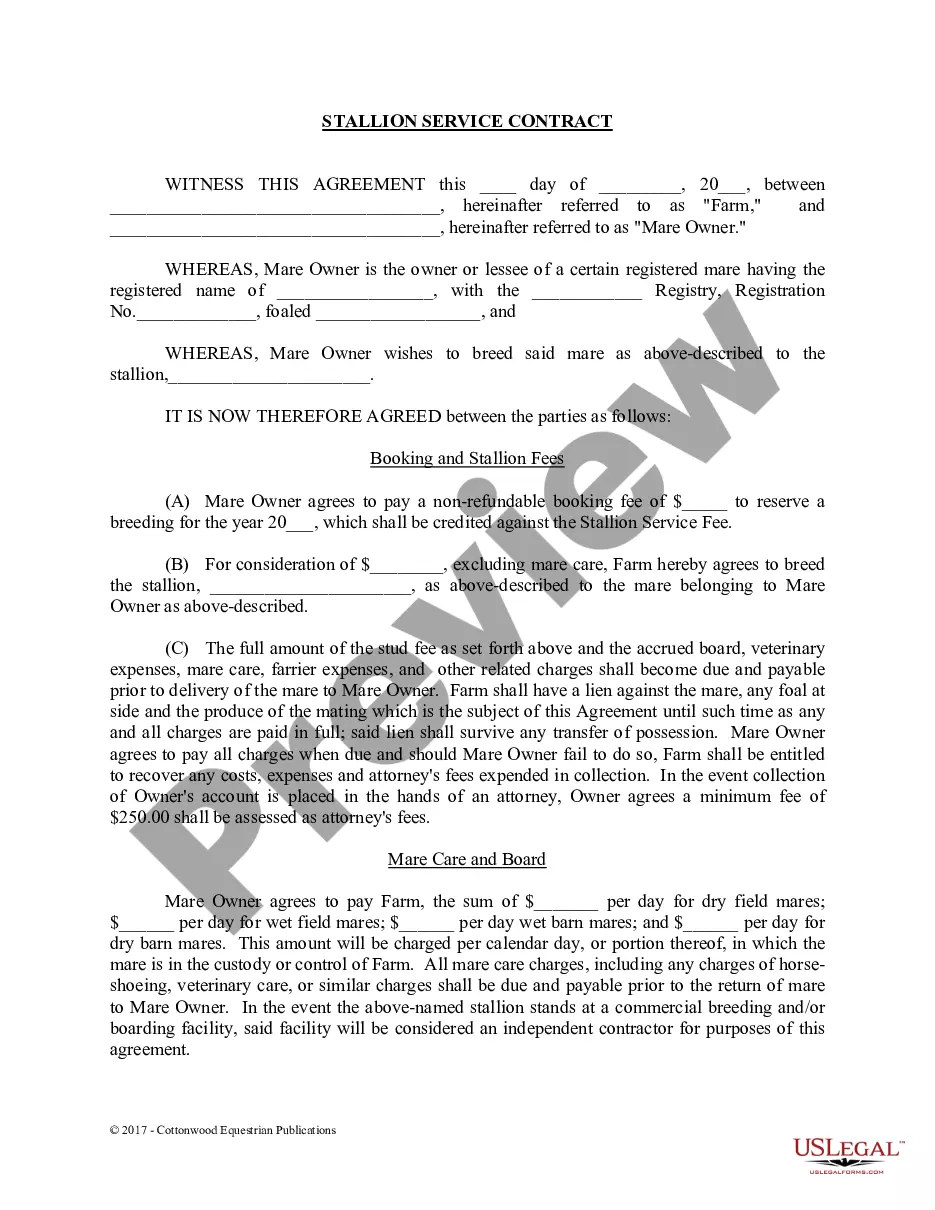
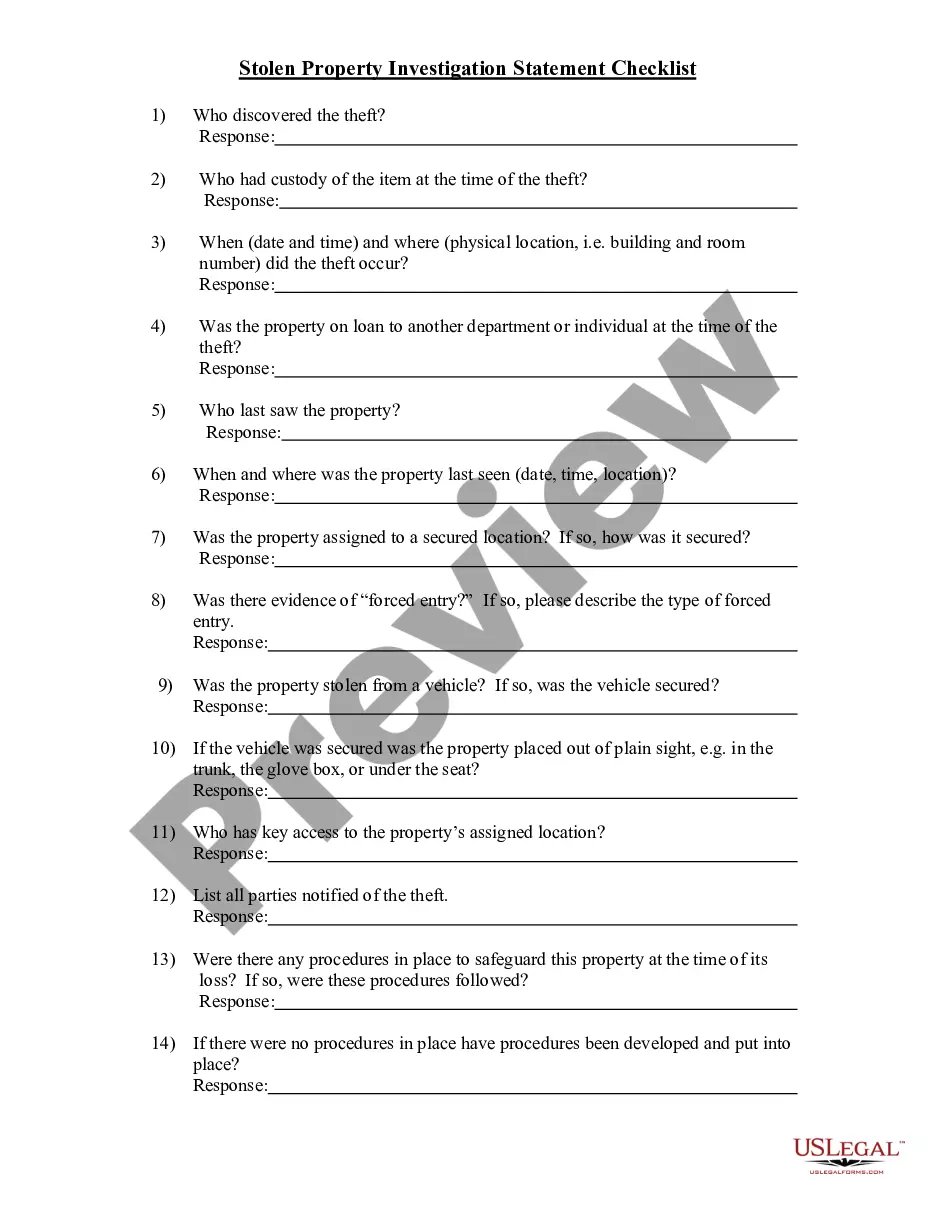
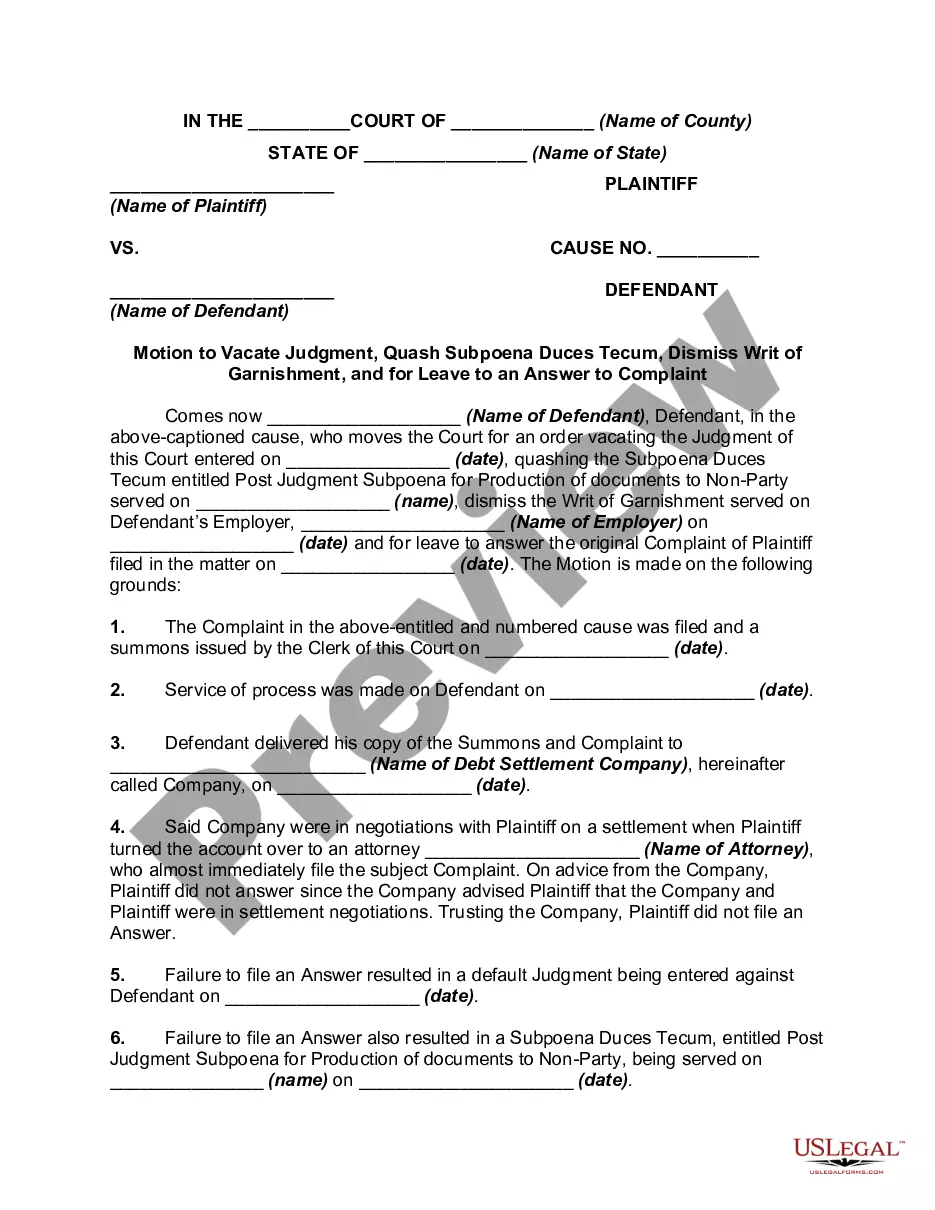
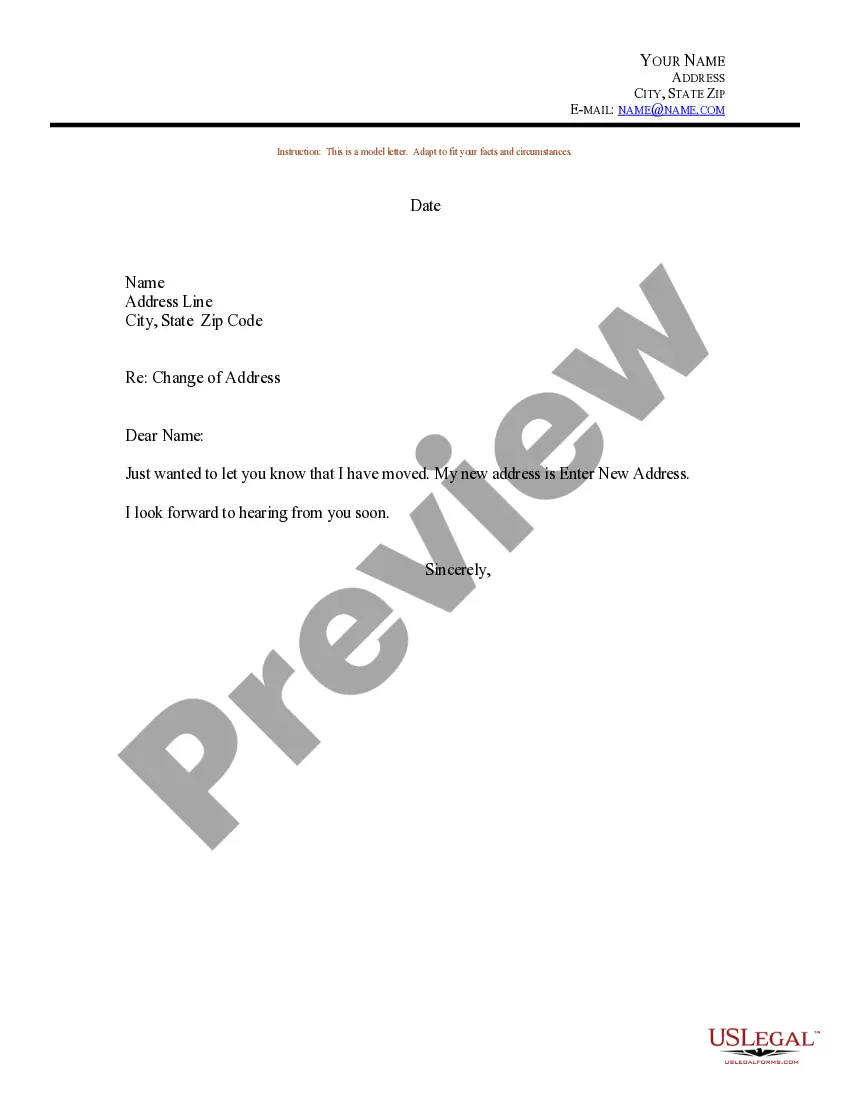




Form popularity
FAQ
In Colorado, when one owner of a jointly owned property passes away, the surviving owner typically gains full ownership through a process called right of survivorship. This means that the deceased owner's share automatically transfers to the surviving owner without going through probate. If both spouses own the property as tenants by the entirety, a Colorado Warranty Deed for Husband and Wife to Individual can simplify the transfer process after one spouse's death. It's important to understand these implications, and platforms like USLegalForms can help you navigate this process effectively.
Transferring a property title to a family member in Colorado involves several steps. First, you need to create a new warranty deed that reflects the new ownership structure, such as a Colorado Warranty Deed for Husband and Wife to Individual. Once drafted, ensure the deed is signed, notarized, and filed with the local county clerk's office. US Legal Forms can assist you in navigating this process efficiently.
Yes, a warranty deed can be transferred. This type of deed allows the owner to convey their interest in the property to another individual. To ensure a smooth transfer, it's important to properly draft the new warranty deed, especially if it involves a Colorado Warranty Deed for Husband and Wife to Individual scenario. Consider using US Legal Forms for guidance on creating or modifying your deed.
Joint tenancy with rights of survivorship in Colorado is a form of property ownership that allows two or more people to own a property together. When one owner passes away, their share of the property automatically transfers to the surviving owner(s) without going through probate. This arrangement can be established using a Colorado Warranty Deed for Husband and Wife to Individual, ensuring that ownership rights are clear and protected. It provides peace of mind, knowing that the property will seamlessly pass to loved ones.
Transferring property title to a family member in Colorado involves using a Colorado Warranty Deed for Husband and Wife to Individual. This document allows owners to formalize the transfer of property. First, obtain the deed form and complete it with accurate details about the property and the family member receiving it. After filling it out, sign the deed in front of a notary public and file it with the county clerk and recorder.
Filling out a warranty deed form involves several important steps. Start with the title of the form, indicating 'Colorado Warranty Deed for Husband and Wife to Individual.' Fill in your names, the property description, and any legal terms. It is essential to provide accurate information to ensure that the deed is valid and enforceable; consider using platforms like USLegalForms for guidance and templates.
To transfer ownership from husband to wife, you can utilize a Colorado Warranty Deed for Husband and Wife to Individual. Prepare the deed indicating the transfer specifics, including both parties’ names and the property details. After filling out the form, both parties should sign it in front of a notary public, and then file it with the local county clerk for proper recording.
Yes, two people can be on a warranty deed. In fact, a Colorado Warranty Deed for Husband and Wife to Individual is specifically designed for this situation. Both parties will hold ownership rights to the property, and both must sign the deed to make it legally valid. This arrangement provides clarity and security concerning property rights.
To add your wife to your warranty deed, you will need to execute a new Colorado Warranty Deed for Husband and Wife to Individual. You should complete the form, ensuring that both names are included in the section where property owners are listed. Be sure to follow the specific guidelines set by Colorado law, which includes having the deed notarized and recorded at your local county clerk's office.