New York Siding Contract for Contractor
About this form
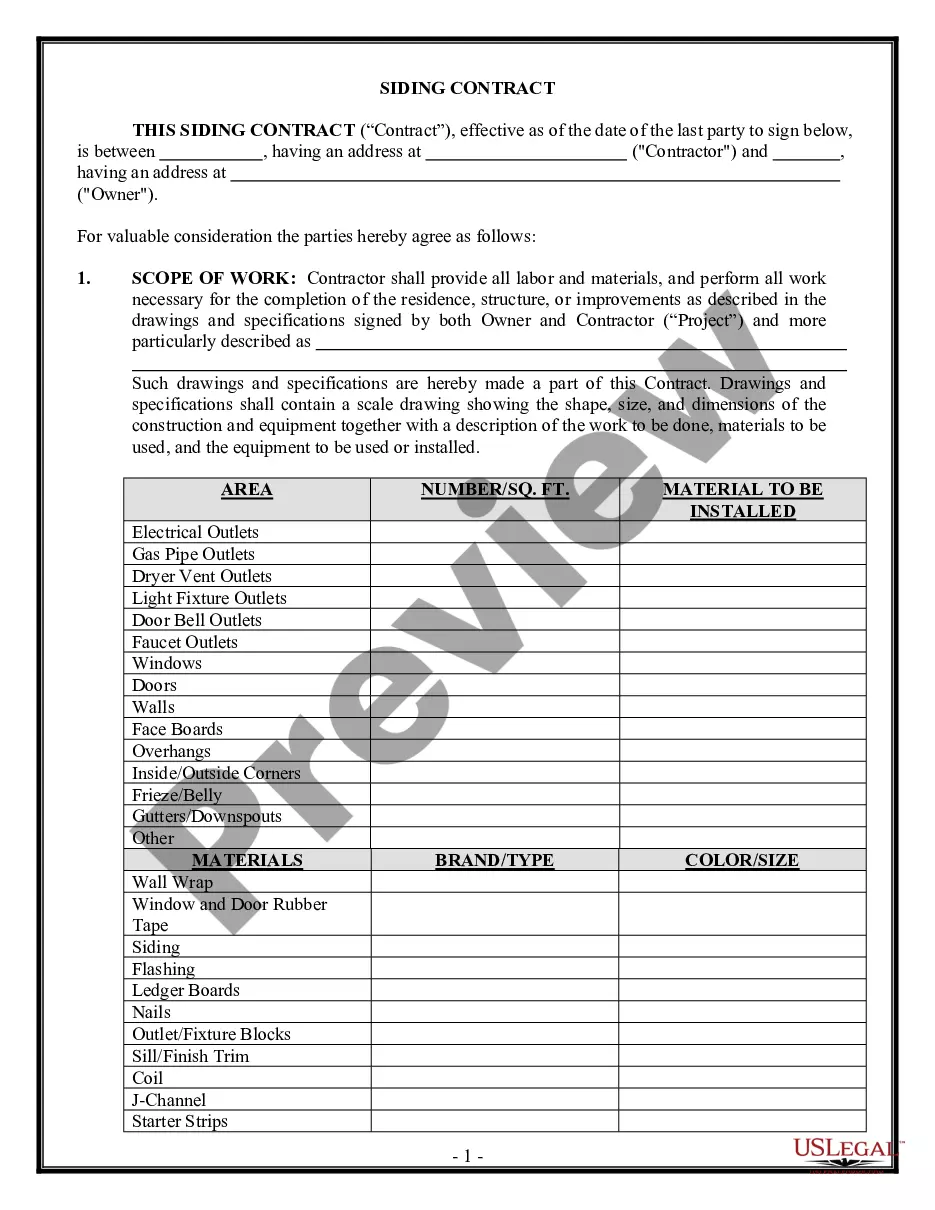
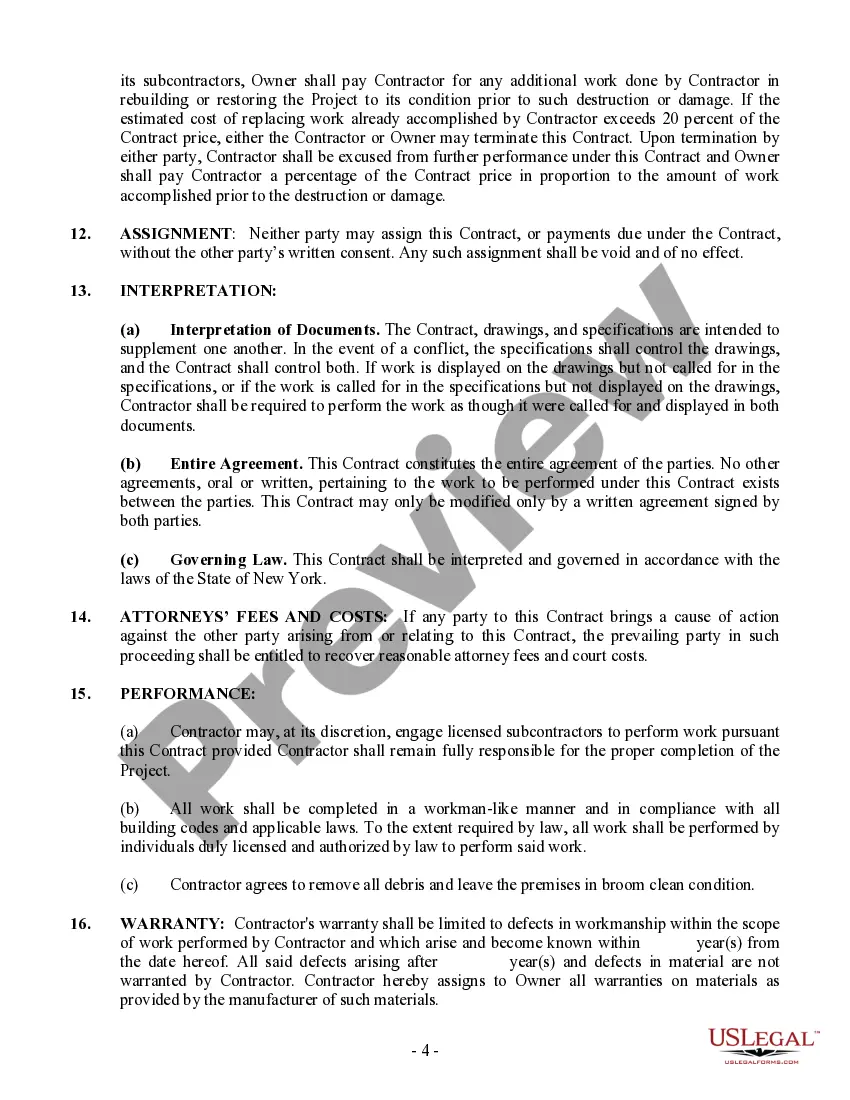
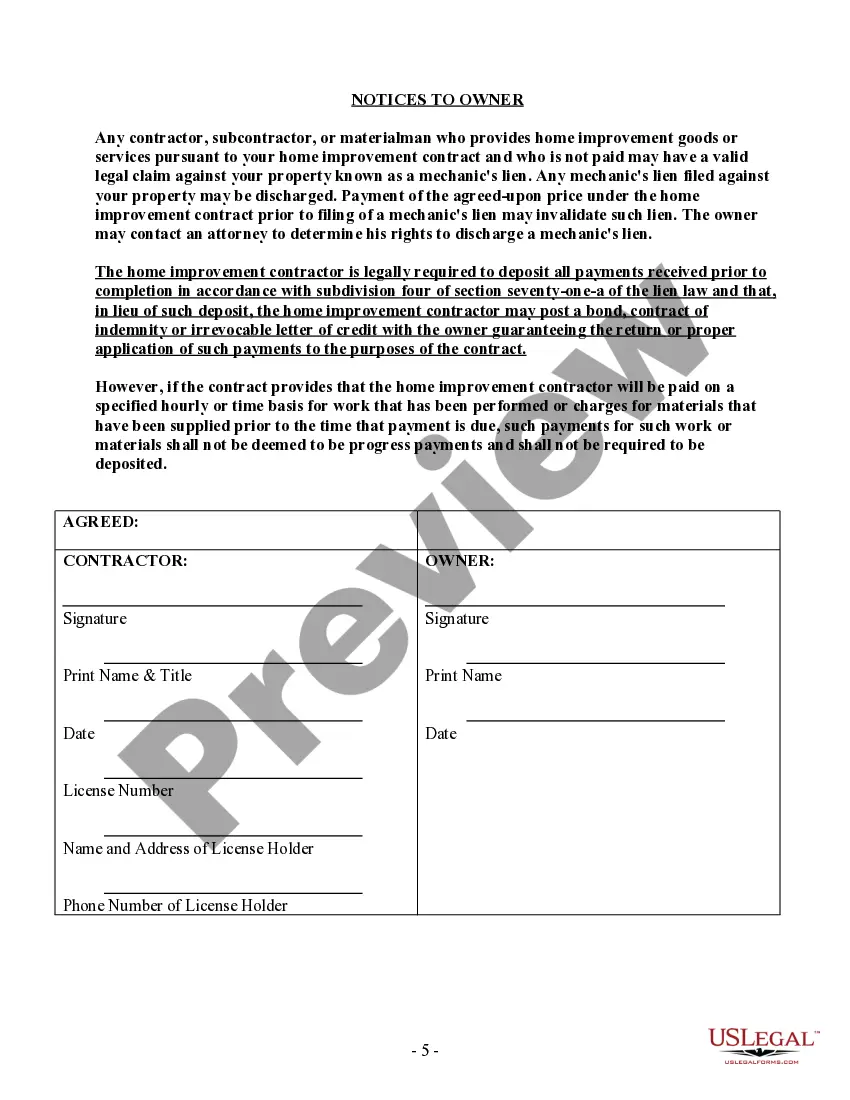
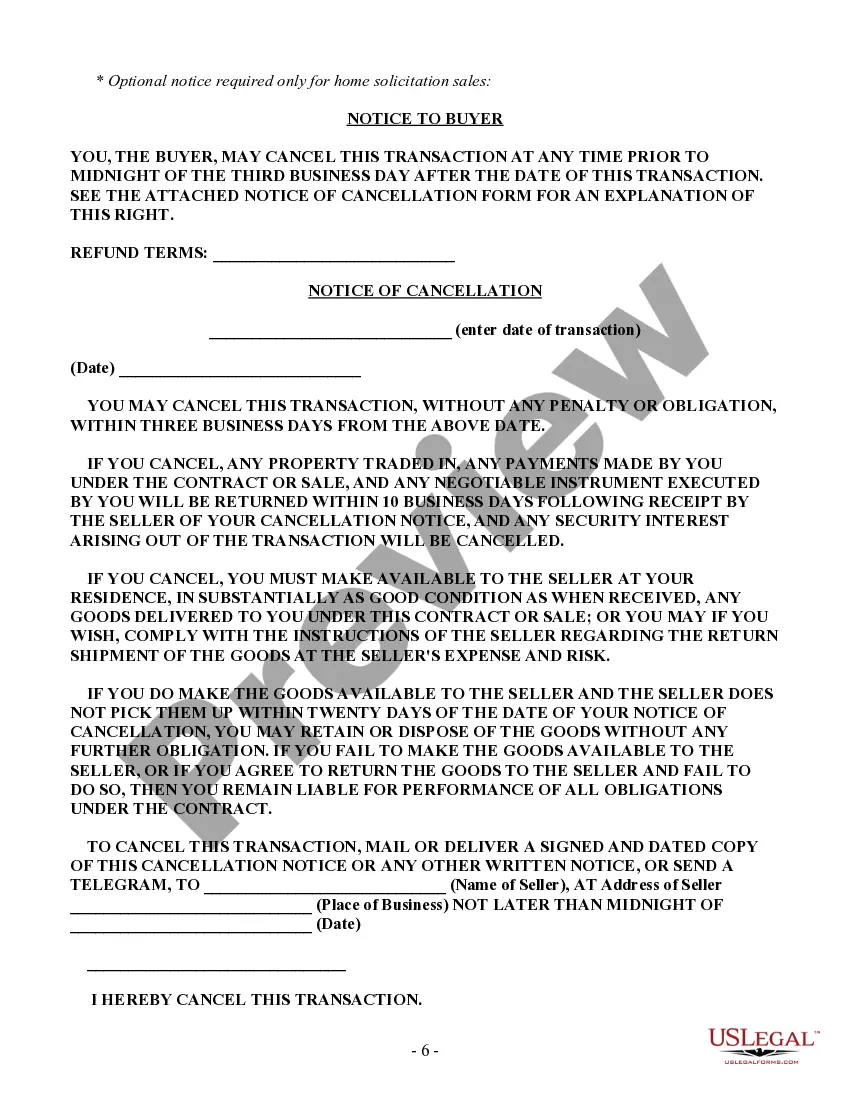
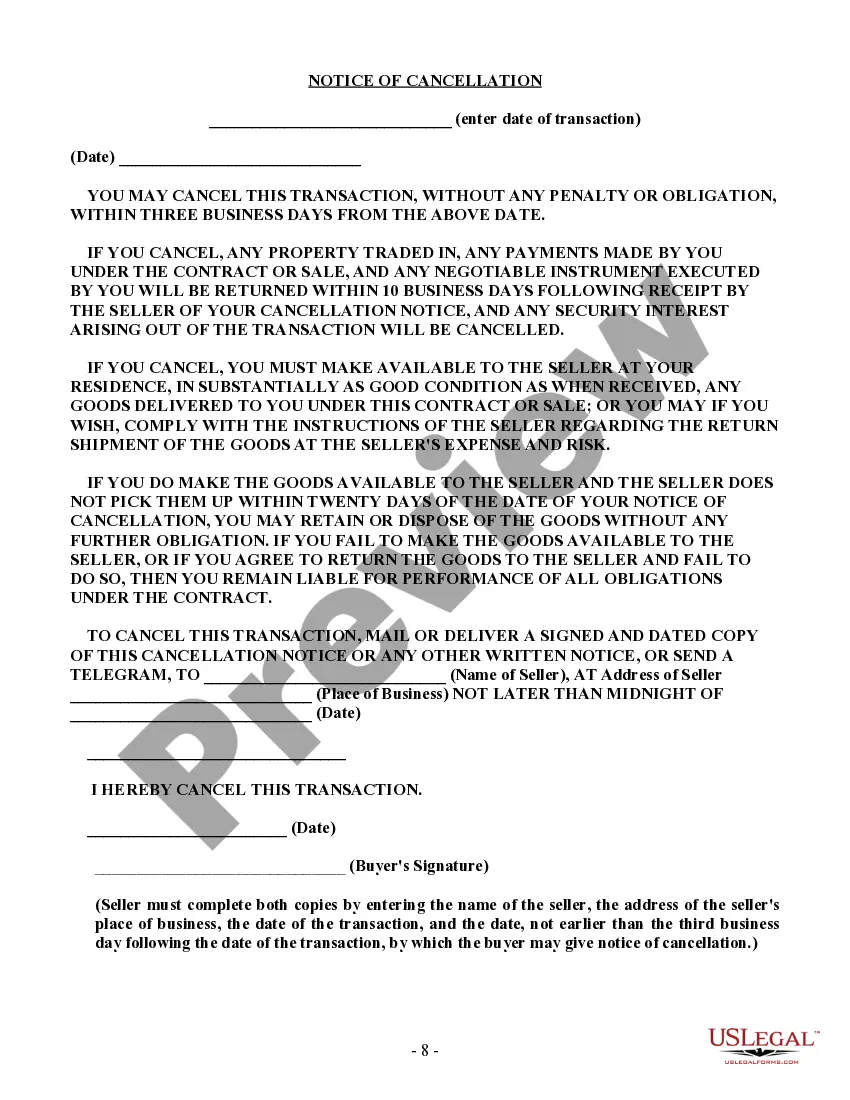
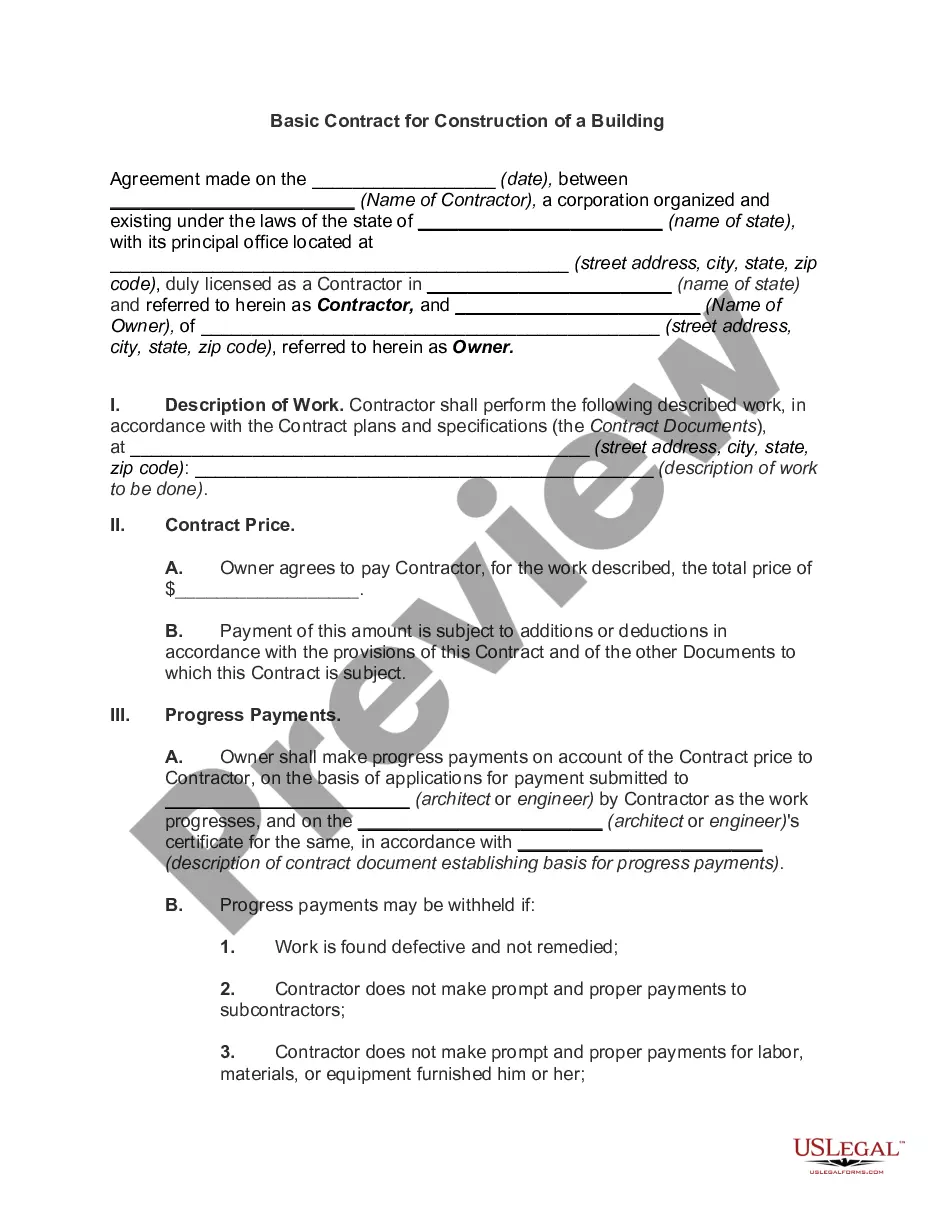
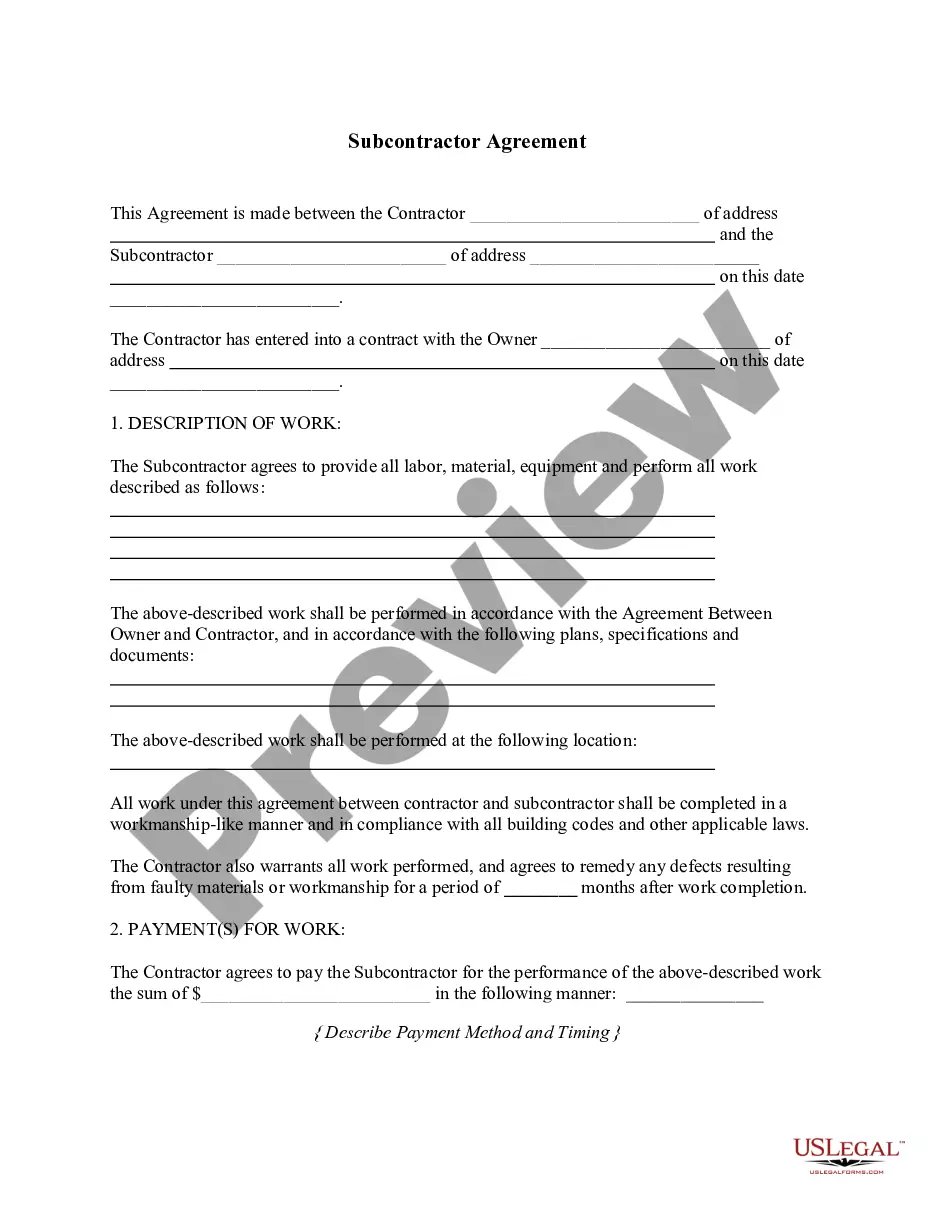
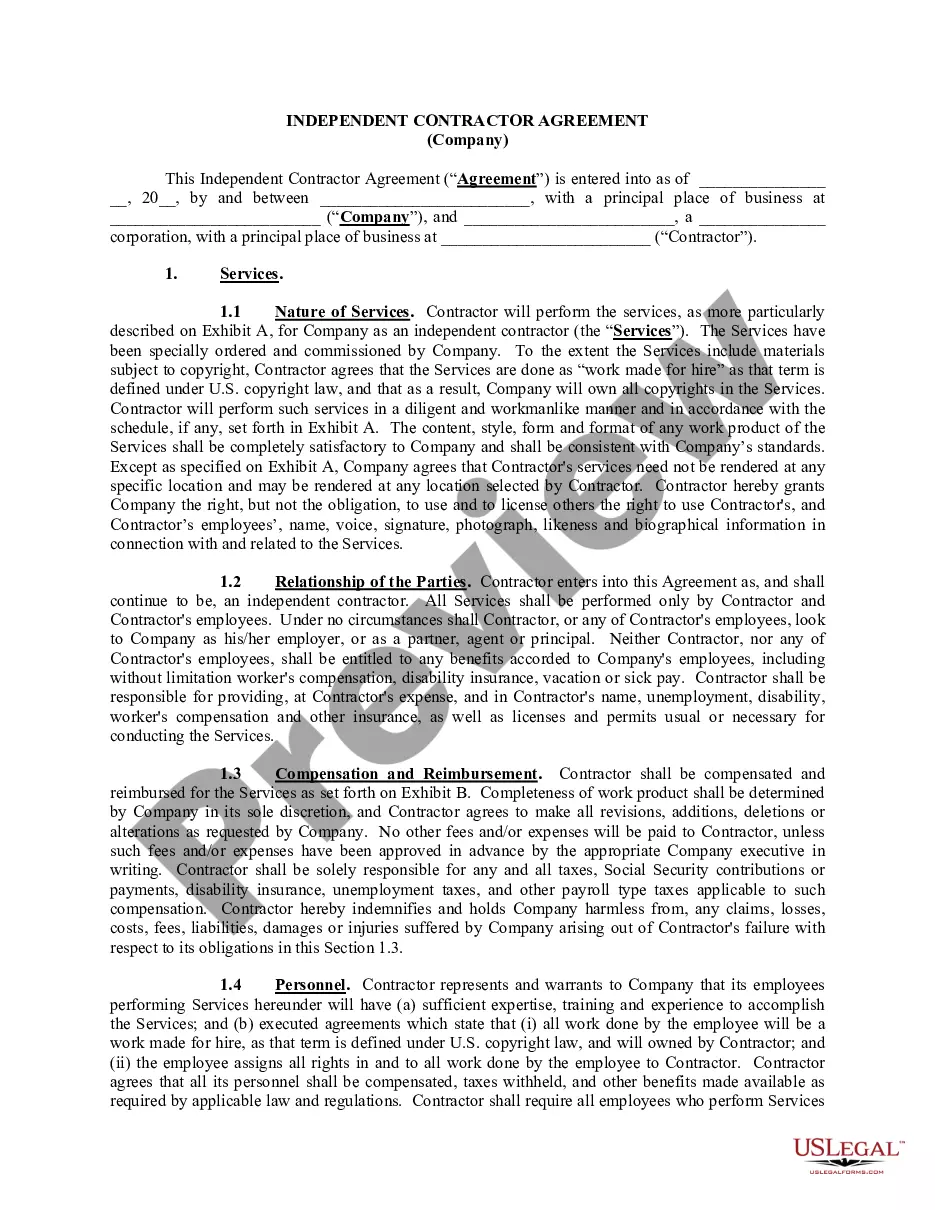
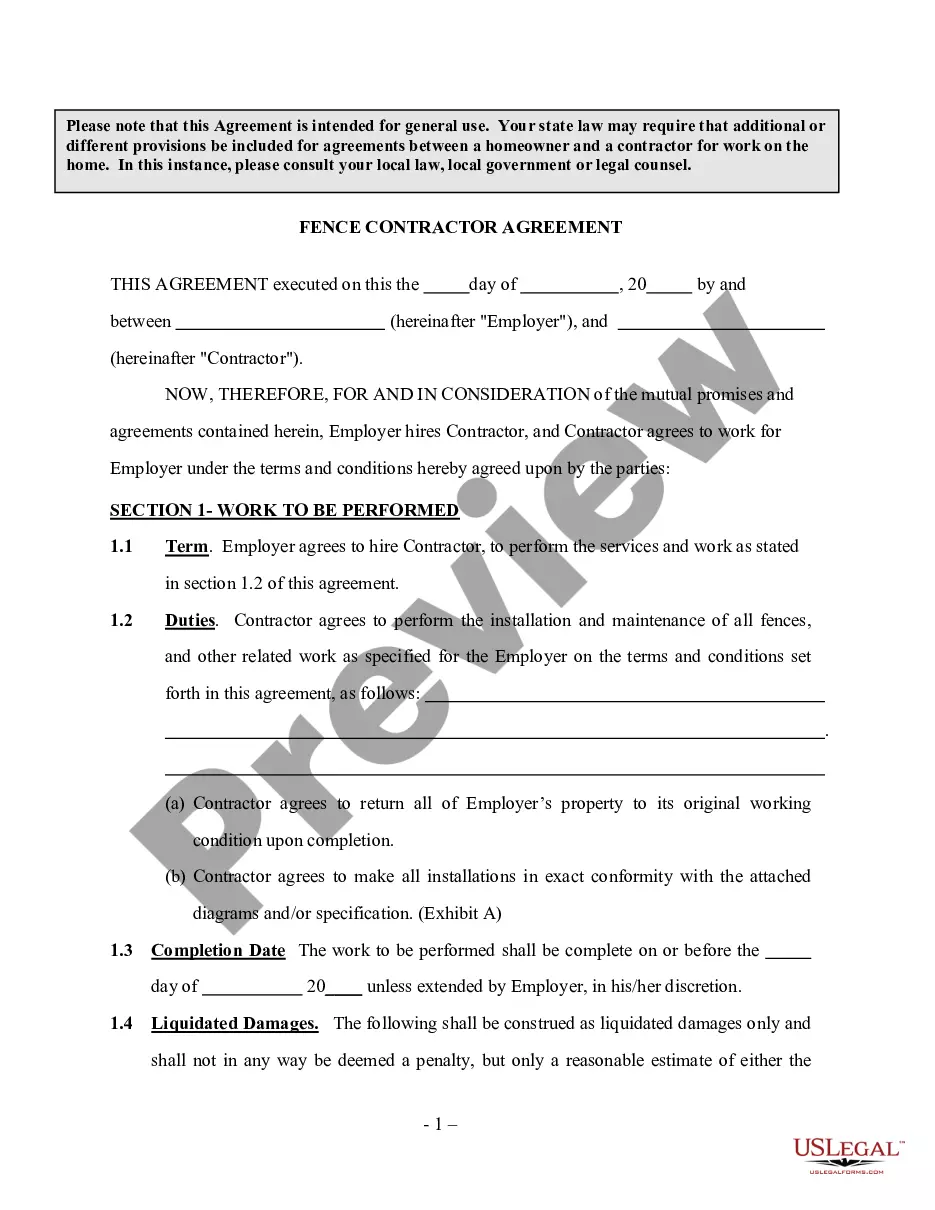
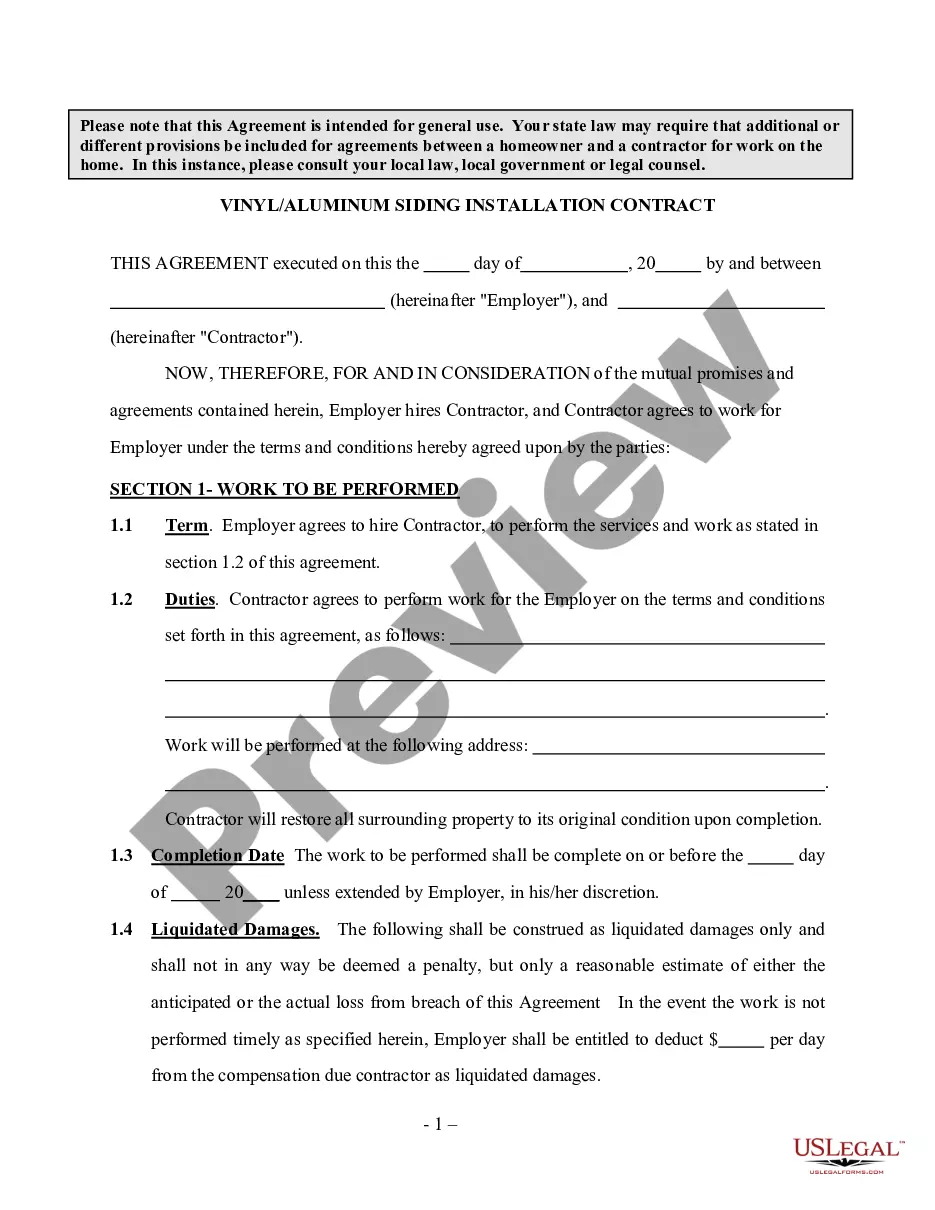
The Siding Contract for Contractor is a legal document that outlines the terms and conditions between siding contractors and property owners for siding installation projects. This contract is essential as it clarifies payment arrangements, project details, responsibilities, and legal protections, ensuring both parties understand their rights and obligations. Unlike general contracts, this form is specifically tailored for siding work and complies with New York state laws, providing a reliable foundation for building agreements in this industry.
Key parts of this document
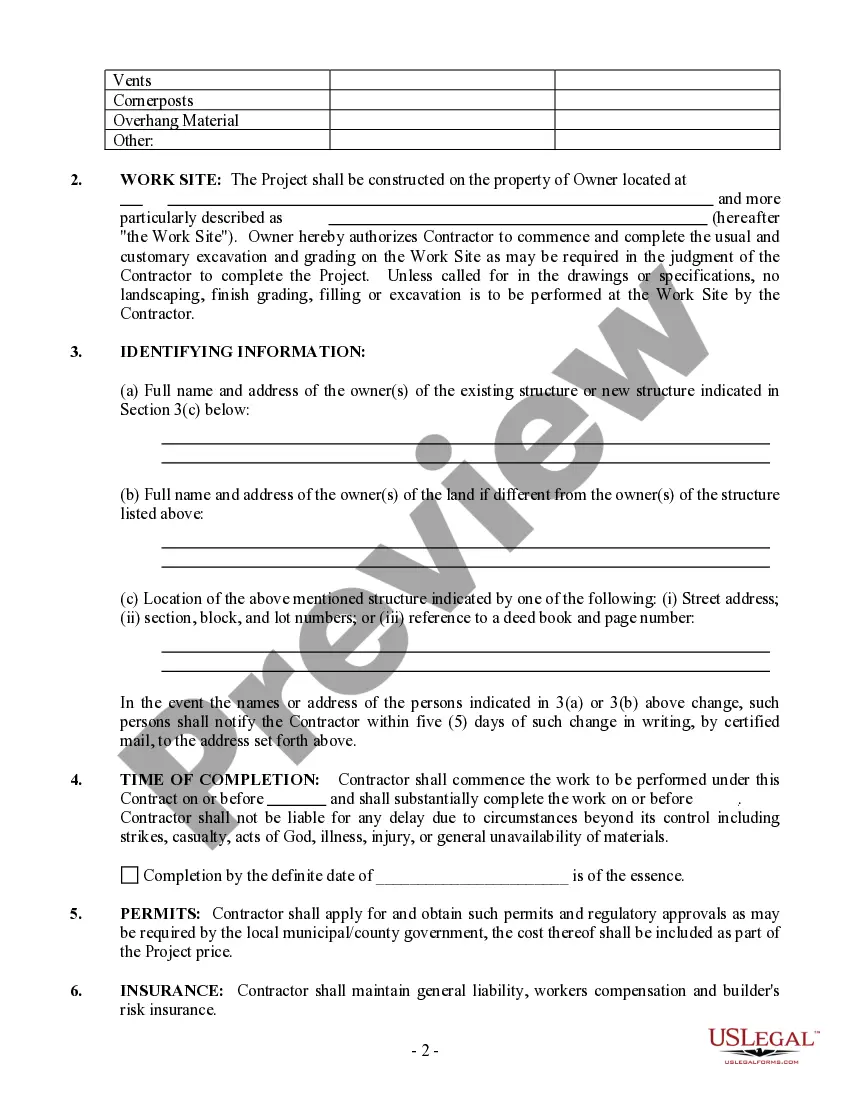
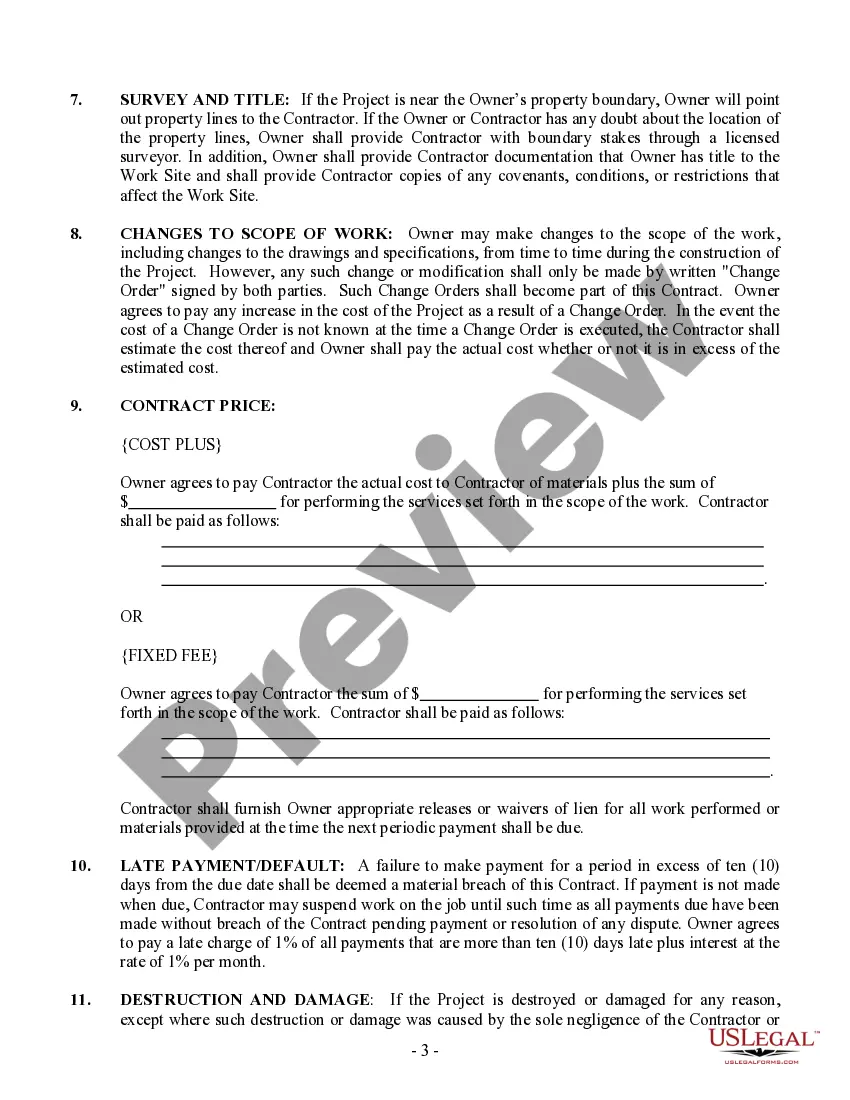
- Payment structure: Options for cost plus or fixed fee arrangements.
- Work site information: Details about the location and scope of work.
- Change orders: Procedures for modifying the project scope or cost.
- Permits: Responsibilities for obtaining necessary permits for the work.
- Insurance: Requirements for contractor insurance to protect against liability.
- Late payment and default: Terms regarding payment timelines and consequences for delays.
- Termination clauses: Conditions under which the contract may be terminated.
When to use this document
This form is useful when a property owner wishes to hire a contractor for siding installation. It is necessary for establishing clear expectations regarding costs, schedules, and legal obligations. Use this contract when starting new siding projects to ensure that both parties can refer back to the agreed-upon terms in case of disputes or changes.
Intended users of this form
This contract is intended for:
- Property owners seeking to hire siding contractors.
- Siding contractors providing installation services.
- Home improvement professionals involved in residential siding projects.
Instructions for completing this form
To complete the Siding Contract for Contractor, follow these steps:
- Identify the parties involved by entering the full names and addresses of the contractor and property owner.
- Specify the work site details, including the project location and description of the siding work to be performed.
- Choose the payment structure and fill in the agreed payment terms.
- Enter all relevant project details including timeline, materials, and insurance information.
- Have both parties sign and date the contract to ensure its validity.
Does this document require notarization?
This form does not typically require notarization unless specified by local law. However, both parties should sign the contract for it to be legally binding. If notarization is needed for specific agreements, it's advisable to consult local regulations.
Get your form ready online
Our built-in tools help you complete, sign, share, and store your documents in one place.
Make edits, fill in missing information, and update formatting in US Legal Forms—just like you would in MS Word.
Download a copy, print it, send it by email, or mail it via USPS—whatever works best for your next step.
Sign and collect signatures with our SignNow integration. Send to multiple recipients, set reminders, and more. Go Premium to unlock E-Sign.
If this form requires notarization, complete it online through a secure video call—no need to meet a notary in person or wait for an appointment.
We protect your documents and personal data by following strict security and privacy standards.

Make edits, fill in missing information, and update formatting in US Legal Forms—just like you would in MS Word.

Download a copy, print it, send it by email, or mail it via USPS—whatever works best for your next step.

Sign and collect signatures with our SignNow integration. Send to multiple recipients, set reminders, and more. Go Premium to unlock E-Sign.

If this form requires notarization, complete it online through a secure video call—no need to meet a notary in person or wait for an appointment.

We protect your documents and personal data by following strict security and privacy standards.
Avoid these common issues
- Failing to include all relevant project details in the contract.
- Not specifying payment terms clearly, leading to misunderstandings.
- Overlooking insurance requirements that protect against potential liabilities.
- Neglecting to have both parties sign the contract, which may jeopardize enforceability.
Benefits of using this form online
- Convenience of downloadable templates that can be filled in online.
- Flexibility to edit and customize the contract to fit specific project needs.
- Reliability of attorney-drafted forms, ensuring legal compliance.
- Time-saving by having a ready-to-use contract that simplifies the documentation process.
Legal use & context
- This contract holds legal weight, ensuring that both parties understand their rights and obligations.
- Failure to comply with the terms can lead to legal disputes, making it crucial to fill the document accurately.
- The provisions included help enforce compliance with state laws governing contracting processes.
Summary of main points
- The Siding Contract for Contractor is essential for clear communication and agreement between homeowners and contractors in siding projects.
- It includes specific provisions for permits, payment terms, and insurance, tailored to comply with New York law.
- Proper completion of this form can prevent many common disputes and misunderstandings, ensuring a smoother project execution.
Looking for another form?
Form popularity
FAQ
A one year warranty is the minimum you should expect. New York State law requires the buyer have certain warranties when buying a new home. One year's protection against faulty workmanship and defective materials.
A: It's not uncommon for contractors to ask for a down payment up front to secure your spot on their schedule or purchase some of the job materials in advance. Asking for more than half of the project cost up front, though, is a big red flag.I recommend tying payments to progress made during the job.
Both parties should sign the contract, and both should be bound by the terms and conditions spelled out in the agreement. In general that means the contractor will be obliged to provide specified materials and to perform certain services for you. In turn, you will be required to pay for those goods and that labor.
You shouldn't pay more than 10 percent of the estimated contract price upfront, according to the Contractors State License Board.
In California, the state limits advance payment at the time of contract signing to 10% of the total estimated job cost or $1,000, whichever amount is lower! All payments thereafter are supposed to be made for work performed or for materials delivered to the job site.
If you run a small business that hires 1099 contractors, also known as independent contractors, it is vital that you have them sign an independent contractor contract. This is because there is a significant gray area between who is classified as an independent contractor and who is classified as an employee.
In California, it's illegal to ask for or accept a down payment of more than 10% of the total home improvement contract price or $1,000, whichever is less, according to the Contractor State License Board.
Identifying/Contact Information. Title and Description of the Project. Projected Timeline and Completion Date. Cost Estimate and Payment Schedule. Stop Work Clause and Stop Payment Clause. Act of God Clause. Change Order Agreement. Warranty.
Payment Schedule In Your Contract Before any work begins, a contractor will ask a homeowner to secure the job with a down payment. It shouldn't be more than 10-20 percent of the total cost of the job. Homeowners should never pay a contractor more than 10-20% before they've even stepped foot in their home.