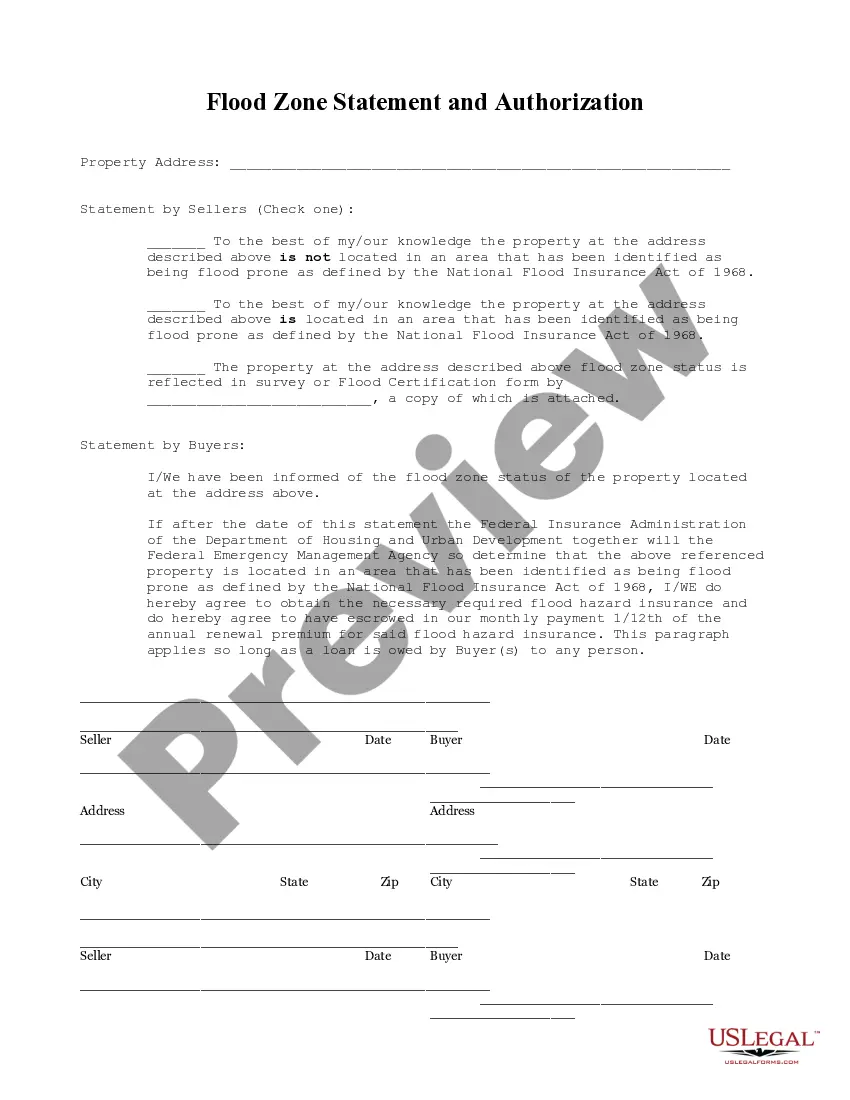
California Flood Zone Statement and Authorization
Overview of this form
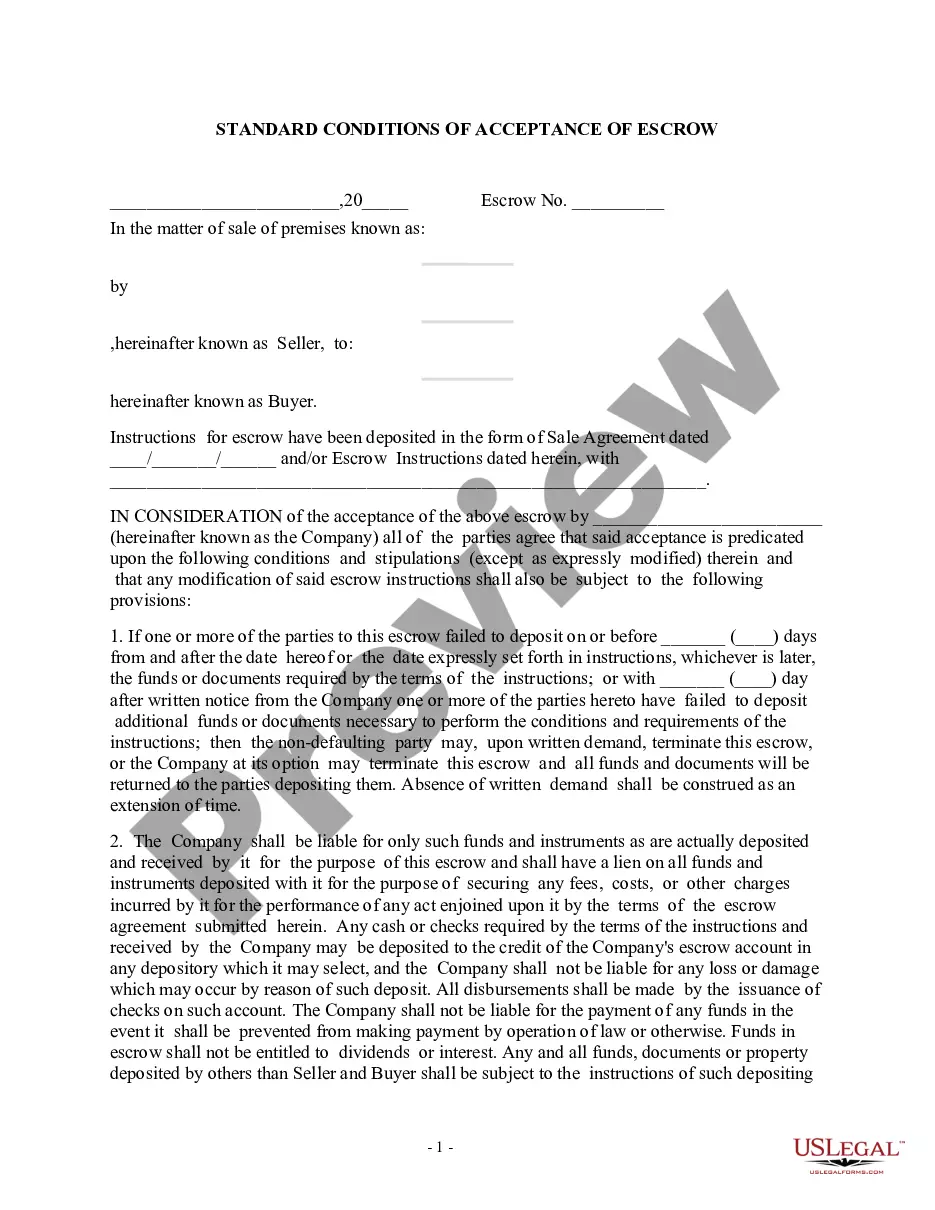
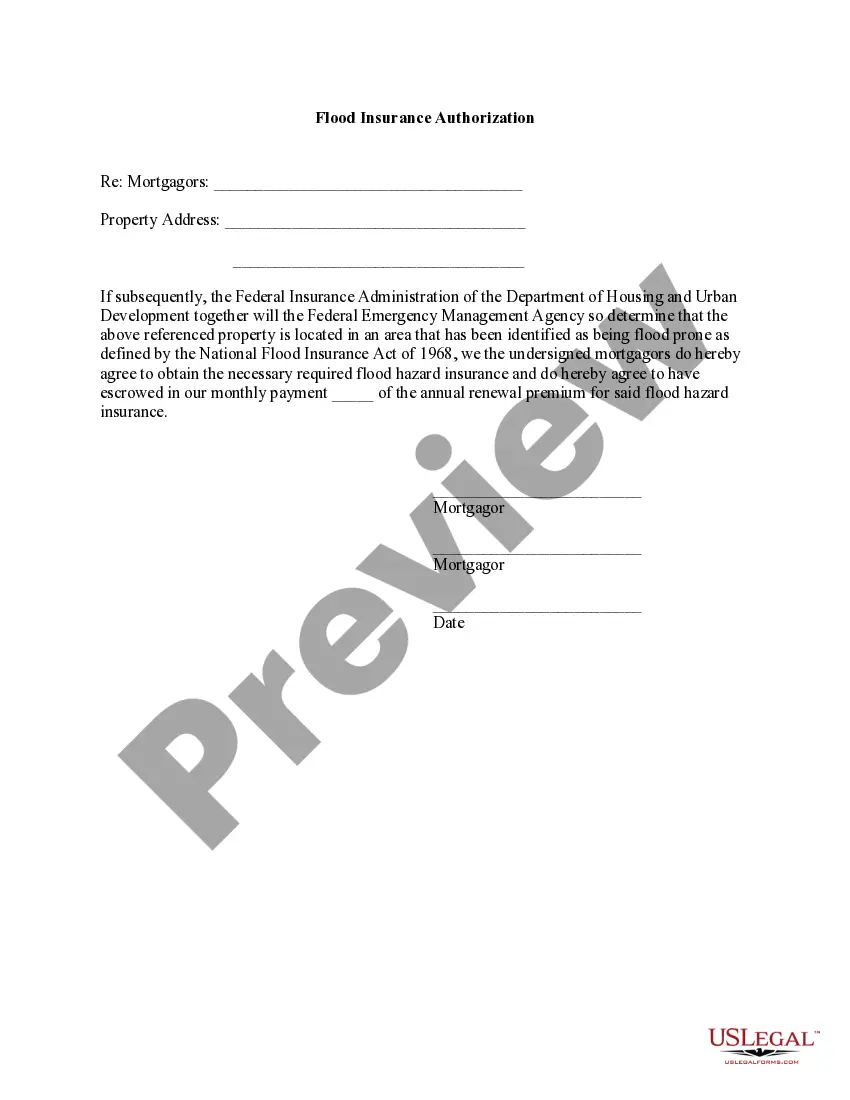
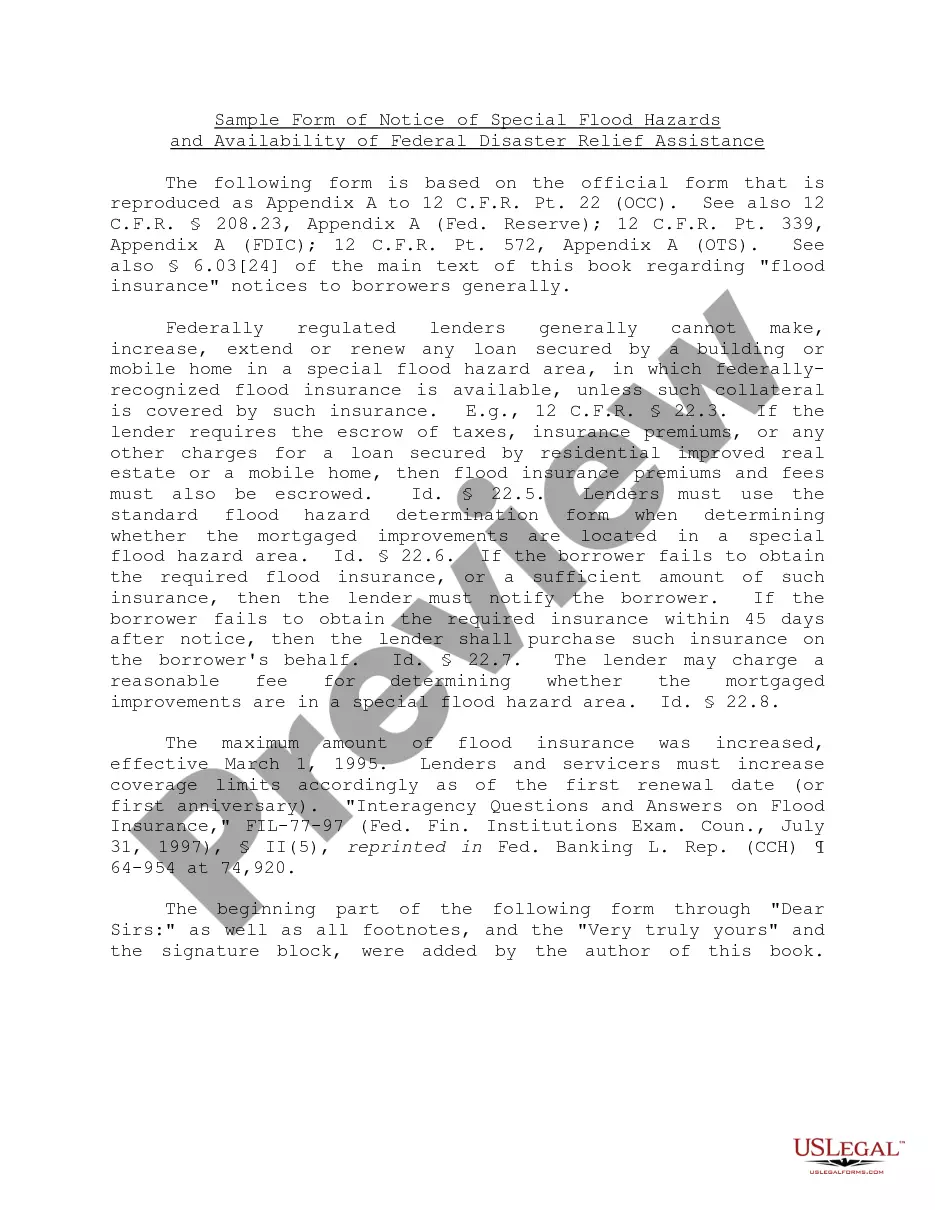
The Flood Zone Statement and Authorization form is a legal document designed for sellers and buyers in real estate transactions. It serves to disclose the flood zone status of the property in question. This form ensures that buyers are aware of the potential flood risks associated with the property and agree to obtain flood insurance if necessary. Unlike general property disclosure forms, this specific document focuses solely on flood zone information, helping both parties understand their obligations under the National Flood Insurance Act of 1968.
Key components of this form
- Property address section to specify the location of the property.
- Seller statements indicating flood zone status, with choices for either confirming or denying flood risk.
- Space for attaching a survey or flood certification as proof of flood zone status.
- Buyer acknowledgement of the flood zone status and commitment to secure flood insurance if required.
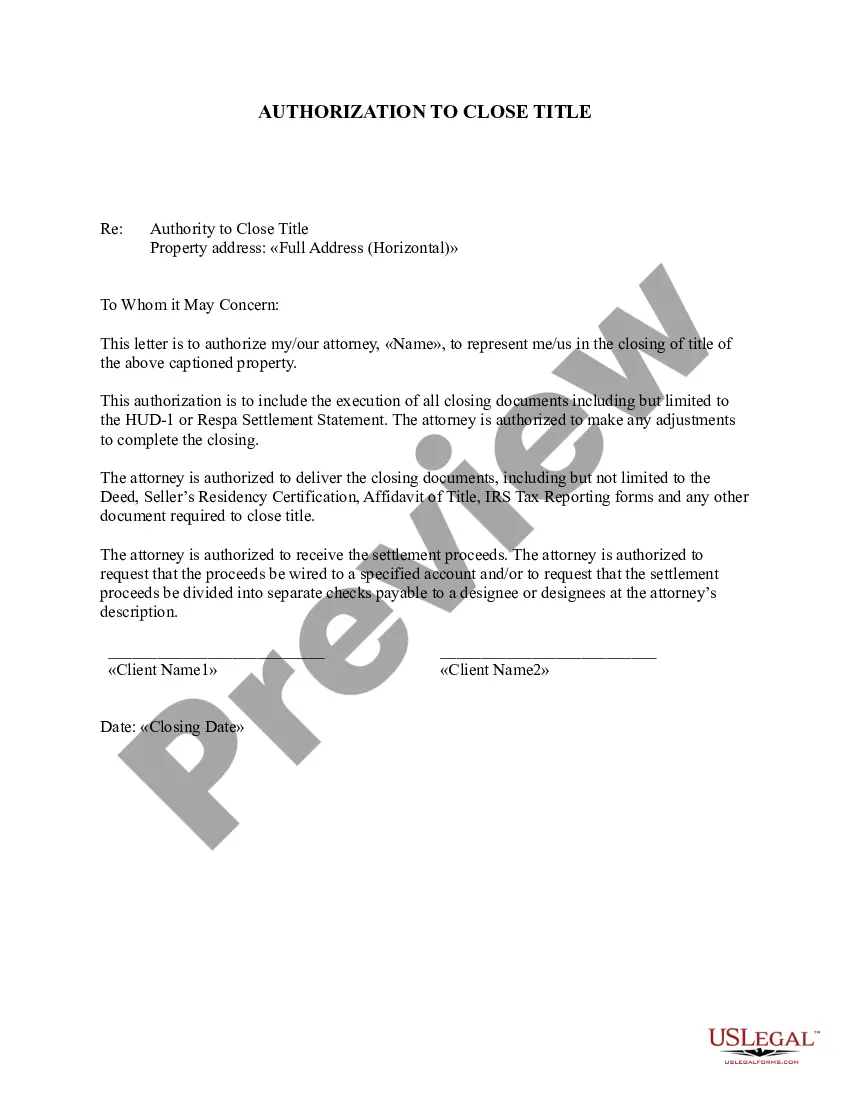
- Signature and date sections for both sellers and buyers to validate the agreement.
When to use this document
This form should be used during the sale of a property located in areas that might be prone to flooding. It is necessary when the property seller needs to disclose whether the property is in a flood zone, and when the buyer needs to acknowledge this status. This is particularly important in regions susceptible to flooding or where the propertyâs flood designation may impact insurance needs and mortgage requirements.
Who needs this form
- Property sellers who need to disclose the flood zone status of their property.
- Home buyers who want to understand any potential flood risks associated with a property.
- Real estate agents or brokers facilitating transactions involving properties in flood-prone areas.
Instructions for completing this form
- Identify and enter the property address at the top of the form.
- Sellers should select the appropriate statement regarding the flood zone status of the property.
- Attach any supporting documents, such as surveys or flood certifications, as needed.
- Buyers must read and acknowledge their understanding of the flood zone status and obligation to obtain flood insurance if necessary.
- Both parties must sign and date the form to finalize the agreement.
Notarization guidance
This form does not typically require notarization unless specified by local law. Always check your stateâs requirements to ensure compliance.
Get your form ready online
Our built-in tools help you complete, sign, share, and store your documents in one place.
Make edits, fill in missing information, and update formatting in US Legal Forms—just like you would in MS Word.
Download a copy, print it, send it by email, or mail it via USPS—whatever works best for your next step.
Sign and collect signatures with our SignNow integration. Send to multiple recipients, set reminders, and more. Go Premium to unlock E-Sign.
If this form requires notarization, complete it online through a secure video call—no need to meet a notary in person or wait for an appointment.
We protect your documents and personal data by following strict security and privacy standards.

Make edits, fill in missing information, and update formatting in US Legal Forms—just like you would in MS Word.

Download a copy, print it, send it by email, or mail it via USPS—whatever works best for your next step.

Sign and collect signatures with our SignNow integration. Send to multiple recipients, set reminders, and more. Go Premium to unlock E-Sign.

If this form requires notarization, complete it online through a secure video call—no need to meet a notary in person or wait for an appointment.

We protect your documents and personal data by following strict security and privacy standards.
Typical mistakes to avoid
- Not providing accurate information regarding flood zone status.
- Failing to attach necessary supporting documents.
- Unsigned forms, which will render the document invalid.
- Overlooking the buyer's acknowledgment section.
Why use this form online
- Convenient access to downloadable forms at any time.
- Editability allows for easy customization to fit specific transaction needs.
- Reliability of attorney-reviewed templates ensures legal compliance.
- Efficient completion process saving time and effort in property transactions.
Legal use & context
- The form helps establish clear agreements regarding flood risk and insurance responsibilities in real estate sales.
- It can enhance transparency and trust between buyers and sellers, reducing the risk of disputes.
Main things to remember
- The Flood Zone Statement and Authorization ensures that all parties are informed about potential flood risks associated with the property.
- Completing this form correctly helps fulfill legal obligations and can protect against future liabilities.
- Buyers should fully understand their responsibilities regarding flood insurance as per this agreement.
Looking for another form?


Form popularity
FAQ
The California Flood Zone Statement and Authorization is a real estate disclosure form that lets sellers reveal the property's flood zone status to buyers. It helps buyers understand flood risks and, if required, to obtain flood insurance. The form also provides for attaching a survey or flood certification and requires signatures from both the seller and the buyer.
To attach a flood zone certificate, obtain a flood certification from a qualified professional or surveying firm that determines the property's flood designation. The form provides space to attach this documentation as proof of flood zone status, supporting the buyer’s awareness and any required insurance decisions at closing.
The form states that buyers acknowledge the property's flood zone status and commit to securing flood insurance if required by the lender or the flood designation. It emphasizes flood-risk disclosure and ties insurance obligations to the disclosure, distinguishing it from broader property disclosures.
The cost of a flood certificate is not set by this form and varies by provider and location. If a certificate is needed to support the disclosure, the parties should obtain it from a qualified professional and attach it to the form. Timing and acceptance should be coordinated during closing.
The form includes signature and date sections for both sellers and buyers to validate the agreement. This ensures both parties acknowledge the flood zone status and any resulting insurance obligations, and that the disclosures become part of the closing record.
It focuses exclusively on flood zone information, requiring buyer acknowledgment and an attachment like flood certification, along with insurance obligations. This contrasts with general disclosures that cover a broader range of property conditions and issues.