Arkansas Power of Attorney and Health Care Revocation
Understanding this form
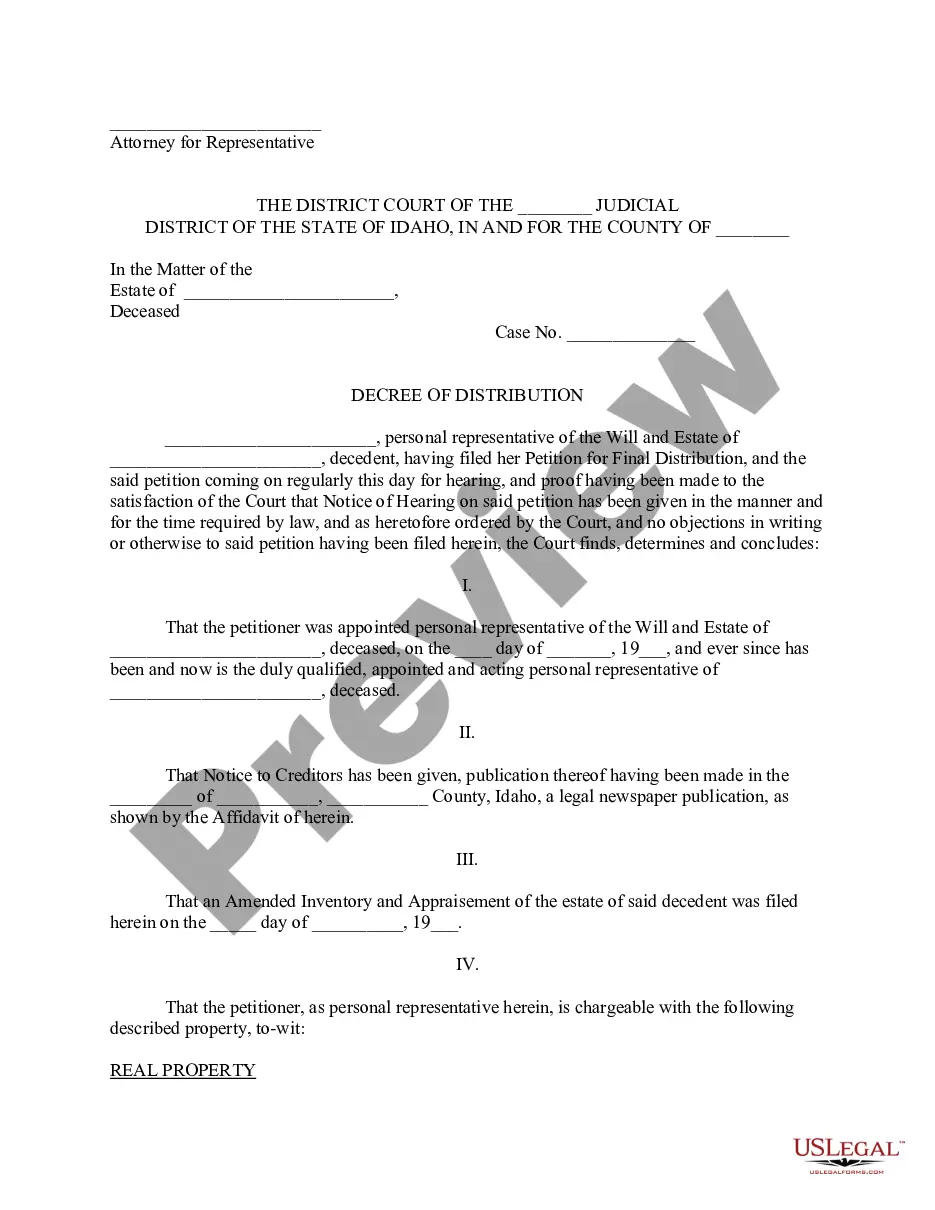
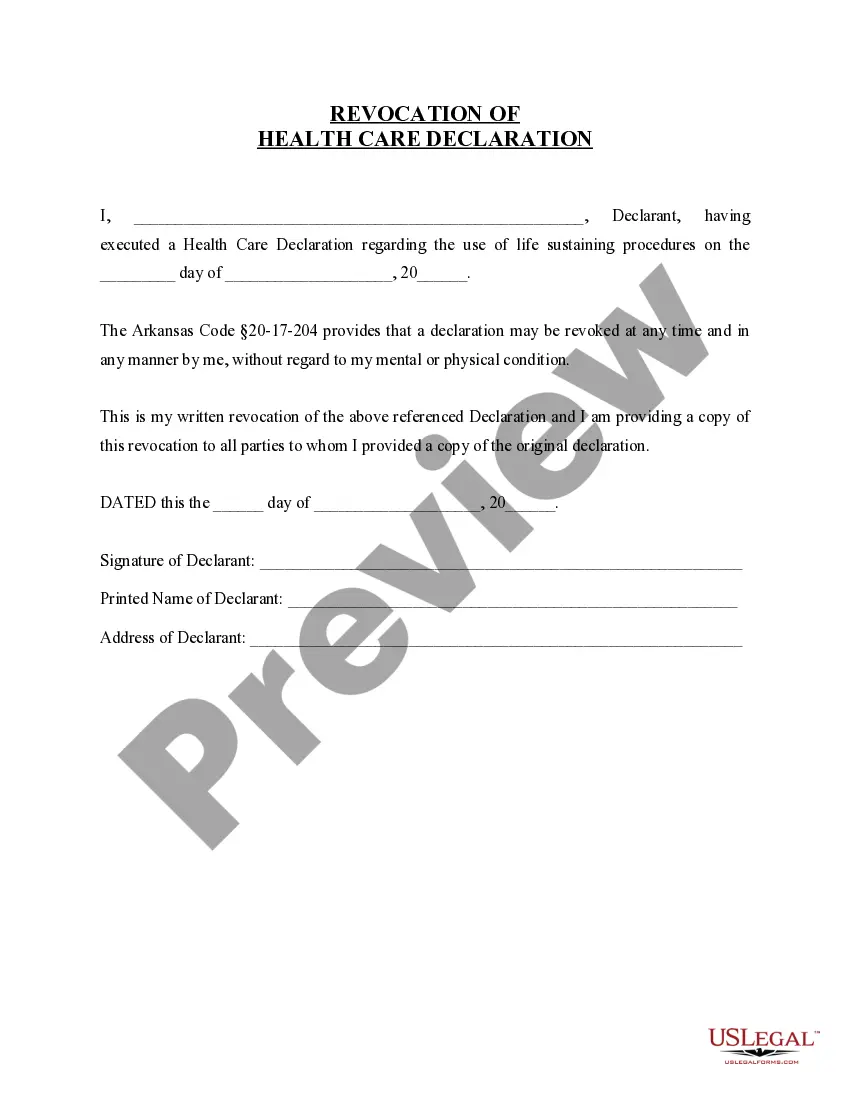
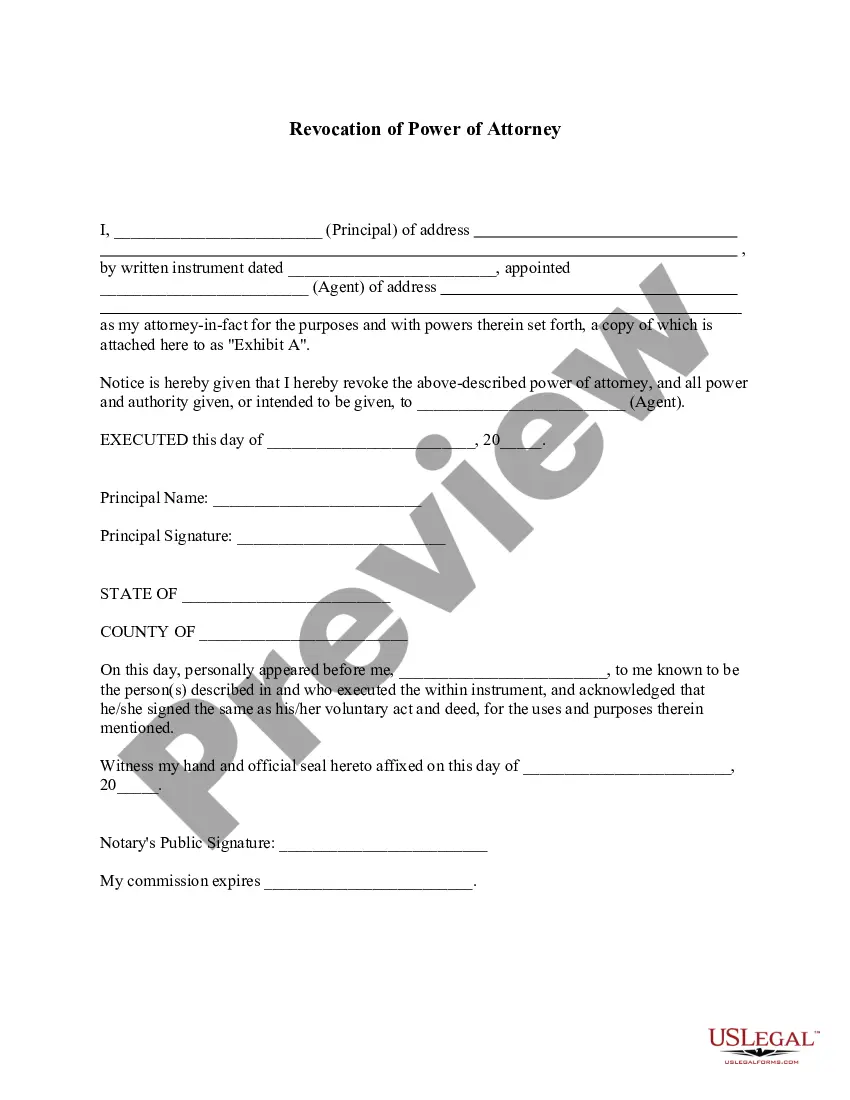
The Power of Attorney and Health Care Revocation form is a legal document used to officially revoke a previously executed health care declaration. This form ensures that your current wishes regarding life-sustaining treatments are accurately represented. Unlike a new health care declaration, this revocation directly refers back to your earlier decision, effectively nullifying it.
Key parts of this document
- Declarant information: The full name and address of the person revoking the previous declaration.
- Reference to previous declaration: Details about the original health care declaration being revoked, including the date it was executed.
- Revocation statement: A clear statement that expresses the revocation of the prior declaration.
- Date of revocation: The date the revocation is made, ensuring it is properly timed.
- Signature and printed name: The signature of the declarant along with the printed name for identification.
When this form is needed
You should use the Power of Attorney and Health Care Revocation form in scenarios where you have decided to change your previously stated wishes regarding medical treatment. This may occur if your health situation changes or if you feel that your previously indicated preferences no longer reflect your current desires. This form allows you to formally communicate these changes to ensure that your rights and healthcare wishes are honored.
Who needs this form
This form is intended for:
- Individuals who previously executed a health care declaration and want to revoke it.
- People who are concerned about their medical treatment preferences and wish to update their health care decisions.
- Patients in changing health situations that might affect their treatment preferences.
Steps to complete this form
- Identify the declarant: Enter your full name and address at the top of the form.
- Reference the prior declaration: Specify the date you executed the previous health care declaration.
- State your revocation: Clearly state that you are revoking the previous declaration.
- Complete the date of revocation: Fill in the current date to validate the revocation.
- Sign and print your name: Provide your signature along with your printed name to finalize the document.
Notarization guidance
This form does not typically require notarization unless specified by local law. However, it is always best to check your stateâs requirements to ensure your revocation is legally valid.
Get your form ready online
Our built-in tools help you complete, sign, share, and store your documents in one place.
Make edits, fill in missing information, and update formatting in US Legal Forms—just like you would in MS Word.
Download a copy, print it, send it by email, or mail it via USPS—whatever works best for your next step.
Sign and collect signatures with our SignNow integration. Send to multiple recipients, set reminders, and more. Go Premium to unlock E-Sign.
If this form requires notarization, complete it online through a secure video call—no need to meet a notary in person or wait for an appointment.
We protect your documents and personal data by following strict security and privacy standards.

Make edits, fill in missing information, and update formatting in US Legal Forms—just like you would in MS Word.

Download a copy, print it, send it by email, or mail it via USPS—whatever works best for your next step.

Sign and collect signatures with our SignNow integration. Send to multiple recipients, set reminders, and more. Go Premium to unlock E-Sign.

If this form requires notarization, complete it online through a secure video call—no need to meet a notary in person or wait for an appointment.

We protect your documents and personal data by following strict security and privacy standards.
Mistakes to watch out for
- Not including the exact date of the previous declaration being revoked.
- Failing to sign the document, which can lead to it being considered invalid.
- Not providing copies to relevant parties, which may result in confusion about health care preferences.
Why complete this form online
- Convenience: Complete and download your revocation form from the comfort of your home.
- Editability: Easily fill out the form with your specific information and preferences.
- Reliability: Use forms drafted by licensed attorneys to ensure legal compliance.
Legal use & context
- The form legally revokes any previous health care declarations, ensuring that current wishes are respected.
- It must be executed in accordance with state law to be enforceable.
- This form may be presented in medical settings to inform providers of the declarant's current wishes.
What to keep in mind
- The Power of Attorney and Health Care Revocation form is used to formally revoke a previous Health Care Declaration.
- Completing this form ensures clarity and communication of your current healthcare wishes.
- Always provide accurate personal information and sign the document to validate it.
Looking for another form?

Form popularity
FAQ
To revoke a Power of Attorney in Arkansas, you need to fill out a revocation form. This document formally terminates the existing Arkansas Power of Attorney and Health Care Revocation. After you complete the form, make sure to notify the agent and any institutions that had the original POA on file. Utilizing platforms like US Legal Forms can simplify this process and provide you with the necessary templates to ensure your revocation is valid and recognized.
Arkansas Code 20-13-104 governs health care decisions made by individuals and their representatives. This code supports the idea that individuals have the right to appoint someone to make medical decisions if they cannot do so themselves. Knowledge of this code enriches your understanding of the Arkansas Power of Attorney and Health Care Revocation, allowing for well-informed decisions regarding health care.
The rules for power of attorney in Arkansas require that the principal must be an adult of sound mind when creating the document. Additionally, the power of attorney must be executed in writing and may need to be notarized or witnessed to ensure its legality. Following these rules is vital for maintaining a valid Arkansas Power of Attorney and Health Care Revocation, safeguarding your interests.
A durable power of attorney for health care in Arkansas allows an individual to designate someone to make health care decisions on their behalf if they become incapacitated. This document remains effective even when the principal is not able to communicate their wishes. By utilizing this tool, you prioritize your health care preferences within your Arkansas Power of Attorney and Health Care Revocation.
A revocation of power of attorney in Arkansas is a formal process through which a principal cancels the authority granted to an agent. The revocation must be in writing and delivered to the agent to be effective. This process is crucial for anyone managing their Arkansas Power of Attorney and Health Care Revocation, ensuring that only trusted individuals have decision-making authority.
In Arkansas, the principal who created the power of attorney holds the authority to override it at any time, provided they are still mentally competent. Additionally, a court can intervene to revoke a power of attorney if it finds that the agent has acted improperly or if there are concerns about the principal's mental capacity. Understanding these provisions can help you manage your Arkansas Power of Attorney and Health Care Revocation effectively.
Arkansas Code 28-68-105 outlines the requirements for creating a power of attorney in Arkansas. This code specifically describes how a principal can grant authority to an agent to act on their behalf. It emphasizes the significance of informing individuals about their rights and responsibilities when entering into an Arkansas Power of Attorney and Health Care Revocation.
In Arkansas, a medical power of attorney also requires notarization to ensure that it is legally binding. This verification serves to confirm your identity and the authenticity of your intentions regarding health care decisions. To assist you in crafting a reliable document, consider using platforms like USLegalForms for expert guidance on your Arkansas Power of Attorney and Health Care Revocation.
Yes, a durable power of attorney must be notarized in Arkansas to ensure validity. Notarization provides legal recognition and may help prevent disputes regarding the legitimacy of the document. Utilizing services like USLegalForms can streamline the process of creating and notarizing your Arkansas Power of Attorney.
The statute governing powers of attorney in Arkansas is found in the Arkansas Code, particularly under Title 28, Chapter 68. This code outlines the legal framework and requirements for establishing a power of attorney, including the responsibilities of both the principal and the agent. Familiarizing yourself with these regulations can enhance your understanding of your Arkansas Power of Attorney rights.