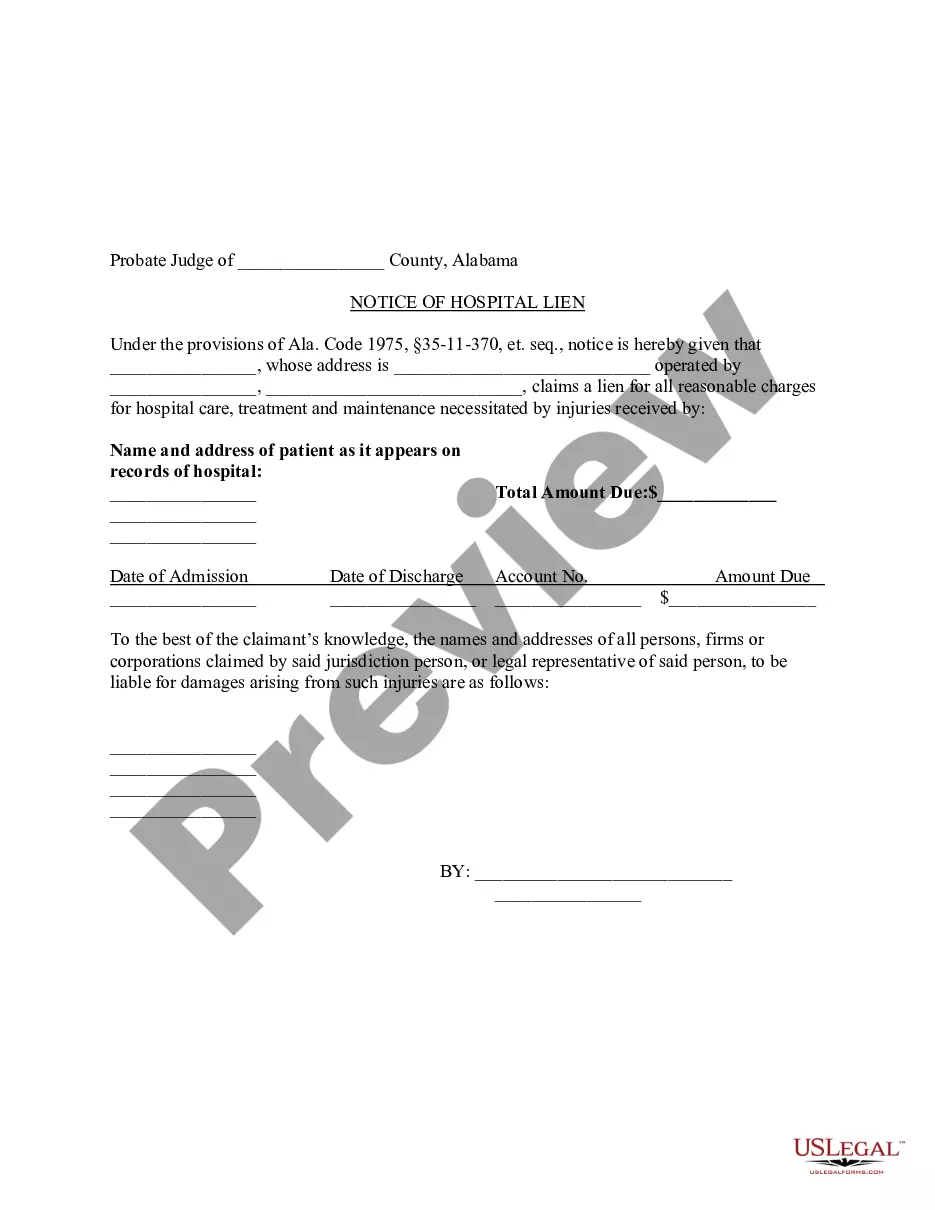
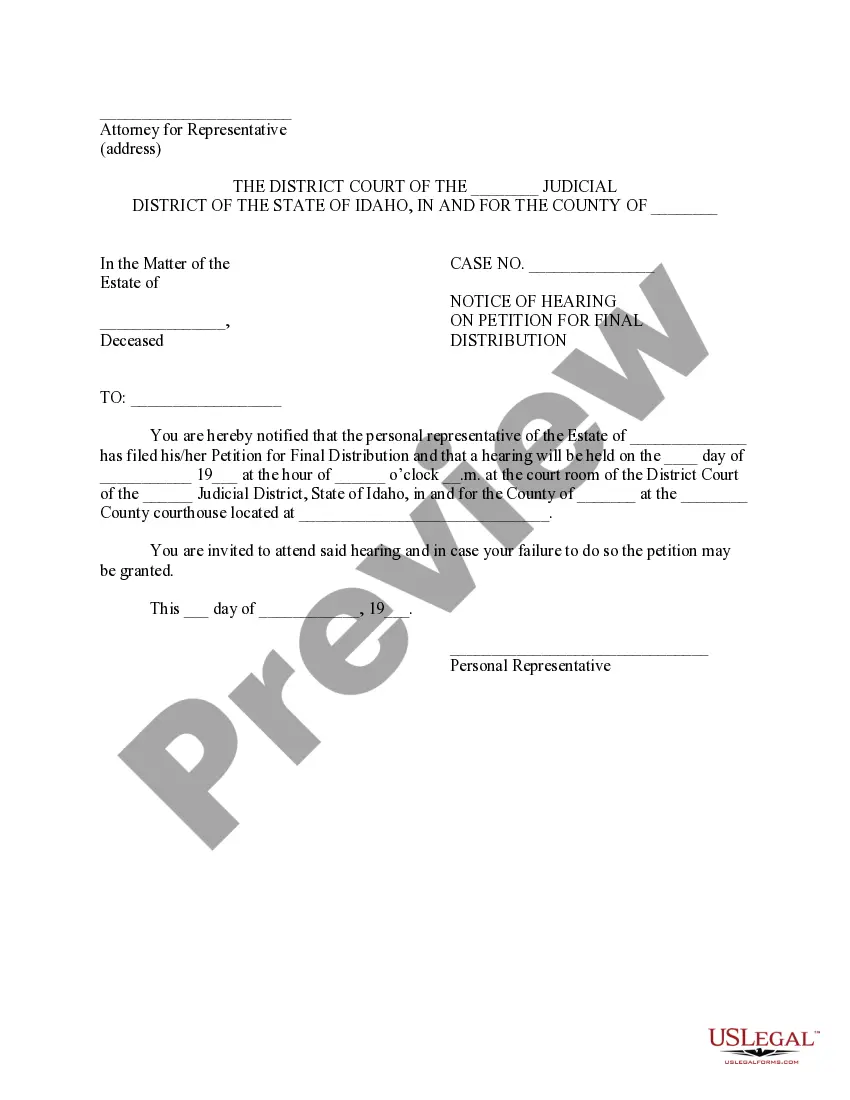
Idaho Notice of Hearing on Petition for Final Distribution
Understanding this form
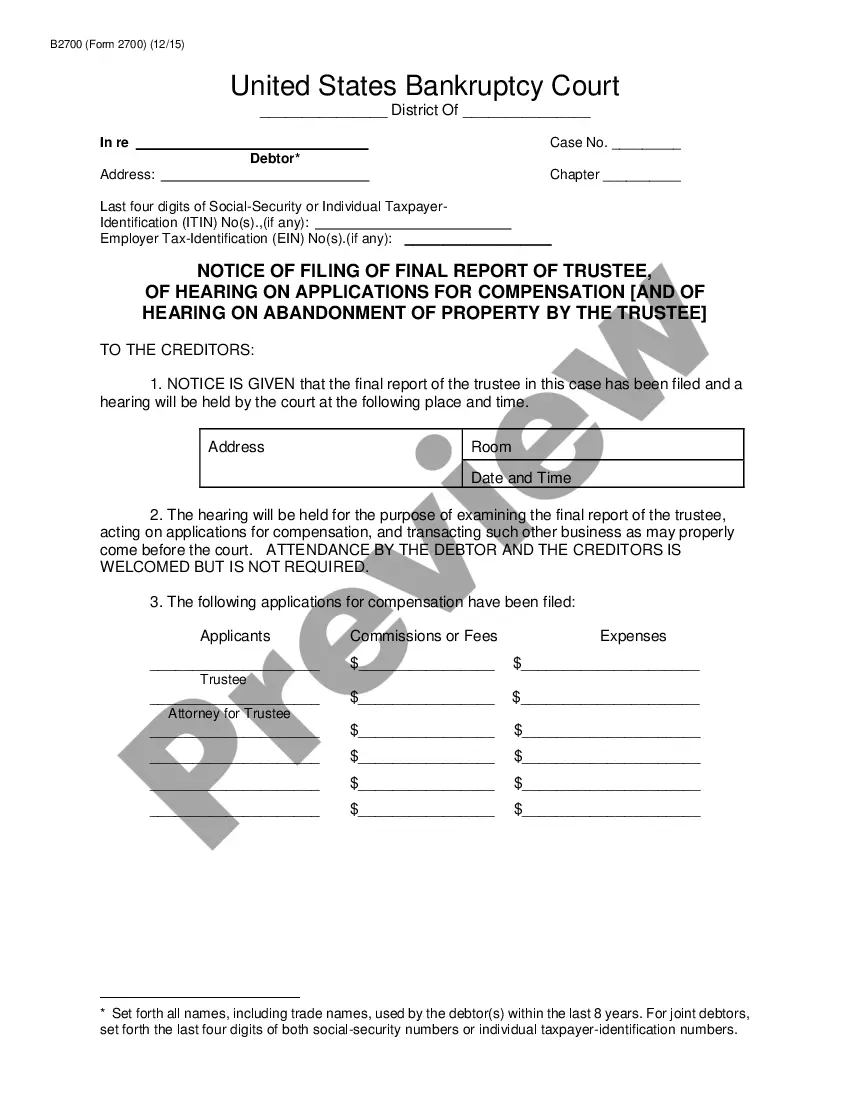
The Notice of Hearing on Petition for Final Distribution is a legal form that notifies interested parties about the hearing concerning the final distribution of an estate. This form is crucial in ensuring that all relevant individuals are informed about important developments in the probate process. Unlike other notices, this form specifically addresses the final distribution of an estate's assets, making it essential for transparency and legal compliance in estate management.
What’s included in this form
- Identification of the personal representative of the estate
- Details of the hearing date, time, and location
- Case number associated with the estate
- Invitation for attendance, highlighting the significance of participation
- Signature line for the personal representative
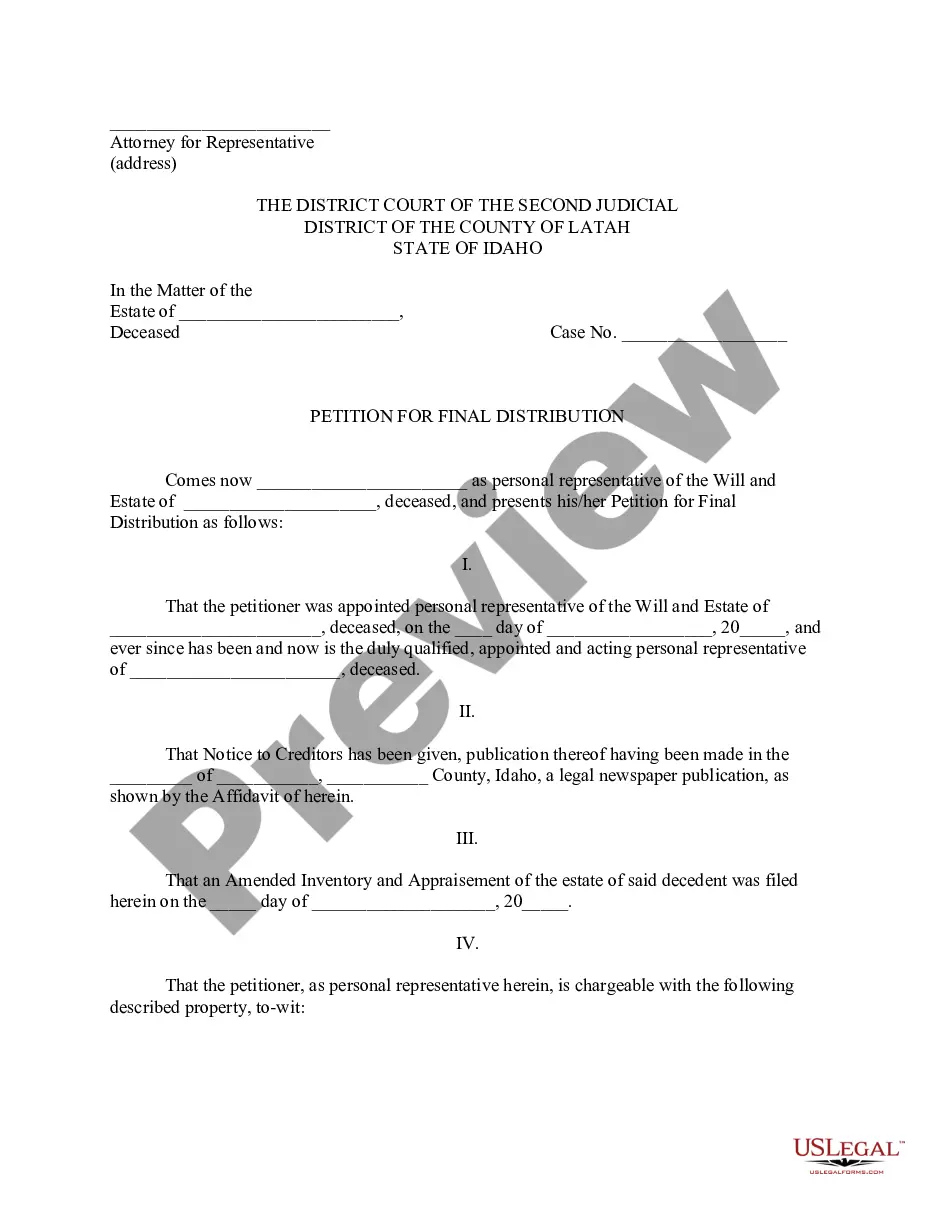
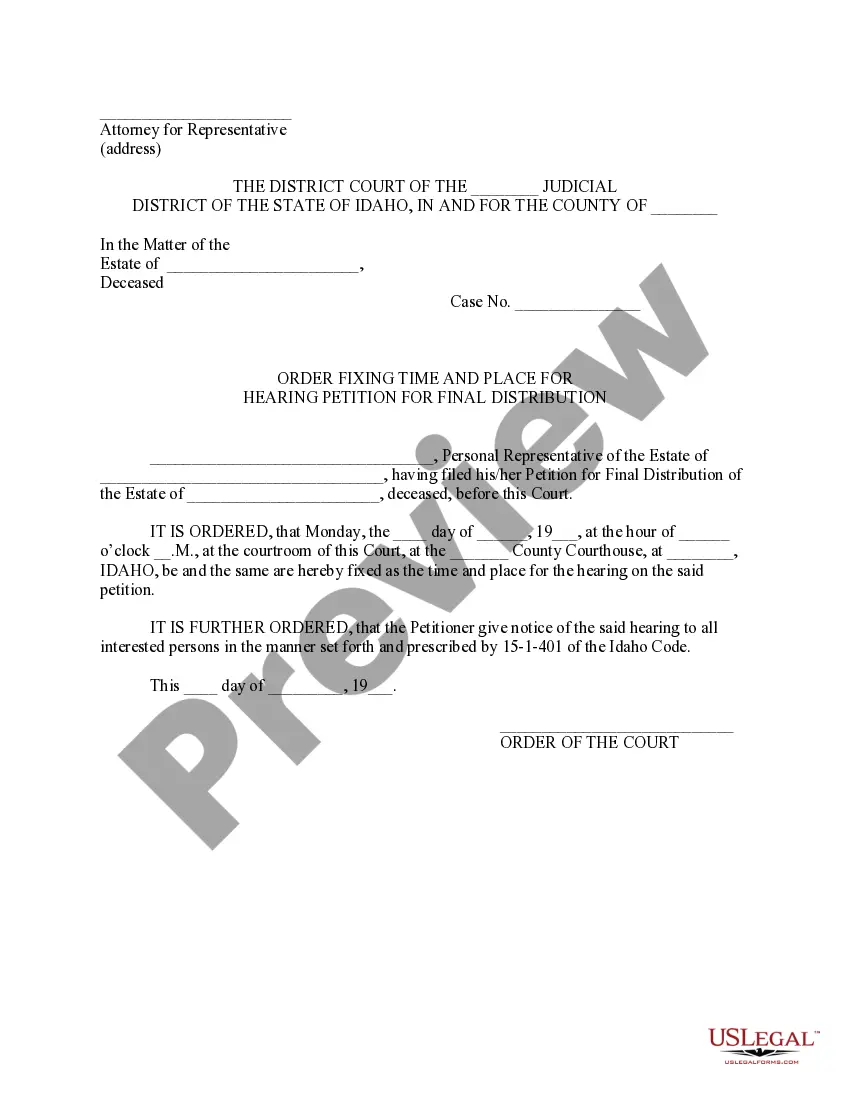
When this form is needed
This form is used when a personal representative has filed a petition for the final distribution of an estate and needs to notify all interested parties about the upcoming hearing. It is typically utilized in probate proceedings when the estate is ready to be settled, ensuring that beneficiaries and any other stakeholders can participate in the hearing to express their concerns or support.
Who should use this form
- Personal representatives of estates seeking final distribution
- Attorneys representing the personal representative
- Beneficiaries or interested parties involved in the estate
- Legal professionals handling probate cases
How to prepare this document
- Fill in the name and address of the personal representative.
- State the district court and county where the estate is probated.
- Enter the deceased's name and the corresponding case number.
- Specify the date, time, and location of the hearing.
- Sign and date the form to validate the notice.
Does this document require notarization?
In most cases, this form does not require notarization. However, some jurisdictions or signing circumstances might. US Legal Forms offers online notarization powered by Notarize, accessible 24/7 for a quick, remote process.
Get your form ready online
Our built-in tools help you complete, sign, share, and store your documents in one place.
Make edits, fill in missing information, and update formatting in US Legal Forms—just like you would in MS Word.
Download a copy, print it, send it by email, or mail it via USPS—whatever works best for your next step.
Sign and collect signatures with our SignNow integration. Send to multiple recipients, set reminders, and more. Go Premium to unlock E-Sign.
If this form requires notarization, complete it online through a secure video call—no need to meet a notary in person or wait for an appointment.
We protect your documents and personal data by following strict security and privacy standards.

Make edits, fill in missing information, and update formatting in US Legal Forms—just like you would in MS Word.

Download a copy, print it, send it by email, or mail it via USPS—whatever works best for your next step.

Sign and collect signatures with our SignNow integration. Send to multiple recipients, set reminders, and more. Go Premium to unlock E-Sign.

If this form requires notarization, complete it online through a secure video call—no need to meet a notary in person or wait for an appointment.

We protect your documents and personal data by following strict security and privacy standards.
Mistakes to watch out for
- Failing to provide accurate hearing date and time.
- Omitting essential contact information for the personal representative.
- Not notifying all interested parties, which may lead to legal complications.
- Neglecting to sign the form, rendering it invalid.
Why use this form online
- Convenience of downloadable forms that can be filled out at your own pace.
- Editability allows customization based on your specific legal circumstances.
- Access to attorney-drafted templates ensures legal compliance.
- Quick retrieval of important legal documents without the need for in-person visits.
Looking for another form?
Form popularity
FAQ
File the Will and Probate Petition. Secure Personal Property. Appraise and Insure Valuable Assets. Cancel Personal Accounts. Determine Cash Needs. Remove Estate Tax Lien. Determine Location of Assets and Secure "Date of Death Values" Submit Probate Inventory.
An estate includes all of a person's assets at their death.When you name an estate as beneficiary, the asset becomes part of your probate estate and your will controls who receives the asset. To do this, you must list "the estate of" followed by your full legal name in the beneficiary designation for the asset.
There is a general rule that executors have an 'executor's year' to complete the estate administration. This means that you should be aiming to have the estate finalised and distributed within 12 months from the date of death.
If the executor has obtained a grant of probate, the executor is allowed one year from the willmaker's death to gather in the assets and settle the affairs of the estate.
Find the will, if any. File the will with the local probate court. Notify agencies and business of the death. Inventory assets and get appraisals. Decide whether probate is necessary. Coordinate with the successor trustee. Communicate with beneficiaries. Take good care of estate assets.
An estate consists of cash, cars, real estate and anything else owned by the deceased that has value.A deceased person's heirs receive any amount left over after all debts are settled, as dictated by the terms of a valid will.
Many will assume responsibility, believing it is the right thing to do, but they are not legally required to do so. Creditors can open an estate. Holding the assets of the decedent in an effort to prevent creditors from reclaiming their debt is a risky proposition.
By Stephanie Kurose, J.D. Closing a person's estate after they die can often be a long, detailed process. This includes paying off debts, filing final tax returns, and, finally, distributing the estate's assets according to the wishes of the deceased.
Unfortunately, every estate is different, and that means timelines can vary. A simple estate with just a few, easy-to-find assets may be all wrapped up in six to eight months. A more complicated affair may take three years or more to fully settle.
Unfortunately, every estate is different, and that means timelines can vary. A simple estate with just a few, easy-to-find assets may be all wrapped up in six to eight months. A more complicated affair may take three years or more to fully settle.