Answer - Personal Injury - Pharmaceutical - Multiple Defendants
About this form
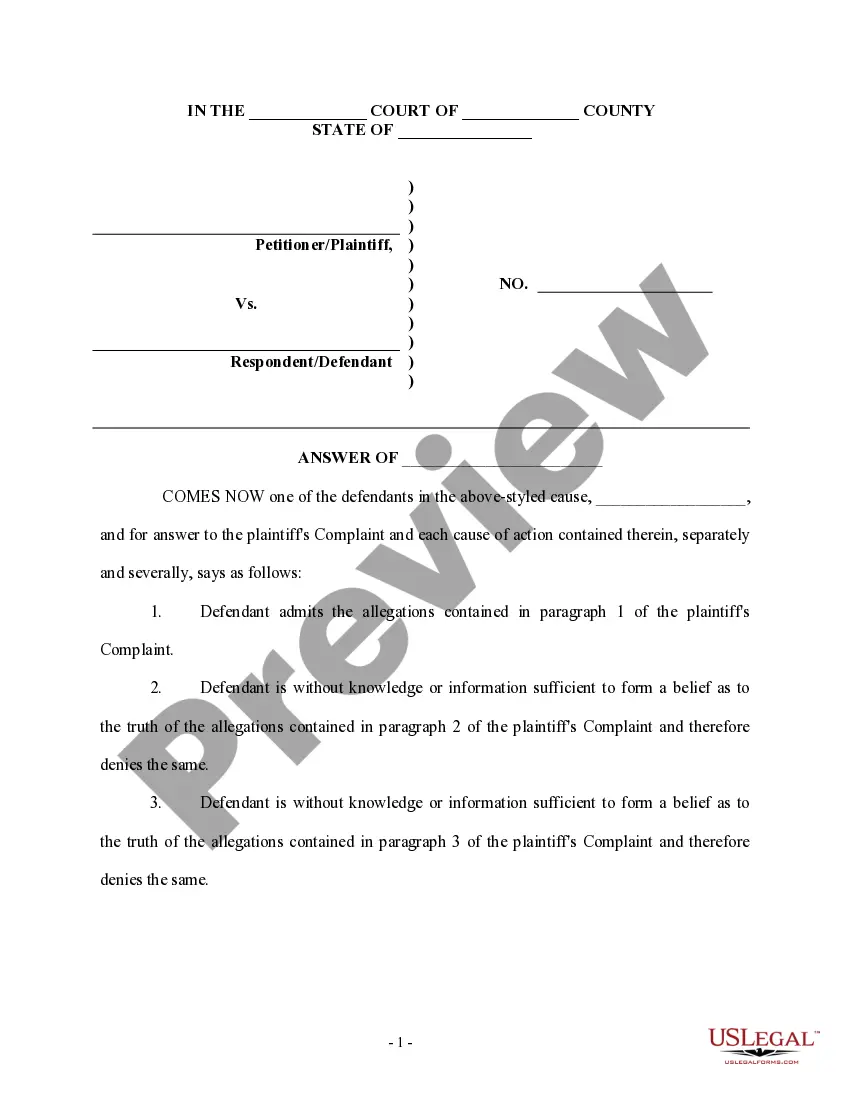
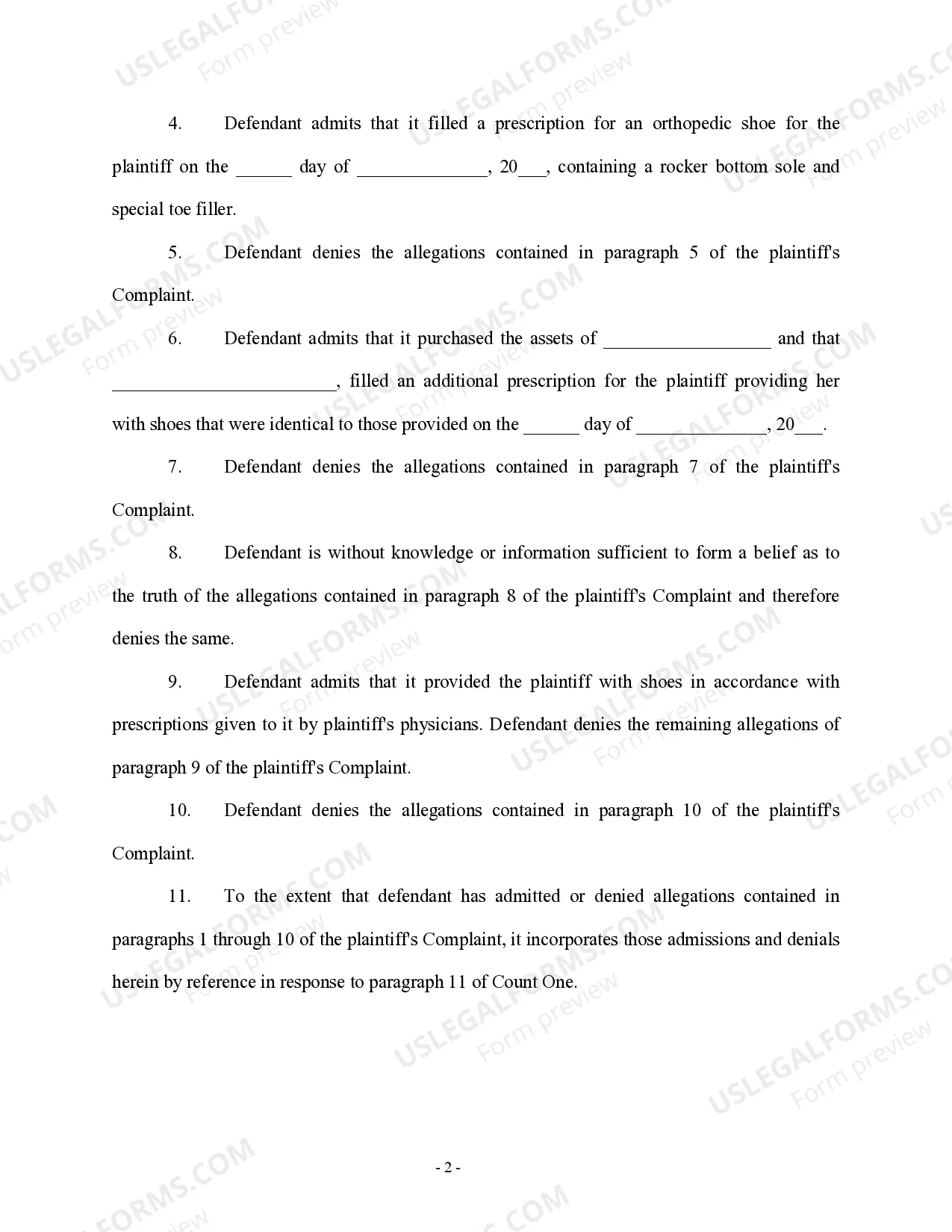
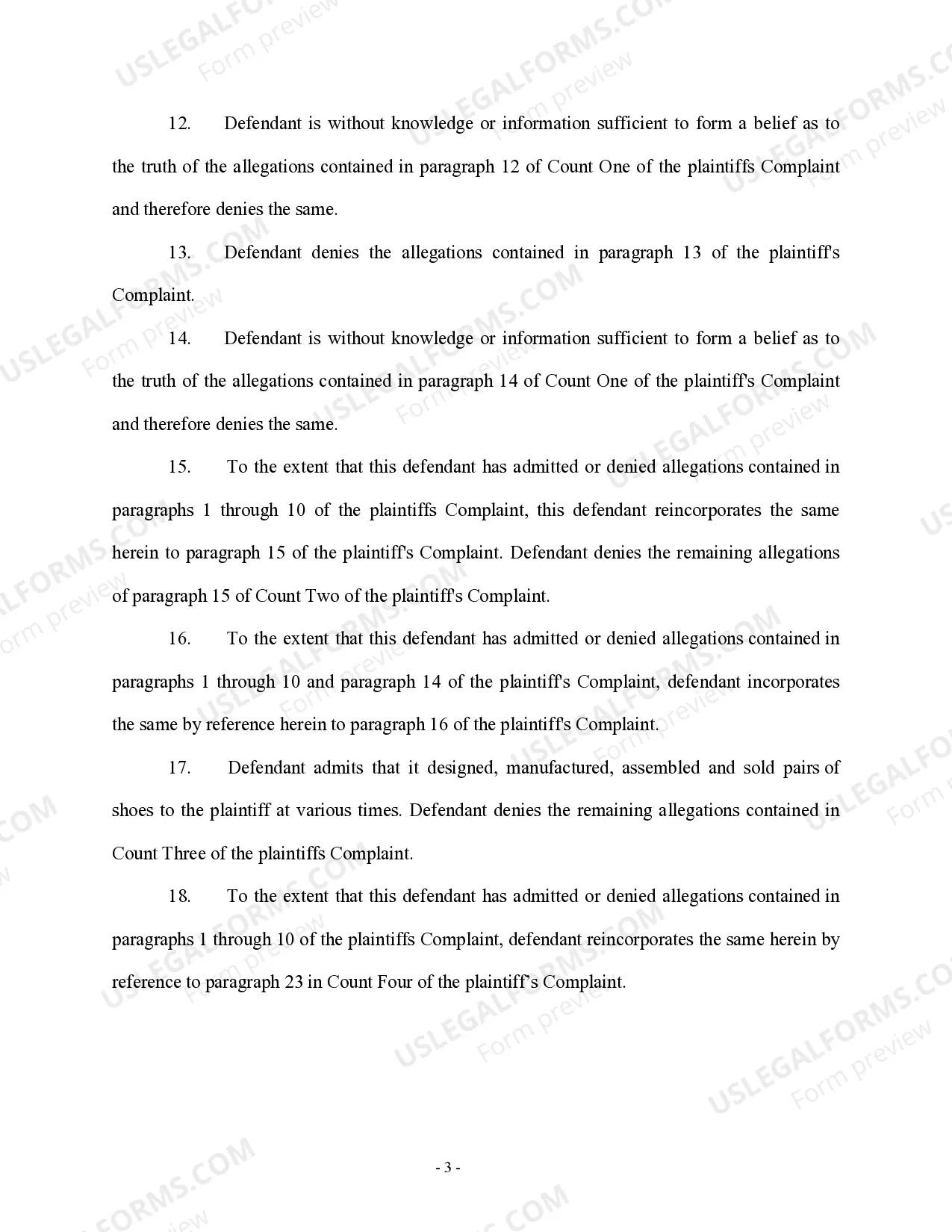
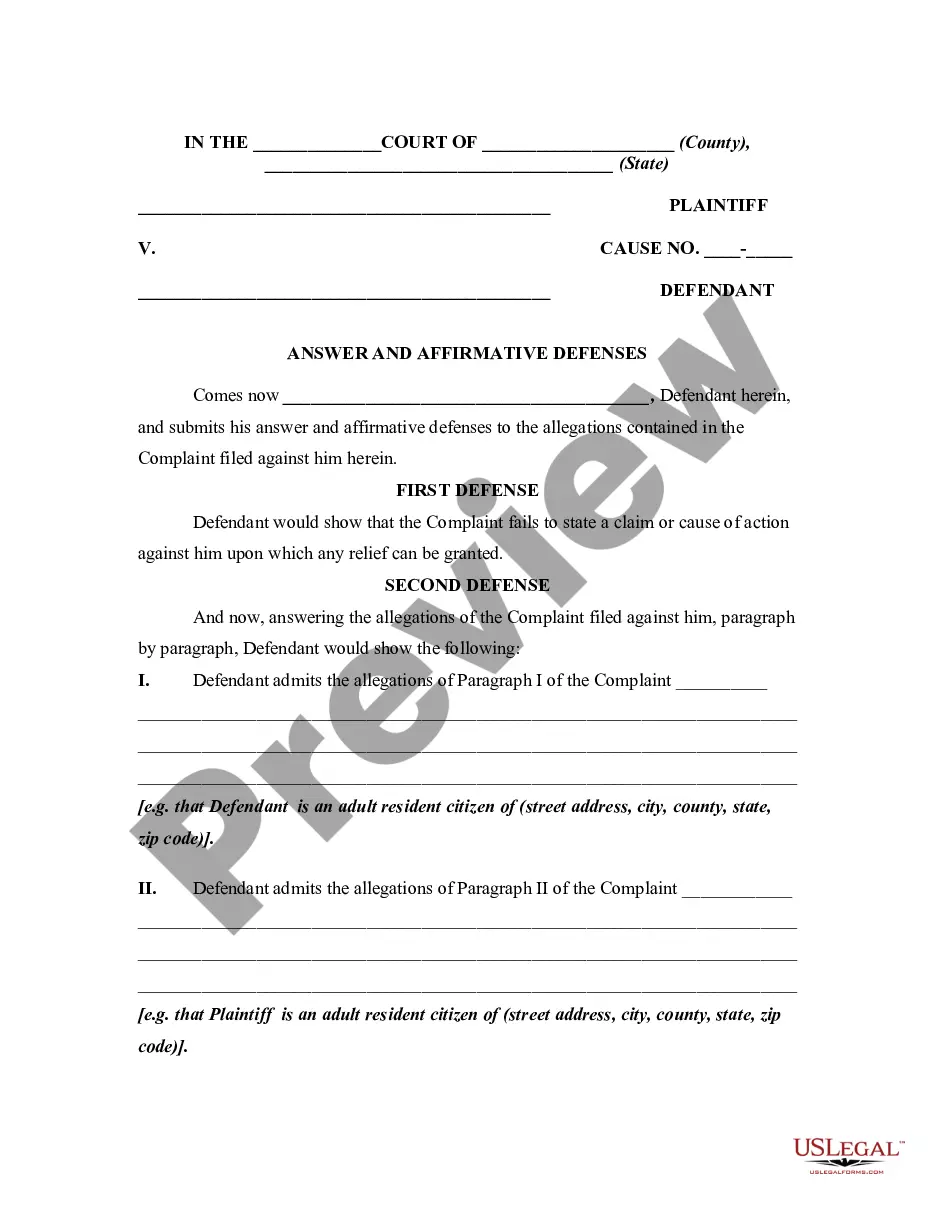
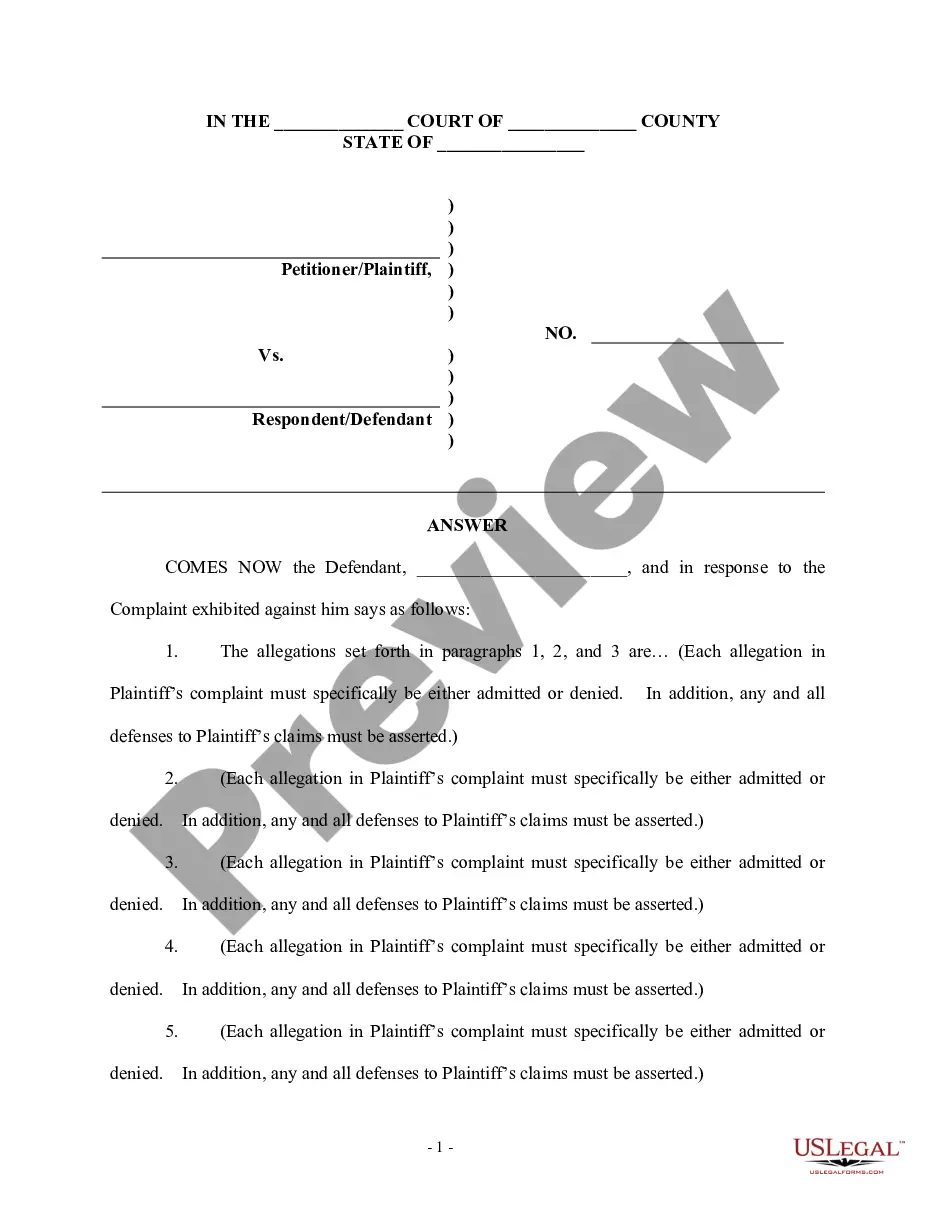
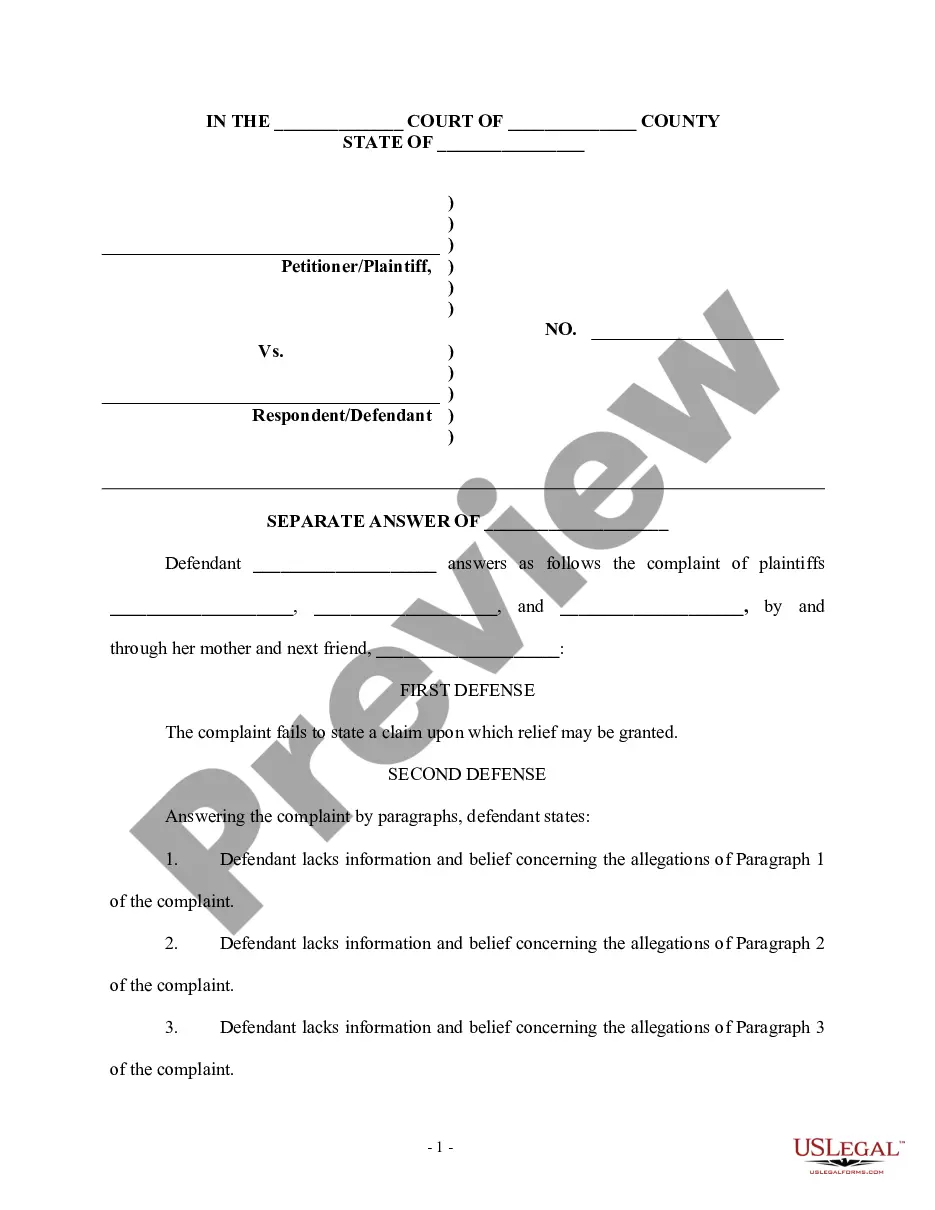
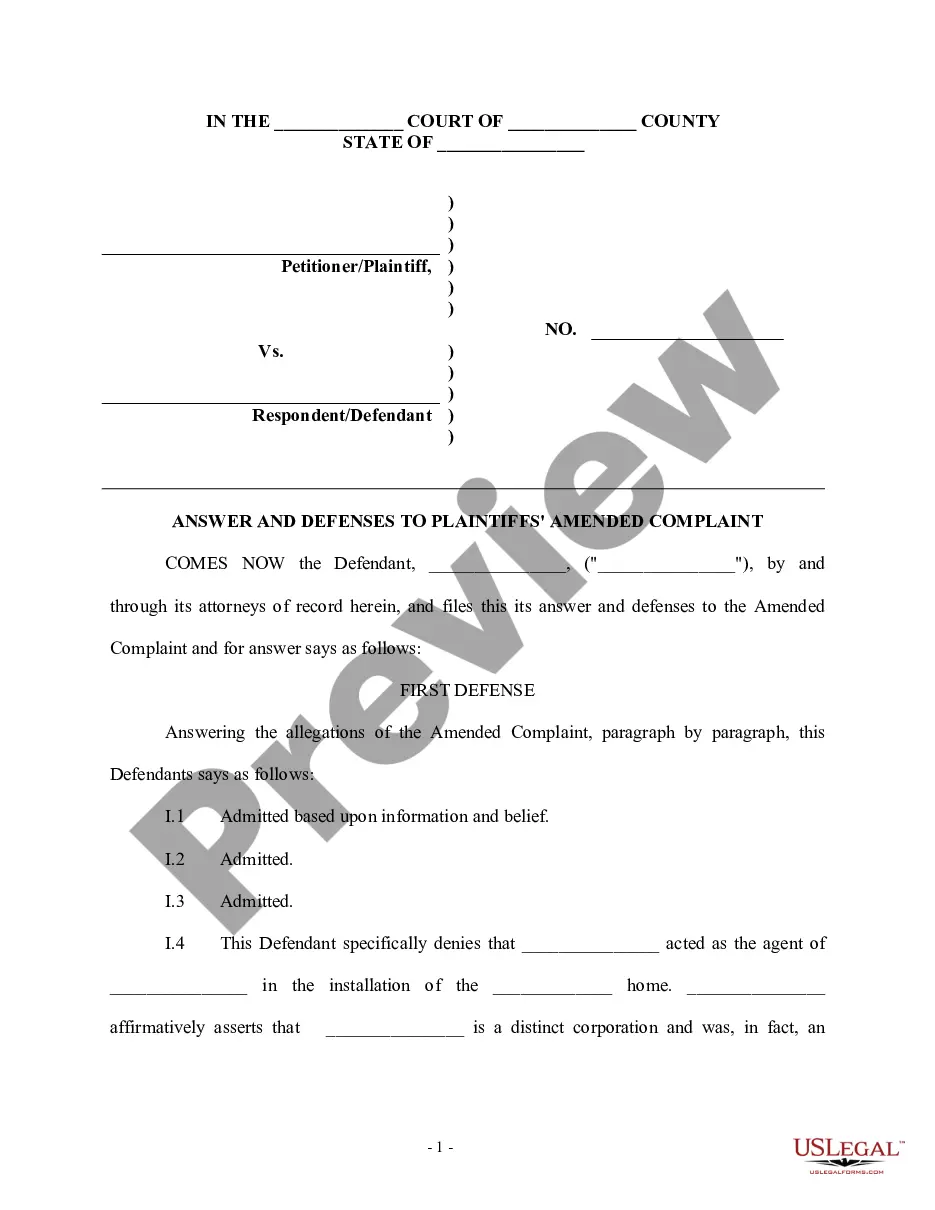
This form, titled Answer - Personal Injury - Pharmaceutical - Multiple Defendants, serves as the defendant's official written response to the allegations presented in a plaintiff's complaint. It outlines the defendant's admissions and denials regarding the claims made in the lawsuit, distinguishing it from other common legal responses by specifically addressing multiple defendants in a pharmaceutical context.
Form components explained
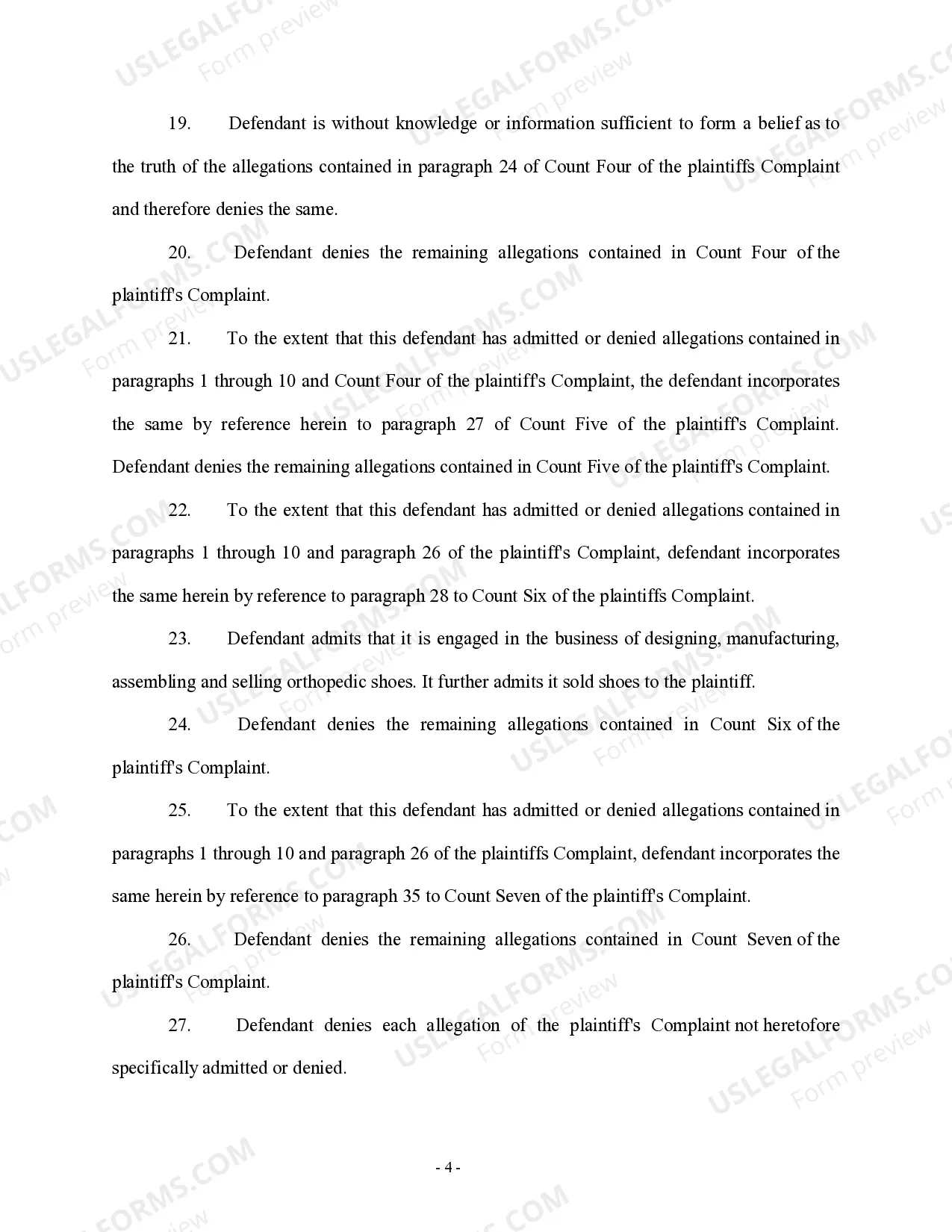
- Defendant's admissions to specific allegations made in the complaint.
- Denials of allegations where the defendant lacks knowledge or information.
- Incorporation of prior admissions and denials for clarity.
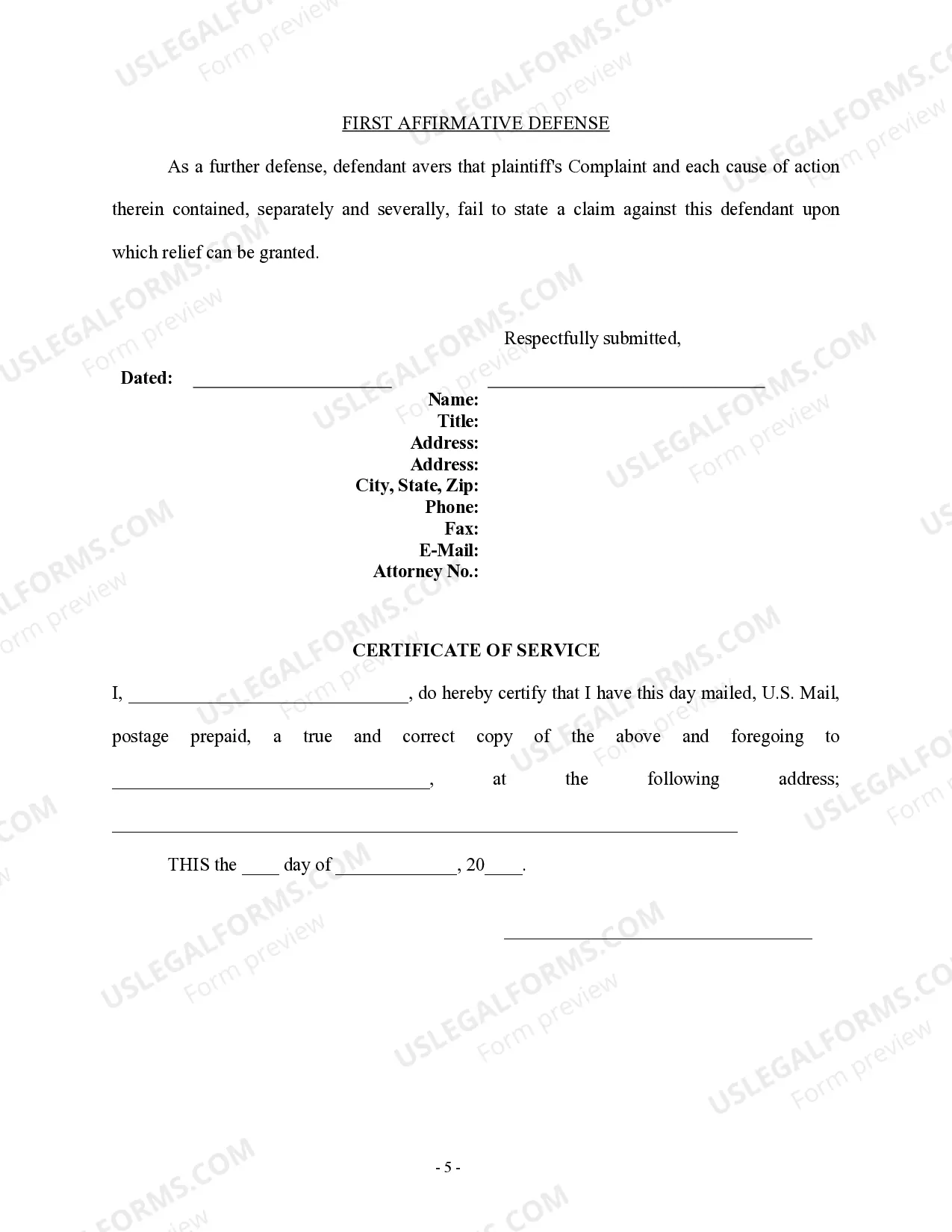
- Affirmative defenses articulated by the defendant.
- Signature and certification of service to the opposing party.

When this form is needed
This form is essential when a defendant in a personal injury case involving pharmaceuticals seeks to officially respond to a complaint made by a plaintiff. It is particularly necessary when multiple defendants are involved, ensuring that each party's response is clearly articulated and recorded in legal proceedings.
Who needs this form
- Defendants in personal injury cases related to pharmaceutical products.
- Legal representatives of defendants responding to a plaintiff's complaint.
- Entities such as pharmaceutical companies involved in litigation where multiple parties are defendants.
- Individuals or corporations that need to clearly state their response to specific allegations in a lawsuit.
How to prepare this document
- Identify all parties involved, including the plaintiff and defendants.
- Review the plaintiff's complaint to determine which allegations to admit or deny.
- Incorporate any admissions or denials from prior responses for clarity.
- Specify affirmative defenses that apply to the case.
- Date the form and include attorney contact information for service of process.
Notarization guidance
This form does not typically require notarization unless specified by local law.
Get your form ready online
Our built-in tools help you complete, sign, share, and store your documents in one place.
Make edits, fill in missing information, and update formatting in US Legal Forms—just like you would in MS Word.
Download a copy, print it, send it by email, or mail it via USPS—whatever works best for your next step.
Sign and collect signatures with our SignNow integration. Send to multiple recipients, set reminders, and more. Go Premium to unlock E-Sign.
If this form requires notarization, complete it online through a secure video call—no need to meet a notary in person or wait for an appointment.
We protect your documents and personal data by following strict security and privacy standards.

Make edits, fill in missing information, and update formatting in US Legal Forms—just like you would in MS Word.

Download a copy, print it, send it by email, or mail it via USPS—whatever works best for your next step.

Sign and collect signatures with our SignNow integration. Send to multiple recipients, set reminders, and more. Go Premium to unlock E-Sign.

If this form requires notarization, complete it online through a secure video call—no need to meet a notary in person or wait for an appointment.

We protect your documents and personal data by following strict security and privacy standards.
Avoid these common issues
- Failing to address each allegation in the complaint specifically.
- Not including all necessary parties in the response.
- Omitting the date or attorney information in the certification of service.
- Not incorporating previous admissions and denials properly.
Benefits of completing this form online
- Accessible anytime and from anywhere, allowing for quick completion.
- Editable templates ensure that users can tailor the document to their specific case.
- Provides reliable legal language crafted by licensed attorneys.
Looking for another form?
Form popularity
FAQ
An average personal injury settlement amount is anywhere between $3,000 and $75,000.Of course, most cases fall in between the very high and very low end of average settlements. There are also outliers you've probably heard about people getting settlements that are millions of dollars.
There are other reasons why insurance companies prefer to settle outside of court besides the unpredictable outcome from a jury trial.A settlement also saves litigation costs for the insurance company. The insurance company is also able to close the associated claim file.
Four percent to five percent of the personal injury cases in the United States go to trial. 95 percent to 96 percent of personal injury cases are settled pretrial. (Source: U.S. Department of Justice, Office of Justice Programs, Bureau of Justice Statistics Bulletin, Federal Tort Trials and Verdicts).
Most personal injury cases settle out of court, and for good reason. Settlement is faster, less expensive, and less risky. Most personal injury cases settle out of court, well before trial, and many settle before a personal injury lawsuit even needs to be filed.
Settling CasesMost civil cases are settled by mutual agreement between the parties. A dispute can be settled even before a suit is filed. Once a suit is filed, it can be settled before the trial begins, during the trial, while the jury is deliberating, or even after a verdict is rendered.
You can sue more than one defendant for the same incident or contract. But each defendant must have some actual interest in the subject of your case and must be (at least arguably) responsible somehow for your injury.
TWO DEFENDANTS MAY SHARE ONE ANSWER FORM, BUT EACH MUST SIGN THE ANSWER AND PAY A SEPARATE FILING FEE.
In multiple defendant cases, a jury is usually asked to allocate fault between the defendants (assuming no fault on the part of the plaintiff) and the defendants are asked to pay damages according to their percentage of the fault.
Two or more plaintiffs may join together and sue a defendant. Alternatively, a plaintiff may sue two or more defendants. Joinder of parties under Rule 20 is not required and is often referred to as "permissive joinder.