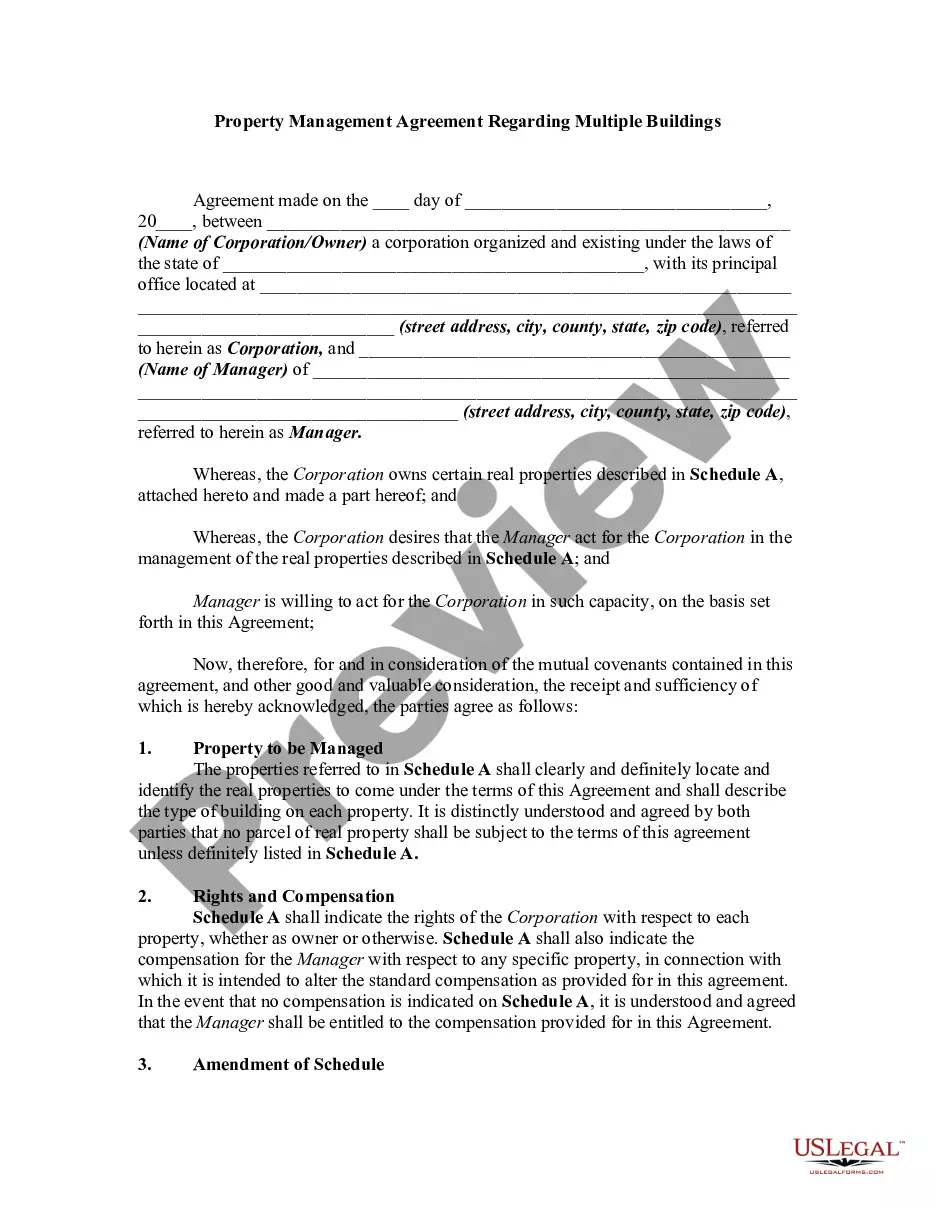
Wyoming Warranty Deed from Individual to LLC
What this document covers
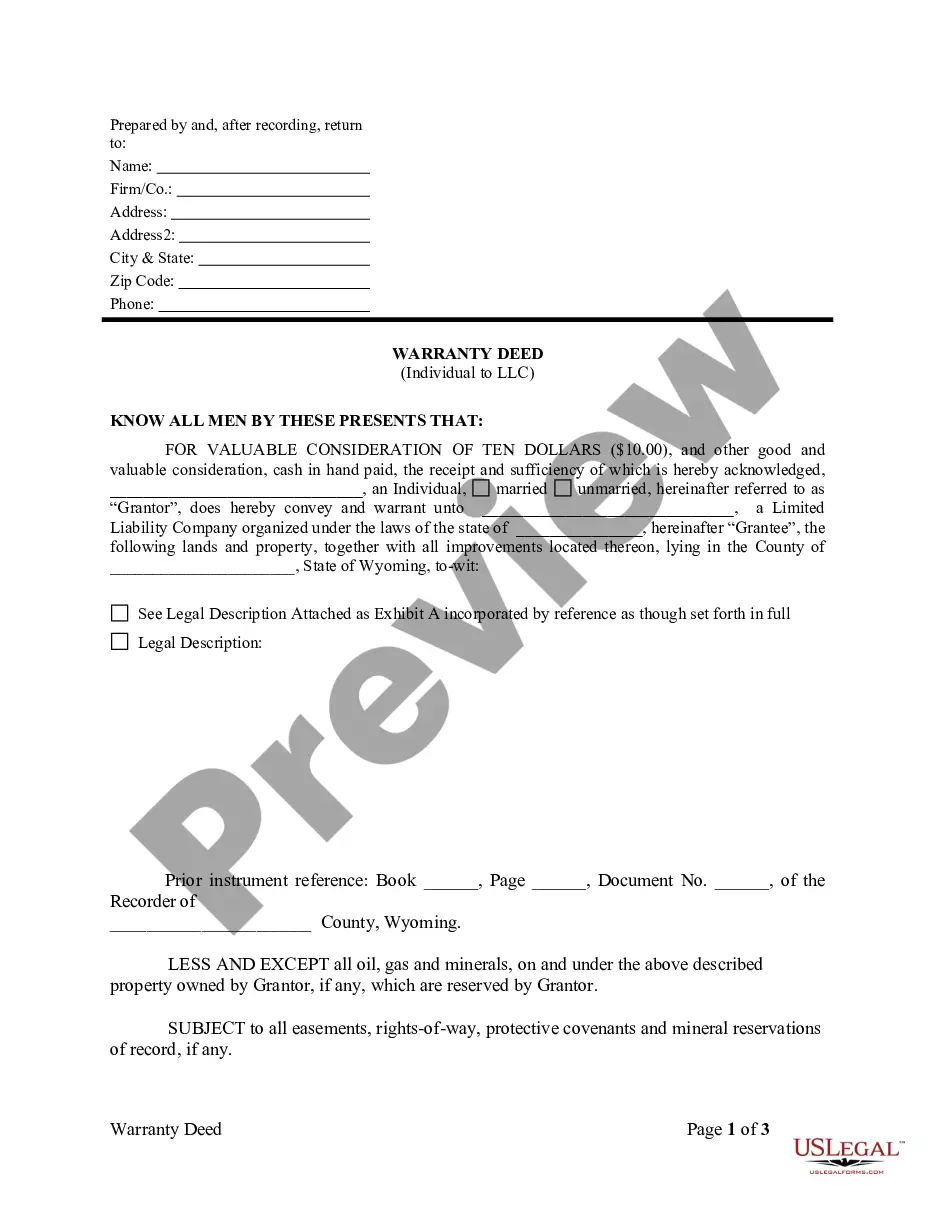
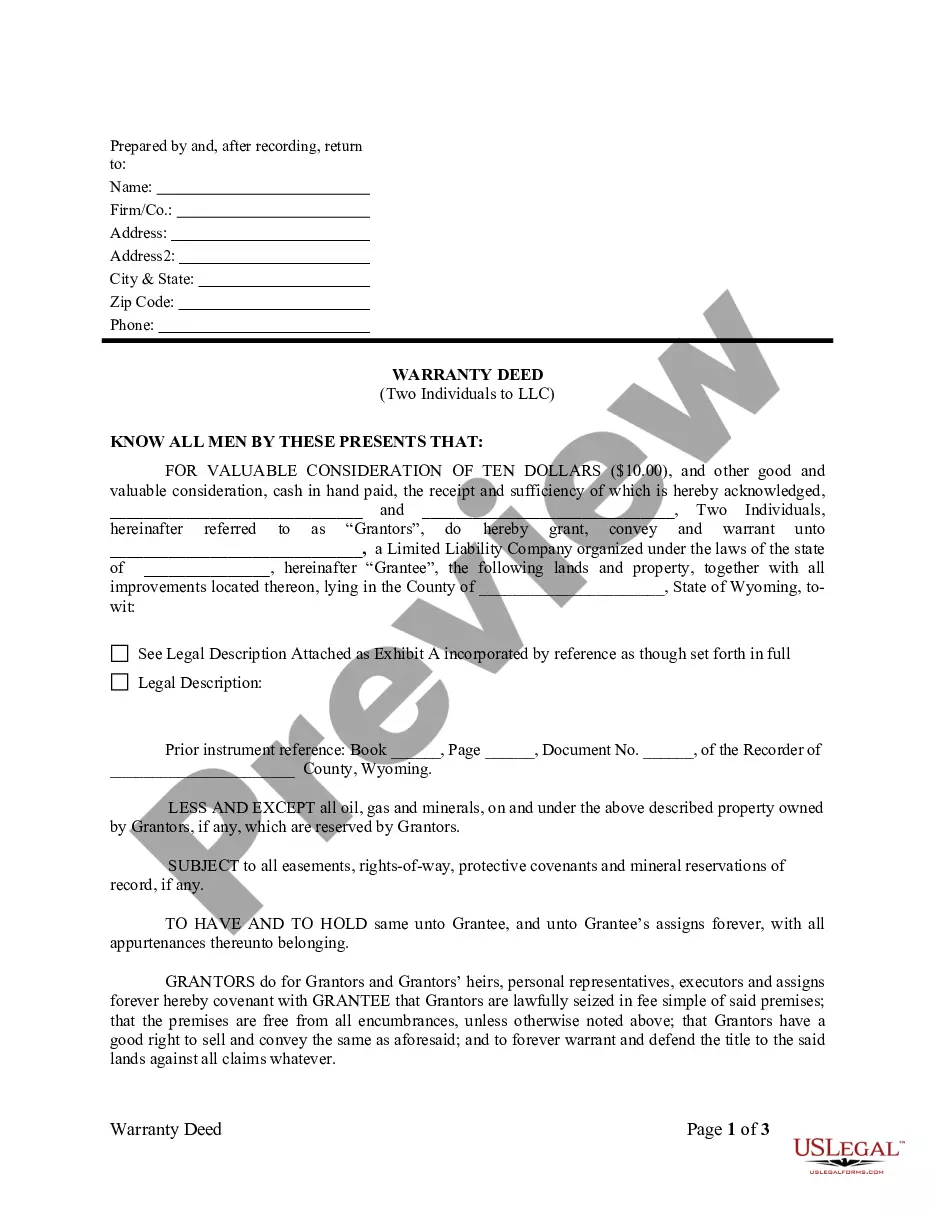
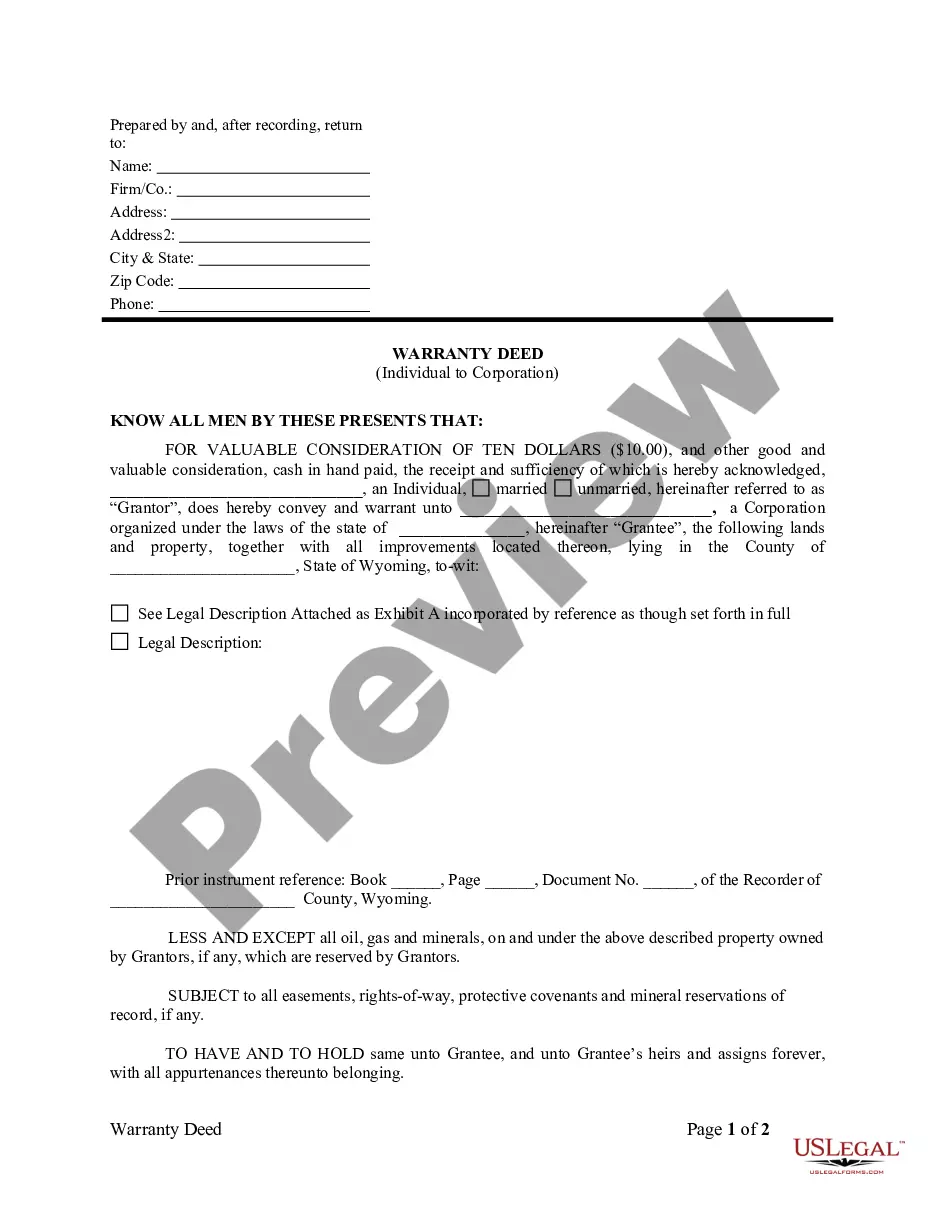
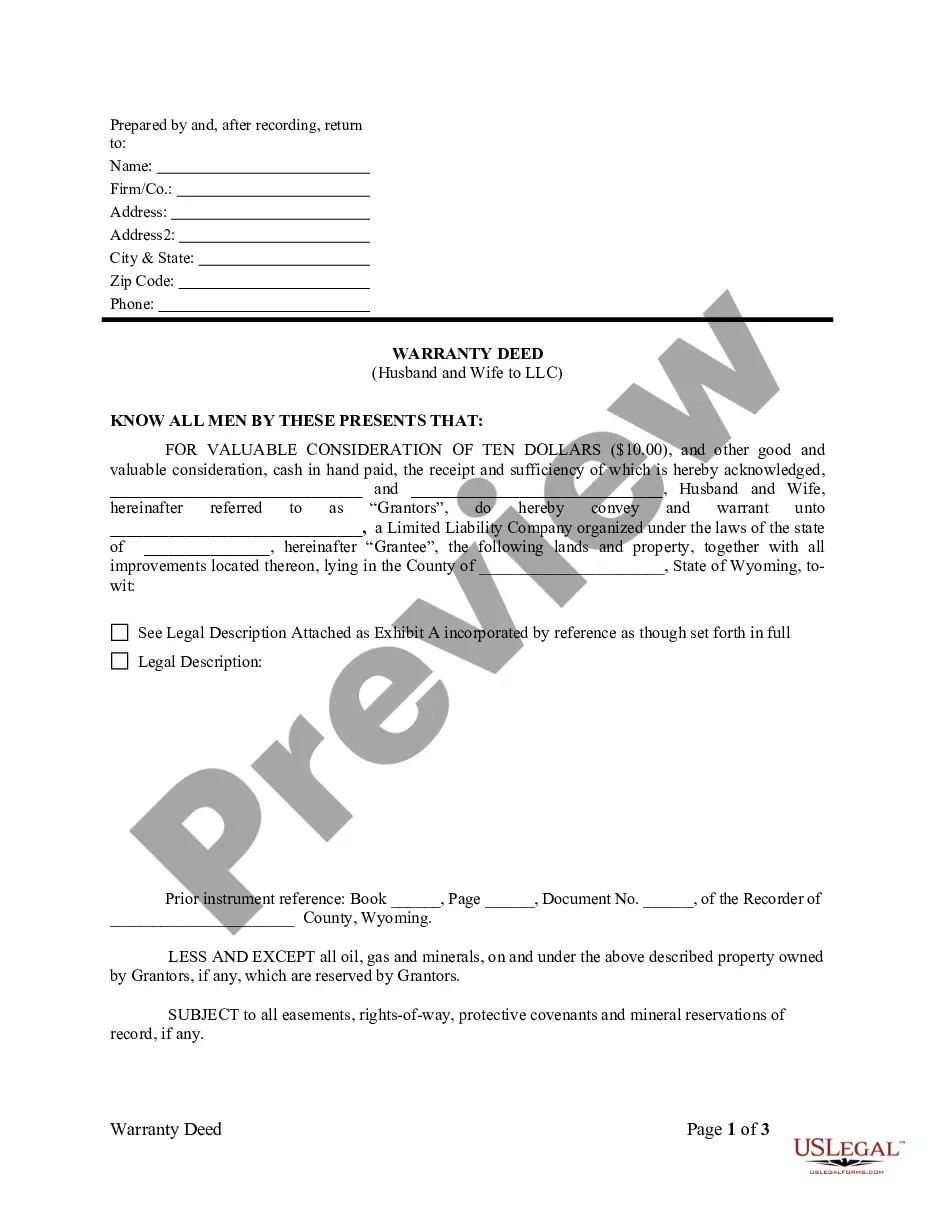
The Warranty Deed from Individual to LLC is a legal document used to transfer property ownership from an individual (the grantor) to a limited liability company (the grantee). This form ensures that the transfer is executed with certain warranties regarding the title of the property. Unlike other types of deeds, this form specifically reserves oil, gas, and minerals, allowing the grantor to retain those rights even after the property has been transferred.
What’s included in this form
- Identification of the grantor (individual) and the grantee (LLC).
- Legal description of the property being transferred.
- Reservation of oil, gas, and mineral rights by the grantor.
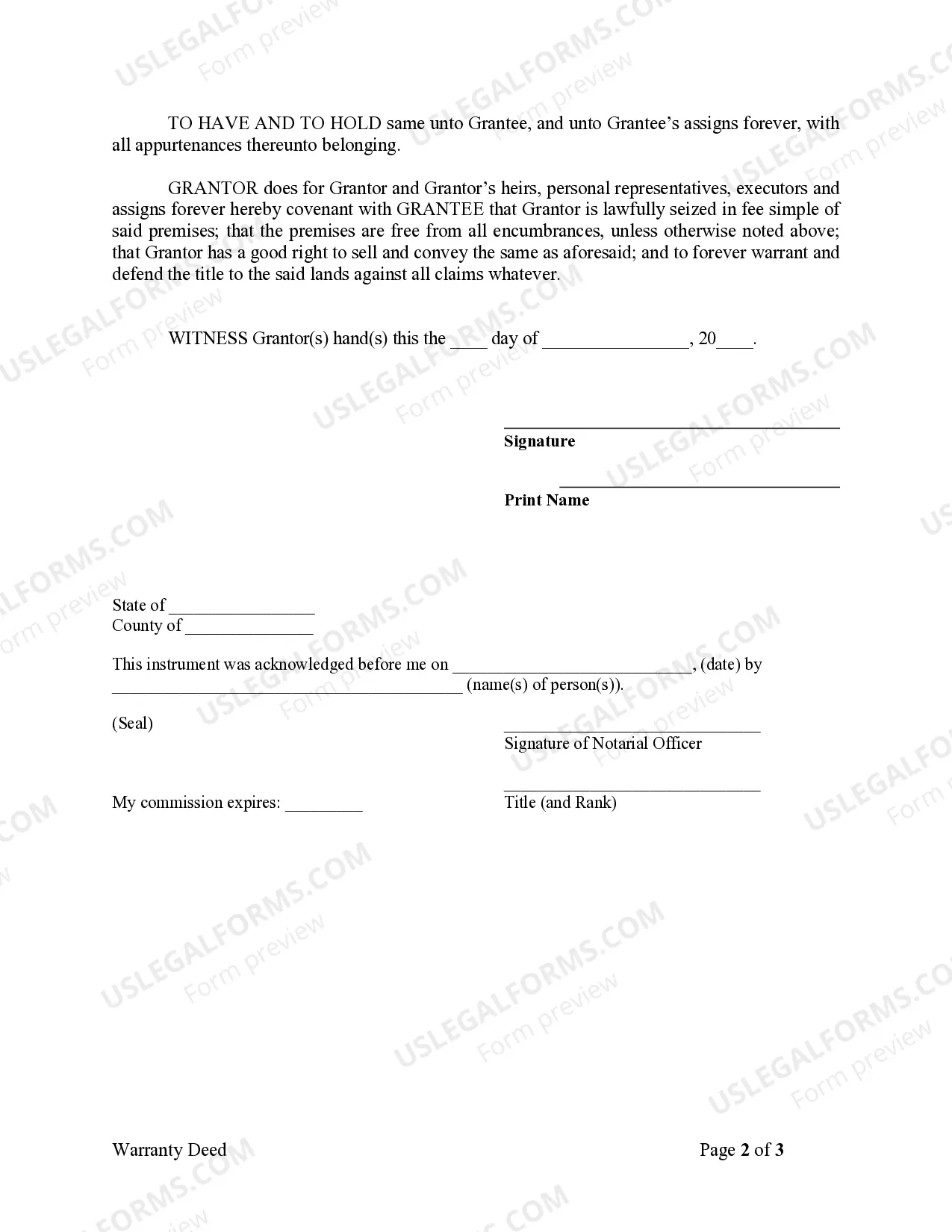
- Covenant of title guaranteeing the grantor's right to sell.
- Signatures of the parties involved.


When to use this document
This form is necessary when an individual wants to transfer ownership of real estate to a limited liability company. It is commonly used in real estate transactions involving business entities and can be helpful in asset protection and financial planning strategies.
Intended users of this form
- Individuals looking to transfer real property to their own LLC.
- Business owners wanting to formalize property ownership in a limited liability format.
- Real estate investors considering property management through an LLC.
Steps to complete this form
- Identify the parties involved: provide the names and addresses of the grantor and the LLC.
- Describe the property: include a detailed legal description of the real estate.
- Detail the mineral rights: state the reservation of oil, gas, and minerals if applicable.
- Sign the document: both the grantor and an authorized representative of the LLC must sign.
- Include any necessary witnessing or notarization as per state rules.
Notarization guidance
To make this form legally binding, it must be notarized. Our online notarization service, powered by Notarize, lets you verify and sign documents remotely through an encrypted video session.
Get your form ready online
Our built-in tools help you complete, sign, share, and store your documents in one place.
Make edits, fill in missing information, and update formatting in US Legal Forms—just like you would in MS Word.
Download a copy, print it, send it by email, or mail it via USPS—whatever works best for your next step.
Sign and collect signatures with our SignNow integration. Send to multiple recipients, set reminders, and more. Go Premium to unlock E-Sign.
If this form requires notarization, complete it online through a secure video call—no need to meet a notary in person or wait for an appointment.
We protect your documents and personal data by following strict security and privacy standards.

Make edits, fill in missing information, and update formatting in US Legal Forms—just like you would in MS Word.

Download a copy, print it, send it by email, or mail it via USPS—whatever works best for your next step.

Sign and collect signatures with our SignNow integration. Send to multiple recipients, set reminders, and more. Go Premium to unlock E-Sign.

If this form requires notarization, complete it online through a secure video call—no need to meet a notary in person or wait for an appointment.

We protect your documents and personal data by following strict security and privacy standards.
Typical mistakes to avoid
- Failing to include a complete legal description of the property.
- Not making clear reservations of mineral rights, if applicable.
- Omitting signatures or dates on the document.
- Not checking state-specific requirements that could impact the form's validity.
Benefits of using this form online
- Instant access to professionally drafted legal documents.
- User-friendly editing tools to customize the form to your needs.
- Reliable and secure storage of legal forms.
Looking for another form?




Form popularity
FAQ
A warranty deed guarantees that: The grantor is the rightful owner of the property and has the legal right to transfer the title.The title would withstand third-party claims to ownership of the property. The grantor will do anything to ensure the grantee's title to the property.
Resolving Small Ambiguities: The Scrivener Affidavit. Sometimes an omission attracts attention just after recording. The Correction Deed: Stronger Than a Scrivener's Affidavit. Obtain your correction deed form. Execute the correction deed. Record the correction deed.
Yes you can. This is called a transfer of equity but you will need the permission of your lender. If you are not married or in a civil partnership you may wish to consider creating a deed of trust and a living together agreement which we can explain to you.
Failure to record a deed effectively makes it impossible for the public to know about the transfer of a property. That means the legal owner of the property appears to be someone other than the buyer, a situation that can generate serious ramifications.
To add a co-owner, the bank would have to create a new home loan agreement, which must be registered after paying the due stamp duty and registration charges. The bank would also insist on making the co-owner a co-borrower in the home loan applicable.
Contrary to normal expectations, the Deed DOES NOT have to be recorded to be effective or to show delivery, and because of that, the Deed DOES NOT have to be signed in front of a Notary Public. However, if you plan to record it, then it does have to be notarized as that is a County Recorder requirement.
It is possible to be named on the title deed of a home without being on the mortgage. However, doing so assumes risks of ownership because the title is not free and clear of liens and possible other encumbrances. Free and clear means that no one else has rights to the title above the owner.
Adding someone to your house deed requires the filing of a legal form known as a quitclaim deed. When executed and notarized, the quitclaim deed legally overrides the current deed to your home. By filing the quitclaim deed, you can add someone to the title of your home, in effect transferring a share of ownership.
If you've recently married and already own a home or other real estate, you may want to add your new spouse to the deed for your property so the two of you own it jointly. To add a spouse to a deed, all you have to do is literally fill out, sign and record a new deed in your county recorder's office.