Memorandum Regarding Potential Board Member Nomination Criteria and Protocols
Overview of this form
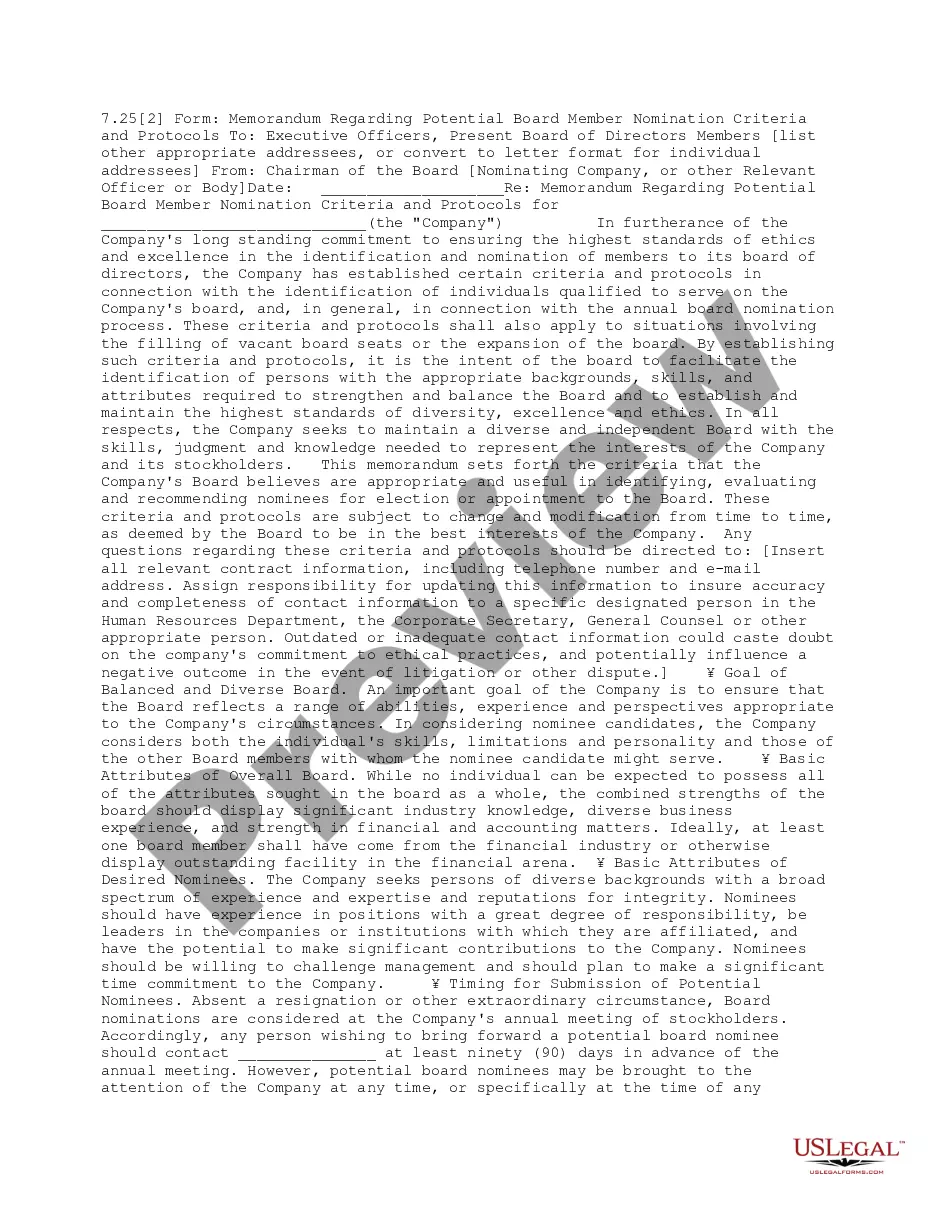
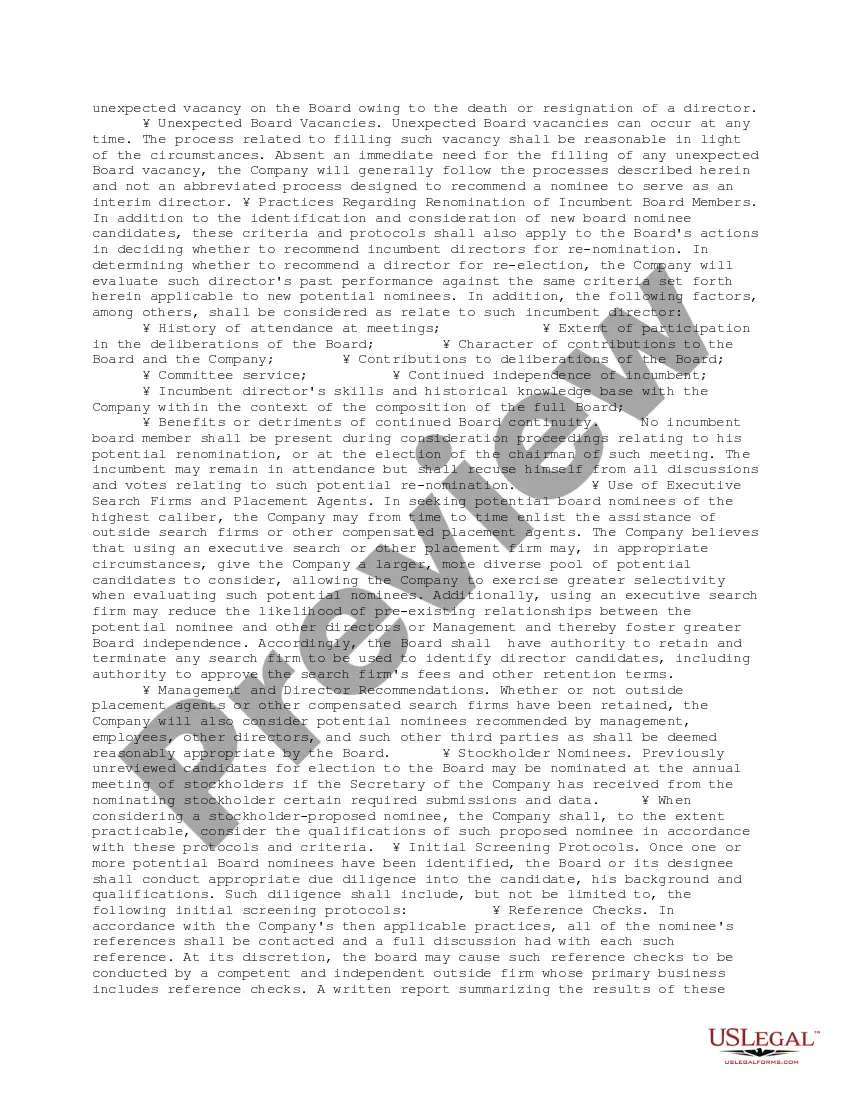
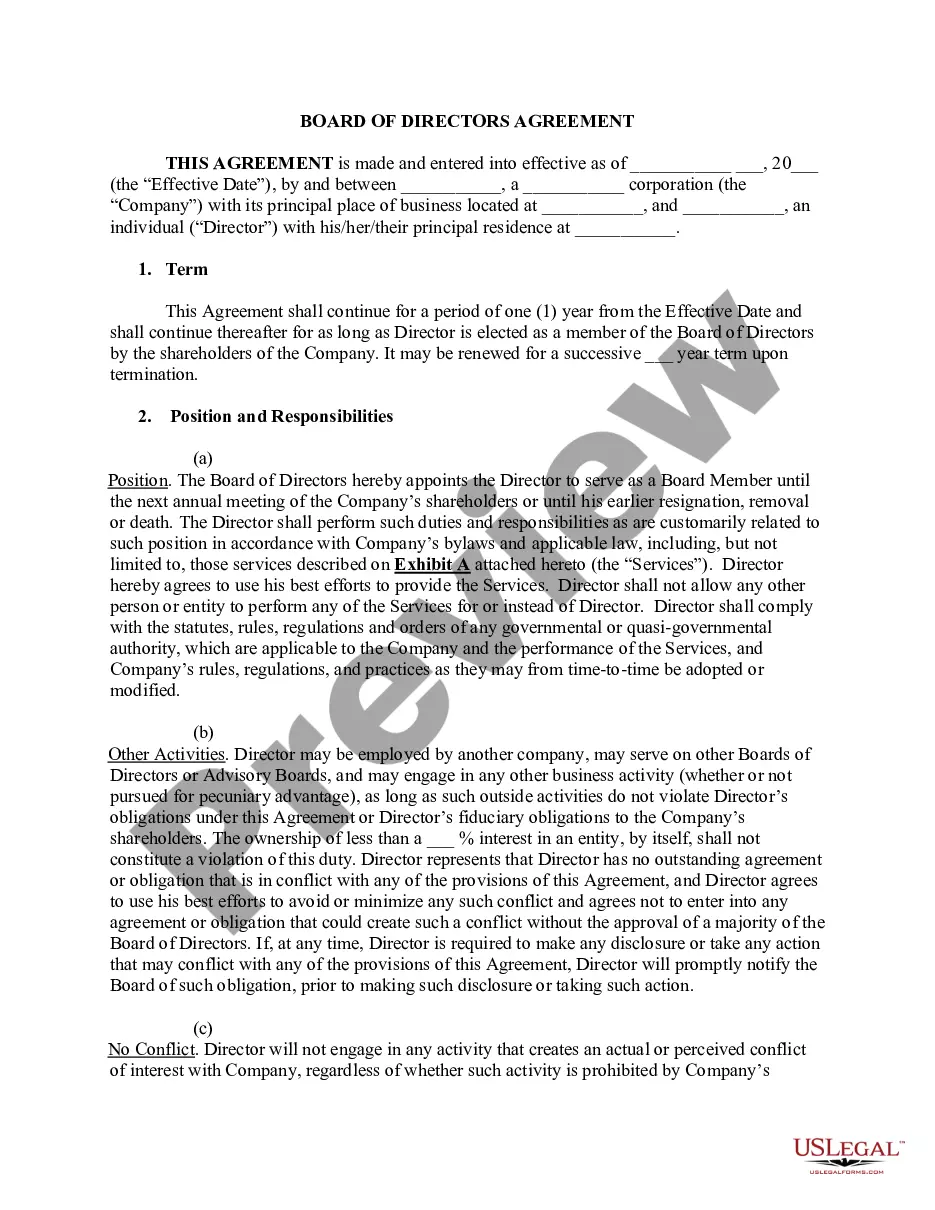
The Memorandum Regarding Potential Board Member Nomination Criteria and Protocols is a formal document that outlines the criteria and procedures used by a company's board of directors to identify, evaluate, and recommend potential nominees for board positions. This document helps ensure a consistent and ethical process in the selection of board members, enhancing the companyâs governance while emphasizing diversity and expertise among nominees.
What’s included in this form
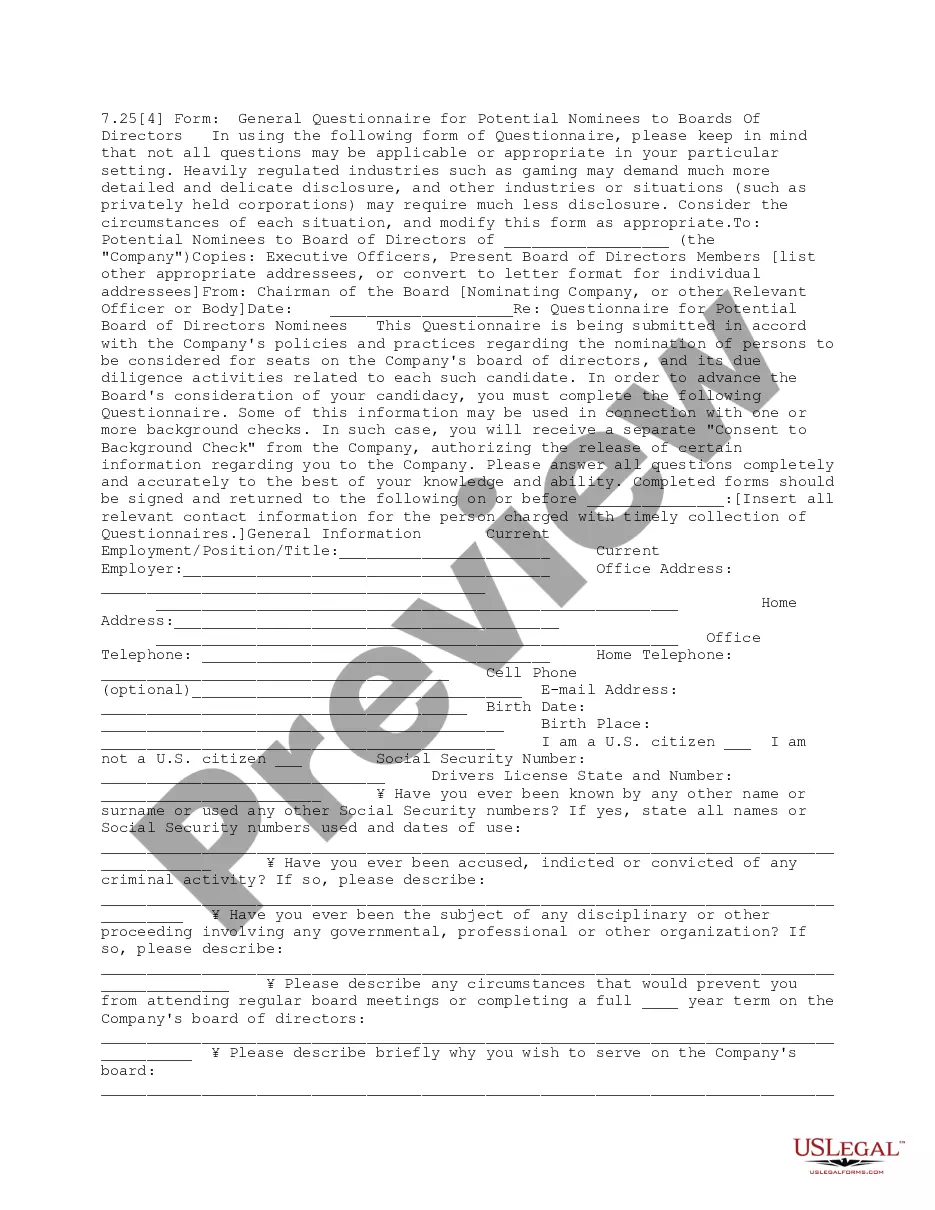
- Addressing details for company executives and board members.
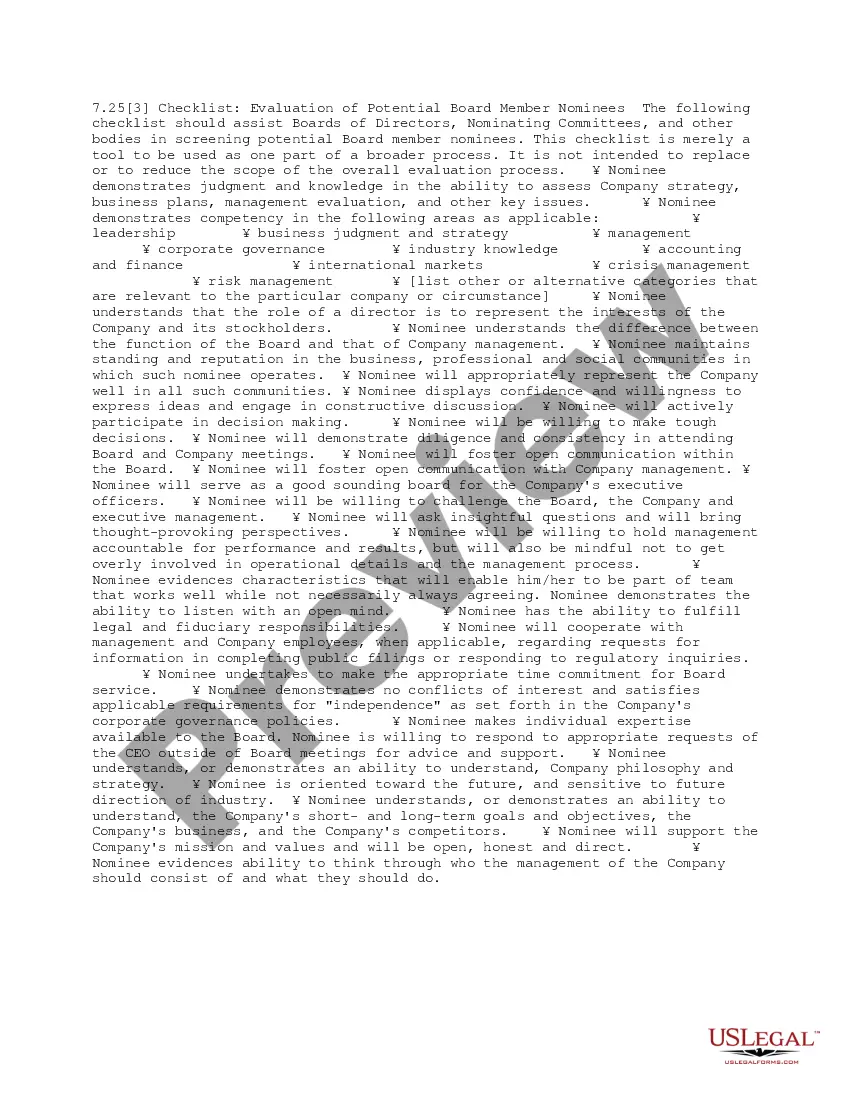
- Clear criteria for board member qualifications and attributes.
- Guidelines for submitting potential nominees and timing requirements.
- Procedures for filling unexpected board vacancies.
- Details on practices relating to renominating incumbent board members.
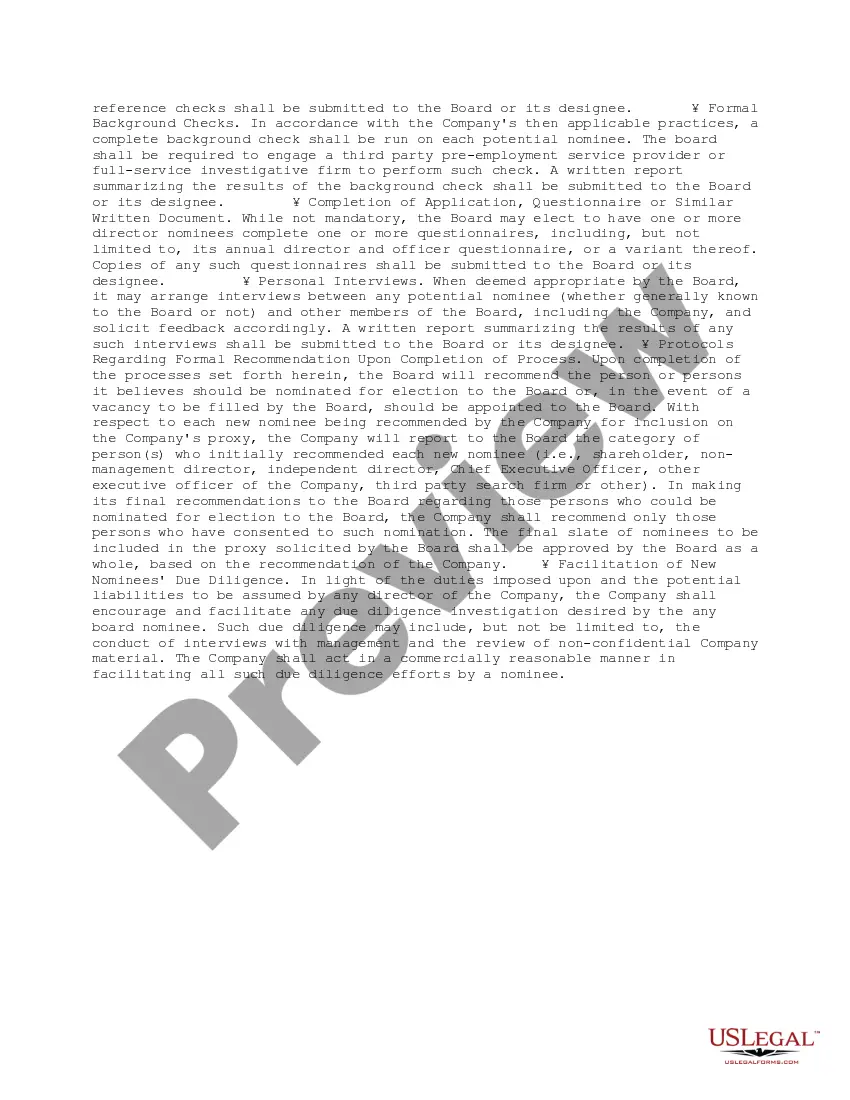
- Protocols for conducting due diligence on nominee candidates.
Common use cases
This form should be used when a company is preparing to evaluate and recommend individuals for election to its board of directors. It is especially relevant during the annual meeting of stockholders or when unexpected vacancies arise. The memorandum serves as a foundational reference for assessing qualifications and ensuring the nomination process is comprehensive and equitable.
Who needs this form
- Companies looking to establish clear nomination criteria for board members.
- Board of directors or nominating committees responsible for board member selections.
- Executive officers involved in the nomination process.
- Shareholders interested in understanding the nomination process.
Completing this form step by step
- Fill in the addressing details for the Executive Officers and current Board Members.
- Specify the date of the memorandum.
- Clearly state the name of the company in the context of the memorandum.
- Identify the key criteria and protocols for nominees as established by the board.
- Provide contact information for questions regarding the memorandum.
Does this document require notarization?
This form does not typically require notarization unless specified by local law.
Get your form ready online
Our built-in tools help you complete, sign, share, and store your documents in one place.
Make edits, fill in missing information, and update formatting in US Legal Forms—just like you would in MS Word.
Download a copy, print it, send it by email, or mail it via USPS—whatever works best for your next step.
Sign and collect signatures with our SignNow integration. Send to multiple recipients, set reminders, and more. Go Premium to unlock E-Sign.
If this form requires notarization, complete it online through a secure video call—no need to meet a notary in person or wait for an appointment.
We protect your documents and personal data by following strict security and privacy standards.

Make edits, fill in missing information, and update formatting in US Legal Forms—just like you would in MS Word.

Download a copy, print it, send it by email, or mail it via USPS—whatever works best for your next step.

Sign and collect signatures with our SignNow integration. Send to multiple recipients, set reminders, and more. Go Premium to unlock E-Sign.

If this form requires notarization, complete it online through a secure video call—no need to meet a notary in person or wait for an appointment.

We protect your documents and personal data by following strict security and privacy standards.
Common mistakes to avoid
- Failing to update contact information, leading to confusion.
- Not considering diversity adequately when nominating candidates.
- Overlooking the timeline for nominee submissions.
- Neglecting to conduct thorough due diligence on potential nominees.
Benefits of using this form online
- Convenience of access and completion without the need for physical paperwork.
- Editability to customize the memorandum to fit specific company needs.
- Reliability of templates drafted by licensed attorneys, ensuring compliance with relevant laws.
Legal use & context
- This memorandum aligns with standard corporate governance practices and is essential for compliance.
- It helps to ensure that the nomination process is both transparent and equitable.
Summary of main points
- The memorandum is crucial for guiding board member nominations and ensuring compliance with company standards.
- Regular updates to the criteria ensure relevance and alignment with the company's goals.
- Following established protocols mitigates risks associated with board member selection.
Looking for another form?
Form popularity
FAQ
The definition of protocol is an official procedure or system of rules that govern affairs of states or diplomatic occasions. To more narrowly define board meeting protocol, look to the powers of the board of directors.
Call to order. Approve agenda. Consent agenda. Approve prior meeting minutes. Executive Director summary. Financial reports. Committee reports. Unfinished business.
Recognize a quorum. Calling meeting to order. Approve the agenda and minutes. Communication and reports. Old/new/Other business. Close the meeting.
Undertake any necessary preparation prior to the meeting. Arrive on time. Keep an open mind. Listen to the opinions of others. Participate. Avoid dominating the proceedings. Avoid conflict situations. Avoid side conversations which distract others.
Running a successful board meeting means taking care of past meeting items first. Before any official business can be conducted, the board must approve the minutes of the prior meeting.The next step is for the chair to ask the members if there are any corrections to the minutes.
Some boards assign a board member to each program manager, although other boards feel that doing so can create special interests on the board.There are no restrictions on board-staff contact, but the executive director must be informed about meetings.
Meeting name and place. Date and time of the meeting. List of meeting participants. Purpose of the meeting. For each agenda items: decisions, action items, and next steps. Next meeting date and place. Documents to be included in the meeting report.
It allows for clarity, continuity and an effective outcome of the meeting. It should list all relevant matters for the particular meeting and set out an order of proceedings.