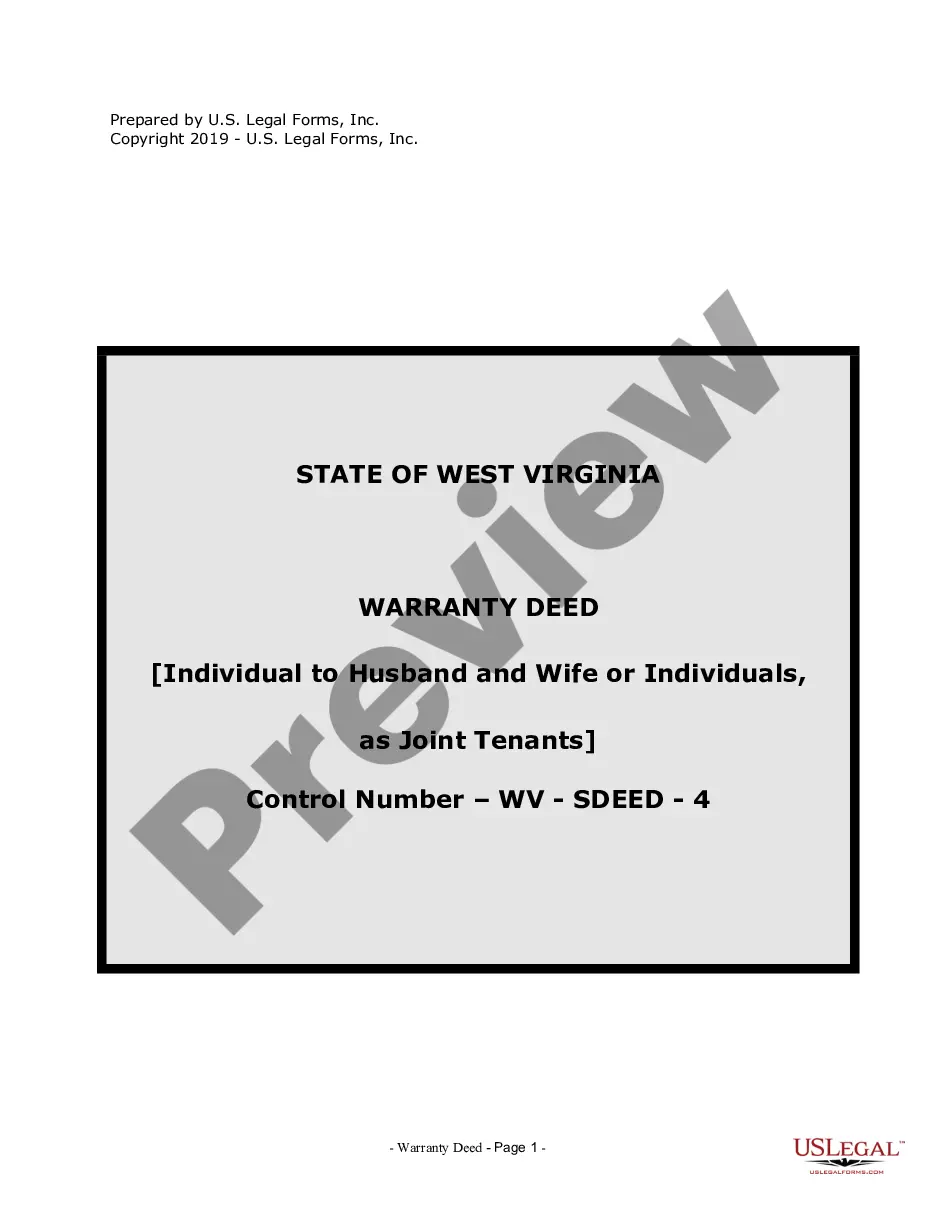
West Virginia Warranty Deed Converting Separate Property of one Spouse to both as Joint Tenants
What this document covers
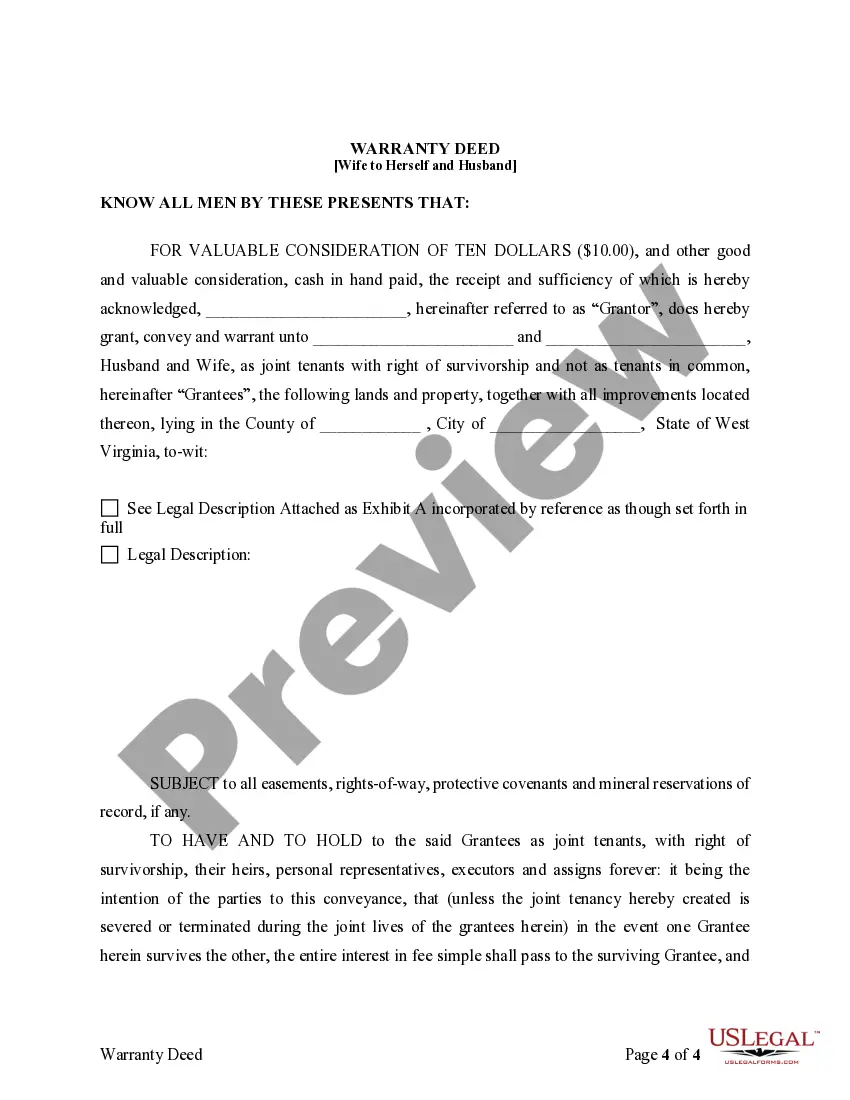
This Warranty Deed allows a wife to convert her separate property into joint ownership with her husband as joint tenants. This form is intended to provide clarity on property ownership and ensure that both spouses share rights to the property, specifically incorporating the right of survivorship, which means that if one spouse passes away, the other automatically takes full ownership of the property. It differs from other forms of property transfer in that it specifically addresses the change from sole ownership to joint tenancy between spouses.
Main sections of this form
- Identity of the Grantor: The spouse transferring the property.
- Identity of the Grantees: The husband and wife, indicating joint ownership.
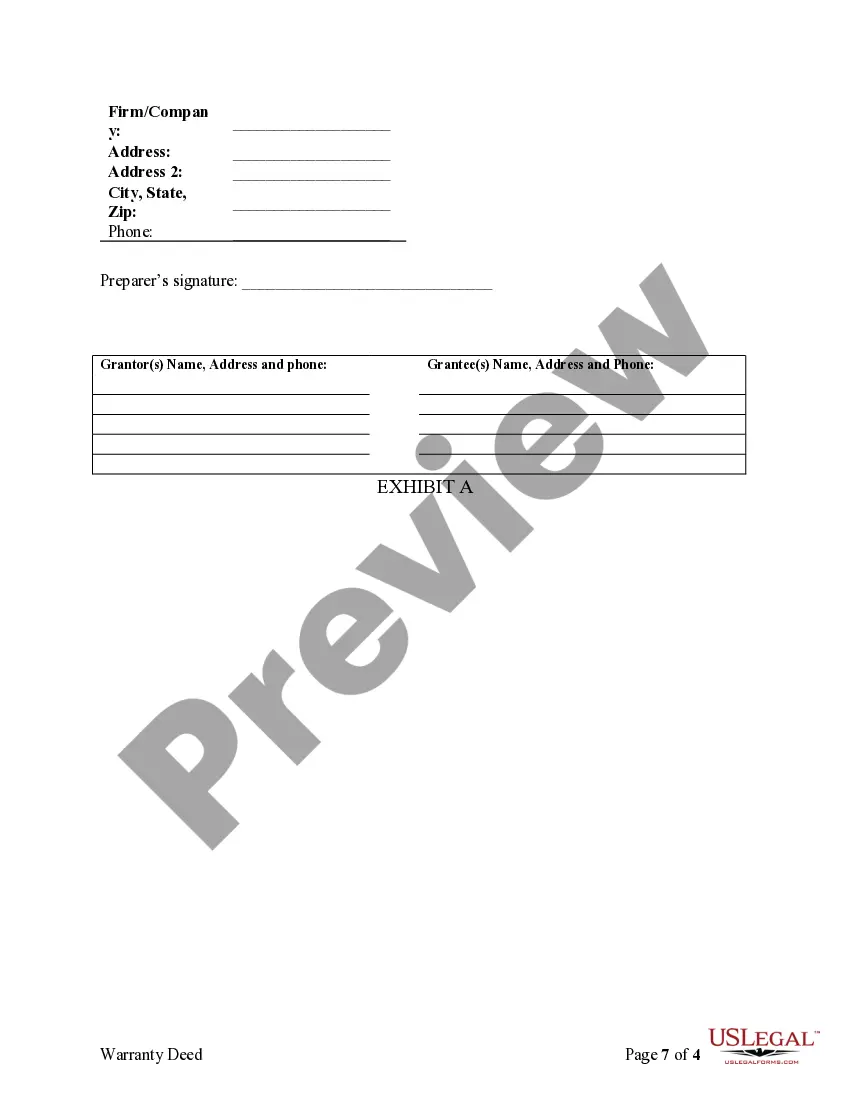
- Legal description of the property: A detailed description of the property being transferred.
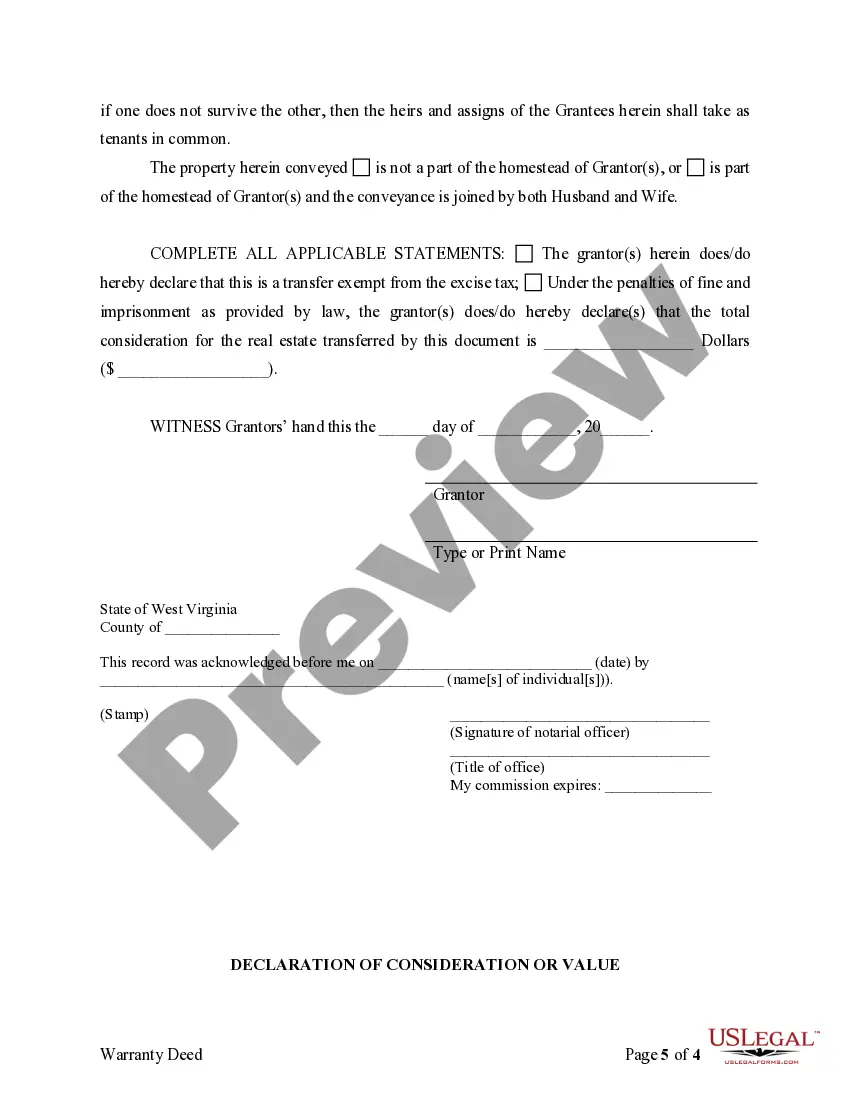
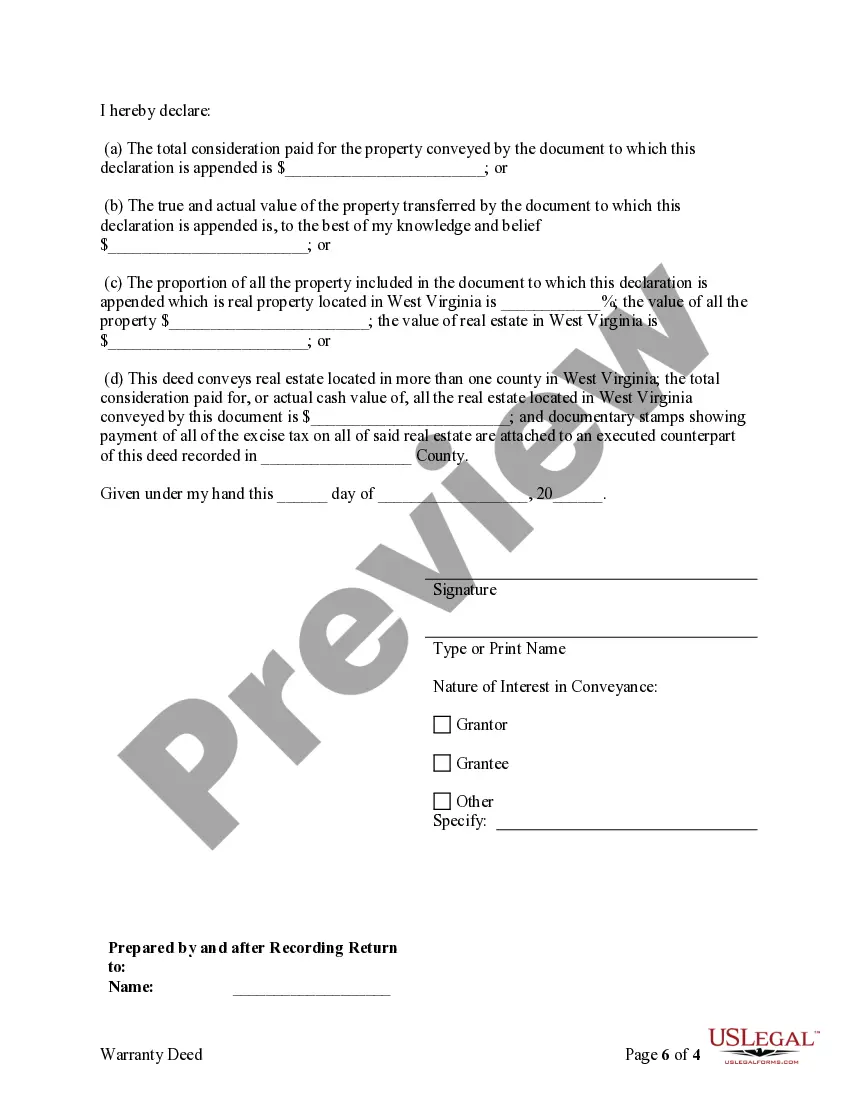
- Declaration of consideration: States the value exchanged for the property.
- Notary section: Requires notarization for validity, confirming the identity of the parties involved.
Situations where this form applies
This form is appropriate in situations where a spouse wishes to transfer their separate property into joint ownership with their partner. It may be used when couples decide to consolidate assets for estate planning purposes, during marriage, or when they wish to provide for easier transfer of property rights in case of death.
Who can use this document
- Married couples looking to convert one spouse's sole property into joint ownership.
- Individuals who want to ensure their partner retains full rights to the property after their death.
- Homeowners in West Virginia wishing to formalize property ownership between spouses.
Completing this form step by step
- Identify the parties: Enter the names of the Grantor (the wife) and the Grantees (the husband and wife).
- Specify the property: Include the legal description of the property being transferred.
- Declare consideration: Indicate the value being exchanged for the property transfer.
- Get notarized: Have the document notarized to validate the transfer.
- Ensure all sections are filled accurately before finalizing.
Is notarization required?
Yes, this form must be notarized to be legally valid. This ensures that the identities of the parties involved are confirmed. US Legal Forms offers integrated online notarization, which is available 24/7 via secure video calls, providing both convenience and legal equivalence without the need for physical travel.
Get your form ready online
Our built-in tools help you complete, sign, share, and store your documents in one place.
Make edits, fill in missing information, and update formatting in US Legal Forms—just like you would in MS Word.
Download a copy, print it, send it by email, or mail it via USPS—whatever works best for your next step.
Sign and collect signatures with our SignNow integration. Send to multiple recipients, set reminders, and more. Go Premium to unlock E-Sign.
If this form requires notarization, complete it online through a secure video call—no need to meet a notary in person or wait for an appointment.
We protect your documents and personal data by following strict security and privacy standards.

Make edits, fill in missing information, and update formatting in US Legal Forms—just like you would in MS Word.

Download a copy, print it, send it by email, or mail it via USPS—whatever works best for your next step.

Sign and collect signatures with our SignNow integration. Send to multiple recipients, set reminders, and more. Go Premium to unlock E-Sign.

If this form requires notarization, complete it online through a secure video call—no need to meet a notary in person or wait for an appointment.

We protect your documents and personal data by following strict security and privacy standards.
Typical mistakes to avoid
- Failing to provide a complete legal description of the property.
- Not having the form notarized, which could invalidate the deed.
- Omitting or incorrectly filling in the declaration of consideration.
- Not clearly identifying all parties involved in the transaction.
Why use this form online
- Convenient access to legal templates without the need for a lawyer.
- Edit and fill out the form digitally before printing, ensuring accuracy.
- Use of a reliable source, drafted by licensed attorneys for legal compliance.
- Immediate download capabilities for quick use.
Main things to remember
- A Warranty Deed is used to convert separate property into joint ownership between spouses.
- It includes important details such as a legal description, consideration, and requires notarization.
- This form ensures that property ownership rights are clear and secure for both parties.
Looking for another form?
Form popularity
FAQ
A In order to make your partner a joint owner you will need to add his name at the Land Registry, for which there is a fee of £280 (assuming you transfer half the house to him). You won't, however, have to pay capital gains tax, as gifts between civil partners (and spouses) are tax free.
Which of these statements applies to both joint tenancy and tenancy by the entirety? The answer is the survivor becomes a severalty owner.A tenancy by the entirety may be terminated by the death of either spouse, and the surviving spouse then becomes sole owner in severalty. You just studied 20 terms!
Adding someone to your house deed requires the filing of a legal form known as a quitclaim deed. When executed and notarized, the quitclaim deed legally overrides the current deed to your home. By filing the quitclaim deed, you can add someone to the title of your home, in effect transferring a share of ownership.
When you opt to co-own an asset with another individual, you can enter into a legal ownership agreement known as joint tenants with rights of survivorship or JTWROS. Upon the death of one of the owners, the surviving owner automatically becomes sole owner of the property, whether it's a vacation home, a plane, or
If you live in a common-law state, you can keep your spouse's name off the title the document that says who owns the property.You can put your spouse on the title without putting them on the mortgage; this would mean that they share ownership of the home but aren't legally responsible for making mortgage payments.
In California, all property bought during the marriage with income that was earned during the marriage is deemed "community property." The law implies that both spouses own this property equally, regardless of which name is on the title deed.
Which statement applies to both joint tenancy and tenancy by the entirety? The last survivor becomes a severalty owner. A deed signed by one owner will convey a fractional interest. A deed will not convey any interest unless signed by both spouses.
In California, all property bought during the marriage with income that was earned during the marriage is deemed "community property." The law implies that both spouses own this property equally, regardless of which name is on the title deed.
If you've recently married and already own a home or other real estate, you may want to add your new spouse to the deed for your property so the two of you own it jointly. To add a spouse to a deed, all you have to do is literally fill out, sign and record a new deed in your county recorder's office.