West Virginia Landlord Tenant Closing Statement to Reconcile Security Deposit
About this form
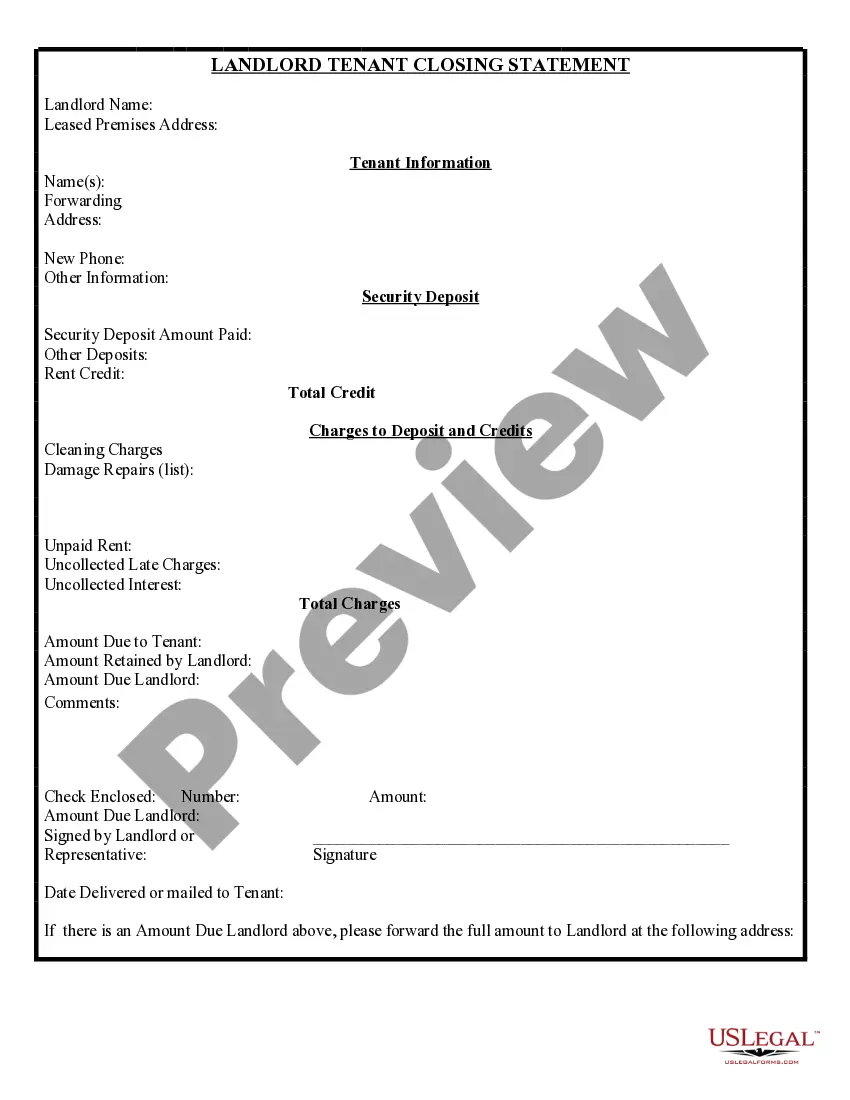
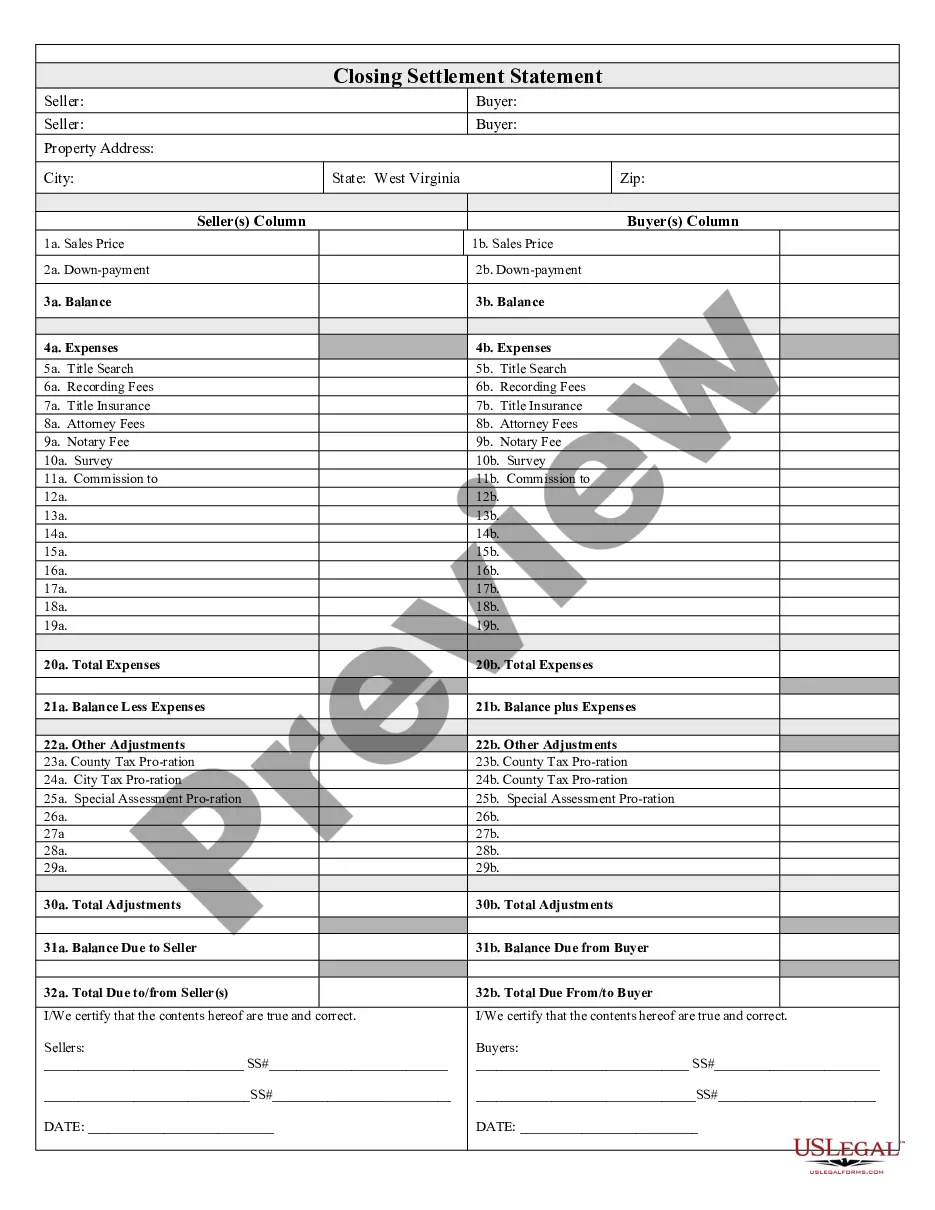
The Landlord Tenant Closing Statement to Reconcile Security Deposit is a legal document that serves as a record for landlords to outline the monetary transactions related to the security deposit held on a rental property. This form details the deposits and credits, while also accounting for deductions that may be applied. Unlike other rental agreements, this closing statement focuses specifically on the financial aspects of the security deposit, ensuring clarity for both landlords and tenants about the total amounts involved.
Key components of this form
- Identification of the landlord and tenant involved in the rental agreement.
- Detailed listing of the security deposit amount collected from the tenant.
- Breakdown of any deductions made from the deposit, such as repair costs or unpaid rent.
- Credits, if applicable, that may reduce the amount deducted from the security deposit.
- Date by which the final reconciliation and return of funds is to occur.
Common use cases
This form is necessary when a tenant vacates a rental property and the landlord needs to account for the disposition of the security deposit. It is typically used to document any deductions made for repairs above normal wear and tear or to collect amounts owed for unpaid rent. By using this form, both parties can clearly understand the transactions that have occurred, fostering transparency and reducing disputes over the return of security deposits.
Who this form is for
- Landlords who have collected a security deposit and need to reconcile it upon a tenant's departure.
- Tenants who want a clear accounting of their security deposit and any charges applied.
- Property managers handling rental agreements on behalf of landlords.
How to complete this form
- Identify the parties by entering the names and contact information of both the landlord and tenant.
- Specify the property by including the address and any relevant property details.
- Document the total amount of the security deposit initially collected from the tenant.
- List any deductions to be made, including details of repairs or outstanding rent.
- Indicate the final amount to be returned to the tenant and the expected date of return.
Does this document require notarization?
This form usually doesn’t need to be notarized. However, local laws or specific transactions may require it. Our online notarization service, powered by Notarize, lets you complete it remotely through a secure video session, available 24/7.
Get your form ready online
Our built-in tools help you complete, sign, share, and store your documents in one place.
Make edits, fill in missing information, and update formatting in US Legal Forms—just like you would in MS Word.
Download a copy, print it, send it by email, or mail it via USPS—whatever works best for your next step.
Sign and collect signatures with our SignNow integration. Send to multiple recipients, set reminders, and more. Go Premium to unlock E-Sign.
If this form requires notarization, complete it online through a secure video call—no need to meet a notary in person or wait for an appointment.
We protect your documents and personal data by following strict security and privacy standards.

Make edits, fill in missing information, and update formatting in US Legal Forms—just like you would in MS Word.

Download a copy, print it, send it by email, or mail it via USPS—whatever works best for your next step.

Sign and collect signatures with our SignNow integration. Send to multiple recipients, set reminders, and more. Go Premium to unlock E-Sign.

If this form requires notarization, complete it online through a secure video call—no need to meet a notary in person or wait for an appointment.

We protect your documents and personal data by following strict security and privacy standards.
Avoid these common issues
- Not providing sufficient detail on deductions, which can lead to disputes.
- Failing to document the date by which the deposit must be returned.
- Not obtaining the tenant's signature on the form, which is crucial for validation.
- Omitting contact information, making future communication difficult.
Advantages of online completion
- Convenient access to downloadable templates that can be completed at your own pace.
- Editable forms allow for customization, ensuring that your specific situation is accurately represented.
- Reliability from professionally drafted content ensures compliance with legal standards.
Legal use & context
- This form helps demonstrate accountability regarding handling tenant funds, which is essential in legal disputes.
- It provides a structured approach for landlords to justify any deductions, making it legally defensible if questioned.
- Understanding local laws regarding security deposits is critical to ensure enforceability of the terms outlined in this form.
Looking for another form?


Form popularity
FAQ
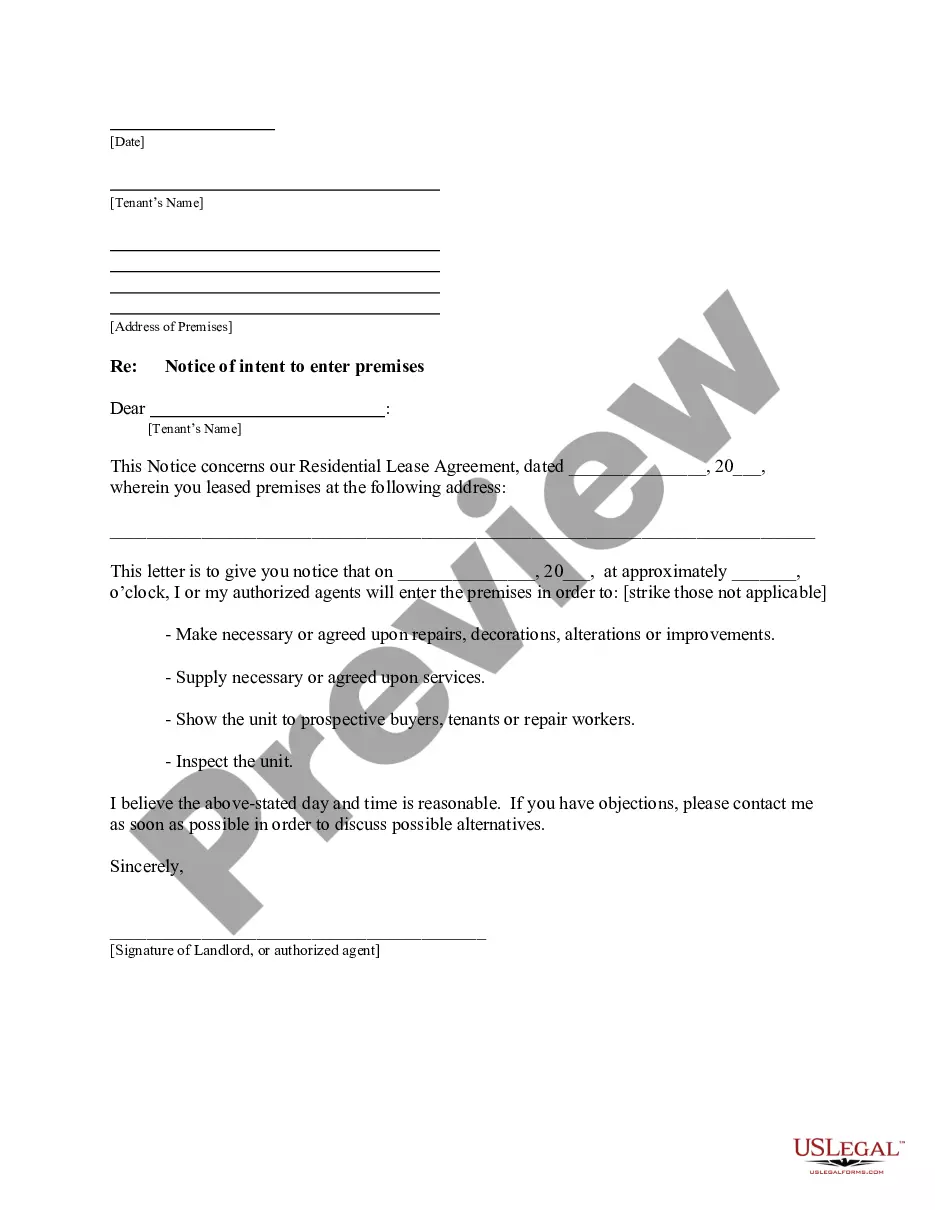
When you rent a property from a landlord it becomes your home. They should only enter the property without you being present, if you have given permission for them to do so, or in a genuine emergency.
The big take-away is that in most circumstances a landlord cannot enter a property without agreement from the tenant. And If the landlord ignores the law and enters the property without permission, the tenant may be able to claim damages or gain an injunction to prevent the landlord doing it again.
State law prohibits landlords from entering rental housing without either the consent of the tenant or providing reasonable notice in advance, unless circumstances require the landlord to perform emergency repairs.
In some circumstances, a tenant can break a fixed-term agreement early without penalty. A tenant can give 14 days' written notice to end an agreement early without penalty if: they have accepted an offer of social housing (e.g. from DCJ Housing)
Fails to pay rent; Violates a clause in the lease or rental agreement; Violates a responsibility imposed by law.
Unless such a condition is explicitly stated in the lease or there is a rare jurisdictional law that requires a cooling period, your lease is binding the second you sign your name. The landlord has the right to decide whether to mutually agree to terminate the lease or to hold you to the terms.
What is the deadline to return a security deposit in West Virginia? The security deposit (minus any costs incurred for cleaning or repairs, if applicable) must be returned to the renter no later than 60 days from the date the tenancy is terminated.
Give the landlord/agent a written termination notice and vacate move out and return the keys according to your notice, and/or. apply to the NSW Civil & Administrative Tribunal (NCAT) for a termination order.
Notice to Terminate Tenancy Month to Month Lease: For any lease under the term of one year, either party can terminate the lease by providing the other party written notice prior to the end of the lease. For a month to month lease, 30 days must be given. pursuant to §37-6-5.