Florida Discovery Interrogatories from Plaintiff to Defendant - Personal Injury
What is this form?
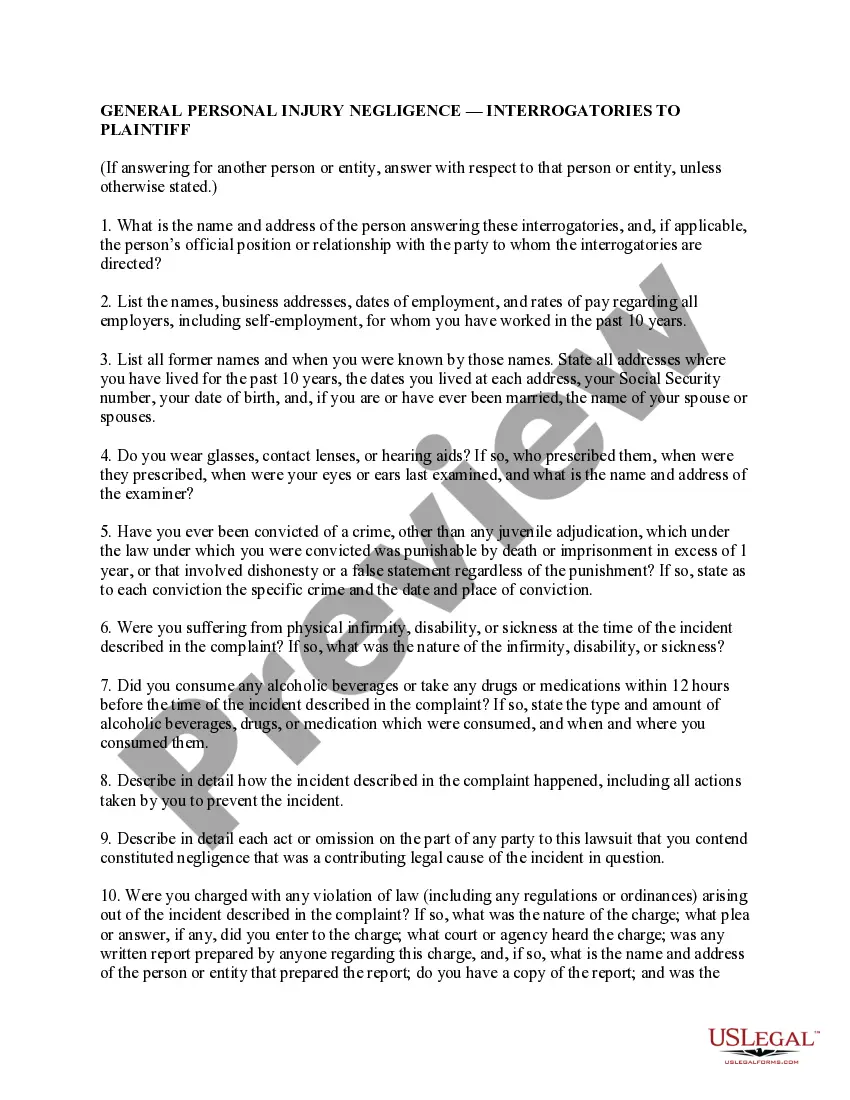
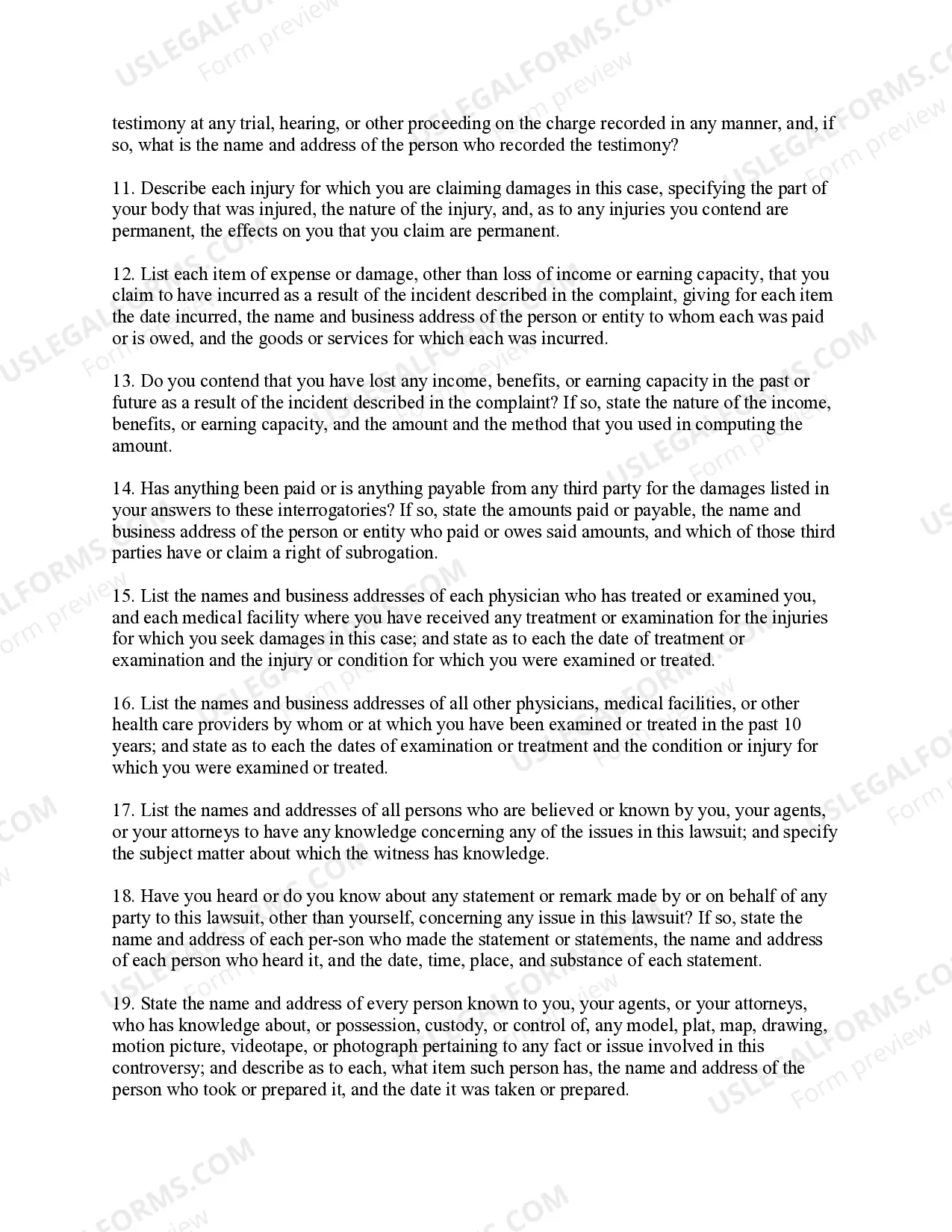
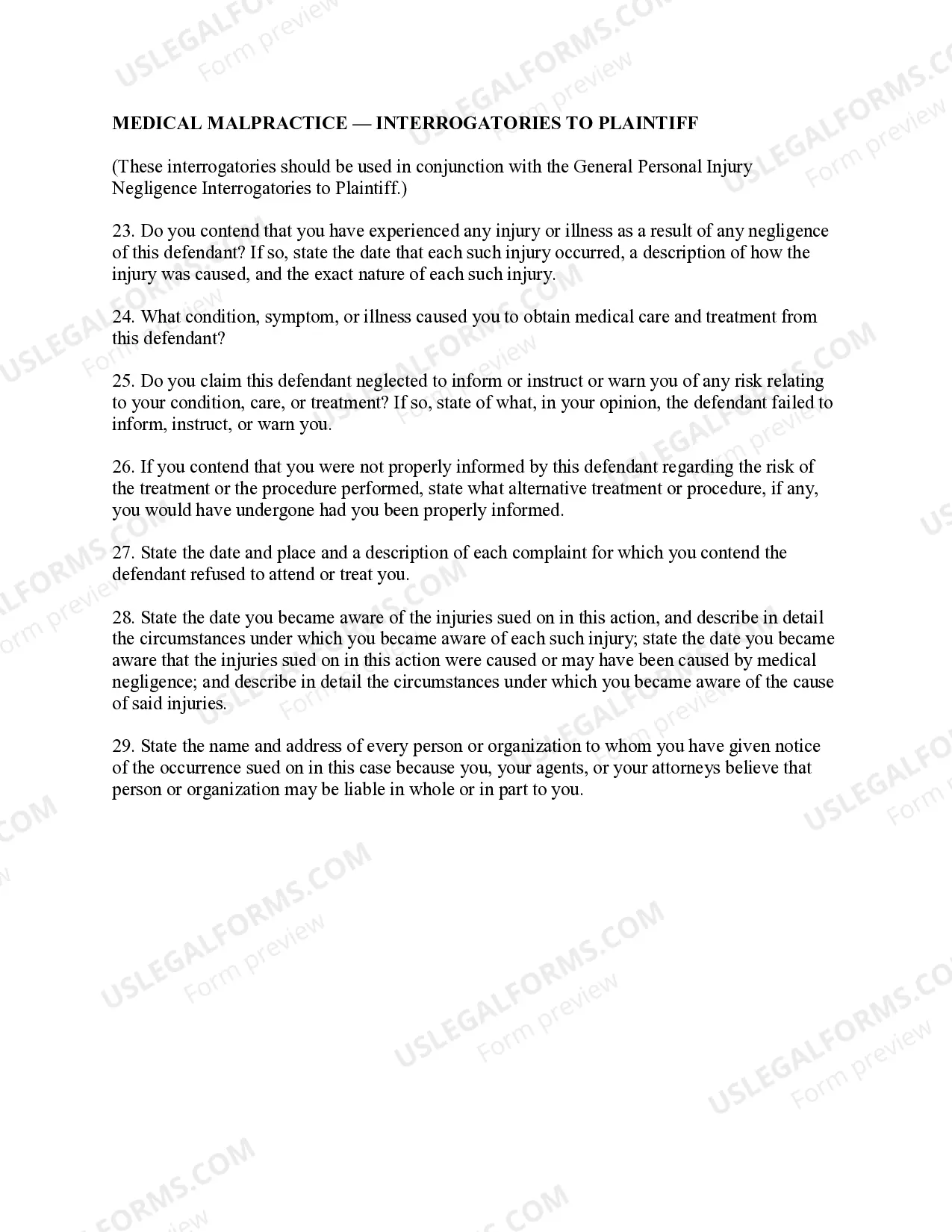
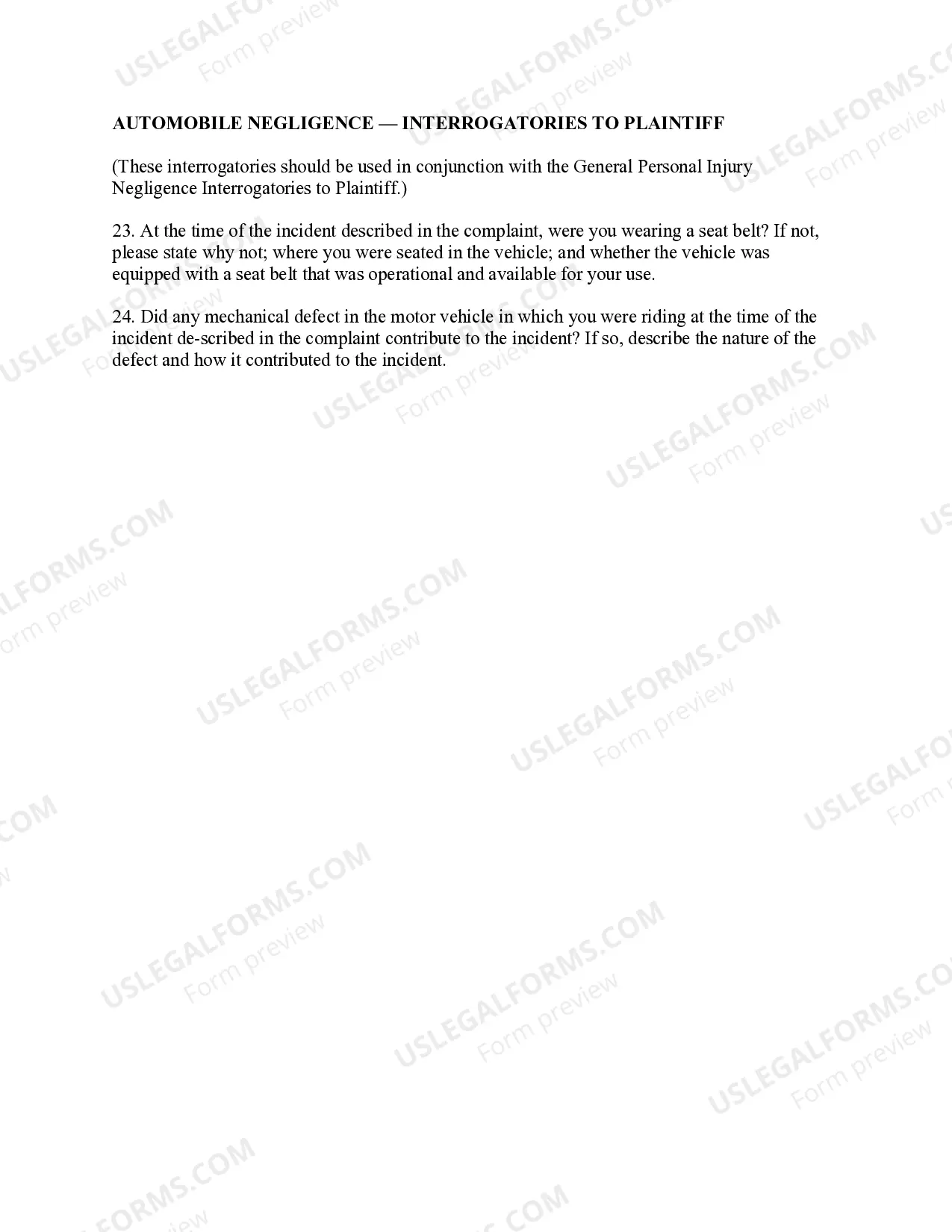
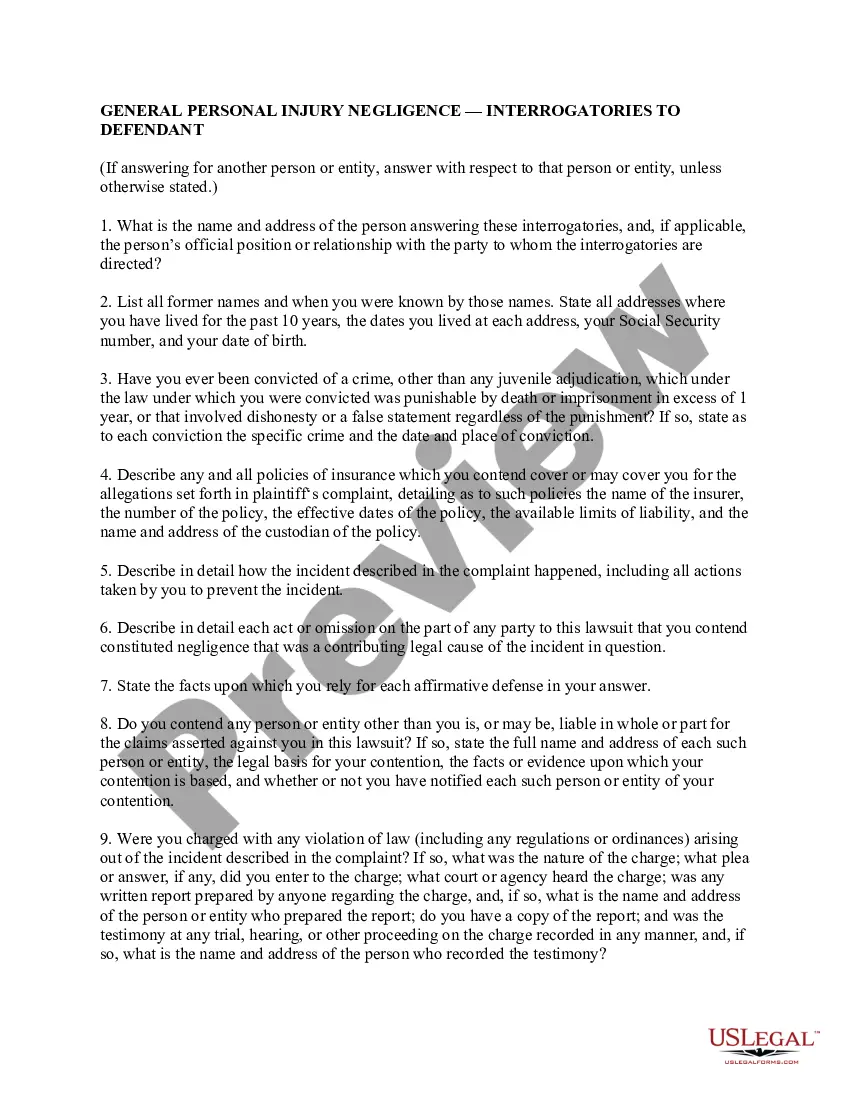
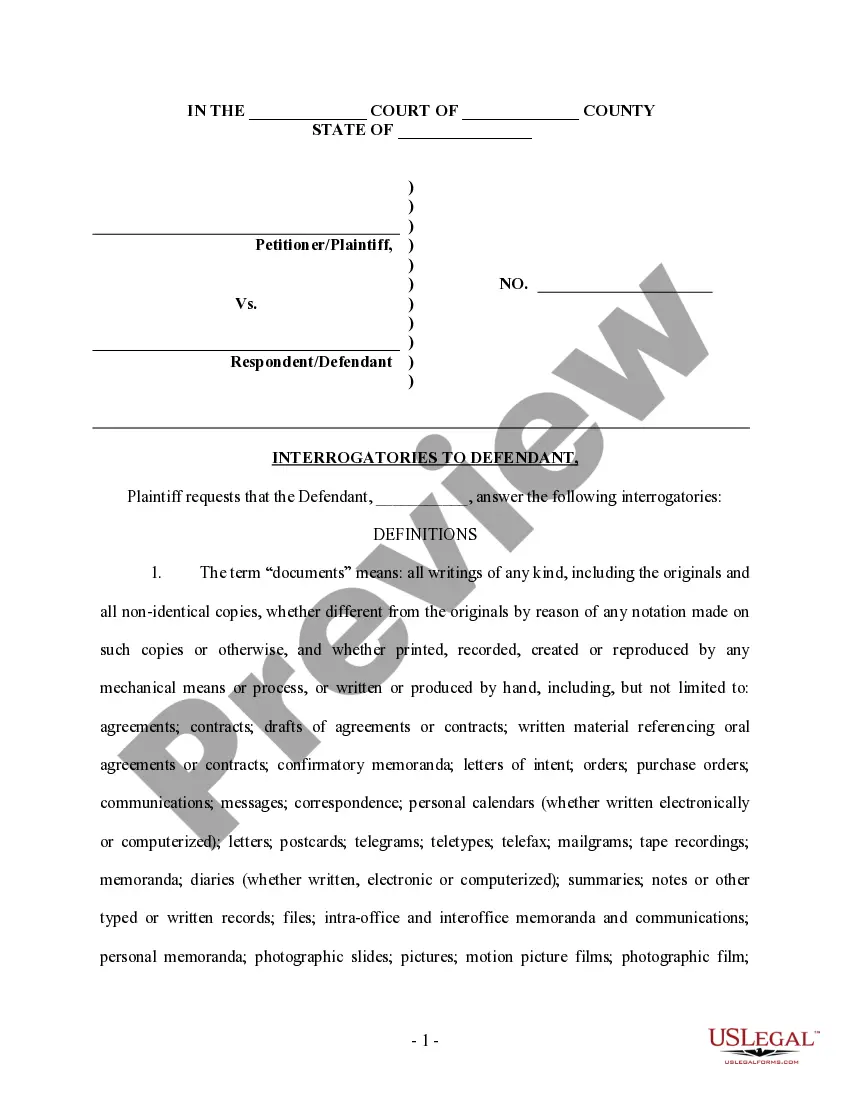
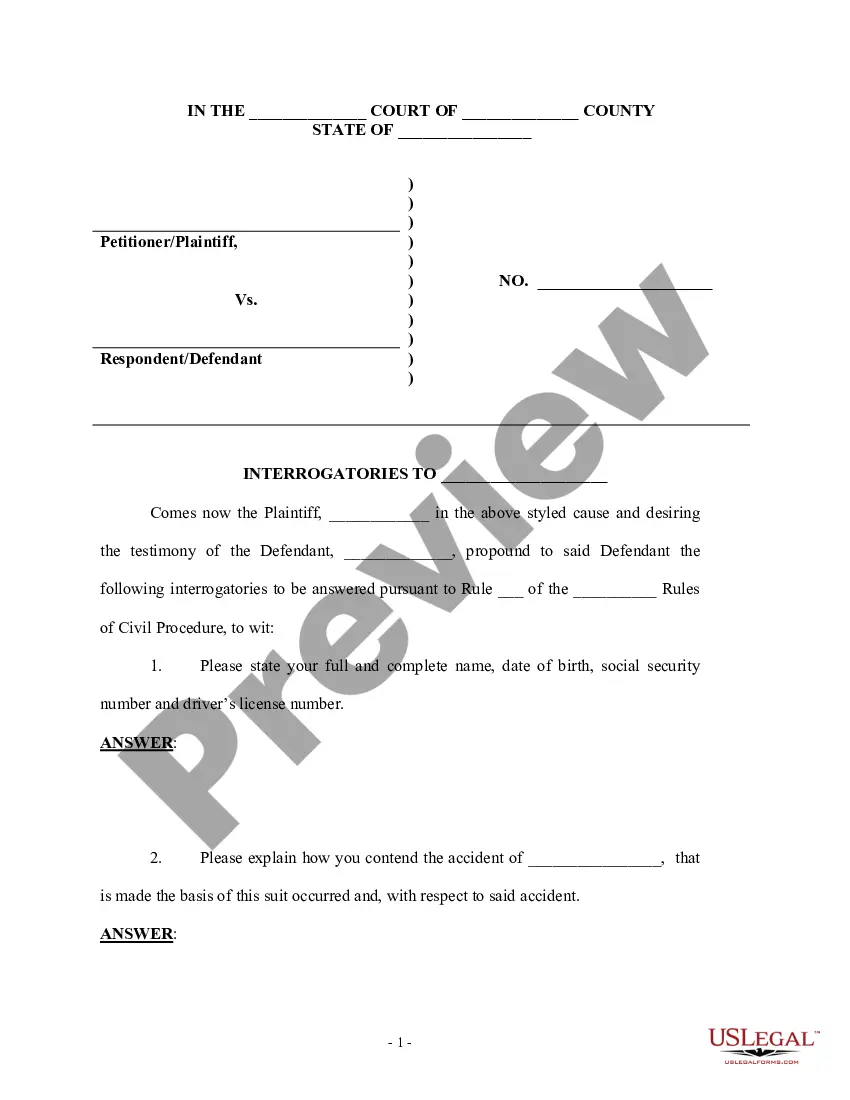
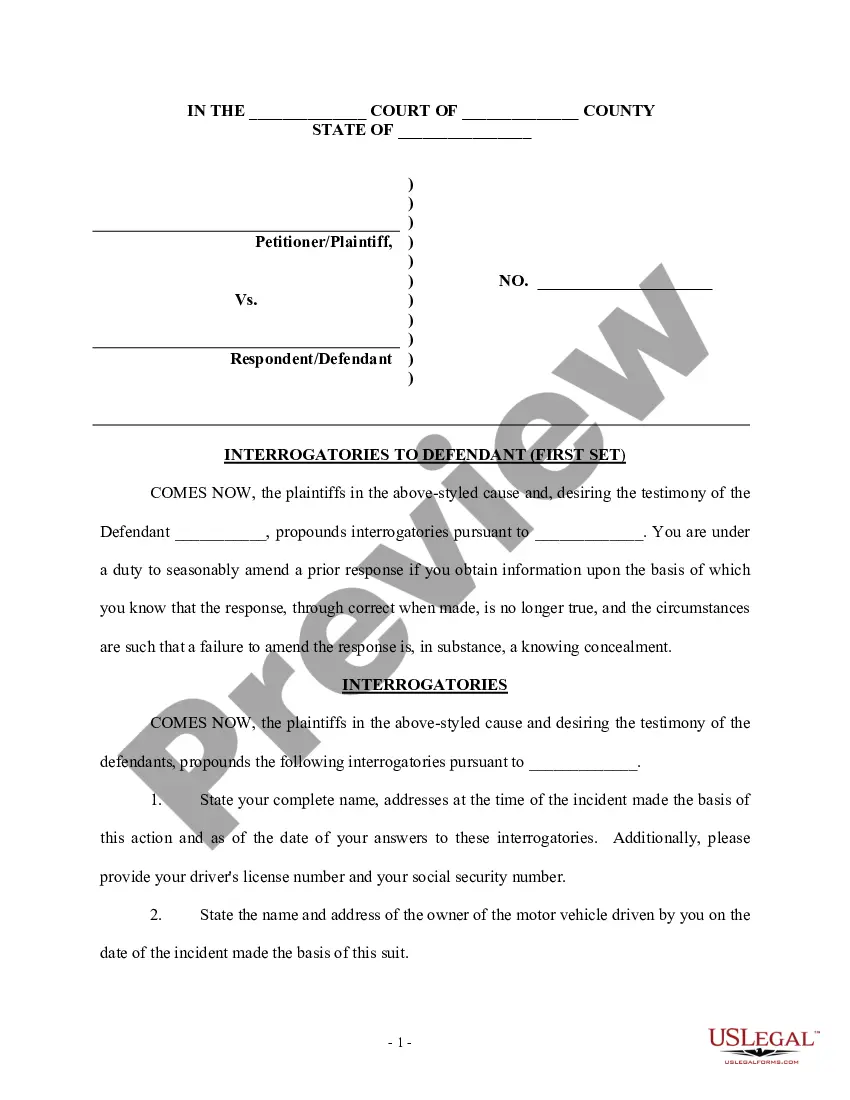
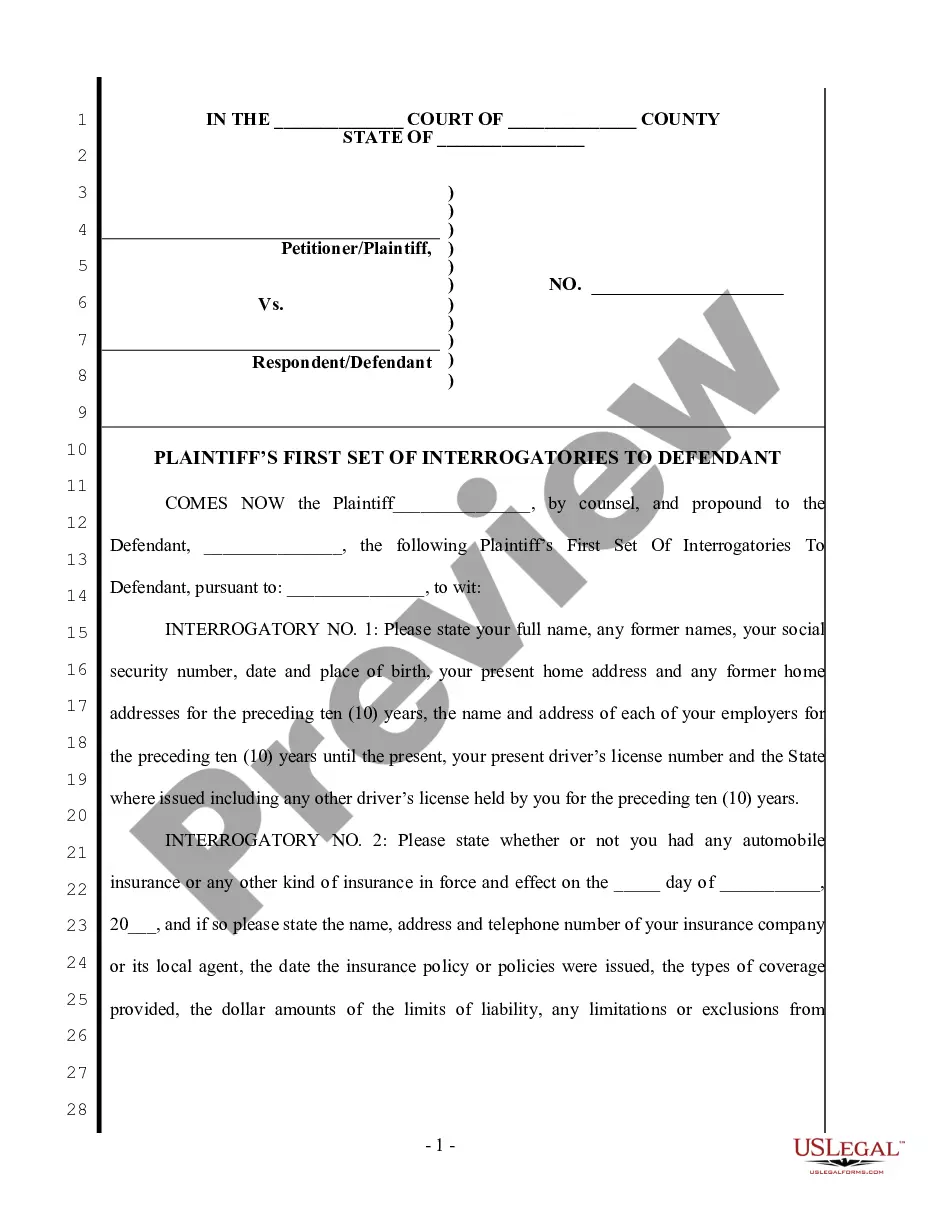
The "Discovery Interrogatories from Plaintiff to Defendant - Personal Injury" form is a legal tool designed for use in personal injury lawsuits in Florida. This form consists of 15 essential interrogatories that allow a plaintiff to request detailed information from the defendant regarding the incident in question. It also includes specialized questions tailored for cases involving medical malpractice and motor vehicle accidents. This form differs from other legal forms by focusing on gathering critical details necessary for building a personal injury case.
Form components explained
- Identification of the respondent and their relationship to the parties
- Employment history and related details for the past 10 years
- Disclosure of prior names and residential addresses
- Information regarding any medical devices or impairments at the time of the incident
- A comprehensive account of the personal injury incident
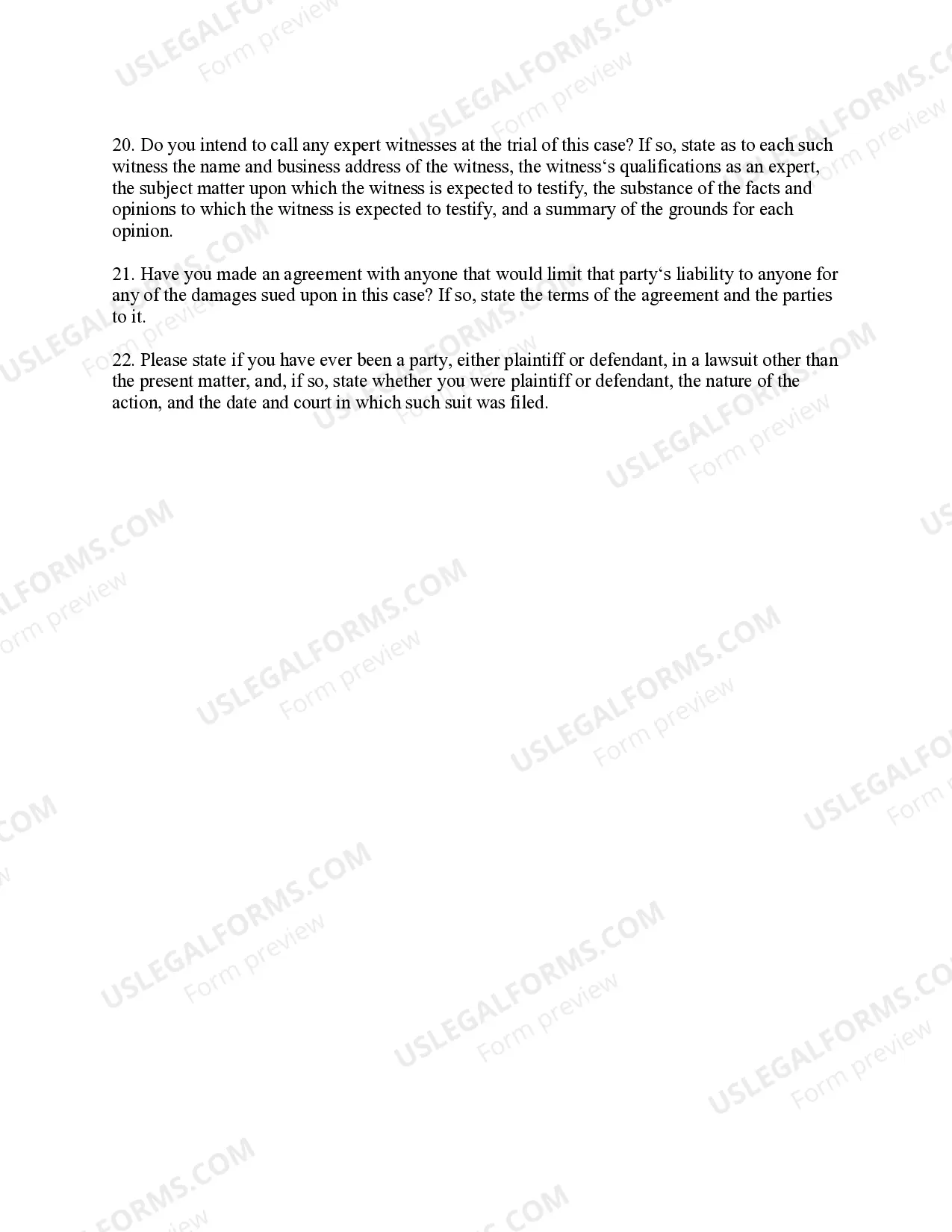
- Details of any witnesses and expert testimonies
- Specific questions related to medical malpractice or automobile negligence when applicable
When to use this document
This form should be used in personal injury cases where the plaintiff needs to obtain information from the defendant. It is particularly relevant when there are disputes regarding negligence, injuries claimed, or any factors contributing to the case, such as medical malpractice or an automobile accident. Utilizing this form can help clarify the facts and establish a stronger case during pre-trial discovery.
Intended users of this form
- Plaintiffs involved in personal injury lawsuits in Florida
- Attorneys representing plaintiffs in cases of personal injury
- Individuals seeking clarity on the injury incident from the defendant
How to prepare this document
- Provide the name and address of the person responding to the interrogatories.
- List all employers and relevant details for the past ten years.
- Detail any medical devices or issues at the time of the incident.
- Describe the injury incident thoroughly, including actions taken to prevent it.
- Submit information regarding witnesses who can support your claims.
Is notarization required?
This form does not typically require notarization to be legally valid. However, some jurisdictions or document types may still require it. US Legal Forms provides secure online notarization powered by Notarize, available 24/7 for added convenience.
Get your form ready online
Our built-in tools help you complete, sign, share, and store your documents in one place.
Make edits, fill in missing information, and update formatting in US Legal Forms—just like you would in MS Word.
Download a copy, print it, send it by email, or mail it via USPS—whatever works best for your next step.
Sign and collect signatures with our SignNow integration. Send to multiple recipients, set reminders, and more. Go Premium to unlock E-Sign.
If this form requires notarization, complete it online through a secure video call—no need to meet a notary in person or wait for an appointment.
We protect your documents and personal data by following strict security and privacy standards.

Make edits, fill in missing information, and update formatting in US Legal Forms—just like you would in MS Word.

Download a copy, print it, send it by email, or mail it via USPS—whatever works best for your next step.

Sign and collect signatures with our SignNow integration. Send to multiple recipients, set reminders, and more. Go Premium to unlock E-Sign.

If this form requires notarization, complete it online through a secure video call—no need to meet a notary in person or wait for an appointment.

We protect your documents and personal data by following strict security and privacy standards.
Common mistakes to avoid
- Failing to provide complete and accurate personal information.
- Neglecting to include detailed descriptions of injuries and expenses.
- Providing vague answers instead of thorough explanations.
Benefits of using this form online
- Convenience of accessing and completing the form from any location.
- Ability to edit and review responses before submission.
- Secure and reliable storage of completed forms for easy retrieval.
Summary of main points
- The form contains essential interrogatories to gather facts from the defendant.
- It is crucial for building a strong case in personal injury lawsuits.
- Using this form can streamline the discovery process and clarify key issues.
Looking for another form?
Form popularity
FAQ
In interrogatories, you cannot ask questions that invade someone's privacy, seek privileged information, or demand legal conclusions. Additionally, you should avoid overly broad questions that could result in irrelevant responses. Keeping these limitations in mind contributes to effective communication in Florida Discovery Interrogatories from Plaintiff to Defendant - Personal Injury, helping both parties stay focused on pertinent issues.
Writing a good interrogatory involves being clear and precise in your questioning. Focus on what information you need without being overly broad or vague. Tailor your interrogatories to gather essential details that can strengthen your case in Florida Discovery Interrogatories from Plaintiff to Defendant - Personal Injury. Using resources like USLegalForms can help you find templates and examples that meet legal standards.
To deny interrogatories, you need to explicitly state that you are denying the requested information. It is important to explain your reasons for the denial, focusing on aspects like lack of knowledge or relevance. This approach allows you to maintain your position in Florida Discovery Interrogatories from Plaintiff to Defendant - Personal Injury and ensures the other party understands your stance clearly.
When answering a plaintiff's interrogatories, start by reading each question carefully to understand what information is being requested. Provide clear, concise responses based on your knowledge and available evidence. Make sure to reference relevant documents if necessary, while ensuring compliance with the requirements of Florida Discovery Interrogatories from Plaintiff to Defendant - Personal Injury. If uncertain, consulting with a legal professional can be beneficial.
To properly object to interrogatories, begin by restating the interrogatory you are objecting to. Follow this by clearly stating your objection, providing a reason why the interrogatory is improper, such as relevance or ambiguity. This method ensures you maintain a formal record, which can be crucial in Florida Discovery Interrogatories from Plaintiff to Defendant - Personal Injury. Utilize legal resources or platforms like USLegalForms for guidance.
Proper objections to interrogatories usually relate to relevance, privilege, or overbreadth. For instance, you might object if the question seeks information that is not pertinent to the case or if it reveals confidential communications. It is important to make these objections clear in your response, stating the reason for each objection to maintain transparency in the process of Florida Discovery Interrogatories from Plaintiff to Defendant - Personal Injury.
To fill out an interrogatories form, first ensure you have the correct form for Florida Discovery Interrogatories from Plaintiff to Defendant - Personal Injury. Begin by entering the case information at the top, including the court name, case number, and parties involved. Then, address each interrogatory clearly, ensuring you follow the numbering and format required by the court. Don't forget to include a signature line at the end for verification.
Rule 33 of the Florida Rules of Civil Procedure outlines the use and limitations of interrogatories. It allows a party to serve written questions to another party with a cap of 30 questions, requiring clear and concise responses. This rule is crucial for managing the scope and effectiveness of interrogatories in personal injury cases. By understanding Rule 33, you can effectively leverage Florida Discovery Interrogatories from Plaintiff to Defendant - Personal Injury for your case.
You can serve an interrogatory upon the opposing party anytime after they have filed their answer to the complaint. It is best to ensure that the interrogatories are relevant and precisely structured to elicit necessary information. This step is essential for outlining the personal injury claim’s details, allowing both sides to better prepare for trial. Hence, being familiar with Florida Discovery Interrogatories from Plaintiff to Defendant - Personal Injury is beneficial.
The earliest a plaintiff may serve interrogatories on a defendant is 30 days after the defendant has been served with the complaint and summons. This allows the defendant adequate time to prepare for the questions posed. These interrogatories can significantly impact the personal injury case by clarifying facts early on. Using Florida Discovery Interrogatories from Plaintiff to Defendant - Personal Injury effectively can streamline this process.